2027 Nursing Education vs Nursing Professional Development: Teaching Roles Explained
Audited and Verified:
Our Editorial and Data Verification Process
Research.com uses government datasets, official education statistics and primary institutional information to support its career and degree guides. Our review process checks factual accuracy, occupational definitions, source dates and the requirements associated with the credentials discussed.
How This Article Was Fact-Checked
Our editorial team verifies salary estimates, employment projections, education requirements and program information against original data providers and official organizations. Salary figures are checked against the relevant occupational definitions and reporting periods. Information about licensure, accreditation and required in-person training is reviewed separately.
Fact-checked and verified on:

Co-Founder and Chief Data Scientist
An experienced nurse who enjoys teaching may be well suited to a faculty position, a hospital staff-development role, or neither - at least not without additional preparation. Nursing education and nursing professional development both involve teaching, but they serve different learners and are judged by different results.
This guide compares the work, qualifications, program options, costs, and credentials so licensed nurses can identify the role they want before committing to a degree. It also shows when precepting, employer training, or a targeted certificate may be a better first step.
Key Things You Should Know
- Audience is the central distinction: Academic nurse educators teach students in degree or licensure programs; nursing professional development (NPD) specialists primarily support the learning and competence of employed nurses.
- One degree does not fit every teaching job: Faculty appointments often favor graduate education, while some clinical teaching and staff-development positions are accessible to experienced RNs under employer or school-specific requirements.
- Check three authorities before enrolling: The prospective employer or school defines the job, the program defines admission and teaching experiences, and the credentialing organization defines certification eligibility.
What is the difference between nursing education and nursing professional development?
Nursing education prepares students for nursing practice or further academic study. In a college, an educator may teach theory, supervise clinical learning, run simulation, and assess whether students meet course and program outcomes. Nursing professional development helps an existing workforce learn new roles, maintain competence, and respond to changes in practice. In a health system, an NPD specialist may design orientation, support preceptors, and evaluate whether training addresses an identified practice need.
The distinction is the purpose and accountability of the teaching, not whether it happens in a classroom or at a bedside. An academic clinical instructor and a hospital educator may both demonstrate a skill, but the instructor assesses students against academic objectives while the hospital educator works within employer policies and competency processes.
Precepting is another point of overlap. A nurse who supports an employee during orientation is not automatically supervising a student's approved academic clinical hours; the school, site, and relevant credentialing rules determine those arrangements. This difference matters when reviewing online FNP school responsibilities for preceptors: placement and oversight cannot simply be assumed to fall to the individual nurse.
What roles do nursing educators and professional development nurses perform?
Job titles can obscure the work. The comparison below focuses on who learns, what the educator produces, and how that work is evaluated; an employer may combine duties across columns.
| Role | Typical learners and work | Evidence of effective teaching |
| Academic faculty | Nursing students; course design, teaching, grading, and sometimes scholarship or service | Student assessment, course outcomes, and documented improvement |
| Academic clinical or simulation instructor | Students; supervised practice, debriefing, and evaluation against program objectives | Observed performance and defensible competency assessment |
| NPD specialist or hospital educator | Employees; orientation, continuing education, practice-change training, and preceptor support | Documented learning needs, competency evaluation, and appropriate follow-up |
| Unit preceptor | An assigned student or new employee; coached practice within an approved arrangement | Timely feedback and documented progress within the assigned role |
A nurse considering these jobs should ask who approves the curriculum, who evaluates competence, how much protected teaching time exists, and whether the position includes weekends, shifts, or clinical-site travel. For example, supporting a post-master's NP student may involve a different approved clinical arrangement than orienting a newly hired RN. Post-master's family NP clinical training requirements belong to the student's program and credentialing pathway, not to an employer's ordinary staff orientation.
What education is required for nursing education and professional development careers?
There is no single national degree requirement for every nurse teaching position. Schools set faculty qualifications in light of their programs, applicable accreditation and regulatory expectations, and the subjects taught. Employers set requirements for NPD jobs. A full-time faculty advertisement may call for an MSN or doctorate, while a clinical instructor, preceptor, or unit-based educator posting may weigh a current RN license and relevant practice experience heavily. Senior NPD positions may also prefer graduate preparation.
For an experienced RN, the most efficient first move is to compare actual postings for the desired setting with existing qualifications. If the gap is teaching experience rather than a required degree, supervised precepting, simulation support, or an employer-sponsored educator assignment may offer a more direct way to build it. Neither clinical expertise nor a graduate degree alone demonstrates skill in lesson design or fair assessment.
An LPN/LVN interested in RN faculty or NPD positions should check whether those positions require RN licensure before buying educator coursework. If RN licensure is the necessary next qualification, shorter LPN-to-RN program comparisons can inform the educational search, but advertised duration does not establish an individual's completion date or licensing eligibility.
Choose a degree by the job's stated requirements and the teaching work it prepares you to perform - not by assuming the highest credential is always better. These routes have different entry points and outcomes.
| Route | Potential fit | Important limit |
| BSN or RN-to-BSN | Strengthens an RN's academic preparation; may meet some clinical teaching or staff-education job requirements | Does not guarantee a faculty appointment or educator certification |
| MSN in nursing education | Direct preparation for curriculum, teaching, and assessment; often relevant to faculty and NPD applications | A non-APRN education track does not prepare graduates for NP licensure |
| Post-master's educator certificate | Targeted pedagogy for an RN who already has an appropriate graduate degree | Acceptance for a particular job depends on its degree and experience requirements |
| DNP or PhD | May fit roles requiring doctoral preparation; a DNP emphasizes practice-focused work, while a PhD emphasizes research | Neither is necessary for every teaching role, and their teaching preparation varies |
An ADN-prepared RN should compare the full sequence to the intended job rather than assume an additional bachelor's degree is always required before graduate study. Some graduate nursing routes for associate-degree nurses offer a bridge, but schools determine admission, bridge coursework, the credential awarded, and whether an educator track is available. Ask for a written degree plan before comparing its time and cost with an RN-to-BSN followed by an MSN.
Online coursework can reduce commuting, but it does not make teaching practice optional or scheduling automatically flexible. An educator program may require live classes, simulation sessions, a teaching practicum, campus visits, or a school-approved placement. Campus-based study can provide regular access to teaching facilities and faculty, but commuting and fixed meeting times may be harder to accommodate.
Ask each program where teaching experiences occur, who finds and approves the site, when live sessions meet, and how a working nurse's teaching performance is observed. Confirm authorization to enroll from your state and check the exact program's institutional accreditation, applicable nursing-program accreditation, and employer recognition; these are distinct questions. For nurses with jobs or caregiving responsibilities, the weekly schedule and placement responsibility may matter more than the word "online."
Cost comparisons must also match the goal. Resources for comparing online NP program costs concern advanced practice preparation; an NP track is not a substitute for an education track merely because its tuition or delivery format looks attractive.
Useful coursework goes beyond presenting information. Educator tracks commonly address learning theory, curriculum design, instructional methods, simulation or clinical teaching, assessment, and evaluation. Courses in evidence-based practice, leadership, and informatics can help an NPD specialist identify a learning need and determine whether an intervention changed practice appropriately.
Compare assignments as carefully as course titles. Designing an orientation module, mapping an assessment to objectives, observing a learner, and revising instruction based on feedback are stronger evidence of teaching preparation than presentation experience alone. Ask whether the program includes a supervised teaching experience and how it is assessed.
Do not mistake a general doctoral project for an educator practicum. When comparing doctoral nursing projects and practice hours, confirm what work the specific program requires and whether it develops the teaching competencies your target employer seeks. A DNP improvement project and direct assessment of your instruction serve different purposes.
Postlicensure MSN educator programs generally expect RN preparation and a current RN license, but schools set their own standards for prior degree, GPA, experience, references, and prerequisite coursework. A post-master's certificate or doctorate normally has additional prior-degree requirements. Admission to a university does not necessarily mean admission to its nursing specialty track.
Before applying, request the track-specific admission criteria and ask whether your license must be active in a particular jurisdiction, whether a proposed teaching site is acceptable, and whether previous graduate credits can be reviewed. If the proposed route is a DNP, comparing DNP eligibility requirements can help frame questions, but the receiving program decides whether your prior degree and preparation meet its criteria. Do not choose a doctorate merely because its admission requirements appear accessible if the teaching job calls instead for educator coursework or experience.
There is no reliable universal duration or price for an educator pathway. The time required depends on entry degree, transfer-credit decisions, enrollment pace, course sequencing, and the availability of an approved teaching experience. A certificate may avoid repeating an entire master's degree for a qualified graduate; a doctorate generally represents a larger commitment. Ask for a term-by-term plan rather than relying on an advertised minimum.
Compare written estimates of tuition and mandatory fees alongside books, technology, travel, campus visits, placement expenses, and any reduction in paid work. For an employer-supported route, check reimbursement caps, eligible courses, required grades, and any service commitment. These costs matter especially when a preceptor or staff-education assignment could meet the immediate goal without a new degree.
Time-efficient online DNP pathways may be relevant to a nurse who has confirmed a doctoral requirement, but a shorter advertised schedule does not establish the total cost, availability of an educator focus, or feasibility of the required project alongside employment.
An active RN license is commonly required when a teaching job involves RN practice, clinical supervision, or nursing responsibilities, but the exact licensing and faculty requirements depend on the position and jurisdiction. An academic degree, professional certification, and employer competency validation are separate qualifications.
The National League for Nursing's Certified Nurse Educator (CNE) credential is associated with academic nurse educator practice. The American Nurses Credentialing Center's Nursing Professional Development-Board Certified (NPD-BC) credential addresses NPD practice. Neither credential automatically grants RN licensure, a faculty appointment, supervisory authority, or exemption from employer orientation. Check each organization's current eligibility, examination, and renewal rules against your education and documented experience before paying an application fee.
Match the credential to the job. A nurse considering affordable PMHNP education pathways is considering preparation for a different, advanced practice role; an educator credential cannot replace PMHNP education, certification, or state authorization.
What career outlook and salaries can nursing educators expect?
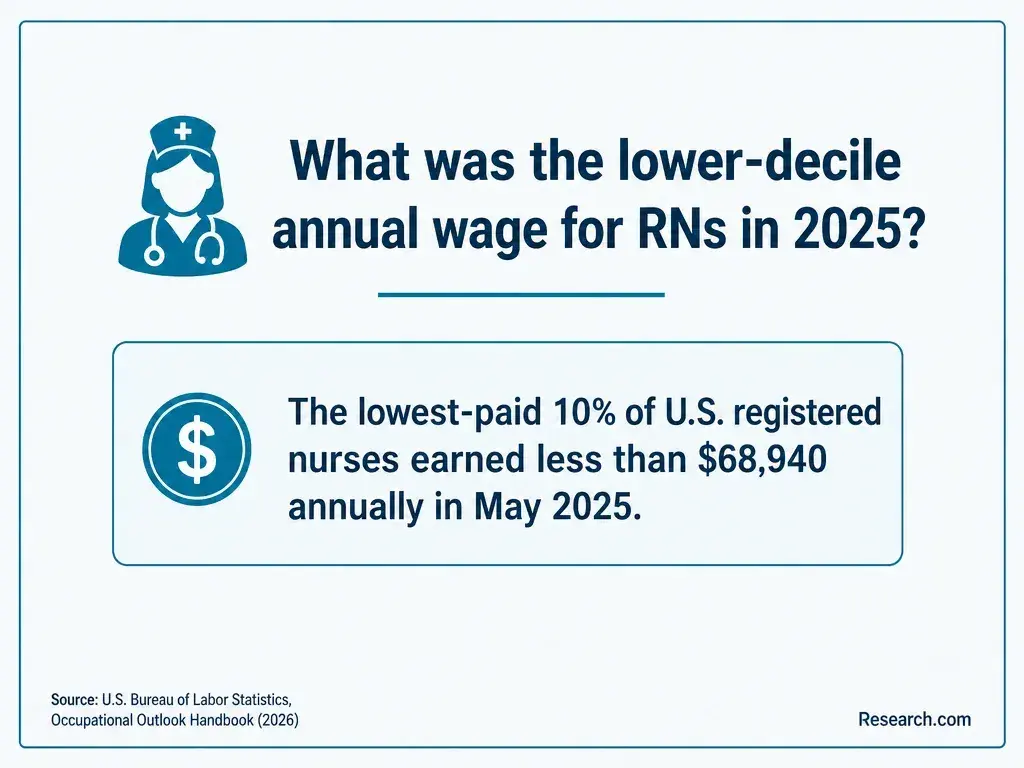
Salary depends on the actual position, setting, region, contract length, and experience. The U.S. Bureau of Labor Statistics reports occupational wage data for nursing instructors and teachers, postsecondary, but that category does not describe every hospital educator, NPD specialist, adjunct instructor, or preceptor. Its occupation-wide wage figures should not be treated as an offer or as the salary earned by everyone with an MSN or doctorate. Compare local postings with the hours, benefits, and duties attached to each job.
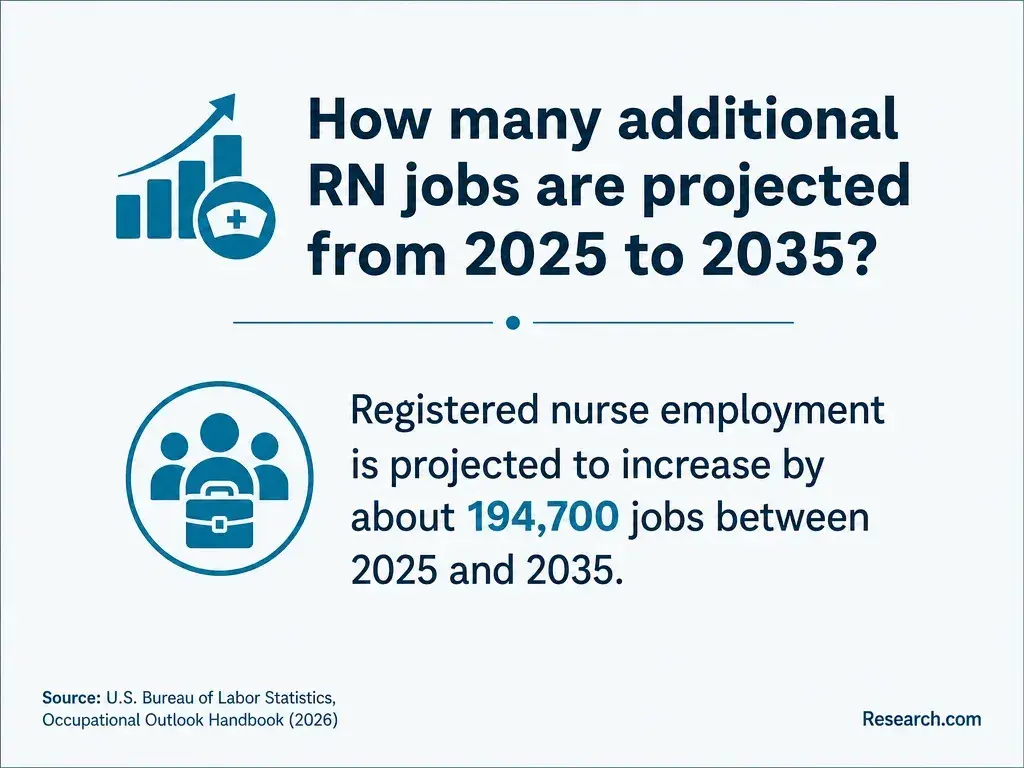
Academic hiring and health-system staff development also respond to different pressures. A school may need instructors for specific courses and clinical sites; an employer may need orientation capacity or support for a practice change. Neither need guarantees an opening for a newly credentialed applicant. Ask prospective employers whether they require prior teaching, specialty experience, scholarly work, or demonstrated program-evaluation skills.
For someone entering nursing from another field, the path is longer than a move between teaching jobs held by an experienced RN. Non-nursing bachelor's to direct-entry MSN options address initial nursing preparation; completing such a program does not itself confer an RN license or make a graduate competitive for every educator position. Build licensed practice and credible teaching evidence before projecting an educator salary.
Other Things You Should Know About Nursing
Yes. Ask about approved preceptor assignments, skills instruction, simulation support, or a limited teaching appointment. Seek feedback on how you explain, observe, and assess learning - not just whether you enjoy presenting.
It depends on the job. Some maintain clinical assignments or demonstrate care; others primarily design and coordinate learning. Confirm clinical duties, scheduling, and competency expectations in the position description.
Bring a concise, de-identified example of a lesson or learning plan, its objectives, your assessment approach, and what you would revise. Obtain permission before sharing employer materials or any patient-related information.
Ask who the learners are, how teaching time is protected, what support new educators receive, and how performance is evaluated. Compare those answers with your preferred balance of instruction, clinical work, administration, and scholarship.
- Nursing Professional Development Evidence-Based Practice | nih.gov https://www.ncbi.nlm.nih.gov/books/NBK589676/
- Nurse educators' professional practice attributes and its... - PMC https://pmc.ncbi.nlm.nih.gov/articles/PMC10578536/
- Roles and Responsibilities | CDC Continuing Education (CE) https://www.cdc.gov/continuing-education/php/roles-and-responsibilities/index.html
- Nurse Educator Roles: Career Paths & Responsibilities | Missouri Baptist University (Mobap) https://www.mobap.edu/news/inside-the-roles-of-todays-nurse-educators/
- Academic freedom meets accreditation | sciencedirect.com https://www.sciencedirect.com/science/article/pii/S155730872600082X
- Bridging Clinical Expertise and Pedagogy: The Dual Role of Nurse Educator | Texas A&M College of Nursing https://nursing.tamu.edu/degrees/msn-education/blog/clinical-expertise-pedagogy.html
- What is Nursing Professional Development? | snhu.edu https://www.snhu.edu/about-us/newsroom/health/what-is-nursing-professional-development
- What Is the Role of Nurse Educators in Hospital Settings? | walsh.edu https://online.walsh.edu/blog/role-of-nurse-educators-in-hospital-setting