2027 Machine Learning Master's Programs With Bridge or Foundation Courses

Co-Founder and Chief Data Scientist
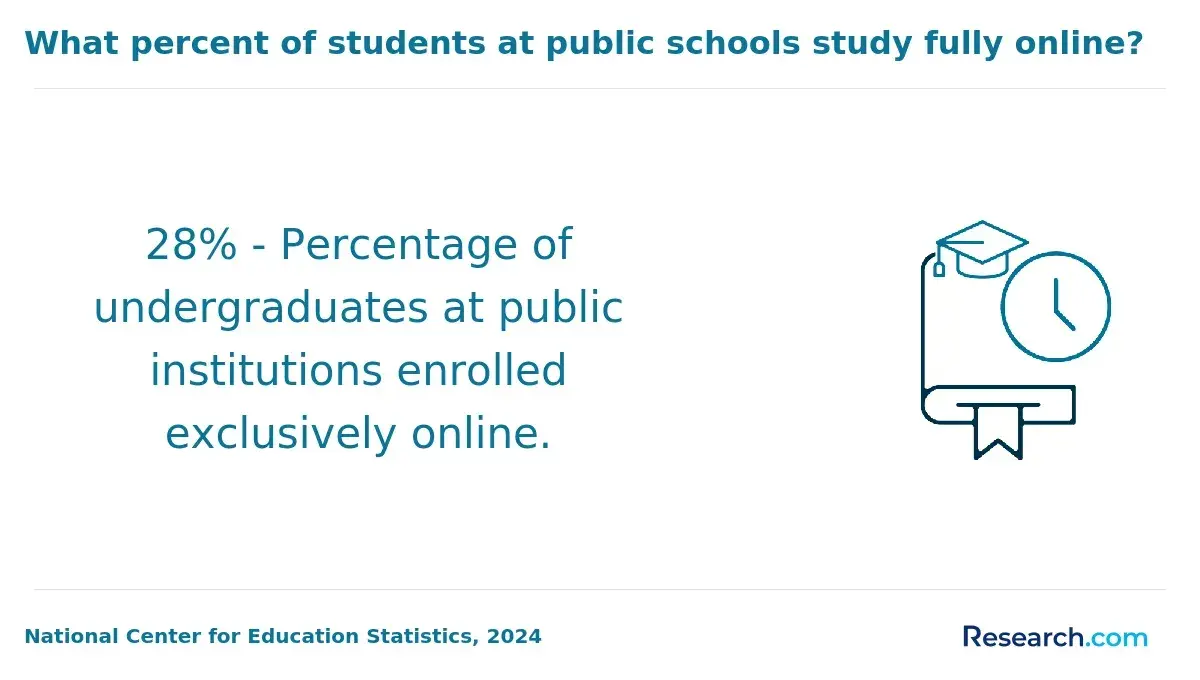
Facing gaps in prerequisite knowledge can block access to master's programs in machine learning, especially for career changers and those with related but incomplete backgrounds. Programs that embed bridge or foundation courses offer a combined pathway, avoiding separate preparatory steps. This integration matters as enrollment in online graduate programs surged 12% in recent years, reflecting growing demand for flexible options that balance career commitments with upgrading skills, according to the National Center for Education Statistics.
Evaluating admission models, credit requirements, and financial aid eligibility helps applicants navigate tradeoffs between conditional and full admission, overall costs, and realistic career outcomes in this evolving landscape.
Key Things to Know About Machine Learning Master's Programs With Bridge or Foundation Courses
- Bridge courses extend total program length, increasing cost and time investment; however, they enable candidates lacking direct technical backgrounds to meet core prerequisites without separate credentials, aligning admission timelines with workforce entry.
- Employers increasingly value graduates from integrated programs combining foundation and advanced machine learning topics, reflecting a preference for practical skill sets validated by consistent credential recognition in competitive hiring markets.
- Conditional admission policies tied to prerequisite credit completion enhance access, especially for working adults balancing employment, but may delay full program participation and financial aid eligibility, affecting enrollment and completion pacing.
What are machine learning master's programs with bridge or foundation courses, and who are they designed for?
Machine learning master's programs with foundation courses address a critical bottleneck: candidates lacking prerequisite knowledge that traditional master's programs insist upon before admission. Unlike standard pathways that expect proficiency in programming, calculus, and statistics, these integrated programs eliminate the barrier for career changers and recent graduates from adjacent fields, enabling a single-degree trajectory rather than requiring a separate post-baccalaureate certificate or an additional bachelor's degree.
For example, a professional shifting from finance to machine learning can bypass the costly and time-consuming step of re-earning foundational competencies externally by enrolling in a program embedding these essential skills alongside graduate-level coursework.
This route carries practical tradeoffs, including an extended program duration and the need to balance foundational learning with advancing core topics, but it streamlines credentialing and financial aid eligibility and reflects employer recognition of coherent, structured preparation.
- Purpose: These programs solve the challenge career changers and students from unrelated undergraduate majors encounter when attempting to enter machine learning graduate study-eliminating the need for separate post-baccalaureate certificates or second bachelor's degrees.
- Structure: Foundation courses usually precede or run concurrently with core master's classes, providing the technical grounding necessary for advanced topics while maintaining progress toward the graduate degree.
- Program Length: Because of the added foundational coursework, these programs often extend beyond the typical 1.5 to 2 years, sometimes by a semester or more, depending on course sequencing and enrollment pace.
- Admission Conditions: Programs may offer conditional admission status predicated on successful completion of foundation courses, rather than full admission contingent on prior credentials.
- Institutional Offering: A diverse array of accredited universities offer this structure, frequently within online or hybrid formats to accommodate working professionals.
- Target Audience: Ideal for career changers from fields like forensic careers and others, recent graduates from adjacent but not machine learning-aligned majors, and professionals unable to interrupt their careers for separate credentialing who seek a streamlined, cohesive master's pathway.
Which accredited U.S. universities offer machine learning master's programs with built-in bridge or foundation courses?
Choosing a master's program in machine learning with integrated bridge or foundation courses is a critical strategy for career changers and professionals lacking traditional prerequisites, as it directly affects time to credential, financial investment, and employability readiness. Opting for programs with embedded foundational coursework reduces the risk of enrollment delays and mitigates the added burden of separate prerequisite studies, which often disrupt working professionals' career momentum.
Public research universities and private nonprofit institutions located in technology-rich regions tend to provide the most robust and formally structured integrated pathways. Smaller teaching-focused colleges rarely offer such comprehensive bridges due to resource constraints and faculty specialization challenges.
- University of Texas at Austin: Offers a data science master's featuring bridge courses in programming and statistics with conditional admission, enabling applicants with quantitative but nontraditional backgrounds to build essential skills before advancing.
- University of Illinois Urbana-Champaign: Includes a preparatory track within its computer science master's that focuses on foundational machine learning and algorithms, balancing research rigor with practical access for students lacking prerequisites.
- University of Washington: Provides an MS in machine learning with conditional admission whereby students complete foundation modules in linear algebra and probability relevant to industry expectations.
- Carnegie Mellon University: Integrates tailored foundation tracks for those transitioning from unrelated STEM fields, combining bridge coursework with intense graduate-level seminars early in the program.
- University of Southern California: Embeds prerequisite courses in the initial semester of its machine learning master's, facilitating a smoother transition for nontraditional applicants without requiring separate prerequisite completion.
- Northeastern University: Emphasizes cohort-based, practical foundational programming to equalize preparation for students with diverse academic backgrounds.
- Georgia Institute of Technology (Online): Online MSCS offers bridge courses in math and programming fundamentals to accommodate professionals without traditional prerequisites, emphasizing flexible pacing.
- University of Illinois Urbana-Champaign (Online): Mirroring on-campus offerings, the online master's integrates foundation modules to support working professionals' schedules within one tuition framework.
- Southern New Hampshire University: Provides data science master's programs with embedded computer science foundations, prioritizing accessibility and affordability for learners from non-technical fields.
Prospective applicants must verify bridge and foundation course availability and conditions through official program websites, regional accreditation databases, and IPEDS records rather than relying on third-party sites that often have outdated information. These prerequisite structures are frequently labeled inconsistently-as "conditional admission," "prerequisite modules," or embedded coursework-and can vary significantly between academic catalogs. Direct consultation with admissions offices is essential to clarify credit implications, financial aid eligibility, and exact admission status, ensuring alignment with both career objectives and practical constraints.
What specific bridge or foundation courses are commonly required before full admission to a machine learning master's program?
Bridge or foundation courses required before full admission to a machine learning master's program often reflect critical gaps between an applicant's prior preparation and program prerequisites. These courses function not simply as remedial work but as essential academic leveling to ensure graduate-level success in a highly quantitative and computational field.
For example, a career changer from a humanities background may face a substantially broader set of foundational requirements than a recent mathematics graduate whose coursework already aligns closely with machine learning's core demands. Recognizing this variation is crucial because the extent and nature of these requirements directly affect total program length, cost, and eligibility for financial aid, making it a key consideration for non-traditional entrants.
- Discipline-Specific Foundations: Core prerequisites typically include mathematics subjects like linear algebra, calculus, and probability and statistics, alongside programming languages such as Python or Java and foundational data structures needed for algorithmic thinking and model development.
- Graduate Readiness Courses: Some programs also mandate courses in technical communication, research methodologies, or introductory data science topics to bridge gaps in academic skills crucial for navigating graduate studies and research rigor.
- Admissions Evaluation: Institutions commonly determine needed bridge courses via detailed transcript audits, placement tests, or standardized criteria, which prospective students should inquire about to gauge their prerequisite burden before committing.
- Variation by Background and Institution: Accreditation standards and program design heavily influence curricular requirements, resulting in wide disparities between programs; those with STEM-aligned undergraduate degrees usually face fewer or no foundation requirements compared to applicants from unrelated fields.
- Financial and Time Implications: Extensive foundation coursework can raise total costs and prolong completion timelines since these courses often carry full graduate tuition and credit load, influencing both affordability and career pacing.
- Pre-Admission Questions: Prospective students need to clarify whether bridge courses affect full admission status, if early or conditional enrollment is possible, and how these courses integrate with their degree plans to avoid unforeseen delays.
When evaluating programs, learners should also consider cost-efficient pathways such as the cheapest masters degree online options that integrate prerequisite courses without requiring separate post-baccalaureate enrollment. This approach can streamline transition timelines and minimize interruptions to ongoing careers while satisfying the rigorous foundational requirements essential for meaningful entry into advanced machine learning studies.
How do bridge or foundation courses in machine learning master's programs differ from a traditional post-baccalaureate or second bachelor's degree?
Choosing between a machine learning master's program with integrated bridge courses, a post-baccalaureate certificate, or a second bachelor's degree fundamentally shapes how quickly and efficiently non-traditional students can enter the field. For working professionals or career changers lacking the prerequisite background, the embedded bridge pathway offers a streamlined progression by combining foundational content with graduate coursework under one degree umbrella.
This arrangement often reduces total time to credential and increases financial aid eligibility compared to tackling prerequisites separately before graduate study.
- Program Structure: Bridge courses are woven into the master's curriculum, allowing conditional admission and continuous progression; post-baccalaureate certificates are standalone, focusing exclusively on prerequisites; second bachelor's degrees require comprehensive undergraduate coursework, absorbing more time and effort.
- Time to Credential: Completing bridge courses within the master's shortens entry compared to adding one to three years via post-baccalaureate or second bachelor's routes, which can delay workforce entry significantly.
- Cost and Financial Aid: Integrated master's programs generally qualify for full financial aid, unlike many post-baccalaureate certificates and second bachelor's degrees, which often lack sufficient aid options for returning students.
- Credential Recognition: Employers and licensing bodies tend to prioritize master's degrees over certificates or additional bachelor's diplomas, simplifying credential evaluation and enhancing marketability.
- Flexibility for Working Adults: Bridge-inclusive master's programs typically offer part-time and online options, accommodating career continuity; contrastly, post-baccalaureate and second bachelor's often require full-time, campus presence, limiting flexibility.
- Competitive Admissions: Highly selective master's programs may prefer applicants with completed post-baccalaureate prerequisites rather than those admitted conditionally via bridge courses, affecting admission strategy.
- Comprehensive Planning: Prospective students should analyze total credit demands, combined study duration, and aid eligibility holistically before choosing their pathway.
A graduate who transitioned from an unrelated undergraduate field described their experience applying to a selective machine learning master's with bridge courses. During rolling admissions, they hesitated committing until missing final clarity on conditional acceptance terms and prerequisite fulfillment timelines.
The embedded bridge structure minimized overall time but introduced uncertainty about admission guarantees, prompting them to carefully monitor communications and re-evaluate backup plans. Ultimately, the integrated path's flexibility allowed enrollment without a multi-year delay associated with pursuing a second bachelor's or separate post-baccalaureate certificate, though the decision involved balancing admitted status uncertainty against time-to-degree priorities.
What are the admission requirements for machine learning master's programs that include a bridge or foundation component?
Admission requirements for master's programs with a bridge or foundation component are notably more accommodating than traditional machine learning master's pathways, which typically require significant prior exposure to machine learning or related quantitative disciplines. This flexibility caters to applicants who lack direct prerequisites but aim to enter the field, such as career changers or recent graduates from adjacent fields.
For example, a professional shifting from data analysis to machine learning may find bridge programs more accessible, but should anticipate a demanding foundational curriculum to compensate for missing background.
- Undergraduate GPA Threshold: While standard programs often insist on a competitive GPA-commonly around 3.0 or higher-bridge programs may accept slightly lower GPAs, reflecting their openness to diverse academic histories.
- Required Documents: Applicants must submit transcripts, recommendation letters, and personal statements; bridge options may emphasize demonstrated quantitative aptitude or career motivation to offset limited technical experience.
- Standardized Test Policies: GRE requirements vary, with some bridge programs waiving exams to reduce entry barriers, whereas others retain them to assess essential analytical skills.
- Professional Experience Requirements: Unlike some conventional routes that expect relevant work experience, many bridge-inclusive programs welcome early-career students and those pivoting professionally, focusing on potential rather than prior ML roles.
Bridge pathways often employ conditional admission, requiring students to meet specific academic benchmarks during foundational coursework before advancing fully into the master's sequence. This provisional status can limit financial aid options and credit transfer flexibility. Alternatively, direct admission to a combined program grants full matriculation upfront but demands managing an accelerated and integrated workload.
Students entering bridge programs should prepare for varied cohort skill levels and an intensive pace designed to rapidly build requisite competencies. This model aligns well with non-traditional learners balancing work or lacking formal ML preparation, yet success depends on solid quantitative reasoning and programming pre-skills to navigate the bridge phase and progress through graduate study effectively.
What is the minimum GPA requirement for machine learning master's programs with bridge or foundation courses, and how does prior academic background affect eligibility?
Bridge or foundation course-integrated master's programs in machine learning often accept applicants with more varied academic histories than traditional programs, reflecting the reality that many career changers or adjacent-field graduates must first build core competencies. The minimum GPA requirement typically falls between 2.75 and 3.0 on a 4.0 scale, which is notably lower than the 3.0 or higher commonly expected by standard machine learning master's programs.
This lowered threshold recognizes the added coursework intensity and foundational skill building embedded in these pathways. For example, a candidate with a 2.8 GPA in a non-STEM undergraduate major can gain admission conditional on completing foundational math and programming classes, allowing them a practical entry point without sacrificing rigor.
Evaluating prior academic background alongside GPA is crucial in these admissions decisions. Applicants with degrees in STEM or quantitatively rigorous fields often face stricter cutoffs, as they are expected to enter the core machine learning curriculum ready to advance rapidly. Conversely, those from humanities or social science disciplines may rely on bridge courses to mitigate gaps and are assessed with a more holistic lens that weighs professional experience and demonstrated skills.
While GPA is significant, many programs balance it with recommendation letters, work experience, and personal statements-especially for applicants lacking direct machine learning preparation. Candidates near or below minimum GPA requirements should consider conditional admission options, targeted professional certifications, or additional quantitative coursework before applying. This approach addresses workforce realities where employers increasingly value demonstrable skills alongside academic credentials, preventing delays or probation risks during graduate studies.
- Minimum GPA Requirements: Most accredited programs require an undergraduate GPA between 2.75 and 3.0, lower than traditional master's programs, reflecting the foundational support offered by bridge courses.
- Influence of Prior Academic Background: STEM graduates often encounter stricter GPA standards, while non-STEM candidates leverage bridge programs and holistic evaluation criteria emphasizing diverse experiences.
- GPA in Context: Admissions weigh GPA with professional experience and recommendations; proven math and programming competencies can offset slightly lower GPAs.
- Conditional Versus Full Admission: Programs frequently grant conditional admission to applicants near GPA cutoffs, contingent on bridge coursework completion to ensure mastery of fundamentals.
- Alternative Pathway Considerations: Lower GPA applicants benefit from professional certifications, relevant job experience, or extra quantitative study to bolster applications and reduce academic risks.
Applicants evaluating minimum GPA requirements for machine learning master's programs with bridge courses will find these metrics essential for realistic self-assessment. This nuanced understanding is similarly vital when considering the impact of prior academic background on eligibility for machine learning bridge programs. For those balancing professional commitments, a single integrated degree program often obviates the need for a separate post-baccalaureate credential, enhancing employability without undue delay.
In scenarios where applicants also explore complementary fields, such as marketing or social media, cross-disciplinary credentials might be advantageous. For example, professionals might examine broader digital skill sets alongside technical mastery in machine learning, as evidenced by resources like social media degree programs, which intersect increasingly with data-driven marketing strategies.
How many additional credit hours do bridge or foundation courses add to a machine learning master's program, and how does this affect total cost and time-to-degree?
Master's programs in machine learning that incorporate bridge or foundation coursework typically add between 9 and 18 credit hours to the standard graduate curriculum, depending largely on accreditation requirements and the expected academic preparation of accepted students.
Programs designed for applicants lacking strong backgrounds in mathematics, statistics, or computer science usually mandate more leveling coursework, which can nearly double the credit load compared to direct-entry students. This distinction often hinges on whether the bridge courses are integrated into the degree credits or imposed as separate, non-degree prerequisites.
Each additional credit hour increases tuition proportionally, meaning a program charging $1,000 per credit could add $9,000 to $18,000 or more solely for bridge courses. Beyond direct tuition, these extra credits extend the time-to-degree, particularly for part-time students balancing professional commitments.
This prolongation incurs indirect costs such as lost income opportunities, ongoing living expenses, and deferred labor market access, which cumulatively outweigh initial differences in per-credit rates. Consequently, applicants should assess total credit requirements inclusive of bridge courses rather than relying exclusively on advertised per-credit tuition when comparing programs.
Applicants must also clarify whether bridge course credits apply toward the master's degree or must be completed externally, as this affects eligibility for financial aid and overall credential timelines. Failing to account for these factors can lead to unexpected financial and temporal burdens that offset the benefits of conditional admission pathways.
- Primary Delivery Formats: Online, hybrid, and on-campus options tailored to accommodate diverse schedules and learner needs.
- Admission Requirements: Conditional offers linked to prerequisite completion versus full admission contingent upon demonstrated readiness.
- Program Length Impact: Additional credits typically prolong degree completion by one to two semesters, influencing working students' plans.
- Career Outcomes: Integrated bridge curricula aim for comprehensive preparation but require longer commitment before job entry.
One graduate recounted that during a rolling admissions cycle, uncertainty over the exact bridge credit requirements delayed her enrollment decision. Although she qualified academically, the need to complete up to 15 additional credits extended her expected graduation timeline by nearly a year.
The prospect of increased tuition coupled with postponed full-time employment led her to weigh program options carefully, opting eventually for a school where some foundation courses counted toward degree credit. This strategic choice mitigated costs and shortened her time-to-degree, illustrating the critical importance of verifying how bridge coursework integrates with degree requirements early in the application process.
What types of students are best suited for machine learning master's programs with bridge or foundation courses?
Students best suited for machine learning master's programs with bridge or foundation courses are those who face demonstrable gaps in prerequisite knowledge but possess the academic aptitude and motivation to bridge them within a single degree path.
For example, a recent graduate with a strong GPA in computer science who lacks formal machine learning coursework can accelerate entry into the field without pursuing separate post-baccalaureate programs. This integrated approach also benefits working professionals seeking flexible entry options with varying academic backgrounds who cannot pause their careers for additional credentials.
- Academic Background: Ideal candidates maintain a strong undergraduate GPA in STEM or adjacent disciplines such as mathematics, statistics, or engineering but lack specific machine learning prerequisites necessary for direct program admission.
- Professional Motivation: Those aiming to transition quickly into machine learning roles-often career changers or recent graduates-who value gaining marketable expertise within an accelerated, single-program timeframe.
- Flexibility: Applicants with financial resources and schedule adaptability willing to absorb the extended duration and incremental tuition costs of foundation courses, acknowledging these may delay total program completion.
- Aptitude for Graduate Work: Candidates demonstrating analytical skills and commitment through prior academic or professional experiences, indicating readiness to meet both foundational and advanced program rigor.
Conversely, applicants with significant prior machine learning coursework risk redundant leveling requirements, diminishing the value of bridge components. Likewise, those targeting elite career paths where employers prioritize credentials from highly selective programs without conditional admissions may be better served pursuing direct entry. An honest self-assessment of one's academic profile, financial runway, career timeline, and long-term goals is critical to determine whether a bridge-integrated machine learning master's degree offers the best return on investment.
Enrollment data reveals a rising share of students prefer programs combining foundation and graduate-level coursework, reflecting practical demand for flexible pathways into advanced machine learning fields. For those navigating admissions and career decisions in machine learning, consulting comprehensive resources on most in demand master's degrees can provide additional actionable insights tailored to evolving workforce realities.
Students seeking flexible entry options with varying academic backgrounds are ideal candidates for machine learning master's programs with bridge or foundation courses.
Applicants aiming to transition into machine learning from non-technical fields benefit most from programs offering foundational coursework integrated within the master's curriculum.
Are bridge or foundation courses in machine learning master's programs offered fully online, on-campus, or in a hybrid format?
Bridge or foundation courses in machine learning master's programs vary significantly in delivery format, a factor that has concrete implications for accessibility, cost, and student outcomes. Working professionals who require flexible scheduling often find fully online asynchronous formats advantageous, allowing them to balance employment and learning. However, this format can limit interaction and hands-on experience, which are critical for building the practical skills employers expect.
Conversely, synchronous live-online options enhance engagement but restrict flexibility through fixed class times. Hybrid courses offer a middle ground with some on-campus sessions that benefit skill acquisition but introduce travel and scheduling challenges-a notable consideration for those evaluating hybrid and on-campus foundation courses in machine learning graduate programs.
- Fully Online Asynchronous: Programs provide recorded lectures and self-paced assignments, maximizing geographic accessibility but potentially compromising depth in practical labs or collaborative projects.
- Synchronous Live-Online: Real-time virtual classes allow immediate feedback and peer interaction, improving comprehension but requiring adherence to scheduled sessions.
- Hybrid: Combines online content with limited in-person components, supporting experiential learning while imposing episodic campus attendance burdens on remote or working students.
- On-Campus Required: Some programs mandate in-person attendance during bridge courses for access to specialized labs or software environments, raising costs and limiting options for those outside the institution's region.
Importantly, the delivery mode for bridge courses often differs from the master's core curriculum. Programs advertised as fully online may nonetheless require on-campus residency or synchronous participation during foundational study, a mismatch that disrupts plans for many students prioritizing geographic and scheduling flexibility. Those pursuing machine learning master's programs with bridge courses online should verify the format for every program phase before enrollment to avoid unexpected time or financial commitments.
Quality and depth in foundational instruction vary with delivery format. Fully asynchronous courses must compensate for reduced face-to-face contact with robust virtual labs, interactive problem sets, and instructor accessibility to prepare students thoroughly for graduate-level rigor. Without these supports, students risk superficial preparation, which can hinder success in advanced machine learning coursework.
Prospective students evaluating these options should also consider career outcomes and employer expectations. Mastery of practical skills, reinforced by direct interaction, often distinguishes candidates in hiring decisions within highly technical fields. For individuals shifting careers or returning after unrelated undergraduate studies, ensuring a rigorous and comprehensive bridge phase tailored to their background becomes essential.
Moreover, students in adjacent fields or career changers may face cumulative prerequisite credits or conditional admission status tied to foundation course performance. These variables influence total cost of attendance and time to degree completion, factors that underscore the importance of transparent program structures. Financial aid eligibility and credential recognition further complicate the decision matrix, emphasizing the value of actionable, detailed program inquiry.
Given this complexity, those aiming to enter machine learning via integrated graduate pathways must align educational formats with personal constraints and professional goals. This scrutiny extends beyond academic fit-it involves realistic assessment of logistical tradeoffs and long-term implications for employability.
For example, healthcare systems increasingly rely on data science specialists, heightening demand across interdisciplinary fields. Similarly, understanding roles like a child life specialist salary highlights how niche analytics skills gained through machine learning graduate training intersect with diverse career trajectories requiring tailored educational pathways.
What is the average cost of the bridge or foundation component in machine learning master's programs, and how does it affect total program investment?
Bridge or foundation components in machine learning master's programs significantly affect total program costs and, consequently, the return on educational investment for non-traditional applicants. Institutions vary their pricing strategies: some charge bridge courses at the same graduate per-credit rate, generally between $500 and $1,200 per credit hour; others offer reduced rates for these prerequisite credits, or apply a flat fee that can simplify budgeting but might not be cost-effective if the credit requirements are high.
For working professionals who cannot pause their careers, an integrated bridge pathway can streamline progression, reducing risks tied to transferring credits or funding eligibility that occur when prerequisites are completed externally.
Pricing Models: Most programs price bridge credits per credit hour, frequently at rates on par with or slightly below those for core graduate coursework, while flat fees, although less common, may impose higher overall costs for students with extensive prerequisites.
Cost Range: Bridge components generally contribute an additional $5,000 to $20,000 to tuition, with variation driven by program design and credit loads.
Total Program Cost: Combining bridge and core graduate credits raises total tuition well above typical machine learning master's fees, which range from $30,000 to $60,000; however, integrated pathways often improve financial aid access and reduce logistical barriers.
Hidden Expenses: Additional fees-including technology, proctoring, course materials, and practicums-may add several hundred to thousands of dollars beyond tuition during the foundation phase.
Financial Planning: Prospective students should obtain a fully itemized cost-of-attendance estimate to avoid unexpected expenses.
Comparative Value: Evaluating bridge-inclusive master's programs alongside alternate routes, such as post-baccalaureate certificates plus standard master's degrees or second bachelor's plus master's, helps candidates align costs and timelines with their backgrounds and career goals.
What Graduates Say About Machine Learning Master's Programs With Bridge or Foundation Courses
- Augustus: "With a full-time job and a family to support, my main constraint was time. I chose a master's program with a foundation course because it allowed me to build the basics quickly without sacrificing my current commitments. After graduation, I landed a data analyst role where the portfolio I developed during the internship proved more valuable than just the degree alone."
- Antonio: "Financial limitations made a traditional master's program out of reach, so I opted for one with bridge courses that fit my budget and schedule. The decision paid off when I secured a remote internship that enhanced my skills and connected me to hiring managers. However, I found that without additional certifications, my salary growth plateaued despite strong technical abilities."
- Julian: "I pivoted from marketing to machine learning but was cautious about workload and burnout. The program with foundation classes helped me transition smoothly, focusing on practical skills employers value, like hands-on projects. While I faced stiff competition for research-heavy roles, I was able to find a mid-level position emphasizing applied machine learning in industry settings."
Other Things You Should Know About Machine Learning Degrees
The bridge or foundation courses typically require a minimum grade threshold, often a B or better, since these classes are designed to ensure students possess the necessary quantitative and programming skills. Falling short usually means repeating courses or academic probation, which delays progress into advanced machine learning topics. Prospective students should prioritize programs with clearly defined, attainable milestones because stringent gatekeeping in this phase directly impacts timely completion and overall workload management.
Yes, most machine learning master’s programs offering bridge or foundation courses in 2027 are accredited by relevant educational authorities. Accreditation ensures that the program meets specific quality standards and academic requirements, which are recognized by employers, licensing boards, and professional associations globally.
Graduates from programs featuring bridge courses generally show comparable early-stage employment rates but may lag slightly in earning potential or placement at elite firms, reflecting employers' preference for candidates with stronger foundational backgrounds. Licensure or certification pass rates are less standardized in machine learning but can serve as proxy indicators of graduates' technical readiness. Candidates should weigh these outcomes against their own preparedness and career targets-programs with comprehensive support during bridge phases typically yield better workforce integration.
Decision-makers must balance several factors: the amount and content of prerequisite material in the bridge phase, overall cost including financial aid availability for foundation courses, and the program's track record in job placement. Prioritizing programs that integrate bridge courses seamlessly into the master's curriculum, offer transparent admission standards, and maintain strong employer engagement leads to better post-graduation outcomes. Students who need flexibility or are career changers should favor programs with tailored advising and practical project experience over those emphasizing theoretical groundwork alone.
References
- How an Online Master’s in AI Can Prepare You for the Future of Tech https://www.ucumberlands.edu/blog/how-online-masters-ai-can-prepare-you-future-tech
- Second bachelors or Masters https://talk.collegeconfidential.com/t/second-bachelors-or-masters/3643598
- Is a Master’s Degree in Machine Learning Worth It? | CSU Global https://csuglobal.edu/blog/masters-degree-machine-learning-worth-it
- What is the Cost to Deploy and Maintain a Machine Learning Model? https://www.phdata.io/blog/what-is-the-cost-to-deploy-and-maintain-a-machine-learning-model/
- Why I got a Master's Degree for AI / ML https://accessibleai.dev/post/why-i-got-a-data-analytics-masters/
- Masters Artificial Intelligence https://www.udacity.com/masters-artificial-intelligence
- Master of Science in Artificial Intelligence and Machine Learning https://walshcollege.edu/programs/master-of-science-artificial-intelligence-and-machine-learning/
- Number of Credits for a Master's Degree in Education https://creditsforteachers.com/the-necessary-number-of-credits-for-a-masters-degree-in-education/
- Top 25 Online Master’s In AI Programs for 2026 - Programs.com https://programs.com/programs/online-masters-in-ai/
- Master’s in AI Online: Today’s Best Programs https://www.onlinemastersdegrees.org/best-programs/computer-science/artificial-intelligence-ai/