2027 Cost per Credit for Online Machine Learning Master's Programs: Tuition Comparison Guide

Co-Founder and Chief Data Scientist
Choosing an online machine learning master's program often hinges on understanding per-credit tuition beyond headline prices. Variations between public, private, and for-profit institutions, alongside hidden fees and residency requirements, complicate affordability assessments.
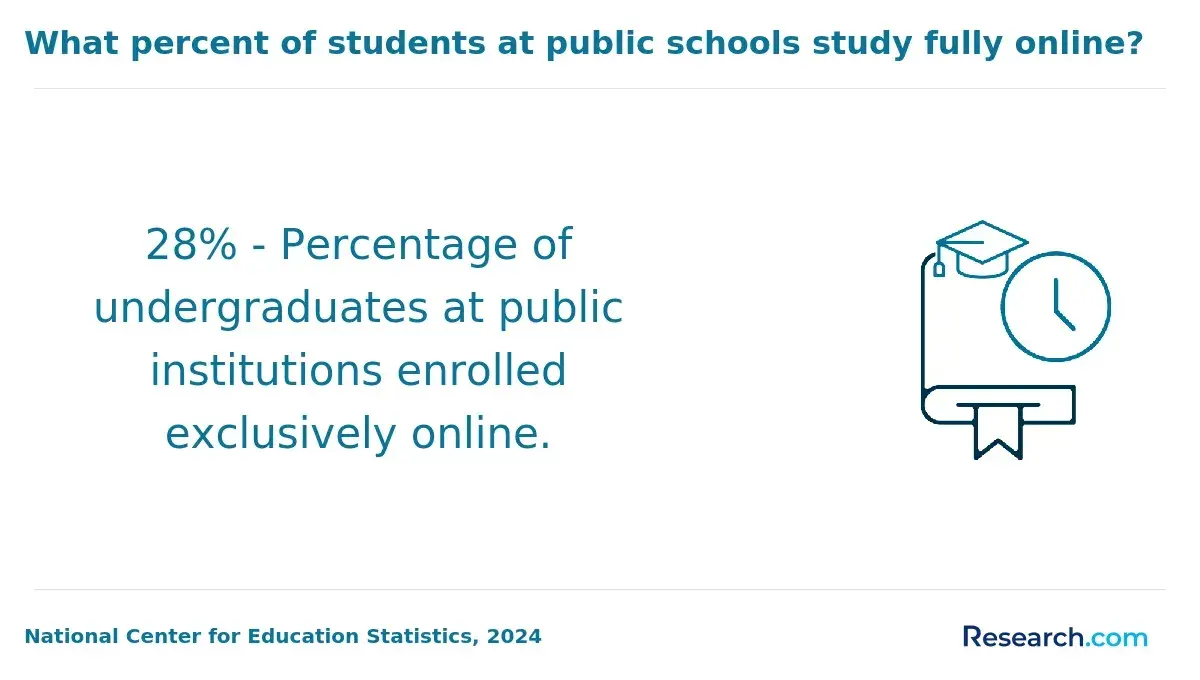
Awareness of these nuances is critical as enrollment in online graduate programs grew by nearly 12% in 2024, reflecting shifting adult learner priorities toward flexibility and career alignment, according to the National Center for Education Statistics. This growth highlights the need to evaluate not only sticker price but also how accreditation status, financial aid options, and delivery formats affect total investment and professional recognition.
Key Things to Know About the Cost per Credit for Online Machine Learning Master's Programs
- Per-credit tuition varies sharply between public, private nonprofit, and for-profit institutions, demanding careful tradeoff analysis as lower sticker prices may coincide with fewer networking or research opportunities.
- Accreditation and licensure directly impact employer recognition; programs lacking regional accreditation risk diminishing degree value in competitive Machine Learning job markets despite lower costs.
- Hidden fees and residency policies often elevate the true per-credit cost, with 2024 National Center for Education Statistics data showing online enrollments growing 12%, reflecting increased demand for flexible timing but also complex cost structures.
What Is the Average Cost per Credit Hour for Online Machine Learning Master's Programs, and How Does It Compare Across Institution Types?
Evaluating online machine learning master's programs by average cost per credit hour provides a sharper lens on tuition affordability than total sticker price alone. This metric reflects the direct cost impact of coursework, which is crucial since credit requirements vary-some programs require 30 credits, others 45 or more-meaning total tuition can obscure real per-unit value.
For instance, a professional funding their education independently must weigh whether paying $700 per credit at a public university for fewer credits yields better cost-efficiency than a higher-priced private nonprofit program demanding more credits but offering stronger employer recognition. IPEDS data for recent academic cycles confirms public universities maintain the lowest average per-credit rates, often between $400 and $700 for in-state students.
Meanwhile out-of-state learners may encounter premiums that can more than double this rate, requiring careful residency status consideration. Private nonprofit institutions typically range $900 to $1,200 per credit. Private for-profit schools present the widest pricing variation-from about $600 up to $1,500+ per credit-reflecting less consistent accreditation and market positioning that can complicate employer acceptance and net value.
Variance between posted per-credit tuition and actual expenses frequently stems from additional mandatory program fees, technology surcharges, and institutional pricing models. For example, flat program fees can distort per-credit cost calculations for students accelerating coursework or needing additional credits, while scholarships and financial aid complicate net cost transparency, making list prices insufficient for fully informed comparisons.
Students must also consider how institutions' accreditation and reputation influence whether employers or certification bodies view their degree equivalently to traditional formats. This guide, therefore, analyzes key variables including:
- Institution Type: Dissecting public, private nonprofit, and private for-profit cost structures and their implications for perceived return on investment.
- Residency Impact: How state residency alters public university pricing and affects overall affordability.
- Hidden Fees: Mandatory technology, lab, or resource fees that inflate effective per-credit costs beyond sticker rates.
- Financial Aid Considerations: The role of scholarships and aid in modulating actual tuition burden.
- Accreditation and Licensing: The influence of institutional credentials on credential legitimacy in the job market.
By juxtaposing granular cost data with these operational insights, prospective students can transcend headline tuition figures to establish robust, realistic financial estimates before enrollment. Those drawn to affordability-focused choices may also benefit from exploring the cheapest CSWE-accredited online MSW programs, which illustrate similar pricing dynamics applicable across professional graduate degrees.
How Many Credit Hours Are Typically Required to Complete an Online Machine Learning Master's Program, and How Does That Affect Total Tuition?
Degree length significantly impacts the true financial investment required for an online machine learning master's program and, ultimately, the return on educational spending. While some programs minimize credit requirements for quicker completion, others extend credit loads, influencing both student time commitment and employer perceptions of thorough preparation.
The credit hours needed typically fall within a broad spectrum, shaped by multiple academic and professional factors. Many programs require between 30 and 45 credits, aligning with common graduate degree standards; however, specialized or research-intensive versions can demand up to 60 credits or more.
This disparity often reflects options like thesis versus non-thesis tracks, the inclusion of practicum or internship components, or institutional accreditation policies that control program depth and rigor.
- Credit Hour Range: Core program requirements generally span 30 to 45 credits, but comprehensive tracks with experiential learning or additional specialization push totals higher, sometimes doubling the credit load of shorter degrees.
- Tuition Multiplication Effect: Since tuition rates are frequently charged per credit, total tuition compounds with higher credit demands, making a program with a lower per-credit fee but larger credit load potentially more expensive overall.
- Practicum and Internship Credits: These experiential components are common and often come with mandatory fees or per-credit surcharges that increase the all-in cost beyond simple tuition calculations.
- Hidden Costs Impact: Fees for supervision, access to specialized labs, or software licenses tied to practicum or thesis work further inflate total expenditure, complicating direct cost comparisons.
- Cost Comparison Advice: Evaluating only per-credit tuition obscures full financial impact. Multiply required credits by per-credit costs, then add any flat fees or additional charges for accurate total cost.
- Example Calculation: For instance, a 36-credit program charging $800 per credit plus a $1,500 practicum fee totals (36 × $800) + $1,500 = $30,300, illustrating how experiential fees affect affordability.
This detailed credit and fee-based analysis empowers prospective students-whether recent graduates, career changers, or place-bound learners-to compare programs holistically. It emphasizes that a superficially cheaper per-credit rate may mask higher overall costs, highlighting the necessity of scrutinizing program demands alongside tuition to ensure an informed, value-driven investment in a machine learning graduate education.
Which Online Machine Learning Master's Programs Offer the Lowest Cost per Credit Hour Among Accredited Institutions?
Selecting the lowest cost per credit hour among accredited online machine learning master's programs involves balancing tuition with accessibility and additional fees that can significantly impact total expenses. For example, Georgia Institute of Technology offers a well-regarded online Master of Science in Computer Science specialization in machine learning at about $510 per credit for 30 credits, totaling roughly $15,300.
West Virginia University provides an online Master of Science in Data Science with a machine learning emphasis charging around $399 per credit for 33 credits, estimating tuition near $13,167. Out-of-state students must consider mandatory technology fees and minimum semester credit requirements to maintain financial aid eligibility.
Texas residents benefit from the University of Texas at Arlington's approximately $317 per credit rate for 30 credits (~$9,510), though non-resident fees nearly double, limiting affordability for many applicants outside Texas. Mississippi State University's data science track with a machine learning focus costs about $355 per credit over 30 credits (~$10,650), but additional enrollment and tech fees increase the real investment.
The University of Florida charges roughly $531 per credit for 30 credits (~$15,930) with no residency limits, although mandatory fees and material costs add to overall expenses. These tuition figures must be revisited regularly as they vary annually, with some programs requiring minimum credit loads or cohort enrollment that impact actual costs.
Therefore, verifying rates directly remains essential for cost-conscious candidates to build an accurate all-in estimate. Prospective students seeking the lowest cost per credit hour for online machine learning master's programs should consider these nuanced factors alongside tuition.
For a detailed comparison and further analysis of the cheapest online masters options, see cheapest online master's.
How Do In-State vs. Out-of-State Tuition Rates Apply to Online Machine Learning Master's Programs, and Which Schools Offer Flat Tuition Regardless of Residency?
In-state versus out-of-state tuition policies historically created a financial barrier for many online machine learning master's students, especially at public universities where non-resident rates could easily double those of residents. This pricing disparity results from the traditional state funding model, where public institutions favor state taxpayers.
However, responding to growing demand for accessible remote education, several universities now offer a flat tuition rate irrespective of residency. This shift reduces one major cost uncertainty and helps out-of-state candidates plan a more predictable budget, a notable advantage for those funding their own education or managing tight cash flow during career transitions.
The implications of residency-based tuition remain significant. Some states participate in regional compacts like WICHE or SREB that provide partial tuition relief to residents of member states, but these agreements rarely eliminate the premium for out-of-state online learners entirely.
Such variability in cost underscores the necessity for prospective students to confirm current tuition policies directly with the bursar or financial aid offices because residency rules and rates can fluctuate between academic years and are sometimes inaccurately represented online. Among the public universities that have adopted uniform, residency-neutral tuition pricing for online machine learning or closely related programs are:
- Georgia Institute of Technology: Applies a competitive flat per-credit tuition for all online master's students in machine learning disciplines.
- University of Florida: Offers online courses in machine learning with a single tuition rate regardless of student residence.
- University of Illinois Urbana-Champaign: Maintains equal tuition pricing for all online master's enrollees specializing in AI and related fields.
- Colorado State University: Provides consistent pricing for online programs in machine learning and data science, independent of residency.
- University of Minnesota: Charges a uniform tuition rate for its relevant online graduate programs, simplifying cost expectations.
Public universities that continue to apply in-state/out-of-state pricing create a financial tradeoff for out-of-state online students, potentially impacting program accessibility and return on investment. Such distinctions can shape student decisions profoundly, especially when balancing tuition against the anticipated value of credential portability and employer recognition.
An online master's graduate recalled navigating a rolling admissions process complicated by uncertainty over residency classification and tuition costs. Initially hesitant to finalize enrollment, the applicant waited for bursar confirmation to avoid an unexpected financial burden. The delay compressed their preparation window, adding pressure, but securing that clarity ultimately made the difference between taking the leap or deferring.
What Mandatory Fees Are Added to Per-Credit Tuition for Online Machine Learning Master's Programs, and How Much Do They Increase the Real Cost?
Tuition advertised per credit hour in online Machine Learning master's programs rarely captures the full financial commitment required. Mandatory fees such as technology, program-specific, and student services charges often increase the real cost by at least 10%, with some programs adding substantially more.
For example, a recurring annual technology fee around $1,200 combined with a $500 program fee over a two-year degree can tack on nearly $2,500 beyond tuition, inflating the effective per-credit price significantly. This difference impacts working professionals funding their own education and undergraduates calculating long-term debt.
- Technology Fees: These cover access to learning platforms, software licenses, and digital tools essential for online coursework, usually billed per credit or semester and accumulating over time.
- Program Fees: Charged by departments to support specialized resources, labs, or faculty involvement, these fees disproportionately affect technically demanding curricula common in machine learning.
- Student Services Fees: Required for campus-wide supports like career counseling, advising, library access, and wellness services, these fees often apply equally to online learners and can be several hundred dollars annually.
- Graduation and Capstone Fees: Separate from tuition, fixed fees associated with degree conferral and final projects can surprise those unprepared near program completion.
- Clinical or Practicum Surcharges: In less common cases involving fieldwork or hands-on components, extra fees compensate institutions for overseeing these experiences.
Institutions frequently bury these fees in fine print or provide only partial disclosure, complicating direct cost comparisons for prospective students. Without a detailed, consolidated fee schedule, evaluating programs solely on advertised tuition per credit risks underestimating the investment. Calculating an all-in per-credit cost that includes a prorated share of mandatory fees offers a clearer financial picture.
How Do Online Machine Learning Master's Program Costs Compare Between Public and Private Universities?
Per-credit costs for online machine learning master's programs reveal critical tradeoffs between public and private universities that influence both financial and professional outcomes for students. Public universities typically offer lower tuition rates due to state subsidization, legislative tuition caps, and economies of scale, which especially benefit in-state residents.
This structural advantage can result in significant savings for students aiming to maximize return on investment while pursuing self-funded education. However, out-of-state students often face tuition rates at public institutions that approach or even exceed prices charged by private nonprofits or for-profit providers.
- Cost Structure: Public universities leverage state funding to maintain more affordable per-credit rates, but this varies widely depending on residency and institutional policies. Conversely, private nonprofits and for-profits set higher sticker prices reflecting their independent funding models, though increasing market competition has caused some nonprofits to lower prices closer to public tuition.
- Value Considerations: Higher costs at private institutions can translate into smaller cohorts, lower faculty-to-student ratios, and stronger employer brand recognition. These factors may enhance networking, personalized learning, and career service support-elements that many employers increasingly weigh when assessing graduate credentials.
- Accreditation and Quality: Beyond cost, accreditation status and licensure eligibility are paramount. Some private programs hold specialized accreditations or industry partnerships that improve professional credibility and hiring prospects, underscoring the importance of evaluating program quality alongside price.
- Hidden Costs and Aid: Mandatory fees, technology surcharges, and required software must be included in the total cost estimate. Financial aid options, employer tuition assistance, and scholarships differ widely, affecting net costs and enabling nuanced budgeting for prospective students.
Working professionals considering geographic mobility or first-generation graduate students evaluating online options should weigh these financial and qualitative factors carefully. Those comparing online machine learning master's tuition comparison public vs private universities must build a comprehensive cost profile that integrates sticker price with program reputation and support mechanisms to inform an optimal enrollment decision.
For those also exploring career pathways beyond machine learning, resources on online finance degrees provide additional context on cost and value tradeoffs across disciplines.
Are There Online Machine Learning Master's Programs With Tuition Locked In at Enrollment, and How Does Tuition Lock Affect Long-Term Cost Planning?
Locking in tuition rates at enrollment can significantly reduce financial unpredictability for students in online machine learning master's programs. Without such guarantees, annually rising tuition can inflate the total cost beyond original expectations, disrupting personal budgeting and return-on-investment calculations.
Tuition locks typically differ in scope-some apply to an entire incoming cohort ensuring all students pay a fixed rate for the program, while others reset annually or cover a limited number of semesters. Maintaining the locked rate frequently requires continual enrollment without breaks, meeting pacing benchmarks, and avoiding administrative leaves that risk forfeiting the guarantee.
This feature holds particular value for part-time learners, who face higher exposure to tuition escalations over extended study periods. For them, a stable per-credit charge allows more accurate long-term financial forecasting amid variable mandatory fees and unpredictable institutional cost adjustments.
However, prospective students must rigorously confirm the presence of a tuition lock, demand formal documentation of its terms, and scrutinize conditions tied to its retention before integrating it into cost comparisons.
- Scope: Tuition locks may cover full program duration per cohort or vary by academic year or semesters.
- Conditions: Continuous enrollment and adherence to course timelines commonly required to preserve locked rates.
- Duration: Coverage can range from entire program length to only initial academic phases.
One recent graduate shared that hesitation during a rolling admissions cycle led to delayed application submission until after confirming a stable tuition rate. This delay imposed a compressed preparation timeline but ultimately avoided unexpected cost increases. Their experience underscores how verifying tuition guarantees early can influence both financial planning and enrollment timing decisions in practice.
What Financial Aid, Scholarships, and Employer Tuition Benefits Are Available to Reduce the Net Cost of an Online Machine Learning Master's Degree?
The published tuition rate for an online machine learning master's degree often masks the true cost burden, as the net cost after financial aid and benefits can significantly alter affordability. For working professionals seeking to pivot into machine learning, leveraging available financial aid and employer tuition reimbursement is critical to avoid accumulating unsustainable debt.
While federal unsubsidized Stafford loans offer predictable funding without requiring financial need, they accrue interest during enrollment, increasing long-term debt. Graduate assistantships can greatly reduce tuition expenses but are frequently limited to on-campus or full-time students, posing a challenge for many online learners.
- Institutional Scholarships: These scholarships are less abundant for graduate students compared to undergraduates and often come with stricter eligibility, especially for online cohorts, so it is crucial to directly engage with each program's financial aid office to discover any available awards.
- Professional Association Awards: Industry groups sometimes provide targeted scholarships or grants for machine learning students with clear career alignments or membership, helping to offset costs when combined with other aid.
- Employer Tuition Assistance: Many technology employers offer tuition reimbursement as an employee benefit, with the IRS allowing up to $5,250 annually in education assistance excluded from taxable income. Candidates should clarify the reimbursement caps and conditions within their employment contracts, especially given the strong labor demand for machine learning skills.
Given the complex financial aid landscape, prospective students should request net cost estimates, which factor in all aid options, rather than relying on sticker prices. This approach reflects practical enrollment behavior, as admissions offices report peak inquiries and financial aid applications in the months preceding term start dates, underscoring the need for timely cost planning.
A comprehensive evaluation mitigates hidden expenses like mandatory fees and supports better comparison across programs with varying accreditation and residency policies. Online learners balancing career transitions, recent graduates, and place-bound students all share the objective of maximizing educational investment.
Assessing financial aid options for online machine learning master's programs requires understanding eligibility nuances and workforce implications, ensuring affordable pathways that maintain the credential's professional viability. For those also considering related fields, programs with unique cost structures can be reviewed through resources like this detailed analysis of the mechanical engineer degree.
How Does the Cost per Credit for Online Machine Learning Master's Programs Differ by Delivery Format-Synchronous, Asynchronous, or Hybrid?
Cost per credit for online machine learning master's programs differs meaningfully by delivery format, reflecting distinct institutional investments and student realities rather than arbitrary pricing alone. Synchronous programs generally command higher tuition per credit due to their reliance on live-session technology, dedicated real-time IT support, and scheduling infrastructure.
These features create administrative and staffing costs that asynchronous programs, which utilize scalable on-demand content with fewer real-time personnel demands, often avoid. For example, a working professional enrolled in a synchronous program may face fixed class times that restrict job flexibility.
- Institutional Costs: Synchronous formats require robust platforms and staffing for live interaction, driving per-credit prices higher compared to asynchronous models optimized for scalability.
- Scalability and Pricing: Asynchronous programs can enroll larger cohorts without proportionate faculty time increases, often offering lower per-credit rates; hybrid programs fall between these extremes due to added coordination and occasional on-campus resource use.
- Indirect Costs: Hybrid models may impose additional expenses like travel, lodging, and childcare, which are invisible in sticker tuition but crucial to total cost assessment.
- Work Schedule Compatibility: Delivery format choice impacts students' ability to maintain steady progress, where a better schedule fit can limit indirect costs from extended enrollment.
- Long-Term Value: Network-building and employer perceptions linked to format can affect career ROI, but consistent completion pace typically outweighs marginal tuition savings per credit.
Considering tuition differences between synchronous asynchronous and hybrid machine learning programs requires coupling sticker costs with delivery format fit, mandatory fees, and financial aid options to build a reliable, all-in cost model. This comprehensive view helps working professionals, recent graduates, and first-generation students make judicious enrollment decisions aligned with their career transition goals.
For additional context on adjacent fields, reviewing a cyber security course could offer insights into comparative online credential strategies.
What Is the Minimum GPA Requirement for Machine Learning Master's Program Admission, and How Does Selectivity Relate to Per-Credit Cost?
Minimum GPA requirements for admission to online machine learning master's programs typically establish a baseline around a 3.0 undergraduate GPA, but this figure often masks significant variability and strategic implications for applicants. Some programs accept candidates with GPAs as low as 2.75 to expand access or adopt holistic reviews, while more selective ones may set floors at 3.5 or above to manage competitive cohorts.
Importantly, meeting the minimum GPA is not a guarantee of admission; selective programs frequently see average admitted GPAs well exceeding these thresholds, reflecting intense competition and signaling that applicants near minimums should adjust their expectations accordingly.
Contrary to common assumptions, higher selectivity-indicated by GPA cutoffs, acceptance rates, or cohort size-does not consistently drive per-credit tuition upwards in machine learning programs. Some expensive programs remain broadly accessible, while certain selective online offerings, especially from public institutions or newer programs, present more competitive pricing structures.
This nuance underlines the importance of examining both admissions criteria and all-in cost metrics rather than assuming a linear relationship between prestige and cost.
- Selectivity: Higher GPA floors and reduced acceptance rates typically point to selective programs, but these do not uniformly translate into higher per-credit costs.
- Per-Credit Cost: While a mild correlation exists in graduate education generally, the machine learning program market includes exceptions driven by institutional type, delivery format, and strategic enrollment priorities.
- Admission Strategy: Applicants near minimum GPA thresholds may strengthen their admission prospects and financial planning by targeting moderately selective programs with comparable tuition.
- Financial Planning: Identifying programs where personal academic profiles align realistically with selectivity is critical to accurately forecasting tuition investments and avoiding avoidable application costs.
In workforce terms, machine learning graduates from programs with strong admission profiles often command higher salaries, but the practical value of the credential hinges on balancing program accessibility, credible accreditation, and net tuition cost. Considering these factors holistically supports informed decision-making aligned with labor market realities for those funding their education independently or balancing other financial responsibilities.
What Graduates Say About the Cost per Credit for Online Machine Learning Master's Programs
- Augustus: "I had a full-time job and a young family, so the biggest constraint was time management. I chose an online master's program because it offered asynchronous classes and the ability to pace myself around my work schedule. Although I didn't land a high-profile AI research role right after graduation, the portfolio I built through capstone projects helped me transition into a mid-level data science job with remote flexibility, which was exactly what I needed."
- Antonio: "Money was a significant factor-I couldn't afford to quit my job or accumulate debt for education. Opting for an online master's allowed me to keep working while upskilling, but I quickly realized that many employers prioritized internships and practical experience over just the degree. I proactively sought out freelance projects during the program, which boosted my resume; however, I found that salary growth plateaued without additional certifications or niche specializations."
- Julian: "After a career pivot from finance, I needed a program that balanced rigor with direct applicability. The online master's program was intense, far more demanding than I expected, but it gave me a competitive edge when applying for entry-level roles in machine learning engineering. Despite this, I faced challenges competing for top-tier positions because many candidates had prior industry experience - so I focused on contracting work to build that up while looking for permanent roles."
Other Things You Should Know About Machine Learning Degrees
For-profit institutions sometimes charge comparable or even higher per-credit rates than nonprofit programs, despite often providing less robust academic support and career services. This disparity can translate into a lower return on investment, with employers potentially skeptical of for-profit credentials, especially in machine learning roles demanding proven technical competence. Students should prioritize nonprofits when possible to maximize employer acceptance and ensure access to reputable faculty and alumni networks, which significantly influence job placement in this fast-evolving discipline.
Beyond tuition, students frequently encounter expenses such as mandatory technology fees, software licenses for specialized machine learning tools, and costs related to remote proctoring or capstone project resources. These can add up to thousands of dollars over the course of the program, sometimes disproportionately affecting lower-cost per-credit options. Candidates should factor in these ancillary costs when comparing programs to avoid underestimating the total financial commitment, as unanticipated fees can disrupt budgets and extend time to degree completion.
Rather than selecting programs solely on lowest cost per credit, candidates must integrate per-credit tuition with program length, required credits, hidden fees, and career outcomes to evaluate true value. Prioritizing programs with transparent cost structures and strong employer ties in machine learning can yield better long-term returns despite higher sticker prices. A strategic approach involves balancing affordability with quality indicators such as faculty expertise, curriculum relevance to current machine learning applications, and alumni employment rates to optimize investment efficiency.
References
- Average In-State vs. Out-of-State Tuition [2025]: Cost Comparison https://educationdata.org/average-in-state-vs-out-of-state-tuition
- Affordable Master in Artificial Intelligence Online https://agtu.us/en/programs/graduate-programs/computer-science/master-artificial-inteligence/
- Best Online AI Master's Programs https://www.itcareerfinder.com/program-rankings/best-artificial-intelligence-masters-programs.html
- Best Online Data Science Master's Degrees https://www.computerscience.org/degrees/best-online-masters-data-science/
- What are the benefits of machine learning? https://virtuslab.com/blog/data/benefits-and-advantages-of-machine-learning/
- Most Affordable Online Master's in AI for 2025 https://www.mastersinai.org/degrees/affordable-online-masters-in-ai/
- Financing & Scholarships â Fund Your Future-Proof Tech Career | Skillspire https://www.skillspire.net/admission/financing-and-scholarships
- How long does it take to get a master's degree? | edX https://www.edx.org/resources/how-long-does-a-masters-degree-take
- How Long Does It Take to Get a Master's Degree? https://www.snhu.edu/about-us/newsroom/education/how-long-does-it-take-to-get-a-masters-degree
- ML in Education: 10 Use Cases, Technologies & Benefits https://www.itransition.com/machine-learning/education