2027 How to Choose Between Flexibility and Structure in College

Co-Founder and Chief Data Scientist
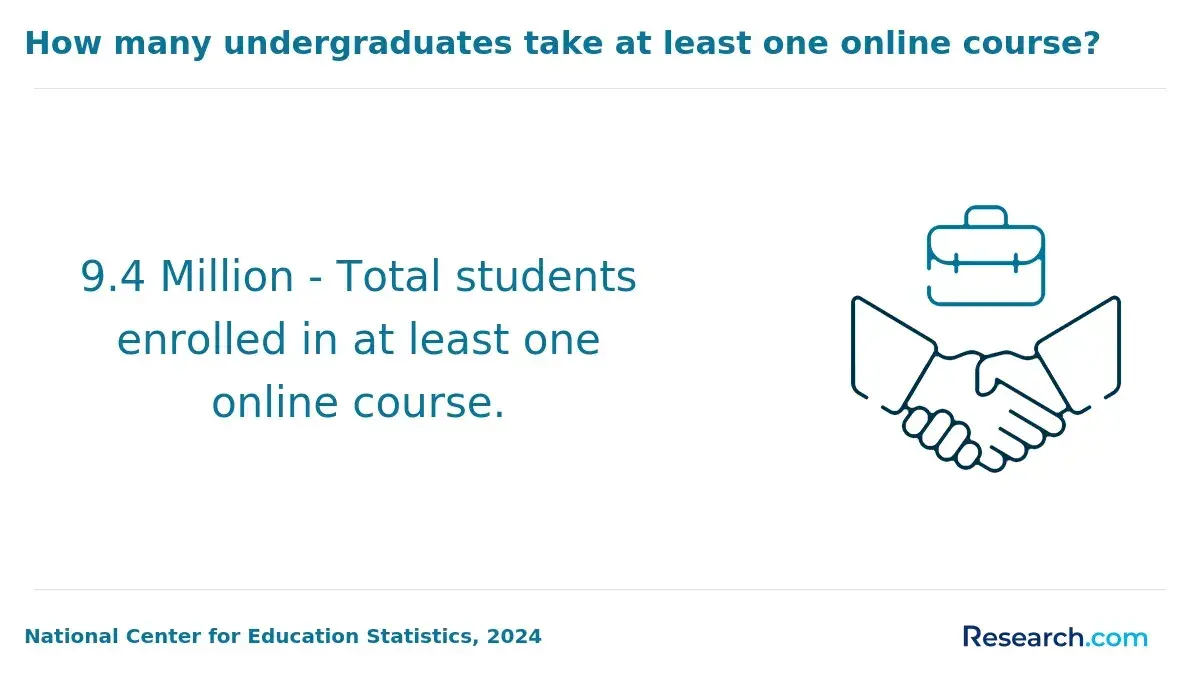
Choosing between flexibility and structure in college affects your schedule, costs, support system, graduation timeline, and career readiness. NCES reported in 2024 that more than half of undergraduates took at least one distance education course in fall 2022, showing how normal flexible learning has become.
This guide is for students comparing online, hybrid, campus-based, accelerated, self-paced, or fixed-curriculum programs. You will learn how each model works, what trade-offs matter, and how to choose the path that fits your goals, responsibilities, and learning style.
Key Things You Should Know
- Flexible programs work best when you need control over time, location, pace, or course sequencing, but they require strong self-management and careful checking of accreditation, transfer rules, and financial aid eligibility.
- Structured programs are usually better for students who need close advising, cohort support, lab access, licensure preparation, or a predictable semester-by-semester path toward graduation.
- College Board's 2024 data shows published tuition and fees averaged $11,610 for in-state public four-year colleges and $43,350 for private nonprofit four-year colleges, so format alone does not determine affordability.
How do flexible and structured college programs differ in learning experience and outcomes?
Flexible and structured college programs differ mainly in how much control students have over time, pace, course order, attendance, and assessments. A flexible program may offer asynchronous online classes, rolling start dates, part-time enrollment, competency-based progress, or generous transfer credit. A structured program usually follows fixed semesters, required course sequences, scheduled meetings, and clearer checkpoints.
The key decision is not whether one model is "better." It is whether the learning experience matches the amount of guidance, accountability, peer interaction, and hands-on practice you need to finish the degree and use it well.
The table below summarizes the major differences that affect day-to-day learning and long-term outcomes.
| Feature | Highly flexible pathway | Highly structured pathway | What it means for the student |
| Schedule | Often asynchronous, evening, weekend, or self-paced | Set class times and academic calendar | Flexibility helps working adults, but structure can reduce procrastination |
| Course sequence | May allow electives, transfer credits, or personalized pacing | Courses are taken in a prescribed order | Flexibility can speed completion, while structure prevents missed prerequisites |
| Support | Advising may be available on demand or virtually | Advising, tutoring, labs, and faculty access may be built into the schedule | Students who need frequent feedback may benefit from more structure |
| Assessment | Projects, exams, portfolios, competency demonstrations, or modular work | Exams, papers, labs, presentations, and scheduled milestones | Assessment style should match the skills required in the target career |
| Outcome risk | Greater risk if the student lacks time management or chooses a weak provider | Greater risk if the schedule is too rigid for the student's life | The best option is the one you can realistically complete |
Flexible pathways can be especially valuable when they reduce stop-outs caused by work, caregiving, transportation, or relocation. Structured pathways can be more effective when the field requires supervised practice, clinical hours, studio time, labs, or faculty-led research.
Which students benefit most from highly flexible degree pathways versus fixed curricula?
Students benefit from flexible or structured degree pathways for different reasons. The right choice depends on your available study time, motivation, career target, need for support, and whether your program has external requirements such as licensure, clinical placements, or internships.
Use the table below to compare common student profiles with the type of structure that usually fits best.
| Student situation | Flexible pathway may fit when... | Structured pathway may fit when... |
| Working adult | You need evening, weekend, asynchronous, or part-time options | You can attend predictable classes and want a cohort |
| Parent or caregiver | You need to study around school pickups, childcare, or family responsibilities | You have reliable coverage during fixed class times |
| First-time college student | You are highly organized and comfortable asking for help online | You need built-in advising, deadlines, peer groups, and campus services |
| Transfer student | You have many credits and need a school with generous transfer policies | Your major has strict course sequencing or accreditation rules |
| Licensure-focused student | The program clearly meets state requirements and arranges placements | The field requires labs, clinical practice, supervised teaching, or exams |
| Career changer | You need to keep earning income while completing prerequisites or a degree | You need intensive networking, labs, internships, or faculty mentorship |
Flexible programs often make the most sense for students who are balancing college with responsibilities that cannot be paused. For example, parents comparing best degrees for single moms should look beyond convenience and ask whether the program offers advising, transfer credit review, childcare-friendly scheduling, and career services that work outside standard business hours.
Before choosing, think honestly about how you study. A flexible program can remove barriers, but it can also remove the external pressure that keeps some students on track. A structured program can create momentum, but it can become stressful if attendance rules conflict with work shifts or family needs.
How should I choose between online, hybrid, and campus-based formats for flexibility and structure?
Online, hybrid, and campus-based formats are not simply different delivery methods. They shape how you interact with instructors, access support, complete assignments, build networks, and manage your time. NCES data published in 2024 shows that distance education is now a mainstream part of undergraduate learning, which means students should evaluate quality rather than assuming online is automatically less rigorous or campus is automatically better.
The table below compares the three formats from a decision-making perspective.
| Format | Best for | Main advantage | Main trade-off |
| Online | Working students, caregivers, military students, rural students, and frequent travelers | Maximum location flexibility | Requires self-direction and careful verification of support services |
| Hybrid | Students who want some campus access but cannot attend daily | Balances flexibility with in-person labs, advising, or networking | Commute days may still conflict with work or caregiving |
| Campus-based | Students needing labs, studios, clinical training, residential life, or close faculty contact | More built-in structure and face-to-face support | Less scheduling flexibility and potentially higher living or transportation costs |
To choose among formats, focus on your weekly reality rather than the ideal version of yourself. A student who works rotating shifts may need asynchronous online courses, while a student entering nursing, engineering, theater, chemistry, or teacher preparation may need in-person components even if lectures are online.
Ask each school these practical questions before enrolling:
- Are online courses asynchronous, synchronous, or a mix of both?
- Can I complete labs, internships, clinicals, practicums, or fieldwork near where I live?
- What tutoring, advising, library, disability, and career services are available remotely?
- How quickly do instructors typically respond to online students?
- Will my transcript or diploma distinguish online study from campus study?
A hybrid option can be a strong compromise if you need flexibility but still want campus connection. However, if the required in-person sessions are unpredictable, the format may be less flexible than it appears.
How does accreditation impact flexible and nontraditional college program options?
Accreditation is one of the most important checks when evaluating flexible and nontraditional college programs. It helps determine whether credits are transferable, whether students can access federal financial aid, whether employers recognize the credential, and whether the program can support licensure or graduate school admission.
There are two main levels to understand. Institutional accreditation applies to the college or university as a whole. Programmatic accreditation applies to specific fields, such as nursing, business, education, social work, engineering, counseling, or allied health. A school can be institutionally accredited while a specific program may still lack the programmatic approval needed for certain careers.
Flexible programs deserve extra scrutiny because nontraditional formats may include accelerated calendars, competency-based learning, third-party platforms, branch campuses, or online-only delivery. These can be legitimate, but students should verify that the credential has the same academic standing and professional usefulness as the school's traditional programs.
Use this sequence before you apply:
- Confirm the institution is accredited by an agency recognized by the U.S. Department of Education or the Council for Higher Education Accreditation.
- Check whether your major needs programmatic accreditation for licensure, certification, graduate school, or employer recognition.
- Ask whether online, hybrid, accelerated, and campus versions of the program share the same accreditation status.
- Verify state authorization if you live outside the school's home state.
- If licensure is involved, contact the state licensing board where you plan to work before relying on admissions claims.
A major red flag is vague language such as "accreditation pending," "nationally recognized," or "industry aligned" without naming the accrediting agency. Those phrases may sound reassuring, but they are not substitutes for recognized accreditation or licensure eligibility.
What admission requirements change when applying to more flexible college programs?
Flexible college programs often use different admission models from traditional full-time campus programs. Some offer rolling admissions, multiple start dates, test-optional review, open admission, prior learning assessment, or transfer-friendly pathways. These policies can make college more accessible, but they also place more responsibility on the student to confirm readiness and degree value.
Common admission differences include the following:
- Rolling start dates instead of one fall or spring deadline.
- Greater emphasis on work experience, military training, professional credentials, or prior college credits.
- Placement tests or prerequisite checks instead of standardized test scores.
- Conditional admission for students who need to complete foundational coursework.
- Program-specific screening for majors with labs, clinicals, portfolios, background checks, or licensure requirements.
If you are returning to school after time away, flexible admission can be helpful because it may recognize what you already know. Some students also use online certifications to build evidence of career direction, strengthen a resume, or test interest in a field before committing to a full degree.
Do not assume easier admission means easier completion. A program with open admission may still have demanding math, writing, clinical, technology, or time-management expectations. Ask whether the school offers placement advising before enrollment so you do not start in courses that are too advanced or repeat courses you may not need.
How do program length, scheduling, and pacing vary between structured and flexible degrees?
Program length, scheduling, and pacing vary widely across structured and flexible degrees. A traditional bachelor's degree is often designed around four years of full-time study, but real completion time can change because of transfer credits, part-time enrollment, course availability, remediation, work schedules, and major requirements.
The table below shows how pacing models typically differ and what students should watch for.
| Pacing model | How it works | Best fit | Potential drawback |
| Traditional semester | Courses follow fall, spring, and sometimes summer terms | Students who want predictable deadlines and campus rhythm | Slower restart if you miss a required course |
| Accelerated term | Courses run in shorter blocks, often 5 to 8 weeks | Motivated students taking fewer courses at a time | Heavy weekly workload and less recovery time |
| Part-time pathway | Students take reduced course loads over more terms | Working adults and caregivers | Longer completion time and possible aid implications |
| Self-paced or competency-based | Students progress by demonstrating mastery | Students with prior experience and strong discipline | Not ideal for students who need frequent deadlines |
| Cohort model | A group takes courses together in a fixed sequence | Students who want peer accountability and clear progression | Less flexibility if life circumstances change |
Scheduling is also an ROI issue. A faster program can reduce time away from higher earnings, but only if you can handle the workload without dropping courses or retaking classes. A slower program can preserve income and family stability, but it may delay entry into a higher-paying role.
For graduate study, pacing matters even more because many students continue working while enrolled. If you are comparing advanced credentials, reviewing fields linked to the most lucrative masters degrees can help you think about whether acceleration is worth the workload for your target career.
How are courses, assignments, and assessments organized in flexible versus structured programs?
Courses, assignments, and assessments are organized differently depending on whether a program prioritizes flexibility or structure. The difference is not just logistical. It affects how students learn, how much feedback they receive, how they demonstrate mastery, and how prepared they are for work or graduate study.
In structured programs, students often move through weekly modules, live discussions, scheduled labs, exams, presentations, and group projects. This can help students practice collaboration, public communication, and deadline management. In flexible programs, students may complete recorded lectures, discussion boards, projects, portfolios, quizzes, simulations, or competency assessments at different times within a term.
The table below compares common academic design features.
| Academic feature | Flexible programs | Structured programs |
| Lectures | Often recorded or asynchronous | Often live, scheduled, or attendance-based |
| Assignments | May use weekly modules, projects, portfolios, or mastery tasks | Usually tied to a fixed syllabus and calendar |
| Interaction | Discussion boards, video meetings, email, chat, or virtual office hours | Class discussion, labs, studios, seminars, and campus office hours |
| Feedback | Can be flexible but may depend on instructor availability and platform design | Often tied to scheduled class meetings and graded milestones |
| Assessment | May include competency demonstrations or applied projects | Often includes exams, papers, presentations, labs, and participation |
Look closely at assessment design if your goal is career preparation. A flexible business, IT, education, or healthcare administration program that uses projects and case studies may build practical evidence for employers. But a program that relies only on auto-graded quizzes may not develop writing, analysis, teamwork, or problem-solving skills deeply enough.
Before enrolling, ask to see a sample syllabus or course shell. You want to understand whether "flexible" means thoughtfully designed for adult learners or simply less interactive.
How do costs, financial aid, and tuition policies compare for flexible and structured pathways?
Costs can differ significantly between flexible and structured pathways, but online or accelerated does not automatically mean cheaper. College Board's 2024 Trends in College Pricing reported average published tuition and fees of $11,610 for in-state students at public four-year institutions and $43,350 at private nonprofit four-year institutions for 2024-25. That gap shows why school choice, residency status, transfer credits, and total fees matter as much as format.
The table below highlights cost categories that students often overlook when comparing flexible and structured options.
| Cost factor | Flexible pathway consideration | Structured pathway consideration |
| Tuition model | May charge per credit, per term, subscription period, or competency block | Usually charges per credit or semester |
| Fees | Technology, online course, proctoring, platform, or remote service fees may apply | Campus, activity, lab, health, parking, or facility fees may apply |
| Living costs | May reduce relocation, housing, or commuting costs | May require housing, commuting, meal plans, or parking |
| Time to completion | Transfer credit and acceleration can lower total cost if completed successfully | Predictable sequencing can prevent costly course mistakes |
| Financial aid | Eligibility may depend on accreditation, enrollment intensity, and academic progress | Often easier to understand in standard semester systems |
Federal aid can help, but students should not assume every flexible program qualifies. For 2024-25, the maximum Federal Pell Grant was $7,395, but eligibility depends on financial need, enrollment status, program eligibility, and other federal rules. If a flexible program is not Title IV eligible, students may have fewer aid options.
To compare real costs, request a full cost estimate rather than looking only at tuition. Include books, fees, technology, transportation, childcare, lost work hours, transfer credit acceptance, retake policies, and whether tuition rises during the program.
Common cost mistakes include choosing the lowest advertised tuition without checking fees, assuming accelerated always saves money, borrowing for a program that does not meet licensure rules, and ignoring how part-time enrollment can affect aid eligibility.
What careers, salaries, and advancement opportunities align with flexible versus structured degrees?
Career outcomes depend more on field of study, credential level, employer demand, experience, location, and skills than on whether a program is flexible or structured. A flexible degree from an accredited, career-aligned program can support advancement, especially for working adults. A structured degree may be stronger when the career requires labs, clinicals, internships, faculty mentorship, or formal recruitment pipelines.
BLS wage data published in 2024 continues to show wide salary differences by occupation, which is why major choice matters. Students comparing best college majors for the future should focus on how the program builds marketable skills, not just whether the schedule is convenient.
The table below shows how program structure tends to align with different career goals.
| Career goal | Flexible degree pathway may work well when... | Structured degree pathway may work well when... |
| Business, management, or administration | You already work in the field and need a credential for promotion | You want internships, student organizations, or campus recruiting |
| Information technology or data roles | You can build projects, certifications, and a portfolio while studying | You need labs, research opportunities, or structured technical mentoring |
| Healthcare | The role is administrative, informatics-focused, or designed for licensed professionals advancing online | The role requires clinical hours, simulation labs, or supervised patient care |
| Education | The program arranges field placements near you and meets state requirements | You need local school partnerships and supervised teaching support |
| Engineering, laboratory science, or studio fields | Only if required labs and hands-on experiences are clearly included | Often better because equipment, faculty supervision, and project spaces matter |
Employers increasingly value demonstrated skills, but that does not make degrees irrelevant. The strongest choice is usually a program that combines an accredited credential with evidence of ability: internships, projects, clinical hours, portfolios, certifications, research, or work-based learning.
Avoid assuming that flexible degrees lead only to remote jobs or that structured degrees automatically lead to better salaries. Outcomes vary by occupation, region, experience, employer, and how well the student uses the program's career resources.
How can I evaluate whether a college's flexibility policies support my long-term goals?
To evaluate whether a college's flexibility policies support your long-term goals, look beyond marketing language. "Flexible" should mean that the program has policies, support systems, and academic design that help students finish and move toward a specific outcome. It should not mean unclear expectations, limited advising, or a do-it-yourself experience.
Use the following questions when comparing schools:
- Does the program meet accreditation, licensure, certification, or graduate school requirements for my intended field?
- How many of my prior credits will transfer, and will they apply to the major or only to electives?
- Can I change between part-time and full-time enrollment without delaying required courses?
- Are required courses offered often enough for my timeline?
- What happens if I pause enrollment for work, health, military, or family reasons?
- Are advising, tutoring, disability services, library access, and career coaching available during hours I can actually use?
- Does the program publish clear information about total cost, fees, refund policies, and satisfactory academic progress?
- Will I complete projects, internships, clinicals, portfolios, or other work that supports my career goal?
Also consider personal fit. A student who prefers independent work, quiet environments, and deep focus may value flexible formats, but career choice still matters. If that sounds like you, researching jobs for introverts that pay well can help you connect learning format with a realistic work environment.
Watch for red flags such as unclear accreditation, pressure to enroll immediately, vague career promises, refusal to provide transfer evaluations in writing, missing licensure disclosures, limited faculty contact, or no clear path to internships or fieldwork. A strong college should be willing to explain exactly how its flexible policies help students complete the credential and use it.
The best final test is simple: choose the program that you can afford, complete, and connect to a defined career or education goal. Flexibility is valuable when it removes barriers. Structure is valuable when it keeps you progressing. The right balance is the one that turns enrollment into completion.
Other Things You Should Know About
Not necessarily. Flexible programs may reduce scheduling barriers, but the academic work can be just as rigorous. They often require more self-discipline because fewer deadlines may be built into the week.
Employers are more likely to respect a degree from an accredited institution with a relevant curriculum and clear skill development. The format matters less than accreditation, field fit, experience, and the reputation of the program.
Students who struggle with procrastination, need frequent instructor feedback, or are new to college-level study may want more structure. A hybrid, cohort-based, or semester-based online program may offer a better balance.
Sometimes, but it depends on the school's policies, course sequencing, transfer rules, and program requirements. Before enrolling, ask whether credits apply across formats and whether switching could delay graduation.
References
- Structured flexibility https://gradingforgrowth.com/p/structured-flexibility
- Flexibility versus structure for student learning - LearnSci Webcasts https://www.learnsci.com/post/the-balance-between-flexibility-and-structure-for-student-learning
- Self-Paced vs Structured Learning: 5 differences between Self-Paced and Structured Learning in Online Courses https://writersking.com/self-paced-vs-structured-learning/
- Flexible Hybrid Learning Models | Higher Education Strategy https://edutech.global/flexible-hybrid-learning-models-in-higher-education/
- Accreditation as a Strategic Driver of Alignment Across Higher Education and Industry https://acbspjournal.org/2026/05/22/accreditation-as-a-strategic-driver-of-alignment-across-higher-education-and-industry/
- The Era of Flexible Education Has Arrived—Is Your Institution Ready? https://moderncampus.com/blog/the-era-of-flexible-education-has-arrived.html
- Complex applications create barriers to college—some are trying to change that | Brookings https://www.brookings.edu/articles/complex-applications-create-barriers-to-college-some-are-trying-to-change-that/
- Flexibility in primary medical programs: A scoping review https://fohpe.org/FoHPE/article/view/579/321
- How Accreditation Can Drive Enrollment and Program Excellence - OJDLA https://ojdla.com/articles/how-accreditation-can-drive-enrollment-and-program-excellence
- Error https://www.creditkarma.com/income/i/most-flexible-jobs