2027 LPN-to-RN Bridge Programs in Hawaii: Admission, Schedules, and Campus Requirements
Audited and Verified:
Our Editorial and Data Verification Process
Research.com uses government datasets, official education statistics and primary institutional information to support its career and degree guides. Our review process checks factual accuracy, occupational definitions, source dates and the requirements associated with the credentials discussed.
How This Article Was Fact-Checked
Our editorial team verifies salary estimates, employment projections, education requirements and program information against original data providers and official organizations. Salary figures are checked against the relevant occupational definitions and reporting periods. Information about licensure, accreditation and required in-person training is reviewed separately.
Fact-checked and verified on:

Co-Founder and Chief Data Scientist
If you are a licensed practical nurse in Hawaii, the key question is not simply which school has an RN program. It is whether that school will award you advanced placement, offer a seat when you need one, and schedule required labs and clinical rotations around your life. This guide explains how to identify a workable LPN-to-RN route, compare campuses, prepare an application, and estimate the time and cost before committing. Because bridge seats and policies can change by entry term, written confirmation from the nursing program matters more than a general college listing.
Key Things You Should Know
- An LPN-to-RN bridge may lead to an associate degree in nursing, but LPN credit, entry terms, and available seats depend on the school's current nursing policy.
- Plan for in-person skills assessment, labs, and supervised clinical rotations; online coursework does not make an initial RN pathway fully remote.
- Graduation is not an RN license: graduates must meet Hawaii Board of Nursing requirements, pass the NCLEX-RN, and receive a license before practicing as RNs.
What are LPN-to-RN bridge programs in Hawaii?
An LPN-to-RN bridge is a prelicensure RN pathway that recognizes some prior practical-nursing preparation while teaching and assessing the additional competencies required of an RN. Depending on the school, an LPN may enter an associate degree in nursing (ADN) sequence at an advanced point, receive credit after a transition course or exam, or apply to the regular sequence. An active LPN license does not automatically waive nursing courses or clinical experiences.
For a Hawaii LPN whose immediate goal is RN practice, an ADN transition can be more direct than starting a new bachelor's program. A BSN may fit someone whose target employer prefers it, but a postlicensure RN-to-BSN program is not a substitute for initial RN preparation. Later graduate options, including bridge programs from an ADN to an MSN, address a different decision after RN licensure.
Which Hawaii schools offer LPN-to-RN bridge programs?
Hawaii applicants should start with the University of Hawaiʻi community-college nursing programs rather than assume that every school advertising an ADN currently has an LPN bridge seat. The campuses below are practical points of inquiry because location and the exact route into RN-level courses both matter. They are not a verified list of open bridge cohorts: ask each nursing department to confirm its current LPN admission option and next entry term.
This comparison identifies where to ask and the distinction that could change your application plan.
| School to contact | Campus area | Question for the nursing department |
| Kapiʻolani Community College | Oʻahu | Is an LPN transition or advanced-placement route accepting applicants for the intended term? |
| Hawaiʻi Community College | Hawaiʻi Island | Can licensed practical nurses enter the ADN sequence with advanced standing, and where are clinical sites? |
| University of Hawaiʻi Maui College | Maui | Does the current nursing cohort offer an LPN-to-ADN entry point, and which courses require campus attendance? |
| Kauaʻi Community College | Kauaʻi | Does its current RN pathway accept LPNs through a transition process or only regular admission? |
Request the current nursing application, degree map, cohort calendar, and written advanced-placement policy. A college's general nursing admission page may not establish that an LPN-specific place is available. If your preferred island has no suitable opening, a guide to nursing schools with easier entry requirements can help frame a broader search, but confirm that any alternative actually prepares you for initial RN licensure and permits the clinical placements you would need.
What are the admission requirements for Hawaii LPN-to-RN programs?
Admission usually has two layers: acceptance by the college and selection for its nursing sequence. A school may review an active, unrestricted LPN license; practical-nursing transcripts; prerequisite science and general-education courses; grades; and a transition assessment. Clinical participation may separately require health documentation, background screening, and site-specific clearance. Exact minimum grades, course-age limits, exams, and deadlines are school- and cohort-specific.
Before paying an application fee, ask the program for a written review of your transcripts and these decisions:
- Which completed courses satisfy current prerequisites, including laboratory and recency rules?
- What LPN coursework or competency assessment can count toward the nursing sequence rather than only elective credit?
- Are LPN applicants considered for a separate cohort, a limited number of advanced-placement seats, or regular ADN admission?
- What must be completed by the application deadline versus before clinical placement?
If an entrance exam is a concern, alternatives to HESI-based nursing admission provide comparison context. They do not establish that a particular Hawaii bridge waives testing.
There is no reliable statewide completion time for an LPN-to-RN bridge. Your timeline is the sum of remaining prerequisites, any transition course, the RN nursing sequence, and the wait for an available entry term. A program may shorten the sequence for an eligible LPN without shortening the calendar if advanced-entry courses are offered only once a year or clinical seats are full.
Ask for a term-by-term plan showing the first course you can enter, its next scheduled offering, and your projected graduation term. Compare that plan with the regular ADN route; if advanced placement saves little time but delays your start, regular admission may be worth considering. Do not use graduate-bridge timelines as an estimate: comparing online BSN-to-MSN program costs concerns education after RN and BSN preparation, not the time needed for initial RN licensure.
Expect a Hawaii prelicensure RN pathway to be campus-based or hybrid, not entirely online. A school may deliver lectures online while requiring scheduled skills labs, simulation, examinations, and supervised patient-care experiences in person. Delivery can also vary by course or term.
For an employed LPN, the useful question is how many fixed daytime blocks each week require attendance - not whether the catalog calls a course "hybrid." Request the actual class and clinical schedule for the relevant cohort before changing work hours. After RN licensure, RN-to-BSN capstone and practice requirements become a separate format question; a postlicensure program's flexibility does not describe an LPN-to-RN bridge.
Bridge coursework typically builds on, rather than simply repeats, practical-nursing education. Depending on the degree map, an LPN may need remaining anatomy and physiology, microbiology, or other general-education requirements alongside RN-level assessment, pharmacology, medical-surgical nursing, mental health, maternal-child care, and community or population health. Courses emphasize clinical judgment, care coordination, documentation, patient safety, and delegation within RN scope.
The decisive document is the school's individual degree audit: a transcript showing that you studied a topic does not prove that its credits satisfy the receiving program's course, lab, or clinical requirements. Keep this initial-licensure curriculum distinct from later graduate study. For example, DNP pathways that do not add a new clinical specialty serve already-licensed nurses and do not replace RN-level coursework.
Campus and clinical obligations are often the limiting factor for working LPNs, especially when crossing islands is impractical. Labs may run at set times; rotations depend on approved sites, faculty supervision, and available shifts. A current LPN job or self-arranged placement counts toward the program only if the nursing department explicitly approves it under its requirements.
Before accepting a seat, obtain the cohort's expected campus days, clinical shift lengths and locations, weekend or evening possibilities, attendance and make-up rules, and any costs of travel. Ask who assigns sites and when the schedule becomes final. This is not the same as an advanced-practice placement: comparing faster PMHNP certificate pathways is relevant only after the separate RN and graduate-preparation steps required for that goal.
No single price accurately represents a Hawaii LPN-to-RN bridge. Your bill depends on residency classification, credits still needed, the number of terms enrolled, and mandatory college and nursing fees. Ask for the current tuition schedule and a personalized degree audit before comparing schools; an advertised per-credit rate alone cannot show the total.
Build a term-by-term budget that includes tuition and fees, books or digital materials, uniforms and equipment, immunizations and screening, exam preparation, licensure-related charges, transportation or interisland travel, and wages lost to fixed clinical shifts. Confirm whether advanced-placement credit carries a fee and whether your enrollment pattern preserves financial-aid eligibility. Later specialty education has a separate budget; online PMHNP tuition and fee considerations should not be folded into the cost of becoming an RN.
Check three different forms of oversight before enrolling: the college's institutional accreditation, the accreditation status and scope of the specific nursing program if applicable, and its status with the Hawaii Board of Nursing for initial RN preparation. One does not substitute for another. Ask the school to identify the exact degree and track that will appear on your record and to explain how graduates seek NCLEX-RN eligibility.
Completing an approved educational route is a step toward licensure, not permission to practice as an RN. The board determines license eligibility, including applicable examination and application requirements. If you may practice outside Hawaii, check the rules of the destination jurisdiction rather than assuming your Hawaii education or license automatically covers that practice. Future doctoral study is another distinct decision: comparing DNP eligibility requirements does not establish eligibility for an initial RN license.
What careers, salaries, and job outlook follow RN licensure?
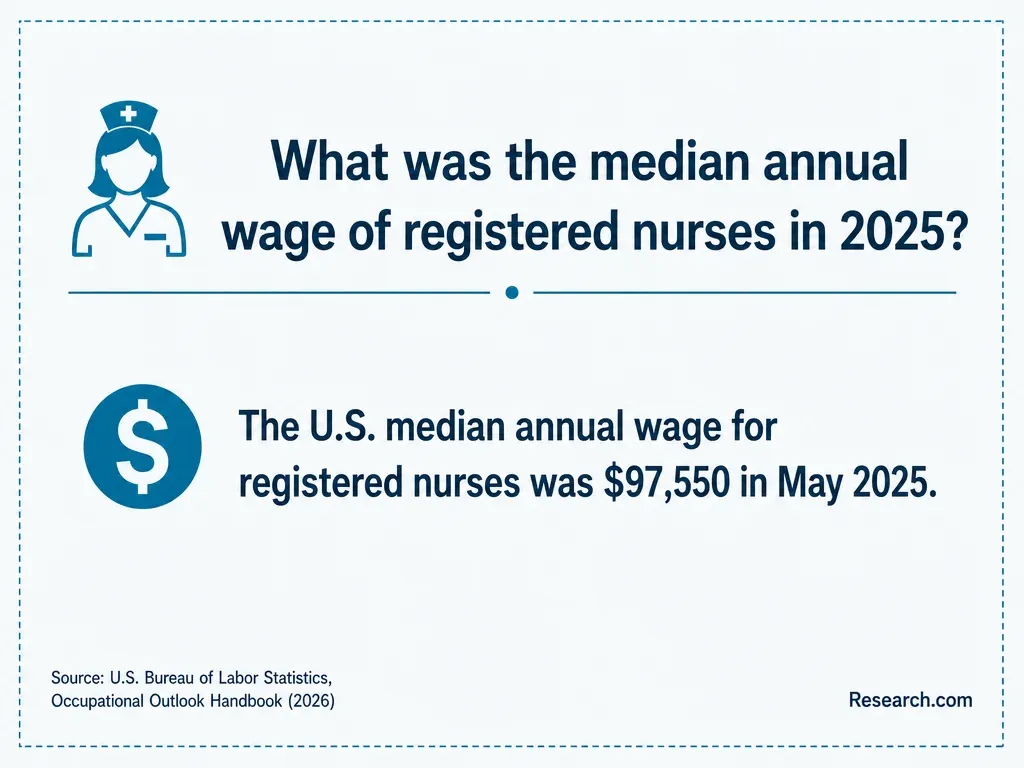
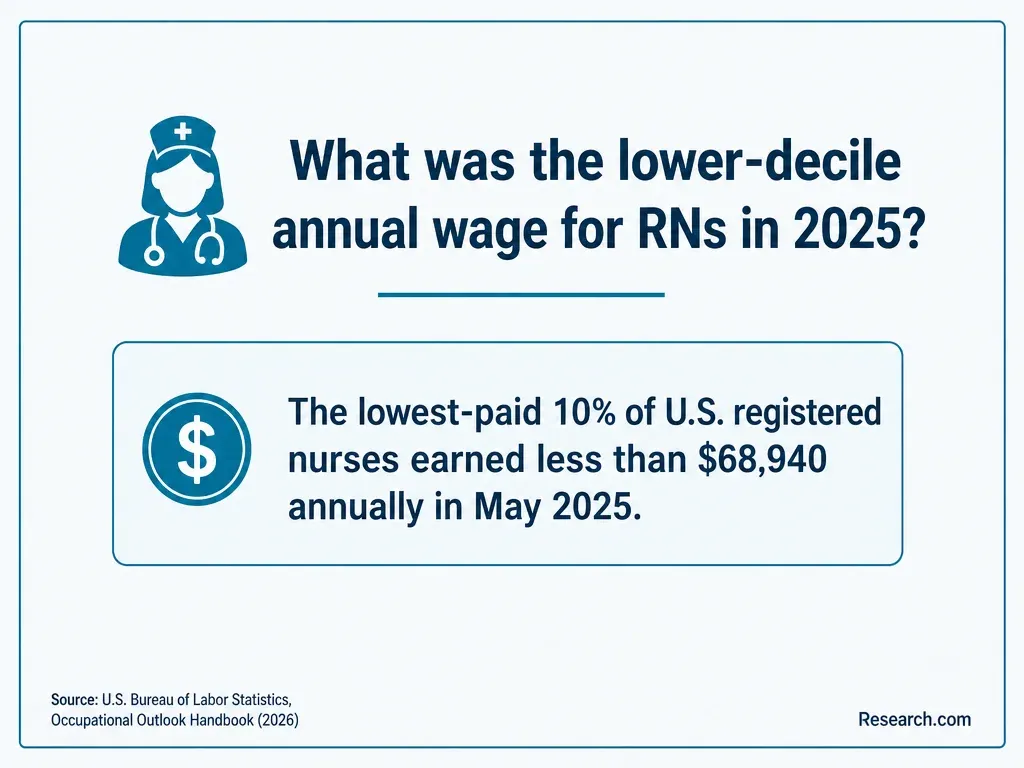
After receiving an RN license, an LPN-to-RN graduate can pursue RN openings in settings such as hospitals, ambulatory care, long-term care, and community health, subject to employer hiring and orientation requirements. The transition brings greater responsibility for assessment, clinical judgment, care planning, and coordination; prior LPN experience is valuable but does not eliminate the need for RN-specific onboarding.
Use RN wage and employment projections as occupation-wide context, not a promised raise. A Hawaii offer will depend on island, employer, shift, experience, and bargaining arrangements; compare the actual offer with your present LPN pay and the full cost of school. If your longer-term goal is advanced practice, affordable graduate pathways to NP preparation are a later comparison. RN licensure alone does not authorize NP practice.
Other Things You Should Know About Nursing
Ask the nursing program which license it requires at application and at clinical entry. Also confirm your authority to practice in Hawaii; school admission and permission to work as an LPN are separate matters.
That depends on the employer's eligible-program rules, grade requirements, reimbursement timing, and any work commitment. Get the terms in writing before budgeting the benefit.
Submit your transcripts and course descriptions for review. A school may accept some prior coursework while requiring newer sciences, a competency assessment, or additional RN-sequence courses.
Potentially, but protect time for fixed labs, clinical shifts, study, and travel. Ask your employer about predictable shifts only after the nursing program provides its cohort schedule.
- Hawaii Nursing Programs https://cca.hawaii.gov/pvl/boards/nursing/hawaii-nursing-programs/
- Cost of Attendance (Budget) | 2025-2026 Federal Student Aid Handbook https://fsapartners.ed.gov/knowledge-center/fsa-handbook/2025-2026/vol3/ch2-cost-attendance-budget
- Clinical Information - Nursing Students - UW-Madison https://students.nursing.wisc.edu/clinical-information/
- Nursing School Cost & Tuition | Chamberlain University https://www.chamberlain.edu/admissions/tuition-expenses
- Tuition & Fees | matc.edu https://www.matc.edu/costs-scholarships-aid/tuition-fees.html
- Bridge for Licensed Practical Nurses | Kapi'olani Community College https://www.kapiolani.hawaii.edu/programs/health/nursing/transition-for-lpn/
- LPN/LVN to BSN | Hawai'i Pacific University https://www.hpu.edu/nursing/bsn/lpn-lvn-bsn.html
- Policy 2.2: Attendance & Short-Term Absences | Current Students https://students.nursing.uw.edu/policies/policy-2-2-attendance-short-term-absences/
- Nursing Education Programs Attendance Policy | rccc.edu https://www.rccc.edu/healtheducation/nursing-education-programs-attendance-policy/
- Explanation of Fees | Rosalind Franklin University https://www.rosalindfranklin.edu/admission-aid/financial-services/tuition-fees/explanation-of-fees/