2027 LPN-to-BSN Pathways for Nurses in Michigan: Direct Bridges and RN-to-BSN Alternatives
Audited and Verified:
Our Editorial and Data Verification Process
Research.com uses government datasets, official education statistics and primary institutional information to support its career and degree guides. Our review process checks factual accuracy, occupational definitions, source dates and the requirements associated with the credentials discussed.
How This Article Was Fact-Checked
Our editorial team verifies salary estimates, employment projections, education requirements and program information against original data providers and official organizations. Salary figures are checked against the relevant occupational definitions and reporting periods. Information about licensure, accreditation and required in-person training is reviewed separately.
Fact-checked and verified on:

Co-Founder and Chief Data Scientist
Michigan LPNs who want a BSN face a consequential choice: enter a prelicensure BSN program that recognizes their practical-nursing education, or become an RN through an associate-degree bridge and complete the BSN afterward.
The routes can differ substantially in clinical schedules, when you become eligible for RN licensure, and how much coursework transfers. This guide explains how to compare them, what to verify with Michigan programs and regulators, and when the shorter route to an RN license may be the better first move.
Key Things You Should Know
- There are two principal sequences: LPN-to-BSN, or LPN-to-RN followed by RN-to-BSN. Both require an RN-licensure step; an RN-to-BSN program alone does not prepare an LPN for initial RN licensure.
- Passing the NCLEX-RN and obtaining an RN license are separate from earning a BSN. Confirm that the specific prelicensure track meets Michigan's requirements before enrolling.
- Compare the complete sequence - not just the advertised bridge length - including accepted credits, remaining clinical placements, the point at which you can work as an RN, and total charges across one or two schools.
What Are the LPN-to-BSN Pathways Available in Michigan?
A Michigan LPN can pursue a prelicensure LPN-to-BSN route that awards a bachelor's degree and prepares graduates to seek initial RN licensure. Some schools describe this as an LPN-to-BSN bridge; others admit LPNs to a traditional BSN track and award limited advanced standing. The label matters less than the school's written evaluation of your credits and the track's RN-licensure outcome.
The alternative is an LPN-to-RN bridge leading to an associate nursing degree, followed - after RN licensure - by a postlicensure RN-to-BSN program. This table shows the credential at each endpoint and the main scheduling trade-off.
| Route | Entry and endpoint | Principal trade-off |
| LPN-to-BSN or LPN advanced standing in a BSN | Licensed LPN enters prelicensure study; graduates with a BSN and seeks RN licensure | One degree sequence, but required labs and clinical placements may limit work hours |
| LPN-to-RN, then RN-to-BSN | LPN earns an associate nursing degree, obtains RN licensure, then completes a BSN | Potentially earlier RN employment, but two admissions processes and possible credit-transfer gaps |
An LPN already has nursing education and a practical-nursing license; a person entering nursing from an unrelated occupation needs a different starting-point comparison. Those applicants can review nursing entry pathways for career changers rather than assuming an LPN bridge is open to them.
Can Michigan LPNs Become RNs Through an LPN-to-RN Bridge First?
Yes. An LPN-to-RN bridge is a prelicensure route, commonly offered through an associate-degree nursing program. If the program meets applicable Michigan requirements, graduates can seek authorization to take the NCLEX-RN; passing the examination and satisfying the state's licensing requirements are still necessary before practicing as an RN.
This route can suit an LPN who needs an earlier opportunity to earn an RN wage or whose nearby BSN options have impractical clinical schedules. Its advantage is not guaranteed speed to the BSN: an RN-to-BSN school must separately decide which associate-degree, general-education, and science credits apply to its graduation requirements. Obtain a written degree audit from the intended BSN school before treating the associate program as the first half of a guaranteed two-school plan.
Later specialty goals should not obscure this first licensure decision. For example, accelerated PMHNP master's admissions and requirements concern graduate preparation after RN education, not a substitute for an LPN-to-RN bridge.
How Do RN-to-BSN Programs Compare With Direct LPN-to-BSN Pathways?
The decisive distinction is when RN licensure occurs. A direct prelicensure BSN route prepares an LPN for initial RN eligibility near the end of the BSN sequence. An RN-to-BSN program assumes the student has already completed an RN-qualifying program and generally requires an active RN license under its admissions or progression rules.
Direct BSN study may avoid a second application and a later transfer evaluation. The two-stage route may allow RN employment before the BSN is finished and may offer more options for completing upper-division coursework around shifts. Neither advantage is universal: compare actual start dates, clinical schedules, transfer decisions, and employer tuition benefits. For the second stage specifically, flexible BSN completion routes for licensed RNs can help frame questions about required projects or practice experiences; "no clinicals" does not necessarily mean no scheduled or community-based work.
For the prelicensure part of either route, confirm the exact campus and nursing track's status with the Michigan Board of Nursing and ask the school to document how that track supports Michigan RN-examination eligibility. Check institutional accreditation separately from nursing-program accreditation, which may be held through organizations such as ACEN or CCNE. Accreditation of an institution does not, by itself, establish the status of every nursing track.
For an RN-to-BSN program, examine the institution's accreditation and the nursing program's accreditation status and scope, as well as any state enrollment restrictions. Ask the school which accreditation and approval records apply to your intended entry term. This distinction remains important if you later consider graduate education: DNP programs with accessible admission requirements still require separate scrutiny of their educational purpose and credentials; a DNP title alone does not establish advanced-practice eligibility.
Requirements vary by school and by whether LPNs enter a designated bridge or the regular BSN nursing sequence. Expect a review of your LPN license, practical-nursing transcript, prior college work, and prerequisite sciences. A school may also specify minimum grades or GPA, science-course recency and lab formats, an entrance assessment, and clinical-placement conditions such as immunizations and a background check.
University admission is not necessarily admission to the nursing major. Request a written, track-specific evaluation showing which LPN courses earn credit, which prerequisites remain, and when a clinical seat could be available. If you already hold a degree in another field, ask for a course-by-course evaluation rather than assuming it satisfies nursing sciences. Future graduate routes have different entry rules: planning a one-year FNP pathway is relevant only after the required RN and advanced nursing preparation, not as a shortcut through BSN admission.
A prelicensure LPN-to-BSN or LPN-to-RN bridge builds beyond practical-nursing preparation with RN-level assessment, clinical judgment, pharmacology and pathophysiology as required by the curriculum, plus supervised patient care across required settings. Schools determine how prior LPN learning is evaluated; paid LPN work does not automatically replace an approved RN clinical placement.
Postlicensure RN-to-BSN study more often emphasizes evidence-based practice, population health, leadership, quality improvement, and nursing inquiry. It may include projects or practice-related experiences, but it is not a second initial-RN clinical program. Confirm who arranges placements, whether simulation or campus labs are scheduled, and whether your workplace can be used for any assignment.
Do not confuse BSN practice experiences with graduate specialty clinicals. FNP programs with support finding preceptors address a separate, supervised advanced-practice requirement that a BSN bridge does not fulfill.
There is no dependable statewide completion time. The useful figure is time from your next available start date to the credential you need. A direct route may require remaining prerequisites before the nursing sequence begins. The two-stage route includes an LPN-to-RN curriculum, time for examination and licensing, and a separate RN-to-BSN enrollment period; some schools permit limited RN-to-BSN coursework while licensure is pending, subject to their policies.
Ask each school for a term-by-term plan based on your transcript, including courses offered only once a year and the earliest available clinical cohort. Compare both the date you could become an RN and the date you could finish the BSN. Accelerated labels elsewhere in nursing are not comparable measures: shorter online post-master's FNP certificates serve already graduate-prepared nurses, not LPNs seeking initial RN licensure.
No single Michigan price accurately represents these routes: tuition depends on the school, residency classification, accepted credits, enrollment pace, and fees. Compare itemized estimates for the entire direct BSN route against the combined associate bridge and RN-to-BSN route. The following charges belong in that comparison, even when they do not appear in an advertised tuition figure.
- Tuition and mandatory fees for every remaining term at each institution.
- Books, technology, uniforms, equipment, health screenings, background checks, and examination or licensing expenses.
- Clinical travel, potential lost work hours, and costs caused by a delayed course or placement.
Ask whether employer reimbursement applies before or only after RN licensure, whether it requires continued employment, and whether aid eligibility changes between schools. The same full-cost method matters for later credentials: comparing online NP program costs is a separate decision and should not be folded into the price of becoming an RN with a BSN.
Expect a hybrid arrangement for prelicensure LPN-to-RN or LPN-to-BSN study, not an entirely remote path. Lectures may be online, but skills assessment, labs, simulation, and approved supervised patient care can require attendance at set locations and times. An online program based outside Michigan also needs to confirm that it can enroll a Michigan resident and that its prelicensure track meets the requirements relevant to Michigan RN eligibility.
RN-to-BSN coursework can be more online-friendly because students already hold RN preparation, although projects, live sessions, or local practice activities may still be required. Ask for a sample weekly schedule and the locations of every in-person requirement before committing. Similarly, exploring faster online DNP routes concerns a later degree level; an online graduate format cannot remove the supervised preparation required for initial RN licensure.
What Careers, Salaries, and Job Outlook Can BSN Nurses Expect in Michigan?
After obtaining RN licensure, a BSN graduate may pursue registered-nurse roles in hospitals, outpatient care, home health, and community settings. The BSN may meet an employer's degree preference or support later advancement, but hiring also depends on experience, unit openings, orientation, and demonstrated competence. An LPN who has completed the BSN but has not yet obtained an RN license cannot practice as an RN.
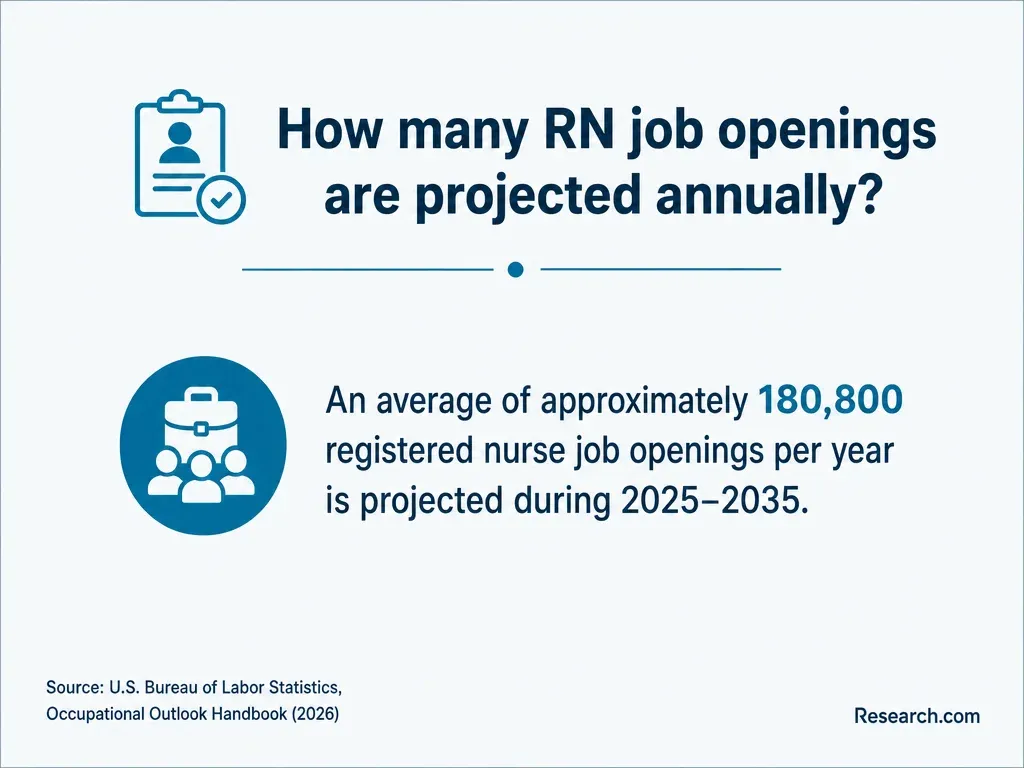
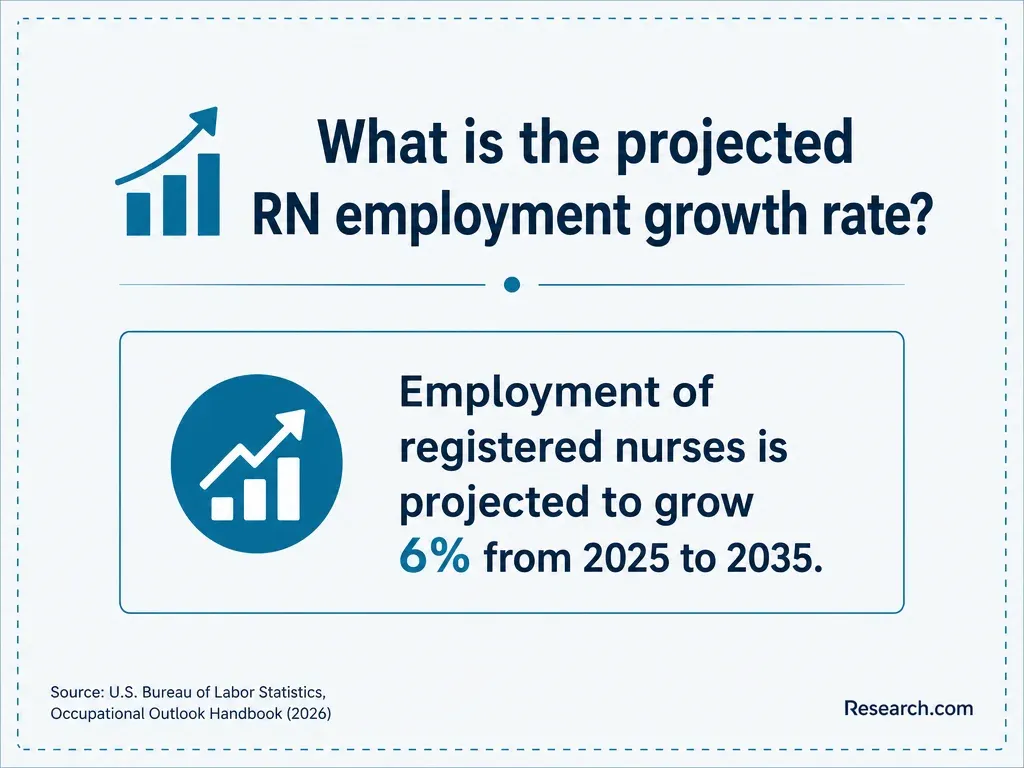
Use occupation-specific U.S. Bureau of Labor Statistics RN wage and employment projections as context, then compare current Michigan postings for the locations and shifts you could actually accept. An occupation-wide RN median includes nurses with different degrees and experience; it is not a predicted new-graduate salary or proof that the BSN route will repay its cost. For a later leadership or graduate-school goal, lower-cost online BSN-to-MSN degree routes warrant their own comparison after you know whether the target job requires an MSN.
Other Things You Should Know About Nursing
Usually, if your LPN license remains active and your employer can accommodate the school's schedule. LPN employment does not expand your scope of practice while you are an RN student.
No. The school sets its admission policy, and Michigan determines licensure status. Ask whether the program accepts your existing license and whether Michigan LPN licensure is required before clinical placement.
Not automatically. The receiving school decides which courses satisfy its degree and nursing prerequisites; science labs and course recency may receive separate review.
Disclose prior enrollment and request the new school's transfer or readmission policy. Prior nursing courses and clinical work may require syllabi and evaluations, and acceptance does not guarantee a place in the next clinical sequence.
- Nursing Licensing Guide and FAQs | michigan.gov https://www.michigan.gov/lara/bureau-list/bpl/health/hp-lic-health-prof/nursing/nursing-licensing-guide-and-faqs
- Licensed Practical Nurse to Registered Nurse Bridge Program | wcccd.edu https://www.wcccd.edu/academic-and-career-programs/health-sciences/licensed-practical-nurse-to-registered-nurse-bridge-program-aas
- RN to BSN Online - School of Nursing https://www.umflint.edu/nursing/undergraduate-programs/rn-to-bsn-online/
- RN to BSN Online Program | Bronson School of Nursing | Western Michigan University https://wmich.edu/nursing/academics/undergrad/rn-bsn
- BSN Nursing Program in Michigan: Pre-Licensure | The University of Olivet https://www.uolivet.edu/program/nursing-program-michigan/
- LPN to RN Pathways ASN/BSN Program Bridge Options | Herzing University https://www.herzing.edu/nursing/lpn-rn
- Nursing (Registered) Associate in Applied Science | Lake Michigan College https://www.lakemichigancollege.edu/academics/health-sciences/nursing/nursing-associate
- Accreditation Information | Muskegon Community College https://www.muskegoncc.edu/nursing/accreditation-information/
- Gogebic Community College - Advance Standing LPN to RN https://www.gogebic.edu/programs/advance_standing_lpn_to_rn.html
- Online LPN to BSN Program | Wilson College https://online.wilson.edu/programs/bachelors-degrees/lpn-to-bsn/