2027 DNP Psychiatric-Mental Health NP Programs for Nurses in Montana: BSN and MSN Entry Routes and Clinical Training
Audited and Verified:
Our Editorial and Data Verification Process
Research.com uses government datasets, official education statistics and primary institutional information to support its career and degree guides. Our review process checks factual accuracy, occupational definitions, source dates and the requirements associated with the credentials discussed.
How This Article Was Fact-Checked
Our editorial team verifies salary estimates, employment projections, education requirements and program information against original data providers and official organizations. Salary figures are checked against the relevant occupational definitions and reporting periods. Information about licensure, accreditation and required in-person training is reviewed separately.
Fact-checked and verified on:

Co-Founder and Chief Data Scientist
Montana nurses considering psychiatric-mental health nurse practitioner practice need to choose a route that matches both their current credentials and their intended clinical role. A BSN-to-DNP track can provide initial PMHNP preparation; an MSN-prepared nurse may instead need a specialty certificate, a DNP completion route, or both. This guide explains the identifiable in-state option, how to assess other programs that accept Montana students, and what to verify about supervised clinical training, cost, certification, and licensure before applying.
Key Things You Should Know
- Montana State University is an identifiable in-state option to investigate for DNP-level PMHNP preparation; confirm its track, entry route, and availability for your intended term directly with the university.
- BSN entry and MSN entry are not interchangeable: an MSN-prepared nurse without PMHNP preparation needs an approved psychiatric specialty pathway, while an already-certified PMHNP may need only a DNP completion route.
- Before paying a deposit, obtain written answers about 3 separate matters: PMHNP certification eligibility, approved supervised clinical placements in Montana, and the full cost of completing the program.
What are DNP psychiatric-mental health nurse practitioner programs in Montana?
A psychiatric-mental health nurse practitioner (PMHNP) DNP program combines doctoral nursing study with advanced practice preparation focused on mental health care. For a nurse entering the specialty, the essential feature is not the DNP title alone: the curriculum must include the appropriate PMHNP coursework and supervised patient-care experiences needed to pursue national certification.
Montana State University (MSU) is an in-state university to investigate for a DNP PMHNP track. Nurses can also consider programs based outside Montana that enroll Montana residents and permit approved clinical training in the state. Neither a Montana mailing address nor an online format establishes that a particular track is accepting applicants or can support a student's placement.
These are postlicensure pathways for registered nurses. An applicant who is not yet an RN must first complete qualifying nursing education and obtain RN licensure. Fast-track LPN programs with online coursework lead toward a different nursing license; they are not a direct substitute for the RN preparation required for PMHNP graduate study.
What are the BSN and MSN entry routes for Montana DNP PMHNP programs?
The right route depends on whether the applicant already has graduate nursing education and whether that education included PMHNP population-focus preparation. An MSN in leadership, education, family practice, or another specialty does not by itself establish PMHNP eligibility.
This comparison separates the academic award from the specialty training an applicant still needs. Schools make the final decision about prior coursework and clinical hours after reviewing the applicant's records.
| Starting point | Route to investigate | Decisive question |
| RN with a BSN | BSN-to-DNP PMHNP track | Does this track provide initial PMHNP preparation and a clear path to certification eligibility? |
| RN with a non-PMHNP MSN | Post-master's PMHNP certificate, or a DNP track that explicitly includes PMHNP preparation | Which prior graduate courses and supervised hours will the school accept after a formal review? |
| Already-certified PMHNP with an MSN | Post-master's DNP completion track | Is another clinical specialty track necessary for the nurse's goal, or is doctoral practice study sufficient? |
An ADN-prepared RN should not assume that a BSN-to-DNP track will waive its bachelor's-entry requirement. ADN-to-MSN admission requirements can help identify possible bridge routes, but the eventual PMHNP program must still determine eligibility. For MSN-prepared applicants, request a written gap analysis rather than relying on a general promise that previous clinical hours will transfer.
Which Montana DNP PMHNP programs are accredited?
MSU is the in-state DNP PMHNP option identified here. Its nursing doctoral accreditation should be checked in the Commission on Collegiate Nursing Education (CCNE) directory for the applicant's intended enrollment term, alongside MSU's current description of the PMHNP track. This is not a verified claim that every historically advertised track is admitting a new cohort.
Accreditation questions have different owners. Institutional accreditation applies to the university; nursing program accreditation applies to the covered nursing degree program; the school describes its specialty curriculum; and Montana's nursing regulator determines state practice requirements. For an out-of-state online program, also confirm that the school can enroll a Montana resident and arrange compliant clinical experiences in Montana.
A program described as accessible to applicants is not necessarily suitable for PMHNP certification. If comparing DNP programs with accessible admission requirements, check the exact degree and specialty track before comparing acceptance criteria. A non-APRN DNP may advance an RN's leadership or improvement work without preparing that nurse to practice as a PMHNP.
Expect a postlicensure application to require evidence of RN licensure and the degree appropriate to the entry route, followed by a review of academic and clinical readiness. A school may also request transcripts, references, a professional statement, a résumé, and an interview. GPA thresholds, RN-experience expectations, prerequisite coursework, and application dates are program- and cohort-specific; confirm them rather than treating a general graduate-nursing checklist as the PMHNP track's policy.
Clinical eligibility can impose additional steps after academic admission, such as a background check, health documentation, and site-specific onboarding. An applicant proposing a placement at their current workplace should ask whether the school will approve that site, patient population, preceptor, and separation of student hours from paid RN duties.
For an RN whose highest degree is an ADN or diploma, BSN completion options for experienced RNs may address a bachelor's-entry requirement. That degree-completion step should not be confused with PMHNP clinical preparation. Before enrolling in either program, ask the DNP admissions office which credential it will accept and whether any prerequisite courses must be completed first.
Delivery format changes where coursework happens, not the need for supervised clinical care. A Montana-based program may combine remote instruction with scheduled campus activities, while an out-of-state online program may require travel for intensives or assessment. Either route can be difficult if a student cannot secure approved local psychiatric placements.
The practical comparison is between schedules and placement obligations, not simply "online" versus "campus." Ask each school for a term-by-term calendar showing live classes, required visits, clinical-hour expectations, and who identifies and approves preceptors. Confirm whether placements can include the populations and settings the track requires, especially if travel across Montana would affect work or caregiving arrangements.
An online MSN may be a shorter educational alternative for a BSN-prepared nurse whose immediate objective is PMHNP certification rather than a doctorate. Compare online MSN-PMHNP completion timelines with DNP plans only after checking Montana enrollment eligibility, on-site obligations, and clinical placement support. Advertised online study does not mean self-paced clinical training.
Initial PMHNP preparation typically builds on advanced health assessment, pathophysiology, and pharmacology, then develops psychiatric assessment, diagnosis, psychotherapy, psychopharmacologic management, and care across the lifespan. DNP study also emphasizes evidence appraisal, systems improvement, and a practice-focused project. The actual sequence and degree requirements belong to the school's current curriculum.
Students need program-approved, supervised encounters with appropriate psychiatric populations and qualified preceptors. Ask how the school documents direct patient-care hours and evaluates competencies, whether it helps develop placements, and what happens if a site withdraws. Simulation, prior RN employment, and unrelated APRN clinical hours should not be assumed to replace required PMHNP encounters.
Population focus matters even to experienced APRNs. Accelerated FNP certificate admissions and requirements describe family nurse practitioner preparation, not a PMHNP pathway. A nurse changing from FNP to psychiatric practice needs the receiving program to assess the educational and supervised-clinical gaps. Any DNP project using workplace or patient information also requires appropriate site permission, privacy protections, and institutional oversight.
A BSN-to-DNP route generally involves more coursework and specialty clinical preparation than a post-master's DNP completion route. An MSN-prepared nurse entering the PMHNP specialty may still face substantial additional study. Published credit totals or ideal completion schedules cannot predict an individual's finish date until the school reviews prior work and confirms course and placement availability.
Compare a complete, individualized estimate rather than tuition alone. It should account for program credits and mandatory fees; books and technology; background checks and clinical onboarding; travel or lodging for visits and placements; certification and licensing expenses; and earnings reduced by clinical or project time. Ask what additional enrollment costs apply if a placement or project extends beyond the planned term.
A lower advertised tuition rate may lose its advantage if clinical travel is extensive or prior graduate credits are not accepted. Use exploring less expensive nurse practitioner study as a starting point for alternatives, then request each school's current, Montana-specific cost estimate. If the doctorate is not needed for the intended job, compare the full DNP cost with an MSN-PMHNP or qualifying post-master's certificate instead.
Graduation, national certification, and state authorization are separate steps. A nurse needs an appropriate RN license during training, must meet the American Nurses Credentialing Center's requirements to pursue the Psychiatric-Mental Health Nurse Practitioner (Across the Lifespan) certification, and must satisfy the Montana Board of Nursing's requirements for APRN practice before working in that role in Montana. Employers may impose additional credentialing and onboarding requirements.
Before enrolling, ask the school to identify the exact certification exam its PMHNP track is designed to support and how it documents the required education and supervised experiences. Graduates should check the certifying body and Montana Board of Nursing for the requirements applicable when they apply. RN licensure, including a multistate RN privilege where applicable, should not be mistaken for APRN practice authority.
For an MSN-prepared nurse who already has advanced practice education but needs psychiatric population-focus training, time-efficient PMHNP certificate pathways may be worth comparing with another doctorate. The receiving school and certifying body must determine whether the particular certificate and the nurse's prior preparation meet eligibility requirements.
Once appropriately certified, licensed, and credentialed, a PMHNP may pursue roles in outpatient behavioral health, integrated primary care, hospitals, community services, or other settings serving people with psychiatric needs. Work can involve assessment, treatment planning, medication management, psychotherapy within preparation and scope, and coordination with other clinicians. New graduates should assess mentoring, consultation access, caseload expectations, and orientation rather than assuming a DNP guarantees immediate independent readiness.
Salary comparisons need care. U.S. Bureau of Labor Statistics nurse practitioner wage figures describe the broader NP occupation, not Montana PMHNPs or DNP graduates specifically. A useful offer comparison examines base pay, expected hours, benefits, patient volume, administrative time, supervision or collaboration arrangements where applicable, and travel. Without a verified, specialty-specific Montana wage figure, a precise PMHNP salary claim would be misleading.
A nurse interested primarily in broad primary care should compare that role with psychiatric specialty practice before selecting a track. Shorter routes to family NP preparation address a different population focus; their duration or career options do not establish a shortcut to PMHNP certification.
What is the job outlook for psychiatric-mental health nurse practitioners in Montana?
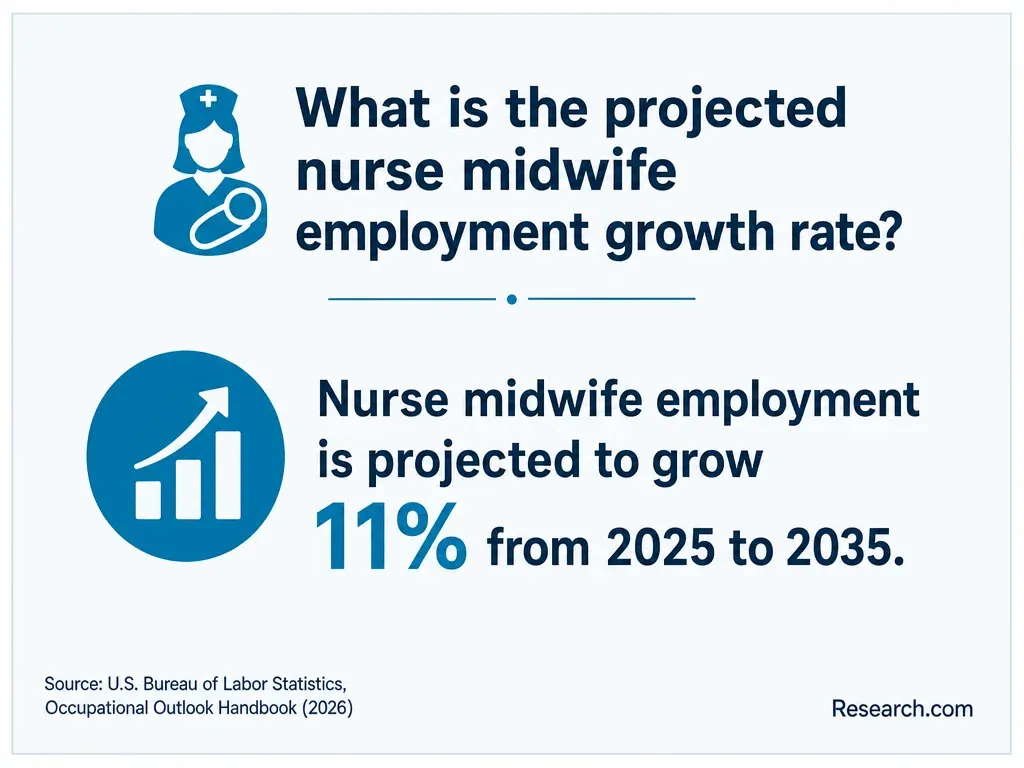
The Bureau of Labor Statistics projects employment for nurse practitioners nationally, but that occupation-wide projection is not a forecast of Montana PMHNP openings. Local opportunities depend on employers, patient access needs, clinical setting, geography, and whether a position can support a new graduate. No verified Montana PMHNP-specific growth percentage is available here, so a national figure should not be used to predict an individual's job prospects.
Before choosing a costly route, review current Montana PMHNP postings for required certification, prior experience, location, schedule, and practice responsibilities. Ask prospective employers whether they hire newly certified PMHNPs and what orientation they provide. A rural opportunity may offer a different mix of travel, consultation support, and patient access than an urban outpatient role.
Outlook also affects the education-cost decision: demand for NPs does not mean every additional doctoral credit will increase an applicant's pay. An RN comparing an MSN route with a DNP can use BSN-to-MSN tuition comparisons to frame the lower-cost alternative, then obtain PMHNP-specific program estimates and assess actual Montana job requirements before committing.
Other Things You Should Know About Nursing
Not automatically. Check the practice and prescribing requirements of the jurisdiction where each patient is located, along with employer and payer policies.
You can ask a potential preceptor about availability, but only the program can decide whether the person, site, population, and proposed experience meet its requirements.
That depends on the employer's eligibility rules, annual limits, covered expenses, and any service commitment. Get the terms in writing before budgeting around reimbursement.
Choose based on the intended role and the program's actual preparation. If eligible MSN-PMHNP study meets the nurse's clinical goal, a DNP is an additional educational choice, not a substitute for specialty training.
- Cost of Attendance (Budget) | 2025-2026 Federal Student Aid Handbook https://fsapartners.ed.gov/knowledge-center/fsa-handbook/2025-2026/vol3/ch2-cost-attendance-budget
- The request for a clinical placement in Montana must include | mt.gov https://rules.mt.gov/policy-library-documents/text/html/d1155a66cc1a9451f10d42fde506776640ead4dd9ad6e4ec448fe5966645a898
- FY 2025 - Montana https://data.hrsa.gov/api/factsheet/3/30/2025
- How Financial Aid Is Calculated | studentaid.gov https://studentaid.gov/complete-aid-process/how-calculated
- Psychiatric Mental Health Nurse Practitioner Option | Montana State University https://www.montana.edu/nursing/graduate/DNP_PsychiatricMentalHealthNursePractitionerOption.html
- MSN to DNP: How the post-master's path works and how long it takes | Chamberlain University https://www.chamberlain.edu/blog/msn-to-dnp-how-the-post-masters-path-works-how-long-it-takes-and-what-to-check
- Psychiatric-Mental Health Nurse Practitioner DNP | RUSH University https://www.rushu.rush.edu/college-nursing/programs-admissions/psychiatric-mental-health-nurse-practitioner-dnp
- Pathways to the DNP | University of Maryland School of Nursing https://www.nursing.umaryland.edu/academics/doctoral/dnp/dnp-pathways/
- How Long Does a DNP Take? | Arkansas State University Online https://degree.astate.edu/online-programs/healthcare/dnp/general-practice/career-growth-for-working-nurses/
- Online DNP Programs: Doctor of Nursing Practice | Georgetown https://nursing.georgetown.edu/degree-programs/doctoral/doctor-of-nursing-practice-programs/