2027 Leading a Nursing Education Project: Needs Assessment, Teaching, and Evaluation
Audited and Verified:
Our Editorial and Data Verification Process
Research.com uses government datasets, official education statistics and primary institutional information to support its career and degree guides. Our review process checks factual accuracy, occupational definitions, source dates and the requirements associated with the credentials discussed.
How This Article Was Fact-Checked
Our editorial team verifies salary estimates, employment projections, education requirements and program information against original data providers and official organizations. Salary figures are checked against the relevant occupational definitions and reporting periods. Information about licensure, accreditation and required in-person training is reviewed separately.
Fact-checked and verified on:

Co-Founder and Chief Data Scientist
A nursing education project succeeds when it addresses a demonstrated learning gap - not simply an interesting topic. For a nursing student, preceptor, staff educator, or nurse leading workplace training, the challenge is to define the gap, teach within the time and resources available, and show whether learning transferred to practice.
This guide explains how to make those decisions, including when formal nursing education matters and when a focused training project is enough. It also shows how to evaluate results without mistaking attendance or confidence for clinical competence.
Key Things You Should Know
- Build the project around three linked decisions: what learners need, what teaching can address, and what evidence will show improvement.
- Measure more than attendance. A useful evaluation separates participation, knowledge or skill, observed practice, and patient or organizational outcomes; those four measures do not establish the same thing.
- A nursing degree is not automatically required to lead staff education. Match the role to employer expectations, required licensure, subject expertise, and the authority needed to assess clinical performance.
What is a nursing education project, and why does needs assessment matter?
A nursing education project is a planned teaching intervention for a defined group, such as nursing students practicing handoff communication or clinic nurses learning a revised documentation workflow. Its deliverables might include a lesson plan, teaching materials, a competency check, and an evaluation report. It differs from a general presentation because its objectives and measures respond to a documented need.
A needs assessment identifies the difference between expected and current performance, then tests whether education can reasonably close it. Consider a hypothetical unit with incomplete handoff documentation. Staff may need practice using the agreed format, but missing fields in the electronic record or insufficient handoff time may also contribute. Teaching alone cannot fix a workflow barrier.
For a manageable project, work through these decisions before developing slides or simulation scenarios:
- Define the learners, setting, expected performance, and decision-maker who can approve the work.
- Review permitted evidence, such as de-identified audit summaries, course assessments, staff feedback, or an approved observation checklist.
- Separate a knowledge or skill gap from staffing, equipment, policy, and workflow problems.
- Set one or two observable objectives and choose a teaching method that fits the learners' duties and available time.
A student completing a postlicensure project should confirm whether it is an education deliverable or an approved clinical placement. For example, BSN completion options for experienced RNs may organize applied coursework differently; a workplace teaching project should never be assumed to satisfy supervised clinical-hour requirements.
What nursing degree pathways prepare students for professional licensure?
Project leadership and entry into licensed nursing practice are separate decisions. Someone who wants to teach colleagues within an existing role may need educator development rather than another degree. Someone who wants to become an RN must instead complete a qualifying prelicensure pathway and meet the relevant state board's requirements.
The distinction below helps prevent a common planning error: choosing a program for its teaching or leadership courses when the intended job first requires an RN license.
| Pathway | Typical entry point | Licensure relationship |
| Prelicensure ADN/ASN or BSN | Applicant not yet licensed as an RN | Designed to prepare eligible graduates to seek initial RN licensure, subject to state requirements |
| Accelerated prelicensure BSN | Applicant with a prior bachelor's degree who meets nursing prerequisites | Also an initial RN pathway; the prior degree does not itself confer nursing licensure |
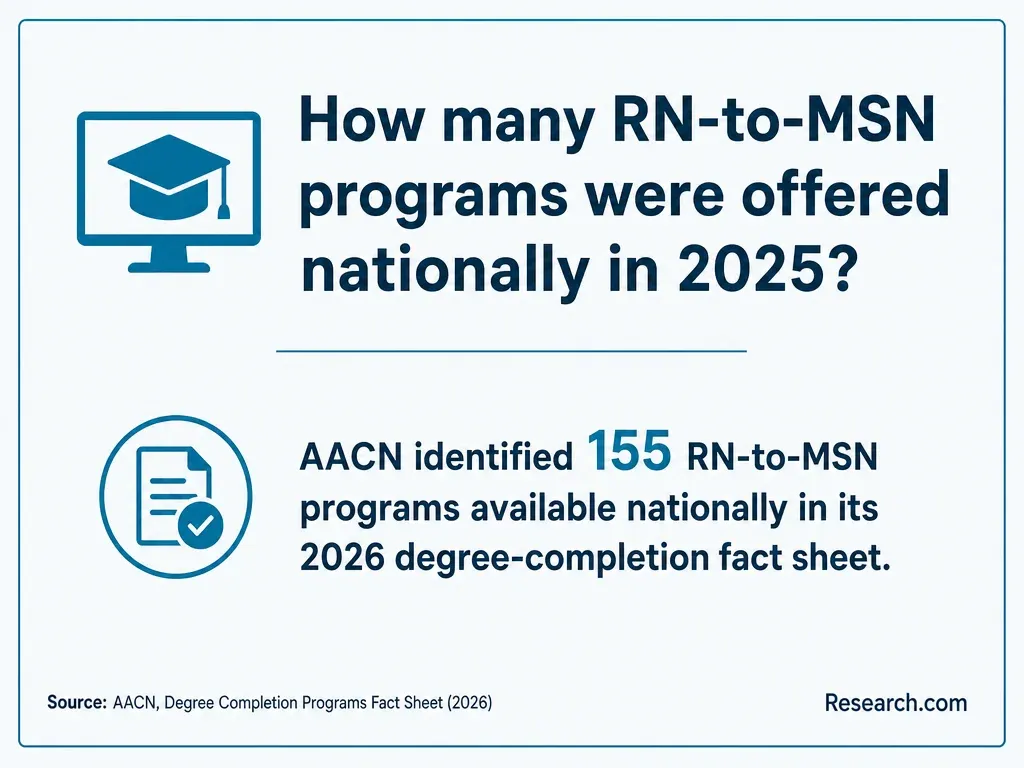
| RN-to-BSN or RN-to-MSN | Already-licensed RN | Advances education; it is not a substitute for initial RN preparation |
| Graduate education, leadership, or informatics track | Usually an RN meeting program requirements | May support a teaching or leadership role but does not inherently prepare an APRN |
Licensed ADN-prepared nurses considering graduate study can compare MSN pathways that accept ADN-prepared nurses with shorter professional-development options. Confirm the exact award, RN-license requirement, clinical expectations, and fit with the intended educator role before committing.
How do you choose an accredited nursing education program?
If a degree is necessary for the intended teaching role, check three different forms of recognition: the institution's accreditation, the nursing program's applicable accreditation, and state board approval or recognition when the program leads to licensure. None automatically establishes the others. Ask the school which campus, delivery format, degree, and track its published status covers, then confirm any state-specific enrollment or licensure implications with the responsible authorities.
For an education-project goal, compare what students actually produce and who evaluates it. Ask whether a capstone permits workplace education, how a site or faculty mentor is assigned, who approves data access, and whether project requirements fit the time available. Published outcomes also need context: a completion or exam-pass rate is more informative when its reporting year, cohort, and denominator are clear.
Admissions selectivity is a different question from project quality. A nurse comparing DNP application options by selectivity should still verify the specific program's project expectations, supervision, costs, and relevance to the intended role. A DNP is not necessary for every staff-development project.
Requirements depend on whether the applicant seeks initial RN preparation, degree completion as an RN, or graduate education. Prelicensure programs may review prerequisite sciences and labs, grades, entrance assessments, and eligibility for clinical placement. Postlicensure programs generally verify RN status and prior academic work; graduate tracks may also request professional experience, references, or a statement of goals.
Check requirements at the level of the nursing track, not just university admission. A prior degree may satisfy general education requirements without satisfying anatomy, physiology, microbiology, statistics, course-age, or lab-format rules. Admission also does not guarantee that a proposed workplace project or clinical site will be approved.
If an entrance exam is an obstacle, nursing programs that do not require TEAS scores are one comparison point. Verify the policy for the intended entry term and ask what other selection criteria apply. For an already-licensed nurse whose immediate goal is a teaching deliverable, employer educator training may be more direct than applying for another degree.
Prelicensure nursing study connects health assessment, pharmacology, pathophysiology, communication, clinical judgment, and patient safety with laboratory, simulation, and supervised patient care. Students must demonstrate more than recall: they are assessed on how they recognize concerns, communicate, document, and act within their level of supervision. Program-approved clinical experience is not interchangeable with attending a teaching session or completing a workplace project.
Postlicensure education may add evidence appraisal, instructional design, informatics, leadership, and quality improvement. Those subjects help a project leader decide whether to teach a skill through demonstration and feedback, a judgment task through cases, or a workflow change through practice in the actual system. The teaching method should follow the objective, not the novelty of the technology.
Specialty preparation demands additional precision. A nurse considering shorter family NP certificate pathways should distinguish a project about teaching family-care concepts from the supervised population-focused education required for NP preparation. Leading a class does not replace clinical competencies or certification eligibility requirements.
Online delivery can make lectures and project meetings easier to access, but it does not make supervised clinical work, simulation, group teaching, or live assessments optional. Campus-based instruction may simplify hands-on practice and faculty feedback but increase travel and schedule demands. Either format can support a strong education project if learners can practice the target behavior and receive credible feedback.
Before enrolling, request the actual schedule: live-session times, campus visits, simulation dates, placement responsibilities, and project-site approval rules. If the proposed learners work shifts, check whether teaching and follow-up assessments can occur without excluding night or weekend staff. An asynchronous module may improve access, while an observed skill still needs an appropriate in-person or approved simulated assessment.
The same distinction matters when comparing PMHNP certificate admissions and timelines: online coursework does not eliminate supervised specialty preparation. A convenient format should be judged against its required experiences, not its label.
Timelines vary with prior credit, enrollment pace, nursing-course sequence, clinical availability, and project approval. A prelicensure student must account for classroom and supervised clinical preparation; an RN pursuing a postlicensure degree may have a different sequence. A short teaching intervention can fit within one course or workplace cycle, but obtaining permission, collecting baseline information, and reassessing practice may take longer than delivering the lesson.
Compare the total cost to reach the goal, not tuition alone: program fees, books, technology, travel, required visits, reduced work hours, and any project-related materials all matter. For a workplace project, a simple budget can distinguish paid staff time from printing or platform expenses and identify who authorizes each cost. Do not calculate savings from a shorter program until the school confirms credit acceptance and the full enrollment plan.
RNs evaluating online BSN-to-MSN programs organized by tuition should compare the final credential and total charges with the role's requirements. If the goal is to run one approved staff lesson, targeted training and mentorship may cost substantially less than a graduate degree, though employers may require formal preparation for permanent educator positions.
Effective teaching aligns the objective, practice activity, and assessment. For a hypothetical handoff project, a brief explanation of the agreed format can precede a realistic case and feedback on an observed handoff. A knowledge quiz can show recall; an observation checklist can show performance in that exercise. Neither alone proves that every future handoff will be complete.
Support matters as much as content. Learners need a chance to ask questions, accessible materials, feedback that identifies what to improve, and a way to practice without compromising patient care. Project leaders need a faculty adviser or workplace sponsor who can resolve scope, scheduling, and assessment questions. If the teaching involves simulation or clinical observation, confirm who is qualified and authorized to assess performance.
Compressed study makes these supports especially important. Nurses reviewing 12-month FNP program options should examine assessment frequency, feedback, and clinical scheduling rather than treating a short advertised duration as evidence of adequate preparation. The same principle applies to a brief education project: protect enough time for practice and reassessment.
Graduation can support different careers depending on the person's license, degree, experience, and employer requirements. A licensed RN might teach as a preceptor, move into staff development, or pursue a formal nurse educator role. These jobs are not identical: a preceptor supports learners during assigned care, while an educator may design curricula and evaluate learning across a department. Specialty certification can document qualifying expertise, but it does not grant a nursing license, replace employer onboarding, or establish authority to supervise.
Salary comparisons require matching the actual job, not the degree title, to the occupation. A U.S. Bureau of Labor Statistics median for registered nurses describes an occupation-wide workforce; it is not the expected pay for a new graduate, nurse educator, or project leader. Ask prospective employers for the position's pay range, required credentials, protected teaching time, and advancement criteria. Compare those terms with tuition and forgone earnings before pursuing another degree.
An RN aiming instead for advanced clinical practice can review NP programs organized by tuition, but affordability is only one filter. Population-focus preparation, clinical placements, certification eligibility, and state authorization govern that separate career decision; an education project does not confer NP competence.
How is a nursing education project evaluated for quality and impact?
Evaluate the project against its original objective and the limits of its evidence. Before teaching, specify what will be measured, when it will be measured, and who may access the data. For example, a hypothetical documentation lesson might measure completion of selected fields before teaching, performance on a practice case immediately afterward, and permitted aggregate documentation audits later.
If no follow-up audit is authorized, report learning results rather than claiming a change in clinical practice. A concise evaluation report should separate these forms of evidence and their limitations:
- Reach: who participated and whether key shifts or learner groups were missed.
- Learning: what a quiz, case response, or skills check shows against a stated objective.
- Practice: whether an approved observation or aggregate audit suggests the behavior occurred after teaching.
- Outcomes: whether a relevant safety or operational measure changed, without attributing the change to teaching alone when other factors could explain it.
Report denominators, measurement dates, missing observations, and revisions made after feedback. Obtain employer and faculty permissions before accessing records or sharing findings; use only authorized, privacy-protective data. The institution determines whether the work is education evaluation, quality improvement, or research requiring additional review. A project proposal is not evidence of completed results.
When comparing advanced programs, including shorter MSN-PMHNP routes, apply the same discipline to advertised outcomes: ask what was measured, which students were included, and whether the evidence answers your goal. For your own project, the strongest conclusion is often a bounded one: what learners demonstrated, what remains untested, and what the next teaching cycle should change.
Other Things You Should Know About Nursing
Agree on ownership and reuse with the employer and any academic program before development. Follow workplace rules for logos, internal procedures, recordings, and confidential examples.
Record who was reached and arrange an approved alternative, such as another session or accessible module. Do not describe the project as unit-wide training if important groups were missed.
Usually, if the organization permits it and learners understand how responses will be used. Keep feedback collection separate from patient information and avoid promising anonymity when a small group could make respondents identifiable.
Assign an owner and review date. Revise it when relevant policy, evidence, technology, or workflow changes - and remove outdated material rather than continuing to assign it.
- Validating Assessment Tools in Simulation - StatPearls - NCBI https://www.ncbi.nlm.nih.gov/books/NBK560531/
- CDC Program Evaluation Framework, 2024 | MMWR https://www.cdc.gov/mmwr/volumes/73/rr/rr7306a1.htm
- Designing feedback processes in the workplace-based... - PMC https://pmc.ncbi.nlm.nih.gov/articles/PMC11036781/
- Strategies for Effective Lesson Planning - CRLT https://crlt.umich.edu/gsis/p2_5
- Chapter 8: Writing an Effective Evaluation Plan | umn.edu https://manifold.open.umn.edu/read/chapter-8-evaluation
- Writing Effective Learning Objectives / Educational Objectives | jhu.edu https://provost.jhu.edu/education/assessment-at-jhu/assessment-measures/writing-effective-and-measurable-learning-objectives/
- Assessing Student Learning Outcomes | Bronx Community College https://www.bcc.cuny.edu/academics/oie/five-step-assessment-process/assessing-student-learning-outcomes/
- Fidelity in School Settings: How It Works and Why It Matters | Iowa Reading Research Center https://irrc.education.uiowa.edu/blog/2024/11/fidelity-school-settings-how-it-works-and-why-it-matters
- Section 5. Developing an Evaluation Plan - Community Tool Box https://ctb.ku.edu/en/table-of-contents/evaluate/evaluation/evaluation-plan/main
- Seven Steps for Conducting a Successful Needs Assessment | nichq.org https://nichq.org/blog/seven-steps-conducting-successful-needs-assessment/