2027 Is an Online Healthcare Administration Bachelor's Degree Worth It?

Co-Founder and Chief Data Scientist
An online healthcare administration bachelor’s degree is usually considered by people who want to move into healthcare leadership without leaving work, relocating, or pausing family responsibilities. The degree can be useful, but it is not automatically the right investment for every student. The value depends on program cost, accreditation, transfer credits, employer recognition, career goals, and how quickly the credential can help you qualify for management or administrative roles.
Demand is one reason this degree attracts attention. According to the Bureau of Labor Statistics, employment for healthcare administrators is projected to grow 32% through 2030, much faster than average. That growth reflects a larger need for professionals who can manage healthcare operations, budgets, compliance, staffing, patient services, data systems, and quality improvement.
This guide explains what to examine before enrolling: real online program costs, long-term return on investment, salary expectations, job options, accreditation, admissions requirements, student support, financial aid, completion timelines, and how employers view online healthcare administration degrees. The goal is to help you decide whether this path fits your current responsibilities and long-term career plans.
Key Things to Know About the Value of an Online Healthcare Administration Bachelor's Degree
- Online healthcare administration degrees offer flexible learning options ideal for working parents, veterans, and mid-career professionals seeking to balance education with life responsibilities.
- Military-friendly programs often accept service credits, reducing time and costs, enhancing return on investment through accelerated degree completion and lower tuition fees.
- Graduates commonly access growing healthcare management roles with a median salary of $104,280 in 2024, supporting strong career advancement and long-term professional stability.
What Are the Real Costs of Earning an Online Healthcare Administration Bachelor's Degree, and How Do They Compare to On-Campus Programs?
The real cost of an online healthcare administration bachelor’s degree includes more than tuition. Students should compare per-credit rates, fees, technology expenses, transfer credit policies, financial aid, and indirect savings such as housing and commuting. Tuition costs for online healthcare administration bachelor's degrees generally range from $300 to $600 per credit hour, which is often cheaper than on-campus programs, according to national data from IPEDS and the College Board's Trends in College Pricing report.
Online programs can be less expensive because students often avoid campus housing, parking, meal plans, and daily transportation. However, online study is not cost-free beyond tuition. Technology fees, proctoring fees, software, textbooks, and graduation charges can change the total price. For students comparing programs, the most useful number is not the advertised tuition rate but the total estimated cost after transfer credits, grants, scholarships, and employer assistance.
- Tuition per credit hour: Online programs often offer competitive pricing compared with traditional campus options. Public universities may charge lower rates for in-state online students, while some schools use a flat online tuition rate regardless of location.
- Required fees: Online students may pay technology, library access, enrollment, proctoring, or student service fees. These fees generally remain modest, under $200 per semester, but they vary by institution.
- Technology costs: Students need reliable internet, a suitable computer, and sometimes specific software. A computer may be a one-time purchase, but internet service and software subscriptions can become ongoing indirect costs.
- Indirect savings: Online learners frequently save on commuting, housing, parking, and meals. These savings can be especially important for working adults, parents, and students who live far from a campus.
- Net price versus sticker price: The listed tuition can overstate what students actually pay. Financial aid, including scholarships, grants, and employer tuition assistance, commonly reduces expenses by 30 to 50 percent or more.
Accredited programs that balance quality and affordability, with tuition below the national average, include the University of Central Florida, Southern New Hampshire University, Indiana State University, and Liberty University. When comparing these and other options, request a full cost estimate that includes tuition, fees, books, technology requirements, and any required campus visits.
Students focused on affordability should also ask how many prior credits will transfer, whether the school charges different rates for upper-division courses, and whether employer tuition reimbursement applies. A lower per-credit rate may not be the cheapest option if the program accepts fewer transfer credits or requires more paid coursework. If price is your first screening factor, comparing a healthcare management degree online can help you evaluate lower-cost pathways before committing.
For related healthcare education pathways, prospective students may also find value in reviewing online RN to BSN programs, especially if they already hold nursing credentials and want to connect clinical experience with administrative advancement.
What Is the Return on Investment (ROI) of an Online Healthcare Administration Bachelor's Degree Over a Career Lifetime?
The return on investment of an online healthcare administration bachelor’s degree depends on how much the student pays, how much debt they take on, whether they continue working while enrolled, and how the degree affects career mobility. ROI in higher education compares the financial benefits of the credential with the total cost of earning it, including tuition, fees, materials, financing costs, and any lost wages.
Using data from the Georgetown University Center on Education and the Workforce and the PayScale College ROI Report, students can build a practical framework for evaluating value. Start by estimating the total program cost after grants, scholarships, transfer credits, and employer tuition assistance. Then compare that amount with expected earnings over a 30 to 40 year career in healthcare administration roles. Subtract degree costs from projected earnings to estimate net return, then divide by the initial investment to express ROI as a percentage.
Affordable online programs can improve ROI because they reduce upfront costs and may allow students to keep working while enrolled. Benchmarking low-cost online programs against national averages reveals strong outcomes. For example, graduates of affordable online healthcare administration bachelor's programs often exceed the 10-year ROI of the average bachelor's degree holder and continue to see enhanced returns at 20 years, especially as they advance into leadership positions.
- 10-Year ROI: Lower tuition and manageable debt can help graduates reach a breakeven point faster, especially if the degree supports movement into healthcare operations, practice management, or supervisory roles.
- 20-Year ROI: Returns can grow as professionals gain experience, move into higher-responsibility positions, or use the bachelor’s degree as a foundation for graduate study.
- Cost efficiency: Programs that accept transfer credits, offer reasonable tuition, and provide clear pathways to employment can reduce debt burden and improve lifetime financial outcomes.
- Opportunity cost: Online study may reduce lost income because many students can remain employed while completing coursework.
ROI is not only financial. Graduates may gain professional credibility, access to administrative career ladders, broader mobility across healthcare settings, and stronger preparation for graduate education. These non-monetary benefits matter, but they should not replace a careful cost comparison. A program with weak accreditation, poor support, or limited employer recognition can reduce the value of the degree, even if tuition appears low.
Students building a broader healthcare education plan may also compare related graduate pathways, such as online MSN FNP programs, to understand how different credentials affect long-term career and salary options.
How Do the Salary Outcomes for Online Healthcare Administration Bachelor's Graduates Compare to Those With Traditional Degrees?
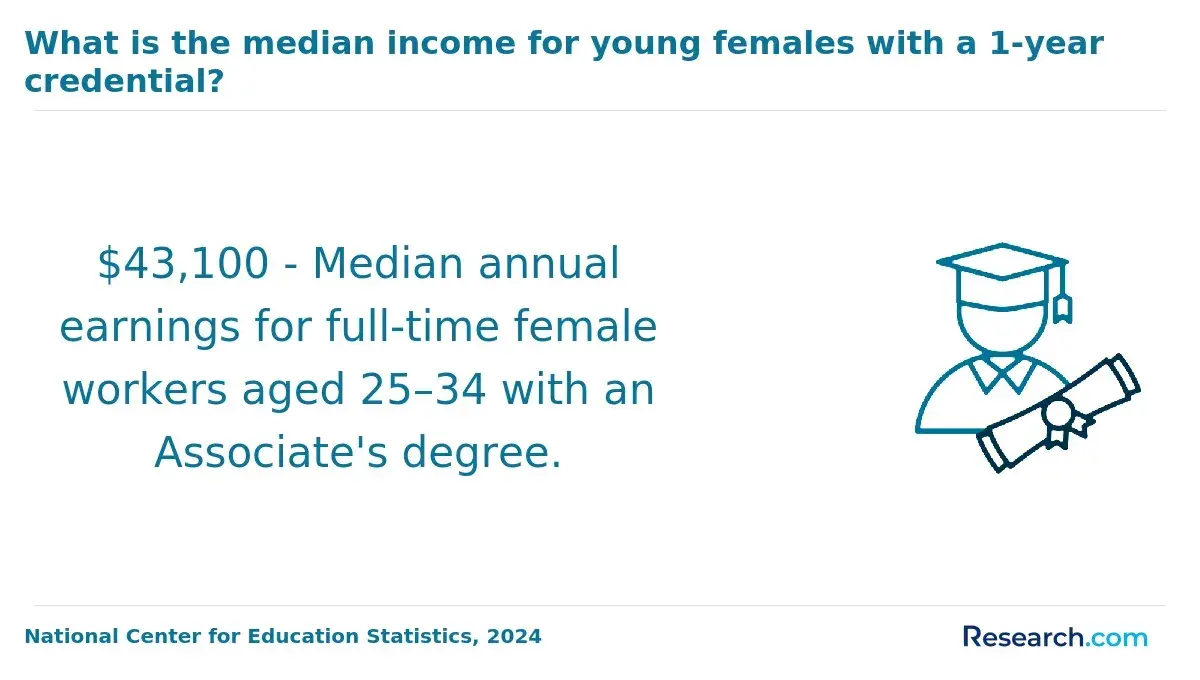
Salary outcomes for graduates of accredited online healthcare administration bachelor’s programs are generally comparable to those of graduates from traditional on-campus programs when the school is reputable and the curriculum is aligned with employer needs. Employers typically focus more on accreditation, relevant experience, internships, leadership ability, data skills, and healthcare knowledge than on whether the coursework was completed online or in person.
Graduates from online healthcare administration bachelor's programs typically see starting salaries comparable to those earning degrees on campus, with median entry-level pay ranging between $48,000 and $55,000 annually. Over time, factors such as institution reputation, local labor market conditions, specialization, certifications, and work experience tend to matter more than delivery format.
- Median starting salary: Recent graduates entering healthcare administration roles often report pay that aligns closely with traditional program alumni, especially when the program is accredited and includes career preparation.
- Mid-career earnings: After five to ten years of experience, many professionals advance into supervisory or managerial roles, with salaries typically ranging from $70,000 to $95,000.
- Institution-specific outcomes: Data from IPEDS and institutional reports suggest that programs with strong employer relationships, credible accreditation, and transparent outcomes tend to support stronger placement and salary growth.
- Experience premium: Students who already work in healthcare may benefit more quickly because the degree can validate practical experience and help them qualify for internal promotions.
One graduate who completed an online healthcare administration bachelor’s degree described the early adjustment as challenging but manageable. He had to learn online platforms, maintain discipline, and balance coursework with work and family. The flexible format allowed him to stay employed, which reduced the financial risk of enrolling.
He noted, "I was skeptical at first about whether employers would value an online degree, but after earning it, I found my qualifications respected equally." Reflecting on salary progress, he added that career growth depended far more on gaining relevant experience and certifications than on the mode of study. "Ultimately, finishing online gave me the credentials I needed without sacrificing my job, which was crucial for my advancement."
What Career Paths and Job Opportunities Are Available to Online Healthcare Administration Bachelor's Degree Graduates?
An online healthcare administration bachelor’s degree can prepare graduates for administrative, operational, and management-track roles across hospitals, clinics, physician practices, long-term care facilities, insurance companies, public health organizations, and healthcare technology vendors. The degree is not a clinical credential. Its value is in preparing students to manage systems, people, budgets, records, compliance, and patient service processes.
- Healthcare administrators: These professionals typically work in hospitals, clinics, or nursing homes, managing operations, staffing, scheduling, budgeting, quality initiatives, and regulatory compliance. Entry-level roles usually require only a bachelor's degree, while advanced positions may need certifications, graduate education, or role-specific experience.
- Medical and health services managers: These professionals oversee departments, service lines, or entire facilities. The Bureau of Labor Statistics projects a 15% job growth from 2024 to 2034, highlighting strong demand driven by population aging and industry expansion.
- Health information managers: These professionals focus on patient data, records systems, privacy, coding workflows, and compliance. A bachelor’s degree may qualify graduates for some roles, while certifications such as the Registered Health Information Administrator (RHIA) credential can strengthen competitiveness.
- Practice managers: These managers handle business operations in outpatient centers and physician offices, including scheduling, billing coordination, staff supervision, patient flow, vendor relationships, and policy implementation.
- Healthcare consultants: Consultants advise organizations on operations, compliance, revenue cycle issues, workflow improvement, or strategic planning. These roles often favor candidates with experience or graduate-level training beyond the bachelor's degree.
Specialization matters. Students interested in data-driven roles may prefer coursework in health information technology, analytics, privacy, or quality improvement. Those aiming for leadership in clinics or hospitals may benefit from operations, finance, human resources, and healthcare law. Students interested in policy or payer organizations should look for courses in public health, insurance, reimbursement, and regulation.
Students who want a shorter time to completion may compare programs that accept transfer credits or use accelerated course formats. Researching colleges with accelerated programs can be useful for learners balancing education with career demands.
What Student Support Services Do Online Healthcare Administration Bachelor's Programs Provide to Promote Success and Retention?
Strong student support can determine whether an online learner finishes the degree on time or stops out. Online healthcare administration students are often working adults, parents, military-affiliated learners, or transfer students, so they need support that is easy to access outside standard business hours and tailored to their academic plan.
- Dedicated academic advising: Advisors help students choose courses, understand prerequisites, evaluate transfer credits, plan graduation timelines, and avoid unnecessary classes. This is especially important for students balancing work, family, or military commitments.
- Tutoring centers: Remote tutoring can help students stay on track in challenging subjects such as accounting, statistics, healthcare finance, economics, or research methods.
- Writing labs: Healthcare administration students write reports, policy analyses, discussion posts, case studies, and professional communications. Virtual writing support can strengthen clarity, structure, citation use, and workplace-ready communication.
- Mental health counseling: Telehealth counseling can provide confidential support during stressful academic periods. For online learners managing multiple responsibilities, access to counseling may help sustain motivation and persistence through completion.
- Career services: Leading programs often offer resume reviews, interview preparation, internship coordination, job search support, employer networking, and mentorship opportunities.
- Technical support: Reliable help with the learning platform, proctoring tools, library access, and software can prevent small technical problems from becoming missed assignments.
A healthcare administration professional who completed an online bachelor's program said these services shaped her ability to persist. While balancing family and full-time work, she relied on academic advising to optimize her course timeline and apply transfer credits, which reduced unnecessary coursework.
She also used tutoring when difficult subjects created stress, telehealth counseling during intense periods, and career services to secure a summer internship that led directly to her current role. Her experience shows why support services should be part of the program comparison, not an afterthought.
Is an Online Healthcare Administration Bachelor's Degree Respected by Employers and Recognized Across Industries?
An online healthcare administration bachelor’s degree is generally respected when it comes from an accredited institution with a credible curriculum and clear career outcomes. A recent survey by the Society for Human Resource Management (SHRM) reveals that nearly 78 percent of hiring managers see no credibility gap between online and on-campus healthcare administration degrees from accredited institutions. Large healthcare employers like Kaiser Permanente and UnitedHealth Group frequently recruit graduates from respected online healthcare administration programs.
Employer acceptance is strongest when the school is properly accredited, the transcript does not suggest a low-quality or unrecognized institution, and the graduate can demonstrate job-ready skills. Employers may look for coursework in healthcare operations, finance, compliance, quality improvement, data systems, leadership, ethics, and healthcare law. Internships, capstone projects, and healthcare work experience can further strengthen a candidate’s profile.
Some roles may still favor traditional or in-person preparation. Positions requiring intensive clinical exposure, direct patient care, laboratory research, or highly specialized hands-on training may prefer candidates with in-person experience. Healthcare administration itself is primarily a management and operations field, so online delivery is often appropriate when the program provides rigorous coursework and meaningful applied learning.
- Evidence-based acceptance: Surveys indicate most employers accept accredited online healthcare administration degrees as equal to on-campus credentials, especially when the institution has a strong reputation.
- Major recruiters: Leading healthcare organizations actively hire from established online programs, demonstrating broader industry confidence in online graduates.
- Field-specific preferences: Clinical and research-focused roles may still place more weight on traditional programs because of hands-on training expectations.
- Accreditation importance: Employer recognition depends heavily on whether the institution and program meet recognized quality standards.
- Career fit: Students should match the program format and curriculum to the type of employer they want to pursue, including hospitals, insurers, public agencies, consulting firms, or outpatient organizations.
What Accreditation Standards Should an Online Healthcare Administration Bachelor's Program Meet to Be Considered Legitimate?
Accreditation is one of the most important checks before enrolling in an online healthcare administration bachelor’s program. It affects federal financial aid eligibility, credit transfer, employer confidence, graduate school admission, and the long-term credibility of the degree. Students should verify both institutional accreditation and any relevant program-level recognition.
Regional accreditation is generally regarded as more prestigious and reliable than national accreditation because it is widely recognized by employers, graduate schools, and other colleges. Six regional accrediting bodies recognized by the U.S. Department of Education oversee quality assurance:
- HLC: Higher Learning Commission (Midwest)
- SACSCOC: Southern Association of Colleges and Schools Commission on Colleges
- NECHE: New England Commission of Higher Education
- MSCHE: Middle States Commission on Higher Education
- NWCCU: Northwest Commission on Colleges and Universities
- WSCUC: WASC Senior College and University Commission
Programs with regional accreditation offer a stronger likelihood of credit transfer, better job market recognition, and expanded access to graduate programs. National accreditation may be appropriate in some contexts, but credits from nationally accredited schools may not transfer as easily to regionally accredited institutions.
Prospective students should verify accreditation status through trusted resources such as the Council for Higher Education Accreditation (CHEA) database and the U.S. Department of Education. They should also confirm whether the program’s accreditation is current, whether the institution has any sanctions, and whether the program has healthcare management-specific recognition, such as standards connected to the Commission on Accreditation of Healthcare Management Education (CAHME), when applicable.
Attending an unaccredited or lapsed program can create serious risks, including loss of federal financial aid eligibility, limited employer recognition, difficulty transferring credits, and barriers to graduate study. According to a recent National Center for Education Statistics report, over 85% of students pursuing healthcare-related degrees enroll in regionally accredited institutions, highlighting their critical role in advancing careers.
How Long Does It Take to Complete an Online Healthcare Administration Bachelor's Degree, and What Factors Affect the Timeline?
Most online healthcare administration bachelor’s degrees require about 120 credits and typically follow a four-year timeline for full-time students in a semester-based program. However, the actual timeline can be shorter or longer depending on transfer credits, course load, work schedule, program format, and whether the school offers accelerated or competency-based options.
Accelerated eight-week courses can help motivated students complete more classes each year. Competency-based education (CBE) pathways can also shorten the timeline by allowing students to progress after demonstrating mastery of required skills. This format may benefit learners with relevant work experience or prior knowledge. Year-round enrollment, offered by schools such as Western Governors University and Southern New Hampshire University, can further shorten completion to around two to three years.
Shorter programs may reduce tuition costs and opportunity costs, but acceleration is not always the best choice. Students working full time or caring for family members should be realistic about weekly workload. Taking too many courses can increase stress, reduce learning quality, and lead to withdrawal or repeated classes, which can make the degree more expensive.
- Credit requirement: Most bachelor's degrees in healthcare administration require around 120 credits, typically completed in four years of full-time study.
- Accelerated courses: Eight-week online formats may allow students to take more classes annually and finish sooner.
- Competency-based education: CBE pathways let students progress by demonstrating skills, often shortening degree completion for experienced learners.
- Year-round enrollment: Continuous study without extended breaks can help some students finish within two to three years.
- Transfer credits and prior learning: Credits from previous colleges, CLEP exam credits, and prior learning assessments can reduce required coursework.
- Personal commitments: Work, caregiving, military service, and health responsibilities may extend the timeline, making realistic planning essential.
Students comparing online healthcare administration programs should review accreditation, employer recognition, transfer policies, and long-term return on investment along with speed. Related healthcare pathways, such as online associate radiology tech programs, may also appeal to learners considering both administrative and technical healthcare roles.
What Financial Aid, Scholarships, and Tuition Assistance Are Available for Online Healthcare Administration Bachelor's Students?
Online healthcare administration bachelor’s students may qualify for federal aid, state grants, institutional scholarships, private scholarships, employer tuition assistance, military education benefits, and work-study options. The best strategy is usually to combine several types of aid while limiting unnecessary borrowing.
- Federal Pell Grants: These need-based grants do not require repayment. Eligibility is based on financial need as determined by the FAFSA, or Free Application for Federal Student Aid.
- Direct Subsidized and Unsubsidized Loans: These federal loans have fixed interest rates. Subsidized loans don't accrue interest while enrolled, unlike unsubsidized loans. Both require FAFSA completion.
- Institution-specific scholarships: Many colleges offer scholarships for healthcare administration students. These may be merit-based, need-based, or experience-based. Notable examples include the American College of Healthcare Executives Foundation Scholarship and the National Association of Healthcare Access Management Scholarships, awarding $1,000 to $5,000.
- State grant programs: Many states provide grants for residents attending in-state institutions, often targeting healthcare-related fields. Applicants should consult state education offices for specific eligibility.
- Employer tuition reimbursement: Healthcare employers may help pay for degrees that support internal advancement, especially when the employee agrees to meet grade, service, or employment requirements.
- Federal work-study: Eligible students may be able to earn income through approved part-time work while enrolled.
The FAFSA is essential for accessing federal, state, and institutional aid. Applicants should file it early, ideally soon after October 1, since some aid is first-come, first-served. Students must complete the FAFSA annually to maintain eligibility.
Working parents, military veterans, and mid-career professionals should ask each school for a personalized financial aid estimate before enrolling. A realistic aid plan should show total tuition, fees, expected grants, scholarships, loans, employer assistance, and remaining out-of-pocket cost. For example, combining Pell Grants, healthcare administration scholarships, and employer assistance can reduce loan dependency.
Students comparing fields may also review financial aid strategies in related programs, such as the online kinesiology bachelor's degree, to see how aid packages, transfer credits, and career outcomes differ across healthcare-adjacent degrees.
What Are the Admission Requirements for Online Healthcare Administration Bachelor's Degree Programs?
Admission requirements for online healthcare administration bachelor’s programs vary by school. Some programs are selective and expect stronger academic records, while others are designed for transfer students, adult learners, military-affiliated applicants, or career changers seeking a more accessible entry point.
- High school diploma or GED: Nearly all programs require applicants to have completed secondary education or an equivalent credential.
- Minimum GPA: Competitive programs typically require a cumulative GPA between 2.5 and 3.0 on a 4.0 scale. Less selective programs may accept lower GPAs, waive minimums, or admit students conditionally.
- Standardized test policies: Many programs are test-optional today, especially following the pandemic, but some still request SAT or ACT scores.
- Prerequisite coursework: Applicants may need foundational coursework in English, mathematics, and occasionally introductory health sciences or business.
- Transfer documentation: Students with previous college credits usually need official transcripts from every institution attended. Transfer-friendly programs may evaluate general education, business, healthcare, and elective credits.
- Rolling or continuous admissions: Numerous online healthcare administration programs review applications as they arrive, which can help working parents, veterans, and career changers avoid rigid start dates.
Prospective students should check whether admission to the university is separate from admission to the healthcare administration major. Some schools allow students to begin as pre-majors and later require completion of prerequisites or a minimum GPA before entering upper-division healthcare administration coursework.
How Should Prospective Students Evaluate and Choose the Right Online Healthcare Administration Bachelor's Degree Program for Their Goals?
The right online healthcare administration bachelor’s program is the one that fits your career target, budget, schedule, academic background, and need for support. A program can be affordable but too rigid, reputable but too expensive, or flexible but weak in career preparation. Students should compare programs using evidence rather than marketing claims.
- Accreditation: Confirm that the institution holds recognized accreditation. Also review whether the healthcare administration program follows relevant professional standards, such as CAHME-aligned expectations where applicable. Accreditation can affect credit transfer, graduate school options, employer confidence, and eligibility for federal aid.
- Cost and ROI: Compare total expenses, not just tuition. Include technology fees, proctored exams, textbooks, graduation fees, and any required campus residencies. Then weigh those costs against salary potential, job placement data, promotion opportunities, and debt load.
- Program format and flexibility: Decide whether synchronous, asynchronous, part-time, full-time, accelerated, or competency-based formats match your schedule. Students working unpredictable shifts may need asynchronous courses, while students who prefer live interaction may benefit from scheduled class meetings.
- Curriculum fit: Look for coursework in healthcare finance, operations, law and ethics, quality improvement, health information systems, human resources, leadership, data analysis, and policy. Choose electives or concentrations that align with your intended career path.
- Career outcomes data: Ask for employment statistics, internship access, alumni roles, employer partners, and examples of capstone or applied projects. Transparent outcomes are a sign that the program understands the job market.
- Student support services: Confirm access to academic advising, tutoring, career counseling, technical support, library services, writing help, and support for veterans or transfer students.
- Transfer credit policies: Investigate how many previous credits are accepted, especially if you have military service, prior college coursework, an associate degree, or professional training. Strong transfer policies can shorten time to degree and reduce cost.
- Employer alignment: If you already work in healthcare, ask your supervisor or human resources department whether the program qualifies for tuition reimbursement and whether the degree would support promotion within your organization.
A good final step is to compare at least three programs side by side using the same criteria: accreditation, total net cost, accepted transfer credits, completion time, curriculum, career services, and outcomes. Avoid choosing based only on speed or advertised tuition.
What Graduates Say About the Value of Their Online Healthcare Administration Bachelor's Degree
- Augustus: "Choosing the online healthcare administration bachelor's degree program was a practical decision for me because I needed flexibility around my family commitments. The cost was surprisingly reasonable compared to traditional universities, making it a smart investment without sacrificing quality. Completing the program gave me the confidence and credentials to step into management roles much faster than I anticipated."
- Antonio: "Reflecting on my experience, the online healthcare administration bachelor's degree provided me with essential industry insights and the business acumen necessary to navigate complex healthcare environments. Although I was initially concerned about the return on investment, the career advancement opportunities and salary increase I've enjoyed since graduation have proven it was well worth it. The program truly prepared me to lead with both knowledge and empathy in a challenging field."
- Julian: "I was drawn to the online healthcare administration bachelor's degree program because it allowed me to continue working while studying, which was critical for financing my education. The affordable tuition helped me avoid excessive debt, and the skills I gained opened doors to new professional opportunities within my organization. This program transformed my career trajectory-I feel equipped to make significant contributions to healthcare management."
Other Things You Should Know About Healthcare Administration Degrees
Students can often choose among concentrations such as healthcare informatics, health policy, long-term care management, or public health administration. These specializations allow students to tailor their studies to specific sectors of the healthcare industry, enhancing their expertise and career prospects. Availability of concentrations depends on the institution, but is common in accredited programs focused on workforce relevance.
Many online programs accept transfer credits from regionally accredited institutions, often allowing up to 60 semester hours to be transferred. Some also recognize prior learning through standardized exams or professional certifications relevant to healthcare administration. Transfer policies vary, so prospective students should verify limits and documentation requirements before enrollment to maximize credit recognition.
Common challenges include balancing coursework with personal responsibilities and staying motivated without in-person interaction. Technical issues and time management can also impede progress. To overcome these, students benefit from establishing a consistent study schedule, leveraging academic advising and tutoring services, and engaging in virtual study groups or networks to maintain connection and accountability.
References
- Healthcare Administration Degree Online: Career Paths Explained https://stpaddysdayrunchicago.com/healthcare-administration-degree-online-career-paths-explained
- Online Healthcare Administration Degree | Programs & Career Options https://www.learnhowtobecome.org/best-online-bachelors-in-healthcare-administration-degree-programs/
- Online Healthcare Administration Degree https://www.snhu.edu/online-degrees/bachelors/bs-in-healthcare-administration
- Healthcare Administration Scholarships https://www.healthadministrationdegrees.com/healthcare-administration-scholarships/
- Online Resources & Scholarships for Healthcare Administration Students https://www.edumed.org/financial-aid/scholarships/healthcare-administration-degrees/
- What are some Benefits of Studying Healthcare Administration Online? - Healthcare Administration Degree Programs https://www.healthcare-administration-degree.net/faq/what-are-some-benefits-of-studying-healthcare-administration-online/
- What to Look for in a Healthcare Administration Degree Online https://www.snu.edu/degrees/blog/what-to-look-for-in-a-healthcare-administration-degree-online
- Does College Pay Off? A Comprehensive Return On Investment Analysis - FREOPP https://freopp.org/whitepapers/does-college-pay-off-a-comprehensive-return-on-investment-analysis/