2027 Industries Hiring Graduates With a Neuroscience Degree

Co-Founder and Chief Data Scientist
Where can graduates with a neuroscience degree find meaningful career opportunities? As workforce demands evolve, jobs for neuroscience degree holders are increasingly diverse, spanning more than traditional research roles. Recent data shows that over 40% of neuroscience graduates transition into interdisciplinary fields within five years post-graduation, reflecting expanding industry demand.
Understanding where graduates typically work helps clarify career flexibility and stability in this sector. This article explores the industries hiring neuroscience graduates, highlighting key career opportunities to guide prospective and current students toward informed employment decisions.
Key Benefits of Industries Hiring Graduates With a Neuroscience Degree
- Diverse industries hiring neuroscience graduates increase career opportunities and provide employment flexibility, allowing graduates to navigate various sectors such as healthcare, technology, and education.
- Strong industry demand for neuroscience expertise supports long-term career growth and professional stability amid evolving scientific advancements.
- Cross-industry work fosters transferable skills development, broadening professional experience and enhancing adaptability in an increasingly interdisciplinary job market.
What Industries Have the Highest Demand for Neuroscience Majors?
Employer demand for neuroscience majors fluctuates across several key industries, reflecting the growing importance of brain science in products and services. Reports indicate that biotechnology and pharmaceutical sectors have experienced a 12% annual increase in hiring candidates with neuroscience expertise, driven by advances in neurological drug development.
These trends highlight diverse career opportunities for those with a neuroscience degree.
- Pharmaceuticals: Neuroscience graduates are vital for developing treatments for neurological diseases such as Alzheimer's and Parkinson's. Their skills are applied in research and development, clinical trials, and regulatory roles that support medication innovation and safety protocols.
- Healthcare: Hospitals, mental health clinics, and rehabilitation centers recruit neuroscience professionals to enhance patient care through diagnostic imaging and cognitive rehabilitation. Their understanding of brain function improves treatment plans and patient outcomes in clinical settings.
- Biotechnology: Firms use neuroscience insights to create neural engineering breakthroughs, brain-computer interfaces, and biomarkers. Neuroscience knowledge contributes to developing biological products and advanced devices that interact directly with the nervous system.
- Technology and Data Analysis: Companies in AI, human-computer interaction, and behavioral analytics increasingly value neuroscience skills. Graduates help build cognitive models and improve user experiences by applying brain science to emerging technological challenges.
These top career fields hiring neuroscience degree graduates in the United States demonstrate the degree's versatility, from healthcare to technology. Prospective students exploring opportunities may also consider online RN to BSN programs no clinicals as a pathway that complements neuroscience training for healthcare roles.
Which Industries Have the Strongest Job Outlook for Neuroscience Graduates?
The job outlook for neuroscience graduates is shaped by industry growth trends, workforce demand, and projected hiring needs across key sectors. According to the U.S. Bureau of Labor Statistics, employment in life sciences, including neuroscience-related roles, is expected to grow around 6% through 2032. This growth reflects ongoing investments in healthcare, technology, and research that rely heavily on neuroscience expertise.
The following industries demonstrate particularly strong or expanding demand for these professionals.
- Biotechnology and Pharmaceuticals: This sector leads in developing new therapies for neurological disorders such as Alzheimer's and Parkinson's diseases. The aging global population and rising cognitive impairments drive sustained investment in drug discovery and clinical trials, creating robust job opportunities for neuroscience graduates.
- Healthcare and Mental Health: Increased focus on neurorehabilitation and treatment for brain injuries, stroke survivors, and psychiatric conditions fuels a rising need for specialists skilled in brain function and therapeutic innovation.
- Technology and Neuroengineering: Advances in artificial intelligence, brain-computer interfaces, and wearable neurotechnology devices open new roles for neuroscience professionals in research and product development aimed at cognitive enhancement and brain health monitoring.
- Academic and Government Research: Strong funding and regulatory requirements support ongoing neuroscience research efforts, emphasizing drug safety assessments and understanding neurological impacts of environmental factors, sustaining consistent employment demand.
What Entry-Level Jobs Are Available for Neuroscience Graduates?
Entry-level roles for neuroscience graduates offer vital opportunities to apply academic knowledge in real-world environments, supporting a smooth transition into professional careers. Nearly 60% of neuroscience graduates find such positions within six months of completing their studies, underscoring solid early employment prospects.
The following outlines several common beginner jobs in this field.
- Research Assistant: This role involves helping with scientific investigations by gathering data, running experiments, and maintaining lab equipment. It is crucial for developing skills in experimental protocols and data interpretation.
- Clinical Trial Coordinator: In this position, graduates organize and oversee clinical studies, handling participant recruitment and documentation. This experience builds competency in managing regulatory compliance and clinical research procedures.
- Medical Sales Representative: Graduates in this role promote neuroscience-related products or pharmaceuticals to healthcare providers. It enhances communication abilities and product expertise in medically oriented industries.
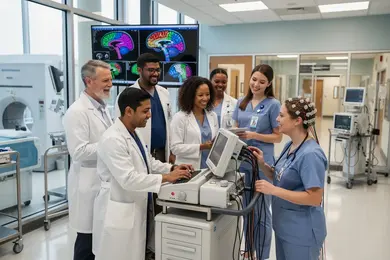
- Neurodiagnostic Technologist: This job requires performing diagnostic tests like EEGs to monitor brain activity. It provides hands-on experience with neurophysiological technologies and patient care.
- Data Analyst in Bioinformatics: Positions focused on analyzing neuroscience datasets apply statistical methods to interpret brain imaging or genetic information. This strengthens computational skills relevant to research and industry settings.
A neuroscience degree graduate shared that navigating the early job market felt both exciting and overwhelming. They recalled how the initial challenge was identifying roles that matched their academic background while offering growth opportunities. "I had to balance applying for traditional research jobs with exploring less obvious paths like medical sales," they said.
The graduate emphasized the importance of networking and gaining diverse experiences, stating, "Each role taught me different skills, and perseverance was key to finding a position where I could truly contribute and learn." This firsthand perspective highlights how entry-level jobs offer not just employment but crucial professional development for new neuroscience graduates.
What Industries Are Easiest to Enter After Graduation?
Industries considered easier to enter often feature large entry-level hiring volumes, accept diverse degrees, or have limited specialized requirements. For example, roughly 54% of STEM graduates find jobs in their field within six months, highlighting the workforce's receptiveness to candidates with strong science backgrounds.
Several sectors exemplify this openness for neuroscience graduates, reflecting demand for their analytical and research capabilities.
- Pharmaceutical and Biotechnology: These fields regularly seek new talent to support laboratory research and clinical studies. The scientific foundation from a neuroscience degree aligns well with the types of projects and problem-solving skills needed, making entry smoother.
- Healthcare and Medical Devices: Companies creating diagnostic tools and neurological equipment value the specialized understanding neuroscience graduates provide. This sector often recruits those with relevant knowledge even at early career stages due to ongoing innovation.
- Research Institutions: Academic and government labs maintain continuous needs for researchers with technical skills. Neuroscience graduates often meet these criteria, enabling accessible pathways into these hands-on environments.
- Data Science and Analytics: The quantitative expertise gained through neuroscience studies matches the growing demand for data analysts, particularly in health-related fields. This opens doors for graduates to apply their skills in data interpretation without extensive prior experience.
- Science Communication and Education: Graduates can leverage their subject knowledge in roles that support public outreach and educational programs. These positions typically prioritize expertise over advanced credentials, easing entry into the workforce.
What Industries Offer the Best Starting Salaries for Neuroscience Graduates?
Entry-level salaries for neuroscience graduates vary significantly across industries due to factors like specialized skill demand, available funding, and workforce shortages. Research reveals that pay in revenue-driven sectors can be up to 20% higher than in academia or public research roles. Below are key industries offering competitive compensation for graduates with a neuroscience degree.
- Pharmaceutical and Biotechnology: These sectors typically offer starting salaries between $70,000 and $90,000. The high pay reflects the technical expertise required for drug development, clinical trials, and experimental design in a highly competitive market.
- Medical Device Industry: Starting salaries generally range from $65,000 to $85,000. The demand for innovation in neurological diagnostic and treatment technologies drives the need for neuroscience knowledge combined with technical proficiency.
- Healthcare and Clinical Research: Positions in hospitals and clinical labs offer entry-level salaries around $60,000 to $80,000. Funding variations cause some pay fluctuation, but the ongoing need for clinical neuroscience research sustains competitive wages.
- Data Science and Technology: Starting pay usually falls between $65,000 and $85,000, fueled by the growing role of neuroscience in artificial intelligence, brain-computer interfaces, and machine learning applications.
For those interested in further advancing their career, pursuing an MHA degree can complement neuroscience expertise and open doors to higher earning potential in healthcare administration and related fields.
Which Skills Do Industries Expect From Neuroscience Graduates?
Employer requirements for graduates with a neuroscience degree differ by sector, yet there is a consistent emphasis on blending technical expertise with reliable workplace skills. Research reveals that around 68% of managers in biomedical and pharmaceutical areas prioritize critical thinking when evaluating candidates.
The following are some of the primary skills neuroscience graduates are expected to demonstrate across industries.
- Analytical Skills: Neuroscience graduates must navigate and interpret intricate datasets from experiments or clinical studies. These skills are imperative in sectors like healthcare and biotech for diagnosing issues, testing hypotheses, and guiding the creation of new products or treatments.
- Research Proficiency: Rigorous scientific inquiry is a cornerstone of neuroscience careers. Graduates apply experimental design principles, statistical analysis, and critical literature review to contribute effectively in academic, clinical, or industrial research environments.
- Technical Literacy: Familiarity with lab instruments, data processing software, and cutting-edge tools such as neuroimaging technologies equips graduates to swiftly adapt and maintain high standards of accuracy and efficiency in their work.
- Communication Skills: Clear articulation of complex scientific concepts to diverse audiences, including team members and external stakeholders, enhances collaboration and promotes knowledge sharing within multidisciplinary settings.
- Problem-Solving and Adaptability: The fast-evolving nature of neuroscience demands creativity and flexibility to overcome unexpected results or shifts in research direction, sustaining progress in dynamic, high-pressure environments.
A professional with a neuroscience degree shared her experience navigating an early career challenge involving conflicting experimental data. She recalled how relying on her problem-solving skills and clear communication with colleagues helped identify overlooked variables and adjust the methodology.
"It was stressful at first," she explained, "but those moments taught me the importance of patience, critical analysis, and staying open to new approaches." This reflection underscores how employers' expectations for neuroscience graduates extend beyond knowledge, prioritizing soft skills that drive effective teamwork and resilience.
Which Industries Require Certifications for Neuroscience Graduates?
Many industries require additional certifications for neuroscience graduates beyond their academic degrees to ensure compliance with professional standards and technical expertise. Research shows that over 60% of employers prefer candidates with specialized credentials, highlighting the importance of certifications for career advancement. The following industries commonly expect or require such credentials.
- Healthcare Sector: Licenses and certifications are often mandatory to meet state or national regulations, ensuring safe and effective patient care. Credentials in clinical neuropsychology or neurodiagnostic technology enhance practical skills and increase employability in medical environments.
- Pharmaceutical and Biotechnology: Certifications demonstrating knowledge in clinical trial management, regulatory affairs, and Good Laboratory Practice (GLP) are highly valued. These credentials indicate adherence to strict industry protocols necessary for drug development and testing.
- Academic and Research Fields: Credentials related to research ethics, laboratory safety, and human subjects protection support compliance with institutional and governmental rules. Such certifications improve opportunities for grant funding and responsible management of neurological studies.
- Government and Forensic Science: Specialized certifications in forensic neuropsychology and related criminal justice areas are often required. These ensure professionals meet legal standards essential for roles involving expert testimony and neurological assessments within the justice system.
These certifications provide employers with assurance that neuroscience graduates possess not only theoretical knowledge but also the practical and ethical training demanded across diverse professional settings.
Which Industries Offer Remote, Hybrid, or Flexible Careers for Neuroscience Graduates?
Workplace flexibility has expanded significantly across many industries due to digital tools and evolving workforce expectations. Recent data shows that over 30% of professional roles now offer hybrid or fully remote options, highlighting this growing trend.
Several sectors are particularly well-suited to provide remote neuroscience jobs with flexible hours, making them attractive for graduates seeking adaptable career paths.
- Pharmaceutical and Biotechnology: These industries support hybrid models because much work involves data analysis, literature reviews, and report writing, tasks easily done remotely. While lab work requires on-site presence, many planning and coordination activities use digital collaboration platforms, allowing for flexible schedules.
- Information Technology and Data Science: Focusing on computational modeling, machine learning, and neuroinformatics, much of this field's work is computer-based and remote-compatible. Cloud-based tools facilitate team interaction, enabling neuroscience graduates to contribute from various locations.
- Healthcare Consulting: Consultants often review clinical data and develop strategies independently, supporting remote or hybrid workflows. While some client meetings may be virtual or in-person, much analytical and preparatory work aligns with flexible hours and locations.
- Education and Academic Publishing: These sectors use project-driven structures well-suited for remote work, including writing, peer review, curriculum development, and online teaching. Neuroscience professionals can manage these tasks around other commitments using digital communication.
- Mental Health Technology: As this industry develops digital tools for cognitive assessment and therapy, teams composed of neuroscientists, developers, and clinicians collaborate through virtual workspaces, promoting hybrid and remote flexibility.
For those exploring career flexibility in neuroscience, understanding options like hybrid career opportunities for neuroscience graduates can expand potential paths. Some roles benefit from certifications such as the CCS certification, which can further enhance qualifications.
What Industries Have the Strongest Promotion Opportunities?
Promotion opportunities for neuroscience graduates are strongly influenced by industry growth, organizational structure, and increasing demand for experienced professionals. Studies show that over 70% of career advancements in science-related fields occur through internal promotions, highlighting the importance of clear pathways within companies.
Below are some industries where neuroscience graduates often find robust career advancement potential.
- Pharmaceutical Industry: This sector features well-defined leadership pipelines and talent development programs that enhance both technical and managerial skills. As pharmaceutical companies expand research and development, neuroscience graduates advance through roles in project management, clinical research oversight, and strategic leadership.
- Biotechnology Firms: Rapid innovation and scaling within biotech create new supervisory and executive roles frequently. Graduates progress from research scientists to leaders of product development or heads of research divisions, supported by continuous skill development initiatives, making biotech a leading industry with the strongest promotion opportunities for neuroscience graduates.
- Healthcare Systems: Hospitals and healthcare institutions offer career ladders that reward multidisciplinary experience and leadership. Neuroscience graduates may advance to administrative roles managing clinical programs or specialized neuroscience services, benefiting from structured advancement opportunities common in patient-centered organizations.
- Academic Research: Tenure-track structures support long-term growth for neuroscience graduates starting as research associates or postdoctoral fellows. Advancement to principal investigator and institutional leadership positions is typical, demonstrating clear promotion paths in academia aligned with research excellence.
- Medical Device Industry: Combining technical expertise with product innovation management, this industry allows neuroscience graduates to transition from technical roles to strategic positions focused on market expansion or regulatory affairs, offering a distinct pathway for career progression.
For students exploring these sectors, finding educational pathways such as online medical assistant programs FAFSA-approved can support entry into various neuroscience-related careers with strong promotion prospects.
How Do You Choose the Best Industry With a Neuroscience Degree?
Evaluating how to choose the best industry with a neuroscience degree requires weighing several factors, including personal career interests, preferred work environments, and long-term growth potential. Graduates should reflect on what aspects of neuroscience excite them most, whether clinical practice, research, or data-driven roles, to identify compatible sectors.
Considering how well these interests align with workplace culture and stability is essential, as 72% of graduates report higher job satisfaction in fields offering clear advancement and market stability. Matching industry demands with individual strengths ensures a sustainable career path in rapidly evolving job markets.
Comparing the best industries hiring neuroscience graduates involves assessing advancement opportunities, industry stability, workplace flexibility, and options for professional development. Graduates should research typical job expectations, required skills, and credential demands to align choices with their career goals effectively.
Exploring how each industry fosters growth and balances work-life needs can reveal important trade-offs. This methodical approach helps carve a path that combines passion with realistic opportunities, enabling informed decisions backed by practical insights and aligned with evolving workforce trends such as those found in a degree in healthcare management.
What Graduates Say About Industries Hiring Graduates With a Neuroscience Degree
- Lawrence: "Starting my career in the pharmaceutical industry immediately after graduating with a neuroscience degree was enlightening. It allowed me to apply my knowledge in drug development while honing my analytical skills, which are crucial in research and clinical trials. This path showed me that the industry values adaptability and continuous learning, which has been invaluable in my professional growth."
- Yitzchok: "Working in the tech sector as a neuroscience graduate opened my eyes to the vast potential of brain-computer interfaces. Early on, I learned the importance of interdisciplinary collaboration, combining neuroscience with engineering and programming. This experience cultivated critical thinking and problem-solving skills that continue to impact my career positively and keep me engaged in cutting-edge developments."
- Cameron: "My journey began in healthcare, where neuroscience graduates are essential in advancing patient care and neurological research. Immersing myself in this environment deepened my clinical insights and empathy, highlighting the real-world impact of our field. Professionally, this foundation has made me a more effective communicator and a dedicated advocate for evidence-based treatments."
Other Things You Should Know About Neuroscience Degrees
Interdisciplinary knowledge is highly important in industries hiring neuroscience graduates. Many roles require integrating neuroscience with fields such as biology, psychology, engineering, or data science to solve complex problems. This combination enhances the ability to innovate and contribute meaningfully to research, healthcare, or technology development.
In 2027, industries such as biotechnology, pharmaceuticals, healthcare, and tech companies focusing on neural networks and AI are actively hiring neuroscience graduates. These sectors value the graduates' skills in data analysis, research, and understanding of the brain and nervous system.
While some entry-level positions are available for neuroscience graduates with a bachelor's degree, many industries prefer or require advanced degrees such as a master's or PhD. Higher degrees often open doors to specialized research, development, and leadership roles, particularly in pharmaceuticals, biotech, and academia-related industries.
Neuroscience graduates stay updated by engaging with professional organizations, attending conferences, and subscribing to scientific journals and industry newsletters. Continuous learning through workshops, certifications, and online courses also plays a vital role in keeping pace with technological advancements and evolving industry standards.
References
- Industry Jobs for those with Training in Neuroscience, Cognition, or Psychology https://tanyajonker.com/essays/industry-jobs
- Careers in Neuroscience - Thiel College https://www.thiel.edu/academics/departments/neuroscience/neuroscience-alumni-careers
- Explore Parexel Careers in Neuroscience https://jobs.parexel.com/en/neuroscience
- Neuroscience PhD Career Paths Beyond Academia https://www.industrycareerguide.com/blog/neuroscience-phd-career-paths
- Neuroscience Jobs Available in a Variety of Industries - Peterson's https://www.petersons.com/blog/neuroscience-jobs-available-in-a-variety-of-industries/