2027 How Fast Can You Get an Applied Business & Technology Degree Online?

Co-Founder and Chief Data Scientist
An online Applied Business & Technology degree is often chosen by adults who need a business credential without stepping away from work, caregiving, or military responsibilities. The central question is not only whether the degree can be completed online, but how quickly it can be finished without choosing a weak program, overloading your schedule, or losing credit for prior learning.
Completion time depends on degree level, transfer credits, course format, prior college work, professional or military experience, and whether the program uses accelerated or competency-based coursework. A student entering with no credits will usually follow a much different timeline than a student who already holds an associate degree, industry certifications, or substantial workplace training.
This guide explains typical timelines, accelerated options, competency-based formats, transfer credit strategies, and employer perceptions so you can decide whether a fast-track Applied Business & Technology program fits your goals, schedule, and career plans.
What are the benefits of pursuing a degree in Applied Business & Technology online?
- The online format offers flexible scheduling, which is ideal for working professionals seeking to immediately apply new business and technology concepts to their current roles.
- Students gain a highly relevant and interdisciplinary skill set that bridges essential business administration with practical technological competencies, highly sought after by employers.
- Pursuing the degree online often results in lower educational expenses by saving money on commuting, housing, and on-campus fees, making career advancement more financially accessible.
How long does it typically take to earn a degree in Applied Business & Technology?
The typical time to earn an online Applied Business & Technology degree depends first on the degree level and second on how many credits you already have. Enrollment intensity also matters: full-time students move faster, while part-time students often need extra semesters because they take fewer courses at once.
| Degree path | Typical full-time timeline | What can change the timeline |
| Associate degree | Around two years, or about five semesters including summer classes | Part-time enrollment may extend the timeline to three to four years. |
| Bachelor's degree starting with no credits | About four years | Year-round enrollment, heavier course loads, and transfer credits may shorten the path. |
| Bachelor's degree with an associate degree or significant transfer credits | As few as two years when studying full-time | The final timeline depends on how many credits the school accepts and how they apply to major requirements. |
| Master's or other advanced degree | Generally one to two years beyond the bachelor's program | Program structure, prerequisites, and course sequencing can affect speed. |
For many students, the fastest route is not simply taking more classes. It is choosing a program that accepts prior credits, offers courses year-round, and has clear advising so credits apply to the right requirements. A program may advertise flexibility, but students should ask how often required courses are offered and whether any capstone, internship, or sequencing rules could delay graduation.
Students who work full-time should also be realistic about pace. A four-year bachelor's timeline may be manageable at a traditional full-time load, but accelerated terms can feel more intense because assignments, projects, and exams arrive quickly. The best timeline is one that lets you finish efficiently while still learning the business, technology, and management skills the degree is meant to build.
Are there accelerated Applied Business & Technology online programs?
Yes. Accelerated Applied Business & Technology online programs are available, and they are usually designed for students who can bring in transfer credits, study in shorter terms, or move through coursework year-round. These programs can be especially useful for working adults, technical school graduates, community college transfer students, and professionals who need a bachelor's credential for advancement.
Acceleration can come from several design features: compressed course sessions, generous transfer policies, monthly or frequent start dates, and curricula that combine business, management, accounting, marketing, information technology, and applied technical skills. The important caution is that “accelerated” does not automatically mean easier. It usually means the same material is delivered in less calendar time.
Examples of accelerated Applied Business & Technology online options include:
- Kansas State University: K-State's fully online Bachelor's in Applied Business and Technology offers a customizable curriculum covering management, accounting, marketing, and technology. Students can transfer credits from community colleges or technical schools to complete the 121-credit program at an accelerated pace, making it a flexible option for learners who already have prior coursework.
- ECPI University: ECPI offers accelerated technology degree programs with five-week course terms and an applied, job-ready curriculum. Students can earn a bachelor's degree in as little as 2.5 years. The institution is accredited by the Southern Association of Colleges and Schools Commission on Colleges (SACSCOC).
- Western Governors University (WGU): WGU's accelerated B.S. to M.S. online program in Information Technology allows completion of both degrees in about four years. The curriculum integrates business and IT skills with industry certifications, monthly start dates, and regional accreditation.
Before enrolling, compare how each school defines acceleration. One program may be fast because it accepts more transfer credits, while another may be fast because it compresses terms. Those are different experiences for students. For a wider view of fast-paced college formats, review fast track online degrees and compare structure, accreditation, credit transfer, and workload before making a decision.
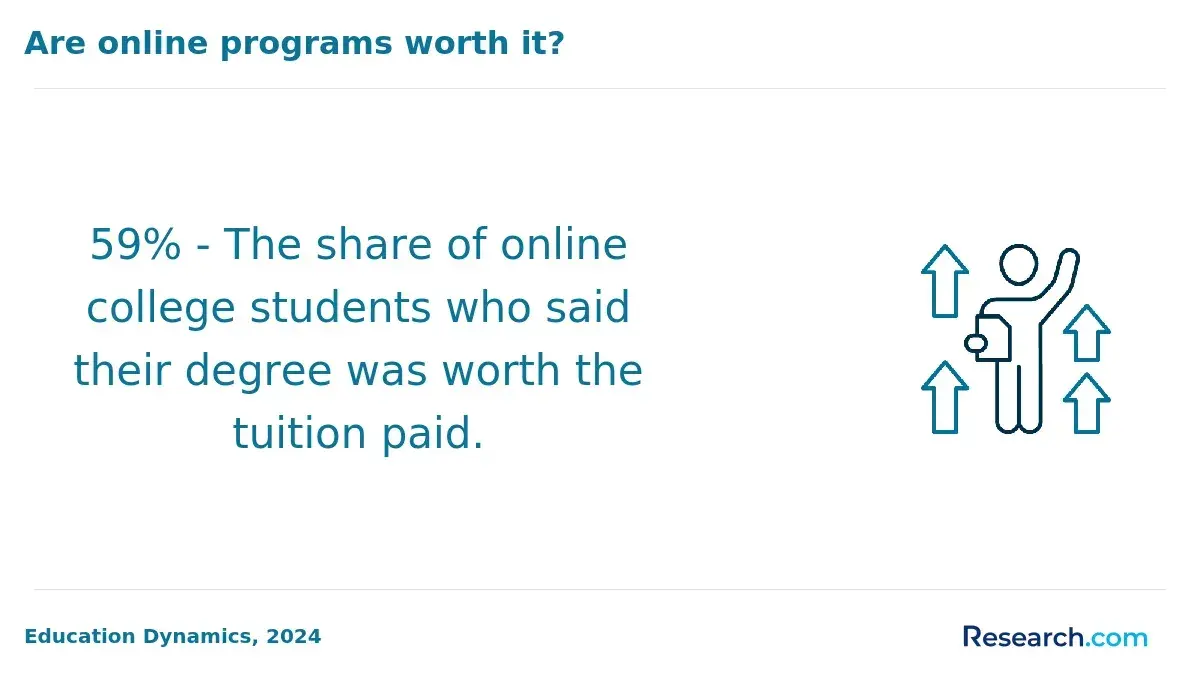
How do accelerated Applied Business & Technology online programs compare with traditional ones?
Accelerated and traditional Applied Business & Technology programs can lead to similar academic credentials when they are properly accredited, but the student experience is different. Accelerated programs compress the calendar and reward students who can work independently. Traditional programs usually provide a slower rhythm, more time between deadlines, and a more predictable academic calendar.
| Factor | Accelerated online program | Traditional program |
| Duration | May allow completion in as little as 18 to 24 months, depending on transfer credits and course load | Typically requires two to four years with fixed academic calendars |
| Course pace | Courses are often condensed into five to eight weeks | Courses usually follow 15-week terms |
| Scheduling | Often asynchronous, with access to materials at different times | May include scheduled virtual meetings or occasional in-person attendance |
| Start dates | Often multiple start dates and sometimes more flexible progression | Usually fewer start dates and a more rigid sequence |
| Best fit | Self-directed students with strong time management and clear goals | Students who prefer more time to absorb material and a steadier pace |
The main benefit of an accelerated program is time. The main trade-off is intensity. Shorter terms leave less room for illness, work emergencies, or falling behind. Students who are comfortable with independent reading, frequent deadlines, and applied projects may benefit. Students who need more instructor interaction or more time to practice new technical tools may prefer a traditional schedule.
Accreditation and learning outcomes are the most important quality checks. A fast program should still provide rigorous coursework in business operations, technology tools, communication, management, and applied problem-solving. Students comparing lower-division options can also review the easiest associates degree to get for context on accessible associate-level pathways, but ease should not be the only factor when choosing a degree tied to career advancement.
Will competency-based online programs in Applied Business & Technology affect completion time?
Competency-based education (CBE) can affect completion time significantly because progress is based on demonstrated mastery rather than a fixed weekly classroom schedule. In an Applied Business & Technology program, this may allow students with existing experience in business software, operations, supervision, project coordination, data tools, or technical systems to move faster through material they already know.
The advantage of CBE is flexibility. Students typically study independently, complete assessments, and advance when they prove they meet the required competencies. This structure can be efficient for disciplined learners who can document or demonstrate skills clearly. It can also help experienced professionals turn workplace knowledge into academic progress.
The trade-off is that CBE is not a shortcut for unprepared students. It often requires strong self-direction, comfort with assessment-based learning, and the ability to stay motivated without the rhythm of weekly class meetings. Students who need frequent instructor prompting or peer interaction may find the format challenging.
Completion time depends on the program's curriculum design and the student's available study time, prior knowledge, and persistence. Highly motivated students may finish faster than the four- to five-semester timeframe seen in conventional online degrees, but students should ask how assessments are scheduled, how many attempts are allowed, and whether any required courses follow fixed term dates.
Can you work full-time while completing fast-track Applied Business & Technology online programs?
Yes, many students work full-time while completing fast-track Applied Business & Technology online programs, but the workload can be demanding. Short terms of 5 to 8 weeks create a compressed schedule, which means assignments, discussions, quizzes, projects, and exams may come quickly. The online format adds flexibility, but it does not reduce the amount of learning required.
Students should review their weekly calendar before enrolling. A full-time job, family responsibilities, commuting, and unexpected work demands can make accelerated coursework harder to sustain. Programs that involve hands-on projects and software use, such as Microsoft Office and Adobe Creative Suite, may take extra time for students who are still building confidence with those tools.
How to decide if the pace is realistic
- Check the course calendar before the term starts. Look for major projects, exams, group work, and software requirements.
- Ask about weekly time expectations. Do not rely only on the number of credits; accelerated courses often compress the same workload into fewer weeks.
- Plan around work peaks. If your job has seasonal deadlines, avoid stacking difficult courses during those periods when possible.
- Use employer support if available. Flexible scheduling, tuition assistance, or study time can make a fast-track program more manageable.
- Start with a manageable load. It is better to build momentum than to withdraw from courses because the pace was underestimated.
Working while enrolled is most realistic when students communicate early with instructors, use advising, and protect dedicated study blocks each week. The biggest mistake is assuming online courses can be completed only on weekends. In accelerated programs, waiting several days to log in can put a student behind quickly.
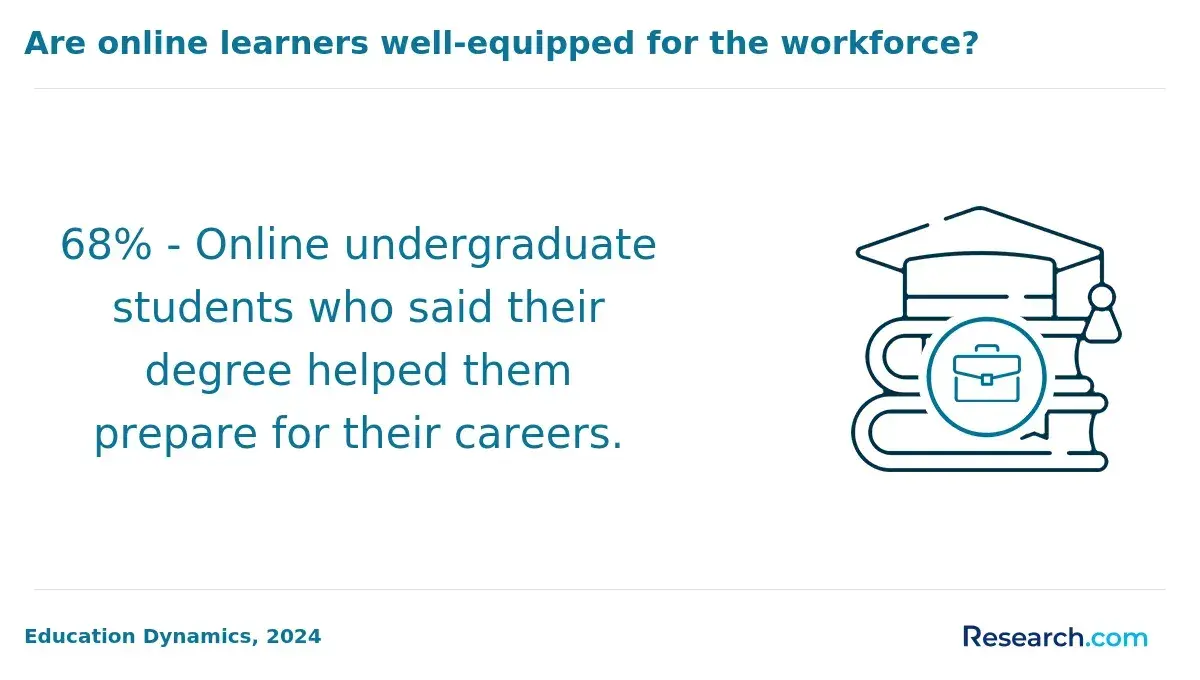
Can prior learning assessments (PLAs) shorten Applied Business & Technology degree timelines?
Yes. Prior learning assessments (PLAs) can shorten an Applied Business & Technology degree timeline when a school awards credit for verified college-level learning gained outside a traditional classroom. PLA credit may come from professional experience, certifications, military training, standardized exams such as CLEP or DSST, or a portfolio that documents relevant skills.
PLA is most useful when prior learning matches degree requirements. For example, experience with business operations, office technology, project coordination, accounting systems, customer relationship tools, technical support, or supervision may be considered if the school can verify that the learning is equivalent to college coursework. Schools usually require documentation, assessments, faculty review, or official training records.
For instance, Antioch University permits students to apply up to 75 transfer credits, including PLA credits, toward its bachelor's completion program. Schools often limit PLA credits to half or less of the total degree requirements, and they may restrict how PLA applies to major courses. Core courses, capstones, and upper-division requirements may still need to be completed through the institution.
Students interested in PLA should ask three questions before enrolling: which types of prior learning are accepted, how credits apply to the degree plan, and whether PLA fees or portfolio requirements affect the total cost and timeline. PLA can be valuable, but only if it reduces actual remaining requirements rather than adding a separate administrative step with little benefit.
Can prior college credits help you get a degree in Applied Business & Technology sooner?
Prior college credits can be one of the fastest ways to reduce the time needed for an Applied Business & Technology degree. Many accredited institutions accept credits from regionally accredited schools, often with a minimum grade of "C" or higher. Accepted credits may satisfy general education, elective, business, or technical requirements, depending on the program's curriculum.
The key is not just how many credits transfer, but how they apply. A student may have many credits on a transcript, but only some may count toward the Applied Business & Technology degree. Courses that do not match the program's requirements may transfer only as electives, which can be helpful but may not shorten the path as much as expected.
Steps to evaluate transfer credit
- Collect official transcripts: Request transcripts from every college attended, including community colleges, technical schools, and previous universities.
- Confirm accreditation: Check whether previous coursework came from regionally accredited institutions, since this often affects transfer eligibility.
- Review grade rules: Identify courses with a "C" or higher if that is the program's minimum transfer standard.
- Ask for a degree-specific evaluation: A general credit estimate is less useful than a written plan showing which requirements are already met.
- Look for associate-to-bachelor's pathways: Structured transfer agreements can reduce lost credits and make the remaining timeline clearer.
- Compare total cost, not only speed: A program that accepts more credits may be more efficient than a cheaper-looking option that requires you to repeat courses.
Students planning long-term academic progression may also compare graduate options such as affordable online phd programs, but the immediate priority should be choosing a bachelor's pathway that uses prior credits effectively and avoids unnecessary repetition.
Can work or military experience count toward credits in a degree in Applied Business & Technology?
Work or military experience may count toward credits in an Applied Business & Technology degree, but credit is not automatic. Colleges decide whether experience is equivalent to college-level learning and whether it fits the degree plan. Relevant experience may help most when it aligns with business technology, administration, leadership, information systems, logistics, training, project management, or operations.
Military students often begin with the Joint Services Transcript (JST). The American Council on Education (ACE) evaluates military training and job roles and recommends corresponding credits that appear on the JST. Colleges then determine whether to accept those recommendations and how to apply them.
Civilian work experience may be reviewed through prior learning assessments, certification review, employer training documentation, credit-by-examination, or a portfolio. Students should expect to provide evidence, not just a resume. Strong documentation may include training syllabi, certificates, job descriptions, performance-based projects, software competencies, or supervisor verification.
Most schools limit transfer credits to between 25% and 50% of the degree. Core program courses often require direct enrollment, while electives and general education requirements may be more likely to accept prior learning credit. Before choosing a program, ask whether experience-based credits reduce required coursework or simply fill elective space.
What criteria should you consider when choosing accelerated Applied Business & Technology online programs?
Choosing an accelerated Applied Business & Technology online program should involve more than finding the shortest timeline. The best program is one that is accredited, transparent about cost and transfer credit, realistic for your schedule, and aligned with the business or technology role you want next.
- Accreditation: Prioritize properly accredited institutions. Accreditation affects credit transfer, employer recognition, eligibility for certain forms of financial aid, and confidence that the program meets external academic standards.
- Transfer and PLA policies: Look for clear rules on transfer credits, prior learning assessments, military credit, certifications, and maximum credit limits. Ask for a written evaluation before committing when possible.
- Program pace: Review term length, number of courses allowed per term, assignment frequency, and whether required courses are available year-round.
- Faculty qualifications: Programs are stronger when instructors combine academic credentials with current industry experience in business, technology, management, or applied systems.
- Curriculum relevance: Compare courses in management, accounting, marketing, technology, analytics, communication, and applied projects. A fast degree should still build practical skills.
- Online delivery format: Fully online, asynchronous courses can help working adults, but some students benefit from scheduled sessions. Choose the format that matches how you learn best.
- Student support: Strong advising, tutoring, technical help, library access, and career services can make the difference between finishing quickly and losing momentum.
- Cost and financial aid: Compare tuition, fees, books, software, transfer credit savings, and available aid. A shorter program is not always cheaper if per-credit costs or fees are high.
- Career alignment: Check whether the program supports your target role, such as operations coordinator, business analyst, technology manager, office systems specialist, or entrepreneur.
If you are still comparing majors and costs, broader guides to online business degrees can help you evaluate affordability and program fit alongside Applied Business & Technology options.
Students focused on fast career-oriented credentials can also review quick degrees that make good money. Use those comparisons as a starting point, then verify each program's accreditation, transfer policy, workload, and outcomes before enrolling.
Are accelerated online Applied Business & Technology degrees respected by employers?
Accelerated online Applied Business & Technology degrees can be respected by employers when they come from accredited institutions and produce graduates with demonstrable business and technology skills. Employers generally care less about whether the coursework was online or accelerated and more about whether the credential is legitimate, the curriculum is relevant, and the graduate can perform.
In the US, online degrees are widely accepted when the institution is properly accredited and the program has credible academic standards. For Applied Business & Technology graduates, employer confidence is often strengthened by evidence of applied projects, software proficiency, communication skills, problem-solving ability, and relevant work experience.
Students can improve employer perception by choosing a recognized school, keeping a portfolio of projects, earning relevant certifications when appropriate, and connecting coursework to measurable workplace outcomes. On a resume, it is usually unnecessary to emphasize that the degree was accelerated unless the speed itself demonstrates discipline while working or managing other responsibilities.
University reputation, coursework rigor, and professional experience all shape how the degree is viewed. Students who prefer shorter, skills-based routes may also compare careers you can pursue via trade schools, but an Applied Business & Technology degree may offer broader preparation for roles that combine technical systems, business operations, and management responsibilities.
What Applied Business & Technology Graduates Say About Their Online Degree
- : "Earning my Applied Business & Technology degree online was a game changer for my career. The program's flexibility allowed me to balance work and study efficiently, enabling me to graduate faster than I expected. Plus, knowing the average cost was reasonable made it an accessible choice that truly paid off. — Jason"
- : "The accelerated pace of the Applied Business & Technology program pushed me to develop strong time-management skills and in-depth business acumen in a short span. I appreciated the practical learning outcomes that immediately translated to my job, making the investment worthwhile both personally and professionally. — Camilo"
- : "Completing an online Applied Business & Technology degree gave me a professional edge, allowing me to pivot careers smoothly. The comprehensive curriculum and structured format helped me master vital technology and business concepts without sacrificing quality, all while keeping costs manageable and timelines tight. — Alexander"
Other Things to Know About Accelerating Your Online Degree in Applied Business & Technology
Yes, prior work experience might allow for credit exemptions in some online programs, potentially reducing the time needed to earn the degree. Schools may evaluate your work experience on a case-by-case basis to determine if it qualifies for credits.
In 2027, requirements for in-person internships or residencies in online Applied Business & Technology degree programs vary by institution. While some programs integrate these experiences for practical exposure, others offer completely online alternatives or waive this requirement based on prior work experience.
Many programs require placement into college-level English and math or completion of developmental courses before the degree starts. Students may also need basic spreadsheet and business communication skills. These prerequisites can add one or two terms before the 60-credit degree sequence begins.
References
- Firsthand Advice for Taking Online Classes While Working Full Time https://www.umassglobal.edu/blog-news/advice-for-taking-online-classes-while-working-full-time
- A Guide to Accelerated Bachelor's Degrees https://www.coursera.org/articles/accelerated-bachelors-degree
- Can I Work Full-Time While Earning an Online Degree? https://www.athens.edu/online-degree-completion-programs-working-adults/can-i-work-full-time-while-earning-an-online-degree/
- What Employers Really Think about Your Online Degree https://bachelors-completion.northeastern.edu/knowledge-hub/are-online-degrees-respected/
- Recognition of prior learning | University of London https://www.london.ac.uk/study/how-apply/recognition-prior-learning
- Is an Accelerated MBA the Right Choice for You? - Saint Mary's University of Minnesota https://www.smumn.edu/blog/is-an-accelerated-mba-the-right-choice-for-you/
- Stevenson University https://www.stevenson.edu/online/about-us/news/how-long-does-it-take-to-get-a-business-degree-online/
- How to Use Prior Learning to Graduate with Your Bachelor’s Sooner https://www.snu.edu/degrees/blog/how-to-use-prior-learning-to-graduate-with-your-bachelors-sooner
- The Benefits of an Accelerated Business Administration Degree https://www.baker.edu/about/get-to-know-us/blog/accelerated-bachelors-of-business-administration-benefits/