2027 Fastest Online Applied Business & Technology Degree Programs You Can Finish in Under 2 Years

Co-Founder and Chief Data Scientist
Choosing a fast online applied business & technology degree is usually a time, money, and career decision at the same time. You may be trying to finish a bachelor’s completion program, convert prior college credits into a credential, qualify for a promotion, or reenter the workforce without spending four more years in school.
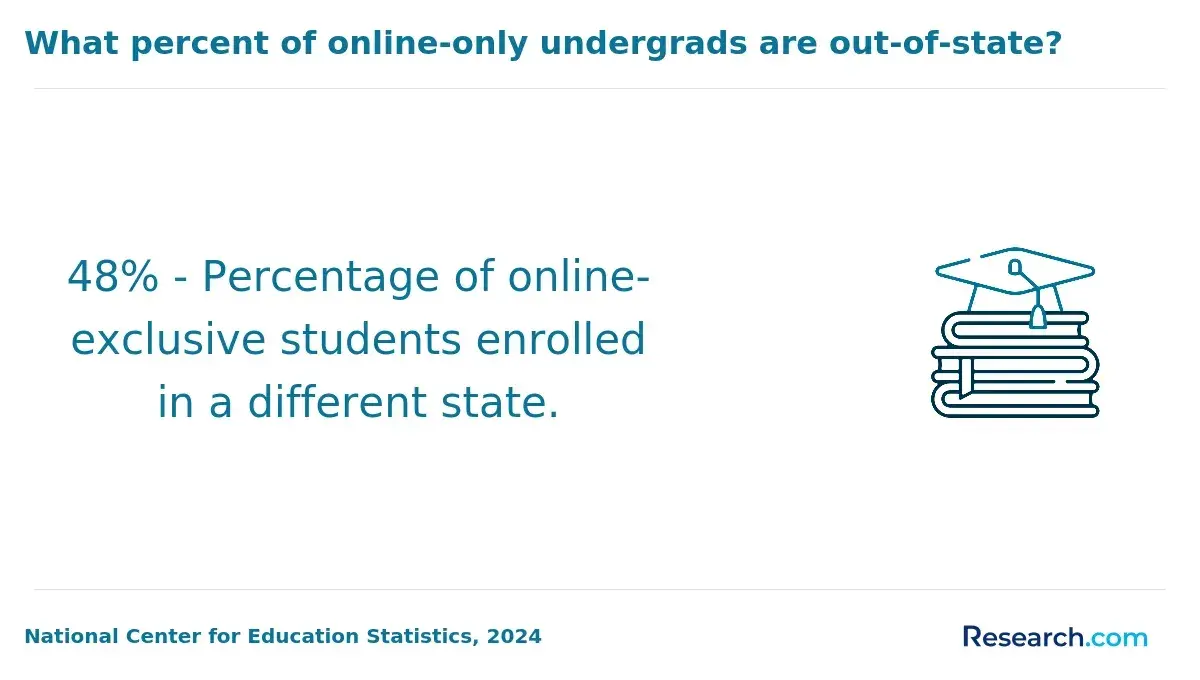
According to the National Center for Education Statistics, over 40% of online students seek accelerated programs in applied business & technology to quickly enter or reenter the workforce. The appeal is clear: a shorter path can reduce opportunity costs, help students apply new skills sooner, and make degree completion more realistic for working adults.
This guide explains what makes an online applied business & technology program accelerated, which formats can be completed in under two years, what admissions and transfer-credit policies to check, how course loads work, what employers look for, and how to compare cost, technology requirements, and career outcomes before enrolling.
Key Benefits of Online Applied Business & Technology Degree Programs You Can Finish in Under 2 Years
- Completing an applied business & technology degree in under two years enables faster workforce entry, aligning with a 15% job growth forecast for tech and business roles through 2030.
- Accelerated online programs reduce overall education costs by minimizing tuition and living expenses, helping students avoid debt while gaining marketable skills efficiently.
- Flexible scheduling in online applied business & technology degrees supports working adults, with enrollment in online education rising over 30% since 2019 according to national data.
What Features Make an Online Applied Business & Technology Program Accelerated?
An online applied business & technology program is accelerated when its calendar, credit policies, curriculum design, and student support systems are built to shorten time to completion. A fast program is not simply a traditional degree delivered online; it usually compresses terms, allows steady year-round enrollment, and gives qualified students ways to apply prior learning or transfer credits.
Approximately 30% of online bachelor's students enroll in accelerated programs, but “accelerated” can mean different things from one school to another. Before applying, students should look beyond the advertised completion time and confirm how the program actually helps them move faster.
- Compressed course terms: Many accelerated courses run 5 to 8 weeks instead of the standard 15-week semester. This allows students to finish more courses in a year, but each class moves quickly and usually requires weekly deadlines.
- Higher course-load options: Some programs allow motivated students to take more credits per term. This can shorten the calendar, but it works best for students with predictable schedules, strong time management, and limited competing obligations.
- Flexible asynchronous coursework: Asynchronous classes let students watch lectures, complete modules, and submit assignments around work or family responsibilities. Flexibility is valuable, but students still need to meet firm due dates.
- Focused career-aligned curriculum: Fast programs often reduce unrelated electives and emphasize applied skills in management, operations, business technology, analytics, communication, and problem solving.
- Transfer-friendly structure: The fastest route is often a completion program designed for students who already have an associate degree, professional training, or prior college credits.
- Short breaks or year-round scheduling: Programs that offer multiple start dates and continuous terms can help students avoid long gaps between courses.
Students comparing business pathways may also review affordable online MBA programs if they are planning for graduate study after completing an applied business degree.
What Are the Online Applied Business & Technology Degree Formats You Can Finish in Under 2 Years?
The format of the degree has a direct effect on whether finishing in under two years is realistic. Students who enter with substantial transfer credits, enroll continuously, and choose a program designed for adult learners are usually in the strongest position to graduate quickly.
Common fast online applied business & technology formats include the following:
- Accelerated term-based programs: These programs divide the academic year into shorter sessions. Instead of taking several classes across a long semester, students may complete one or two intensive courses at a time and then move immediately into the next session.
- Competency-based education: Competency-based education, or CBE, allows students to progress by proving mastery of required skills. This can help experienced learners move quickly through familiar material, but it requires self-direction and comfort with independent study.
- Full-time intensive tracks: These tracks are best for students who can commit significant weekly study time. They can shorten the degree timeline, but they may be difficult to manage with overtime, caregiving, or unpredictable work schedules.
- Year-round enrollment models: Programs with summer, winter, fall, and spring options reduce downtime. Continuous enrollment is one of the simplest ways to finish faster without taking an unmanageable number of classes at once.
- Bachelor’s completion programs: These are often the most practical under-two-year option for students who already hold an associate degree or have many transferable credits.
| Format | Best For | Main Trade-Off |
| Accelerated terms | Students who want structure and frequent progress checkpoints | Deadlines arrive quickly, and falling behind can be hard to recover from |
| Competency-based education | Experienced learners who can prove skills efficiently | Requires strong motivation and independent pacing |
| Full-time intensive track | Students who can prioritize school for a concentrated period | May be difficult to balance with full-time work |
| Year-round enrollment | Students who want to shorten the calendar without overload | Fewer long breaks for rest or schedule changes |
Research from sources like the National Center for Education Statistics shows many in these formats graduate months to a year earlier than peers in traditional programs. Students comparing technical and applied pathways may also look at an online engineering degree to understand how different online degree structures handle pace, cost, and workload.
What Are the Admission Requirements for Accelerated Online Applied Business & Technology Degrees?
Admission requirements for accelerated online applied business & technology degrees are meant to confirm that students can handle a faster pace. Schools may be flexible with adult learners, but they still need evidence of academic readiness, prior preparation, and the ability to manage online coursework independently.
- Minimum GPA thresholds: Most programs require a GPA between 2.5 and 3.0 on a 4.0 scale. A GPA requirement helps schools assess whether applicants are prepared for compressed courses and steady deadlines.
- Prior college coursework or an associate degree: Students with previous credits or a related associate degree may have a shorter path to graduation. Applicants should request an unofficial transfer review before assuming that all credits will apply.
- Professional experience: Work experience in business, administration, operations, information technology, customer service, logistics, or related fields can strengthen an application, especially for programs that emphasize applied learning.
- Placement or readiness assessments: Some schools use assessments to determine whether students need support in writing, quantitative reasoning, technology use, or college-level study skills.
- Proof of online learning readiness: Accelerated online study requires self-discipline. Admissions teams may look for evidence that applicants can meet deadlines, communicate with instructors, and manage multiple responsibilities.
- Official transcripts: Students should expect to submit transcripts from every college previously attended. Missing transcripts can delay admission and transfer-credit evaluation.
The most common mistake is applying without first checking how many credits the program is likely to accept. A student admitted with few applicable credits may not be able to finish in under two years, even in an accelerated format.
Students who want to compare online admissions requirements across fields may also review affordable accredited online psychology degrees to see how online programs communicate GPA, transfer, and degree-completion expectations.
How Many Transfer Credits Do Fast Online Applied Business & Technology Programs Accept?
Transfer credit is often the single biggest factor in whether an online applied business & technology degree can be completed quickly. Some online programs accept transfer credits up to 75% of the total degree requirements, but the exact number depends on the school, the degree level, accreditation rules, course equivalencies, and residency requirements.
Many programs allow between 30 and 60 semester hours to be transferred. However, the number advertised is not always the number that will apply to a specific student’s degree plan. A course may transfer as general elective credit but still fail to satisfy a major, core, or upper-division requirement.
- Maximum transferable credits: Schools may cap transfer credits based on the total credits required for the degree. A generous transfer policy can shorten both time and cost, especially for students entering with an associate degree.
- Accreditation and course match: Credits are more likely to be accepted when they come from an appropriately accredited institution and align closely with the new program’s curriculum.
- Age of credits: Business and technology courses may be reviewed more carefully if they are older, especially when they involve software, systems, data tools, or current business practices.
- Core and capstone limits: Programs often require students to complete major courses, capstones, or a minimum number of institutional credits at the degree-granting school.
- Prior learning assessment: Some institutions may evaluate professional training, certifications, military education, or portfolio evidence, though policies vary widely.
Before enrolling, ask for a written degree audit showing which credits apply, which requirements remain, and how many terms are realistically needed. This document is more useful than a general transfer-credit estimate.
A professional who recently finished a fast online applied business & technology degree in under two years said the transfer process was the key step. The transcript review felt slow at first, but advisor guidance helped clarify which courses counted and which requirements still had to be completed.
“It was stressful waiting to hear what transferred,” he said, but approval of several key courses made the accelerated timeline possible. He emphasized that reading the fine print early helped him balance school with full-time work.
How Many Classes Do You Take at Once in a Fast Online Applied Business & Technology Program?
In a fast online applied business & technology program, students usually take fewer classes at the same time than they would in a traditional semester, but they complete terms more frequently. Data from 2022 shows that students in accelerated online programs often handle more intensive course loads, finishing terms in eight weeks or less compared to the traditional 15-week schedule.
The right course load depends on the term length, course difficulty, work schedule, and whether the student is trying to finish as quickly as possible or maintain a sustainable pace.
- Term length: In six- to eight-week terms, one or two courses can feel like a full load because readings, discussions, assignments, and exams are compressed.
- Course sequencing: Some programs control the order of courses to prevent students from taking too many demanding classes at once. Others give students more freedom but expect them to plan carefully.
- Pacing model: Self-paced and hybrid models may offer more flexibility, but they can also shift more responsibility to the student.
- Work and family obligations: A student working full time may need a different course load than a student who can treat school as the primary commitment.
- Course type: Writing-heavy, quantitative, software-based, or project-based courses may require more weekly time than survey courses.
| Student Situation | Course-Load Strategy | Risk to Watch |
| Full-time worker with family responsibilities | Start with one course in the first accelerated term | Underestimating weekly workload |
| Part-time worker or flexible schedule | Consider two courses per short term after adjusting to the format | Burnout from continuous enrollment |
| Student with many transfer credits | Use advisor planning to sequence remaining major courses efficiently | Missing prerequisites or capstone timing |
| Student seeking the fastest possible finish | Enroll year-round and avoid unnecessary breaks | Taking too many demanding courses together |
A practical approach is to begin with a manageable first term, evaluate the workload honestly, and then increase pace only if grades, health, work performance, and personal responsibilities remain stable.
Do Employers Respect Accelerated Online Applied Business & Technology Degrees?
Employers are generally more concerned with the school’s credibility, the relevance of the curriculum, and the graduate’s skills than with whether the degree was completed online or on an accelerated schedule. A fast degree can be respected when it comes from an accredited institution and produces evidence of real business and technology competence.
What matters most is whether the credential can withstand normal employer scrutiny. Hiring managers may not ask how quickly the degree was completed, but they may notice the institution, degree title, coursework, certifications, projects, and work experience.
- Accreditation: Employers prioritize degrees from accredited institutions because accreditation signals that the school meets recognized academic standards.
- Curriculum relevance: Programs that include current business systems, data analysis, operations, communication, project coordination, and technology applications are easier to connect to workplace needs.
- Applied projects: Capstones, case studies, simulations, internships, and portfolio projects give graduates concrete examples to discuss in interviews.
- Academic rigor: A shorter timeline should not mean lighter expectations. Employers are more likely to value programs that maintain meaningful assignments, assessments, and faculty engagement.
- Student’s prior experience: For working adults, the degree may be most powerful when combined with existing industry experience and measurable accomplishments.
Students should be cautious about programs that emphasize speed while giving little information about accreditation, faculty, curriculum, student support, or outcomes. A fast credential is useful only if it is recognized, verifiable, and aligned with the roles the student wants to pursue.
How Much Does a Fast Online Applied Business & Technology Degree Cost?
The cost of a fast online applied business & technology degree depends on tuition, transfer credits, fees, course load, and how many terms the student needs to finish. A shorter timeline can reduce certain costs, but students should compare total program cost rather than assuming the fastest option is automatically the cheapest.
- Per-credit tuition: Tuition fees per credit typically range from $300 to $700. Because most schools charge by credit, the final tuition bill depends heavily on how many credits the student must complete after transfer evaluation.
- Total program cost: Most accelerated programs require between 60 and 70 credits to graduate. Total costs commonly fall between $10,000 and $30,000, depending on tuition rate, transfer credit, and fees.
- Additional fees: Students may pay technology fees, registration fees, graduation fees, course materials costs, or proctoring fees. These charges can add several hundred dollars and should be included in any budget.
- Financial aid and employer support: Federal aid eligibility, scholarships, employer tuition assistance, military education benefits, and payment plans can reduce out-of-pocket costs. Students should confirm aid eligibility before enrolling.
- Opportunity cost: A faster degree may help students return to full-time work, qualify for advancement, or pursue better-paying roles sooner, but the workload can be demanding while enrolled.
When comparing programs, calculate the cost after transfer credits, not just the published tuition rate. Students researching broader affordability questions can also use resources on online business degree cost to understand how tuition, fees, and program length affect the final price.
| Cost Factor | Why It Matters | Question to Ask |
| Transfer credits | Can reduce the number of credits you must pay for | How many credits apply directly to my degree plan? |
| Per-credit tuition | Determines the base tuition cost | Is tuition the same for online, in-state, and out-of-state students? |
| Fees | Can increase total cost beyond advertised tuition | What mandatory fees will I pay each term? |
| Course load | Affects pace, aid status, and workload | What enrollment level is required for my financial aid or benefits? |
A graduate of an accelerated online applied business & technology program said completing the degree in under two years helped lower her overall college expenses. Taking a full course load each term meant fewer semesters of recurring fees and allowed her to reenter the workforce sooner.
She kept costs manageable by choosing a program with a competitive per-credit rate and using employer tuition assistance. The heavier workload was challenging, but she considered the financial and career benefits worthwhile.
“Finishing fast wasn’t easy,” she said, “but it saved me thousands compared to traditional programs and got me back to earning full-time much earlier.”
What Jobs Can You Get With a Fast Online Applied Business & Technology Degree?
A fast online applied business & technology degree can prepare graduates for roles that sit between business operations, data use, systems support, project coordination, and management. The U.S. Bureau of Labor Statistics projects employment in business and technology-related fields to grow by 5% from 2021 to 2031, indicating steady demand for qualified professionals.
Career outcomes depend on the student’s prior experience, location, employer, technical skills, internships or projects, and whether the degree is at the associate, bachelor’s, or completion-program level. Common roles include:
- Business analyst: Business analysts review data, processes, and stakeholder needs to recommend improvements. This role requires analytical thinking, communication skills, and comfort with business software. Salaries typically range from $60,000 to $85,000 annually.
- IT support specialist: IT support specialists troubleshoot hardware, software, access, and user issues. The role requires technical knowledge, patience, documentation skills, and problem-solving ability. Average earnings range between $45,000 and $65,000.
- Project coordinator: Project coordinators help plan schedules, track deliverables, communicate with teams, and support project managers. Salaries often range between $50,000 and $70,000.
- Operations manager: Operations managers oversee workflows, teams, resources, and process improvements. Compensation commonly ranges from $70,000 to $100,000 per year.
Students should choose electives and projects that match the job they want. For example, a student targeting business analyst roles should prioritize data, reporting, process mapping, and systems coursework, while a student targeting operations roles should look for classes in supply chain, project management, quality improvement, and leadership.
For students still comparing degree options and asking which bachelor’s degree to choose, applied business & technology can be a practical route because it connects broad business knowledge with workplace technology skills.
What Technology Is Required for Accelerated Online Applied Business & Technology Programs?
Accelerated online programs leave little room for technical problems. Students need reliable equipment, stable internet access, and confidence using digital learning tools before the first class begins. A slow computer, weak connection, or unfamiliar platform can quickly become a barrier when assignments are due every week.
- Reliable high-speed internet access: Steady connectivity is essential for streaming lectures, uploading assignments, joining meetings, and using cloud-based resources. According to EDUCAUSE's 2023 report, 98% of online learners emphasize that consistent internet access directly impacts their academic success.
- Learning management system access: The LMS is where students usually find readings, lectures, discussions, quizzes, grades, calendars, and instructor announcements. Students should learn the system before deadlines begin.
- Video conferencing tools: Some courses include live sessions, office hours, group work, or presentations. Students should test microphones, cameras, screen sharing, and meeting links in advance.
- Productivity software: Word processors, spreadsheets, presentation tools, PDF readers, cloud storage, and note-taking apps are common requirements for business and technology coursework.
- Security and backup habits: Students should use strong passwords, updated software, secure Wi-Fi, and regular file backups. Losing work in an accelerated course can be difficult to recover from.
- Program-specific tools: Some courses may require spreadsheet functions, database tools, project management software, analytics platforms, or business simulation software.
Before enrolling, review the school’s technology requirements and confirm whether software is included in tuition or billed separately. Students should also identify technical support hours, especially if they study evenings or weekends.
Students exploring short add-on credentials may review online certificate programs to see how certificates can complement an applied business & technology degree.
How Do You Choose the Fastest Online Applied Business & Technology Degree Program?
The fastest program is not always the best program. The right choice is the accredited degree that lets you finish efficiently while still matching your career goals, budget, learning style, and available weekly study time.
- Verify accreditation first: Do not rely only on marketing language. Confirm that the institution is accredited by a recognized agency and that the degree will meet employer, graduate school, or professional requirements relevant to your goals.
- Request a transfer-credit evaluation: Ask for a written review showing which credits apply to the program. This is essential if you are trying to finish in under two years.
- Compare actual completion plans: Ask an advisor to map your remaining courses by term. A program advertised as fast may still take longer if courses are offered only once per year or have strict prerequisites.
- Review curriculum fit: Make sure the coursework supports the work you want to do, such as business analysis, operations, project coordination, systems support, or management.
- Calculate full cost: Include tuition, fees, books, software, transfer credits, aid eligibility, and the cost of reducing work hours if needed.
- Assess support services: Strong online advising, tutoring, writing support, career services, technical help, and faculty access matter more in accelerated programs because delays can affect an entire term.
- Look at outcomes carefully: Review available graduation, retention, employment, and job placement information. Programs emphasizing applied learning typically result in higher employment rates within six months after graduation.
A good selection process should end with three clear answers: how long the degree will take based on your credits, what it will cost after aid and transfer evaluation, and how the curriculum connects to your target job.
What Graduates Say About Their Fastest Online Applied Business & Technology Degree Programs
- Jason: "When I discovered the accelerated online applied business & technology program, I was excited by the flexibility and shorter time frame. I finished my degree in just 18 months. The cost was surprisingly affordable compared to traditional programs, which eased my financial worries. Since graduating, I have been able to step into management roles much faster, and I credit the program with helping accelerate my career growth."
- Honey: "Choosing the fast online applied business & technology degree was a thoughtful decision, especially because the average cost was reasonable for the value it provided. Completing the degree in under two years gave me a strong sense of accomplishment and practical skills that I use daily at work. It opened doors that once felt out of reach."
- Connor: "I pursued an accelerated online applied business & technology degree to gain expertise quickly without giving up my job commitments. The overall cost fit my budget, making it a smart investment in my future. Finishing the program so quickly helped me apply new capabilities at work and earn important promotions sooner than I expected."
Other Things You Should Know About Applied Business & Technology Degrees
Yes. Regionally accredited programs often accept up to 90 transfer credits toward a 120-credit bachelor’s degree, which can shorten completion time to under two years. Schools usually require official transcripts and a minimum grade, often C or higher, for transfer courses.
Many accredited online applied business & technology programs that can be completed in under 2 years qualify for federal financial aid, including grants and loans.
Students must complete the Free Application for Federal Student Aid (FAFSA) and verify that their chosen program is eligible before receiving assistance.
References
- Accelerated Business https://www.fit.edu/accelerated-business/
- Online programs are invaluable to students & employers | Hult International Business School https://www.hult.edu/blog/online-programs-are-invaluable-to-students-employers/
- A Guide to Accelerated Bachelor's Degrees https://www.coursera.org/articles/accelerated-bachelors-degree
- 2025's Fastest Online Master’s Degrees & Accelerated Programs https://www.onlinemastersdegrees.org/features/fastest-online-masters-degrees/
- 6 Fast-Growing Jobs You Can Land with a Master of Business, Law, and Technology Degree | The Colleges of Law https://www.collegesoflaw.edu/blog/2025/09/09/fast-growing-jobs-masters-business-law-technology/
- What You Need to Know about Accelerated Online Courses https://louisiana.edu/online/blog/what-you-need-know-about-accelerated-online-courses
- How employers see your online degree https://www.calcoast.edu/news/truth-about-how-employers-view-your-online-degree
- What Do Employers Think About Your Online Degree? | OnlineMBA.com https://www.onlinemba.com/resources/employers-thoughts-on-online-degrees/
- Accelerated Business Degree Programs https://www.umassd.edu/charlton/programs/accelerated/
- Is Your Degree Fit for Purpose: Graduate From University 2 Business - OPIT - Open Institute of Technology https://www.opit.com/magazine/is-your-degree-fit-for-purpose-graduate-from-university-2-business/