2027 Flexible Online Counselor Education Doctorate Programs: Part-Time, Hybrid, and Self-Paced Options

Co-Founder and Chief Data Scientist
Choosing an online counselor education doctorate is often less about "online or not" and more about whether the format can survive your work schedule, clinical responsibilities, and family life. The stakes are real: the BLS reported a May 2024 median annual wage of $83,980 for postsecondary teachers, a common path for doctorate holders.
This guide is for licensed or advanced counseling professionals comparing part-time, hybrid, and asynchronous options. You'll learn how formats differ, what flexibility really means, and how to choose a program that fits your goals without overlooking accreditation, cost, or residency requirements.
Key Things You Should Know
- Flexible online counselor education doctorates are usually not fully self-paced; most combine scheduled doctoral seminars, supervised internship expectations, dissertation milestones, and faculty advising.
- Part-time study is common, but timelines often extend to 4-7 years depending on transfer credits, dissertation progress, residency requirements, and whether the program uses a cohort model.
- Cost planning should include tuition, fees, residencies, travel, technology, books, internship expenses, and financing limits such as the $20,500 annual Direct Unsubsidized Loan cap for graduate students.
Which Flexible Online Counselor Education Doctorate Programs Offer Part-Time Options?
Part-time options are most commonly found in online or low-residency PhD in Counselor Education and Supervision programs and some EdD programs connected to counseling leadership, supervision, or higher education. Instead of asking only whether a program is "online," look for catalog language that confirms reduced course loads, extended completion windows, and dissertation support for working adults.
The table below summarizes the main types of flexible counselor education doctorate programs and how their part-time features usually differ. Use it to narrow your search before contacting admissions offices.
| Program type | Typical flexibility | Best fit | What to verify |
| Online PhD in Counselor Education and Supervision | Often cohort-based with evening, weekend, or asynchronous coursework; may allow 1-2 courses per term | Licensed counselors seeking faculty, supervision, research, or leadership roles | CACREP status, internship structure, residency dates, dissertation sequence |
| Hybrid or low-residency PhD in Counseling or Counselor Education | Mostly online coursework with required campus intensives | Students who want online access but value in-person faculty contact | Number of campus visits, travel costs, attendance rules, clinical supervision expectations |
| Online EdD related to counseling leadership or counselor education | Often designed for working professionals; may emphasize applied leadership over research training | Counseling administrators, program directors, supervisors, and practitioner-scholars | Whether the degree aligns with faculty hiring goals or CACREP-related expectations |
| General counseling doctorate without counselor-education specialization | Format varies widely; flexibility may be strong, but alignment may be narrower | Students focused on advanced practice, consulting, or organizational leadership | Whether the curriculum supports counselor educator, supervisor, or licensure-related goals |
A practical way to compare programs is to ask for a sample part-time degree plan before applying. If the school can show exactly how a working student progresses through coursework, internship, comprehensive exams, and dissertation, the flexibility is more than a marketing claim.
How Do Hybrid and Fully Online Counselor Education Doctorate Programs Differ?
Hybrid and fully online counselor education doctorates can both be flexible, but they solve different problems. A fully online format reduces travel and commute time, while a hybrid format may provide more structured face-to-face mentoring, live skills assessment, and peer connection.
This comparison highlights the trade-offs that matter most for doctoral students who are already employed. The best choice depends on your schedule, learning style, finances, and tolerance for required travel.
| Feature | Fully online doctorate | Hybrid or low-residency doctorate |
| Course access | Coursework is delivered online, often through a mix of live and asynchronous tools | Coursework is mostly online, with required in-person sessions |
| Travel | Usually minimal unless the program requires residencies, conferences, or dissertation defense travel | Travel is expected and should be budgeted early |
| Peer interaction | Depends heavily on live sessions, discussion boards, group projects, and cohort design | Often stronger during residencies or intensives |
| Scheduling burden | Lower commute burden, but synchronous classes can still conflict with work | Requires advance planning for campus dates and time away from work |
| Best for | Students with limited travel flexibility or significant geographic constraints | Students who can travel occasionally and want in-person academic community |
Fully online is not automatically easier, and hybrid is not automatically better. For doctoral work, the more important question is whether the delivery model gives you regular faculty feedback, clear dissertation milestones, and realistic access to supervision and research opportunities.
Do Online Counselor Education Doctorate Programs Offer Self-Paced or Asynchronous Learning?
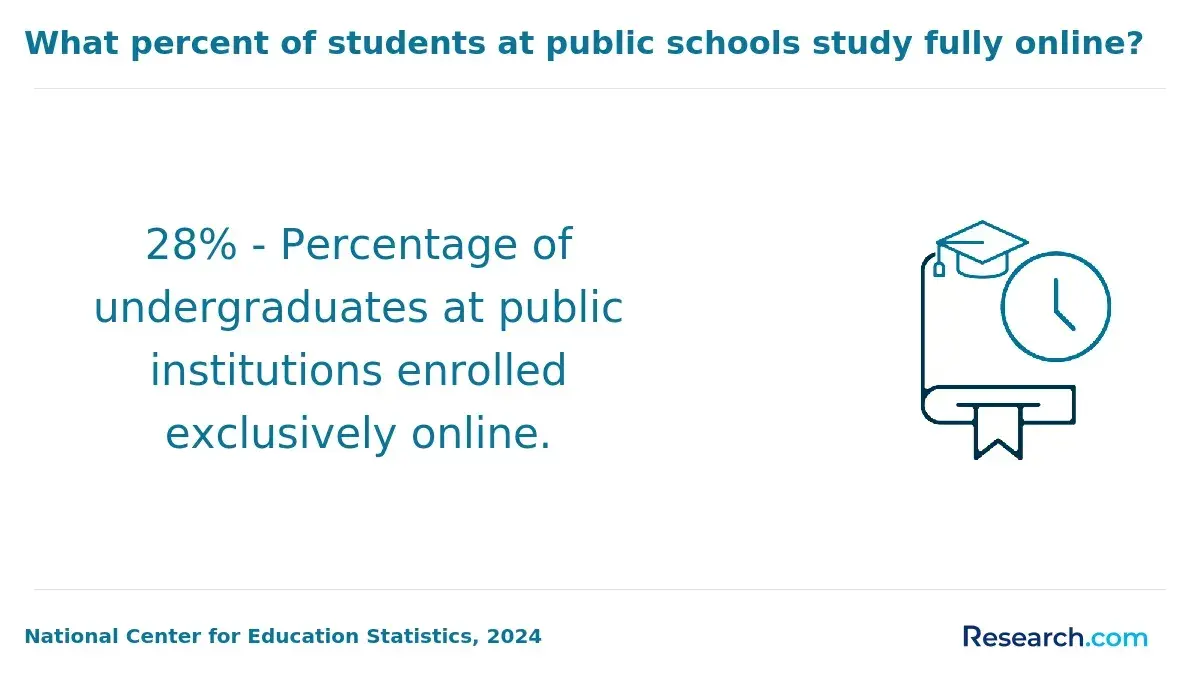
Online counselor education doctorates may include asynchronous learning, but true self-paced study is uncommon. Doctoral programs typically need scheduled interaction because students must demonstrate advanced counseling knowledge, supervision skills, teaching competence, research ability, and professional identity development.
When schools describe asynchronous coursework, they usually mean that you can complete readings, recorded lectures, discussion posts, and assignments within weekly deadlines. That is different from open-ended pacing, where you start and finish courses whenever you choose.
Before assuming a program will fit around your work calendar, ask how much of the program is synchronous. The most important scheduling details to confirm include the following:
- Whether live class meetings are required weekly, monthly, or only during selected courses.
- Whether synchronous sessions are scheduled in the evening, on weekends, or during standard work hours.
- Whether missed live sessions can be made up through recordings or alternate assignments.
- Whether dissertation advising, comprehensive exams, teaching demonstrations, and supervision labs require real-time participation.
- Whether internship hours must be completed during business hours, evenings, or approved site schedules.
Asynchronous learning helps students manage weekly workload, but it does not remove doctoral accountability. The strongest programs use flexible delivery while still keeping students connected to faculty, peers, supervisors, and research expectations.
How Long Does It Take to Complete a Flexible Online Counselor Education Doctorate?
Most flexible online counselor education doctorates take multiple years because students must move through advanced coursework, research preparation, internship or practicum requirements, comprehensive exams, and a dissertation or applied doctoral project. Part-time enrollment can make the degree more manageable, but it usually lengthens the path.
The table below gives a realistic planning framework rather than a promise. Actual completion time depends on course availability, transfer credit, dissertation momentum, faculty approval processes, and whether you pause enrollment.
| Enrollment pattern | Common timeline range | Why it may take longer | Who it fits |
| Full-time online or hybrid study | About 3-5 years | Dissertation delays, internship scheduling, research approvals, or limited course rotation | Students who can reduce work hours or have strong employer support |
| Part-time study | About 4-7 years | Fewer courses per term, slower dissertation progress, leave terms, or residency scheduling | Working counselors, supervisors, and administrators balancing employment |
| Accelerated or year-round study | May shorten coursework time | Dissertation and internship requirements still set the pace | Students with strong time availability and prior graduate preparation |
| Extended dissertation stage | Varies by school limit | Topic changes, data collection delays, committee feedback, or IRB timelines | Students whose research depends on external sites or participant recruitment |
If your main goal is educational leadership rather than counselor-educator preparation, it can also be useful to compare broader cheapest online EdD programs. An EdD may offer a more applied structure, but it may not substitute for a counselor education doctorate when faculty or CACREP-aligned supervision roles are the target.
How Do Flexible Online Counselor Education Doctorate Programs Accommodate Working Professionals?
Flexible online counselor education doctorates are usually built for experienced professionals, but the best programs make that design visible in their calendars, advising model, and course sequencing. A program that merely places campus courses online may still be difficult for a full-time clinician, school counselor, or counseling director to complete.
Look for flexibility features that reduce friction without weakening academic quality. These are the supports most likely to matter during a doctoral program:
- Part-time plans that show exactly which courses to take each term.
- Evening or weekend synchronous classes for students who work standard daytime schedules.
- Predictable residency dates announced far enough ahead to request leave from work.
- Advising checkpoints for dissertation topic development before coursework ends.
- Permission to complete internship or supervised doctoral experiences near the student's location when appropriate.
- Technology support for online teaching demonstrations, supervision recordings, research meetings, and group projects.
- Leave-of-absence and continuous-enrollment policies that are clear before enrollment.
Some counseling professionals discover that their real career goal is online teaching, curriculum development, or digital training design rather than counselor supervision or faculty research. In that case, comparing best online instructional design master's programs may help clarify whether a doctorate is necessary for the work they actually want.
What Are the Attendance and Residency Requirements for Flexible Online Counselor Education Doctorates?
Attendance and residency requirements vary significantly across online counselor education doctorates. Even fully online programs may require live class attendance, short residencies, internship hours, comprehensive exams, dissertation defenses, or synchronous supervision activities.
Residency requirements deserve special attention because they affect both schedule and total cost. A low-residency program can still be flexible, but only if the required dates are predictable and financially manageable.
Students should confirm these requirements before submitting an application:
- How many campus residencies or intensives are required across the full program.
- Whether residencies occur annually, at the beginning of the program, before internship, or near dissertation milestones.
- Whether travel, lodging, meals, parking, and lost work time are included in the school's cost estimates.
- Whether online attendance is synchronous, asynchronous, or mixed for each course.
- Whether missed live sessions are allowed and what documentation is required.
- Whether the doctoral internship follows CACREP-style expectations, which commonly include 600 hours in counselor education and supervision-related activities.
- Whether dissertation proposal and final defense can be completed online.
A common mistake is assuming "online" means "no campus obligations." Always compare the academic calendar against your work schedule, especially if you provide clinical services, follow a school-year calendar, or supervise staff.
How Much Do Flexible Online Counselor Education Doctorate Programs Cost?
The cost of a flexible online counselor education doctorate depends on tuition structure, number of credits, residency travel, fees, books, technology, dissertation continuation charges, and how long you remain enrolled. The lowest tuition rate is not always the lowest total cost if the program requires repeated travel or extra dissertation terms.
For students comparing affordability, the most useful figure is total estimated cost to completion, not tuition per credit. You can also compare dedicated affordability resources such as cheapest online PhD in counseling options, then verify each school's current tuition directly.
- Federal Direct Unsubsidized Loan annual limit for graduate and professional students is $20,500.
- Federal Grad PLUS borrowing may cover up to the school-certified cost of attendance minus other aid, subject to eligibility.
- Residency costs may include travel, lodging, meals, local transportation, parking, and time away from paid work.
- Dissertation continuation fees can add cost if research, revisions, or committee review extend beyond the planned timeline.
The table below shows the main cost categories to request from every school. This helps you compare programs on the same basis instead of relying on advertised tuition alone.
| Cost category | Why it matters | Question to ask |
| Tuition per credit or term | It forms the core academic cost but may not include fees | Is tuition charged per credit, per term, or by cohort package? |
| Required fees | Online, technology, library, graduation, and dissertation fees can add up | Which fees are mandatory for online doctoral students? |
| Residency expenses | Hybrid requirements can change the real cost of attendance | How many trips are required, and what does the school estimate for travel? |
| Internship or supervision costs | Site requirements may create unpaid hours or administrative expenses | Can internship activities be completed through my current employer or local network? |
| Time-to-completion costs | Extra semesters increase tuition, fees, and opportunity cost | What is the typical time to completion for part-time students? |
Which Students Benefit Most From Flexible Online Counselor Education Doctorate Programs?
Flexible online counselor education doctorates are strongest for students who already understand the counseling profession and need a format that supports continued employment. They are usually less suitable for students who need entry-level licensure preparation, want a quick credential, or are unsure whether they want research, teaching, supervision, or leadership responsibilities.
The table below clarifies who tends to benefit most and who may need a different path first. Use it as a fit check before committing to a multi-year doctoral plan.
| Student profile | Why the format may work | Potential concern |
| Licensed professional counselor, school counselor, or clinical supervisor | Can build on existing practice experience while studying part time | Must balance doctoral workload with client, student, or supervisee responsibilities |
| Counseling faculty applicant or aspiring counselor educator | Doctoral training aligns with teaching, supervision, research, and professional leadership | Hiring expectations vary by institution, accreditation needs, research agenda, and experience |
| Program director or behavioral health administrator | Flexible study can support advancement into supervision, policy, or organizational leadership | An EdD, public administration degree, or health leadership program may be a better match for some roles |
| Recent bachelor's graduate | Usually not the intended audience for a counselor education doctorate | Most will need a counseling master's degree and supervised licensure preparation first |
| Student seeking the fastest counseling credential | A doctorate may provide advanced preparation | The time and cost may be unnecessary for entry-level practice goals |
A useful decision rule is this: choose the doctorate if your next step requires advanced scholarly, supervisory, teaching, or leadership preparation. If your immediate goal is to become licensed for the first time, a master's-level counseling pathway is usually the more direct route.
Does Program Flexibility Affect Career Outcomes for Online Counselor Education Doctorate Graduates?
Program flexibility can affect your experience, persistence, and work-life balance, but it does not automatically improve or weaken career outcomes. Employers and universities usually care more about accreditation fit, doctoral specialization, dissertation quality, teaching or supervision experience, licensure status, research productivity, and professional references than whether courses were delivered online.
Salary outcomes also depend on role, employer type, region, and experience. For context, the BLS reported a May 2024 median annual wage of $83,980 for postsecondary teachers and $65,140 for educational, guidance, and career counselors and advisors. These figures are broad occupational benchmarks, not doctorate-specific salary promises.
The table below connects common post-doctoral goals with the evidence schools should be able to provide. This is more useful than relying only on program format.
| Career goal | Relevant doctorate value | Evidence to request from programs |
| Counselor educator or faculty member | Preparation in teaching, research, supervision, and professional identity | Graduate placements, teaching opportunities, faculty mentoring, dissertation support |
| Clinical supervisor or training director | Advanced supervision theory, ethics, assessment, and leadership preparation | Supervision coursework, internship options, professional partnerships |
| Research or policy role | Research design, statistics, grant writing, and applied scholarship | Faculty research areas, publication support, conference participation |
| Higher education administrator | Leadership, accreditation, assessment, and program development skills | Administrative internships, alumni roles, institutional partnerships |
| Consultant or private trainer | Credibility, specialized expertise, and curriculum development experience | Applied projects, teaching portfolio, supervision credentials, professional network |
The biggest risk is choosing flexibility at the expense of fit. A highly convenient program may still be a poor investment if it lacks the specialization, faculty expertise, accreditation alignment, or doctoral experiences needed for your target role.
How Should Students Choose the Most Flexible Online Counselor Education Doctorate Program?
The most flexible online counselor education doctorate is the one that fits your professional goal, not simply the one with the fewest campus visits. Start by defining the role you want after graduation, then test each program against that goal, your schedule, and your budget.
Use this step-by-step process before you apply. It is designed to prevent the most common mistakes students make when comparing online doctoral options.
- Confirm the degree name, specialization, and whether it is a PhD, EdD, or other doctorate.
- Check accreditation and ask whether the program's structure aligns with your intended faculty, supervision, or leadership goals.
- Request both full-time and part-time degree plans, including dissertation and internship milestones.
- Ask for exact residency dates, live class expectations, and whether attendance flexibility is allowed.
- Compare total estimated cost to completion, including fees, residencies, and dissertation continuation charges.
- Review faculty expertise and identify at least two faculty members whose research or supervision interests match yours.
- Ask how online students gain teaching, supervision, research, and professional leadership experience.
- Speak with current students or alumni about workload, advising quality, dissertation support, and scheduling reality.
- Verify state licensure implications if you plan to use the degree for supervision, counseling practice, or credential advancement.
- Compare opportunity cost, including reduced work hours, unpaid internship time, travel, and delayed earnings.
Also watch for red flags. These do not always mean a program is bad, but they should trigger deeper questions before you enroll.
- The school advertises "self-paced doctoral study" but cannot explain dissertation deadlines, supervision requirements, or faculty feedback cycles.
- The catalog does not clearly state residency, internship, comprehensive exam, or dissertation requirements.
- Admissions advisors emphasize speed but avoid discussing completion rates or dissertation support.
- The program does not show how online students gain teaching or supervision experience.
- The tuition estimate excludes mandatory fees, travel, or continuation enrollment.
- The curriculum does not match your target role in counselor education, supervision, research, or leadership.
If you are still comparing foundational counseling pathways before doctorate-level study, reviewing easiest counseling degree programs can help you understand which earlier degree options may be more appropriate before committing to a doctoral program.
Other Things You Should Know About Counselor Education
Usually, no. Many counselor education doctorates expect applicants to hold a master's degree in counseling or a closely related field, and some prefer or require professional counseling licensure or eligibility. Requirements vary by school, so check admissions criteria carefully.
Most PhD programs require a dissertation. Some EdD programs may use an applied dissertation, capstone, or doctoral project, but students should not assume it is easier; these projects still require research design, faculty approval, and substantial writing.
A counselor education doctorate is usually designed for advanced roles, not initial licensure. Licensure is typically based on a qualifying master's degree, supervised experience, exams, and state board rules. Always confirm requirements with the relevant state licensing board.
Publication is not always a graduation requirement, but it can be important for faculty, research, and competitive leadership roles. Students aiming for academic careers should ask about conference presentations, faculty research teams, writing groups, and publication mentoring.
References
- 2025 Most Affordable Online PhDs in Counseling https://www.onlineu.com/most-affordable-colleges/counseling-doctoral-degrees
- 25 Cheapest Online EdD Programs of 2025 https://www.eddprograms.org/schools/affordable-online-doctor-of-education-programs/
- Standards Archives - CACREP https://www.cacrep.org/category/standards/
- CACREP-Accredited Online Counseling Programs https://onlinecounselingprograms.com/online-counseling-degrees/cacrep-accredited/
- Online Doctoral Counseling Programs: Accelerated Hybrid PsyD with Licensure https://www.scuhs.edu/psyd-article/online-doctoral-counseling-programs-accelerated-hybrid-psyd-with-licensure/
- Best CACREP-Accredited Online Master's In Counseling 2025 https://www.psychology.org/rankings/masters/online-cacrep-accredited-school-counseling-degrees/
- Ph.D. in Counselor Education and Supervision https://www.ucumberlands.edu/academics/graduate/phd-counselor-education-and-supervision
- Current Practices in Online Counselor Education - The Professional Counselor https://tpcjournal.nbcc.org/current-practices-in-online-counselor-education/
- Counseling Degree Programs Online with Financial Aid https://www.edumed.org/online-schools/counseling-degrees/financial-aid/