2027 Online Counselor Education Doctorate Program Costs: Tuition, Fees, Financial Aid, and Employer Reimbursement

Co-Founder and Chief Data Scientist
An online Counselor Education doctorate can support faculty, supervision, research, and leadership goals, but the price can be difficult to judge before enrollment. Graduate borrowing matters: federal graduate students can borrow up to $20,500 per year through Direct Unsubsidized Loans, with Grad PLUS loans covering remaining certified costs. This guide is for licensed counselors, supervisors, and master's graduates comparing programs. You'll learn how tuition, fees, residencies, aid, employer reimbursement, and career outcomes affect the real cost, so you can decide whether the degree fits your budget and professional goals.
Key Things to Know About Online Counselor Education Doctorate Program Costs
- Most online Counselor Education doctorates are priced by credit; a 60-credit program costs $48,000 at $800 per credit and $72,000 at $1,200 per credit before fees, travel, books, and dissertation continuation costs.
- Federal graduate aid can be significant but expensive: Direct Unsubsidized Loans are capped at $20,500 per academic year, while Grad PLUS loans may cover the remaining school-certified cost of attendance after credit approval.
- Employer education assistance can reduce cash flow pressure, but the commonly cited tax-free employer education benefit is limited to $5,250 per year, so multi-year sponsorship or promotion-based reimbursement matters more than a one-time benefit.
What is the average tuition cost of an online Counselor Education doctorate program?
There is no single federal average published specifically for online Counselor Education and Supervision doctorates, so the most reliable way to compare programs is to calculate total tuition from the program's required credits and per-credit rate. Most applicants should treat the advertised tuition figure as a starting point, not the full price, because doctoral enrollment often extends through dissertation, internship, practicum, or residency requirements.
A practical planning range for many online Counselor Education doctorate programs is roughly the mid-$40,000s to more than $90,000 in tuition before fees. Programs at public universities may be lower for in-state students, while private nonprofit and private for-profit programs may use flat online rates that are easier to predict but not always cheaper.
The table below shows how quickly total tuition changes when the credit requirement or per-credit rate changes. Use it as a budgeting model when reviewing published tuition pages and degree plans.
| Program pricing scenario | Required credits | Per-credit tuition | Estimated tuition before fees | What it means for applicants |
| Lower-credit, moderate-rate program | 48 | $800 | $38,400 | Often attractive if transfer credit is allowed and dissertation enrollment is controlled. |
| Common doctoral planning scenario | 60 | $900 | $54,000 | A useful midpoint for comparing online programs before adding fees and travel. |
| Higher-credit or higher-rate program | 72 | $1,200 | $86,400 | May still be worthwhile for strong faculty fit, CACREP alignment, or funded opportunities, but requires careful ROI review. |
If affordability is your main filter, compare tuition, required credits, and residency requirements together rather than ranking programs by per-credit price alone. Students who want a broader market view can also review options listed among the cheapest online PhD in counseling, then verify each program's current tuition directly with the university.
Are online Counselor Education doctorate programs subject to distance learning or technology fees?
Yes. Many online Counselor Education doctorate programs charge distance learning, technology, library, student services, graduation, clinical placement, or dissertation-related fees. These charges may be billed per credit, per course, per term, or as one-time program fees, which makes them easy to miss when comparing only base tuition.
The most important question is whether fees are already included in the published online rate. A flat online tuition model can be easier to budget, but some universities still add separate mandatory fees for platforms, identity verification, digital resources, or doctoral milestones.
The table below summarizes common fee categories and why they matter when calculating the true cost of attendance.
| Fee type | How it is commonly billed | Why it affects total cost | Question to ask the school |
| Technology or online learning fee | Per credit, per course, or per term | Can compound over several years of part-time enrollment. | Is this fee included in the advertised online tuition rate? |
| Student services or university fee | Per term | May apply even when the student is fully online. | Which mandatory fees apply to online doctoral students? |
| Clinical, practicum, or internship fee | Per placement or course | Can affect students completing supervision or field-based requirements. | Are placement, supervision, or liability-related fees separate? |
| Dissertation or continuation fee | Per term after coursework | Becomes costly if dissertation completion takes longer than planned. | What is the fee for dissertation enrollment after coursework ends? |
| Graduation or administrative fee | One time | Small compared with tuition, but still part of final out-of-pocket cost. | Are there final-term fees not shown in the tuition estimate? |
A common mistake is assuming "online" means all digital access is included. Before enrolling, request a written cost sheet for the full degree, not just the first term.
What out-of-pocket expenses should online Counselor Education doctorate students anticipate?
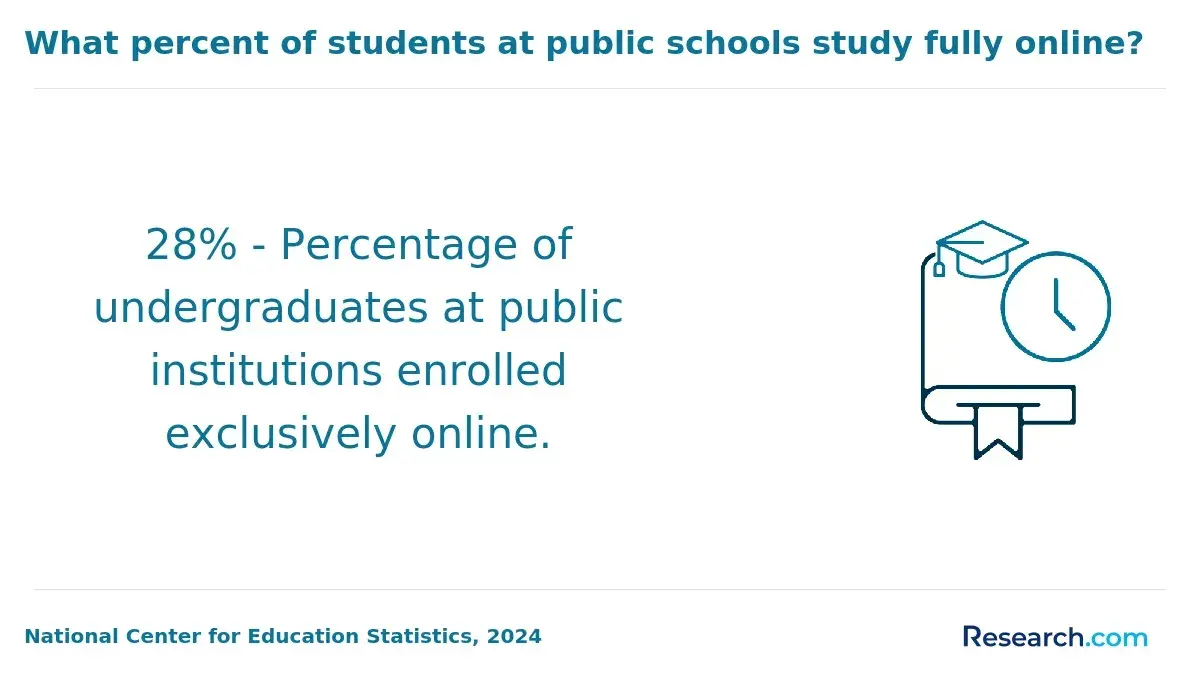
Online students often save on commuting and relocation, but they still face out-of-pocket expenses that may not be obvious in the tuition estimate. Counselor Education doctorates can include synchronous meetings, residencies, doctoral internships, research software, professional association costs, and dissertation-related expenses.
The table below gives planning ranges rather than guaranteed costs. Actual expenses vary by university, location, travel distance, dissertation design, and whether the student already owns the required technology.
| Expense category | Typical planning range | Why it matters | How to reduce the cost |
| Required residency travel | $500-$2,500 per trip | Some online doctorates require campus intensives, conferences, or supervision labs. | Ask whether residencies are annual, optional, virtual, or bundled into one visit. |
| Books and digital materials | $300-$1,200 per year | Doctoral courses often require specialized counseling, research, and statistics texts. | Use library access, older editions when allowed, and institutional e-book subscriptions. |
| Computer, webcam, and software | $500-$2,000 initially | Online counseling education courses may require reliable video, secure testing, and statistical software. | Check whether the university provides software licenses. |
| Professional association and conference costs | $100-$1,500 per year | Presentations and networking can support academic job searches but may not be required every year. | Apply for student rates, travel grants, and virtual presentation options. |
| Dissertation research costs | Varies widely | Transcription, survey tools, participant recruitment, or data analysis support may add costs. | Design a feasible study with your chair before committing to expensive methods. |
To build a realistic budget, calculate tuition first, then add mandatory fees, residency travel, materials, dissertation costs, and loan interest. If the program's completion timeline is flexible, include at least one extra term in your budget so a dissertation delay does not become a financial emergency.
Does in-state versus out-of-state residency status impact online Counselor Education doctorate tuition?
Residency status can affect online Counselor Education doctorate tuition, but the impact depends on the school's pricing model. Some public universities charge different in-state and out-of-state graduate rates, while others use a flat online rate for all distance learners. Private institutions usually charge the same tuition regardless of state residency, though total costs can still vary because of fees and travel.
The table below compares common tuition models so you can identify which structure is likely to be most affordable for your situation.
| Tuition model | Who may benefit | Main risk | Best use case |
| Public in-state rate | Students who live in the university's state and qualify for graduate residency | Limited availability if the desired specialization or faculty fit is elsewhere | Strong option when the program is accredited, well-aligned, and significantly cheaper. |
| Public out-of-state rate | Students who need a specific program not available locally | Can exceed private online tuition if the out-of-state differential is high | Worth considering when faculty expertise or licensure alignment is unusually strong. |
| Flat online tuition | Out-of-state students who want predictable pricing | May not be lower than in-state public tuition | Useful for comparing programs across states without residency uncertainty. |
| Private institutional rate | Students prioritizing program format, cohort model, or mission fit | Sticker price may be high if institutional grants are limited | Can make sense if aid, employer support, or completion speed offsets the higher rate. |
Do not assume you can move states and immediately qualify for in-state graduate tuition. Residency rules vary by university and state, and some institutions restrict reclassification for students who move primarily for education.
How do total costs for an online Counselor Education doctorate compare to traditional on-campus programs?
Online programs are not automatically cheaper than on-campus programs, but they often reduce indirect costs. The biggest online savings usually come from avoiding relocation, commuting, campus parking, and lost work hours. The biggest online cost risks are residency travel, technology fees, and a longer part-time timeline that extends fee payments.
The table below compares typical cost categories for online and traditional on-campus Counselor Education doctoral study. It is most useful when you are deciding whether format, not just tuition, changes affordability.
| Cost factor | Online doctorate | On-campus doctorate | Decision takeaway |
| Tuition | May be flat-rate, in-state, or private online pricing | Often tied to campus residency and state residency status | Compare total tuition, not delivery mode. |
| Housing and relocation | Usually avoidable | May be required if the student moves near campus | Online study can be cheaper for working adults with established households. |
| Work continuity | Often easier to maintain full-time or part-time employment | May require reduced work hours for assistantships, daytime courses, or campus obligations | Lost income can be larger than tuition differences. |
| Assistantship access | May be limited or remote-dependent | Often stronger for research, teaching, and administrative roles | Campus programs may become cheaper if funding is substantial. |
| Residency and travel | Possible short-term travel costs | Daily campus costs instead of occasional travel | Online is not cost-free if residencies are frequent. |
If your broader goal is educational leadership rather than counselor education faculty work, it can be useful to compare adjacent doctoral pathways, including the cheapest online EdD programs. A lower-cost EdD may fit administrative or training goals, but it may not substitute for a Counselor Education and Supervision doctorate when the target role requires counseling faculty expertise.
Can graduate assistantships and fellowships reduce online Counselor Education doctorate costs?
Graduate assistantships and fellowships can reduce doctoral costs, but online students should verify eligibility early. Many assistantships are tied to campus-based teaching, research labs, advising offices, or grant-funded projects, which can make them less accessible to distance learners. However, some departments offer remote research assistance, online course support, editorial work, assessment projects, or limited doctoral scholarships.
The value of an assistantship is not only tuition reduction. It can also provide supervised teaching experience, research output, faculty mentoring, and stronger credentials for future counselor educator positions. The trade-off is time: a funded role may slow coursework if you are already working full time.
Use the following questions when speaking with a program director or graduate funding office:
- Are online Counselor Education doctoral students eligible for departmental assistantships, tuition waivers, or fellowships?
- Are any assistantships remote, hybrid, evening-based, or project-based?
- Does the assistantship include tuition remission, a stipend, health insurance, or only hourly pay?
- How many doctoral students receive funding each year, and is funding renewable?
- Can assistantship duties count toward teaching, supervision, research, or professional portfolio development?
A common red flag is a program that mentions funding generally but cannot explain whether online doctoral students have recently received it. Ask for recent examples, not promises.
What financial aid options are available for students enrolled in an online Counselor Education doctorate?
Financial aid for online Counselor Education doctorate students can include federal loans, institutional scholarships, professional association awards, employer reimbursement, military education benefits, and sometimes state or workforce-related grants. Eligibility usually depends on accreditation, enrollment status, satisfactory academic progress, citizenship or eligible noncitizen status, and the school's participation in federal aid programs.
Federal loans often cover the largest share of graduate costs. Current federal rules allow eligible graduate students to borrow up to $20,500 per academic year in Direct Unsubsidized Loans; Grad PLUS loans may cover remaining school-certified cost of attendance after other aid is applied and after credit review. This can make enrollment possible, but it also means students should compare repayment scenarios before borrowing the maximum available amount.
The table below summarizes major funding sources and the role each one can play in an affordability plan.
| Funding option | Potential value | Best fit | Main limitation |
| Direct Unsubsidized Loans | Up to $20,500 per academic year | Students needing predictable federal loan access | Interest accrues, and annual limits may not cover full tuition. |
| Grad PLUS Loans | Up to remaining certified cost of attendance | Students with costs above unsubsidized loan limits | Credit review applies, and borrowing can become expensive. |
| Institutional scholarships | Varies by university | Applicants with strong academic, research, service, or diversity profiles | Awards may be competitive, small, or not renewable. |
| Professional association awards | Usually targeted support | Students presenting research, serving underrepresented communities, or pursuing counselor education leadership | Often requires separate applications and deadlines. |
| Military and veteran benefits | Depends on benefit eligibility | Eligible service members, veterans, and dependents | Program approval and remaining entitlement must be verified. |
Students comparing education-related credentials should also consider whether a less expensive adjacent program meets their career goal. For example, those focused on learning design, training, or corporate education may want to compare affordability with the best online instructional design master's programs before committing to a counseling doctorate.
Does employer tuition reimbursement cover an online Counselor Education doctorate?
Employer tuition reimbursement may cover an online Counselor Education doctorate if the degree is related to your current role or a documented career path within the organization. Counselors working in universities, school systems, hospitals, behavioral health agencies, nonprofit organizations, government agencies, or employee assistance programs may have stronger arguments for coverage when the doctorate supports supervision, teaching, program evaluation, compliance, leadership, or workforce development.
The most important federal benchmark is the employer education assistance exclusion: employers may provide up to $5,250 per year in tax-free educational assistance to eligible employees under current IRS rules. Some employers offer more than that, but amounts above the tax-free threshold may have tax consequences unless another exclusion applies.
Employer policies vary widely, so read the details before counting the benefit as guaranteed funding. Pay attention to these policy terms:
- Annual reimbursement cap and whether it resets by calendar year, fiscal year, or academic year
- Whether doctoral programs are eligible or only certificates, bachelor's, and master's programs
- Minimum grade requirements for reimbursement after course completion
- Accreditation requirements for the university or program
- Required employment period after reimbursement and repayment obligations if you leave
- Whether fees, books, residencies, and dissertation credits are covered
Employer support works best when the degree clearly improves your value to the organization. It works poorly when the doctorate is mainly for a career change the employer does not benefit from.
How can working professionals negotiate employer sponsorship for an online Counselor Education doctorate?
Working professionals can often improve their chances of employer sponsorship by presenting the doctorate as a business investment rather than a personal education request. Your proposal should connect the program to measurable needs, such as supervision capacity, clinical training, accreditation support, grant writing, research, leadership succession, or counselor retention.
Use this sequence to prepare a stronger reimbursement or sponsorship request:
- Identify the employer's need: supervision shortages, staff training gaps, program evaluation needs, leadership pipeline goals, or accreditation expectations.
- Map specific doctorate courses or outcomes to that need, such as advanced supervision, counselor education pedagogy, research methods, trauma-informed training, or assessment.
- Prepare a cost summary showing tuition, mandatory fees, expected annual reimbursement, your contribution, and any federal aid you may use.
- Offer a retention agreement that is reasonable, such as continued employment after reimbursement, without accepting terms that could create unmanageable repayment risk.
- Ask for non-cash support if full tuition is unlikely, such as paid residency days, conference travel, schedule flexibility, dissertation data access, or supervision hours.
- Request written confirmation of covered expenses, reimbursement timing, tax treatment, and what happens if courses are delayed or repeated.
A practical negotiation strategy is to ask for layered support. For example, an employer may decline full tuition sponsorship but agree to the annual education benefit, paid professional development time, and conference funding. Those combined benefits can reduce both cash cost and completion friction.
What ROI can graduates expect from an online Counselor Education doctorate?
The ROI of an online Counselor Education doctorate depends on your starting salary, debt level, career target, completion time, and whether the credential is necessary for your goal. The strongest ROI cases usually involve people who already work in counseling and want to move into counselor education faculty roles, doctoral supervision, program leadership, research, accreditation, or senior administrative positions.
Federal labor data can provide context, but it should not be treated as a salary promise. The Bureau of Labor Statistics reported a May 2024 median annual wage of $84,380 for postsecondary teachers overall, while postsecondary education administrators had a median annual wage above $100,000. These figures cover broad occupations, not only Counselor Education doctorate holders, so use them as labor-market reference points rather than guaranteed outcomes.
The table below shows how to think about ROI by career path. It focuses on fit, not just salary, because institution type, location, tenure status, workload, and prior experience all influence earnings.
| Career outcome | How the doctorate may help | ROI considerations | Best fit |
| Counselor education faculty | Supports teaching, research, supervision, and accreditation-aligned faculty qualifications | ROI improves if the program builds publications, teaching experience, and faculty mentorship. | Licensed counselors seeking academic careers. |
| Clinical supervision or training director | Strengthens supervision, curriculum, and workforce development credentials | ROI depends on whether the employer rewards doctoral-level leadership. | Experienced clinicians moving into training or program leadership. |
| Postsecondary administration | Can support roles in counseling programs, student services, accreditation, or academic leadership | Administrative salaries vary by institution size and responsibility level. | Professionals who want leadership rather than primarily clinical practice. |
| Research, consulting, or policy work | Builds research design, evaluation, and subject-matter authority | Income may be variable if consulting is part-time or entrepreneurial. | Students with strong research interests and professional networks. |
This degree may not be the right investment if you only need entry-level counseling credentials, are unsure about doctoral research, or would need to borrow heavily without a clear career use for the degree. If you are earlier in the pathway and still comparing counseling entry options, reviewing the easiest counseling degree programs may be more appropriate than jumping directly to doctoral cost planning.
To evaluate ROI before enrolling, estimate your total cost, subtract grants and employer aid, project realistic monthly loan payments, and compare the result with conservative salary scenarios. A doctorate is most financially defensible when it opens roles you actively want and cannot reasonably reach through a lower-cost credential.
Other Things You Should Know About Counselor Education
CACREP accreditation is not required for every career goal, but it can matter for counselor education faculty roles, program credibility, and some employer preferences. Applicants should verify whether the doctoral program's accreditation aligns with their intended academic, supervisory, or leadership path.
Sometimes. Some universities allow limited doctoral-level transfer credit, but many restrict transfers because doctoral curricula are cohort-based or tied to accreditation outcomes. Ask how many credits can transfer, whether they reduce tuition, and whether they shorten the program timeline.
Part-time enrollment can make payments easier to manage, but it is not always cheaper. If the school charges per-term fees or dissertation continuation fees, taking longer may increase the total amount paid even if each term costs less.
In many cases, 529 funds can be used for qualified higher education expenses at eligible institutions, including graduate programs. Rules can vary by expense type and tax situation, so students should confirm eligibility with the plan administrator or a qualified tax professional.
References
- Best Doctorates in Counseling Online https://www.onlineu.com/degrees/doctoral-counseling
- Why Pursue an Online Ph.D. in Counselor Education and Supervision? https://www.ucumberlands.edu/blog/why-pursue-an-online-phd-counselor-education-supervision
- Counseling Scholarships https://onlinecounselingprograms.com/become-a-counselor/resources/scholarships/
- insights https://aituedu.org/insights/
- Types of Financial Aid for Online Colleges https://www.umassglobal.edu/blog-news/types-financial-aid-online-colleges
- Financial Aid for Online Colleges | CollegeAtlas https://www.collegeatlas.org/financial-aid-for-online-colleges
- Tuition Support - Education Fund https://theedfund.org/tuition-support/
- Education assistance https://www.lambenefits.com/work-life/educational-assistance
- Financial Aid Guide for Online College Students | Onlinedegrees.com https://www.onlinedegrees.com/degree360/student-loans-scholarships/
- Counselor Education and Supervision (PHD) | East Texas A&M University, ETAMU https://www.etamu.edu/programs/counselor-education-supervision-phd/