2027 Fastest-Growing Careers for Higher Education Degree Graduates

Co-Founder and Chief Data Scientist
Graduates holding a higher education degree often face uncertainty when choosing a career path amid rapidly evolving labor markets. While some fields contract, others expand swiftly-creating crucial disparities in job availability and salary growth. For example, employment in healthcare and technology-related occupations is projected to grow 16% over the next decade, significantly outpacing the average for all occupations. This expanding demand poses both opportunities and challenges for degree holders aiming to align their skills with market needs. This article explores the fastest-growing careers for higher education graduates-using data-driven insights to guide readers toward roles with strong advancement potential and competitive compensation.
Key Things to Know About the Fastest-Growing Careers for Higher Education Degree Graduates
- Employment projections indicate a 15% growth rate in education administration and instructional coordination roles, driven by increasing demand for postsecondary learning support.
- Labor market analytics reveal strong salary growth in educational technology specialists-up to 12% annually-as institutions adopt digital learning innovations.
- Current hiring trends show a geographic spread favoring urban and suburban areas, emphasizing candidates with advanced credentials and data literacy skills for competitive advantage.
Which Higher Education Degree Career Paths Are Experiencing the Fastest Job Growth in the United States Right Now?
Recent labor market data from the Bureau of Labor Statistics (BLS) reveals that several career paths for higher education degree graduates are growing notably faster than average, driven by demographic, technological, and policy changes. Examining projected job growth over the next decade highlights the top five fastest-growing occupations, showcasing robust opportunities in fields with strong compensation and advancement potential.
- Nurse Practitioners: Rapid growth stems from an aging population increasing demand for healthcare services and healthcare policy focusing on primary care access. Nurse practitioners play a vital role in underserved and rural communities, with preventive care and healthcare facility expansion propelling this field.
- Data Scientists and Analysts: The surge in big data and the adoption of artificial intelligence and machine learning create high demand for graduates with STEM and analytical expertise. These roles transform complex information into strategic insights across multiple industries, opening lucrative career paths.
- Physical Therapist Assistants: An aging demographic and growing emphasis on rehabilitative medicine have increased the need for physical therapy services. Assistants support licensed therapists in patient recovery, while advances in health technology and insurance policies contribute to this occupation's expansion.
- Information Security Analysts: Rising cyber threats, the increase of remote work, and stricter regulations make protecting digital infrastructure critical. This role's importance grows as organizations intensify efforts to safeguard sensitive data, fueling strong job growth.
- Operations Research Analysts: Businesses and government agencies increasingly rely on advanced mathematical models to improve decision-making and efficiency. Demand rises in response to complex supply chains, risk management, and technological integration requiring skilled analytical problem solvers.
These fastest growing higher education degree careers in the United States reflect structural shifts not as visible in earlier years-such as demographic evolutions, policy emphasis, and technological advances. Graduates can strategically position themselves to capitalize on these expanding roles by building relevant skills and credentials.
Exploring certificate programs that pay well offers one practical route to enhance market value and readiness. This guide will continue with an in-depth look at qualifications and strategies for success within the top higher education degree jobs with highest growth in U.S. labor market.
What Does the Bureau of Labor Statistics Project for Higher Education Degree Employment Over the Next Decade?
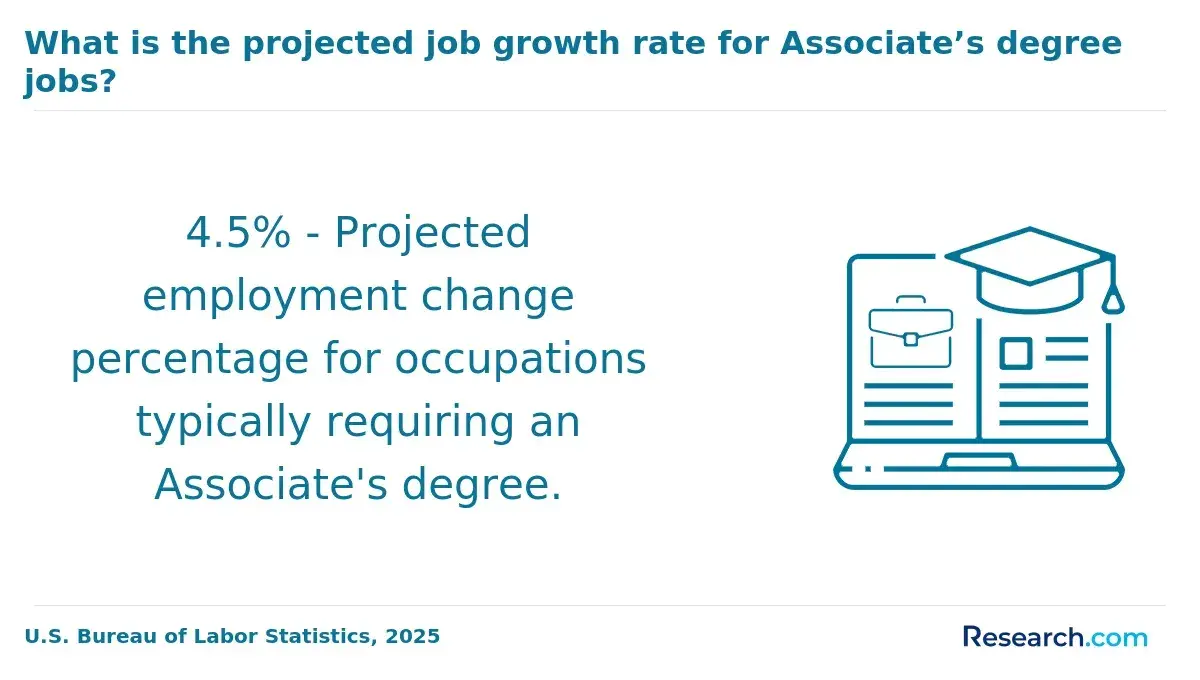
The Bureau of Labor Statistics (BLS) projects stronger-than-average growth for occupations requiring a higher education degree over the next decade. Employment in these fields is expected to rise about 8 percent from 2022 to 2032, compared to a 5 percent average growth rate for all occupations. This indicates a promising labor market for degree holders seeking expanding job opportunities.
- Overall Growth: Higher education degree-related roles will outpace national averages, with notable demand for skilled professionals in various sectors.
- Healthcare Expansion: Registered nurses, medical and health services managers, and similar healthcare careers are forecasted to grow between 10 and 14 percent. An aging population and policy efforts to broaden healthcare access drive this increase.
- Technology Fields: Computer and information technology occupations-including software developers and information security analysts-are expected to grow at 15 percent or more, supported by ongoing digital transformation and cybersecurity needs.
- Education Sector: Postsecondary teachers and educational administrators should see steady growth around 12 percent, influenced by retirements and sustained higher education investment.
- Business and Management Roles: Careers such as business analysts, management consultants, and financial managers show growth near 7 to 9 percent. Strategic decision-making and resource management underpin this demand-candidates with a business administration degree are well positioned.
- Regional Variances: While these national projections provide a helpful benchmark, local labor markets will vary significantly. Regional industry concentrations, state policies, and economic conditions influence job availability and salary potential.
Higher education degree employment growth projections from the Bureau of Labor Statistics highlight not just volume increases but also quality opportunities-including salary growth, advancement potential, and geographic flexibility.
Demand Drivers Overview
- Retirements: Many professionals are nearing retirement age, creating openings for new graduates.
- Policy Mandates: Initiatives expanding healthcare coverage and educational funding boost hiring in related sectors.
- Service Sector Growth: Expanding healthcare and technology services contribute to greater job creation rates for degree holders.
For those exploring the U.S. labor market forecast for higher education graduates over the next decade, these insights offer crucial guidance for academic and career planning.
How Do Emerging Technologies and Industry Disruptions Create New Career Opportunities for Higher Education Graduates?
The World Economic Forum's Future of Jobs Report emphasizes that graduates who combine their core degrees with digital and technical skills stand to benefit most from evolving job markets. Disruption should be viewed as an opportunity that rewards adaptability and critical thinking fostered through higher education.
- Artificial Intelligence: AI continues to reshape industries like finance, healthcare, and technology, spawning roles such as machine learning engineers, data scientists, and AI ethics consultants. These positions demand analytical prowess, coding skills, and expertise in interpreting complex data sets. Graduates with backgrounds in computer science, mathematics, or engineering tend to excel due to their problem-solving abilities and training in algorithmic logic.
- Green Energy Transition: Efforts to combat climate change have accelerated demand for professionals in renewable energy development, environmental consulting, and sustainability project management. Candidates with degrees in environmental science, engineering, or business leverage technical expertise alongside policy analysis and organizational skills. Research from the McKinsey Global Institute highlights not only a rise in job availability but also competitive salaries and strong advancement opportunities in this sector.
- Digital Health Transformation: The healthcare sector's increasing reliance on digital tools is fueling demand for health informatics specialists, telemedicine coordinators, and bioinformatics analysts. These roles merge medical knowledge with IT capabilities and data management skills. Graduates from programs that blend health sciences with digital competencies are positioned to contribute to patient care innovations and medical research development.
Employers today prioritize precise entry-level job titles when searching for recent graduates, especially in high-growth sectors. Using exact titles instead of broad descriptors enhances visibility in applicant tracking systems and boosts relevance in job searches. The most in-demand entry-level careers for higher education graduates in the U.S. include several key roles identified from current hiring data.
- Data Analyst: Tasked with analyzing large datasets to guide business decisions, data analysts are prominent in finance, healthcare, and technology. Starting salaries range from $55,000 to $70,000, with clear progression into roles like data scientist or business intelligence manager.
- Software Developer: These professionals develop and troubleshoot software applications across various platforms. Common in IT and software service industries, starting pay is typically $65,000 to $80,000 annually. This position often leads to senior developer and project management roles.
- Registered Nurse (RN): RNs provide direct patient care and health education within hospitals and clinics. Initial salaries fall between $60,000 and $75,000, with advancement opportunities into specialties such as nurse practitioner or healthcare administration.
- Marketing Coordinator: Focusing on campaign support and market analysis, coordinators are prevalent in advertising and retail sectors. Entry pay usually ranges from $45,000 to $55,000, with career growth paths toward marketing management or digital strategy.
- Financial Analyst: Analysts working in banking and corporate finance evaluate financial data and prepare reports. Starting salaries are generally between $60,000 and $75,000, offering trajectories into senior analyst and financial management roles.
Graduates can align with current market demands by targeting these specific titles rather than generic field names. Leveraging precise job titles on resumes maximizes discoverability in a competitive job market. For those interested in further academic advancement alongside career building, exploring affordable EdD programs online can offer valuable credentials that enhance long-term prospects.
Compensation growth varies among these fields-software development and data science frequently offer high initial pay with steep income gains over time, while healthcare administration and environmental science tend to provide steady, incremental salary increases. Educational technology may start with lower pay but rewards adaptability and leadership in a rapidly expanding sector.
- Data Science: Entry-level salaries typically range from $65,000 to $85,000, reflecting strong demand for foundational skills. Mid-career roles see notable jumps, with wages rising to between $100,000 and $130,000. Senior professionals, particularly those skilled in AI or machine learning, often earn $140,000 to $180,000 or beyond, driven by specialized expertise.
- Healthcare Administration: Starting pay usually falls between $50,000 and $70,000, increasing to $80,000-$110,000 as management duties expand. Senior executives in large healthcare organizations may command salaries of $120,000 to $160,000, with advanced certifications and graduate degrees accelerating compensation growth.
- Educational Technology Specialists: Initial salaries generally range from $45,000 to $60,000, rising to $70,000-$90,000 mid-career. Senior-level positions focused on program leadership and strategic innovation offer $95,000 to $130,000, especially for those mastering emerging technologies within education sectors.
- Environmental Science and Protection: Entry wages hover around $50,000 to $65,000, with mid-career pay increasing to $75,000-$100,000. Senior experts and project leaders often earn between $110,000 and $140,000, buoyed by rising organizational and regulatory emphasis on sustainability.
- Software Development: Starting salaries range from $70,000 to $90,000, growing to $110,000-$140,000 in mid-career roles depending on technical proficiency. Senior developers or tech leads typically earn between $150,000 and $200,000, with growth amplified by rapid skill acquisition and leadership responsibilities.
Geographic location, employer size, and industry significantly influence these figures, so reviewing cost-of-living details alongside salary expectations is essential for a complete financial outlook.
Geographic factors strongly influence career trajectories and salary potentials for graduates holding higher education degrees. Economic structures, industry presence, and workforce demands vary widely across U.S. regions, shaping opportunities in significant ways.
- Northeast: With a concentration of research universities and financial hubs, demand remains robust for graduates in business, education, and health services. Employment typically grows moderately, around 4-6% over ten years. Median salaries exceed $65,000, driven by urban centers like New York and Boston.
- Southeast: Rapid population increases and expanding healthcare and tech industries support rising demand, especially in education administration and STEM fields. Growth rates reach 7-9%, fueled by new campuses and workforce initiatives. Median earnings average near $55,000 but are trending upward.
- Midwest: Stable but slower expansion occurs around manufacturing-centric cities and public universities, backed by state policy incentives. Job growth sits at about 3-5%. Salaries typically hover around $50,000 due to lower living costs and institutional support.
- Southwest: Investment in research and technology hubs, especially in Texas and Arizona, drives demand for expertise in education technology and administration. Growth can reach 8-10%, reflecting economic diversification. Median wages vary broadly, $52,000 to $60,000 in technology-focused metros.
- West: Innovation-driven economies like California and Washington experience strong university research activity, boosting demand for STEM, education, and administrative roles. Employment growth ranks highest nationally, around 9-12%. Median wages often surpass $70,000 amid elevated living costs.
Regional disparities reflect underlying economic factors-industry clusters demand skilled professionals, growing populations increase education needs, and research hubs cultivate specialized roles. State incentives further attract institutions expanding programs or workforce training.
The rise of remote and hybrid models enables some careers, such as instructional design and education technology, to transcend geographic limits. Nonetheless, many occupations still require proximity to campus communities or local populations.
Graduates should align their geographic choices with both career prospects and lifestyle preferences-targeting regions with strong growth and competitive pay, while considering cost of living and remote work opportunities to optimize their professional development in higher education fields.
Working across multiple industries strengthens resilience to economic cycles, broadens skills, and increases earning potential. Graduates should prioritize alignment of industry growth with their values and long-term goals-meaningful work in expanding sectors builds sustainable career satisfaction beyond short-term salary gains.
- Technology: Rapid digital transformation drives high demand in technology for roles like software developer, data analyst, and IT project manager. Career progression often moves from junior developer or analyst to senior technical lead or product manager. Compensation levels typically exceed the higher education field median, reflecting strong industry competitiveness and skill specialization.
- Healthcare: An aging population and persistent public health needs sustain hiring in healthcare. Graduates find opportunities in health administration, nursing education, or health informatics, advancing from entry-level positions to supervisory or managerial roles in hospitals and clinics. Salary growth is steady and tied to the sector's critical service nature and credential requirements.
- Education Services: Expanding areas like adult education, online learning, and educational technology offer roles such as curriculum developer, academic advisor, and program coordinator. Career pathways include moving into administrative leadership roles like director or dean. Compensation aligns closely with the higher education field median, balancing public and private sectors.
- Financial Services: Financial institutions hire graduates for risk management, financial analysis, and compliance roles. Career ladders run from analyst to senior executive, with salaries above median levels boosted by bonuses and commissions tied to performance.
- Consulting and Professional Services: This sector values strong analytical and communication skills, offering roles such as business analyst, management consultant, and human capital advisor. Career advancement includes progressing from associate to partner, accompanied by significant compensation growth linked to firm results.
Advanced certifications and graduate credentials significantly accelerate career advancement and increase earning potential for higher education degree holders in the United States. Strategic selection of such credentials is essential for graduates seeking to maximize the return on investment in their professional growth.
Evaluating credentials involves assessing cost, time to completion, and the typical salary premium or promotion opportunity each offers. Standards and recognition vary by state and institution, so verifying with credentialing bodies is crucial before enrollment.
- Project Management Professional (PMP): This credential is broadly respected across industries and greatly benefits graduates targeting leadership roles. PMP certification highlights expertise in managing projects and teams-skills highly sought after in education administration, corporate training, and nonprofit sectors. Holding a PMP often leads to faster career progression and salary increases.
- Certified Higher Education Professional (CHEP): Tailored for those pursuing academic administration or student services, this certification validates specialized knowledge in enrollment management and institutional policy. Graduates with CHEP credentials stand out for roles within colleges and universities.
- Master's or Doctoral Degrees in Specialized Fields: Degrees such as a master's in Educational Leadership or a PhD in Counseling Psychology prepare graduates for senior and niche positions in academia and research. Although these degrees require significant investment, they unlock substantial leadership roles and salary growth.
- Certified Information Systems Security Professional (CISSP): For those entering IT security or data privacy within education and research technology, CISSP remains a highly regarded credential. It enhances employability in this expanding digital sector.
- Licensed Professional Counselor (LPC) or Licensed School Psychologist: These licensures provide direct access to clinical and counseling roles in educational settings. Despite being highly specialized, they offer strong demand and clear career pathways.
Graduates exploring these options should also consider accelerated online MFT programs to boost clinical credentials quickly and cost-effectively, taking advantage of proven pathways to growth in mental health education employment.
Remote and hybrid work opportunities for higher education graduates have transformed career landscapes, particularly in instructional design, educational technology, online training, and academic consulting. Recent workforce surveys from Owl Labs (2023) report that 58% of jobs in these fast-growing education-related fields offer remote or hybrid flexibility, making these career paths highly accessible beyond traditional geographic limits.
- Talent Scarcity: Employers increasingly implement flexible work models to attract skilled candidates nationwide, addressing talent shortages by expanding recruitment beyond local labor markets.
- Productivity Research: Evidence shows remote roles in higher education maintain or enhance productivity by enabling focused, uninterrupted work sessions, reinforcing organizational commitments to distributed teams.
- Digital Workflow Maturity: Advanced cloud-based tools and collaboration platforms ensure seamless functioning of remote teams in administrative, counseling, and academic support positions, expanding remote job availability.
- Financial Advantage: Professionals working remotely can earn salaries benchmarked to high-cost urban markets-often 20-30% above regional averages-while residing in lower-cost areas, increasing net real income. For example, a remote educational consultant earning $80,000 annually in New York City may retain $15,000 more annually after expenses by living in a mid-sized city with reduced housing and transportation costs.
- Job Search Tips: Candidates should prioritize keywords such as "remote," "telecommute," and "hybrid" on job boards to find remote-friendly roles in higher education fields. Highlighting strengths in self-management, digital collaboration, and accountability in resumes and cover letters aligns with employer expectations for distributed teams. Those interested in pursuing remote or hybrid clinical roles might explore online clinical psychology masters programs as a viable pathway.
The Society for Human Resource Management (2023) reports that 72% of higher education employers plan to sustain or increase hybrid work options post-pandemic, confirming entrenched shifts in workplace models.
Focusing on a specialization within higher education can substantially boost a graduate's salary prospects, job competitiveness, and long-term advancement in rapidly growing sectors. Rather than adopting a generalist approach, honing skills in specific niches meets current labor market demands and yields premium compensation and career stability.
- Educational Leadership: Roles such as academic deans and program directors benefit from institutional expansion, requiring leadership qualifications often gained through graduate degrees or certification programs.
- Instructional Design and Technology: As digital and hybrid instruction become standard, specialists who create online curricula and platforms see accelerated job growth and higher pay.
- Student Affairs and Counseling: Increasing prioritization of student well-being drives demand for counselors and support staff with expertise in mental health and social services.
- Policy and Administration: Navigating evolving regulations calls for professionals skilled in compliance, policy analysis, and higher education governance.
- Data Analytics: Growing reliance on data to improve student outcomes requires individuals adept in both technical analytics and educational contexts.
Graduates typically decide on a specialization during graduate studies or early career stages, often supported by certifications confirming their expertise. While deep focus commands higher salaries, it can limit job flexibility-whereas broader skills offer adaptability but potentially lower earning power.
The best specialization aligns both with market needs and personal passion. Recent Bureau of Labor Statistics data highlights that instructional coordinator positions, linked to instructional design, are expanding 7% faster than average through 2032-illustrating how targeted specialization yields measurable career advantages.
Career paths for higher education graduates differ notably between public and private sectors, shaped by growth rates, earnings, and advancement patterns.
- Growth Trajectories: Private industries like technology, healthcare, financial services, and consulting typically exhibit quicker expansion due to innovation and market demand, offering frequent opportunities to advance. Public sector roles across federal, state, and local governments, as well as educational institutions, often experience steadier but more predictable growth influenced by budgetary and policy factors.
- Compensation Structures: Private sector salaries generally start higher and include performance bonuses and merit-based raises. Public sector wages may face limits, but compensate with stable pensions and comprehensive health benefits. According to BLS data, government positions provide longtime financial security despite slower nominal salary increases.
- Advancement Timelines: Promotions in public institutions follow formalized processes, extending timelines but ensuring transparency and job security. In contrast, private sector advancement tends to be faster and linked directly to results and adaptability, though less structured.
- Job Security and Benefits: The public sector offers strong job stability and pension plans, appealing to those valuing long-term security. Private sector jobs may have greater risks but often include retirement savings tied to investments and stock options.
- Hybrid Career Pathways: Initiatives like federal STEM hiring programs, workforce investment acts, and partnerships across sectors enable graduates to combine mission-based roles with entrepreneurial environments, expanding career options.
Graduates should evaluate whether they prioritize mission alignment, financial rewards, stability, or autonomy. Choosing between public and private sectors depends largely on personal career goals rather than a one-size-fits-all best path.
What Graduates Say About the Fastest-Growing Careers for Higher Education Degree Graduates
- Esteban: "Graduating with a higher education degree opened my eyes to career paths with robust advancement potential and impressive compensation growth. I found that roles in education management not only reward experience but also the right credentials like administrative licenses. Plus, the geographic flexibility meant I could pursue opportunities across various states without feeling limited."
- Alexis: "Looking back, the most valuable insight I gained was how transferable the skills from my higher education degree are to emerging career fields, particularly in educational technology and curriculum development. Employers highly value strong communication and analytical skills paired with specialized certifications, which clearly set graduates apart. The enthusiasm around these sectors is palpable, and it's exciting to know these roles are found nationwide."
- Eli: "My experience in higher education taught me that success in the fastest-growing careers depends heavily on ongoing professional development and networking within the education sector. The trajectory for earning potential climbs steadily when you combine advanced degrees with practical experience. I also appreciate how accessible these jobs are geographically, with many positions available in urban and rural areas alike."
Other Things You Should Know About Higher Education Degrees
In 2027, employers emphasize soft skills such as adaptability, communication, and problem-solving for higher education graduates. These competencies are essential for roles in tech, healthcare, and business sectors, where collaboration and the ability to navigate complex environments are crucial for career progression.
Internships provide practical exposure to institutional operations, student services, and policy implementation, which are critical in fast-growing career paths. Early career roles also help graduates build relevant networks and demonstrate their ability to apply theoretical knowledge in real-world settings. Graduates should seek internships aligned with emerging fields like educational technology or diversity and inclusion initiatives to maximize career growth potential.
Joining professional associations such as the American Association of Collegiate Registrars and Admissions Officers or the National Association of Student Personnel Administrators can broaden access to job leads, mentorship, and professional development. Attending conferences and participating in online communities enable graduates to stay informed about industry trends and build lasting professional relationships. Networking remains a key factor in career advancement in a competitive job market.
A master’s degree in higher education administration, student affairs, or educational leadership is the most common requirement for dean, director, and provost-track roles. Many employers also prefer the NASPA or ACPA competencies, plus three to five years of campus experience in advising, enrollment, or academic support.
- 13 Highest-Paying College Majors in 2025 | National University https://www.nu.edu/blog/highest-paying-college-majors/
- The Evolving Higher Ed Workplace: Embracing Remote/Hybrid Work to Thrive - HireEd | Careers by Academic Impressions https://hireed.com/the-evolving-higher-ed-workplace-embracing-remote-hybrid-work-to-thrive/
- How does a college degree improve graduates’ employment and earnings potential? - APLU https://www.aplu.org/our-work/4-policy-and-advocacy/publicuvalues/employment-earnings/
- Higher Ed Initiatives For Career Readiness In ‘Future of Work’ Issue https://blog.virtualinternships.com/higher-ed-initiatives-for-career-readiness
- New BLS data reveals the 10 fastest-growing and declining occupations for college-educated workers through 2034 https://en.as.com/latest_news/new-bls-data-reveals-the-10-fastest-growing-and-declining-occupations-for-college-educated-workers-through-2034-n/
- Importance of Higher Education for Future Career Growth https://mvjdc.edu.in/importance-of-higher-education-for-future-career-growth/
- The college majors that are quickly getting more popular https://qz.com/college-majors-popularity-growing
- Top 7 Institutional Research Certifications to Boost Your Career in Higher Education | BlockSurvey https://blocksurvey.io/research/top-institutional-research-certifications-to-boost-your-career-in-higher-education
- The Most Employable Degrees - Goingto.Universiy https://goingto.university/choosing-a-course/most-employable-degrees/
- Top Certifications After Graduation That Boost Job Prospects https://scholarsavenue.com/certifications-after-graduation/