2027 Fastest Accredited Online Physics Degree Programs That Accept Transfer Credits

Co-Founder and Chief Data Scientist
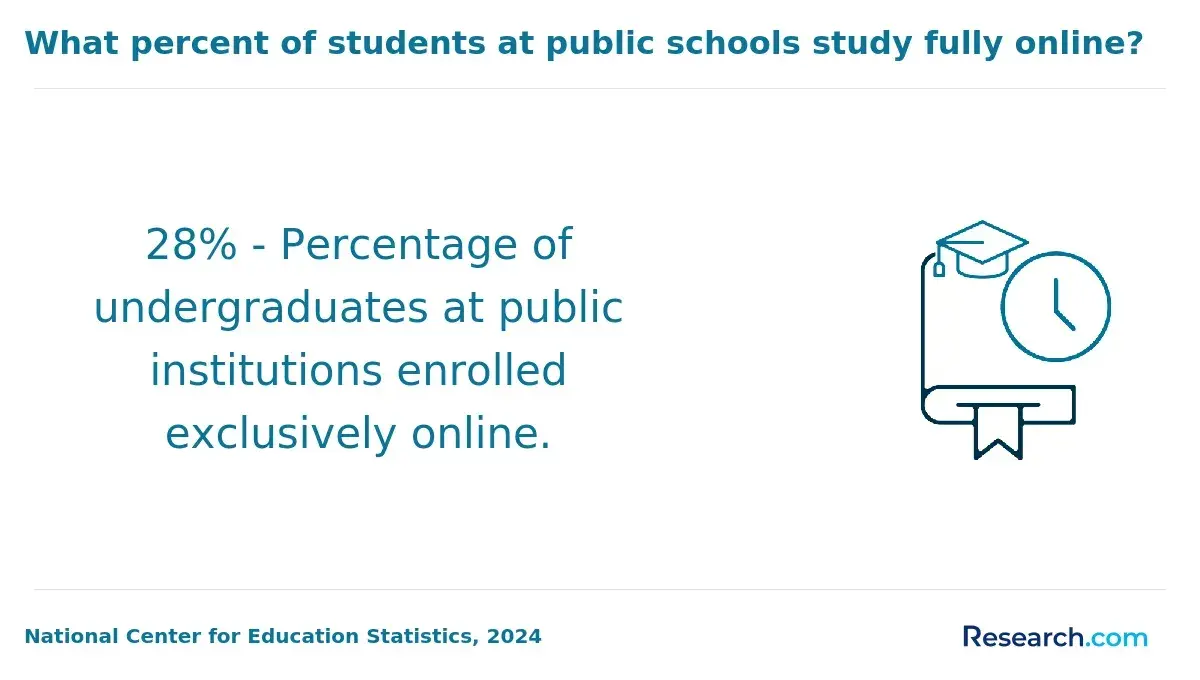
Finishing a physics degree online can be fastest when your previous college credits actually apply to the major, not just to electives. NCES data released in 2024 shows that more than half of U.S. undergraduates take at least one distance education course, making online degree completion a mainstream option rather than a backup plan.
This guide is for transfer students, adult learners, military students, and degree completers who want the quickest legitimate route to an accredited online physics bachelor's degree. You'll learn how to compare programs, verify accreditation, estimate graduation time, and avoid transfer-credit mistakes.
Key Things You Should Know
- The fastest realistic path is usually a regionally accredited 120-credit online physics bachelor's program that accepts up to about 90 transfer credits while still requiring roughly 30 credits in residence.
- Transfer-friendly options to compare first include Liberty University, University of North Dakota, Arizona State University, and Fort Hays State University, but the fastest choice depends on how many of your credits satisfy physics, math, lab science, and upper-division requirements.
- A student entering with 60 transferable credits may need about 2 years of full-time study, while a student entering with 90 applicable credits may finish in about 12 to 18 months if the program offers frequent course starts and the remaining physics sequence is available online.
What Are the Fastest Accredited Online Physics Degree Programs That Accept Transfer Credits?
The fastest accredited online physics degree programs are not always the schools with the largest advertised transfer-credit maximum. The best options combine regional accreditation, online access to required physics and math courses, a clear transfer evaluation process, and a residency requirement that does not force you to retake credits you already earned.
For most students, "fastest" means the shortest path to a completed bachelor's degree after transcript review. A program that accepts 90 transfer credits may still take longer than a program accepting 75 credits if the remaining upper-division physics courses are offered only once per year.
If you are comparing degree paths outside physics as well, it is also useful to check whether a profession requires graduate education. For example, questions like do you need a masters to be a librarian show why credential requirements vary widely by field.
The table below summarizes U.S. online physics or physics-adjacent bachelor's options that transfer students often compare. Policies can change, so treat this as a decision framework and confirm current catalog rules before applying.
| Program | Accreditation type to verify | Typical degree format | Transfer-credit advantage | Fastest-fit student |
| Liberty University, online BS in Physics | Regional accreditation through SACSCOC | Online bachelor's with accelerated course scheduling | School policy commonly allows up to 75% of a bachelor's degree to transfer, or about 90 credits in a 120-credit program | Students with many completed general education, math, and lower-division science credits who want frequent course starts |
| University of North Dakota, online BS in Physics | Regional accreditation through the Higher Learning Commission | Online physics degree with structured science coursework | Transfer students may be able to apply substantial prior credits, subject to UND residency and major requirements | Students who want a traditional physics curriculum and can follow a sequenced schedule |
| Arizona State University, online BA in Physics or related physical science pathway | Regional accreditation through the Higher Learning Commission | Online degree with broad science and quantitative coursework | ASU's transfer system can be strong for students with community college or prior university credits, though major applicability matters | Students seeking a flexible physics-oriented degree that may align with teaching, technical, or graduate-prep goals |
| Fort Hays State University, online physics-related bachelor's options | Regional accreditation through the Higher Learning Commission | Online public university degree pathway, depending on current catalog availability | Public universities often publish clear transfer and residency rules, but course sequencing should be reviewed carefully | Cost-conscious transfer students who can wait for required course rotations if needed |
The main trade-off is speed versus course availability. Physics is lab- and sequence-heavy, so the fastest program for you is the one that accepts your previous calculus, chemistry, programming, and introductory physics credits into the degree plan without creating missing prerequisites.
Before you decide, ask each school for a written degree audit rather than a general estimate. A useful audit should show exactly which credits apply to general education, free electives, major prerequisites, upper-division physics, lab requirements, and residency requirements.
How Fast Can You Complete an Online Physics Degree With Transfer Credits?
With transfer credits, an online physics bachelor's degree can take anywhere from about 1 year to 4 years. The shortest timelines usually require three things: a large number of applicable credits, year-round enrollment, and immediate access to the remaining physics sequence.
Most U.S. bachelor's degrees require about 120 credits. That number matters because every accepted credit that applies to the degree can reduce remaining tuition, course load, and time. However, physics is less flexible than many liberal arts majors because calculus-based physics, modern physics, advanced lab work, and upper-division electives often must be taken in a specific order.
The table below gives realistic timeline ranges based on how many credits apply after the official transfer evaluation. These are planning ranges, not guarantees, because course availability and your weekly study time can change the result.
| Applicable transfer credits | Credits remaining in a 120-credit degree | Realistic full-time completion range | What usually determines speed |
| 0 to 30 | 90 to 120 | 3 to 4 years | General education, calculus, chemistry, and introductory physics still need to be completed |
| 31 to 60 | 60 to 89 | 2 to 3 years | Speed depends on whether lower-division physics and calculus transfer cleanly |
| 61 to 75 | 45 to 59 | 18 months to 2 years | Upper-division physics sequencing becomes the main bottleneck |
| 76 to 90 | 30 to 44 | 12 to 18 months | Fastest if remaining major courses are offered frequently and residency rules are satisfied |
Students who want the fastest route should build a term-by-term completion map before enrolling. This is especially important if you are working full time, because accelerated physics courses can require substantial weekly problem-solving, lab preparation, and math review.
Use this sequence when estimating your own timeline:
- Request unofficial transfer reviews from at least two accredited schools before submitting a deposit.
- Ask which credits apply directly to the physics major, not just to total elective hours.
- Confirm whether remaining courses are offered every term, every semester, or only once per academic year.
- Check whether online labs, proctored exams, or short campus visits are required.
- Compare a full-time plan with a part-time plan so you know the fastest feasible pace, not just the fastest advertised pace.
A common mistake is assuming that 90 accepted credits automatically means one year to graduation. If those credits do not include calculus, lab science, and prerequisite physics, you may still need multiple terms to complete the required sequence.
How Many Transfer Credits Can You Apply Toward an Online Physics Degree?
Many accredited online bachelor's programs can accept up to 90 transfer credits toward a 120-credit degree, but physics students need to focus on "applicable credits." Accepted credits count somewhere on your transcript; applicable credits satisfy specific degree requirements.
This distinction matters because a school may accept your previous astronomy, engineering, statistics, or general education courses but apply them only as electives. That can still help, but it may not reduce the number of physics courses you need before graduation.
The table below shows the difference between common transfer-credit categories and how they typically affect degree speed.
| Credit category | How it may help | Possible limitation | Impact on speed |
| General education credits | Can clear writing, humanities, social science, and general math requirements | May not reduce the physics major sequence | Moderate to high if many requirements are cleared |
| Calculus and differential equations | Can unlock upper-level physics courses sooner | Must match the program's math prerequisites | High |
| Introductory calculus-based physics with lab | Can prevent retaking first-year physics | Algebra-based physics may not satisfy a physics major requirement | Very high |
| Engineering or applied science courses | May satisfy electives or technical requirements | May not substitute for theoretical physics courses | Variable |
| Upper-division physics credits | Can reduce remaining advanced coursework | Often reviewed by faculty for content match and recency | High if approved |
To avoid losing time, ask admissions and the physics department the same question in two ways: "How many credits can I transfer?" and "How many transferred credits will reduce my remaining degree requirements?" The second answer is the one that determines your actual graduation date.
Students with older credits should also ask about recency rules. Some schools may accept older general education credits but require recent coursework in calculus, computing, or laboratory science if the content has changed or if the course is foundational for advanced physics.
How Can You Verify Accreditation for Fast Online Physics Degree Programs?
Accreditation is the first filter for any fast online physics degree. A program that is not properly accredited can create problems with federal financial aid, graduate school admission, employer recognition, and transferability of future credits.
For U.S. bachelor's degrees, the most important baseline is institutional accreditation from an accreditor recognized by the U.S. Department of Education or the Council for Higher Education Accreditation. Physics bachelor's programs typically do not require a separate programmatic accreditor in the way that nursing, engineering, or education programs often do, though program quality and graduate outcomes still matter.
Use the following checks before you apply or send transcripts:
- Confirm the institution's accreditation status in the U.S. Department of Education's Database of Accredited Postsecondary Institutions and Programs.
- Match the institution name exactly, especially if a school uses multiple campuses, online divisions, or historic names.
- Check whether the accreditor is currently recognized and whether the institution has warnings, probation, or teach-out notices.
- Review the school catalog for the exact online physics degree title, total credits, major requirements, residency rules, and graduation requirements.
- Ask graduate programs or employers in your target field whether the degree format and institution meet their expectations.
Be cautious with any school that promises unusually fast completion without reviewing your transcript, offers large credit awards for a fee with little documentation, or avoids direct answers about accreditation. A legitimate accelerated path should still require college-level physics, mathematics, labs, and faculty evaluation.
Accreditation also affects financial aid. Federal student aid generally requires attendance at an eligible accredited institution, so checking accreditation before enrollment can protect both your degree value and your financing options.
Which Types of Transfer Credits Can Count Toward an Online Physics Degree?
Online physics degree programs may consider several kinds of transfer credits, but they are not all equally useful for speed. Traditional college credits from regionally accredited institutions are usually the most straightforward, while exams, military credits, and professional training may require additional review.
The most valuable transfer credits for a physics degree are those that remove prerequisites. If your previous coursework includes calculus-based mechanics, electricity and magnetism, multivariable calculus, differential equations, programming, and chemistry, you may be able to move into upper-division physics more quickly.
Schools may review the following credit types:
- Regionally accredited college coursework from community colleges, four-year universities, or prior online programs.
- Advanced Placement or International Baccalaureate exam credit, if accepted by the institution and applicable to the degree plan.
- CLEP or DSST exams, usually for general education rather than advanced physics requirements.
- Military training evaluated through American Council on Education recommendations, especially for technical electives or general education.
- Prior learning assessment portfolios, which may help with electives but rarely replace upper-division theoretical physics.
- Professional or technical certifications, which may be considered for elective credit depending on institutional policy.
Physics major requirements are often stricter than general transfer rules. A calculus-based physics sequence with labs is usually treated differently from a non-calculus physics course designed for non-majors. If your goal is speed, make sure your previous science courses match the level required for physics majors.
Another mistake is transferring too many elective credits without enough major credits. Electives can help you reach 120 total credits, but they will not help you graduate if you still need the required quantum mechanics, thermodynamics, electromagnetism, or advanced lab courses.
How Do Residency and Major Requirements Affect Transfer Credits for an Online Physics Degree?
Residency requirements determine how many credits you must complete through the degree-granting institution. Major requirements determine which physics, math, and lab courses you must complete regardless of how many total credits you already have. Together, they often decide whether a transfer-friendly program is truly fast.
Many bachelor's programs require at least 30 credits in residence. Some also require a certain number of upper-division credits, major credits, or final credits to be completed at the institution. This means a student with 100 prior credits may still need 30 new credits if the school's residency rule requires it.
The table below explains how common requirements can slow down or speed up an online physics degree plan.
| Requirement | What it means | Why it matters for transfer students | What to ask |
| Institutional residency | Minimum credits completed at the school awarding the degree | Can limit how much transfer credit shortens the degree | "What is the minimum number of credits I must complete here?" |
| Major residency | Minimum physics major credits completed at the school | May require retaking or replacing advanced courses | "How many upper-division physics credits must be taken through your department?" |
| Upper-division requirement | Minimum credits at junior or senior level | Lower-division transfer credits may not satisfy advanced degree rules | "How many upper-division credits will I still need after transfer?" |
| Lab requirement | Required experimental or laboratory components | Online students may need approved lab kits, simulations, remote labs, or campus intensives | "Are all required labs available online?" |
| Course sequencing | Prerequisite order for physics and math courses | A missing prerequisite can add a full term or year | "Can I take remaining courses in overlapping terms?" |
The best way to evaluate residency rules is to request a degree completion plan after transcript review. That plan should list the exact remaining courses by term. If a school cannot show when each required physics course is offered, it is difficult to know whether the program is truly fast.
Students should also watch for "last credits" rules. Some colleges require the final 24 to 30 credits to be completed through the institution, which can affect students who planned to take inexpensive community college courses near the end of the degree.
Can Prior Learning, CLEP, Military Training, or Certifications Help You Finish an Online Physics Degree Faster?
Prior learning, CLEP, military training, and certifications can help some students finish faster, but they usually help around the edges of a physics degree. They are most useful for general education, free electives, introductory computing, communications, or technical elective areas.
Physics departments are less likely to waive upper-division theory and lab requirements through prior learning alone. That is because advanced physics courses require specific mathematical methods, experimental competencies, and prerequisite knowledge that must align closely with the school's curriculum.
Here is how to use alternative credit without overestimating its impact:
- Ask the school for its maximum credit-by-exam and prior-learning limits before paying for exams or portfolio reviews.
- Prioritize exams that satisfy general education requirements you have not already completed.
- Do not assume technical work experience will replace calculus-based physics, modern physics, or advanced lab courses.
- Submit military Joint Services Transcript or Community College of the Air Force records early if applicable.
- Get written confirmation showing where each nontraditional credit applies in the degree audit.
Short online credentials can be valuable for career skills, but they do not automatically replace physics coursework. For example, a resource on the best bookkeeping certification online may be useful for business or accounting skill development, but a bookkeeping credential would normally apply, if at all, as an elective rather than a substitute for quantum mechanics or electromagnetism.
Military students should pay special attention to ACE credit recommendations. Technical training in electronics, radar, nuclear operations, aviation, or computing may support electives, but each physics department decides whether the content is equivalent to required major courses.
How Much Does a Fast Online Physics Degree Cost After Transfer Credits and Financial Aid?
The cost of a fast online physics degree depends on three major variables: credits remaining, tuition per credit, and financial aid eligibility. Transfer credits can reduce the total price significantly, but only if they apply to the degree and do not trigger extra prerequisites.
College Board's 2024 Trends in College Pricing reported average published tuition and fees of $11,610 for in-state students at public four-year institutions and $43,350 at private nonprofit four-year institutions for the 2024-25 academic year. Those figures are not online physics prices, but they show why transfer credits and public tuition rates can materially affect total cost.
When comparing programs, estimate your net cost after the official transfer evaluation rather than using the sticker price for four full years. A student with 60 applicable credits is pricing roughly half of a degree, while a student with 90 applicable credits may be pricing only the residency portion plus fees, books, labs, and technology costs.
Include these cost categories in your comparison:
- Tuition per credit for online students, including whether out-of-state online tuition differs from in-state tuition.
- Mandatory online, technology, laboratory, graduation, transcript, or proctoring fees.
- Textbooks, lab kits, software, calculator, or equipment expenses.
- Prior learning assessment, portfolio review, CLEP, DSST, or transcript evaluation fees.
- Federal, state, military, employer, institutional, and transfer-student aid options.
- Opportunity cost, especially if an accelerated schedule reduces work hours.
Price should not be evaluated in isolation. A lower-cost program that delays a required upper-division physics course for a year may cost more in lost time than a slightly higher-cost program with more frequent course availability.
Students comparing affordability across online professional programs may also find it helpful to review how cost is handled in fields such as online MSW programs affordable, where tuition, field requirements, and financial aid can change the real net price.
To reduce cost without slowing graduation, ask whether you can complete approved remaining general education courses at a lower-cost community college before matriculation. Do this only with written preapproval, because post-enrollment transfer rules may be stricter than pre-enrollment transfer rules.
How Do Accelerated, Competency-Based, and Self-Paced Online Physics Degree Programs Compare?
Accelerated, competency-based, and self-paced formats can all shorten some online degrees, but physics is harder to compress than many majors. The reason is simple: physics learning is cumulative. You usually cannot move into quantum mechanics, advanced electromagnetism, or statistical mechanics without the right calculus, differential equations, and lower-division physics foundation.
Accelerated programs typically use shorter terms, such as 7- or 8-week sessions. Competency-based programs allow students to progress after demonstrating mastery. Self-paced programs let students control timing within defined course limits. In physics, fully competency-based bachelor's options are uncommon because labs, proofs, problem sets, and sequenced prerequisites require structured faculty assessment.
The table below compares these formats for a transfer student trying to finish quickly.
| Format | How it can speed completion | Physics-specific limitation | Best fit |
| Accelerated terms | More start dates and shorter course blocks can reduce waiting time | Heavy math and lab courses may be difficult in compressed sessions | Students with strong preparation and predictable weekly study time |
| Competency-based learning | Students with prior knowledge may move faster through familiar content | Rare for full physics majors and may not cover upper-division lab science | Students completing general education or adjacent technical credits |
| Self-paced courses | Can help motivated students finish prerequisites quickly | May not align with sequenced major courses or financial aid term rules | Students clearing individual math or general education requirements |
| Traditional semester online | Predictable academic calendar and faculty support | May be slower if courses are offered only once per year | Students who need structure or plan to apply to graduate school |
The broader online education market has moved toward flexible scheduling, stackable credentials, and adult-learner pathways. That trend appears in many disciplines, including graduate programs such as affordable doctoral programs in leadership, but physics students should be careful: format flexibility does not eliminate prerequisite depth.
The best acceleration strategy is usually not to choose the most compressed course calendar. It is to transfer in the right prerequisites, enroll year-round, avoid unnecessary electives, and choose a program where the remaining upper-division physics courses are available online when you need them.
Are Fast Accredited Online Physics Degrees Respected by Employers and Graduate Schools?
Accredited online physics degrees can be respected by employers and graduate schools when the institution is legitimate, the curriculum is rigorous, and the student can demonstrate relevant skills. The word "online" matters less than accreditation, coursework, lab experience, math preparation, research or project work, and fit for the intended career or graduate program.
Physics bachelor's graduates often pursue technical roles in data analysis, engineering support, software, laboratory operations, education, aerospace, defense, energy, or graduate study.
However, the title "physicist" often requires graduate education. The BLS Occupational Outlook Handbook updated in 2024 reported a median annual wage of $149,530 for physicists and astronomers using May 2023 wage data, but that figure is most relevant to advanced roles that commonly require a master's or doctorate.
For students evaluating return on investment, physics can be a strong quantitative foundation, but salary outcomes vary by job title, location, graduate education, internships, programming ability, and industry. If compensation is a major factor in your decision, compare physics with other quantitative undergraduate paths using resources on the highest paying bachelor degrees.
Graduate schools may look closely at whether your online physics degree included the expected core: classical mechanics, electromagnetism, quantum mechanics, statistical or thermal physics, mathematical methods, advanced lab work, and sufficient calculus. If your program is a BA rather than a BS, check whether it includes enough upper-division physics for your target graduate programs.
To improve employer and graduate-school recognition, build evidence beyond the transcript:
- Complete research, capstone, computational physics, or data analysis projects that you can discuss in interviews.
- Develop programming skills in Python, MATLAB, C++, R, or scientific computing tools used in your target field.
- Seek internships, undergraduate research, lab assistant work, tutoring, or technical employment while enrolled.
- Keep syllabi for transferred physics and math courses in case graduate programs request content verification.
- Ask whether online students receive the same diploma wording as campus students.
The main red flag is not online delivery. The bigger concern is an unaccredited institution, a weak lab sequence, unclear faculty support, or a degree plan that does not prepare you for your actual goal.
Other Things You Should Know About Physics Degrees
It can be useful for technical and analytical roles, but it is not the same as an ABET-accredited engineering degree. If your goal is professional engineering licensure, check state board and employer requirements before choosing physics instead of engineering.
Some programs use online labs, lab kits, remote experiments, simulations, or approved local arrangements. Others may require short campus sessions. Always confirm lab delivery before enrolling because lab availability can affect both speed and cost.
Not automatically. A BS often includes more advanced science and math coursework, while a BA may allow more flexibility for teaching, interdisciplinary study, or double majors. For graduate physics programs, compare the course list against admissions prerequisites.
Yes, and this is often one of the most cost-effective routes. The best results usually come from completing calculus, calculus-based physics with labs, chemistry, and general education courses that have already been approved for transfer by the receiving university.
References
- Advanced Placement (AP) https://sunyorange.edu/registrar/transfer_credit.html
- Where Can I Find a Physics Online Course for Credit? 5 Great Options - Prereqcourses https://www.prereqcourses.com/physics-online-course-for-credit/
- New Pathways to a College Degree: How Transfer Credits Save Time https://www.uagrantham.edu/blog/transfer-college-credits-online-pathways-degree/
- How to Transfer College Credits | McMillan Education https://www.mcmillaneducation.com/blog/how-to-transfer-college-credits/
- StraighterLine Courses https://www.straighterline.com/online-college-courses/
- The Importance of Understanding Transfer Credit Policies https://www.sophia.org/blog/higher-education/understanding-transfer-credit-policies/
- Top Online Schools That Accept Transfer Credits https://www.edvisorly.com/student-guides/online-schools-that-accept-transfer-credits