2027 Online Physics Degree Programs With No Application Fee and Rolling Admissions

Co-Founder and Chief Data Scientist
Finding an online physics degree is hard enough; finding one with no application fee and rolling admissions is even narrower. The choice matters because the Bureau of Labor Statistics reported a $149,530 median annual wage for physicists and astronomers in May 2024, but many higher-level roles require strong preparation and often graduate study.
This guide is for working adults, transfer students, military learners, and career changers who need flexible entry points. You will learn which programs to verify, how rolling admission works, what costs matter beyond the waived fee, and how to choose a credible program.
Key Things You Should Know
- Very few U.S. online physics degree options publicly combine both features; students should verify the current application-fee policy, rolling review process, and next available start date before applying.
- A waived application fee usually saves a modest upfront amount, often far less than tuition, technology fees, lab costs, transfer-credit limits, and financial aid deadlines.
- Physics-related careers can be well paid, but the strongest outcomes usually depend on math depth, lab or computational experience, programming ability, accreditation, and whether the student plans for graduate study.
Which Online Physics Degree Programs Have No Application Fee and Rolling Admissions?
The short answer is that fully online physics degrees with both no application fee and rolling admissions are uncommon in the U.S. Students should treat any list as a starting point, not a final answer, because application-fee waivers, admissions cycles, and online availability can change by term, student type, campus, and program level.
The table below focuses on U.S. online or physics-adjacent degree options that prospective students commonly encounter when searching for no-fee, rolling-admission pathways. It also shows why verification matters: some programs are true physics degrees, while others are broader natural science degrees with physics coursework or applied science pathways.
| School or program type | Online physics fit | Application-fee status to verify | Rolling admissions or flexible starts to verify | Best-fit student |
| American Public University | Online natural sciences degree with physics-related coursework rather than a traditional standalone physics major | Public-facing admissions materials commonly advertise no application fee | Monthly or frequent start structure is commonly used | Adult learners seeking flexible science coursework with transfer-friendly scheduling |
| Liberty University Online | Online physics degree availability should be verified for the current catalog and state authorization | Application-fee promotions or waivers may be available but should be confirmed directly | Multiple annual start dates and rolling-style admissions are commonly used | Students who want a structured online university model with frequent entry points |
| Online applied science, astronomy, or engineering technology programs | May support physics-related goals but may not be equivalent to a physics degree | Varies widely; many schools still charge an application fee | Often flexible, but not always rolling | Students targeting technical, aerospace, data, or education-adjacent roles rather than research physics |
| Online graduate certificates or master's programs in applied physics-related fields | Often narrower than a full physics degree and may require prior STEM coursework | Many charge graduate application fees, so no-fee options are limited | Some review applications by fixed priority deadlines rather than continuously | Students who already have a STEM bachelor's degree and need specialized coursework |
A no-application-fee policy is helpful, but it should not be the main selection filter. A stronger shortlist compares degree title, curriculum depth, transfer-credit rules, accreditation, start dates, total tuition, online lab requirements, and whether the program supports the student's intended career path.
Before applying, students should ask admissions offices for written confirmation of the following items. This is especially important when a school advertises flexible admissions broadly but individual programs operate under different rules.
- Is the application fee currently $0 for this exact physics or physics-related program?
- Is admission reviewed on a rolling basis, or does the program use priority deadlines?
- What is the next start date, and are all required first-term courses available then?
- Are labs fully online, kit-based, simulation-based, hybrid, or campus-based?
- Does the degree title appear as physics, natural sciences, applied science, astronomy, or another related field on the transcript?
How Does Rolling Admission Work for Online Physics Degree Programs?
Rolling admission means a school reviews applications as they arrive instead of waiting for one fixed deadline. For online physics programs, rolling admission can be useful because students may be able to begin in the next available term rather than waiting for a fall-only cohort.
The comparison below shows how rolling admission differs from fixed-deadline admission for online physics students. The distinction matters because rolling admission creates flexibility, but it does not remove every deadline.
| Feature | Rolling admission | Fixed-deadline admission | What students should do |
| Application review | Applications are reviewed as they are completed | Applications are reviewed after a stated deadline or in rounds | Submit early to secure course access, advising, and financial aid processing time |
| Start dates | May include multiple starts per year | May begin only once or twice per year | Confirm whether physics, math, and lab courses are available in the desired term |
| Financial aid | May still follow federal, state, and institutional aid timelines | Often tied closely to the admissions calendar | Complete FAFSA and scholarship steps separately from the admission application |
| Course availability | Admission may be flexible, but class seats can still fill | Courses are usually planned around cohort deadlines | Ask whether late admits can take the correct first sequence of calculus and physics |
| Decision speed | Can be faster if the application is complete | Can take longer because review is batch-based | Avoid incomplete submissions, which can delay a rolling decision |
A common mistake is assuming rolling admissions means "apply whenever and start whenever." In practice, online programs still have transcript deadlines, registration cutoffs, tuition-payment dates, financial aid processing windows, and course sequencing constraints.
Students should build a rolling-admission plan backward from the term they want to start. A practical sequence is:
- Choose a preferred start date and identify the application-completion deadline for that term.
- Request official transcripts at least several weeks before the school's registration cutoff.
- Ask whether placement testing or prerequisite review is required for calculus, general physics, or upper-division coursework.
- Complete financial aid steps separately instead of waiting for an admission decision.
- Confirm that the first-term course schedule supports the degree plan rather than only elective enrollment.
How Much Can Students Save by Choosing an Online Physics Degree With No Application Fee?
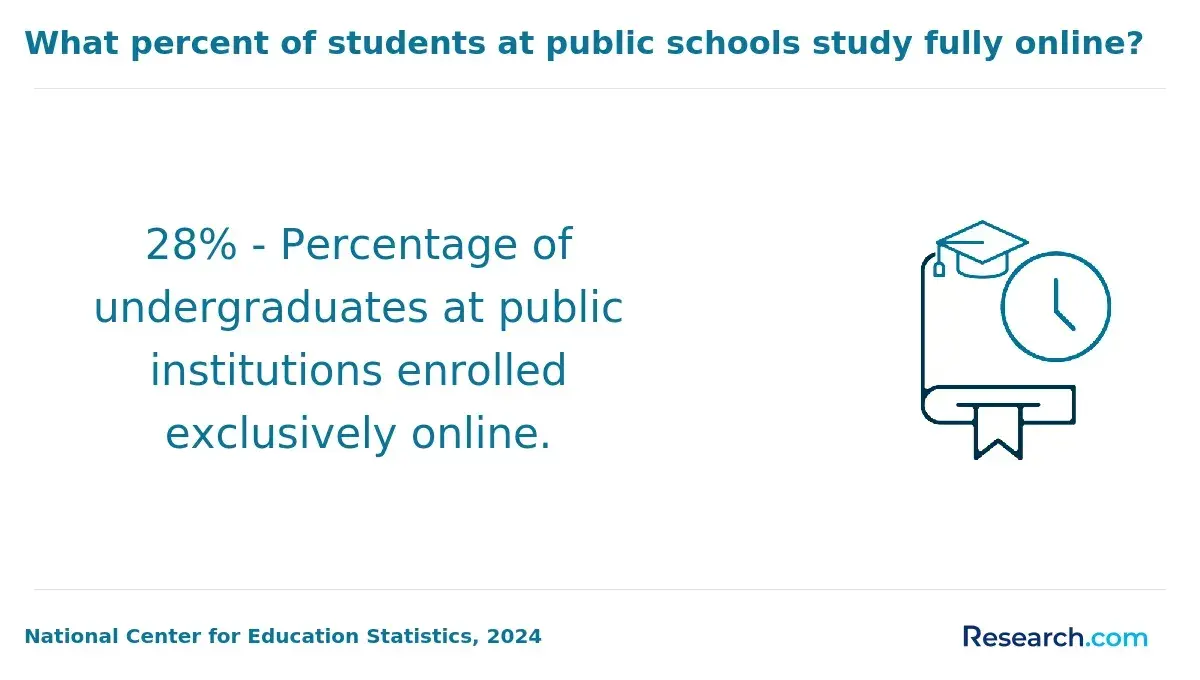
A no-application-fee online physics degree can reduce the cost of exploring multiple options, but the savings are usually small compared with total degree cost. The real value is strategic: students can apply to more than one credible program without paying upfront fees, then compare aid packages, transfer-credit evaluations, and course availability before enrolling.
The table below separates application-related savings from larger enrollment costs. This helps students avoid overvaluing a waived fee while missing costs that have a much bigger effect on affordability.
| Cost item | How it affects students | Why it matters more than the application fee |
| Application fee | Paid before admission unless waived | Helpful to avoid, but usually a one-time cost |
| Tuition per credit | Multiplied across the number of credits required | Often the largest cost driver in a bachelor's or master's program |
| Transfer-credit acceptance | Can reduce the number of credits a student must complete | May save far more than any application-fee waiver |
| Technology and online course fees | May apply each term or course | Can add recurring costs that are easy to overlook |
| Lab materials or proctoring | May be required for online science courses | Can affect both cost and convenience |
| Time to completion | Depends on course load, prerequisites, and course sequencing | Longer timelines can increase living costs, loan borrowing, or opportunity costs |
Students comparing affordability across fields should use the same total-cost logic they would apply to other online degrees, such as online MSW programs affordable. The cheapest application is not always attached to the cheapest degree, and the cheapest tuition is not always the best value if transfer credits, advising, or course sequencing are weak.
The best way to calculate real savings is to request a written cost estimate after the school evaluates transfer credits. Students should compare the total number of credits left to graduate, per-credit tuition, mandatory fees, lab costs, expected books or software, and the financial aid package before deciding that a no-fee application makes one program the better deal.
What Are the Admission Requirements for No-Fee Online Physics Degree Programs?
No-fee online physics programs usually do not have "easy" admissions simply because the application is free. Physics is math-intensive, so schools often look closely at prior coursework, transfer transcripts, GPA, and readiness for calculus-based science courses.
The table below summarizes common admission requirements by degree level. Exact requirements vary by institution, and graduate programs are usually more selective because students must be ready for advanced mathematical and computational work.
| Degree level | Common requirements | Physics-specific items to check | Potential red flags |
| Online bachelor's in physics or related science | High school diploma or equivalent, transcripts, minimum GPA or placement review | Algebra, trigonometry, precalculus, calculus readiness, prior lab science | No clear path for labs, calculus placement, or upper-division physics courses |
| Online bachelor's completion program | College transcripts, transfer-credit evaluation, good academic standing | Whether previous calculus, physics, chemistry, and general education credits transfer | Large credit loss after transfer evaluation |
| Online master's in applied physics or physics-related field | Bachelor's degree, STEM prerequisites, transcripts, statement of purpose, recommendations | Prior mechanics, electromagnetism, differential equations, programming, or lab experience | Admitting students without confirming prerequisite gaps |
| Graduate certificate | Bachelor's degree or upper-level STEM coursework | Whether certificate credits can later apply to a master's degree | Credits that do not stack into a degree or are not recognized by target employers |
Students should prepare for admissions even when the process is rolling. A complete and convincing application typically includes:
- Official transcripts from every high school or college the student attended, depending on degree level
- A transfer-credit review showing how prior math, science, and general education courses apply
- Evidence of readiness for calculus, statistics, programming, or lab science when required
- A clear statement of goals if the program requests an essay or personal statement
- Recommendations for graduate-level programs, especially when research or advanced technical work is involved
- Documentation for military credit, professional training, AP, CLEP, or dual-enrollment credits when applicable
One important warning: rolling admissions does not mean rolling prerequisite completion. If a student lacks calculus or introductory physics, the school may admit them but place them into a longer path. That can increase both cost and time to graduation.
When Should Students Apply to Online Physics Degree Programs With Rolling Admissions?
Students should apply earlier than the final rolling-admission cutoff, especially for physics programs. Math placement, transfer evaluation, lab planning, financial aid, and course sequencing can all take time, and a late admission decision may leave a student with limited first-term options.
A good target is to complete the application well before the desired start date. The best timeline depends on whether the student is entering as a first-year learner, transfer student, working adult, military student, or graduate applicant.
| Student situation | Recommended timing | Reason to apply early |
| First-time bachelor's student | Several months before the desired term | Placement, advising, financial aid, and course planning may take longer than expected |
| Transfer student | As early as possible after choosing target programs | Transfer-credit evaluations can change the real cost and graduation timeline |
| Working adult | Before work schedule or tuition-assistance deadlines are finalized | Employer reimbursement may have separate approval dates |
| Military or veteran student | Before benefits-processing deadlines | Education benefits and military transcripts may require extra processing time |
| Graduate applicant | Before recommendation and prerequisite-review delays become a risk | Advanced physics programs may need faculty or departmental review |
Students should avoid waiting just because an admissions page says applications are accepted continuously. The biggest practical risk is not necessarily denial; it is being admitted too late to get the right first course sequence, aid package, or advising appointment.
A smart application calendar includes these checkpoints:
- Confirm the next three start dates, not just the next available start date.
- Ask when registration opens for calculus, physics, lab, and required science courses.
- Submit transcripts early enough for transfer evaluation before enrollment.
- Complete financial aid forms and scholarship applications before their separate deadlines.
- Ask whether delaying one term would produce a better course sequence or aid opportunity.
How Can Students Strengthen an Online Physics Degree Application?
A strong online physics degree application shows readiness for quantitative work and a realistic understanding of the field. Admissions teams want to see that the student can handle mathematics, science reasoning, online learning, and sustained technical coursework.
Students can strengthen the application before submission by focusing on evidence, not generic enthusiasm. The most useful preparation steps are:
- Complete or refresh prerequisite math, especially precalculus and calculus, if the program expects calculus-based physics.
- Document programming experience in Python, MATLAB, R, C++, or another language used for modeling and data analysis.
- Explain career goals clearly, such as physics teaching, engineering preparation, data analysis, aerospace work, graduate study, or science communication.
- Address weak grades directly if the application includes an essay, emphasizing later improvement and current readiness.
- Request recommendations from instructors or supervisors who can describe quantitative ability, persistence, and independent work habits.
- Prepare a realistic weekly study schedule because online physics courses often require sustained problem-solving time beyond recorded lectures.
Current employer expectations make applied skills more important. Physics students increasingly benefit from computational modeling, data visualization, AI-assisted analysis literacy, and clear technical communication, because many graduates work outside traditional academic physics roles.
Students who want to broaden employability can add practical, low-cost credentials carefully, but those credentials should support rather than replace physics preparation. For example, a student exploring technical operations, finance-adjacent analytics, or small-business science consulting might compare a short option like the best bookkeeping certification online, while recognizing that it will not substitute for calculus, physics labs, or programming in a physics degree plan.
Are Online Physics Degree Programs With No Application Fees Accredited and Legitimate?
Some no-fee, rolling-admission online physics programs are legitimate, but students must verify accreditation and program substance before enrolling. A waived application fee is a marketing or access feature; it is not evidence of academic quality.
For U.S. students, the most important baseline is institutional accreditation from an accreditor recognized by the U.S. Department of Education or the Council for Higher Education Accreditation. Physics itself does not usually have a single required programmatic accreditor for all careers, but students pursuing teacher licensure, engineering-adjacent roles, or graduate school should check additional requirements.
The table below shows what to verify and why each item matters for legitimacy and career value.
| Quality check | What to verify | Why it matters |
| Institutional accreditation | The institution is accredited by a recognized U.S. accreditor | Accreditation affects transfer credits, financial aid eligibility, employer recognition, and graduate admission |
| Degree title | The transcript title matches the student's goal | A natural sciences or applied science degree may not be viewed the same as a physics degree |
| Lab format | Labs are online, hybrid, kit-based, simulation-based, or campus-based | Science coursework must provide credible experimental or applied learning experiences |
| Faculty qualifications | Courses are taught by qualified physics, astronomy, engineering, or science faculty | Faculty depth affects academic rigor and graduate-school preparation |
| State authorization | The school is authorized to enroll online students in the student's state | Some online programs cannot enroll students from every state |
| Licensure alignment | Teacher-preparation or certification pathways meet the student's state rules | Physics teaching requirements vary by state |
Red flags include vague accreditation language, unclear lab requirements, no published curriculum, pressure to enroll immediately, confusing degree titles, or promises of guaranteed employment. Students should pause if the program cannot provide a degree plan, cost estimate, accreditation status, and written answers about online delivery.
How Do Financial Aid and Total Costs Compare Among Online Physics Degree Programs?
Financial aid and total costs can vary more than application fees. In many cases, a program that charges an application fee may still be cheaper overall if it offers lower tuition, stronger transfer-credit acceptance, scholarships, or a faster path to graduation.
The table below shows the major cost categories students should compare before choosing among online physics programs. It is designed to help students estimate total cost rather than focusing only on the upfront application charge.
| Cost or aid factor | Questions to ask | Decision impact |
| Tuition | Is tuition charged per credit, per term, or by residency status? | Determines the largest portion of direct program cost |
| Mandatory fees | Are there technology, online, lab, graduation, or proctoring fees? | Can change the true cost even when tuition looks affordable |
| Transfer credits | How many prior credits apply directly to the degree? | Can shorten completion time and reduce borrowing |
| Scholarships | Are scholarships tied to priority deadlines even if admissions are rolling? | Late applicants may miss aid opportunities |
| Federal aid | Is the program eligible for federal student aid? | Eligibility depends on institution, program, enrollment status, and student circumstances |
| Employer or military benefits | Does the school accept tuition assistance, GI Bill benefits, or employer reimbursement? | Can significantly reduce out-of-pocket cost for eligible students |
Students should compare physics ROI with realistic career pathways. The Bureau of Labor Statistics reported a May 2024 median wage of $149,530 for physicists and astronomers, but many of those roles require a graduate degree and specialized research or technical experience. A bachelor's degree can still be valuable, especially when paired with programming, data analysis, engineering support, teaching preparation, or graduate-school planning.
For broader salary context, students comparing majors can review highest paying bachelor degrees, but they should remember that major-level salary lists do not replace program-specific analysis. The best financial decision depends on the student's target role, degree level, local job market, debt, and likelihood of needing graduate education.
Which Students Benefit Most From No-Fee, Rolling-Admission Online Physics Degrees?
No-fee, rolling-admission online physics degrees are most useful for students who need flexibility without sacrificing academic credibility. The features are especially valuable when a student is still comparing programs and wants to avoid paying multiple application fees before seeing transfer evaluations and aid estimates.
These programs can be a strong fit for several types of learners:
- Working adults who need multiple start dates because they cannot wait for one annual admissions cycle
- Transfer students who want to compare how different schools apply prior math, science, military, or general education credits
- Military-affiliated students who need flexible starts around deployment, relocation, or benefits processing
- Career changers who already have some STEM coursework and want a structured path into physics-related technical roles
- Students who are uncertain about fit and want to apply without paying several upfront fees
- Prospective graduate students who need additional undergraduate physics or math preparation before applying to a more selective program
However, students should avoid choosing a physics program primarily because it is free to apply or accepts applications year-round. A traditional-deadline program may be better if it has stronger faculty depth, research opportunities, graduate-school placement, licensure alignment, or a lower total cost.
Career changers should also compare credential requirements across fields before committing. For example, someone weighing science education, library science, and technical information roles may find it useful to understand questions like do you need a masters to be a librarian, because different professions have very different expectations for graduate study, certification, and state requirements.
How Should Students Choose Among No-Fee Online Physics Degree Programs?
Students should choose among no-fee online physics programs by starting with career goals, then testing each program against cost, credibility, curriculum, flexibility, and support. The application-fee waiver should be treated as a convenience, not the reason to enroll.
A practical decision process is to compare programs in this order:
- Confirm the exact degree title and whether it matches the intended career or graduate-school pathway.
- Verify institutional accreditation and any state authorization or licensure requirements.
- Ask for a transfer-credit evaluation before estimating affordability.
- Compare total tuition and mandatory fees after transfer credits are applied.
- Review the physics, math, lab, programming, and elective curriculum for depth and sequencing.
- Confirm whether rolling admission applies to the specific program, not only the university.
- Check the next start date and whether required first-term courses are actually available.
- Ask about advising, tutoring, faculty access, online lab support, and career services.
- Compare financial aid, scholarships, military benefits, and employer reimbursement deadlines.
- Choose the program that offers the best combination of fit, rigor, affordability, and completion likelihood.
Students planning long-term leadership roles in education, research administration, or technical organizations may eventually compare graduate pathways beyond physics. For example, someone mapping a future move into academic or organizational leadership could later explore affordable doctoral programs in leadership, but that should come after choosing a physics degree that builds the right technical foundation.
The strongest choice is usually the program that makes it easiest to finish the right degree at a manageable cost while preserving future options. If a no-fee, rolling-admission program is also accredited, transparent, transfer-friendly, and academically rigorous, it can be a smart option. If those qualities are missing, the waived application fee is not enough to make the program a good investment.
Other Things You Should Know About Physics
Some programs offer online labs through simulations, lab kits, remote experiments, or structured at-home activities, while others require hybrid or campus-based labs. Students should ask how each required lab is delivered before enrolling.
Employers are more likely to respect an online physics degree when it comes from an accredited institution and includes rigorous math, lab, computational, and analytical coursework. The delivery format matters less than credibility, skills, and relevance to the role.
Many research physicist and astronomer roles require a master's or doctorate, but a bachelor's degree can support roles in data analysis, engineering support, education, technical sales, software, laboratory support, and science communication.
Useful skills include Python or another programming language, data analysis, technical writing, statistics, modeling, problem solving, and familiarity with AI-assisted research tools. These skills can broaden career options beyond traditional physics roles.
References
- Tuition & Fees for Online Students | University at Albany https://www.albany.edu/cost-aid/tuition-fees/online-students
- Online Colleges No Application Fee: Schools With No Fees to Apply https://www.top10onlinecolleges.org/with-no-application-fee/
- 2025 Best Online Degrees in Physics https://www.onlineu.com/degrees/physics
- Physics Employment Facts https://www.compadre.org/careers/facts.cfm
- 4 Factors in Choosing Between Online and Traditional Degrees | ProFellow https://www.profellow.com/tips/4-factors-in-choosing-between-online-and-traditional-degrees/
- Tuition and Other Fees https://www.ceu.edu/admissions/tuition-fees
- Estimate your college cost | USAGov https://www.usa.gov/estimate-college-cost