2027 Online Physics Degree Programs With No Letters of Recommendation Required

Co-Founder and Chief Data Scientist
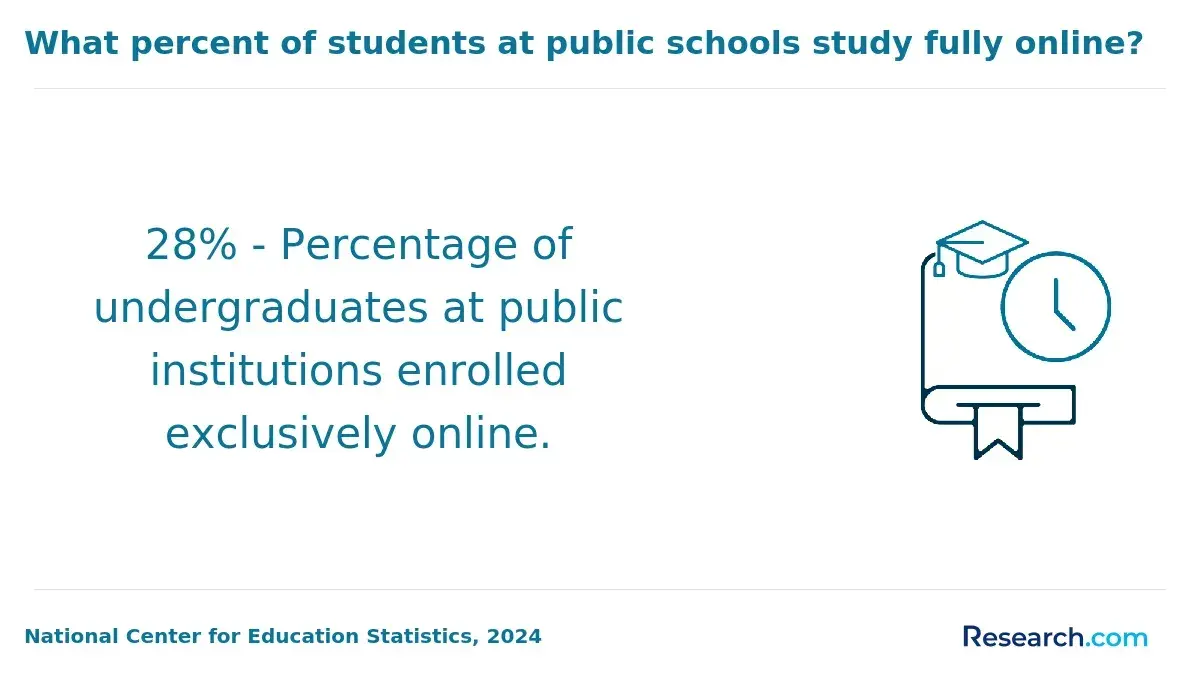
Applicants returning to school, changing careers, or lacking recent academic contacts may want an online physics degree without the delay of securing recommendation letters. This option is increasingly relevant: the National Center for Education Statistics reported that 54% of U.S. postsecondary students took at least one distance education course in fall 2022.
This guide explains what "no letters required" actually means, what schools assess instead, how to verify accreditation and costs, and how to choose a program that supports your academic or technical career goals.
Key Things You Should Know
- "No letters of recommendation required" means the published application checklist does not require references for that specific online physics program; it does not mean that transcripts, math prerequisites, GPA standards, essays, or identity and residency documents are waived.
- Fully online physics bachelor's degrees are less common than online engineering, astronomy, or applied-science programs, so confirm that the curriculum includes the calculus-based physics sequence and laboratory experience needed for your intended transfer, graduate-school, or technical-career path.
- Program quality depends more on institutional accreditation, curriculum, faculty access, laboratory design, total net cost, and transfer policies than on whether recommendations are requested; public four-year institutions reported average published in-state tuition of $11,610 for 2024-25, although online rates vary widely.
Which Online Physics Degree Programs Require No Letters of Recommendation?
At the undergraduate level, recommendation-free admission is most often found at institutions using a centralized online undergraduate application. A school may admit students to the university without letters and then apply separate requirements to a physics major, so applicants should verify both levels. Graduate physics programs are much more likely to request references because they assess research readiness.
The following comparison helps distinguish program formats that may use streamlined admissions from formats where letters remain common. It is not a substitute for the current program-specific application checklist, which can change by term.
| Program type | Likelihood of no required letters | What to confirm before applying |
| Online bachelor's degree in physics or applied physics | Possible, especially with general undergraduate admission | Major prerequisites, calculus sequence, lab format, and whether admission is direct or after enrollment |
| Online bachelor's completion program | Often possible for transfer-focused applicants | Minimum transferable credits, required lower-division physics courses, and residency requirement |
| Online physics master's degree | Less common | Whether references are mandatory, optional, or waived only for alumni or qualified applicants |
| Online graduate certificate in a physics-related field | Sometimes possible | Whether the credential supports the intended career or graduate-school objective |
Start with the institution's official admissions page, then open the catalog page for the exact degree and term. Look for wording such as "letters are not required," rather than assuming that a missing reference field means letters are optional. If a program says materials are accepted "if available," ask admissions whether they are truly optional and whether submitting them changes review practices.
A physics bachelor's degree can support work in data analysis, engineering support, research operations, software-adjacent roles, education, and technical sales, depending on electives and experience. Students comparing earnings across majors can also review highest paying bachelor degrees while keeping in mind that role, location, internships, and graduate education strongly affect outcomes.
What Are the Admission Requirements for Online Physics Degree Programs With No Recommendation Letters?
Removing letters usually simplifies only one part of the application. Most online undergraduate physics programs still need evidence that an applicant can succeed in quantitative coursework. Requirements differ for first-year, transfer, international, and degree-completion applicants.
Applicants should expect the following materials or conditions to appear on a typical checklist:
- Completed institutional application and any required application fee or fee-waiver request
- Official or verified transcripts from high school, college, or both, depending on applicant status
- Minimum cumulative GPA, which may differ for admission to the university and admission to the major
- Preparation in algebra, trigonometry, precalculus, or calculus, plus prior science coursework when required
- Transfer-credit evaluation for applicants bringing college-level physics, mathematics, or general education credits
- Personal statement, short-answer response, résumé, or placement assessment when the institution uses one
- Proof of English proficiency for applicants required to provide it
Standardized test policies vary. Many undergraduate institutions remain test-optional or do not use SAT or ACT scores for admission, but a physics department may still recommend scores, placement testing, or documented preparation if your transcript does not show the needed mathematics. Do not confuse test-optional admission with no academic prerequisites.
Before paying an application fee, ask whether calculus can be completed after admission, whether introductory labs are available remotely, and whether students without the standard sequence may enter as pre-physics majors. That answer can determine whether streamlined admission actually shortens your path.
Are Online Physics Programs With No Letters of Recommendation Easier to Get Into?
Not necessarily. A no-recommendation policy reduces an administrative barrier, particularly for working adults and applicants who have been out of school, but it does not automatically lower academic standards. Physics is cumulative: students generally need a solid foundation in algebra, calculus, mechanics, and problem solving to progress successfully.
Schools may use GPA, completed mathematics courses, prior college performance, and required prerequisites as more consistent evidence than a reference letter. A program can therefore have a simple application while still requiring strong preparation for upper-division physics.
Consider the trade-off carefully. Streamlined admissions may fit applicants with clear transcripts and relevant technical experience. Applicants with uneven grades, limited math preparation, or a goal of research-intensive graduate study may benefit from a program that offers advising, conditional admission, bridge coursework, or a chance to explain academic context in an essay.
A common mistake is treating an application without recommendations as open admission. Avoid this by separating three questions: whether you can submit an application, whether you meet major prerequisites, and whether the online curriculum fits your next step. Admission alone does not establish readiness for advanced mechanics, electromagnetism, quantum physics, or graduate school.
What Do Online Physics Programs Evaluate Instead of Letters of Recommendation?
When letters are not required, admissions staff generally rely more heavily on objective academic records and direct applicant materials. Their goal is similar: to determine whether you are prepared for the program and likely to persist, without asking another person to make that case.
This table shows how common substitute materials can influence an application review.
| Material | What it can demonstrate | How to strengthen it |
| Academic transcripts | Performance in math, science, and prior college courses | Submit every required record and confirm that course titles and grades are legible |
| Mathematics prerequisites | Readiness for calculus-based physics | Document completed calculus or ask whether an equivalent course will transfer |
| Personal statement | Motivation, context, and fit with online study | Explain a specific academic goal and address relevant gaps briefly and directly |
| Résumé or technical experience | Workplace problem solving, programming, instrumentation, or laboratory exposure | Use concrete responsibilities and tools rather than broad claims |
| Placement assessment | Current readiness in mathematics or writing | Review the school's preparation resources and complete the assessment by its deadline |
Use the essay, if offered or required, to connect your preparation to the curriculum. For example, a returning applicant might explain how programming, engineering-technician work, military technical training, or prior college calculus prepared them for quantitative online study. Do not submit a generic career narrative when the program asks for academic goals.
Applicants exploring a career change should also distinguish a degree from a short credential. A resource on the best bookkeeping certification online illustrates why credential length, occupational requirements, and expected skills should be compared rather than assuming all online programs serve the same purpose.
How Can You Tell if an Online Physics Degree With No Recommendation Requirement Is Accredited and Legitimate?
A legitimate online physics degree is awarded by a recognized, institutionally accredited U.S. college or university and has transparent information about faculty, curriculum, tuition, student services, and academic policies. Institutional accreditation is especially important because it affects federal aid eligibility, transfer-credit acceptance, and employer or graduate-school confidence.
Use these steps before enrolling, particularly if a school emphasizes fast or easy admission:
- Check the institution's accreditation status through the U.S. Department of Education's Database of Accredited Postsecondary Institutions and Programs or the Council for Higher Education Accreditation.
- Confirm that the exact credential is a degree awarded by the accredited institution, not merely coursework delivered by a third-party platform.
- Read the published physics curriculum for calculus, core physics topics, laboratory expectations, upper-division coursework, and elective choices.
- Ask how labs work online, including equipment, simulations, on-campus intensives, safety requirements, and associated fees.
- Review faculty credentials, student support, complaint procedures, refund policies, and the school's state authorization information.
- Request written confirmation that recommendation letters are not required for your applicant type and intended start term.
Programmatic accreditation is not normally the standard quality marker for physics degrees in the way it is for some engineering, nursing, or teacher-preparation programs. However, physics students pursuing engineering licensure should investigate whether their intended engineering pathway has separate accreditation requirements. A physics degree can be excellent preparation, but it is not automatically interchangeable with an accredited engineering degree.
Red flags include pressure to enroll immediately, vague faculty information, missing total-cost disclosures, promises of guaranteed employment, and no clear explanation of laboratory learning. Employers generally focus on the awarding institution, degree, demonstrated skills, projects, and experience rather than on whether your application included recommendations.
How Much Do Online Physics Degree Programs With No Letters of Recommendation Cost?
A no-recommendation policy does not determine price. Tuition depends on the institution, residency rules, credit load, transfer credits, whether online students pay a flat or per-credit rate, and charges for laboratories, technology, proctoring, and student services. Published tuition is not the same as your net price after grants and scholarships.
For perspective, College Board reported average published in-state tuition and fees of $11,610 at U.S. public four-year institutions for 2024-25. Use that figure only as a broad benchmark: an online physics program may cost less or more, and nonresident tuition can substantially change the total.
Compare the full financial picture rather than one advertised per-credit figure. The cost categories below are the most useful items to request in writing from each school.
- Tuition per credit and the total credits required after transfer evaluation
- Mandatory online-learning, technology, graduation, and student-service fees
- Laboratory kits, software, proctoring, travel, or optional campus-intensive costs
- Course-material expenses and whether digital resources are included
- Scholarships, employer tuition assistance, military benefits, and estimated net price
- Whether tuition changes after a set number of credits or by residency status
For a broader example of how program affordability can be evaluated across online fields, see online MSW programs affordable. The relevant lesson is to compare total completion cost, not simply the first term's tuition.
Can You Get Financial Aid for an Online Physics Degree With Streamlined Admissions?
Yes, students in an eligible online degree program at an accredited institution may generally pursue federal financial aid by filing the Free Application for Federal Student Aid (FAFSA). Admissions requirements and aid eligibility are separate matters: not needing references does not make a student automatically eligible for grants, loans, work-study, or institutional scholarships.
Your eligibility can depend on citizenship or eligible noncitizen status, enrollment intensity, satisfactory academic progress, prior borrowing, and the school's participation in federal aid programs. Degree-seeking enrollment usually matters; standalone courses and some nondegree certificates may have different aid treatment.
Take these practical steps early because aid timing can affect whether you can register for laboratory courses and purchase needed materials:
- Submit the FAFSA for the relevant aid year and add each school you are seriously considering.
- Compare each financial-aid offer by grants and scholarships first, then loans, rather than comparing only the total amount offered.
- Ask whether online students qualify for the same institutional scholarships as campus students and whether physics or STEM awards require full-time enrollment.
- Use the school's net-price calculator and ask for an estimate that includes online and laboratory fees.
- Review loan terms before borrowing and retain a realistic plan for completing the degree without unnecessary excess credits.
Veterans, active-duty service members, and employees with tuition benefits should also speak with the appropriate school office before enrolling. Benefit rules, course-format requirements, and payment timing can differ by program.
How Long Does an Online Physics Degree With No Letters of Recommendation Take to Complete?
A typical bachelor's degree requires about 120 semester credits, but the calendar time depends on how many credits you transfer, how often required physics and mathematics courses are offered, and whether laboratories must be completed in sequence. A first-time student studying full time may plan around four years; a transfer student with completed general education and calculus coursework may finish sooner. Part-time students often need longer.
Physics sequencing matters more than accelerated marketing. Calculus commonly precedes or runs alongside introductory mechanics, which supports later courses in electromagnetism, thermodynamics, modern physics, and quantum mechanics. Missing one prerequisite can delay several courses, even when the program is fully online.
Ask an advisor for a term-by-term plan before committing. The plan should identify which required courses are offered every term, which are offered once a year, how online labs are scheduled, and what happens if you need to repeat a gateway mathematics or physics course.
If you are considering a later leadership or management credential alongside technical work, review the expected commitment separately; affordable doctoral programs in leadership can provide a useful comparison of how doctoral study differs from undergraduate degree completion. A doctorate is not normally required for entry-level physics-adjacent technical roles.
Can You Transfer Credits Into an Online Physics Degree Program With No Recommendation Letters?
Many online bachelor's programs accept transfer credit, but acceptance is not guaranteed simply because a prior college is accredited. The receiving institution decides how each course applies to general education, major requirements, electives, and residency rules. Recommendation-letter policies usually have no connection to transfer evaluation.
Transfer students should send official transcripts early and retain syllabi, catalog descriptions, lab outlines, and course assignments for calculus and physics classes. These documents can help when course titles do not clearly show equivalency. A calculus-based university physics course with a documented lab may transfer differently from an algebra-based survey course.
Before enrolling, request a preliminary or official evaluation and ask these focused questions:
- How many total credits can transfer, and how many upper-division physics credits must be completed at the institution?
- Will prior calculus, differential equations, programming, mechanics, electricity and magnetism, and laboratory courses meet major requirements?
- Does the program accept credit by examination, military learning, or approved prior-learning assessment?
- Will transferred grades count toward the physics-major GPA, or only toward earned credits?
- Can an advisor provide a written graduation plan based on the evaluation?
Do not withdraw from a current course based on an informal assurance that it "should transfer." Obtain the evaluation in writing, especially for sequential STEM classes where one decision can affect your completion timeline.
How Should You Compare Online Physics Degree Programs That Do Not Require Letters of Recommendation?
Compare programs as academic and career investments, not merely as applications with fewer documents. The strongest option is one that accepts you without unnecessary barriers while still providing the mathematics, laboratories, advising, and credibility needed for your goal.
This comparison framework highlights the questions most likely to affect value and fit.
| Comparison area | What to look for | Why it matters |
| Admission policy | Written confirmation that references are not required for your degree and applicant type | Prevents surprises after you begin an application |
| Accreditation | Recognized institutional accreditation and transparent institutional information | Supports aid, transfer, and degree credibility |
| Curriculum | Calculus-based physics, advanced electives, programming, and realistic laboratory instruction | Determines preparation for technical work or further study |
| Online design | Live versus asynchronous expectations, exam proctoring, lab delivery, and faculty access | Shows whether the format fits your schedule and learning needs |
| Total cost | Tuition, fees, travel, materials, aid, and likely credits remaining after transfer | Produces a more realistic affordability comparison |
| Career support | Internship access, undergraduate research, career services, alumni outcomes, and graduate-school advising | Helps translate coursework into next-step opportunities |
Physics is a versatile but academically demanding degree. It can fit students who enjoy mathematical modeling, computational work, experimental reasoning, and problem solving. It may be less suitable for applicants seeking a narrowly job-specific credential with minimal mathematics or a program that can be completed entirely without laboratory commitments.
Use an admissions call to confirm the facts that matter most, then compare written answers from at least two programs. Students also considering other professional paths may find the question do you need a masters to be a librarian useful as an example of why occupation-specific education requirements should be checked before choosing a degree.
Other Things You Should Know About Physics
Yes, if the program's current checklist explicitly states that letters are not required. You will usually still need transcripts and evidence of mathematics preparation. Working adults should ask whether a résumé or personal statement can provide useful context for their application.
Yes. "Optional" means you may submit letters, while "not required" means they are not part of the standard application. Some schools waive letters only for certain applicant groups, so verify the policy for your degree level, start term, and applicant status.
It can, provided the program offers rigorous upper-division physics, mathematics, laboratory work, strong grades, and opportunities for faculty interaction or research. Graduate physics admissions commonly require recommendations, so build relationships with instructors during your bachelor's program even if undergraduate admission did not require them.
Check when you first shortlist programs, again before submitting the application, and once more if your enrollment is deferred to another term. Save a copy of the published checklist and request written clarification if the website and application portal appear inconsistent.
References
- Online Bachelor's degree in physics from an accredited school? https://www.physicsforums.com/threads/online-bachelors-degree-in-physics-from-an-accredited-school.561327/
- 2025 Best Online Degrees in Physics https://www.onlineu.com/degrees/physics
- Best Choice: Affordable & Flexible Online Degrees - MSU Denver https://www.msudenver.edu/online/
- Top Physics Summer Camps & Research Programs for High School Students https://pioneeracademics.com/news/top-physics-summer-camps-research-programs/