2027 Online Physics Degree Programs With Monthly Tuition Payment Plans

Co-Founder and Chief Data Scientist
Paying several thousand dollars at the start of a term can make an online physics degree seem out of reach, even when the total tuition is manageable over time. Monthly tuition payment plans divide a school's net term balance into scheduled installments, usually after financial aid is applied.
For context, the Federal Student Aid maximum Pell Grant for the 2025-26 award year is $7,395. This guide helps prospective physics students compare payment-plan terms, expected costs, financial-aid timing, and program fit before committing.
Key Things to Know About Physics Programs with Monthly Tuition Payments
- Online physics degrees with "monthly payments" usually use short, term-based installment plans rather than 12 monthly payments across an entire degree; a typical fall or spring plan may divide one semester's remaining balance into two to five payments.
- There is no authoritative U.S. average monthly payment for online physics programs because tuition, course load, financial aid, and installment length vary widely. At a published rate of $407.97 per credit, a 12-credit term costs about $4,896 before fees; three equal installments would be about $1,632 before plan fees or aid.
- A payment plan can improve cash-flow management, but it does not reduce tuition. Compare the enrollment fee, deposit, late-payment policy, aid disbursement date, and the full program cost before choosing installments over paying upfront or borrowing.
Which online Physics degree programs have monthly tuition payment plans?
Fully online physics bachelor's degrees are less common than online programs in broader STEM fields, and payment-plan eligibility is generally determined by the institution rather than the major. A school may offer an online physics degree and a tuition installment option, but students should confirm that online students, part-time students, and distance-learning charges are eligible before enrolling.
The following examples illustrate programs and institutional payment-plan structures that prospective students can investigate. Published tuition and plan rules can change by academic year, residency classification, and enrollment date, so treat this as a starting point rather than a final price quote.
| School and online physics option | Payment-plan approach to confirm | Why the details matter |
| University of North Dakota, online B.S. in Physics | Term-based installment billing administered through the university's student-account process | Confirm the number of installments, plan enrollment deadline, and whether online course and proctoring charges are included. |
| Arizona State University Online, B.S. in Physics | University payment arrangements may be available for eligible account balances | Ask whether the plan applies to ASU Online charges and whether aid must post before enrollment. |
| Other regionally accredited universities offering distance physics coursework or degree-completion pathways | Often use third-party installment platforms or in-house deferred-payment agreements | Program availability alone does not establish plan availability; obtain the current agreement in writing. |
Start with the degree page and then contact the bursar or student accounts office - not only admissions. Admissions can explain the program, while the billing office can confirm the amount due at enrollment, plan dates, fees, autopay rules, and consequences of a missed installment.
Cost should be only one part of the decision. Students comparing fields with different salary pathways may also find context in this guide to the highest paying bachelor degrees, while recognizing that career outcomes depend on role, graduate education, location, experience, and individual preparation.
How much do online Physics degree programs typically cost?
The total cost of an online physics degree depends primarily on per-credit tuition, required credits, transfer credits, residency rules, and science-course fees. A bachelor's degree often requires about 120 credits, but an adult learner transferring general-education credits may need substantially fewer credits from the new institution. Physics programs can also require lab kits, synchronous lab sessions, software, or occasional campus experiences.
There is no reliable national average monthly payment specifically for online physics degrees. The calculation below uses a published 2024-25 University of North Dakota online undergraduate tuition rate of $407.97 per credit as an illustration; it is not a universal program price or a quote for every student.
| Illustrative calculation | Amount | What it means |
| Published tuition rate | $407.97 per credit | Tuition can differ by school, academic year, and student category. |
| Estimated tuition for 12 credits | $4,895.64 | This excludes mandatory fees, books, lab materials, and prior balances. |
| Three-installment term plan | About $1,631.88 per installment | This is the pre-aid balance divided evenly and does not include any plan enrollment fee. |
| Estimated tuition for 120 credits | $48,956.40 | This is a simple 120-credit estimate, not a complete degree-cost estimate. |
Use a school's net price calculator and ask for a written program-specific estimate. A lower per-credit rate does not automatically mean a lower degree cost if the program accepts fewer transfer credits, requires more credits, or adds recurring course and technology fees.
Students considering affordability across graduate pathways can compare how institutions present costs in resources on online MSW programs affordable. The useful habit is the same: compare the complete academic cost and payment schedule, not a single advertised tuition figure.
How common are monthly tuition payment plans among Physics programs?
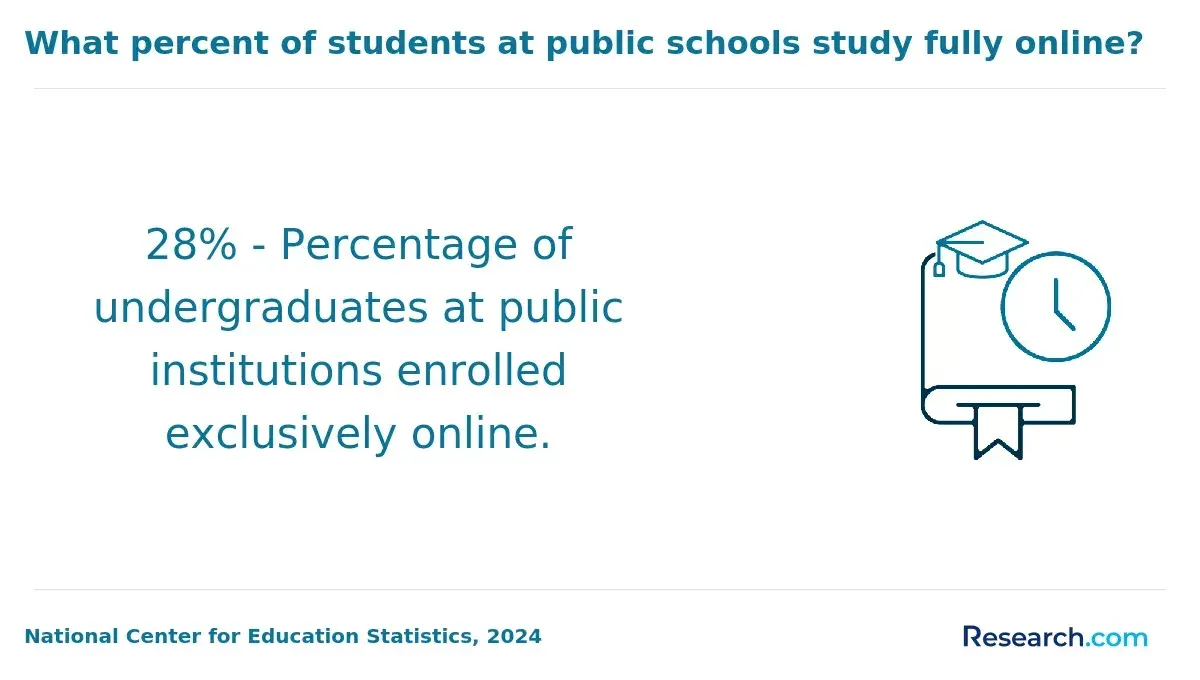
Installment billing is common across U.S. colleges, but it is not a feature unique to physics or necessarily available for every online program. Most schools describe these arrangements as tuition payment plans, deferred payment plans, or installment plans. They commonly cover one semester, quarter, or shorter session rather than the entire degree.
This distinction matters because a student may see "monthly payments" and assume the school will finance four years of tuition. In practice, the unpaid balance is often split across a limited number of due dates within the term. The student must usually enroll again for each term, and the number of payments can be smaller for late registrants.
Availability can be especially variable for accelerated online calendars. A program with eight-week terms may provide only two installments, leaving a much larger monthly bill than a traditional 16-week semester plan. Ask the billing office for the payment calendar corresponding to your exact start date and course load.
For perspective, schools use similar account-management approaches across many online disciplines. Readers researching graduate-level options can see comparable affordability questions in affordable doctoral programs in leadership, although tuition plans, degree length, and professional outcomes should be evaluated separately.
Can monthly tuition plans make paying for Physics degrees more attainable?
Monthly payment plans can make an online physics degree more attainable for students who have predictable income but cannot comfortably pay a full term balance at once. They are cash-flow tools, not grants or discounts. The strongest fit is often a working learner who can set aside a known amount each pay period and has enough room in the budget for fees, books, and unexpected expenses.
A plan is usually most useful when the student can pay the balance during the same academic term without high-interest borrowing. It may be less suitable for a learner whose income is irregular, who expects financial aid that has not yet been finalized, or whose monthly budget cannot absorb the required installment.
Compare the major payment routes before choosing one. The comparison below focuses on the trade-off between immediate affordability and total financing risk.
| Option | Usually makes sense when | Main trade-off |
| Term-based monthly payment plan | You can clear the balance within the term from income or savings. | Missed payments can trigger late fees, registration holds, or plan cancellation. |
| Pay tuition upfront | You have available funds and the school does not charge a meaningful upfront-payment penalty. | Requires more cash at the beginning of the term. |
| Federal student loans | Payment within the term is not feasible and you remain within aid eligibility and borrowing limits. | Loan principal and interest may remain after graduation or withdrawal. |
| Employer tuition assistance or reimbursement | Your employer has a qualifying benefit and you can meet its grade, tenure, and course-approval rules. | Reimbursement may arrive after you have already paid the school. |
Before selecting a plan, map each due date to actual paydays. Include an emergency buffer rather than assuming every month will have identical expenses. A payment plan is more attainable when the installment fits the budget without relying on credit-card debt.
Does monthly payment plans have an effect on the overall cost of Physics degrees?
Monthly payment plans generally do not change the school's underlying tuition rate. They can, however, increase the amount paid if the school charges a nonrefundable enrollment fee, a returned-payment fee, or late fees. The financial effect is usually smaller than long-term private financing, but it should still be included in the total-cost comparison.
Read the plan agreement for these cost drivers before authorizing autopay.
- Plan enrollment fee: Often charged once per term or payment-plan enrollment and may be nonrefundable even if you later drop classes.
- Late or failed-payment fee: May apply when an installment is missed, a bank account lacks funds, or a card payment is declined.
- Reinstatement or administrative fee: Some schools charge an additional amount to restart a cancelled plan or remove an account hold.
- Interest or finance charge: Many institutional term plans do not charge interest, but students should not assume this without checking the contract.
A longer installment schedule can lower the amount due each month but may not be cheaper. If it adds more administrative fees or pushes the balance into outside financing, the lower monthly amount can conceal a higher total cost. Pay upfront when doing so preserves an emergency fund and avoids plan fees; use installments when the cash-flow benefit is worth the documented fee.
Students exploring low-cost credentials in another area can apply the same comparison method to the best bookkeeping certification online search: separate tuition from enrollment fees, materials, and financing charges before comparing advertised prices.
Do monthly payment plans affect your financial aid eligibility for Physics programs?
Enrolling in a monthly payment plan does not normally change eligibility for federal financial aid by itself. Eligibility is determined through the FAFSA, enrollment level, satisfactory academic progress, citizenship or eligible-noncitizen status, and other federal and institutional requirements. The payment plan affects how the remaining balance is collected after anticipated aid is applied.
Timing is the critical issue. Schools generally disburse eligible federal aid after enrollment and attendance requirements are met, not merely because a student registered. If aid is still pending when the first installment is due, the school may calculate payments using anticipated aid, require a temporary payment, or require the student to cover the full balance until funds post. Policies differ.
For the 2025-26 award year, the maximum Federal Pell Grant is $7,395 for eligible students. That figure is a maximum award rather than a typical award, and it may not cover a full physics term after tuition and fees. Review the aid offer, not just the FAFSA submission confirmation, before setting a payment amount.
Take these steps to prevent an avoidable account problem.
- Accept or decline awards in the student portal and complete any required loan counseling, verification, or promissory-note tasks.
- Ask student accounts whether anticipated grants and loans reduce the installment amount before disbursement.
- Request the exact first-payment due date and compare it with the school's stated aid-disbursement date.
- Keep records of the aid offer, billing statement, and payment-plan agreement in case the balance changes.
A payment plan cannot replace financial-aid eligibility requirements, and withdrawing or dropping below the required enrollment level can change aid and create a balance due. Contact the financial-aid office promptly if your course schedule changes.
Is there a deposit required before starting Physics monthly payment plans?
Often, yes. Schools may call the upfront amount a down payment, initial installment, enrollment payment, or plan activation amount. Some plans require the first scheduled payment when the plan is created; others collect a fixed enrollment fee plus a percentage of the term balance. A separate admissions deposit may also apply at some institutions, though it is not automatically the same as a payment-plan deposit.
Do not rely on the word "deposit" alone. Ask whether it is credited toward tuition, refundable after a schedule change, and included in the advertised installment amount. If the school applies financial aid first, the required down payment may be lower; if aid is pending or incomplete, it may be higher.
Calculate the upfront cash requirement using the school's own billing statement. Add the first installment, plan enrollment fee, any admissions or orientation charge due immediately, and required course materials. This produces a more realistic enrollment figure than looking only at the later monthly payments.
Are there fees not covered by monthly tuition payment plans for Physics programs?
Yes. A tuition payment plan usually schedules eligible charges on the student account; it does not necessarily include every educational expense. Physics students should be particularly careful about course materials because laboratory work can create costs beyond standard online-course tuition.
This table identifies common expenses to verify. Whether an item is included depends on the school and course, so obtain confirmation for the specific term.
| Potential cost | Commonly included in installment balance? | What to confirm |
| Tuition | Usually | Whether all registered credits are included after add/drop changes. |
| Mandatory institutional fees | Often, but not always | Technology, distance-learning, student-service, and course fees. |
| Laboratory kits and equipment | Varies | Whether purchased through the school, billed separately, or shipped directly to the student. |
| Textbooks and access codes | Varies | Whether materials are billed to the account or paid directly to a retailer. |
| Proctoring or testing charges | Varies | Whether remote proctoring, testing-center, or identity-verification costs are separate. |
| Late, returned-payment, and plan fees | No | The amount, trigger, grace period, and whether the fee is refundable. |
Also ask whether health insurance, graduation fees, optional parking for any campus lab visit, and professional memberships appear on the account. A plan may include an account charge while still excluding costs paid directly to a vendor.
What should you look for in payment plan terms for Physics programs?
The best plan is not automatically the one with the lowest first payment. Read the complete agreement and compare plans using the same term, credit load, and expected financial-aid amount. Verbal answers from recruitment staff are useful, but the written billing policy and account disclosure control the obligation.
Use the following review process before enrolling.
- Confirm that your specific online physics program, session length, and enrollment status qualify for the plan.
- List the total billed charges, anticipated aid, first payment, number of installments, every due date, and the final payment amount.
- Identify every fee, including enrollment, late, returned-payment, cancellation, and reinstatement fees.
- Ask what happens if financial aid is delayed, a payment fails, or you add, drop, or withdraw from a physics course.
- Check whether autopay is required, what payment methods are accepted, and how much advance notice is needed to cancel.
- Save a dated copy of the agreement and the itemized billing statement before the payment-plan deadline.
Red flags include vague answers about fees, no written deadline schedule, promises that aid will "definitely" cover the balance, and an installment amount calculated before known course fees are included. Another common mistake is enrolling late: fewer remaining due dates can make each payment much larger.
Program cost is only one education-planning question. Learners comparing degree requirements in other fields may encounter similarly important questions such as do you need a masters to be a librarian; in every case, confirm credential requirements and total cost before relying on a payment schedule.
How do you know if online Physics degrees with monthly payments are right for you?
An online physics degree with monthly payments can be a practical choice if the institution is appropriately accredited, the curriculum supports your academic or career goal, and the payment schedule fits your income without creating unmanageable debt. It is not a reason by itself to choose a program with weaker lab access, unclear transfer-credit policies, or a higher total cost.
A strong candidate for a term-based plan generally has stable income, understands the full balance after aid, and can pay each installment while maintaining an emergency cushion. This approach can work well for employed adult learners, students receiving predictable employer support, or students using a combination of savings and finalized aid.
Consider another approach if you expect irregular income, need a payment period longer than one term, are waiting on uncertain aid, or would need credit cards to make each installment. In those circumstances, compare federal aid options, scholarship opportunities, employer benefits, a reduced course load, or postponing enrollment until the budget is stronger.
Before making a final decision, compare each prospective school on accreditation, total credits remaining after transfer evaluation, laboratory format, tuition and mandatory fees, payment-plan costs, and career or graduate-school preparation. A school that offers a monthly plan may be more convenient, but the right program is the one that combines affordable completion with the physics education you actually need.
Other Things You Should Know About Physics
Recognition depends more on institutional accreditation, curriculum rigor, laboratory preparation, grades, research experience, and the requirements of the employer or graduate program than on payment method. Confirm whether the degree transcript distinguishes online delivery and whether advanced lab courses have in-person or virtual components.
Some programs use mailed lab kits, simulations, remote instruments, or local arrangements, while others require campus sessions or approved in-person labs. Ask for the lab schedule before enrolling because travel, equipment, and attendance requirements can affect both cost and feasibility.
Potentially. Accepted transfer credits can reduce the number of credits you must pay for, but physics and calculus courses may have course-equivalency, grade, recency, or laboratory requirements. Request an official transfer evaluation before comparing final program costs.
Usually, if the institution permits part-time enrollment and the plan is available to part-time students. A lighter course load can reduce each term's bill, but it may extend completion time and can affect financial-aid eligibility, employer reimbursement rules, and course sequencing.
References
- Project 2025 Would Increase Costs, Block Debt Cancellation for Student Loan Borrowers - Center for American Progress https://www.americanprogress.org/article/project-2025-would-increase-costs-block-debt-cancellation-for-student-loan-borrowers/
- Learning the Best Way to Pay Off Student Loans | Diamond CU https://diamondcu.org/blog/best-way-to-pay-off-student-loans/
- Affordable Accredited Online Colleges https://www.onlineu.com/online-schools/low-tuition
- Financial Aid For Online Colleges https://www.affordablecollegesonline.org/financial-aid/financial-aid-for-online-colleges/
- Payment Plans - Student Loan Borrowers Assistance https://studentloanborrowerassistance.org/for-borrowers/dealing-with-student-loan-debt/repaying-your-loans/payment-plans/
- Options for Financing Your Education https://lesley.edu/costs-financial-aid/options-for-financing-your-education
- Grants and Scholarships | Financial Aid Options at SCI https://scitexas.edu/paying-for-school/
- Understanding Student Loans: Strategies & Repayment Plans - EDCAPNY.org https://www.edcapny.org/resources-for-borrowers/student-loan-repayment-strategies-plans/
- Private Loan vs. Payment Plan: Which Is Best for You? | Climb Credit https://climbcredit.com/resources/finance-loans/loan-vs-payment-plan/
- The Rise of Installments: Transforming Education Payment Options - Splitit https://www.splitit.com/blog/payment-solutions-technology/the-rise-of-installments-transforming-education-payment-options/