2027 Online Physics Degree Programs With No Personal Statement or Admissions Essay Required

Co-Founder and Chief Data Scientist
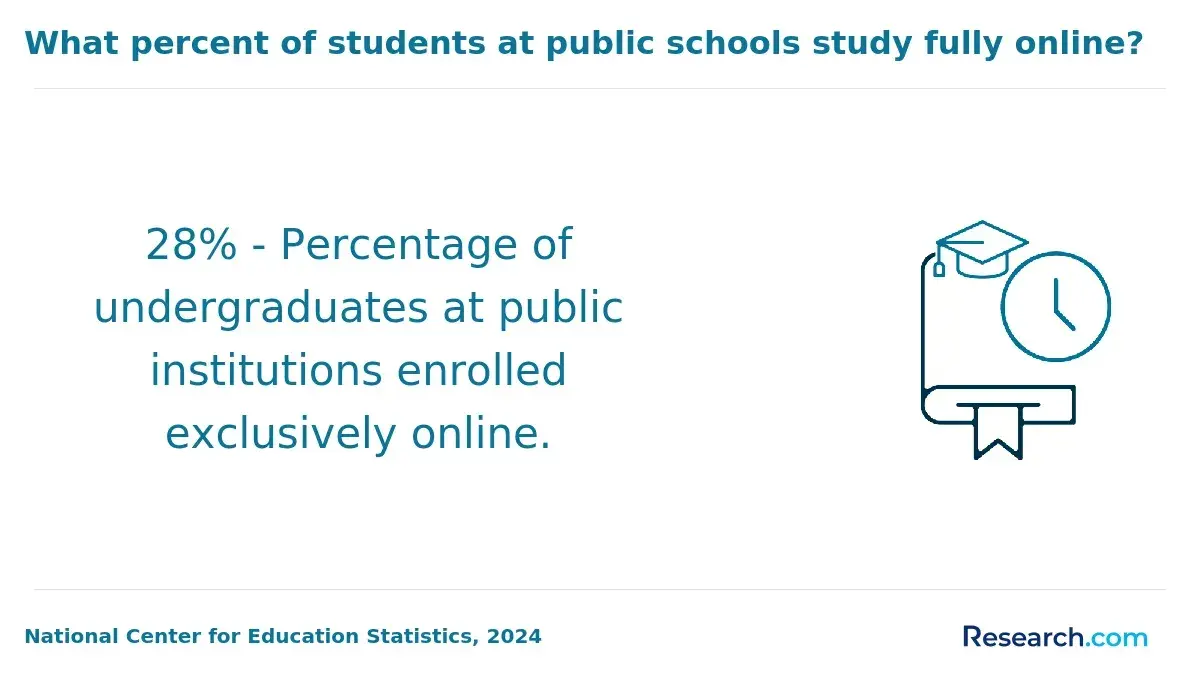
An online physics degree can reduce application writing, but "no personal statement or admissions essay required" usually removes only one admissions component - not transcripts, math preparation, or GPA review. This matters as online study remains a major enrollment route: the National Center for Education Statistics reported that 53% of postsecondary students take at least one distance education course.
This guide helps first-time, transfer, and adult students verify no-essay policies, assess program quality, estimate costs, and apply without confusing a simpler application with guaranteed admission.
Key Things You Should Know
- A true no-essay online physics degree application does not request a personal statement for standard admission, but schools may still evaluate official transcripts, cumulative GPA, college algebra or calculus preparation, science prerequisites, residency, and transfer-credit eligibility.
- No-essay, essay-optional, and essay-waived are different policies: an optional essay can strengthen a borderline application, while a waiver may apply only to a particular applicant group; honors programs, scholarships, and appeals can still require writing.
- Application simplicity should not outweigh fit: compare institutional accreditation, laboratory access, upper-level math and physics courses, total net price, and career preparation; the 2024-25 maximum Federal Pell Grant is $7,395 for eligible students, making a complete aid application important.
What Does No Personal Statement or Admissions Essay Required Mean for Online Physics Degree Programs?
A no-personal-statement or no-admissions-essay policy means the standard application does not require the applicant to submit a written narrative explaining their background, goals, challenges, or interest in physics. The admissions office instead makes its initial decision from objective materials such as transcripts and application fields. The policy may apply to a university's online bachelor's completion program, an associate degree, or a particular graduate certificate; it should never be assumed to cover every academic level.
For physics, the distinction matters because programs often need evidence that a student can begin or progress through quantitative coursework. A school may not ask why you want to study physics, yet still require prior credit in precalculus, calculus, calculus-based physics, programming, or general education courses. Some programs also use an enrollment counselor's transcript evaluation to determine the appropriate entry point.
"No essay" describes an application item, not an admissions category. It does not mean open admission, guaranteed acceptance, no deadlines, or no academic screening. It also does not necessarily mean that a student can complete every laboratory requirement from home. Before applying, confirm whether labs use mailed kits, simulation software, short campus sessions, an approved local lab, or transfer credit.
Online physics offerings vary substantially. Fully online programs are more common at the associate, interdisciplinary science, engineering-technology, and degree-completion levels than traditional research-intensive bachelor's physics majors. Students seeking a path toward graduate physics study should carefully confirm that the curriculum includes the calculus sequence, modern physics, advanced laboratory work, and upper-division theory expected by target graduate departments.
What Admissions Requirements Do Online Physics Degree Programs Use Instead of an Essay?
Without an essay, colleges commonly rely more heavily on verifiable academic records and placement information. Requirements differ by institution and degree level, but applicants should expect the following materials to carry the application.
- Official high school transcript, GED record, or prior college transcripts.
- Minimum cumulative GPA or a satisfactory academic standing determination.
- Mathematics and science prerequisite review, especially for calculus-based physics sequences.
- Completed online application, identity or residency information, and any application fee or fee-waiver request.
- Placement assessments or transfer-credit evaluation when prior math coursework is unclear or outdated.
- English-language proficiency documentation for applicants required to provide it under the institution's policy.
- Immunization, background-check, or local laboratory-site documentation only when a specific course or placement requires it.
Test-optional admissions and no-essay admissions answer different questions. Test-optional means standardized scores may not be required or considered; no-essay means a written narrative is not required. A program can be both, either, or neither. If scores are optional, submit them only when the school says they may help and they accurately represent your academic readiness.
The table separates common review factors from requirements that are less universal. Use it to identify what to check on an individual program's admissions page before spending time on an application.
| Application factor | How it is commonly used | Why it matters in physics |
| Transcripts | Confirms completed courses, grades, and academic standing | Shows preparation for sequential math and science courses |
| GPA | May be a minimum threshold or part of holistic review | Can indicate readiness for a demanding quantitative workload |
| Prerequisites | Determines direct entry into major coursework or a preparatory pathway | Physics courses often build on calculus and earlier physics concepts |
| Test scores | May be required, optional, or not considered | Policy varies separately from the essay policy |
| Recommendations | More common for selective, graduate, or special programs | May provide context when required, even if no essay is requested |
| Placement assessment | Places students into math or writing courses | Can affect time to degree and course sequencing |
Applicants considering several career directions should distinguish an academically rigorous physics pathway from a degree chosen solely for a quick application. Reviewing highest-paying bachelor degrees can provide broader earnings context, but salary potential should not replace checking the physics curriculum and required preparation.
Who Is a Good Fit for Online Physics Degree Programs With No Admissions Essay?
A no-essay pathway can fit students with solid academic records who prefer an efficient, document-based application. It can be especially useful for working adults, military-connected students, transfer students with substantial coursework, and applicants who find personal-statement writing burdensome or difficult to schedule. It may also suit students applying to several institutions where transcript evaluation, course availability, and affordability are more important than presenting a personal narrative.
The best fit is not simply someone who wants the shortest application. A strong candidate can document appropriate math preparation, communicate with advisors about laboratory requirements, and set aside time for problem sets, proctored assessments, and synchronous sessions if required. Physics is cumulative; skipping foundational preparation can extend the degree timeline even when admission itself is straightforward.
A program with an essay requirement may be worth considering when your record needs explanation. For example, an applicant with a low early GPA followed by strong recent calculus grades, a major interruption in enrollment, substantial technical experience, or a specific research goal may benefit from having a formal place to provide context. An optional essay can likewise be useful when it permits this explanation, but only if the admissions office confirms it will be reviewed.
Students who ultimately want a research doctorate, competitive internship, or selective graduate program should prioritize advanced course access, faculty interaction, laboratory opportunities, and research preparation. A simplified undergraduate application does not make later graduate admissions less selective.
What Is the Difference Between No-Essay, Essay-Optional, and Essay-Waived Physics Degree Admissions?
Schools use similar language for policies that have materially different consequences. Read the application checklist, not only a marketing statement, and look for separate instructions by applicant type, term, campus, and scholarship program.
This comparison shows what each term usually means and the question an applicant should ask before relying on it.
| Policy | Meaning for standard admission | Best question to ask |
| No essay required | No personal statement or admissions essay appears in the ordinary application requirements | Does this apply to my program, degree level, and applicant type? |
| Essay-optional | The applicant may submit an essay, and the college may consider it | Will an optional essay be reviewed for admission, placement, or scholarships? |
| Essay-waived | An otherwise required essay is excused for certain students or terms | What condition created the waiver, and could it change for my application? |
| Essay required | A written response is part of a complete application | What prompt, word limit, and deadline apply? |
A waiver is the policy most likely to create confusion. It may cover transfer applicants with a stated number of credits, applicants using a partner agreement, or students applying during a particular term. It can also be rescinded if the student changes programs. Get confirmation in writing or save the applicable admissions-page language before submitting.
Written material can remain necessary outside standard admission. Scholarships, departmental honors, research opportunities, study-abroad applications, academic appeals, and graduate-school applications may each have separate writing requirements. Do not decline an optional essay automatically if it is the only place to explain relevant circumstances and the school confirms it will be considered.
Are Online Physics Degree Programs With No Admissions Essay Easier to Get Into?
Not necessarily. Removing an essay can make an application faster to complete and more accessible for students who dislike admissions writing, but it does not reveal how selective a program is. A college may use GPA floors, prerequisite completion, limited seats, transfer-credit rules, or capacity limits in laboratory courses to make decisions. An institution can also admit broadly while a particular physics sequence remains challenging to enter or complete.
"Easier to apply to" and "easier to be admitted to" are separate comparisons. A realistic evaluation examines the published admissions criteria, whether all applicants who meet minimum criteria are admitted, and whether acceptance is to the institution, the online degree, or a pre-major pathway. Ask whether students who need prerequisite math are admitted conditionally, admitted to another major, or required to complete coursework before beginning physics classes.
Students should also avoid treating an essay as a barrier in every setting. At programs using holistic review, an essay may offer a valuable chance to demonstrate persistence, preparation, or goals that grades alone do not show. If your transcript is strong and the curriculum is the right fit, a true no-essay policy may save time. If your record needs context, essay-optional or essay-required programs can offer an advantage.
Physics coursework itself remains rigorous regardless of the application format. Courses commonly require algebraic modeling, calculus, data analysis, scientific programming, technical writing, and careful experimental reasoning. A no-essay policy should be one factor in a decision, not evidence that academic standards are lower.
How Can You Verify Accreditation and Quality in No-Essay Online Physics Degree Programs?
Start by verifying that the institution holds recognized institutional accreditation and that the online degree is awarded by the same accredited institution named on the transcript. Institutional accreditation is central to federal aid eligibility, transfer-credit acceptance, and many graduate-school applications. Physics bachelor's programs are not commonly evaluated through a single programmatic accreditation model in the way some professional fields are, so curriculum quality and faculty support deserve separate scrutiny.
Check the accreditor and institutional status through the U.S. Department of Education's Database of Accredited Postsecondary Institutions and Programs or the Council for Higher Education Accreditation. Confirm details directly with the college because accreditation, branch-campus status, and online-program availability can change. Do not rely on an accreditation seal alone, especially if a school does not clearly identify its accreditor.
Use the following review steps to assess whether an online option supports your academic goal.
- Download the degree map and confirm total credits, general education requirements, major courses, and likely course sequence.
- Check whether calculus I through multivariable calculus, differential equations, introductory and advanced physics, modern physics, and laboratory experiences are available when needed for your goal.
- Ask how laboratory work is conducted, what equipment or travel is required, and whether the method is accepted by likely transfer or graduate destinations.
- Review faculty biographies, office-hour access, tutoring, academic advising, library resources, disability services, and technical support.
- Request the full cost of attendance, including distance-learning, technology, proctoring, laboratory-kit, and residency charges.
- Ask for outcomes information that defines the cohort, timeframe, and methodology rather than relying on broad employment claims.
Red flags include unclear accreditation language, no identifiable faculty, vague laboratory descriptions, pressure to enroll before receiving written costs, and promises of automatic transfer or guaranteed employment. A legitimate program should answer specific questions about curriculum, credit transfer, and student services.
Accreditation also matters when comparing fields with formal post-degree expectations. For example, students investigating whether do you need a master's to be a librarian should separately review employer and role expectations; similarly, physics students should identify whether their target occupation requires graduate study, licensure, or employer-specific credentials.
How Does the Application Process Work for Online Physics Degree Programs With No Personal Statement?
The exact portal differs, but no-essay applications generally follow a document-and-verification process. Begin early enough to resolve transcript delivery, prerequisite questions, financial aid, and course registration. An application can be complete without an essay yet still be delayed by a missing official record or an unresolved residency classification.
These steps help applicants verify the policy and submit a complete file.
- Select the exact online physics program, degree level, entry term, and applicant category rather than relying on institution-wide advertising.
- Read the official admissions checklist and save a copy showing whether a personal statement, recommendation, or test score is required.
- Request official transcripts from every required high school, college, or credentialing source, including institutions where you withdrew or earned no credit if the school requires all records.
- Complete the application accurately, including prior education, residency, military affiliation, and intended major information.
- Submit required placement, prerequisite, or identity materials and pay the fee or request an eligible fee waiver.
- File the FAFSA if you may seek federal, state, or institutional aid, then monitor your student portal for verification requests.
- Review the admission decision and transfer evaluation carefully before accepting; confirm awarded credits, remaining prerequisites, lab expectations, and first-term courses.
Contact admissions if the checklist appears inconsistent. For example, a general undergraduate application may say "no essay," while an honors college, accelerated track, international process, or departmental scholarship has an additional form. Ask for the answer by email when timing matters.
Do not submit an unsolicited personal statement unless the college explicitly permits supplementary materials. Extra documents can be ignored, complicate file processing, or create the impression that instructions were not followed. Instead, use the designated explanation field, advisor conversation, or appeal process if the institution provides one.
Can Transfer and Adult Students Apply to Online Physics Degree Programs Without an Essay?
Yes, many transfer and adult applicants can use no-essay admission routes, but their requirements often differ from those for first-time students. Transfer applicants may need transcripts from every prior college, a minimum number of transferable credits, a specified college GPA, and course syllabi for older or unusual science and math credits. Adult students may be exempt from submitting high school records after reaching a school-defined college-credit threshold, but that is institution-specific.
Transfer evaluation is particularly important in physics because course equivalencies affect sequencing. A transferred algebra-based physics course may satisfy a general science requirement without substituting for a calculus-based major course. Similarly, an old calculus credit may transfer but leave a student rusty for mechanics or electromagnetism. Ask whether credits apply to the major, general education, or electives - not merely whether they transfer.
Before enrolling, obtain answers to these transfer-specific questions.
- Which prior math, physics, programming, and laboratory courses will satisfy major requirements?
- Will the school evaluate unofficial transcripts before application, and when will the official evaluation be final?
- Is there a transfer-credit residency requirement that limits how many credits can count toward the degree?
- Are course syllabi, lab descriptions, or accreditation records needed for equivalency review?
- Can credits earned years ago meet prerequisites, or is a refresher or placement assessment required?
- Does the no-essay policy apply to readmission applicants, students on academic probation, and students seeking an exception?
Adult learners should factor in course scheduling as carefully as admissions. A program may be online but offer advanced physics only once a year, which can lengthen completion after a missed prerequisite. Students balancing employment should ask whether examinations are synchronous, whether lab work has fixed deadlines, and whether part-time enrollment changes aid eligibility or degree pace.
Affordability comparisons are useful across disciplines, but course transferability and professional goals remain field-specific. For students exploring a human-services alternative, online MSW programs affordable options illustrate why program accreditation, practicum rules, and total cost should be checked alongside admissions convenience.
Do No-Essay Online Physics Degree Programs Affect Tuition, Financial Aid, or Scholarships?
No-essay admission does not inherently reduce tuition or make a program eligible for more aid. Tuition is generally determined by the institution, credit load, residency classification, delivery format, and program fees - not whether an applicant wrote a personal statement. Online students should calculate the full published cost, including per-credit tuition, mandatory fees, proctoring, laboratory supplies, software, travel, and charges for repeated courses.
Eligible students may still pursue federal aid by submitting the FAFSA. For the 2024-25 award year, the maximum Federal Pell Grant is $7,395, though an individual award depends on eligibility, enrollment intensity, cost of attendance, and other federal criteria. This maximum is not a promise of aid; it shows why applicants should not skip financial-aid steps merely because the admission application is brief.
Scholarship processes are often separate from admission. Institutional merit awards may be automatic for eligible students, but competitive scholarships commonly request essays, recommendation letters, interviews, portfolios, or proof of community involvement. A college can truthfully advertise no essay for admission while requiring an essay for a scholarship application.
The table highlights cost questions that a no-essay policy does not answer. Compare the same categories across schools and use the net price, rather than headline tuition alone, to make a practical decision.
| Cost or aid factor | What to verify | Potential decision impact |
| Tuition rate | Per-credit rate, residency rule, and whether online students pay a different rate | Determines baseline instructional cost |
| Required fees | Technology, distance-learning, proctoring, lab, and graduation charges | Can materially increase total cost beyond tuition |
| Transfer credits | How many credits apply directly to degree requirements | May reduce both time and total tuition |
| Federal and state aid | FAFSA deadlines, enrollment rules, and verification requirements | Can affect affordability and borrowing needs |
| Scholarships | Separate deadlines and whether essays or recommendations are required | May favor applicants willing to complete additional materials |
| Employer or military benefits | Eligibility, billing process, approved programs, and course-load rules | May change the effective out-of-pocket cost |
Do not compare an online bachelor's program with an unrelated graduate credential as though they have identical costs or outcomes. Still, people considering long-term leadership careers can use affordable doctoral programs in leadership to understand how advanced-degree pricing and financial planning can differ by credential level.
How Should You Compare Online Physics Degree Programs With No Admissions Essay?
Compare programs in the order that protects your goals: academic legitimacy and curriculum first, affordability and transfer value second, application convenience third. A no-essay policy is useful only if the program can deliver the courses, support, and credential recognition you need.
Create a short list of programs and score each using the same evidence. The following comparison framework helps prevent a quick application from becoming an expensive mismatch.
| Comparison area | Evidence to collect | What a strong answer looks like |
| Accreditation | Institution name, recognized accreditor, and current status | Accreditation is clearly disclosed and independently verifiable |
| Admissions policy | Checklist for your degree level and applicant category | No essay requirement is explicit, with exceptions identified |
| Math and physics curriculum | Catalog, degree map, prerequisites, and course rotation | Courses align with your transfer, employment, or graduate-school objective |
| Laboratory experience | Lab format, equipment, travel, costs, and instructor support | Requirements are transparent and workable for your location |
| Transfer policy | Credit limits, equivalency decisions, and residency requirement | Prior credits apply meaningfully to required coursework |
| Total price | Tuition, all fees, aid estimate, and likely remaining credits | Written cost information supports an apples-to-apples comparison |
| Student support | Tutoring, advising, career services, accessibility, and technical support | Online learners can access subject-specific assistance when needed |
After narrowing the list, ask each school the same concise questions: Does the no-essay policy apply to my applicant category? Which courses will transfer into the physics major? How are labs completed? What will I pay after likely credits and aid? What is the next available course in my required sequence? Written answers make it easier to compare claims and protect against misunderstandings.
A practical red flag is choosing solely because an application has fewer steps. Another is assuming an online science program has no hands-on requirements. The better approach is to submit efficient applications to programs that meet your academic and financial standards, then use optional written materials strategically where they can improve scholarship or placement opportunities.
Students who decide physics is not the right academic match may also explore shorter skills-focused routes, such as a best bookkeeping certification online option, but should compare the credential's required skills, career scope, and employer expectations rather than assuming any faster program offers the same outcomes.
Other Things You Should Know About Physics
No. A policy may differ for first-time, transfer, international, readmission, honors, or graduate applicants. Confirm the requirements for your exact degree, term, and applicant type in the official checklist.
Yes. A school may request clarification about academic history, disciplinary history, residency, prerequisite coursework, or unusual documents. This does not necessarily mean the published no-essay policy was inaccurate; it may be an individualized follow-up.
Only submit one if the college provides an optional upload or specifically invites additional information. Unrequested materials may not be reviewed. Use the designated explanation field if one is available.
Many do, but the format varies. Programs may use home lab kits, simulations, remote instruments, local arrangements, limited residencies, or transferred lab credit. Verify the method, added cost, and travel expectations before enrolling.
References
- Online Bachelor's degree in physics from an accredited school? https://www.physicsforums.com/threads/online-bachelors-degree-in-physics-from-an-accredited-school.561327/
- 2025 Most Affordable Online Colleges & Degrees https://www.onlineu.com/most-affordable-colleges
- 12 Personal Statement Examples + Analysis 2026/2027 | College Essay Guy https://www.collegeessayguy.com/blog/personal-statement-examples
- Bachelor of Science Degrees (All) Admissions Requirements https://www.digipen.edu.sg/admissions/undergraduate-degree-programs/admissions-requirements/bachelor-of-science-degrees
- Online Physics Degrees: Are They Useful in Today's Scenario? https://www.allassignmenthelp.com/blog/online-physics-degrees-in-todays-scenario/
- Financial Aid For Online Colleges https://www.affordablecollegesonline.org/financial-aid/financial-aid-for-online-colleges/
- Physics Employment Facts https://www.compadre.org/careers/facts.cfm
- UCAS Personal Statement for Physics: How to Stand Out at Imperial, Cambridge and More https://statementory.com/blog/ucas-personal-statement-physics