2027 Accredited Online Physics Degree Programs That Accept the Most Transfer Credits

Co-Founder and Chief Data Scientist
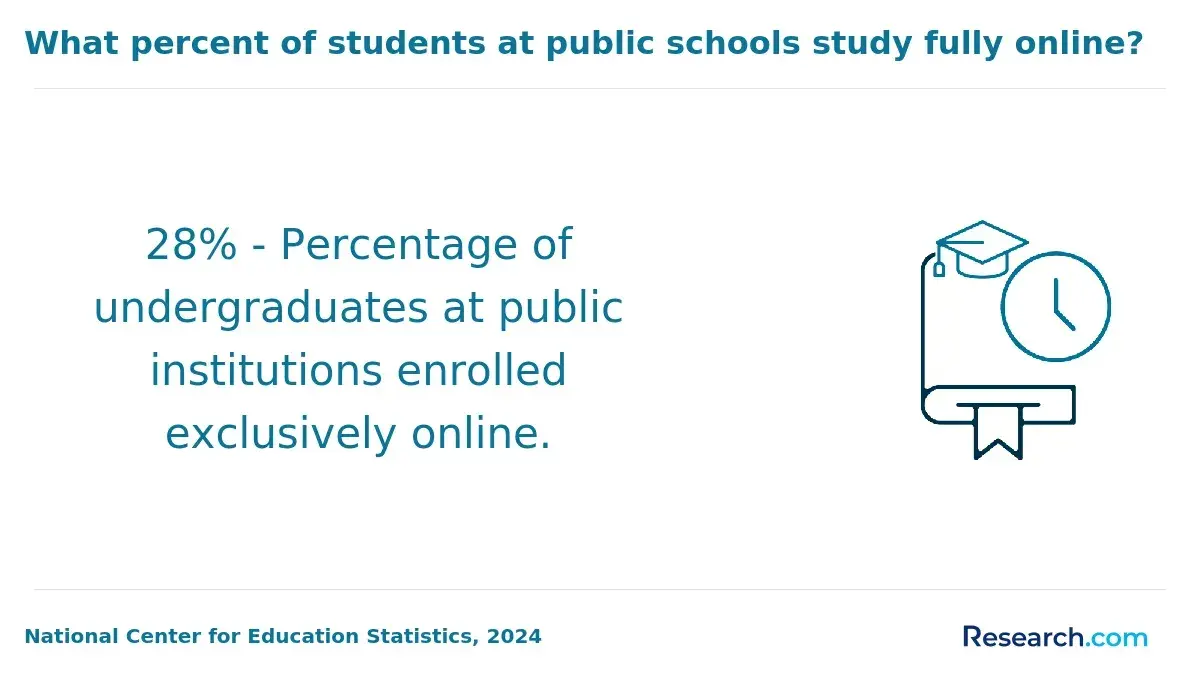
Choosing an online physics degree is often less about starting over and more about finding out how much of your previous coursework still counts. NCES reported in 2024 that average undergraduate tuition and fees reached $9,750 at public four-year institutions and $35,248 at private nonprofit institutions for the 2022-23 academic year, so lost credits can be expensive. This guide is for transfer students, associate degree holders, military learners, and adults returning to college. You will learn which accredited online physics programs are transfer-friendly, how credits are evaluated, and how to compare real completion cost instead of advertised maximums.
Key Things You Should Know
- The most transfer-friendly accredited online physics bachelor's options commonly allow up to about 90 semester credits, but residency rules usually require at least 30 credits from the degree-granting institution.
- A high transfer limit does not mean all credits apply to the physics major; calculus, calculus-based physics, labs, chemistry, programming, and upper-division science courses transfer best when syllabi and lab documentation match the destination curriculum.
- Physics can support strong long-term value, but outcomes vary by role: the BLS reported a May 2024 median annual wage of $166,300 for physicists, while many bachelor's-level graduates work first in engineering support, data, education, software, or technical analyst roles.
Which Accredited Online Physics Degree Programs Accept the Most Transfer Credits?
The accredited online physics degree market is smaller than the market for business, psychology, or computer science programs because physics requires advanced math, sequenced labs, and specialized upper-division coursework.
For transfer students, the best programs are not simply the ones with the highest published cap; they are the ones most likely to apply prior credits to general education, math prerequisites, lab science requirements, and upper-division physics electives.
The table below compares transfer-friendly online or substantially online physics bachelor's options based on publicly stated institutional transfer and residency policies. Policies can change, and final credit awards require an official evaluation, so use these figures as a screening tool rather than a promise of credit acceptance:
| Institution | Online physics-related bachelor's option | Institutional accreditation | Common maximum transfer allowance | Key transfer caveat | Best fit |
| Liberty University | Online BS in Physics | Southern Association of Colleges and Schools Commission on Colleges | Up to 75% of a bachelor's degree, commonly 90 of 120 credits | Physics major, lab, and upper-level requirements still must match the degree plan | Students with many lower-division general education and STEM credits who want a high published transfer cap |
| Arizona State University Online | Online BS in Physics | Higher Learning Commission | Often up to 90 credits overall, with limits on community college and residency credits | ASU's transfer tools help estimate equivalencies, but upper-division physics applicability is program-specific | Students who want a large public research university and clear transfer-mapping tools |
| Oregon State University Ecampus | Online BS in Physics | Northwest Commission on Colleges and Universities | Up to 135 quarter credits may commonly apply toward a 180-quarter-credit degree, roughly comparable to 90 semester credits | Quarter-credit conversion and upper-division residency requirements affect the final degree audit | Students comfortable with the quarter system and seeking a research university physics curriculum online |
| University of North Dakota | Online BS in Physics or physics-focused online pathway where available | Higher Learning Commission | Often limited by a minimum institutional credit requirement, commonly leaving about 30 credits to complete at UND | Course sequencing, labs, and upper-division availability should be confirmed before enrollment | Students who want a public university option and can align previous STEM courses with UND requirements |
The practical takeaway is that several accredited options may let a student bring in roughly three-fourths of a bachelor's degree, but physics is a structured major. A student with 90 credits in unrelated electives may still need several years of calculus, laboratory physics, and advanced coursework, while a student with fewer but better-aligned STEM credits may finish faster.
If you are comparing physics with other high-value undergraduate pathways, it may also help to review broader salary-oriented degree comparisons such as highest paying bachelor degrees. That context can help you decide whether physics, engineering, computer science, data science, or another quantitative major better fits your target career.
How Do Online Physics Degree Programs Evaluate Transfer Credits?
Online physics programs usually evaluate transfer credits in two layers. First, the registrar or transfer office determines whether credits are college-level, accredited, graded, and eligible for transfer. Then the academic department decides whether those credits satisfy specific physics, math, lab, or elective requirements.
This distinction matters because a credit can transfer without helping you graduate sooner. For example, an algebra-based physics course may count as elective credit but not replace calculus-based mechanics required for a physics major.
Most schools use a process like the one below to determine whether credits apply to the degree, not just to the transcript:
- Submit official transcripts from every college previously attended, including community colleges, four-year institutions, and dual-enrollment providers.
- Request a degree-specific transfer evaluation rather than a general admission estimate, because physics requirements are more restrictive than free electives.
- Provide syllabi, lab descriptions, textbooks, course outcomes, and credit-hour details for math and science courses that do not already appear in the school's transfer equivalency database.
- Ask whether each accepted course fulfills general education, major prerequisites, upper-division physics, laboratory science, or elective requirements.
- Review the remaining degree audit before committing, paying close attention to course sequencing and annual availability of required online physics labs.
Common red flags include verbal estimates that are not reflected in a written degree audit, transfer evaluations that list many elective credits but few major requirements, and missing lab documentation for prior science courses. In physics, a three-credit lecture course without a lab may not satisfy a four-credit lecture-and-lab requirement.
How Can Transfer Credits Shorten an Online Physics Degree?
Transfer credits shorten an online physics degree only when they remove required courses from the remaining degree plan. The most valuable credits usually clear general education requirements, calculus sequences, introductory calculus-based physics, chemistry, computing, and approved upper-division electives.
The table below shows how different transfer-credit scenarios can affect a 120-credit semester-based bachelor's degree. The timeline is approximate because physics courses must be completed in sequence, and some online labs or upper-division courses may not be offered every term:
| Accepted credits that apply to degree | Credits remaining in a 120-credit program | Likely completion effect | Main risk |
| 30 credits | 90 credits | May remove about one year of full-time coursework if credits satisfy general education or prerequisites | Student may still need the full physics and calculus sequence |
| 60 credits | 60 credits | Can create a true degree-completion path if associate-level credits align well | Some associate degrees lack calculus-based physics or advanced math |
| 75 credits | 45 credits | May allow a focused final phase of upper-division physics, labs, and electives | Course sequencing can prevent a simple three-semester finish |
| 90 credits | 30 credits | Often reaches the practical maximum because of residency requirements | Remaining 30 credits may still take longer if required courses are sequential |
A useful rule is to separate "credits accepted" from "credits that reduce remaining requirements." If a school accepts 80 credits but only 45 apply to the physics degree plan, your real transfer efficiency is 45 credits, not 80.
Before enrolling, ask the program to identify the longest remaining prerequisite chain. A student who still needs Calculus I, Calculus II, Calculus III, differential equations, mechanics, electricity and magnetism, and modern physics may not finish quickly even with a large bank of elective credits.
How Much Can Transfer Credits Reduce the Cost of an Online Physics Degree?
Transfer credits can reduce tuition when the school charges by the credit and the transferred courses replace required credits. The potential savings are highest when accepted credits remove both lower-division general education courses and STEM prerequisites that would otherwise need to be retaken.
College Board's 2024 Trends in College Pricing reported average published tuition and fees of $11,610 for in-state students at public four-year institutions and $43,350 at private nonprofit four-year institutions for the 2024-25 academic year. Those figures are annual averages, not online physics prices, but they show why avoiding unnecessary repeat credits can materially affect the total cost of a bachelor's degree.
The table below explains how to estimate cost reduction without relying on a school's advertised transfer maximum. The most important number is the tuition attached to credits you no longer have to take:
| Cost variable | What to verify | Why it matters |
| Per-credit tuition | Whether online students pay in-state, out-of-state, flat-rate, military, or program-specific tuition | Transferred credits save more when the remaining institution charges higher per-credit tuition |
| Credits applied to requirements | How many credits reduce general education, major, prerequisite, and elective requirements | Credits that transfer only as excess electives may not reduce the final bill |
| Residency minimum | The minimum credits you must complete through the university | A 30-credit residency rule can limit savings even when 100 previous credits appear on transcripts |
| Fees and materials | Technology fees, lab kits, proctoring, textbooks, and course materials | Physics courses may carry lab or equipment costs that general tuition estimates miss |
| Financial aid rules | Whether your remaining enrollment level supports grants, loans, scholarships, or employer benefits | Taking fewer credits can reduce tuition, but it can also affect aid eligibility or pacing |
To calculate your likely savings, multiply the number of credits that truly satisfy degree requirements by the school's per-credit tuition, then subtract any added fees that still apply. If two programs accept different amounts of credit, compare the total cost to graduation, not the cost per credit alone.
This same cost-completion logic applies across fields; readers comparing graduate or professional paths may recognize it from guides to online MSW programs affordable, where the lowest sticker price is not always the lowest final cost after transfer, fieldwork, or residency requirements.
Can Military, Professional, or Prior Learning Credits Transfer to an Online Physics Degree?
Military, professional, exam-based, and prior learning credits may transfer to an online physics degree, but they are usually more useful for general education or elective requirements than for advanced physics requirements. Physics departments commonly require documented college-level math, lab science, and theory coursework before replacing core major courses.
Students with nontraditional credits should ask how each credit type is reviewed, because policies vary widely by institution and by academic department. The list below explains where these credits typically fit best:
- Military credits evaluated through ACE recommendations may satisfy physical education, leadership, technical, communication, or elective requirements, but they rarely replace upper-division physics courses without close content alignment.
- CLEP, DSST, AP, and IB credits may clear general education, calculus, chemistry, or introductory science requirements when scores meet the school's minimum thresholds.
- Professional certifications and workplace training may count as electives or technical credits if the university recognizes the provider, learning outcomes, and assessment method.
- Portfolio-based prior learning assessment may help adult learners document college-level learning, but physics major credit usually requires strong evidence of theory, computation, experimentation, and lab practice.
The main mistake is assuming that "credit for experience" will replace rigorous physics coursework. A university may value prior technical experience while still requiring you to complete mechanics, electromagnetism, quantum physics, statistical physics, or advanced laboratory work through the institution.
If you have career-focused certificates as well as college credits, compare how each credential is treated. For example, guidance on the best bookkeeping certification online shows how career certificates can be valuable in their own field, but that does not mean they will apply directly to a science major.
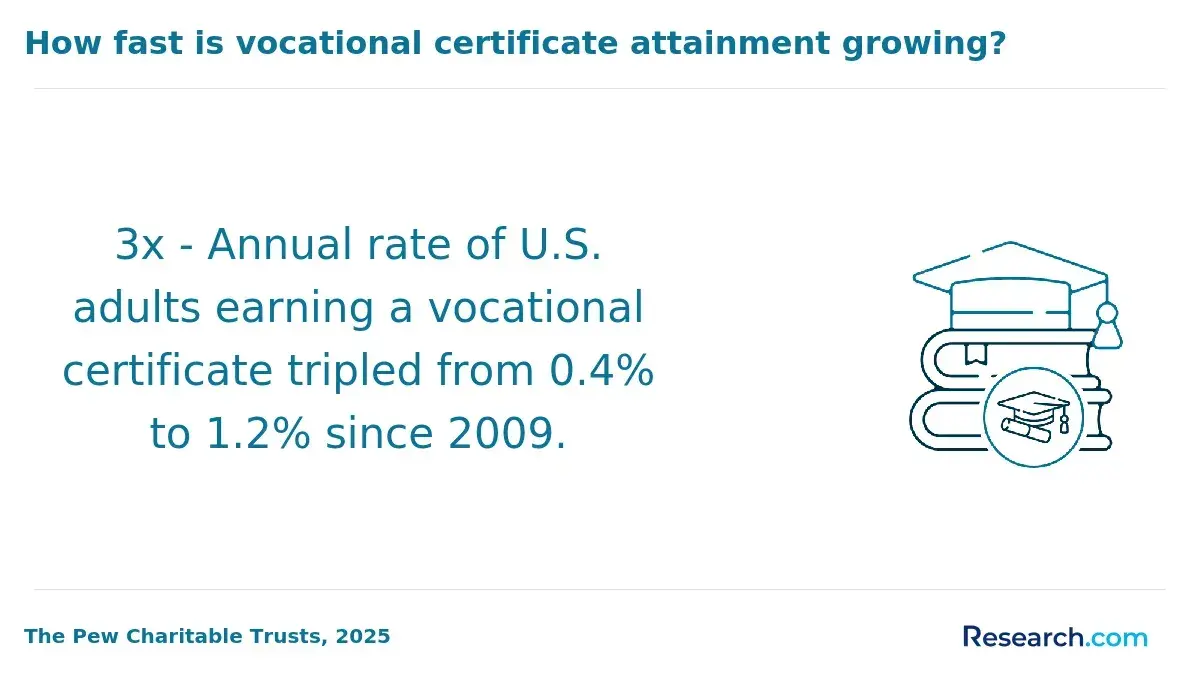
Which Types of Previous College Credits Transfer Best to Online Physics Degrees?
The best transfer credits for online physics degrees are recent, graded, college-level courses from accredited institutions that closely match the receiving school's degree requirements. Physics programs are especially sensitive to course level, lab format, math prerequisites, and whether the course was calculus-based.
The table below ranks common prior credits by how likely they are to reduce remaining physics degree requirements. The key is not only whether the credit transfers, but whether it lands in the right category on the degree audit:
| Previous credit type | Typical transfer strength | Why it helps or falls short |
| Calculus I-III and differential equations | Very strong | These courses often unlock upper-division physics sequencing when content and credit hours match |
| Calculus-based general physics with labs | Very strong | Directly aligns with foundational physics major requirements when lab documentation is complete |
| General chemistry with labs | Strong | Often satisfies supporting science requirements for physics majors |
| Programming, numerical methods, or scientific computing | Moderate to strong | May satisfy computing or elective requirements, especially if the course used Python, C++, MATLAB, or similar tools |
| General education courses | Strong | Frequently clears writing, humanities, social science, and communication requirements |
| Algebra-based physics | Limited | May count as elective science credit but often does not replace calculus-based physics for majors |
| Older technical or science credits | Variable | Some schools impose age limits or require department review for rapidly changing technical content |
Students with an Associate of Science in physics, engineering, mathematics, or physical science often have better transfer alignment than students with unrelated associate degrees. However, an Associate of Arts can still be valuable if it clears general education requirements and leaves room to focus on physics major courses after transfer.
How Do Transfer Agreements Affect Online Physics Degree Completion?
Transfer agreements can make online physics degree completion more predictable by mapping courses from one institution to another before the student applies. These agreements may be called articulation agreements, transfer pathways, guaranteed admission pathways, statewide transfer agreements, or 2+2 plans.
For physics students, the strongest agreements identify exact math and science courses, not just total credits. A general associate degree agreement may guarantee junior standing, but it may not guarantee that calculus-based physics, lab, and upper-division prerequisites are complete.
When reviewing a transfer agreement, look for the following features because they directly affect completion speed:
- Course-by-course equivalencies for calculus, chemistry, computer programming, and calculus-based physics with labs.
- A published semester plan showing which courses to take before transfer and which courses remain after transfer.
- Clear minimum grade requirements, especially for STEM courses that must be used as prerequisites.
- Confirmation that the agreement applies to the online physics degree, not only to the campus version or a general science program.
- A current effective date, because curriculum changes can invalidate older pathway sheets.
The main benefit of a strong transfer agreement is reduced uncertainty. Instead of discovering after admission that a course transfers only as an elective, you can follow a pre-approved path that preserves both credits and sequence.
What Transfer Policies Should Students Compare Before Choosing an Online Physics Degree?
Before choosing an online physics degree, compare transfer policies that affect actual graduation requirements. A generous transfer-credit headline can hide restrictions related to residency, upper-division credit, course age, grade minimums, lab equivalency, or how many credits may come from two-year colleges.
Use the checklist below when speaking with admissions counselors, registrar staff, and physics department advisors. Ask for written answers whenever possible:
- What is the maximum number of transfer credits allowed toward the bachelor's degree, and is there a separate limit for community college credits?
- What is the minimum number of credits that must be completed at the university?
- How many upper-division physics credits must be completed through the institution?
- What minimum grade is required for transfer courses, and are STEM prerequisites held to a higher standard?
- Do calculus-based physics courses require a separate lab, and will online or hybrid labs from another school be accepted?
- Are there course-age limits for math, physics, computer science, or technical coursework?
- Will an associate degree waive general education requirements automatically, or will each course be evaluated individually?
- Can the school provide a degree-specific audit showing credits remaining before you enroll?
One of the biggest red flags is a school that promotes a high transfer maximum but cannot explain how your credits apply to the physics curriculum. Another is a program that accepts many credits but leaves you with a long chain of prerequisites offered only once per year.
Degree rules also differ by profession and credential level. Just as the answer to do you need a masters to be a librarian depends on role and employer expectations, the right physics degree path depends on whether your goal is graduate study, engineering-adjacent work, teaching, data analysis, or technical employment.
Which Students Benefit Most From Transfer-Friendly Online Physics Degree Programs?
Transfer-friendly online physics programs are most useful for students who already have credits that map cleanly to the degree. They are less useful for students whose prior credits are mostly unrelated electives, outdated technical courses, or algebra-based science courses that do not meet physics major standards.
The students below usually gain the most from high-transfer online physics options because their previous learning is more likely to reduce remaining requirements:
- Associate of Science graduates in physics, engineering, mathematics, physical science, or closely related STEM fields.
- Community college students who completed calculus, calculus-based physics, chemistry, and general education before transfer.
- Adults who left a physics, engineering, or applied science bachelor's program with substantial completed major prerequisites.
- Military learners with a mix of accredited college coursework and ACE-reviewed technical training that can cover electives or general education.
- Working adults who need online flexibility but can handle scheduled labs, proctored exams, and advanced quantitative coursework.
Students should be cautious about choosing physics primarily because a school accepts many credits. Physics is mathematically demanding, and bachelor's-level career outcomes often depend on complementary skills such as programming, data analysis, instrumentation, technical writing, or preparation for graduate study.
BLS 2024 wage data for physicists reflects roles that often require graduate education, research experience, or specialized technical expertise, so bachelor's students should evaluate intermediate career paths as well. If your goal is faster entry into a high-paying role, compare physics against engineering, computer science, statistics, and applied data programs before committing.
How Should Students Choose an Online Physics Degree Based on Transfer Efficiency?
The best transfer-friendly online physics degree is the one that turns the largest number of your usable credits into the shortest, most affordable path to a credible credential aligned with your goal. Maximum transfer credit is only one factor; degree fit, accreditation, course availability, lab quality, advising, and career outcomes also matter.
Follow this decision process before applying widely or enrolling. It helps you compare programs based on actual transfer efficiency rather than marketing claims:
- Create a transcript inventory that separates general education, math, physics, chemistry, computer science, electives, military credits, exam credits, and professional training.
- Shortlist only institutionally accredited schools with an online physics degree or clearly physics-focused online pathway that matches your career or graduate-school goal.
- Request degree-specific transfer evaluations from at least two programs, not just unofficial credit estimates.
- Compare credits accepted, credits applied to the major, credits remaining, required residency credits, lab requirements, and course sequencing.
- Calculate total cost to graduation using remaining credits, tuition, fees, materials, financial aid, employer benefits, and expected time away from full-time work if applicable.
- Choose the program with the strongest combination of usable transfer credits, manageable timeline, credible curriculum, and career relevance.
A stricter transfer policy can be worth accepting if the program has stronger advising, better-aligned upper-division courses, clearer graduate-school preparation, or more reliable course availability. Conversely, a high-transfer program may be a poor investment if accepted credits do not satisfy major requirements or if required courses are difficult to access online.
For long-term planning, think beyond the bachelor's degree. Some students use physics as a foundation for graduate study, research, engineering, education, analytics, or leadership roles; others may later compare flexible graduate options such as affordable doctoral programs in leadership if their career moves toward management, policy, or academic administration.
Other Things You Should Know About Physics
They can be, especially when the institution is accredited and the curriculum includes rigorous math, laboratory science, computation, and upper-division physics. Employers usually care more about accreditation, skills, projects, research or lab experience, and technical ability than whether every course was completed on campus.
Yes, reputable programs typically include lab requirements through home lab kits, remote instrumentation, simulation-supported labs, local arrangements, or short in-person components. Ask how labs are delivered, assessed, and documented, especially if you plan to apply to graduate school.
It can, but admission depends on course rigor, grades, research preparation, recommendation letters, and completion of expected upper-division topics. Students considering graduate physics, astronomy, engineering, or applied science should confirm that the online curriculum includes the prerequisites expected by target programs.
Students typically need a reliable computer, high-speed internet, webcam, scientific calculator or approved software, and access to tools used for coding, data analysis, graphing, and lab reporting. Some courses may require specific software, lab kits, or proctored testing systems.
References
- Annex 1. CEU Credit Transfer Regulations https://documents.ceu.edu/file/13316/download
- Transfer Access for All? Depends on Where You Start https://www.nists.org/post/transfer-access-for-all-depends-on-where-you-start
- New Pathways to a College Degree: How Transfer Credits Save Time https://www.uagrantham.edu/blog/transfer-college-credits-online-pathways-degree/
- Choosing an Online School as a Transfer Student | OEDb.org https://www.oedb.org/advice/choosing-an-online-school-for-transfer-students/
- Top Online Schools That Accept Transfer Credits https://www.edvisorly.com/student-guides/online-schools-that-accept-transfer-credits
- Online Science Courses with Lab that Transfer: A Helpful Guide - Prereqcourses https://www.prereqcourses.com/online-science-courses/
- Transfer Credit Policies at Online Colleges: What Students Need to Know | Credit Transfer Process https://credittransferprocess.com/online-college-transfer-policies/
- Are Online Prerequisite Courses Accepted by Colleges? https://www.straighterline.com/blog/are-online-prerequisite-courses-accepted-by-colleges