2027 Online Physics Degree Programs That Accept 60, 75, or 90 Transfer Credits

Co-Founder and Chief Data Scientist
Transferring into an online Physics degree can save time and tuition, but only if your credits apply to the right requirements. The National Student Clearinghouse Research Center reported that transfer enrollment rose 4.4% in fall 2024, showing renewed demand for flexible degree-completion paths. This guide is for students with substantial prior college credit-often 60, 75, or 90 credits-who want to finish efficiently. You will learn how transfer limits, physics prerequisites, lab courses, residency rules, and tuition math affect your remaining credits, graduation timeline, and total cost.
Key Things You Should Know
- Most bachelor's degrees require about 120 credits, so transferring 60, 75, or 90 credits can leave roughly 60, 45, or 30 credits-but only credits that match general education, electives, physics major courses, math prerequisites, and upper-division requirements actually reduce the degree plan.
- A school that "accepts up to 90 transfer credits" usually still requires a residency minimum, often about 30 credits completed through that institution, and physics majors may also require upper-division, lab, capstone, or sequential courses that cannot be fully replaced by transfer credit.
- Before enrolling, request an official transfer evaluation and degree audit; accepted credits may appear on your transcript, while applied credits are the credits that satisfy specific graduation requirements and directly affect completion time and cost.
How Many Transfer Credits Can You Apply Toward an Online Physics Degree?
For most U.S. bachelor's programs, the practical transfer-credit question is not simply "How many credits will the university accept?" It is "How many credits will apply to the online Physics degree I want?" A 120-credit Physics bachelor's program typically includes general education, calculus and differential equations, physics lecture and lab sequences, upper-division major courses, electives, and institutional requirements.
In transfer language, accepted credits are credits the university recognizes as college-level work. Applied credits are credits that fill a requirement in your official degree plan. This difference matters because 90 accepted credits may still leave more than 30 credits if the missing courses are required physics, math, or upper-division classes.
The table below summarizes how 60, 75, and 90 transfer-credit scenarios usually affect a 120-credit online Physics degree. Use it as a planning model, not as a promise; each school's degree audit is the deciding document.
| Transfer-credit scenario | Approximate credits remaining in a 120-credit degree | Best fit | Main risk to check |
| 60 transfer credits | About 60 credits remaining | Associate degree holders or students with two years of college coursework | Lower-division physics and calculus may transfer, but many upper-division physics courses may still be required |
| 75 transfer credits | About 45 credits remaining | Students who completed an associate degree plus extra math, science, or elective coursework | Extra credits may become electives if they do not match the Physics major map |
| 90 transfer credits | About 30 credits remaining | Degree-completion students with extensive prior coursework from accredited colleges | Residency, capstone, lab, and upper-division requirements may prevent all 90 credits from shortening the program |
Physics is also different from many transfer-friendly majors because the course sequence is structured. Calculus-based physics, modern physics, computational physics, quantum mechanics, electromagnetism, and lab courses often build on one another. If your old coursework was algebra-based physics, engineering technology, astronomy, or general science, it may transfer as elective credit rather than replacing the core major sequence.
Career goals should also influence how aggressively you try to maximize transfer credits. The U.S. Bureau of Labor Statistics' 2024 Occupational Outlook Handbook notes that physicist and astronomer roles commonly require a doctoral degree, so a bachelor's in Physics is often a foundation for graduate study, engineering-adjacent roles, teaching pathways, data analysis, technical sales, software, or laboratory work. If earnings potential is part of your comparison, you may also want to review how Physics fits among highest paying bachelor degrees.
Which Online Physics Degree Programs Accept 60, 75, or 90 Transfer Credits?
Online Physics bachelor's options are less common than online business, psychology, or computer science degrees because physics often requires lab work and a tight math sequence. Still, several U.S. universities offer online or mostly online Physics, applied physics, physical science, or physics-focused degree-completion pathways that may accept substantial transfer credit.
The table below is designed to help you compare transfer-friendly options by maximum transfer potential and degree fit. Always confirm current catalog rules, because transfer policies can change and departments may apply stricter rules than the university-wide maximum.
| School or program type | Online Physics fit | Transfer-credit potential | What to verify before applying |
| Liberty University Online | Online Bachelor of Science in Physics pathway | May allow up to 75% of a bachelor's degree to transfer, commonly up to 90 credits for a 120-credit degree | Which transferred physics and math courses satisfy the major, lab, and upper-division requirements |
| University of North Dakota | Online Physics bachelor's option with structured science coursework | Substantial transfer credit may be considered, subject to institutional residency and program rules | Whether labs, calculus-based physics, and upper-division Physics courses must be completed through UND |
| Arizona State University Online | Online Bachelor of Arts in Physics | Often transfer-friendly, with common limits for community college transfer and separate review for university credits | How ASU applies lower-division science, calculus, general studies, and upper-division requirements |
| Fort Hays State University or similar public online degree-completion options | May offer physics-focused, physical science, or general studies pathways rather than a traditional Physics major | Often compatible with large transfer blocks when residency minimums are met | Whether the credential says Physics, Physical Science, General Studies, or another major name |
| Adult-focused public or nonprofit transfer institutions | May offer natural science, mathematics, or interdisciplinary science degrees with physics coursework | Some allow very large transfer blocks, but not always into a standalone Physics major | Whether the degree supports your graduate-school, teaching, or employer requirements |
A 90-credit transfer maximum can be attractive, but it is not automatically the best option. A student with 75 well-matched credits in calculus, chemistry, programming, physics labs, and general education may finish faster than a student with 90 credits that transfer mostly as free electives.
When comparing programs, ask each school for a written estimate showing remaining credits by category. You want to know how many credits remain in general education, major prerequisites, upper-division Physics, electives, labs, and residency. That breakdown is more useful than the headline transfer-credit limit.
How Can You Tell Whether Transfer Credits Will Actually Apply Toward Your Physics Degree?
The safest way to evaluate a transfer-friendly online Physics program is to separate university acceptance from degree applicability. Admissions offices can often tell you the maximum number of transferable credits, but the registrar, transfer-credit office, or Physics department determines how credits count in the degree audit.
Use the following sequence before you commit to a program, especially if you are choosing among schools that advertise 60-, 75-, or 90-credit transfer pathways.
- Collect official transcripts from every college where you earned credit, including community colleges, four-year institutions, dual-enrollment programs, and military-affiliated institutions.
- Download the current online Physics degree plan and mark each required course, including calculus, differential equations, programming, laboratory science, upper-division Physics, and capstone courses.
- Ask for an official or pre-enrollment transfer evaluation that maps each prior course to a specific requirement, not just a total number of accepted credits.
- Confirm minimum grades for transfer, because many universities require at least a C for major, prerequisite, or lab science coursework.
- Ask whether your physics courses were calculus-based or algebra-based in the receiving school's system, since this distinction can determine whether they apply to the major.
- Request a remaining-course plan by term so you can see whether prerequisites will delay your graduation even if your total remaining credits look low.
Watch for red flags. If a school says it can accept up to 90 credits but will not show how those credits apply to the Physics major before enrollment, you may be taking on avoidable risk. If a program requires several sequential upper-division courses offered only once per year, a small number of missing courses can stretch your timeline.
A practical rule is to compare programs by remaining required credits, not accepted transfer credits. A program accepting 75 credits with only 45 clearly scheduled credits left may be better than a program accepting 90 credits but requiring extra prerequisites, labs, or residency courses that push you beyond 30 credits.
What Types of Previous College Credits Can Transfer Into an Online Physics Degree?
Online Physics programs may review several kinds of prior learning, but traditional college coursework is usually the most straightforward. The more closely your previous courses match the receiving school's catalog descriptions, credit hours, lab components, and level, the more likely they are to apply to the degree rather than transfer as electives.
The table below explains common credit sources and how they usually fit into a Physics degree. This can help you predict which credits are likely to reduce your remaining requirements and which may only add to your total accepted-credit count.
| Previous credit source | How it may apply | Physics transfer concern |
| Community college coursework | Often applies to general education, calculus, introductory physics, chemistry, programming, and electives | Upper-division Physics requirements usually cannot be completed at a two-year level |
| Four-year university coursework | May apply to both lower-division and upper-division requirements if course content matches | Department review may be needed for advanced Physics equivalencies |
| Associate degree | May satisfy a block of general education or lower-division requirements | A completed associate degree does not automatically satisfy calculus-based Physics prerequisites |
| AP, IB, CLEP, or DSST exams | May apply to general education, math, or science requirements depending on score and school policy | Some Physics departments limit exam credit for major lab sequences |
| Military training | May apply as elective, technical, physical science, or general education credit after ACE-based review | Highly technical training may still not replace required upper-division Physics theory courses |
| Professional certifications | May occasionally count as elective or prior-learning credit at adult-focused institutions | Certifications rarely replace Physics major courses unless the institution has a formal equivalency |
Students changing fields should be especially careful with alternative credits. A certification that is valuable in a business or accounting context may not help much in a Physics degree plan, even if it is credit-bearing elsewhere; for example, someone comparing career pivots might research the best bookkeeping certification online, but those credits would normally serve a different academic purpose than calculus-based science coursework.
The strongest transfer profile for an online Physics degree usually includes college algebra or precalculus, calculus I through III, differential equations, general chemistry, programming, calculus-based physics with labs, and completed general education. The weaker profile is a large number of unrelated electives, outdated technical credits, or non-lab science courses that do not match the Physics major sequence.
How Do Residency and Upper-Division Requirements Affect Physics Transfer Students?
Residency requirements define how many credits you must complete through the university that grants the degree. For many bachelor's programs, a common residency floor is about 30 credits, which is why many schools cap practical transfer at 90 credits for a 120-credit degree. Some institutions also require a certain number of upper-division credits or major credits to be completed in residence.
Physics transfer students should pay close attention to three overlapping requirements. Each can reduce the value of otherwise valid transfer credit.
- Institutional residency: You may need to complete a minimum number of credits through the degree-granting university, even if you already have enough transferable coursework.
- Upper-division requirement: A bachelor's degree often requires advanced 300- or 400-level coursework, and lower-division community college credits usually cannot satisfy those credits.
- Major residency: The Physics department may require specific upper-division Physics, lab, research, or capstone courses to be completed at the institution.
These requirements explain why 90 transfer credits can still leave a complicated path. If your remaining 30 credits include quantum mechanics, electromagnetism, advanced lab, statistical mechanics, computational physics, and a capstone, you may need several terms because those courses have prerequisites and may not run every session.
Residency rules are not necessarily bad. They protect academic quality and ensure that the school can stand behind the degree. The key is to know the rule before you enroll, because it affects both cost and scheduling.
How Does the Transfer Credit Evaluation Process Work for an Online Physics Degree?
The transfer credit evaluation process is the bridge between your old transcript and your new Physics degree plan. A good evaluation should tell you not only the number of credits accepted, but also the exact remaining courses needed for graduation.
Most evaluations move through several stages. Understanding the sequence helps you ask better questions and avoid enrolling based on an incomplete estimate.
- Transcript submission: You send official transcripts from all prior institutions, including schools where you withdrew or earned only a few credits.
- Institutional review: The registrar checks accreditation, credit level, grades, credit hours, and whether courses are transferable under university policy.
- Course equivalency review: Courses are matched to the receiving school's catalog, often as direct equivalents, general education credits, electives, or department-review courses.
- Physics department review: Faculty may review syllabi for calculus-based physics, lab contact hours, upper-division theory, computational work, and modern physics content.
- Degree audit: The school places approved credits into your Physics degree plan and identifies remaining requirements.
- Enrollment planning: An advisor helps you choose a first-term schedule that respects prerequisites, course rotation, lab availability, and financial aid enrollment rules.
For Physics courses, you may be asked for syllabi, textbook names, lab descriptions, learning outcomes, and catalog descriptions. Keep these documents if you still have them. A transcript alone may not prove that your old course covered the same material as the receiving school's required course.
Do not rely only on an unofficial "up to 90 credits" statement. Before enrolling, ask for a degree audit showing remaining credits and course names. If the school cannot provide a complete official evaluation until after admission, ask whether it can provide a preliminary review in writing and whether you can appeal equivalency decisions.
How Long Does It Take to Finish an Online Physics Degree With 60, 75, or 90 Transfer Credits?
Time to completion depends on both remaining credits and course sequencing. In a flexible major, 30 remaining credits may equal two full-time semesters. In Physics, the same 30 credits may take longer if advanced courses must be taken in order or if online labs are offered on a limited schedule.
The table below gives realistic planning ranges for students transferring 60, 75, or 90 credits. These ranges assume the transferred credits apply well; mismatched credits can extend the timeline.
| Applied transfer credits | Approximate credits remaining | Possible full-time timeline | Possible part-time timeline | Planning note |
| 60 credits | About 60 credits | About two academic years | Three or more years | Best case when calculus, introductory physics, and general education are already complete |
| 75 credits | About 45 credits | About three to four terms | Two to three years | Sequencing matters if upper-division Physics courses are missing |
| 90 credits | About 30 credits | About one academic year | One and a half to two years | Fastest only when remaining courses are available in the right order |
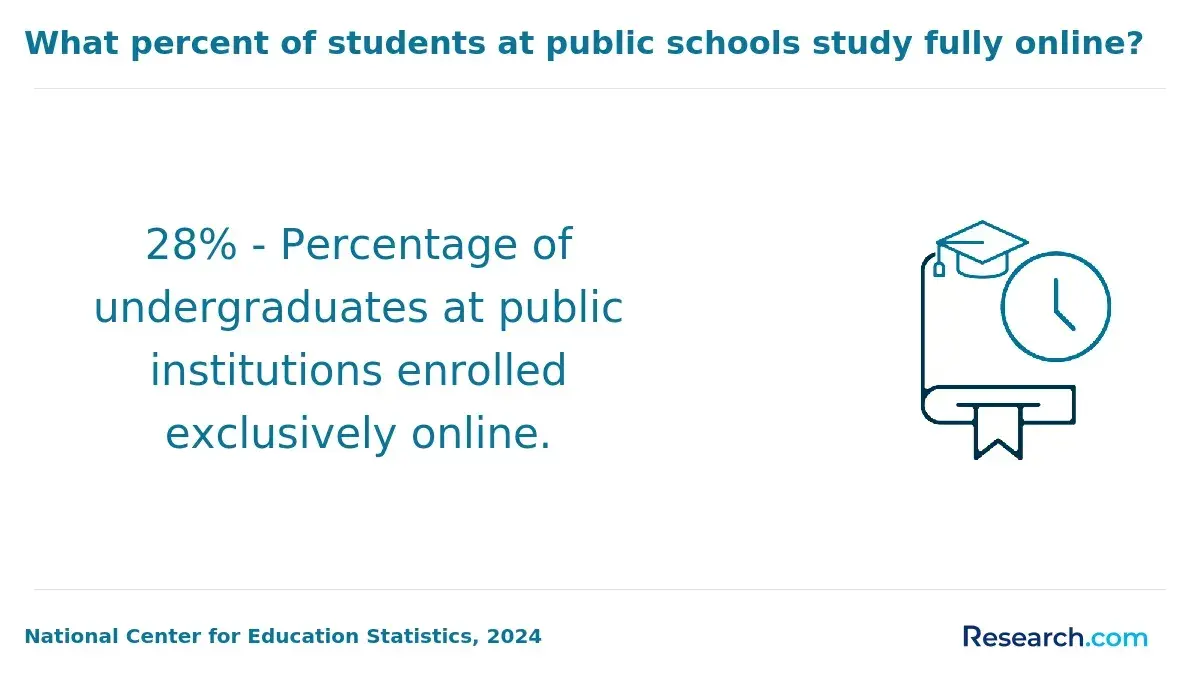
Online enrollment trends make these pathways more important for adults who need to study around work. The National Center for Education Statistics has continued to report large-scale participation in distance education in recent federal data releases, and universities have responded by expanding online degree-completion formats. For transfer students, that flexibility is valuable only if the required Physics courses are actually offered online when needed.
If you are comparing Physics with another career-focused online degree, use the same transfer-credit logic: remaining credits, field-placement or lab requirements, and term availability matter more than marketing language. Students weighing public-service or human-services pathways, for instance, may compare this planning approach with guides to online MSW programs affordable, where practicum requirements play a role similar to labs and sequencing.
A common mistake is assuming that fewer remaining credits always means faster graduation. In Physics, one missing prerequisite can block several advanced courses. Ask whether the school offers multiple start dates, whether upper-division Physics courses run every term, and whether required labs can be completed fully online, through kits, simulations, intensives, or approved local arrangements.
How Much Can Transfer Credits Reduce the Cost of an Online Physics Degree?
Transfer credits can reduce the cost of an online Physics degree by lowering the number of credits you must pay for at the new institution. The basic formula is simple: remaining tuition cost equals required remaining credits multiplied by the program's per-credit tuition, plus fees, books, lab materials, and any residency or technology charges.
College Board's 2024 Trends in College Pricing reported average published tuition and fees of $11,610 for in-state students at public four-year institutions for the 2024-25 academic year. That figure is not an online Physics price quote, but it shows why reducing even one year of coursework can be financially meaningful.
The table below shows how transfer credits change the number of credits you may need to fund. To estimate your actual savings, replace the remaining-credit count with the tuition rate and fee structure from each school you are considering.
| Scenario | Credits potentially avoided | Credits likely still paid to the new school | Cost implication |
| 60 credits accepted and applied | About half of a 120-credit degree | About 60 credits | May reduce total tuition substantially, but still resembles a two-year completion plan |
| 75 credits accepted and applied | More than half of the degree | About 45 credits | Can be efficient if remaining Physics courses are available without long prerequisite delays |
| 90 credits accepted and applied | About three-fourths of the degree | About 30 credits | Often the lowest-credit path, but residency and upper-division major rules can limit savings |
Cost comparisons should include more than tuition. Physics students may pay for lab kits, software, proctoring, textbooks, graphing or computational tools, and possible travel if a program requires short residencies or in-person lab experiences. Financial aid eligibility can also depend on taking enough credits in a term, so a very light final schedule may affect aid packaging.
To compare schools fairly, ask each program for a remaining-cost estimate after transfer evaluation. Include tuition, mandatory fees, lab costs, course materials, graduation fees, and any repeated prerequisites. A program with a lower per-credit rate can become more expensive if it accepts fewer applicable credits or requires extra terms.
Can Prior Learning, Military Training, Exams, or Certifications Count Toward an Online Physics Degree?
Some online Physics programs may award credit for prior learning, military training, standardized exams, or professional credentials, but these credits are most likely to apply to general education, electives, or lower-division requirements. They are less likely to replace advanced Physics major courses that require faculty-reviewed mathematical and laboratory preparation.
Before investing time or money in alternative credit, confirm the receiving school's rules. These credit sources can help, but only when they fit the degree audit.
- AP or IB credit: May satisfy introductory math, science, or general education requirements if scores meet the university's threshold.
- CLEP or DSST exams: May help with humanities, social science, math, or elective requirements, but Physics major courses may have stricter limits.
- Military training: May be reviewed using ACE recommendations and can be useful for technical electives or general education, depending on the institution.
- Portfolio or prior learning assessment: May document college-level learning from work or training, but it rarely substitutes for upper-division Physics theory without formal departmental approval.
- Industry certifications: May count at some adult-focused universities, though they usually support electives rather than the Physics core.
Alternative credit can be useful if you are short on general education or elective credits. It is less useful if your missing requirements are quantum mechanics, advanced laboratory, mathematical methods, or electricity and magnetism. In those cases, the fastest path is usually to take the required course rather than search for a substitute.
Also think ahead to graduate school. If your long-term goal includes a master's or doctorate in Physics, engineering, data science, or education, admissions committees may expect transcripted coursework in advanced math and physics. Other fields treat transfer credit differently; for example, students comparing graduate-level pathways can see how cost and transfer expectations vary in guides to affordable doctoral programs in leadership.
Do Older College Credits Expire When Transferring Into an Online Physics Degree?
Older credits do not always "expire," but they may be reviewed more carefully. General education courses such as English composition, history, or humanities often remain usable for many years. Physics, mathematics, computer programming, and laboratory science courses may face stricter review because content, software, instrumentation, and prerequisite expectations can change.
How old credits are treated usually depends on the course type. The table below gives a practical way to predict where you may face problems.
| Older credit type | Likelihood of transfer | What may happen in a Physics degree audit |
| English, humanities, and social science | Often more durable | May apply to general education if the institution accepts the credits |
| College algebra, precalculus, and calculus | Varies by school and program | May be accepted, but advisors may recommend review or retaking if preparation is weak |
| Introductory physics with lab | Depends on level and content | May apply if calculus-based and comparable; algebra-based courses may become electives |
| Upper-division Physics | Often requires department review | May require syllabi, textbook evidence, or replacement if content is outdated or not equivalent |
| Computer programming or computational science | More sensitive to age | May transfer as elective credit if language, tools, or outcomes no longer match requirements |
If your credits are more than several years old, ask whether the school has time limits for STEM prerequisites, major courses, or transfer into teacher-preparation pathways. Some universities do not publish a blanket expiration rule but still allow departments to decide whether old courses are current enough for the major.
The best strategy is to send syllabi and ask for course-by-course review early. If an older calculus or physics course transfers but you no longer feel prepared, retaking or refreshing the material may protect your GPA in advanced courses. Similar degree-planning questions appear in other fields as well; for example, students asking do you need a masters to be a librarian also need to separate old undergraduate credit from current professional entry requirements.
Other Things You Should Know About Physics
Yes, but an associate degree usually works best when it includes calculus, calculus-based physics, lab science, and general education. If the associate degree is mostly unrelated electives or algebra-based science, it may transfer but leave many Physics major requirements unfinished.
Sometimes. A BA in Physics may have fewer advanced lab or technical requirements than a BS, depending on the school. However, graduate Physics, engineering, or research-focused pathways may prefer the stronger math and laboratory preparation often found in BS programs.
Only if those credits are confirmed to apply to the online Physics degree. Completing calculus, general education, and calculus-based introductory physics can help, but taking extra unrelated electives may not reduce your remaining requirements.
Possibly, but schools may require a minimum transfer GPA and may require higher grades for major courses. Even if you are admitted, courses with low grades may not apply to Physics, math, lab, or prerequisite requirements.
References
- Top Online Schools That Accept Transfer Credits https://www.edvisorly.com/student-guides/online-schools-that-accept-transfer-credits