2027 Fastest Accredited Online Community Health Programs: Accelerated Degrees and Completion Times

Co-Founder and Chief Data Scientist
Choosing the fastest online community health degree is really a timing decision: how quickly can you graduate without choosing the wrong accreditation, workload, or fieldwork path? The Bureau of Labor Statistics projects health education specialist and community health worker employment to grow 7% from 2024 to 2034, making speed relevant for career changers and working adults.
This guide explains accredited accelerated programs, who they fit, what "fast" actually means, and how transfer credits, prerequisites, course load, start dates, and internship requirements can change your real completion time.
Key Things You Should Know
- The fastest realistic route is usually a bachelor's-completion program: students entering with an associate degree or close to 90 transferable semester credits may finish an accredited online community health or public health bachelor's degree in about 12 to 24 months.
- Accelerated online formats commonly use 5-week, 7.5-week, 8-week, or 10-week courses; they shorten the calendar but usually do not reduce the amount of reading, writing, projects, or field-based work required.
- Many bachelor's programs require 120 semester credits and may accept up to 90 transfer credits, while quarter-credit programs often use 180 quarter credits and may accept up to 75% of the degree from prior college work.
Which Colleges Offer the Fastest Accredited Online Community Health Programs?
The fastest accredited online community health programs are usually not "four-year degrees completed in one year." They are more often online bachelor's-completion programs, public health programs with community health coursework, or health promotion degrees that accept substantial transfer credit and run courses in shorter terms.
The table below compares examples of institutionally accredited U.S. online programs that may serve students interested in community health, health promotion, public health practice, or population health:
| College or university | Online program fit | Acceleration features | Transfer-credit opportunity | Fastest practical path for many students |
| Arizona State University Online | BS in Community Health | 7.5-week online classes and multiple start dates | Transfer evaluation required; lower-division limits may apply | Fastest for students with substantial general education and prerequisite credit already completed |
| Southern New Hampshire University | BS in Public Health with community and population health coursework | 8-week undergraduate terms and year-round online scheduling | May accept up to 90 transfer credits toward a 120-credit bachelor's degree | Often fastest for students entering with an associate degree or near-junior standing |
| American Public University | BS in Public Health | 8-week online courses with frequent monthly starts | May accept up to 90 transfer credits, subject to degree fit and residency rules | Good fit for adults who need frequent starts and flexible pacing |
| Purdue Global | BS in Health and Wellness with population health relevance | 10-week terms and online delivery | Quarter-credit structure; transfer credit may cover a large share of the degree when approved | Potentially fast for students with prior college, military, professional, or health-related learning |
| University of Arizona Global Campus | BA in Health and Human Services with community-facing health service relevance | Short online course terms and continuous scheduling | Transfer credit policies may reduce the remaining bachelor's requirements | Best considered when career goals include health services, outreach, case coordination, or nonprofit health work |
When comparing these options, look beyond the program title. A "community health" degree may be labeled public health, health promotion, health and wellness, or health services, and the best match depends on whether you want outreach work, program planning, epidemiology preparation, health education, nonprofit leadership, or graduate public health study.
How Long Does It Take to Complete an Accredited Online Community Health Degree?
Completion time means the total calendar time from enrollment to graduation after transfer evaluation, not the length shown in a marketing headline. For online community health degrees, the biggest variables are how many credits you bring in, whether courses are offered every term, and whether the program includes a practicum, internship, capstone, or required sequence.
The table below summarizes realistic timeline ranges by starting point. It is useful because the same "accelerated" program can take one student one year and another student four years depending on prior credits and enrollment intensity:
| Starting point | Typical credits remaining | Common online pace | Realistic completion range | What can slow it down |
| No prior college credit | About 120 semester credits | Full-time, year-round study | About 3 to 4 years | Math, science, statistics, writing, and general education sequencing |
| Some college credit | About 60 to 90 credits remaining | Full-time or heavy part-time | About 2 to 3 years | Credits that transfer as electives instead of major requirements |
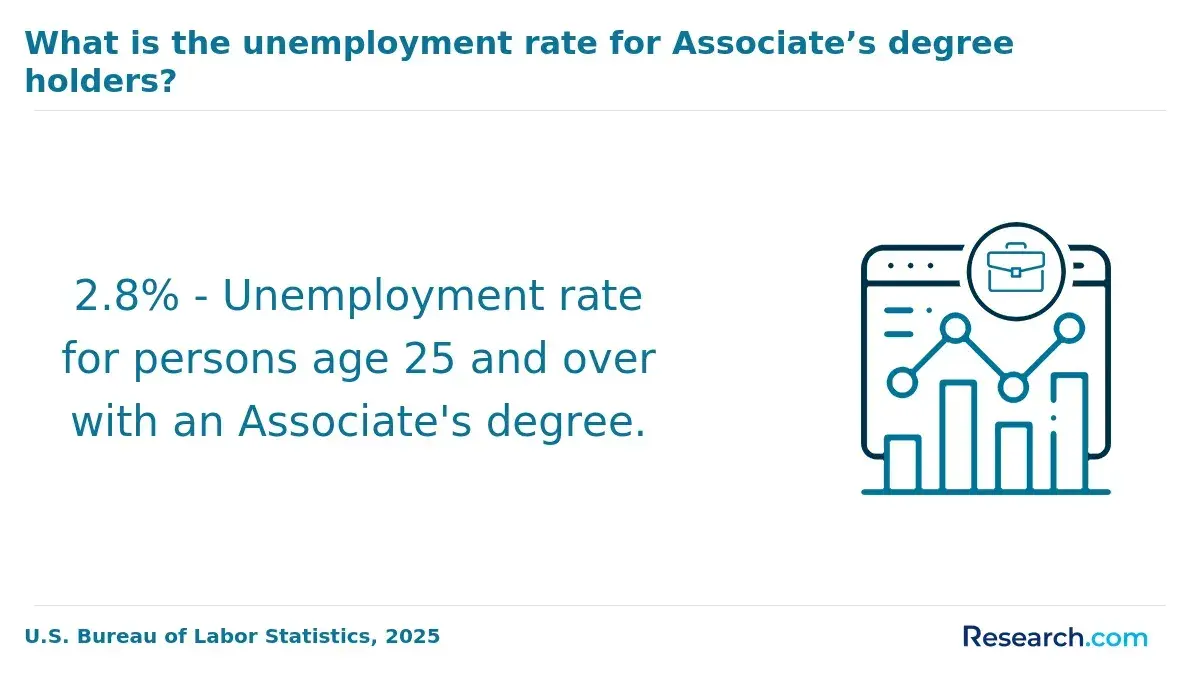
| Associate degree completed | About 30 to 60 credits remaining | Full-time online bachelor's completion | About 12 to 24 months | Missing prerequisites, residency rules, or upper-division course availability |
| Near maximum transfer credit | About 30 credits remaining | Full-time, year-round, accelerated terms | About 12 months when course sequencing allows | Capstone timing, internship placement, or limits on credits per term |
| Master's-level community or public health pathway | Varies by degree | Part-time or full-time online graduate study | Often 12 to 24 months for accelerated formats | Field experience, thesis, practicum, or concentration requirements |
A shorter course term does not automatically mean a shorter degree. A student taking one 8-week course at a time may move more slowly than a student taking two 16-week courses per term, so compare total credits completed per year rather than course length alone.
How Do Accelerated and Competency-Based Online Community Health Programs Work?
Accelerated online community health programs shorten the academic calendar through compressed terms, year-round enrollment, frequent start dates, transfer-friendly policies, or self-paced coursework. Competency-based programs work differently: instead of moving only by weekly deadlines, students progress by demonstrating mastery of required outcomes.
These formats can save time, but they place more responsibility on the student. Before choosing a format, compare how each model affects your weekly workload, support needs, and ability to keep moving when work or family responsibilities change:
| Format | How it works | Why it may be faster | Best fit | Main trade-off |
| Accelerated 5-week to 8-week courses | Courses cover a full syllabus in a compressed term | Students can complete more courses across the year | Organized learners who can study consistently each week | Missed assignments can compound quickly |
| Year-round enrollment | Students take courses in fall, spring, summer, and sometimes additional sessions | There are fewer long breaks between requirements | Students trying to finish within 12 to 24 months after transfer | Less downtime and higher risk of burnout |
| Competency-based education | Students advance by proving mastery of competencies | Prior knowledge may help students move quickly through familiar material | Self-directed adults with work or military experience | Requires discipline and may not suit students who need weekly structure |
| Bachelor's-completion model | The program focuses on upper-division major coursework after general education is done | Students avoid retaking lower-division credits already earned | Associate degree holders and transfer students | Not fast for students starting from zero credits |
If you are comparing community health with broader accelerated options, a guide to fast track career programs can help you understand how short terms, credit transfer, and career-aligned curricula work across fields.
What Accreditation Should an Online Community Health Program Have?
Accreditation is the first filter for any fast online community health degree. A program that is quick but not properly accredited can create problems with transfer credit, graduate school admission, employer screening, financial aid, and professional certification eligibility.
There are two accreditation levels to understand. Institutional accreditation applies to the college or university as a whole, while programmatic accreditation applies to a specific academic program or school:
- Institutional accreditation: Look for a college accredited by a recognized U.S. institutional accreditor, such as HLC, NECHE, SACSCOC, MSCHE, WSCUC, or NWCCU.
- Programmatic public health accreditation: For public health degrees, Council on Education for Public Health accreditation can matter for students planning graduate public health study or certain public health roles.
- Health education alignment: Students interested in Certified Health Education Specialist eligibility should check whether the curriculum covers health education competencies, not just general health services topics.
- State and employer requirements: Community health worker certification is state-specific where it exists, and many roles do not require the same license structure as nursing, counseling, or social work.
Programmatic accreditation is especially important when comparing health-adjacent online degrees. For example, students more interested in medical data, coding, privacy, and records may want to compare a HIM degree online, where program accreditation and certification pathways differ from community health.
How Can Transfer Credits and Prior Learning Shorten an Online Community Health Degree?
Transfer credit is often the single largest factor in finishing an online community health degree quickly. A school that accepts up to 90 credits can still require extra time if your previous courses do not satisfy the major, prerequisite, upper-division, or residency requirements.
The table below shows how transfer credit can change the timeline. It is important because "credits accepted" and "credits applied to the degree" are not always the same thing:
| Credit situation | How it may shorten the degree | What to verify before enrolling |
| Completed associate degree | May satisfy many lower-division and general education requirements | Whether the associate degree transfers as a block or course by course |
| Prior public health, biology, sociology, psychology, or statistics courses | May reduce prerequisite or major-support coursework | Minimum grade requirements and course age limits |
| Military, professional, or workplace training | May qualify for prior learning assessment or elective credit | Whether the school uses ACE, portfolio review, exams, or internal evaluation |
| Maximum transfer credit near 90 semester credits | May leave only upper-division major, residency, and capstone requirements | Whether required courses are offered often enough to finish in one year |
To use transfer credit strategically, ask for an official or written preliminary degree plan before committing. Then focus on the remaining requirements, not the number of credits the school says it can accept in theory:
- Request a transcript evaluation from every school on your shortlist.
- Ask which transferred courses satisfy general education, prerequisites, major courses, electives, and upper-division requirements.
- Confirm the residency requirement, meaning the minimum number of credits you must complete at that institution.
- Ask whether prior learning, standardized exams, professional training, or military credit can reduce elective requirements.
- Check whether capstone, practicum, or internship courses are offered every term or only during specific sessions.
What Are the Admission Requirements and Start Dates for Accelerated Online Community Health Programs?
Accelerated online community health programs often use flexible admissions calendars, but flexible starts do not mean automatic admission or immediate progress into major courses. Students may still need transcripts, minimum GPA, placement requirements, English composition, statistics, biology, or introductory health coursework before upper-division community health classes.
Admissions requirements vary by school, but accelerated programs commonly ask for documentation that allows the college to place you correctly and determine whether you can handle the pace.
- Official transcripts from all colleges previously attended.
- High school transcript or GED documentation for students with limited college credit.
- Minimum GPA, often with different thresholds for freshmen and transfer students.
- Transfer-credit review before registration into upper-division courses.
- Prerequisites in writing, math, statistics, biology, psychology, sociology, or introductory public health.
- Technology access, including reliable internet, webcam capability when required, and learning management system readiness.
- Possible background check or site approval if the degree includes community placement, practicum, or internship work.
Start dates can matter as much as admission speed. Monthly starts are convenient, but if a required capstone or practicum is offered only a few times per year, a student can still lose a term waiting for the right course sequence.
How Much Does a Fast Online Community Health Degree Cost, and Is Financial Aid Available?
A fast online community health degree is not automatically cheaper. It may reduce living expenses or time away from work, but accelerated pacing can also increase short-term tuition bills because you are taking more credits in fewer months.
Use the following cost items to compare programs on total price, not just speed. Federal Student Aid set the maximum Federal Pell Grant at $7,395 for the 2024-25 award year, which can meaningfully reduce costs for eligible undergraduates but may not cover the full tuition and fee burden:
- Tuition structure to compare: Per-credit tuition, per-course tuition, flat-rate term tuition, or competency-based subscription tuition
- Common additional costs to ask about: Technology fees, course materials, background checks, practicum expenses, graduation fees, and transcript fees
- Potential savings source: Accepted transfer credit, prior learning credit, employer tuition assistance, military benefits, scholarships, and year-round financial aid planning
Moreover, Maximum Federal Pell Grant for eligible undergraduates in the 2024-25 award year is $7,395. Financial aid is generally available only when the school is eligible for federal student aid and the student qualifies.
If you are comparing healthcare-related online programs by price, resources on cheap nursing programs can provide a useful benchmark for how tuition, fees, and clinical requirements differ across health fields.
Can You Work Full Time While Completing an Accelerated Online Community Health Degree?
You can work full time while completing an accelerated online community health degree, but the realistic pace may be slower than the school's shortest advertised timeline. The key question is not whether the program is online; it is whether you can consistently complete readings, discussions, writing assignments, group projects, exams, and any fieldwork on a compressed schedule.
Use these workload signals to decide whether to attempt the fastest path or choose a steadier part-time plan. A slower plan can be the better decision if it protects your GPA, financial aid standing, health, and job performance:
- A one-course-at-a-time accelerated plan may be manageable for full-time workers but may extend the calendar compared with taking two courses per term.
- Two accelerated courses at once can move you faster but may feel like a full-time academic load during heavy writing or research weeks.
- Fieldwork, practicum, or community placement requirements may require daytime availability, even in an online program.
- Students with unpredictable shifts should prioritize asynchronous courses, multiple start dates, and flexible assignment windows.
- Students planning graduate healthcare education should protect grades and prerequisites rather than choosing the fastest possible undergraduate schedule.
Workload trade-offs are not unique to community health. Students comparing advanced healthcare paths, such as the shortest DNP program online, face a similar issue: shorter calendars usually require tighter weekly execution, not less academic work.
Are Accelerated Online Community Health Degrees Respected by Employers and Graduate Schools?
Accredited online community health degrees can be respected by employers and graduate schools when the institution is properly accredited, the curriculum matches the role, and the student can show applied skills.
Employers generally care less about whether the classes were online and more about whether the applicant can plan programs, communicate with communities, analyze health needs, evaluate interventions, and work ethically with diverse populations.
Career outcomes vary because community health is a broad field. Graduates may pursue roles such as community health worker, health education specialist, outreach coordinator, prevention program assistant, wellness coordinator, patient navigator, nonprofit program associate, or public health program coordinator.
BLS May 2024 wage tables report these occupations separately, so use role-specific salary data rather than assuming one degree leads to one salary level.
Graduate schools may accept an online community health or public health degree if it comes from an accredited institution and includes the prerequisites they require. If your long-term goal is clinical practice, compare degree paths carefully; a community health degree is different from nursing tracks such as a post masters FNP certification, which has separate licensure, clinical, and certification requirements.
How Should You Compare the Fastest Accredited Online Community Health Programs?
The best fast online community health program is the one that gets you to your goal quickly without creating accreditation, transfer, cost, workload, or career-fit problems. Start with your target role, then work backward to the degree title, curriculum, fieldwork expectations, and completion timeline.
The table below organizes the main comparison factors. It helps you separate genuine acceleration from marketing language that may not apply to your transcript or schedule:
| Comparison factor | What to look for | Why it affects speed |
| Accreditation | Recognized institutional accreditation and, when relevant, CEPH-aligned public health preparation | Unaccredited credits may not transfer and may limit graduate school options |
| Transfer policy | High transfer cap, clear residency requirement, and written degree audit | More applicable transfer credit usually means fewer remaining terms |
| Course length | 5-week, 7.5-week, 8-week, or 10-week courses | Shorter terms can increase yearly credit completion when courses are available |
| Course availability | Required courses offered frequently and online | Infrequent capstone or prerequisite courses can delay graduation |
| Fieldwork | Clear practicum, internship, or project requirements | Site placement and approval can extend the timeline |
| Cost after transfer | Total remaining credits multiplied by tuition and fees | The cheapest per-credit option may not be cheapest if fewer credits transfer |
| Career alignment | Courses in health education, program planning, epidemiology, evaluation, communication, and community engagement | A fast degree is less useful if it does not match employer or graduate-school expectations |
Before enrolling, watch for common mistakes that can make a "fast" degree slower, more expensive, or less useful than expected. These are the red flags most likely to affect real graduation speed:
- Assuming the advertised completion time applies even if you have few or no transfer credits.
- Choosing a program before verifying institutional accreditation.
- Ignoring whether public health or health education programmatic accreditation matters for your next step.
- Confusing short courses with light courses.
- Failing to ask whether all required courses are available every term.
- Assuming every previous college credit will apply to the major.
- Overlooking practicum, internship, background check, or site-placement requirements.
- Picking the fastest schedule even if it risks poor grades, withdrawal, or loss of aid eligibility.
A strong final shortlist should answer practical questions in writing. Ask admissions or advising teams for the details below before you submit an enrollment deposit:
- How many of my credits will apply to the degree, not just transfer to the university?
- What is the minimum number of credits I must complete at your school?
- Can I finish in 12, 18, or 24 months based on my actual transcript?
- Which required courses are offered every term, and which are offered less often?
- Does the program include a practicum, internship, capstone, or community project?
- What is the maximum course load allowed in accelerated terms?
- Will this program prepare me for CHES eligibility, graduate public health study, or the specific jobs I want?
Other Things You Should Know About Community Health
Not exactly. Public health is the broader field focused on population health, prevention, policy, epidemiology, and systems. Community health is often more applied and local, focusing on outreach, education, program delivery, and health needs in specific communities.
It depends on the role and state. Some community health worker roles use state-recognized certificates, while health education roles may prefer or require CHES eligibility. Check job postings in your target state before choosing electives or fieldwork.
Many universities do not list "online" on the diploma, but policies vary. Employers can still verify the institution and degree, so accreditation, curriculum quality, internship experience, and skills are more important than the delivery format.
Yes, if the courses you need are offered in summer and your financial aid plan supports year-round enrollment. Summer terms are most useful when they help you complete prerequisites, electives, or required major courses without waiting for the next fall or spring term.
References
- Pre-Professional Health Experience Guide | PublicHealthOnline.org https://www.publichealthonline.org/pre-professional-experience/
- What does a nursing assistant do? https://apexlearning.org.uk/online-health-and-social-care-courses-are-they-recognised-by-employers/
- Health Care Accreditation, HEDIS® Measures & Quality Improvement - NCQA https://www.ncqa.org/
- Online Bachelor’s Degree in Community Health and Wellness https://www.monroeu.edu/academics/undergraduate-programs/school-allied-health-professions/online-bachelors-degree-community
- Your Guide to Online Public Health Degrees with Financial Aid https://www.edumed.org/online-schools/public-health-degrees/financial-aid/
- 15 Best Online Bachelor's in Public Health - Healthcare Administration Degree Programs https://www.healthcare-administration-degree.net/best/online-bachelors-in-public-health/
- Learn public health | edX https://www.edx.org/learn/public-health
- Explore Top Online MPH Programs (No GRE Requirement) https://masterspublichealth.com/online-mph-programs-no-gre/
- Accreditation of Online Courses | European Association for Higher Education Advancement https://www.eahea.org/international-online-course-accreditation.html