2027 Evaluating a Financial Assistance Outreach Program

Co-Founder and Chief Data Scientist
A hospital can offer financial assistance and still fail to reach patients who need it. Evaluating outreach means examining whether people learn about help, can complete an application, receive a timely decision, and obtain care without avoidable financial barriers.
This guide is for healthcare staff, prospective administrators, and students considering work in patient financial assistance. It explains how to assess an outreach program, which education paths fit different roles, and when a healthcare administration degree is worth the investment.
Key Things You Should Know
- Judge outreach by the full patient journey: awareness, screening, completed applications, decisions, and access to care - not application volume alone.
- Entry-level outreach work may not require a graduate degree; management roles generally call for relevant experience alongside education.
- The Bureau of Labor Statistics reports a $126,520 median annual wage for all management occupations in May 2025, not a salary specific to financial assistance outreach.
What Is a Financial Assistance Outreach Program in Healthcare Administration?
A financial assistance outreach program helps patients learn about and apply for available ways to reduce healthcare costs. In a hospital, that may include the hospital's financial assistance policy, often called charity care, and referrals to insurance enrollment or other community resources. Outreach can happen before a visit, during registration, after discharge, or when a patient receives a bill.
The work is broader than handing out applications. Staff must explain policies in accessible language, connect patients with qualified help, coordinate with billing teams, and protect sensitive information. Administrators set procedures, train staff, monitor results, and examine whether eligible patients can realistically use the assistance offered.
An outreach program is a service, not a degree. Someone interested in managing that service might pursue one of the accredited U.S. universities offering healthcare administration bachelor's degrees, but the appropriate credential depends on the job and the applicant's existing experience.
How Does a Financial Assistance Outreach Program Support Healthcare Access?
Effective outreach can make a financial assistance policy usable for patients who might otherwise miss it, misunderstand it, or abandon an application. It cannot, by itself, eliminate every cost or establish that a patient received medically necessary care. An evaluation should therefore track both the application process and what happens afterward.
The measures below cover different stages of the patient journey. Compare them over time using consistent definitions, and examine differences across patient groups when data collection and privacy rules permit.
| Evaluation measure | What it helps reveal | Important limitation |
| Patients reached and screened | Whether outreach contacts people who may need help | Contacts alone do not show eligibility or understanding |
| Applications completed | Whether patients can navigate documentation and submission | A low completion rate may reflect unclear instructions or burdensome requests |
| Decision time and outcomes | Whether eligible patients receive timely determinations | Approval rates need context about eligibility and referral practices |
| Care access and billing follow-up | Whether assistance is associated with fewer unresolved financial barriers | Other changes may also affect care use or bills |
For example, counting only approved applications could reward a program for approaching patients who are easiest to enroll while missing harder-to-reach communities. Review translated materials, referral sources, incomplete applications, and patient feedback alongside the numbers. Health information specialists may support reliable reporting; students considering that distinct data-focused path can explore online CAHIIM-accredited programs for health information careers.
What Education Is Required for Financial Assistance Outreach Careers?
There is no single degree required for every financial assistance outreach job. Employers may hire patient financial counselors or outreach staff with a high school diploma, an associate degree, or a bachelor's degree, depending on the duties and required experience. Familiarity with billing, insurance, patient communication, and local assistance policies can matter as much as a degree for frontline work.
A bachelor's degree in healthcare administration, public health, social work, or a related field can help someone qualify for broader coordination responsibilities. Supervisory and program leadership positions may favor a bachelor's or graduate degree plus demonstrated experience improving workflows, managing staff, and interpreting performance data. A degree does not replace knowledge of a particular hospital's policies.
Current employees should compare openings at their target employers before enrolling. If a bachelor's degree is the next step, planning when to begin a healthcare administration bachelor's may help them coordinate study with work and any employer education assistance.
The best degree depends on whether the goal is direct patient support, program management, or research and executive leadership. Compare curricula and fieldwork rather than assuming that the highest degree is the best preparation for outreach.
| Education path | Potential fit for outreach work | Limitation to check |
| Associate or bachelor's degree in healthcare administration | Patient services, operations, and a foundation for coordination roles | May offer limited practice with financial assistance policies |
| Master of healthcare administration or related specialized master's | Program design, health policy, budgeting, and organizational leadership | May be more education than a frontline position requires |
| MBA with relevant healthcare coursework | Broad management preparation for someone moving toward operational leadership | Healthcare coursework may not cover charity care or patient navigation in depth |
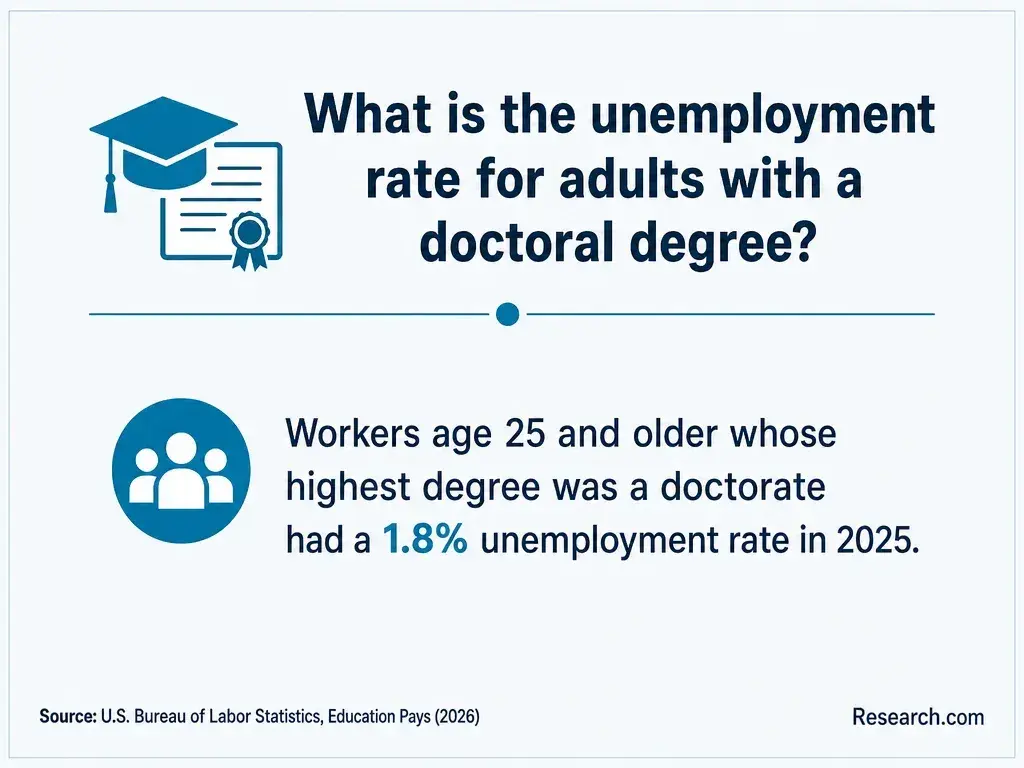
| Doctoral study | Research, advanced policy analysis, or certain senior leadership goals | Usually a poor first step for entering outreach work |
Doctoral programs differ in purpose and scheduling; applicants pursuing research or senior leadership can compare doctoral degree formats and time requirements in healthcare administration. For most people seeking a first outreach role, relevant work experience or a shorter credential is a more direct investment.
Workplace outreach programs typically train staff on the employer's financial assistance policy: who may qualify, how applications are documented, when decisions are made, and how to explain next steps without promising approval. Training should also cover respectful communication, language access, privacy, billing escalation, and referrals outside the organization's own assistance program.
Degree programs teach a different, broader set of skills. Healthcare administration students may study healthcare finance, operations, policy, ethics, quality improvement, and data analysis. An MBA adds a general management core; a healthcare elective or concentration does not automatically provide hands-on training in a hospital's application process. Ask whether a program offers projects or placements where students can analyze patient access workflows with appropriate privacy safeguards.
Professionals who already have a bachelor's degree and need management skills rather than another undergraduate degree can compare shorter graduate pathways in healthcare management. Those aiming to master a specific employer's outreach procedures may benefit more immediately from supervised work and policy training.
Online study can prepare students for outreach careers when it combines relevant coursework with opportunities to practice communication, workflow analysis, and problem-solving. Delivery mode alone says little about effectiveness. A program with case studies but no patient-facing experience may require students to build that experience through employment, a practicum, or a suitable project.
Before enrolling, verify whether classes are asynchronous, whether live meetings or group projects have fixed times, and whether field placements can be completed near home. Also ask how the school supports online students seeking healthcare placements and whether career services serve their intended region. A faster schedule can reduce time in school but increase the workload in each term; compare accelerated healthcare administration degrees against your available study time, not speed alone.
Requirements vary by institution and degree level. Bachelor's applicants commonly need evidence of secondary-school completion or prior college work; graduate applicants generally need a completed bachelor's degree. Schools may also request transcripts, a statement of purpose, recommendations, a résumé, or prerequisite coursework. Do not assume a specific GPA, test policy, or work-experience threshold without checking the program.
Applicants with patient services, billing, or community outreach experience can use their application to show how that work connects to their goals. Before applying, confirm transfer-credit rules, any practicum requirements, and whether the program admits students on the schedule they need. A compressed option such as graduate healthcare administration study on a 12-month timetable deserves particular scrutiny for admission prerequisites and required course load.
Cost and completion time depend on degree level, required credits, transfer credits, enrollment pace, and school-specific fees. Compare the total amount needed to finish, not just an advertised tuition rate. Include mandatory fees, books or software, placement-related expenses, and any travel required for campus visits. Part-time study may make the schedule manageable while extending the period in which expenses arise.
Ask each school for a written estimate based on your transcript and intended course load. Then subtract only aid or employer reimbursement you are reasonably eligible to receive, and consider whether borrowing would add financing costs. Budget-friendly online health administration degrees are worth comparing, but the lowest advertised tuition is not necessarily the lowest cost for a student with different transfer-credit or residency requirements.
Possible paths include patient financial counselor, eligibility or enrollment specialist, outreach coordinator, patient access supervisor, and financial assistance program manager. Frontline roles emphasize explanations, applications, referrals, and follow-up; managers add staffing, policy implementation, partnerships, and performance review. Progression depends on an employer's structure and the worker's results, not a degree alone.
Salary data require care because "financial assistance outreach" is not one standardized occupation. The Bureau of Labor Statistics reports a $126,520 median annual wage for management occupations in May 2025. That broad US figure includes many jobs unrelated to healthcare outreach and should not be used as an expected salary for a counselor, coordinator, or new graduate. Compare pay ranges for the exact job title and location instead.
An experienced outreach worker seeking management responsibilities may benefit from broader business training. Before choosing an MBA, compare the curriculum, cost, and online healthcare management MBA program duration with a specialized healthcare administration degree or employer training. For someone seeking a first patient-facing role, work experience may offer a more direct route.
How Can Students Choose an Accredited Healthcare Administration Program?
Start by verifying that the institution holds recognized institutional accreditation. Then examine any programmatic accreditation relevant to the specific degree, rather than assuming institutional and specialized accreditation are the same. Accreditation matters, but it does not establish that a curriculum covers financial assistance outreach or that an employer will accept a particular credential.
Compare course descriptions for patient access, healthcare finance, policy, and quality improvement; ask how students obtain practical experience; and request total-cost and completion estimates in writing. Speak with potential employers about the qualifications they seek. If considering a doctorate for a later leadership or research goal, weigh accreditation and curriculum alongside healthcare administration doctorate program expenses rather than assuming an advanced credential will improve outreach career prospects enough to justify its cost.
Other Things You Should Know About Healthcare Administration
Requirements vary by hospital policy. Patients should request the current application and ask which income, household, or other documents are needed - and what alternatives are accepted if a document is unavailable.
Patients can ask for the reason in writing and check the hospital's policy for reconsideration or appeal procedures. A denial may also reflect a missing document that can be supplied.
Not necessarily. It generally applies under a particular hospital's policy and may not cover services billed by separate providers. Patients should ask exactly which charges are included.
No. Patients should seek emergency care when needed and ask about financial assistance afterward. Hospitals' emergency-care obligations and financial assistance application procedures are separate matters.
- Funding Opportunity; Street Outreach Program | Federal Register https://www.federalregister.gov/documents/2010/06/22/2010-14798/funding-opportunity-street-outreach-program
- CDC Approach to Program Evaluation https://www.cdc.gov/evaluation/php/about/index.html
- Title VI, Prohibition Against National Origin Discrimination Affecting Limited English Proficient Persons https://www.archives.gov/eeo/laws/title-vi.html
- Overlapping Eligibility and Enrollment: Human Services and Health Programs Under the Affordable Care Act | ASPE https://www.aspe.hhs.gov/reports/overlapping-eligibility-enrollment-human-services-health-programs-under-affordable-care-act-0
- Developing Goals and Measurable Objectives | samhsa.gov https://www.samhsa.gov/grants/how-to-apply/forms-and-resources/developing-goals-measurable-objectives
- Community Outreach and Engagement Strategies from... - PMC https://pmc.ncbi.nlm.nih.gov/articles/PMC4033519/
- Outreach and Enrollment Definitions | acf.gov https://liheapch.acf.gov/Directors/outreach/definitions.htm
- FERPA | Protecting Student Privacy - Department of Education https://studentprivacy.ed.gov/ferpa
- Strategic Outreach | U.S. Department of the Treasury https://home.treasury.gov/policy-issues/coronavirus/assistance-for-state-local-and-tribal-governments/homeowner-assistance-fund/promising-practices/strategic-outreach
- A Qualitative Study to Inform Implementation Strategies | sagepub.com https://journals.sagepub.com/doi/10.1177/15248399251362163