2027 Evaluating a Clinical Documentation Improvement Nurse Job: Workload, Performance Measures, Schedule, and Support
Audited and Verified:
Our Editorial and Data Verification Process
Research.com uses government datasets, official education statistics and primary institutional information to support its career and degree guides. Our review process checks factual accuracy, occupational definitions, source dates and the requirements associated with the credentials discussed.
How This Article Was Fact-Checked
Our editorial team verifies salary estimates, employment projections, education requirements and program information against original data providers and official organizations. Salary figures are checked against the relevant occupational definitions and reporting periods. Information about licensure, accreditation and required in-person training is reviewed separately.
Fact-checked and verified on:

Co-Founder and Chief Data Scientist
A clinical documentation improvement (CDI) job can offer an experienced RN a move away from bedside care, but a remote schedule or manageable-sounding caseload does not tell you what the workday will feel like. Review assignments, physician response expectations, discharge deadlines, and access to experienced colleagues can make two CDI offers very different.
This guide explains what CDI nurses do and gives you concrete questions to compare workload, performance measures, schedule, and support before accepting a role.
Key Things You Should Know
- Ask for three separate workload figures: initial reviews, follow-up reviews, and the active case census. A single "cases per day" target can conceal substantial rework.
- Assess quality alongside volume: appropriate, nonleading queries and accurate documentation matter more than a high query count or response rate alone.
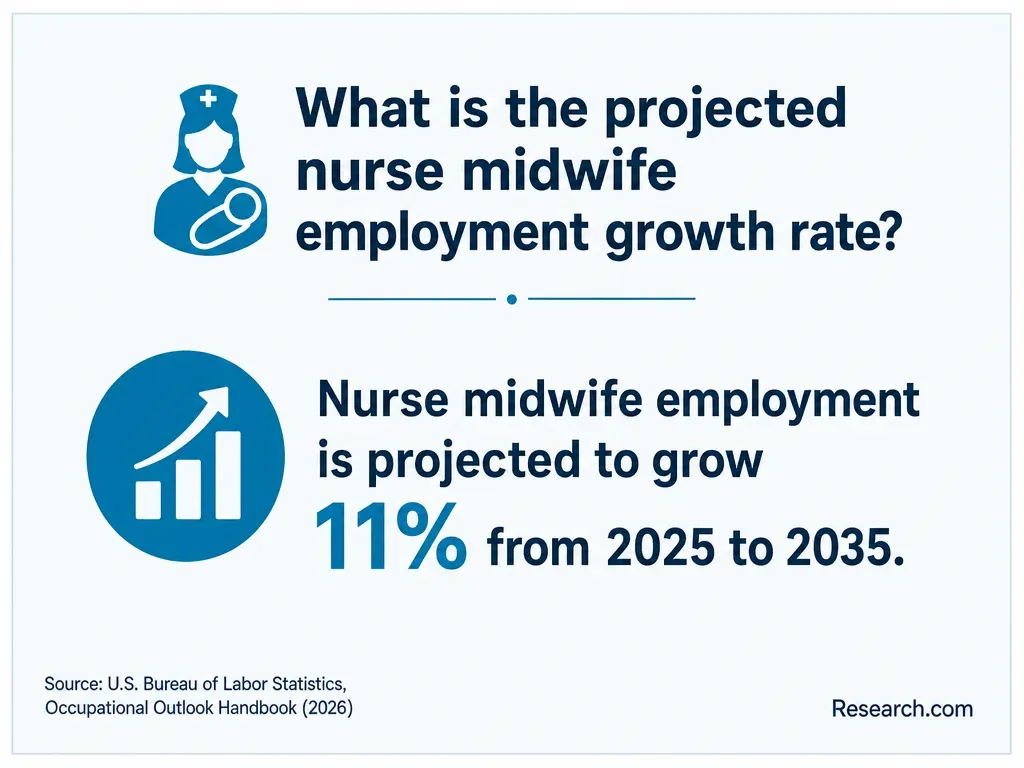
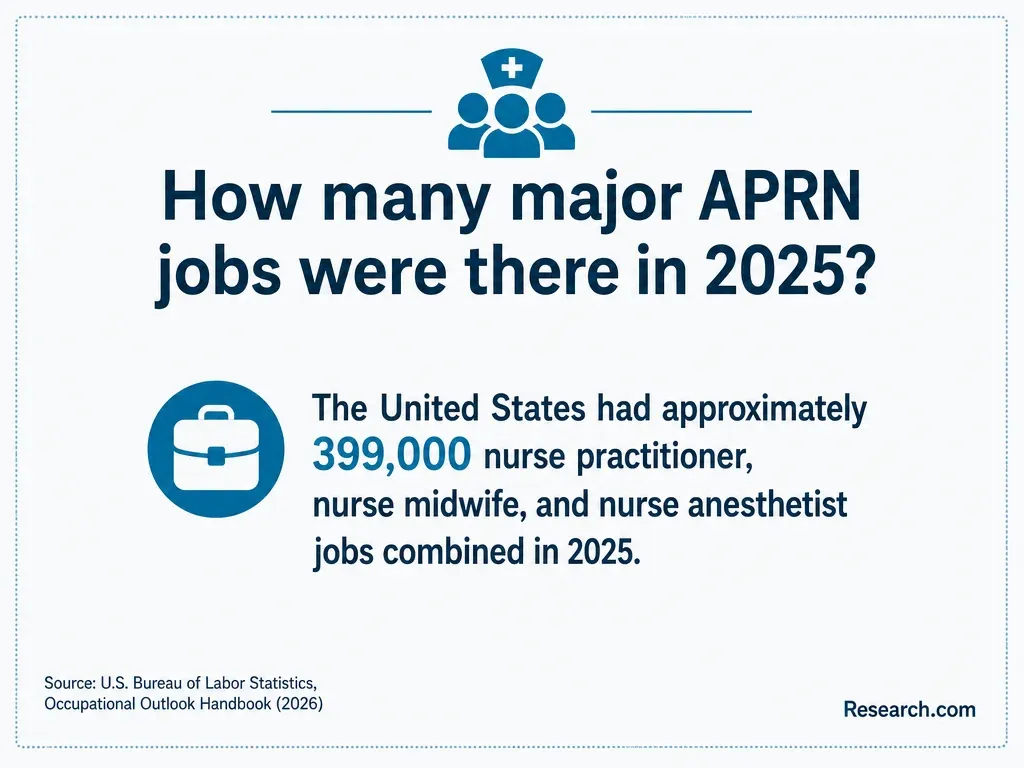
- There is no separate federal wage or employment-growth series for CDI nurses. Compare the actual offer, benefits, and advancement path rather than treating RN-wide statistics as CDI pay.
What does a clinical documentation improvement nurse do?
A CDI nurse reviews health records for clinical evidence that the documented diagnoses and conditions may need clarification. In a hospital, this often means reviewing records while patients are still admitted, identifying gaps or inconsistencies, and sending compliant queries to the treating provider. The aim is an accurate, complete record that supports patient care, quality reporting, and appropriate coding - not a particular diagnosis or payment result.
For example, a nurse might notice clinical indicators that warrant clarification of a condition's status or specificity. The provider decides what to document; the CDI nurse does not independently diagnose the patient or change the provider's note. The role also involves discussing documentation with clinicians and working with coding, quality, and utilization-review teams.
Some jobs focus on inpatient concurrent review; others include outpatient, retrospective, or denial-related work. Confirm which functions the posting actually assigns. Because spotting subtle clinical indicators requires bedside judgment, this specialty is typically reserved for experienced RNs rather than those currently researching nursing program options for first-time nursing students to enter the profession.
What education and nursing license does a CDI nurse need?
Many CDI nurse positions seek an active RN license and substantial clinical experience, often in acute care. Employers may accept an ADN or BSN, prefer a BSN, or specify particular specialties. Strong assessment, pathophysiology, and record-review skills are more directly useful than a graduate degree for most entry-level CDI jobs. Some CDI teams also hire qualified professionals from coding or other clinical backgrounds, so an RN license is not universal to every CDI position.
Check the exact posting for license status, state requirements, experience, and any coding knowledge expected. A nurse working remotely should not assume that the location of the employer or a multistate license settles every practice-authorization question; the employer must clarify the duties and jurisdictions involved. An MSN, DNP, or nurse practitioner qualification—even one earned through online FNP programs with preceptor support—does not replace CDI-specific training and is generally unnecessary solely to enter this role.
How do you become a clinical documentation improvement nurse?
For an experienced RN, the most direct route is usually to build on clinical experience, learn the fundamentals of documentation and coding, and apply for a position with structured onboarding. Experience interpreting complex records and communicating with physicians transfers well; knowing billing codes alone does not establish clinical review competence. While some nurses explore affordable nursing master's study for BSN graduates to advance into broader healthcare informatics or administrative leadership, an entry-level CDI transition relies primarily on acute-care clinical judgment and targeted documentation training.
Before applying, use job descriptions and conversations with CDI staff to identify your gaps. A practical sequence is:
- Compare your experience with postings for the setting you want, distinguishing inpatient from outpatient and concurrent from retrospective work.
- Learn how provider queries, diagnosis specificity, coding collaboration, and documentation quality fit together; use employer-approved examples rather than patient records from your current job.
- Ask how new hires progress from observed reviews to independent assignments, who checks early queries, and how disagreements are resolved.
- At the offer stage, request written details on productivity targets, training time, schedule, and the performance review process.
If the employer expects independent productivity immediately despite limited CDI experience, a role with supervised onboarding may be a better first transition - even if its headline pay is lower.
A CDI caseload is not just a stack of new charts. An initial review may lead to a query, a later check for a provider response, another review after clinical changes, and a final check near discharge. Meetings, clinician education, coding conversations, and training also consume scheduled hours. Case complexity, record length, EHR tools, and the share of follow-up work can change what a reasonable daily target looks like.
The table separates workload figures that can sound interchangeable in an interview. Ask the manager to define each figure for the team and explain what is excluded from productivity calculations.
| Workload figure | What it tells you | What it may miss |
| Initial reviews | New records assessed during a period | Complexity and subsequent work |
| Follow-up reviews | Previously reviewed records revisited | Time spent resolving queries or discussing cases |
| Active case census | Records currently assigned to the nurse | How many need attention today |
| Query volume | Clarifications sent to providers | Appropriateness, accuracy, and provider workload |
Ask whether assignments are divided by unit, service line, or rotating pool; whether admissions late in the day become same-day work; and who covers absences. A target that looks comfortable for straightforward records may be difficult on a high-acuity service without adjustment. For MSN-prepared CDI nurses who eventually decide to return to direct patient care rather than manage daily chart quotas, online family NP certificate coursework comparisons offer a practical way to evaluate post-master's tracks tailored for primary care practice.
Employers may track completed reviews, review timeliness, query rates, provider response rates, documentation changes, and audit findings. These measures answer different questions. A response rate, for instance, is meaningful only if you know its denominator, the response window, and how unanswered or withdrawn queries are counted. A high query rate is not automatically a sign of good work.
Ask to see the scorecard used for this position. Find out who audits queries for clinical support and neutrality, whether audit feedback is educational or disciplinary, and how targets change during orientation, leave coverage, or unusually complex assignments. Appropriate queries should offer clinically reasonable options without steering a provider toward a financially favorable answer.
Organizations may also examine coding, quality, or reimbursement outcomes, but those results are influenced by provider decisions, patient mix, coding rules, and team processes. Be cautious if an individual nurse is held solely responsible for outcomes they cannot control. A sound performance system makes room to decline an unsupported query and to escalate a disputed case—recognizing that a CDI nurse's competency rests on nuanced clinical judgment and real-world bedside experience, a far cry from early academic milestones like comparing alternatives to nursing entrance tests.
Many CDI roles follow a daytime business schedule, but that does not mean every position is a fixed, interruption-free weekday job. Hospitals may need coverage around admissions, discharges, holidays, or reporting deadlines. Remote and hybrid roles still involve scheduled meetings, secure-system access, and timely responses to clinicians or coders.
Compare the posted hours with the operating rules: required start and end times, weekend or holiday rotation, overtime approval, on-call expectations, meeting windows, and whether unfinished reviews carry into the next day. For an RN balancing caregiving, personal commitments, or advanced education—such as shorter online DNP programs—ask whether flexibility means control over work hours or simply permission to work from home. Also confirm the equipment, private workspace, security, and connectivity requirements.
The physical demands may be lower than bedside nursing, but sustained screen work, competing deadlines, and difficult conversations about documentation can be tiring. Ask whether you can consult a CDI educator, coding specialist, or physician adviser during the hours you are expected to work.
Common CDI credentials include the Certified Clinical Documentation Specialist (CCDS) from the Association of Clinical Documentation Integrity Specialists and the Certified Documentation Integrity Practitioner (CDIP) from the American Health Information Management Association. Employers vary in whether they prefer a credential, require one after hire, or place greater weight on demonstrated CDI experience.
Before paying for an exam, check the issuing organization's current eligibility rules, exam outline, fees, and renewal requirements. Ask the employer whether it funds preparation, exam attempts, continuing education, or protected study time. A CDI certification can document specialized knowledge, but it does not change RN licensure, authorize diagnosis, or replace supervised onboarding. If a position accepts an experienced RN without certification and provides strong training, earning a credential after entering the role may be the more economical choice. For nurses looking to leverage this specialized background into broader healthcare systems leadership or informatics, comparing DNP admission criteria can also help identify doctoral programs that value clinical documentation expertise and specialty credentials.
Prelicensure ADN and BSN programs establish the nursing foundation needed to become eligible to seek RN licensure; graduation alone is not a license. For a nurse already licensed, an RN-to-BSN program may meet an employer's degree preference and strengthen writing, informatics, and quality-improvement skills. Neither route is a substitute for experience reading complex records or learning CDI workflows.
Choose additional education against a specific job requirement. If postings you can realistically pursue accept your current degree, targeted CDI training, coding coursework, and mentored reviews may provide a more direct path than another nursing degree. An MSN in leadership or informatics may make sense for a defined management or systems role, not as a default CDI entry requirement. Nurses considering ADN-to-MSN program planning should first establish that the graduate credential serves a goal beyond obtaining a CDI position.
There is no reliable national median wage reported specifically for CDI nurses in the U.S. Bureau of Labor Statistics occupational data. BLS registered-nurse wages—such as the May 2025 national median of $97,550—describe a much broader occupation, including direct-care roles, and should not be presented as CDI salaries.
Just as entry-level nursing pay differs significantly between candidates who enter the workforce through shorter practical nursing study pathways versus full registered nurse licensure, CDI offers vary widely with location, employer, clinical and CDI experience, supervisory duties, and whether the job is remote.
Compare written offers on annual pay or hourly rate, expected weekly hours, overtime eligibility, benefits, retirement contributions, certification support, and commuting or home-office costs. Ask whether the quoted amount assumes a productivity bonus and what must happen to earn it. For a bedside RN considering the switch, compare total compensation - including shift differentials you would give up - rather than base pay alone.
What is the job outlook for clinical documentation improvement nurses?
BLS does not publish a separate employment-growth projection for CDI nurses. Its RN projection covers many settings and cannot establish how many CDI openings will exist in a particular market. Demand for accurate records gives healthcare organizations a reason to maintain documentation expertise, but budgets, outsourcing, technology, and local hiring practices can change the number and design of positions.
For a useful local outlook, look at recent postings from the employers you would consider and distinguish entry-level training positions from jobs requiring prior CDI experience. Ask hiring managers whether openings reflect team growth or turnover, how long staff typically stay, and whether the organization promotes reviewers into educator, quality, or leadership roles. A job with a clear development path and sufficient review support—alongside practical tuition benefits for RNs considering advanced clinical tracks, such as planning the cost of PMHNP education—may be a stronger opportunity than one offering a higher starting rate without either.
Other Things You Should Know About Nursing
No. CDI specialists focus on whether the clinical record is complete and clear; coders assign codes under applicable rules. They collaborate closely, and some positions combine responsibilities, so check the job description.
Software can flag records for review, but a flagged condition still needs clinical assessment, an appropriate query when warranted, and a provider's documentation decision. Ask how an employer checks automated suggestions for accuracy and bias.
An RN may pursue bedside jobs while maintaining the required license, but employers can require recent clinical experience, orientation, and competency validation. Ask about those requirements before assuming a quick return.
The provider makes the documentation decision. Follow the organization's query and escalation policy, keep the communication professional, and do not treat disagreement as permission to insert a diagnosis into the record.
- H-HIM-Gal 5 - Productivity and Coding Documentation Audits https://www.ihs.gov/rpms/training/course-materials/
- The Health Care Industry and Calculating Overtime Pay | dol.gov https://www.dol.gov/agencies/whd/fact-sheets/54-healthcare-overtime
- How to Become a CDI Specialist | Purdue Global https://www.purdueglobal.edu/blog/health-sciences/cdi-specialist/
- Understanding Physician Queries in Clinical Documentation | uasisolutions.com https://www.uasisolutions.com/understanding-physician-queries-clinical-documentation
- Clinical Documentation Improvement (CDI) and AI Guide | Nalashaa Healthcare Tech Blogs https://blog.nalashaahealth.com/clinical-documentation-improvement-a-practical-guide/
- Clinical Documentation Improvement (CDI) Nurse | uhsinc.com https://jobs.uhsinc.com/careers/jobs/269252
- Understanding CDI Metrics | Journal of AHIMA https://journal.ahima.org/AMP_EDN/383/Understanding-CDI-Metrics-1715.amp.html
- Clinical Documentation Integrity Specialists - Purpose and Process | Health Information Associates https://hiacode.com/blog/clinical-documentation-integrity-specialists-purpose-process
- What Is Clinical Documentation Improvement (CDI)? | Healthcare Compliance Pros https://www.healthcarecompliancepros.com/what-is-clinical-documentation-improvement-and-why-it-matters
- What is Clinical Documentation Improvement (CDI)? | Consensus https://www.consensus.com/clinical-documentation-improvement/