2027 DNP Family NP Programs for Nurses in Missouri: BSN and MSN Entry Routes and Clinical Training
Audited and Verified:
Our Editorial and Data Verification Process
Research.com uses government datasets, official education statistics and primary institutional information to support its career and degree guides. Our review process checks factual accuracy, occupational definitions, source dates and the requirements associated with the credentials discussed.
How This Article Was Fact-Checked
Our editorial team verifies salary estimates, employment projections, education requirements and program information against original data providers and official organizations. Salary figures are checked against the relevant occupational definitions and reporting periods. Information about licensure, accreditation and required in-person training is reviewed separately.
Fact-checked and verified on:

Co-Founder and Chief Data Scientist
A Missouri RN considering family nurse practitioner practice has two decisions to make: which education route fits their current credentials, and whether a program can deliver the clinical preparation they need.
A DNP with an FNP track can serve BSN-prepared nurses and, in some cases, nurses who already hold an MSN, but those entry routes do not necessarily provide the same coursework or certification outcome.
This guide compares Missouri options, explains what to verify about accreditation and placements, and shows how to assess the time, cost, and credentials involved before applying.
Key Things You Should Know
- A BSN-to-DNP FNP track generally combines initial NP preparation with doctoral study; an MSN-to-DNP route qualifies a nurse for FNP certification only if it includes an approved FNP population-focus track.
- The American Association of Colleges of Nursing describes at least 1,000 post-baccalaureate practice hours as a DNP preparation benchmark, but schools determine how documented prior hours and new clinical work meet their requirements.
- Before choosing a Missouri program, confirm the exact FNP track, nursing accreditation, approved clinical-site arrangements, total charges, and eligibility for national certification and Missouri APRN recognition.
What are DNP Family Nurse Practitioner programs in Missouri?
A Doctor of Nursing Practice (DNP) family nurse practitioner program is postlicensure graduate nursing education that combines preparation to care for patients across the lifespan with practice-focused doctoral work.
FNP students study primary care assessment, diagnosis, treatment, prevention, and referral while providing supervised care in approved settings. The DNP portion adds work in evidence-based practice, systems improvement, and leadership.
The FNP track matters as much as the degree title. A leadership-focused DNP without formal FNP coursework and supervised FNP clinical preparation is not an initial NP pathway.
These programs also assume an existing RN license; a person who has not yet become an RN needs a prelicensure route first. For an associate-degree RN, ADN-to-MSN program planning may help identify a bridge before deciding whether a DNP is necessary.
How do BSN-to-DNP and MSN-to-DNP pathways differ in Missouri?
The decisive question for an MSN-prepared applicant is whether their existing degree already included FNP preparation. An MSN in education, leadership, or another NP population focus does not automatically satisfy FNP requirements.
The comparison below separates initial FNP preparation from doctoral degree completion:
| Entry route | Typical starting point | What the route must include for a new FNP | Key decision |
| BSN-to-DNP FNP | RN with a BSN | Graduate FNP courses, supervised population-focused care, and DNP requirements | Compare its full cost and schedule with an MSN FNP followed by an optional DNP. |
| MSN-to-DNP, already an FNP | MSN-prepared, certified FNP | Doctoral coursework and practice requirements set after review of prior education | Determine whether doctoral preparation advances a specific practice or leadership goal. |
| MSN-to-DNP, not an FNP | MSN in another focus or a non-APRN field | A formal FNP track or additional approved FNP education - not merely a DNP completion track | Request a written review of coursework and clinical-hour gaps. |
A BSN-prepared RN whose immediate goal is FNP practice may find that an MSN FNP is a more direct route than a DNP. Compare the entire sequence, rather than only the first degree, when reviewing affordable master's progression for bachelor's-prepared RNs.
Which Missouri DNP Family Nurse Practitioner programs are accredited?
Missouri institutions to investigate for DNP and FNP offerings include the University of Missouri, the University of Missouri-Kansas City, Missouri State University, Saint Louis University, and Maryville University.
This is a research shortlist, not a verified list of currently admitting, accredited DNP FNP tracks. Degree offerings, entry routes, locations, and enrollment status can change; confirm each institution's exact option for your intended term.
Check three separate issues: the institution's accreditation, the nursing degree program's accreditation through an applicable agency such as the Commission on Collegiate Nursing Education (CCNE) or Accreditation Commission for Education in Nursing (ACEN), and whether the specific FNP pathway meets the education requirements relevant to certification and practice in Missouri.
A claim that a university is accredited does not, by itself, establish the status or suitability of a particular FNP track.
Ask the program for its current accreditation statement, the accreditor's listing, the FNP track's certification-exam eligibility information, and any restrictions on where students may complete clinical work.
An already-prepared NP who needs a new population focus should also compare a DNP with short online family nurse practitioner certificates; the certificate must still provide the required FNP education and supervised experiences.
Expect a separate review of eligibility for graduate study and for the FNP track. Schools commonly request an active RN license, transcripts, an eligible prior nursing degree, references, a statement of goals, and evidence of readiness for advanced clinical work.
GPA thresholds, RN experience expectations, interviews, and application deadlines are program-specific. Clinical sites may separately require background checks, immunizations, training, and onboarding.
MSN applicants should send course descriptions and records of supervised clinical hours, particularly if seeking credit for previous advanced assessment, pharmacology, pathophysiology, or NP preparation. Ask for a written gap analysis: an admissions decision alone does not establish which prior hours or courses fulfill FNP or DNP requirements.
A non-nurse cannot enter an RN-to-DNP FNP track solely on the strength of a bachelor's degree in another field. A direct-entry nursing master's program guide can help compare initial nursing-entry options, but applicants must verify when RN licensure occurs and what additional preparation is needed for FNP practice.
FNP preparation usually integrates advanced health assessment, pathophysiology, pharmacology, clinical decision-making, and primary care across the lifespan.
Students learn to evaluate common and complex presentations, plan care within applicable scope, coordinate referrals, document decisions, and communicate with patients and other clinicians. Supervised encounters, not coursework alone, allow faculty and preceptors to evaluate performance with patients.
DNP coursework typically addresses evidence appraisal, population health, quality and safety, healthcare systems, and a practice-focused project. A DNP project may evaluate or improve a care process; it should not be mistaken for a PhD dissertation or treated as proof of improved outcomes before appropriate measurement and oversight.
Population focus is not interchangeable. An RN drawn primarily to psychiatric specialty practice should compare FNP preparation with exploring affordable PMHNP education pathways before committing to FNP clinical rotations and tuition. The right track depends on the patients and role the nurse intends to serve.
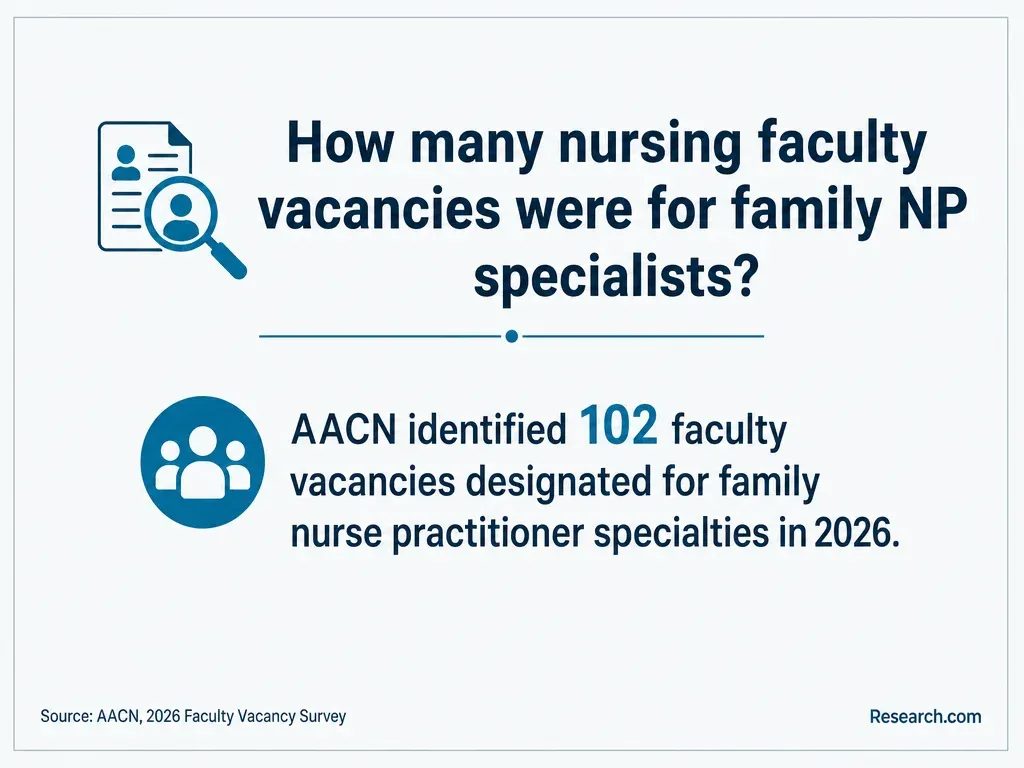
Online delivery can reduce routine travel for lectures, but it does not eliminate supervised clinical hours, scheduled meetings, skills assessments, or possible campus visits.
Campus-based study may offer more face-to-face instruction and easier access to local resources, while still requiring students to coordinate placements around site and preceptor availability.
The most useful format comparison is a weekly calendar, not an "online" label. Ask each program which classes meet live, when clinical days occur, whether visits are mandatory, and what happens if a site cannot accommodate the planned term.
Working nurses and caregivers should check whether clinical hours can realistically coexist with employment; local travel can remain substantial even in an online program.
Placement support varies. When comparing online FNP programs with preceptor support, distinguish a school that arranges sites from one that supplies leads or only approves students' proposals. Obtain the policy in writing, including geographic limits and what happens if a proposed preceptor is declined.
BSN-to-DNP study generally involves more coursework and new FNP clinical preparation than a DNP completion route for an already-qualified FNP. A prior MSN may shorten doctoral coursework, but it does not automatically shorten a new population-focus track.
Published timelines also depend on part-time enrollment, course sequencing, placement availability, and project completion; use the school's plan of study for your entry term rather than a generic completion estimate.
No single Missouri DNP FNP price accurately represents every route. Schools may charge by credit, term, or program, with different fees and tuition classifications.
To compare offers, request an itemized estimate for the specific route and enrollment pace, then account for required visits, clinical travel, screening, materials, certification and application fees, and any earnings reduced during rotations. This broader view is more useful than comparing advertised tuition alone; planning the cost of nurse practitioner education can help frame the trade-off.
Compare the DNP's additional cost with the role you actually seek. If an MSN FNP already meets that goal, the doctoral expense may not be necessary. Employer assistance can change the calculation, but check reimbursement caps, grade rules, and service commitments before treating it as guaranteed funding.
FNP clinical training involves supervised, approved patient care across the family lifespan, with encounters and competencies documented to the program's standards. DNP practice hours may also involve systems-level or project work.
These are not interchangeable simply because both are described as "hours": the program must determine which experiences satisfy FNP direct-care preparation, doctoral requirements, and applicable certification expectations.
The American Association of Colleges of Nursing identifies at least 1,000 post-baccalaureate practice hours as a DNP preparation benchmark.
An MSN-prepared nurse should ask how the school verifies earlier supervised graduate hours and how many additional hours its curriculum requires. RN employment, self-arranged shadowing, and simulation should not be assumed to replace approved FNP clinical work.
"Residency" can mean a clinical immersion, a scheduled campus experience, or a course designation rather than an employed, paid residency. Before accepting an offer, obtain the clinical handbook and ask who finds sites, approves preceptors, evaluates competencies, and resolves a placement delay.
Advertised time-efficient online DNP pathways are only time-efficient for a student who can complete their required clinical and project work on schedule.
Graduation is one step, not permission to practice as an FNP. A nurse generally needs an appropriate RN license, completion of an eligible FNP educational pathway, national FNP certification through an organization such as the American Nurses Credentialing Center or the American Academy of Nurse Practitioners Certification Board, and the applicable Missouri advanced practice recognition and practice arrangements. The Missouri State Board of Nursing and the certifying organization determine their respective current requirements.
Verify the sequence before enrollment, especially if the program is outside Missouri or clinical work will occur in another state. A multistate RN privilege is not, by itself, authorization for advanced practice wherever the nurse works or sees patients by telehealth. Employers may also require credentialing and orientation after state requirements are met.
Certification follows the population focus taught. For example, an FNP credential does not replace psychiatric-mental health NP preparation. An already-qualified APRN considering a change should examine time-efficient PMHNP certificate pathways only if that new role - not an FNP doctorate - is the intended outcome.
What careers, salaries, and job outlook can Missouri DNP FNP graduates expect?
FNPs may work in primary care clinics, community health centers, specialty practices, and other outpatient settings, subject to employer needs and applicable practice rules. Their work can include assessment, management of health concerns, prevention, follow-up, and care coordination.
A DNP may additionally support practice improvement, education, or leadership work, but the degree does not guarantee a leadership position or broader legal scope.
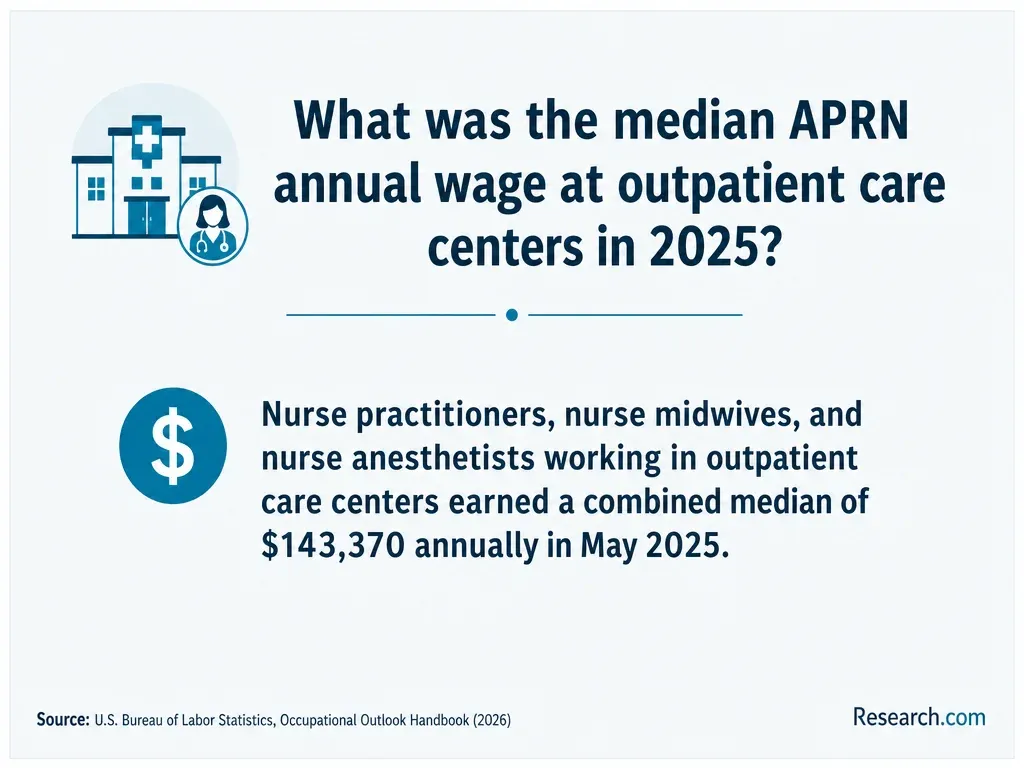
For pay and outlook, the relevant U.S. Bureau of Labor Statistics occupation is nurse practitioners, not "DNP graduates" or Missouri FNPs specifically. Its national wage and employment projections cover multiple NP specialties and experience levels; neither figure predicts a new graduate's offer.
Compare actual Missouri job postings and offers by setting, schedule, experience requirement, benefits, and clinical support. A position with strong onboarding may be a better first FNP job than a higher-paying offer that expects immediate independent performance.
If the goal is clinical FNP employment rather than doctoral-level project or leadership work, compare local hiring requirements with the cost of an MSN route. Reviewing affordable master's progression for bachelor's-prepared RNs may reveal a sufficient alternative; choose the DNP when its additional preparation serves a defined professional objective.
DNP programs with accessible admission requirements offer aspiring nursing professionals an opportunity to advance their education, develop leadership skills, and gain specialized clinical knowledge without facing overly restrictive entry requirements.
Other Things You Should Know About Nursing
Often, yes, but clinical days and project demands may require reduced or changed hours. Ask for a term-by-term schedule before committing to a work arrangement.
Not automatically. The program must approve the site, supervisor, activities, and documentation; ordinary RN duties do not become FNP clinical experiences simply because they involve patients.
Possibly. The school must permit placements in that state, and the site, preceptor, and any applicable state requirements must be satisfied before hours begin.
Usually not merely to retain FNP practice eligibility. Identify the specific new role or skill you need first; targeted continuing education or employer-supported development may be more appropriate.
- Board of Nursing - Missouri Division of Professional Registration https://pr.mo.gov/nursing-advanced-practice-nurse.asp
- Cost of Attendance (Budget) | 2025-2026 Federal Student Aid Handbook https://fsapartners.ed.gov/knowledge-center/fsa-handbook/2025-2026/vol3/ch2-cost-attendance-budget
- DNP in Nursing | UMSL https://www.umsl.edu/degrees/doctorate/dnp-nursing.html
- BSN to DNP vs. MSN to DNP: Which Pathway Works for You? | Herzing University https://www.herzing.edu/blog/bsn-dnp-vs-msn-dnp-which-pathway-works-you
- Clinical Placement Services for FNP Programs | Texas Woman's University https://onlinenursing.twu.edu/clinical-placement-services
- Family Nurse Practitioner | Nell Hodgson Woodruff School of Nursing https://www.nursing.emory.edu/degrees-programs/nursing/family-nurse-practitioner
- BSN to DNP Program Length: Timelines & What to Expect | STU https://online.stu.edu/degrees/healthcare/bsn-to-dnp/how-long-does-it-take/
- Doctor of Nursing Practice - Missouri State University https://www.missouristate.edu/nursing/doctor/default.htm
- How to Become a Family Nurse Practitioner: A Step-by-Step Guide for RNs | University of the Cumberlands https://www.ucumberlands.edu/blog/how-become-family-nurse-practitioner-step-step-guide-rns
- Family Nurse Practitioner | DNP | Sinclair School of Nursing https://nursing.missouri.edu/academic-programs/doctor-of-nursing-practice/dnp-program-requirements/dnp-family-nurse-practitioner/