
2027 Credit Requirements for an Applied Business & Technology Degree Explained

Co-Founder and Chief Data Scientist
Choosing an applied business & technology degree is not only a question of major fit. It is also a credit-planning decision that affects tuition, transfer value, course sequencing, financial aid pacing, and how quickly you can qualify for business-technology roles. Many students underestimate how core requirements, electives, prior credits, and online course formats work together, which can add semesters and unnecessary costs.
In 2023, nearly 40% of students in this field took longer than six years to complete their degree, often because they misunderstood required credits, transfer limits, or program policies. That makes early planning especially important for working adults, transfer students, online learners, and anyone trying to finish without taking excess courses.
This guide explains how applied business & technology credits are usually structured at the associate, bachelor’s, master’s, accelerated, and online levels. It also covers transfer credit, work experience credit, licensure-related requirements, credit-hour calculations, graduation timelines, and whether taking extra credits is likely to improve career outcomes.
Key Things to Know About Credit Requirements for Applied Business & Technology Degrees
- Applied business & technology degrees usually require a balanced credit load tailored for completion within a few years, aligning with industry demands for timely workforce entry.
- Transfer credits and prior learning assessments can significantly reduce required coursework, enabling faster progress and often lowering overall educational expenses.
- Credit structures influence pacing, affecting both academic progression and total cost; managing credits efficiently can shorten graduation timelines and improve employment opportunities.
How Many Credits Are Required for a Applied Business & Technology Degree?
An applied business & technology degree usually follows the same credit framework as other accredited college programs: fewer credits for associate degrees, about twice as many for bachelor’s degrees, and a smaller but more specialized credit load for master’s programs. The exact requirement depends on the institution, catalog year, transfer policy, concentration, and whether the program includes a capstone, internship, or certification-aligned coursework.
- Associate degree: Generally requires about 60 to 70 credits. These programs typically combine general education, introductory business courses, basic technology applications, and career-focused classes for entry-level office, operations, administrative, or technical support roles.
- Bachelor's degree: Usually requires approximately 120 to 130 total credits needed for applied business and technology graduation. This normally includes general education, business foundations, technology coursework, analytics or systems classes, electives, and upper-division major requirements.
- Master's degree: Typically requires 30 to 40 credits. Graduate programs usually focus less on broad general education and more on leadership, applied analytics, digital operations, information systems, project management, and strategic technology use in organizations.
The most important planning step is not simply knowing the total credit number. Students should confirm which credits must be taken in sequence, which courses are offered only in certain terms, and whether any transfer credits will apply to the major rather than only to electives. A student with many accepted credits can still face delays if the remaining core courses are locked behind prerequisites.
Students comparing graduate structures in other fields can review online SLP master's programs to see how credit expectations differ across professional and applied disciplines.
How Many Core and Elective Credits Are Required for a Applied Business & Technology Degree?
Applied business & technology programs normally divide credits into required core courses and electives. Core courses build the competencies every graduate is expected to have, while electives let students shape the degree around a career direction such as business analytics, cybersecurity, digital marketing, project coordination, operations, or software tools.
A common distribution looks like this:
- Core courses: These generally account for about 60% of the total credits, typically 36 to 42 credit hours. Core course credit requirements in applied business and technology degrees often cover business principles, information systems, technology integration, data analysis, project management, communication, and applied problem-solving.
- Electives: Elective credits usually make up the remaining 40%, roughly 18 to 28 credits. Electives can strengthen a student’s profile when they are chosen intentionally, especially in areas such as cybersecurity, digital marketing, advanced software tools, data visualization, entrepreneurship, or workflow automation.
The best elective strategy is career-driven. A student interested in management should prioritize leadership, operations, and project courses. A student targeting technology-heavy roles should consider systems, databases, cybersecurity, or analytics. A student seeking a general business technology role may benefit from a balanced set of electives rather than a narrow specialization.
Students should avoid using electives only to fill empty schedule slots. Easy or unrelated electives may help complete the credit count, but they may not improve employability or prepare students for the technical expectations of business-technology jobs. Before registering, ask whether an elective counts toward the major, a concentration, a certificate, or only general graduation credits.
For cost planning, especially when electives vary by institution or format, students can compare online business degree cost options alongside credit requirements to estimate the full price of completion.
Students who want to compare applied technical curricula outside business may also examine engineering degrees online for a different view of core-versus-elective program design.
Do Online Applied Business & Technology Programs Require the Same Number of Credits?
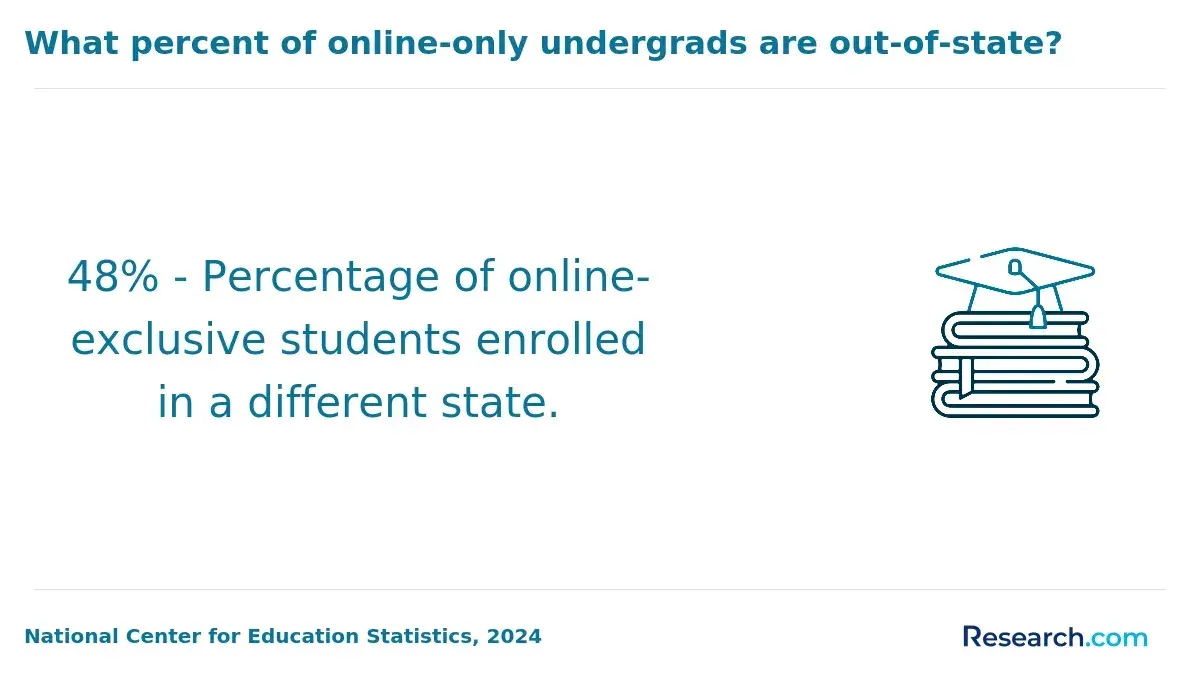
In most cases, online applied business & technology programs require the same or very similar number of credits as campus programs at the same degree level. Delivery format changes how students complete coursework, not the academic value of the degree. An online bachelor’s program, for example, is typically designed to meet the same institutional, accreditation, and graduation standards as its on-campus equivalent.
Online applied business & technology programs have experienced over 30% growth in enrollment in recent years, reflecting demand for flexible programs among working adults, transfer students, parents, and students who cannot relocate. Flexibility, however, should not be confused with a lighter academic load.
- Typical Credit Range: Most online applied business & technology bachelor's degrees require between 120 and 130 credit hours, aligning closely with traditional on-campus programs.
- Course Delivery and Flexibility: Online courses may be asynchronous, synchronous, or hybrid. Asynchronous formats can make scheduling easier, but students still need to complete the same assignments, projects, exams, discussions, and applied work expected for the credits awarded.
- Credit Transfer and Graduation Goals: Online credits from accredited institutions are usually reviewed under policies similar to campus credits. Students should still confirm residency requirements, maximum transfer limits, grade minimums, and whether credits apply to the major.
- Workforce Preparation: A well-designed online program should still require students to demonstrate business communication, technology use, data literacy, systems thinking, and project execution. The credential’s value depends more on curriculum quality and accreditation than on whether the courses were delivered online or in person.
One graduate of an online applied business & technology program explained that the credit requirements matched those of a traditional program, but the format made completion realistic while working full time. The main challenge was staying disciplined without a fixed classroom routine. The benefit was being able to plan credit loads around job responsibilities rather than pausing a career to attend campus full time.
Before enrolling, students should ask three practical questions: Are courses offered often enough to avoid delays? Can required technology labs or projects be completed remotely? Will the school provide academic advising for transfer evaluation before enrollment? Those answers matter as much as the total credit count.
How Many Credits Are Required in Accelerated Applied Business & Technology Programs?
Accelerated applied business & technology programs are built to reduce calendar time, not necessarily to reduce academic expectations. Students may take shorter terms, heavier course loads, year-round classes, or fewer breaks between sessions. This can be efficient, but it also compresses deadlines and requires consistent weekly availability.
- Undergraduate Credit Range: Accelerated undergraduate tracks usually require between 36 and 60 credits. These are often degree-completion programs for students who already have transfer credits, an associate degree, or prior college coursework.
- Graduate and Professional Credits: For graduate or professional pathways, the credit load often spans 30 to 45 credits. Coursework is usually concentrated in advanced business technology, leadership, analytics, systems, or applied management areas.
- Credit Distribution: Accelerated curricula often emphasize required core courses and limit elective choice. This structure helps shorten the path, but it may reduce the opportunity to explore multiple specializations.
- Effect of Accelerated Format: A condensed schedule means students may complete the same credit value in fewer weeks. That can create a heavier weekly workload, especially when courses include projects, group work, software assignments, or business case analysis.
- Planning and Transfer Credits: Accelerated programs often work best for students who enter with a clear credit evaluation. Missing transcripts, unapproved transfer courses, or unresolved prerequisites can disrupt a fast timeline.
These programs are best suited for students who can commit steady time every week, handle overlapping deadlines, and make quick progress through technology-based assignments. They may be less suitable for students who need a lighter pace, extensive elective flexibility, or extra time to strengthen foundational math, writing, or technical skills.
How Many Transfer Credits Are Accepted Toward a Applied Business & Technology Degree?
Transfer credit can substantially reduce the number of courses a student must complete, but acceptance is not automatic. Schools evaluate where the credits were earned, whether the institution was accredited, the grade received, how old the course is, and whether the content matches current program outcomes. Nearly 40% of learners in these programs transfer credits from previous coursework, making transfer policy one of the most important factors in degree planning.
- Associate Degrees: Usually, up to 60 credits can be transferred. These credits often cover general education, introductory business courses, computer applications, and electives, depending on equivalency rules.
- Bachelor's Degrees: Institutions commonly allow between 60 and 90 transfer credits. However, upper-division major requirements may need to be completed at the receiving institution, especially if the program has specific applied business technology outcomes.
- Master's and Professional Degrees: Advanced programs tend to accept fewer transfer credits, commonly capping at 9 to 12 credits. Graduate coursework must usually be recent, relevant, and equivalent in rigor.
- Doctoral Programs: Transfer credits at this level are rare and usually limited. When accepted, they are generally tied to prior graduate coursework that directly supports the student’s research or professional focus.
- Accelerated Programs: Accelerated formats may have stricter transfer limits because course sequencing is compressed. Some may also award credit for certifications or documented professional training if it aligns with program outcomes.
Transfer credits are most likely to apply smoothly to general education and electives. They may apply to core business or technology requirements only when the prior course closely matches the receiving school’s syllabus, learning outcomes, credit value, and level. A course title alone is rarely enough to guarantee equivalency.
A graduate of an applied business & technology degree described the process as “challenging and rewarding.” She initially felt overwhelmed by the documentation required to evaluate previous coursework, including syllabi, transcripts, catalog descriptions, and course outcomes. Her main advice was to stay organized and request the review as early as possible because equivalency decisions can take time.
The payoff can be significant. In her case, accepted transfer credits allowed her to skip some foundational classes and focus on advanced courses more closely tied to her career goals. Students can improve their odds by submitting official transcripts promptly, keeping old syllabi when possible, and asking advisors for a written degree plan that shows exactly where each accepted credit applies.
Can Work Experience Count Toward Applied Business & Technology Degree Credits?
Yes, work experience may count toward applied business & technology degree credits if the school offers prior learning assessment, often called PLA. PLA does not award credit merely for time spent in a job. It awards credit when a student can document college-level learning that matches specific course outcomes.
Common sources of prior learning include professional work experience, military service, technical training, certifications, employer-sponsored learning, and documented project achievements. The strongest PLA requests connect real responsibilities to measurable skills, such as managing systems, improving workflows, coordinating projects, analyzing data, supporting business operations, or implementing technology tools.
- Hands-on Business and Technology Roles: Universities typically request resumes, job descriptions, supervisor letters, portfolios, or written explanations of responsibilities. Credit may be awarded when the experience aligns clearly with a course in the degree plan.
- Professional Certifications: Certifications related to business technology subjects may qualify when the program recognizes the credential and maps it to academic outcomes. Credit limits usually apply.
- Military and Technical Training: Military service and formal technical training may be evaluated through transcripts, training records, or standardized recommendations. These credits often apply best to technical, management, or elective areas.
- Documented Project Achievements: Portfolios showing project management, system implementation, process improvement, software deployment, reporting, or business analysis can strengthen a PLA application. Most programs cap credits earned through PLA at about 30-40% of total degree requirements.
PLA can shorten time-to-degree and reduce tuition costs for adult learners, but policies vary widely. Some schools charge assessment fees, limit PLA to undergraduate programs, restrict how PLA credits apply to the major, or require faculty review. Students should ask whether PLA credits count toward residency requirements, financial aid enrollment status, and graduation totals.
Students considering affordable graduate pathways in other disciplines may also compare options such as the cheapest MLIS degree online while evaluating the role of prior learning and transfer credit.
Do Licensure Requirements Affect Credit Hours in a Applied Business & Technology Degree?
Licensure requirements can affect credit hours when an applied business & technology program is designed to prepare students for a regulated credential, professional certification, or state-specific requirement. Many business technology roles are not licensed in the same way as nursing, teaching, accounting, or counseling, but some career paths may still require certification-aligned coursework, supervised experience, exams, or specialized training.
When a program incorporates licensure or certification preparation, students may need additional courses, internships, practicum experiences, labs, capstones, or documented contact hours. These requirements can increase the total workload and may extend time-to-degree, especially if practical experiences are offered only during certain terms or require placement approval.
State rules can also matter. Licensing boards and credentialing bodies may define acceptable coursework differently, which can affect both campus and online programs. Students planning to work in a specific state should not assume that a program designed for one jurisdiction automatically satisfies requirements elsewhere.
Students should ask the school for written answers to these questions before enrolling:
- Does the program prepare students for any license, certification, or industry exam?
- Are any extra credits required beyond standard degree requirements?
- Are internships, supervised hours, or capstone projects mandatory?
- Does the program meet requirements in the state where the student plans to work?
- Will online students have access to required placements, labs, or practical experiences?
Credit requirements influenced by licensure can improve job readiness and credential recognition, but they can also raise cost and scheduling complexity. Students comparing the return on different majors may find it useful to review degrees that make the most money while weighing credit load, credential requirements, and career goals.
How Do Universities Calculate Credits for a Applied Business & Technology Degree?
Universities calculate degree credits using the credit-hour system. A credit hour represents one hour of classroom or direct faculty instruction plus a minimum of two hours of out-of-class student work weekly throughout a semester. In practice, this means a course’s credit value reflects both scheduled instruction and expected independent work, including reading, projects, software practice, group assignments, exams, and applied business analysis.
- Lecture courses: These usually award one credit hour per hour of weekly instruction. They often cover business theory, technology concepts, communication, management, analytics foundations, and other core topics.
- Labs: Labs may require more scheduled time than lecture courses because students are practicing technical skills, using software, completing simulations, or applying tools. Credit value depends on institutional policy and the type of supervised work required.
- Clinicals and practicums: These credits are based on structured field experience, supervised practice, and related academic work. In applied business & technology programs, comparable experiences may include internships, consulting projects, workplace-based learning, or practicum-style assignments.
- Capstone or project-based courses: These may carry higher credit values when they require students to integrate business strategy, technology tools, research, data, communication, and implementation planning into a major final project.
Graduate courses often require more intensive reading, analysis, and independent work per credit than undergraduate courses. Online and on-campus courses should follow the same credit-hour expectations, even if the online program allows students to complete assignments on a more flexible schedule.
Accreditation helps ensure that credit-hour definitions are applied consistently, which supports transfer review, financial aid eligibility, and degree recognition. Students interested in shorter completion models can compare fast online degrees, but they should still confirm that the credit structure meets standard academic expectations.
Applied Business Technology degree credit calculation matters because it determines more than a number on a transcript. It affects tuition billing, full-time or part-time status, financial aid pacing, workload, transfer review, and the feasibility of finishing on schedule.
How Do Applied Business & Technology Degree Credit Requirements Affect Graduation Timelines?
Credit requirements set the minimum academic work needed to graduate, but timelines depend on how those credits are scheduled and completed. Total requirements vary between 60 and 120 credits depending on the degree level, and students can move faster or slower depending on transfer credit, course availability, personal workload, and program format.
- Core credits: Core courses can control the timeline because they are often sequenced. If a required course has prerequisites or is offered only once per year, missing it can delay graduation.
- Elective requirements: Electives can help students stay on pace when core courses are full, but they should still support career goals or degree requirements. Taking electives that do not apply to the plan can add unnecessary credits.
- Transfer credits: Accepted prior coursework can reduce the remaining credit load and shorten completion time. The advantage is greatest when credits satisfy major, general education, or prerequisite requirements rather than only free electives.
- Accelerated formats: Condensed courses and year-round terms can help students complete credits faster, but they require strong time management and may not be realistic for every learner.
- Prior learning assessment: Work experience, military service, certifications, or other documented learning can reduce the number of courses needed when the school grants applicable credit.
Online students may be able to build schedules around work and family responsibilities, which can make steady enrollment easier. Campus students may benefit from in-person advising, structured course sequences, and easier access to some labs or internships. Neither format automatically guarantees faster completion; the key is whether required courses are available when the student needs them.
A practical graduation plan should include the total remaining credits, required course sequence, expected term-by-term load, transfer credits already approved, electives that fit the goal, and any capstone or internship deadlines. Students should update this plan after every term to catch problems early.
Do More Credits Lead to Better Career and Salary Outcomes for Applied Business & Technology Graduates?
More credits do not automatically lead to better career or salary outcomes. Employers usually care more about relevant skills, credentials, experience, portfolios, internships, and demonstrated ability than about taking extra unrelated courses. Additional credits can be valuable when they build a marketable specialization or satisfy a recognized credential requirement.
- Advanced Concentrations: Extra credits in focused areas such as project management, business analytics, cybersecurity, systems administration, or digital operations can strengthen a graduate’s profile for more specialized roles.
- Licensure Preparation: Additional credits tied to professional certification or licensing requirements may qualify graduates for roles that have clearer credential expectations.
- Technical Skill Development: Coursework in technical domains beyond the core curriculum, such as cybersecurity or IT automation, can make candidates more competitive when the skills match employer demand.
Extra credits are less likely to help when they are not connected to a clear outcome.
- General Credit Accumulation: Earning more credits without a strategy may increase cost without improving job readiness.
- Entry-Level Roles: For students seeking their first role, finishing the degree efficiently, building experience, completing internships, and producing evidence of skills often matter more than adding courses.
- Non-Strategic Coursework: Credits outside targeted skill areas or certification pathways may prolong time-to-graduation without improving salary potential.
The better question is not “Should I take more credits?” but “Which credits help me qualify for the role I want?” Students should review job postings, talk with advisors, compare certification requirements, and choose electives or extra courses that fill specific skill gaps. A smaller, well-planned credit load can be more valuable than a larger unfocused one.
What Graduates Say About The Credit Requirements for Their Applied Business & Technology Degree
- Alexander: "From a professional standpoint, the online applied business & technology program's credit system offered a strategic advantage by reducing time and expenses typically associated with degree completion. It's clear that the flexibility to acquire additional credits not only saved money but also enriched my expertise, putting me ahead in a competitive field. I highly recommend this program to anyone focused on career growth."
- Camilo: "The cost efficiency of the applied business & technology degree was a crucial factor for me, especially as I could accumulate credits both online and on-campus. Reflecting on the experience, the program's design helped me balance study with family life without compromising quality. The extra credits I earned have enhanced my professional portfolio, directly impacting my promotion opportunities."
- Jason: "Completing my applied business & technology degree online allowed me the flexibility to earn credits around my busy work schedule, which was priceless. Given the reasonable cost per credit compared to traditional programs, it was a smart investment in my future. Earning those extra credits significantly boosted my qualifications, opening doors to managerial roles I hadn't imagined."
Other Things You Should Know About Applied Business & Technology Degrees
Yes, many applied business & technology degree programs require students to complete prerequisite courses before enrolling in advanced classes. These prerequisites often include foundational subjects such as basic mathematics, introductory computer skills, or business fundamentals. The credits earned from these prerequisite courses typically count toward the total credit requirement but are essential to build the necessary knowledge base.
In 2027, a bachelor's degree in Applied Business & Technology typically requires approximately 120 credits. This comprises general education courses, major-specific classes, and electives. Each institution may have specific courses and credit distributions, so it’s advisable for students to check the curriculum offerings at their chosen university.
Some institutions offer credit-by-examination options such as CLEP or departmental exams that allow students to test out of introductory or general education courses within applied business & technology degrees. Successfully passing these exams can reduce the number of credits a student must complete, potentially shortening the time to graduation. However, policies vary widely between schools, and core technical courses often require direct enrollment.
References
- The Faculty of Business clarifies the Reality About Graduation in 3 Years https://www.asu.edu.eg/en/9558/news/the-faculty-of-business-clarifies-the-reality-about-graduation-in-3-years
- Bachelor of Science Applied Technology https://europe.umgc.edu/online-degrees/bachelors/appliedTechnology
- Accelerated Grad Program – Business and Information Technology | Missouri S&T https://bit.mst.edu/acceleratedgradprogram/
- Applied Technology | Undergraduate Programs | The University of Southern Mississippi https://www.usm.edu/undergraduate-programs/applied-technology.php
- College Credit for Work Experience and Military Training https://www.coloradotech.edu/admissions/registrar-evaluation-services/professional-training
- Applied BS Business Administration https://campus.snhu.edu/programs/undergraduate/applied-bs-business-administration
- Working Professionals | UMass Global https://www.umassglobal.edu/admissions/transfer-center/working-professionals
- Accelerated Business Degree AS | SLCC https://www.slcc.edu/workforce-training/program/accelerated-business-as.aspx
- Online Bachelor's Degree: Applied Technology https://www.umgc.edu/online-degrees/bachelors/applied-technology
- Applied Business Technology > Find your program > Applied Business Technology — Full time https://www.ufv.ca/abt/find-your-program/applied-business-technology--full-time/





