2027 Choosing MPH Coursework for Diabetes Prevention Program Evaluation

Co-Founder and Chief Data Scientist
Choosing MPH coursework for diabetes prevention program evaluation means looking beyond a course titled "diabetes." You need to learn whether a program reaches the people it intends to serve, delivers its intervention consistently, and measures outcomes responsibly. This guide is for prospective MPH students and practitioners who want to evaluate community-based prevention efforts. It identifies the courses and applied experiences that matter most, explains how to compare programs, and helps you decide when focused training may be more useful than another degree.
Key Things You Should Know
- Prioritize a sequence of epidemiology, biostatistics, evaluation methods, and community-engaged practice - not a diabetes elective alone.
- Look for supervised access to a suitable evaluation project; an applied deliverable is stronger evidence of readiness than a concentration name.
- For programs modeled on the CDC's National Diabetes Prevention Program, distinguish the goals of 5%-7% weight loss and 150 minutes of weekly physical activity from outcomes a local program has actually achieved.
What Is Diabetes Prevention Program Evaluation in Public Health?
Diabetes prevention program evaluation examines how a prevention effort is implemented, whom it reaches, and whether its intended outcomes change. A community organization might evaluate referrals, enrollment, attendance, participant experience, physical activity, or weight-related outcomes. The purpose is often to improve delivery and inform funding decisions - not to prove that the program alone caused every observed change.
Start by separating process measures, such as referral-to-enrollment rates and session attendance, from outcome measures, such as changes recorded among participants. Define each measure's denominator and time period. An attendance figure for everyone enrolled answers a different question from one calculated only among people who completed the program. Evaluators should also examine who was not reached or who left early, without treating participants as responsible for structural barriers to participation.
The CDC's National Diabetes Prevention Program provides a recognizable intervention context, but its participant goals are not a substitute for local evaluation findings. If you are still working toward a bachelor's degree, reviewing online public health BS programs may help you identify an earlier route into community-health or data-support work; it does not replace the advanced methods training needed for independent evaluation.
Which MPH Courses Build Diabetes Prevention Evaluation Skills?
The strongest course plan follows the work of an evaluator: define the population and question, select measures, analyze data, interpret limitations, and communicate findings to a community partner. Course titles vary, so compare syllabi and assignments rather than relying on catalog labels.
This comparison shows what each course should contribute to a diabetes prevention evaluation and what evidence of learning to look for.
| Course area | Evaluation contribution | Useful coursework evidence |
| Epidemiology | Defines populations, outcomes, comparison groups, and threats to interpretation | A study-design critique addressing selection and confounding |
| Biostatistics and data management | Supports denominators, missing-data checks, estimates, and uncertainty | A reproducible analysis with an explained data dictionary |
| Program planning and evaluation | Connects intervention activities to feasible process and outcome measures | A logic model and evaluation plan |
| Qualitative or mixed methods | Explores access barriers, participant experience, and implementation context | An interview guide and defensible analysis approach |
| Community health and health equity | Supports respectful interpretation and partner-informed reporting | A communication product designed for a specified audience |
Take introductory epidemiology and statistics before an advanced evaluation or applied analysis course when the program permits that sequence. Then seek supervised work that brings the skills together. A student interested chiefly in developing new epidemiologic methods may need more research-intensive training; low-cost epidemiology doctorates and financial aid are relevant only to that substantially different, longer-term goal.
How Does CEPH Accreditation Affect MPH Program Quality?
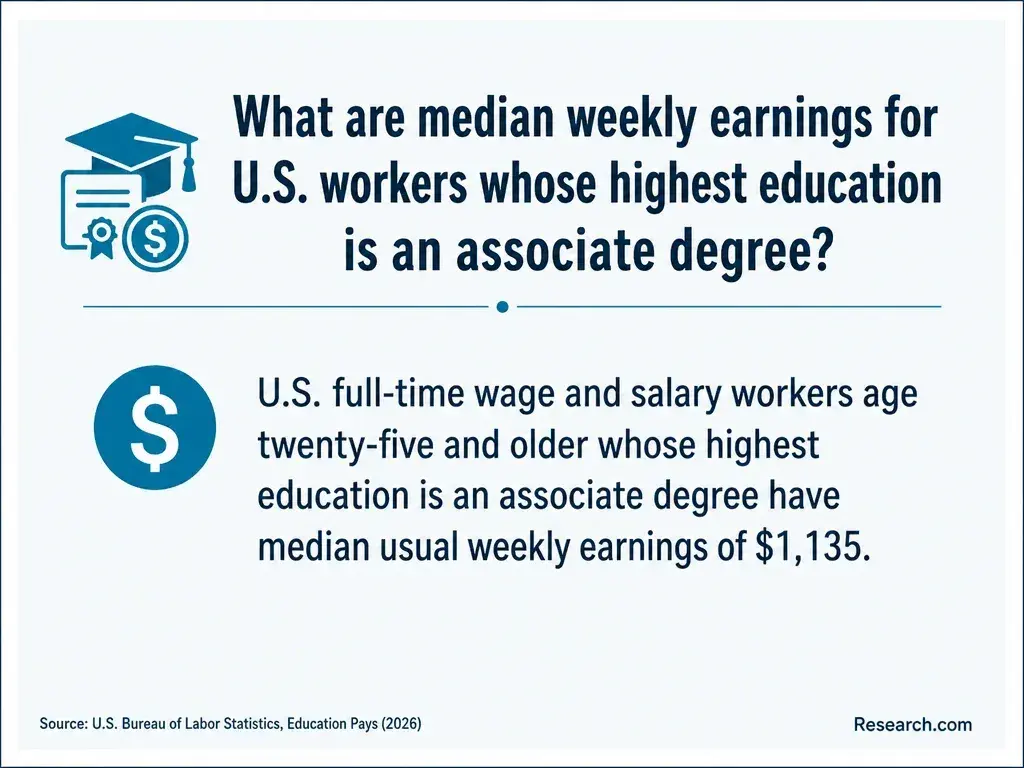
Accreditation by the Council on Education for Public Health (CEPH) indicates that the accredited school or program has been reviewed against public health education standards. It is a useful baseline, not proof that its diabetes evaluation electives, faculty supervision, or community partnerships fit your goal. Institutional accreditation and CEPH accreditation also answer different questions.
Check CEPH's directory for the exact accredited school, unit, or program and confirm that the MPH you intend to enter falls within its scope. Then ask the program for current syllabi, elective schedules, applied-practice requirements, and examples of acceptable evaluation deliverables. Apply the same checks when comparing low-tuition online public health degree options: a lower advertised price does not establish either accreditation scope or suitable evaluation training.
Choose the format that gives you reliable access to methods instruction, feedback, and an appropriate practice site. An online MPH may let an employed student evaluate a program in their own community. A campus program may make it easier to collaborate with faculty or a local research group. Neither format automatically provides a field placement or permission to use participant data.
Ask whether evaluation electives run asynchronously or at fixed times, how group work is scheduled, whether campus visits are required, and who arranges and approves applied-practice sites. For a working student, a required weekday placement can matter more than the format of recorded lectures. Use finding online MPH programs that fit your profile as a starting point, then verify each program's actual course and fieldwork schedule before enrolling.
MPH programs generally assess prior undergraduate study and an applicant's preparation for graduate work, but prerequisites, tests, experience expectations, and application materials vary by school. A non-public-health major need not rule out admission: work in community organizations, clinical settings, social science, computing, or program operations may provide relevant preparation.
For this goal, distinguish admission eligibility from readiness for quantitative coursework. Ask whether your target program requires a prior statistics course, recommends one, or teaches introductory statistics after enrollment. If you have helped run a prevention program, describe specific responsibilities - such as referral tracking or grant reporting - rather than claiming evaluation expertise you have not yet developed.
Doctoral admission is a separate decision with different expectations about experience and scholarly or leadership goals. Resources on doctoral public health programs by entry criteria should not be used as a proxy for MPH requirements.
Time and cost depend on required credits, course availability, enrollment pace, tuition rules, fees, and applied-practice arrangements. An accelerated schedule is useful only if it leaves enough time to learn the methods and complete a supervised project. Part-time study may better accommodate employment, but it can extend the period over which a student pays fees or waits for a required elective.
Request a term-by-term degree plan and a written cost estimate for your expected enrollment pattern. Include travel to a placement, any required campus visits, and the possibility of reduced work hours. Compare that full commitment with a statistics or evaluation course if you already hold a relevant degree and need only a specific skill. An online public health master's value guide can help frame the comparison, but published tuition figures should be checked against the school's charges for your entry term.
Choose a concentration by the evaluation tasks you want to perform. Epidemiology or biostatistics is a strong fit for study design and quantitative analysis. Community health or health promotion emphasizes intervention delivery, participation, and communication. Health policy or management may fit evaluation tied to funding, implementation across organizations, or reporting decisions.
None of these labels guarantees the needed course sequence. A community-health concentration with a rigorous evaluation elective and a well-supervised project may be more useful than an epidemiology concentration with little access to implementation work. Compare required courses, elective availability, and project supervision before deciding. If you are considering a concentration mainly to fill one skills gap, online public health degrees balancing cost and time can inform a broader cost comparison, but a targeted course may be the more direct choice.
Relevant roles include program evaluator, evaluation coordinator, public health analyst, epidemiologist, and chronic disease program specialist. Titles do not reliably describe duties: one evaluator may manage attendance and referral data, while another designs surveys, analyzes outcomes, and presents limitations to funders. Review job descriptions for the methods and responsibilities you actually want.
An MPH graduate with a supervised evaluation project may be competitive for roles that involve analysis or evaluation support, depending on prior experience and the employer. Leading a multi-site study or directing a program usually requires a stronger record of practice. If you do not yet have a bachelor's degree, comparing accelerated public health undergraduate schedules may clarify a first step toward program-assistant or community-health work before considering graduate study.
"Public health evaluator" is a job title rather than a single US Bureau of Labor Statistics occupation. For a role centered on population-level study design and analysis, the Bureau's epidemiologist profile may be the closest comparison; for intervention delivery and education, its health education specialist profile may be more relevant. Neither occupation's median wage represents the expected pay of an MPH graduate or of every evaluation job.
Use the current Bureau of Labor Statistics wage and projection period for the occupation that best matches a specific posting, then compare local employer salaries, required experience, and the cost of your proposed degree. Salary planning for MPH graduates can provide additional context, but the defensible financial comparison is between your likely job options - not an occupation-wide median and a tuition bill.
Which Certifications and Standards Support Diabetes Prevention Evaluation?
For evaluation work, the most useful standards are often the ones governing the program and its data. If a partner operates a CDC-recognized National Diabetes Prevention Program lifestyle-change program, learn its applicable recognition standards and reporting definitions. Confirm which measures the partner must report before designing a separate student evaluation. Recognition of a delivery organization is not a credential awarded to its evaluator.
Credentials such as Certified in Public Health (CPH) or Certified Health Education Specialist (CHES) may be relevant to particular jobs, but eligibility rules and employer preferences differ; neither substitutes for demonstrated evaluation skills or confers clinical authority. If your aim is to direct substantial research rather than evaluate an existing community program, comparing online public health doctoral programs addresses a different training decision. Before using any project data, confirm site permission, data-security requirements, and whether institutional ethical review is needed.
Other Things You Should Know About Public Health
Yes. Aggregate referral, enrollment, attendance, and completion records can answer useful implementation questions. Match the available data to the question, and obtain the partner's permission before using or sharing it.
You can describe reach, implementation, and changes observed among participants. Do not attribute those changes solely to the program; other influences and differences between people who stay and leave may affect the results.
Not automatically. Choose measures that fit the program's purpose, consent arrangements, data access, and reporting obligations. Clinical measures may be unavailable or inappropriate for a student-led evaluation.
Usually only with the appropriate permissions. Remove identifiable or confidential information, follow the site's agreement, and label a proposed evaluation plan as a plan rather than completed findings.
- Evolution of Master of Public Health Core Curriculum - PMC https://pmc.ncbi.nlm.nih.gov/articles/PMC11574769/
- Competencies for Public Health Professionals | cdc.gov https://www.cdc.gov/infrastructure/training-professional-development/competencies-for-public-health-professionals.html
- 5. Descriptive and Analytical Epidemiological Study Designs | Windsor & Downs Press https://iopn.library.illinois.edu/pressbooks/epidemiologyaprimer/chapter/chapter-5-descriptive-and-analytical-epidemiological-study-designs/
- Aligning Efforts to Outcomes: Effective Program Design and Evaluation | UIC Online | University of Illinois Chicago https://onlineprograms.uic.edu/non-credit-programs/cnm/courses/program-design-and-evaluation/
- Practicum and Capstone: COPHP MPH | Health Systems and Population Health https://hspop.uw.edu/cophpmph/program-experience/practicum-capstone/
- Course Descriptions - CCEB - University of Pennsylvania https://www.cceb.med.upenn.edu/course-descriptions
- Practicum Overview | UW School of Public Health https://sph.washington.edu/mph-practicum/overview