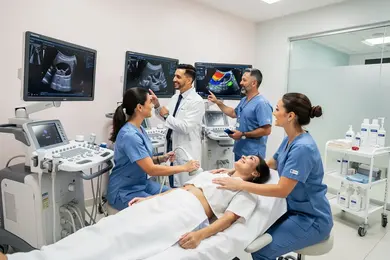
2027 Cheapest Accredited Online Ultrasound Technology Degree Programs That Accept FAFSA

Co-Founder and Chief Data Scientist
Choosing an online ultrasound technology degree is tricky because the cheapest tuition is not always the lowest real cost after FAFSA, fees, transfer credits, and clinical requirements. The decision matters because the U.S. Bureau of Labor Statistics reported a May 2024 median wage of $89,340 for diagnostic medical sonographers, making program cost and debt especially important for ROI.
This guide is for students comparing affordable, accredited, FAFSA-eligible options and explains how to verify aid eligibility, compare net price, avoid red flags, and choose a program that fits career goals.
Key Things You Should Know
- The cheapest FAFSA-eligible ultrasound technology options are usually public community colleges, public universities, and online degree-completion programs, but most entry-level programs still require in-person labs and clinical rotations.
- FAFSA participation does not mean the program will be free; the maximum Federal Pell Grant for the 2025-2026 award year is $7,395, and eligibility depends on financial need, enrollment status, program length, and school rules.
- For entry-level sonography, CAAHEP-accredited programs are often the safest path for certification eligibility, while bachelor's completion programs can be a better value for already-certified sonographers seeking advancement.
Which Are the Cheapest Accredited Online Ultrasound Technology Degree Programs That Accept FAFSA?
The cheapest accredited online ultrasound technology degree programs that accept FAFSA are typically hybrid associate programs at public colleges and online bachelor's completion programs at public universities. Fully online entry-level sonography degrees are uncommon because students must complete hands-on scanning labs and supervised clinical hours before they can safely work with patients.
If you are still exploring program formats, overviews of ultrasound tech programs online from trustworthy education portals can help you understand why "online" usually means online academic coursework plus local or campus-based clinical training.
The table below highlights affordable FAFSA-eligible options to investigate first. Tuition changes frequently, and clinical site availability can limit admission, so use this as a decision shortlist rather than a guaranteed price ranking.
| School | Program type | Online format | Accreditation to verify | Why it may be affordable | Best fit |
| Washburn University | Diagnostic medical sonography certificate or degree pathway | Online didactic coursework with required clinical placement | Institutional accreditation and CAAHEP program status | Public university pricing can be lower than many private allied health options | Students who can meet clinical placement and prerequisite requirements |
| Jackson College | Associate-level diagnostic medical sonography pathway | Hybrid or online-supported coursework with in-person clinical training | Institutional accreditation and CAAHEP program status | Community college tuition can reduce total borrowing, especially for local students | Cost-conscious students seeking an entry-level sonography route |
| State Fair Community College | Associate-level diagnostic medical sonography pathway | Online-supported coursework with lab and clinical requirements | Institutional accreditation and CAAHEP program status | Public two-year college structure can keep tuition and fees comparatively low | Students who want a lower-cost entry-level option and can satisfy clinical requirements |
| Oregon Institute of Technology | Bachelor's or degree-completion pathway in diagnostic medical sonography or imaging | Online or online-supported upper-division coursework for qualified students | Institutional accreditation and relevant programmatic accreditation where applicable | Public university tuition may offer strong value for credentialed imaging professionals | Registered sonographers or imaging professionals completing a bachelor's degree |
| Fort Hays State University | Online medical diagnostic imaging bachelor's completion pathway | Online completion format | Institutional accreditation; confirm whether the pathway meets your sonography goal | Public online tuition is often competitive for bachelor's completion students | Credentialed imaging professionals who need a bachelor's for advancement |
| AdventHealth University | Online imaging sciences bachelor's completion pathway | Online completion format for credentialed imaging professionals | Institutional accreditation and program requirements for the selected track | May be valuable after transfer credits, although private nonprofit tuition may be higher | Working imaging professionals comparing flexibility, transfer credit, and employer aid |
The practical takeaway is that "cheapest" depends on your starting point. A first-time student usually needs a CAAHEP-accredited entry-level associate or certificate pathway with clinical training, while an already-certified sonographer may save more by choosing an online bachelor's completion program that accepts significant transfer credit.
How Does FAFSA Eligibility Work for Online Ultrasound Technology Degree Programs?
FAFSA eligibility starts with the school, not the marketing label "online." A college must participate in federal student aid programs, and the specific ultrasound technology program must be an eligible credential, such as an approved associate degree, bachelor's degree, or qualifying certificate.
Students should confirm eligibility before applying because online health programs sometimes have special rules, limited clinical sites, or separate certificate structures. Use this sequence when checking a school:
- Confirm that the institution has a current federal school code and participates in Title IV federal student aid.
- Ask whether the exact ultrasound, sonography, or imaging program is eligible for Pell Grants, Direct Loans, and other federal aid.
- Verify whether online, hybrid, and clinical portions are covered under the same aid-eligible program.
- Ask how many credits count toward full-time, three-quarter-time, half-time, or less-than-half-time enrollment for aid purposes.
- Confirm the school's satisfactory academic progress policy because losing SAP status can suspend future aid.
The common mistake is assuming that FAFSA acceptance equals a full scholarship. FAFSA is an application system used to determine eligibility for grants, loans, and work-study; it does not guarantee that your full tuition, fees, books, uniforms, background checks, and clinical travel will be covered.

How Much Does an Online Ultrasound Technology Degree Cost After Financial Aid?
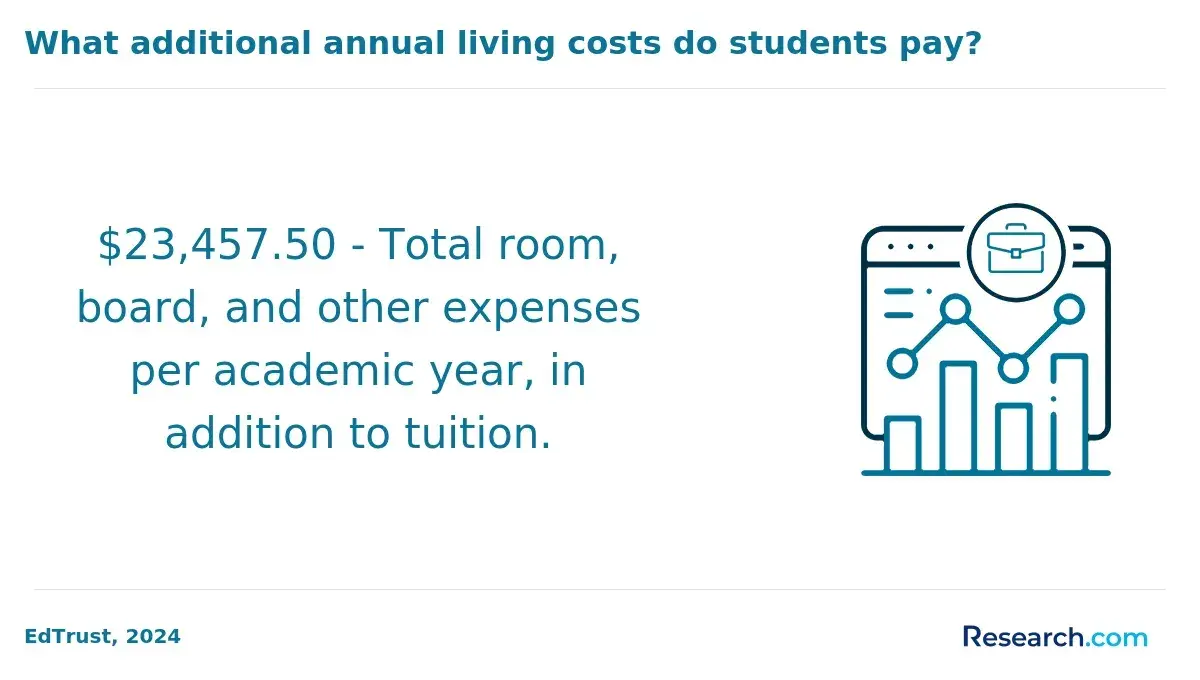
The real cost of an online ultrasound technology degree is the total cost of attendance minus grants, scholarships, employer assistance, and other gift aid. Students should compare net cost, not just published tuition, because sonography programs can include lab fees, simulation fees, uniforms, liability insurance, health screenings, certification exam costs, and travel to clinical sites.
The table below shows how financial aid can change out-of-pocket costs. These are simplified examples for comparison, not school-specific price quotes.
| Cost scenario | Example direct annual cost before aid | Gift aid example | Estimated remaining cost before loans or payment plan | What it means |
| Low-cost public program with high grant eligibility | $8,000 | $7,395 Pell Grant | $605 | Grants can cover most direct charges, but books, fees, and clinical travel may still remain |
| Moderate-cost public program with partial grant eligibility | $14,000 | $4,000 grants and scholarships | $10,000 | The school may be FAFSA-eligible, but borrowing may still be needed |
| Private nonprofit completion program with transfer credit | $18,000 | $3,000 employer or institutional aid | $15,000 | A higher sticker price can still work if transfer credits shorten the degree |
| Low tuition program with poor transfer fit | $10,000 | $2,000 grants | $8,000 plus added repeat credits | Repeating credits can erase the savings from lower tuition |
For many students, the best financial decision is not the program with the lowest per-credit tuition. It is the program with the lowest total remaining cost after aid, transfer credits, required fees, clinical expenses, and the number of semesters needed to finish.
Which Affordable Online Ultrasound Technology Degree Programs Offer the Best Value?
The best-value program is the one that is affordable, accredited for your goal, realistic to complete, and connected to certification or advancement outcomes. A cheap program with weak clinical access, poor transfer policies, or the wrong accreditation can become expensive if it delays graduation or blocks certification eligibility.
Use the table below to compare value by student type. This matters because a new student and an already-certified sonographer usually need different programs.
| Student profile | Best-value program type | Why it can be a strong value | Main caution |
| First-time sonography student | CAAHEP-accredited associate degree or qualifying certificate at a public college | Can provide the clinical training and educational pathway needed for entry-level certification | Admission can be competitive, and local clinical placement is not always guaranteed |
| Working imaging professional | Online bachelor's completion program | Transfer credits and existing credentials can reduce time, cost, and career interruption | It may not be an entry-level sonography program if you are not already credentialed |
| Student with many general education credits | Transfer-friendly public university or community college pathway | Accepted credits can lower both tuition and time to completion | Science prerequisites may expire or need minimum grades |
| Student using employer tuition assistance | Accredited online completion program with flexible scheduling | Employer aid can reduce borrowing while the student keeps working | Employer reimbursement may require upfront payment or continued employment |
| Student outside the school's clinical region | Program with approved local clinical site arrangements | Can reduce relocation and commuting costs | Some programs only approve clinical sites in specific states or partner systems |
Students comparing allied health pathways may also want to look at a lower-cost nutritionist degree if they prefer a healthcare career with fewer hands-on imaging and clinical scanning requirements. That comparison can clarify whether sonography's clinical intensity is worth the added training commitment.
Are the Cheapest Online Ultrasound Technology Degree Programs Properly Accredited?
Accreditation is one of the most important checks in ultrasound technology because sonography is a patient-facing field tied to certification, employer trust, and clinical training quality. At minimum, the school should hold recognized institutional accreditation, and entry-level diagnostic medical sonography programs should be checked for programmatic accreditation through CAAHEP when certification eligibility is a major goal.
Before enrolling, verify accreditation directly rather than relying only on advertising language. The safest approach is to check these items in order:
- Confirm institutional accreditation through a recognized accrediting agency listed by the U.S. Department of Education or the Council for Higher Education Accreditation.
- Confirm whether the specific sonography program is CAAHEP-accredited and whether it is listed under the correct concentration, such as general, cardiac, or vascular sonography.
- Ask whether graduates are eligible to sit for the certification exams required or preferred by employers in your target state or specialty.
- Ask whether online students receive the same accreditation-covered curriculum and clinical oversight as campus students.
- Review state authorization rules if you live outside the school's home state.
A major red flag is a very cheap "ultrasound degree" that does not clearly identify its institutional accreditation, clinical training structure, or certification pathway. Low tuition is not a good deal if the credential is not accepted by employers or does not support your licensing, certification, or advancement goals.
What FAFSA Grants and Federal Aid Can Pay for an Online Ultrasound Technology Degree?
FAFSA can connect eligible students to federal grants, federal loans, and sometimes work-study. For the 2025-2026 award year, the maximum Federal Pell Grant is $7,395, but the amount a student receives depends on financial need, enrollment intensity, program eligibility, and remaining lifetime Pell eligibility.
Students comparing healthcare programs should understand the same FAFSA principles whether they are choosing sonography, radiography, nursing, or a nurse practitioner school. The credential changes, but the need to compare net price and borrowing stays the same.
The table below summarizes the main federal aid types that may apply to eligible online ultrasound technology students:
| Aid type | Repayment required? | How it can help sonography students | Important limitation |
| Federal Pell Grant | No, unless eligibility rules are violated | Can reduce tuition and fee costs for eligible undergraduates | Not every student qualifies, and the maximum award may not cover the full program cost |
| Federal Supplemental Educational Opportunity Grant | No, unless eligibility rules are violated | May provide extra grant aid for students with high financial need | Funds are limited and not available equally at every school |
| Federal Direct Subsidized Loan | Yes | Can cover remaining eligible costs for undergraduate students with financial need | Annual and aggregate borrowing limits apply |
| Federal Direct Unsubsidized Loan | Yes | Can help pay costs not covered by grants or subsidized loans | Interest is the student's responsibility while enrolled unless deferred |
| Federal Work-Study | No loan repayment | Can provide part-time earnings for eligible students | Availability depends on the school and may be hard to balance with clinical rotations |
The best strategy is to use grants and scholarships first, then employer assistance if available, and then borrow only what is needed. Sonography clinical schedules can be demanding, so students should be cautious about assuming they can work enough hours to cover a large unpaid balance.
How Do Transfer Credits Lower the Cost of an Online Ultrasound Technology Degree?
Transfer credits can lower the cost of an online ultrasound technology degree by reducing the number of credits you must pay for at the new school. This is especially powerful for bachelor's completion students who already have an associate degree, registered sonographer credential, or completed general education courses.
The same transfer-credit logic applies across advanced healthcare education, including accelerated options such as a 1 year DNP program online, where prior graduate coursework or clinical preparation can affect total time and cost. For sonography students, the key is whether credits apply to the actual degree plan, not just whether the school accepts them generally.
Ask these questions before committing to a program:
- How many transfer credits can be applied to the ultrasound, imaging, or degree-completion curriculum?
- Will anatomy, physiology, physics, algebra, and other prerequisites expire after a certain number of years?
- Does the school award credit for ARDMS, ARRT, or other imaging credentials?
- Are transfer credits charged an evaluation fee or posted at no extra tuition cost?
- Will accepted credits reduce tuition-bearing credits, semesters enrolled, or both?
For a simple cost estimate, multiply the number of accepted credits by the program's per-credit tuition. If a school charges $300 per credit and accepts 30 applicable credits, that is $9,000 in tuition avoided before considering fees and time savings.
Which Students Benefit Most From a Low-Cost Online Ultrasound Technology Degree With FAFSA?
Low-cost FAFSA-eligible online ultrasound technology programs are most beneficial for students who can combine affordable tuition with a realistic path to completion. The strongest fit is usually someone who has stable clinical access, meets prerequisites, qualifies for some grant aid, and can manage the time demands of scanning labs and clinical rotations.
These students often benefit the most from choosing a low-cost online or hybrid option:
- Students near an approved clinical site who can avoid relocation and long-distance commuting costs.
- Community college students who qualify for in-district or in-state tuition and federal grants.
- Working imaging professionals who can complete a bachelor's degree online while using transfer credits.
- Students with strong prerequisite grades who can compete for limited sonography seats at public colleges.
- Adult learners who need online academic coursework but can schedule in-person clinical hours.
Students should be more cautious if they need a fully remote program with no in-person training, have limited availability for daytime clinical rotations, or are choosing the cheapest option without verifying certification eligibility. In those cases, a slightly more expensive program with stronger clinical coordination may produce better value.
How Does the Cost of an Online Ultrasound Technology Degree Affect Career ROI?
Career ROI depends on total education cost, time to completion, debt, certification eligibility, and local job opportunities. The BLS reported a May 2024 median annual wage of $89,340 for diagnostic medical sonographers, which suggests that a lower-debt accredited pathway can be financially attractive, but the number should be treated as a labor-market benchmark rather than a guaranteed outcome.
Students comparing healthcare credentials should look at debt in relation to expected earnings, just as they would when reviewing advanced options such as the cheapest PhD nursing programs. A low-cost ultrasound program can have strong ROI when it leads to certification eligibility and employment, but it can have poor ROI if it requires repeat coursework, delays clinical completion, or forces heavy borrowing.
Use this ROI checklist before enrolling:
- Estimate total direct costs, including tuition, fees, books, uniforms, immunizations, background checks, and clinical travel.
- Subtract grants, scholarships, employer aid, and transfer-credit savings before estimating loans.
- Ask the program for completion rates, credentialing exam outcomes, and job placement information where available.
- Compare expected monthly loan payments with realistic entry-level wages in your region.
- Consider whether the program supports high-demand specialties such as cardiac or vascular sonography if those match your goals.
One current trend to watch is the use of AI-assisted imaging tools. These tools may help with image quality, workflow, and measurement support, but employers still need trained sonographers who can position patients, capture diagnostic images, recognize urgent findings, communicate with care teams, and follow safety protocols.
How Should Students Choose the Cheapest FAFSA-Eligible Online Ultrasound Technology Degree?
Students should choose the cheapest FAFSA-eligible online ultrasound technology degree by comparing net price, accreditation, clinical feasibility, transfer credit, and career alignment together. The lowest tuition should only win if the program also supports the credential and employment outcome you need.
A practical comparison process can prevent expensive surprises. Follow these steps before you accept admission or financial aid:
- Shortlist only schools that participate in federal student aid and offer the exact sonography, ultrasound, or imaging credential you need.
- Verify institutional accreditation and, for entry-level sonography, programmatic accreditation and certification eligibility.
- Request a written cost estimate that includes tuition, fees, books, supplies, clinical costs, and expected semester count.
- Submit the FAFSA early and compare financial aid offers by net cost, not by the largest aid package.
- Ask for a transfer evaluation before enrolling if you have prior credits, healthcare credentials, or military training.
- Confirm where labs and clinical rotations occur and whether you may need to travel, relocate, or find an approved site.
- Compare borrowing needs against expected local wages and your timeline to certification.
The biggest red flags are vague accreditation claims, unclear clinical placement responsibilities, pressure to enroll before receiving a full cost estimate, and promises that FAFSA will cover everything. A trustworthy program should be able to explain its accreditation, aid eligibility, clinical requirements, total cost, and graduate outcomes clearly.
Other Things You Should Know About Ultrasound Technology
Prerequisites for 2027 online ultrasound technology degree programs typically include a high school diploma or GED, completion of specific science and math courses, and sometimes healthcare experience. Exact requirements may vary by institution, so checking with the specific program is recommended.
Employers usually care more about accreditation, certification eligibility, clinical competence, and patient-care skills than whether lecture courses were online. However, the program must provide credible supervised clinical training.
Often yes, if the school and program are aid-eligible and the student meets enrollment requirements. Aid amounts may be reduced for less-than-full-time enrollment, so ask the financial aid office for a part-time award estimate.
Ask about lab fees, uniforms, shoes, immunizations, drug screening, background checks, liability insurance, textbooks, scanning supplies, certification exam fees, parking, and travel to clinical sites.
References
- Ultrasound & Sonography Technician Schools & Programs for Technicians Des Plaines IL - The Aquarius Institute https://aquariusinstitute.com/
- Unaccredited vs Accredited Sonography Programs https://www.sonography101.com/post/unaccredited-vs-accredited-programs
- Ultrasound Technician Courses – What is Required to Be a Sonographer? https://www.ultrasoundschoolsinfo.com/courses/
- Tuition and Fees https://iudmed.com/tuition-and-aid/
- Top Online Ultrasound Technician Schools https://www.affordablecollegesonline.org/degrees/vocational/ultrasound-tech/
- Top 12 Fully Accredited U.S. Ultrasound Schools https://todopocus.com/top-12-fully-accredited-us-ultrasound-schools/
- Costs and Financial Aid https://www.kumc.edu/school-of-health-professions/academics/departments/respiratory-care-and-diagnostic-science/academics/diagnostic-ultrasound-and-vascular-technology-program/costs-and-financial-aid.html
- How Competitive Is Sonography School? Acceptance Rates + Real Tips That Actually Help - Life of a Sono Tech https://lifeofasonotech.com/how-competitive-is-sonography-school/
- Benefits of Certification | ARDMS, APCA, & POCUS Certifications https://www.inteleos.org/benefits-of-certification/
- Bachelor of Science (BS) in Diagnostic Medical Sonography https://www.rushu.rush.edu/college-health-sciences/academic-programs/bachelor-science-diagnostic-medical-sonography