2027 Cheapest Accredited Online Ultrasound Technology Degree Programs: Tuition, Fees, and Financial Aid

Co-Founder and Chief Data Scientist
Choosing an online ultrasound technology degree is harder than comparing tuition. Many programs advertise low per-credit rates, but clinical requirements, mandatory fees, transfer rules, and aid eligibility can change the real price. The Bureau of Labor Statistics reports a May 2024 median pay of $89,340 for diagnostic medical sonographers, making affordability and accreditation especially important for career-focused students.
This guide is for future or current imaging professionals comparing accredited online options. You'll learn how to identify genuinely low-cost programs, verify accreditation, estimate net price, and avoid paying for a program that does not support your certification or employment goals.
Key Things You Should Know
- The cheapest online ultrasound-related degree options are usually degree-completion programs for already credentialed imaging professionals; Fort Hays State University, Boise State University, Oregon Tech, Nebraska Methodist College, and AdventHealth University are among the lower-cost accredited options to compare by published tuition and required credits.
- Advertised tuition is not the same as total cost. A $300-per-credit program can cost less than a $250-per-credit program if it accepts more transfer credits, charges fewer mandatory fees, or requires fewer institutional credits.
- FAFSA-eligible students may reduce net price through Pell Grants of up to $7,395 for the 2025-2026 award year, state grants, institutional aid, employer tuition benefits, and scholarships, but only if the school and program meet federal aid rules.
What Are the Cheapest Accredited Online Ultrasound Technology Degree Programs?
The cheapest accredited online ultrasound technology degree programs are typically not fully online entry-level sonography programs. Most are online bachelor's completion or medical imaging programs with a diagnostic medical sonography, ultrasound, or advanced imaging focus for students who already hold an imaging credential or have completed substantial clinical coursework.
That distinction matters because sonography is a hands-on clinical field. A low-cost online degree may be a strong value for an ARDMS-registered sonographer seeking a bachelor's degree, but it may not be the right path for a beginner who still needs supervised scanning experience. Students looking for broader school options can also compare ultrasound tech programs online before narrowing choices by cost and accreditation.
The table below compares affordable accredited online or mostly online ultrasound-related degree paths using published tuition models and typical degree-completion structures. Because schools update tuition annually and student transfer credits vary, use these figures as a screening tool, then request a personalized cost sheet before enrolling.
| School | Online ultrasound-related degree path | Accreditation context | Published tuition signal to verify | Cost note for affordability |
| Fort Hays State University | Online medical diagnostic imaging bachelor's pathway with sonography-related applicability for credentialed imaging professionals | Institutionally accredited; students should verify whether the specific sonography pathway meets their certification goal | Often among the lowest public online per-credit rates in this comparison | Strong tuition value if transfer credits and credentialed imaging coursework are accepted toward the degree |
| Boise State University | Online Bachelor of Science in Advanced Medical Imaging with diagnostic medical sonography emphasis options | Institutionally accredited; designed for credentialed imaging professionals | Competitive online per-credit pricing for degree-completion students | Can be affordable when the student enters with an eligible associate degree and registry credential |
| Oregon Institute of Technology | Online Bachelor of Science in Diagnostic Medical Sonography degree-completion option | Institutionally accredited; Oregon Tech is widely recognized in applied health and imaging education | Public university tuition structure; residency and online-rate rules should be confirmed | May offer good long-term value because the degree title closely matches diagnostic medical sonography |
| Nebraska Methodist College | Online imaging sciences bachelor's completion pathway with sonography-relevant options | Institutionally accredited; healthcare-focused college | Private nonprofit tuition that may be higher than public options but still competitive for health degrees | Value depends heavily on transfer acceptance, employer benefits, and institutional aid |
| AdventHealth University | Online Bachelor of Science in Imaging Sciences with advanced imaging tracks | Institutionally accredited; healthcare-system affiliation may support working clinicians | Private university per-credit pricing; fees and transfer policy should be reviewed closely | May be worth comparing if employer partnerships, scheduling flexibility, or clinical-career alignment reduce indirect costs |
For entry-level students, the lowest-cost route may be a CAAHEP-accredited local associate degree or certificate with some online general education courses, rather than a fully online bachelor's program. For working sonographers, the cheapest total degree is usually the program that accepts the most prior credits and charges the fewest required online, technology, graduation, and clinical documentation fees.
How Were the Cheapest Online Ultrasound Technology Degree Programs Ranked?
The ranking should be based on total value, not just the lowest advertised tuition line. A credible affordability comparison starts with published tuition, then adjusts for required credits, fees, transfer policies, financial aid access, accreditation status, and the student's career goal.
Use the following ranking logic when comparing programs side by side. This sequence helps prevent the common mistake of choosing a low tuition rate that becomes expensive after fees or repeated coursework are added:
- Confirm institutional accreditation first, because it affects credit transfer, employer recognition, and federal financial aid eligibility.
- Confirm whether programmatic accreditation is needed for your goal, especially if you are seeking entry-level sonography certification eligibility.
- Calculate tuition by multiplying the per-credit rate by the number of credits you must complete at that school, not by the total credits listed for the full degree.
- Add mandatory fees, including online learning, technology, lab, background check, drug screening, immunization tracking, clinical placement, graduation, and exam-related expenses.
- Subtract gift aid that does not need to be repaid, such as Pell Grants, state grants, institutional scholarships, employer tuition reimbursement, and renewable professional scholarships.
- Compare the resulting net price against program quality indicators such as completion support, registry-exam alignment, career services, clinical requirements, and graduate outcomes.
This approach rewards schools that are transparent, transfer-friendly, aid-eligible, and aligned with sonography career outcomes. It also avoids overvaluing programs that look cheap per credit but require many more institutional credits than competitors.

How Can You Verify the Accreditation of an Online Ultrasound Technology Degree Program?
Accreditation is the first affordability checkpoint because a cheap program can become costly if it does not meet employer, certification, transfer, or financial aid requirements. In ultrasound technology, students need to understand the difference between institutional accreditation and programmatic accreditation.
Institutional accreditation applies to the college or university as a whole. Programmatic accreditation applies to a specific sonography program and is often especially important for entry-level students seeking eligibility for credentialing exams. The Commission on Accreditation of Allied Health Education Programs, commonly called CAAHEP, is the key programmatic accreditor for many diagnostic medical sonography programs in the U.S.
Before applying, complete these verification steps and save screenshots or written confirmations from the school. Accreditation status can change, and admissions pages may not answer every certification question clearly.
- Search the U.S. Department of Education's Database of Accredited Postsecondary Institutions and Programs to confirm the school's institutional accreditor.
- Check the CAAHEP directory if you need an entry-level diagnostic medical sonography program that meets programmatic accreditation expectations.
- Ask the program director whether the online pathway is degree-completion, entry-level, hybrid, or clinical-site dependent.
- Ask whether the program's graduates qualify for the credentialing exam pathway you intend to use, such as ARDMS, ARRT sonography, or CCI, depending on specialty.
- Confirm whether the school is approved for Title IV federal student aid, because accreditation alone does not always mean every program or student is aid-eligible.
- Verify state authorization if you live outside the school's home state, especially if clinical hours or internships are required in your state.
A useful rule is simple: institutional accreditation helps establish that the school is legitimate, while programmatic accreditation helps establish that a specific sonography program meets specialized professional education standards. Many online bachelor's completion programs are intended for students who already solved the clinical eligibility issue through a prior accredited program or registry credential.
How Much Does an Accredited Online Ultrasound Technology Degree Really Cost?
The real cost of an accredited online ultrasound technology degree includes more than tuition. Students should separate five numbers: tuition, mandatory fees, total program cost, financial aid, and net price. Net price is the amount left after grants, scholarships, and other gift aid are applied; it is usually the most useful number for affordability.
The table below explains the main cost categories students should request from each school. This is especially important in sonography because clinical documentation, insurance, simulation, and credentialing expenses may sit outside the advertised tuition rate.
| Cost category | What it means | Why it matters |
| Tuition | The instructional charge, usually billed per credit, per term, or as a cohort rate | This is the easiest number to compare, but it rarely shows the full cost |
| Mandatory fees | Required charges for online learning, technology, student services, clinical tracking, labs, graduation, or registration | Fees can make a lower-tuition program more expensive than it first appears |
| Total program cost | Tuition plus required fees and required program expenses before aid | This shows the maximum direct educational cost before financial aid |
| Financial aid | Grants, scholarships, loans, work-study, employer benefits, and payment plans | Gift aid lowers net price; loans reduce the amount due now but must be repaid |
| Net price | The amount the student pays after grants and scholarships are applied | This is the most practical affordability figure for comparing schools |
For example, a student who needs 30 institutional credits at $350 per credit starts with $10,500 in tuition before fees and books. If another school charges $300 per credit but requires 45 institutional credits, its tuition-only cost is $13,500 before fees, even though the per-credit rate looks cheaper.
The safest comparison is a personalized degree audit plus a written financial aid estimate. Ask each school to show the number of credits you still need, the tuition rate that applies to your residency and online status, every required fee, and the estimated aid you may receive.
Which Tuition Models Make Online Ultrasound Technology Degree Programs More Affordable?
Tuition models can change affordability as much as the tuition rate itself. Online health programs use several pricing structures, and the best model depends on how many credits you need, whether you study full time, and how much prior coursework transfers.
The table below summarizes common online tuition models and how they affect ultrasound technology students. Students comparing related allied-health fields, such as a nutritionist degree, will see many of the same pricing patterns across accredited online health programs.
| Tuition model | How it works | When it may be cheaper | Affordability risk |
| Per-credit tuition | Students pay for each credit attempted | Best for students transferring many credits or taking a lighter course load | Repeated courses or extra prerequisites increase cost quickly |
| Flat-rate semester tuition | Students pay one rate for a credit range in a term | Best for students who can take a heavier full-time load without dropping courses | Part-time students may overpay if the flat rate is not prorated |
| Cohort tuition | A fixed program rate applies to a structured group sequence | Useful when the school clearly lists total program cost upfront | Less flexible if work or clinical obligations interrupt enrollment |
| Online program rate | Online students pay a separate rate that may ignore residency | Helpful for out-of-state students when the online rate is lower than nonresident tuition | Some online rates add technology or distance-learning fees |
| Employer-partner tuition | Discounted tuition applies through a hospital, clinic, or health-system partnership | Strong option for working imaging professionals | Benefits may require continued employment or grade minimums |
Per-credit pricing is often best for credentialed sonographers who need only upper-division completion credits. Flat-rate pricing may help students who can take more credits per term, but it can backfire if clinical schedules, family responsibilities, or work hours make full-time study unrealistic.
What Fees and Hidden Costs Should Online Ultrasound Technology Degree Students Expect?
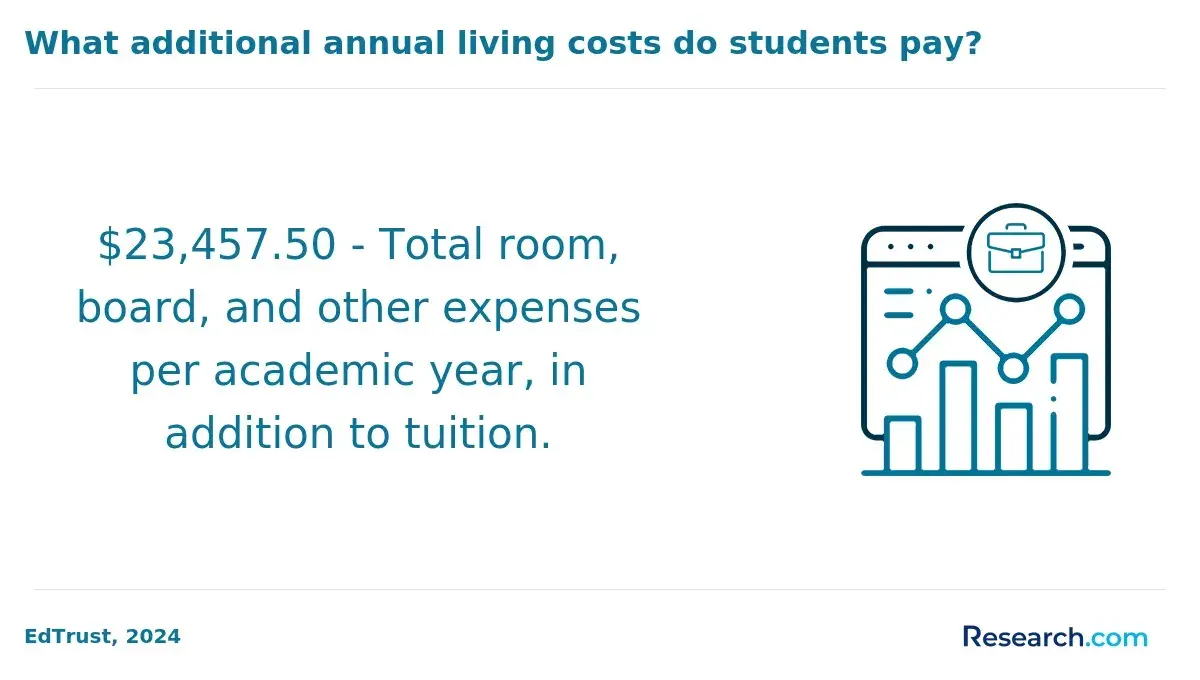
Fees and indirect costs are where many "cheap" online ultrasound technology programs become less affordable. Sonography education is unusually sensitive to these costs because students may need clinical-site documentation, specialty supplies, liability coverage, and exam preparation beyond ordinary online coursework.
When requesting a cost sheet, ask the school to mark each item as required, optional, one-time, or recurring:
- Online learning or technology fees charged per credit, per course, or per term
- Clinical compliance costs, including background checks, drug screenings, immunization tracking, CPR certification, and health records platforms
- Professional liability insurance, student health insurance requirements, or clinical-site onboarding charges
- Lab, simulation, scanning, or skills-assessment fees for hybrid or clinical components
- Textbooks, e-books, access codes, anatomy software, and registry-exam preparation materials
- Travel, lodging, parking, and unpaid time away from work for required campus visits or clinical rotations
- Graduation, transcript, registry application, and credentialing-exam costs
The biggest red flag is a school that publishes tuition clearly but cannot provide a full required-fee estimate. If fees are described only as "varies," ask for the most recent billed amounts for students in your exact program track.
How Does FAFSA and Federal Financial Aid Work for Online Ultrasound Technology Degree Programs?
FAFSA-based aid can make an accredited online ultrasound technology degree more affordable, but eligibility depends on the school, program, enrollment level, citizenship or eligible noncitizen status, academic progress, and financial need. The FAFSA is used to determine access to federal grants, federal loans, work-study, and many state or institutional aid programs.
The 2025-2026 maximum Federal Pell Grant is $7,395. That amount is not guaranteed for every student, but it is important because Pell Grants do not need to be repaid and can substantially reduce the net price of a low-cost online degree-completion program.
Students comparing healthcare education options, including those researching nurse practitioner school, should use the same aid-check process before assuming an online program will qualify for federal aid.
- Confirm that the institution participates in Title IV federal student aid programs.
- Ask whether your specific online ultrasound, sonography, or imaging sciences degree track is eligible for federal aid.
- Submit the FAFSA as early as possible using the school codes for every institution you are seriously considering.
- Review the aid offer by separating grants and scholarships from loans, because loans lower the bill now but increase future repayment obligations.
- Check enrollment rules, since dropping below half-time may affect loan eligibility and some grant amounts.
- Ask whether summer courses, clinical terms, or accelerated sessions are covered by the same aid package.
The FAFSA changed significantly beginning with the 2024-2025 cycle, including the use of the Student Aid Index. Because formulas and school packaging practices can affect offers, students should compare aid letters from multiple programs rather than assuming the cheapest tuition will produce the lowest net price.
Which Scholarships, Grants, and Tuition Benefits Can Help Pay for an Online Ultrasound Technology Degree?
Scholarships, grants, and tuition benefits can reduce the net price of an online ultrasound technology degree, especially for working sonographers who are already employed by hospitals, imaging centers, or health systems. The best funding strategy usually combines several smaller sources instead of relying on one large award.
Gift aid should be prioritized because it does not require repayment. Students in healthcare fields often find aid through schools, employers, foundations, state workforce programs, professional associations, and local hospital auxiliaries. Options include:
- Institutional scholarships from the college or university, including awards for transfer students, adult learners, health sciences majors, or high-GPA applicants
- Federal and state grants based on FAFSA results, residency, income, enrollment intensity, or workforce priorities
- Employer tuition reimbursement from hospitals, outpatient imaging centers, physician groups, and healthcare systems
- Professional association scholarships for diagnostic imaging, sonography, radiologic technology, and allied health students
- Military, veteran, spouse, and dependent education benefits when the student qualifies
- Local healthcare foundation scholarships tied to service areas, rural healthcare, community hospitals, or high-need specialties
Students should ask whether each award is renewable, whether it applies to online students, whether it can be stacked with other aid, and whether it requires a minimum number of credits. These same questions matter across advanced healthcare programs, from imaging degrees to the cheapest PhD nursing programs, because the lowest tuition is not always the lowest net cost after institutional aid.
Can Transfer Credits, Prior Learning, and Competency-Based Study Lower the Cost of an Online Ultrasound Technology Degree?
Transfer credits, prior learning, and competency-based study can lower the cost of an online ultrasound technology degree more than a small tuition discount. This is especially true for registered sonographers, radiologic technologists, and other imaging professionals who may already hold an associate degree, clinical training, registry credentials, or college-level science credits.
Before choosing a program, ask for a written transfer evaluation. Do not rely on a general admissions estimate, because residency requirements and upper-division credit rules can determine how many credits you must still pay for at the new school.
- Request an official or unofficial degree audit before enrolling, showing which credits transfer and which requirements remain.
- Ask how the school treats registry credentials, military medical training, hospital-based certificates, and prior allied-health coursework.
- Confirm the minimum number of credits that must be completed at the institution, often called the residency requirement.
- Check whether transfer credits expire for anatomy, physiology, physics, patient care, or imaging coursework.
- Ask whether competency-based, self-paced, or accelerated courses are available and whether they affect financial aid eligibility.
- Compare the cost of repeating prerequisites against choosing a program with a more generous transfer policy.
Accelerated healthcare programs can be cost-effective only when they reduce time and credits without weakening credential alignment. That same trade-off appears in other online health pathways, including a 1 year DNP program online, where speed matters less than accreditation, eligibility, workload, and total net cost.
How Should Students Compare the Net Price, Quality, and Return on Investment of Online Ultrasound Technology Degree Programs?
The best-value online ultrasound technology degree is the one that fits your credential goal, costs the least after realistic aid, and provides enough academic and career support to justify the price. A program with slightly higher tuition may be a better investment if it has stronger transfer acceptance, clearer certification alignment, better advising, or fewer hidden requirements.
The Bureau of Labor Statistics projects faster-than-average demand for diagnostic medical sonographers over the 2024-2034 period. That outlook can support the value of sonography education, but it should not be treated as a guarantee of employment, wages, or local job availability. Students should compare program cost against the labor market in the state or metro area where they plan to work.
The table below highlights common affordability mistakes and better ways to evaluate total value. Use it before paying an application fee or signing an enrollment agreement.
| Common mistake | Why it can be expensive | Better comparison method |
| Choosing the lowest per-credit tuition | The program may require more credits, more fees, or repeated prerequisites | Compare total required credits, fees, and net price after gift aid |
| Ignoring programmatic accreditation | The degree may not support the certification pathway the student needs | Verify CAAHEP or credentialing-exam alignment before applying |
| Assuming online means fully remote | Clinical rotations, labs, or campus visits may add travel and time costs | Ask for all in-person requirements in writing |
| Overlooking transfer limits | Generous advertising may still require many credits to be taken in residence | Request a degree audit and residency-credit explanation |
| Comparing aid offers by total award amount | Large loan packages can look better than smaller grant-heavy packages | Separate grants and scholarships from loans before calculating net price |
| Ignoring student outcomes | A cheap program with weak support may increase the risk of delayed completion | Ask about completion rates, registry outcomes, advising, and career support |
Before enrolling, ask each school for a written answer to five questions: how many credits you must complete, what the full required cost will be, whether your program is eligible for federal aid, whether it supports your certification goal, and what outcomes data the school can share. The most affordable program is the one that passes all five checks at the lowest realistic net price.
Other Things You Should Know About Ultrasound Technology Degrees
Usually not from start to finish. Entry-level sonography requires supervised hands-on scanning experience, so many programs are hybrid or campus-based with clinical rotations. Fully online options are more common for registered sonographers completing a bachelor's degree.
It can be cheaper if you already meet the prerequisites and the certificate leads to the credential pathway you need. However, a bachelor's degree may offer better long-term flexibility for management, education, or advanced imaging roles.
Many employers prefer or require ARDMS credentials, but requirements vary by employer, specialty, and state. Before enrolling, ask the school which credentialing exams its curriculum is designed to support.
They can be worthwhile when the program is accredited, transfer-friendly, affordable after aid, and aligned with career goals such as advancement, specialization, education, or leadership. The value is weaker if the degree adds debt without improving credential options or career mobility.
References
- Benefits of Certification | ARDMS, APCA, & POCUS Certifications https://www.inteleos.org/benefits-of-certification/
- Sonography and Ultrasound Tech Scholarships & Resources https://www.edumed.org/financial-aid/scholarships/sonography-ultrasound-programs/
- Types of Financial Aid https://www.hhloans.com/types-of-financial-aid/
- Financial Aid and Scholarships for Sonographers https://www.ultrasoundschoolsinfo.com/financial-aid-scholarships-sonography/
- Accreditation processes for technical programs https://edquip.co/blog/accreditation-processes-for-technical-programs
- CAAHEP https://www.caahep.org/
- Top Online Ultrasound Technician Schools https://www.affordablecollegesonline.org/degrees/vocational/ultrasound-tech/