2027 Online Ultrasound Technology Degree Programs With No Letters of Recommendation Required

Co-Founder and Chief Data Scientist
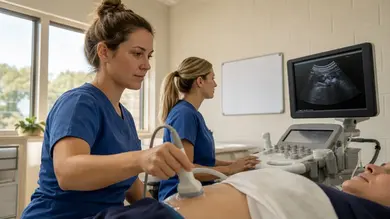
Applicants who lack recent academic or professional references may want a simpler route into ultrasound technology, but they still need a program that supports certification and clinical career goals. Online learning can make coursework more accessible, while sonography scanning practice remains hands-on.
The U.S. Bureau of Labor Statistics projects 13% employment growth for diagnostic medical sonographers from 2024 to 2034, faster than the average for all occupations. This guide explains how no-recommendation admissions work, what schools review instead, and how to verify a legitimate online or hybrid option before applying.
Key Things You Should Know
- "No letters of recommendation required" means the application does not ask for recommendation letters from any applicant; it is different from letters that are optional, waived only for certain students, or requested after initial review.
- Fully online entry-level sonography programs are uncommon because clinical scanning competencies must be completed in person; online options are often hybrid programs or degree-completion programs for already credentialed sonographers.
- Programmatic accreditation, clinical-placement arrangements, certification eligibility, and total cost matter more than streamlined admissions; diagnostic medical sonographers had a $89,340 median annual wage in 2024, according to the U.S. Bureau of Labor Statistics.
Which Online Ultrasound Technology Degree Programs Require No Letters of Recommendation?
The most accurate answer is that availability changes by institution, term, degree level, and applicant type. A school may advertise "no letters required" for general admission while its selective diagnostic medical sonography cohort asks for references, an interview, or clinical documentation. Confirm the requirement on the official program application - not only the university's general admissions page.
Online ultrasound options generally fall into the following categories. This distinction matters because the admissions process and the ability to enter the sonography profession differ substantially.
| Program pathway | Typical online format | Who it commonly serves | Recommendation-letter pattern |
| Entry-level associate degree or certificate | Didactic courses may be online; labs and clinicals are in person | Students preparing for first sonography role | May use selective admissions; letters are not universally required |
| Hybrid bachelor's degree | Online academic courses plus required on-campus or clinical components | Students seeking initial preparation or advanced education | Varies by cohort and prerequisite status |
| Degree-completion bachelor's program | Often substantially online | ARDMS-credentialed or registry-eligible working sonographers | Frequently emphasizes transcripts and credentials rather than letters |
| Related imaging or health-science degree | May be online or hybrid | Professionals seeking advancement outside initial sonography training | Often has streamlined undergraduate admission requirements |
Use a current directory of ultrasound tech programs online to build a starting list, then contact each school to ask whether recommendation letters are required for the exact program, concentration, and start date. Do not assume a program qualifies because its courses are online; ask where scanning labs and supervised clinical rotations occur.
A no-letter option may fit a working adult, career changer with limited academic contacts, or credentialed sonographer completing a bachelor's degree. It is a weaker fit for a first-time student who needs a fully remote program with no in-person requirements, because legitimate entry-level sonography education requires supervised practical training.
What Are the Admission Requirements for Online Ultrasound Technology Degree Programs With No Recommendation Letters?
Removing letters of recommendation eliminates one application component, not the school's responsibility to assess academic readiness. Requirements vary widely, especially between entry-level clinical programs and bachelor's-completion programs. Applicants should expect official transcripts, identity and residency information, and proof that prerequisite coursework or professional credentials meet the program's standards.
The following materials commonly replace or accompany recommendation letters. Reviewing them early can prevent a delayed application or an avoidable prerequisite gap.
- Official high school, college, or both types of transcripts
- Minimum cumulative and prerequisite GPA, often with separate standards for science courses
- Completed prerequisites such as anatomy and physiology, medical terminology, algebra, physics, or patient-care coursework
- A personal statement, short-answer responses, or interview explaining career goals and readiness
- A resume documenting health-care employment, patient-contact experience, or prior imaging work when relevant
- Proof of ARDMS credentials, an associate degree, or registry eligibility for degree-completion programs
- Background check, drug screen, immunizations, CPR certification, and health records required before clinical placement
Standardized tests are increasingly uncommon for many undergraduate online admissions processes, but a school can still require placement testing or evaluate prior college performance. Ask whether prerequisites must be complete at application, whether courses may be in progress, and whether science courses have an expiration date.
Applicants considering adjacent advanced-practice pathways should recognize that admission rules differ by profession. For example, a 1 year DNP program online is designed for nurses with prior education and licensure, not for entry into diagnostic sonography.
Are Online Ultrasound Technology Programs With No Letters of Recommendation Easier to Get Into?
Not necessarily. A no-recommendation policy can make an application less burdensome, particularly for applicants who have been out of school for years, but it does not indicate that admission is automatic or that clinical standards are lower. Programs with limited clinical seats may remain competitive because they must match students with qualified clinical instruction and maintain appropriate supervision.
Admissions committees may place more weight on prerequisite grades, science GPA, completed patient-care experience, interviews, and the applicant's ability to satisfy clinical compliance requirements. A program can be accessible in paperwork while still being selective about who is academically and professionally prepared for sonography training.
One common mistake is choosing the school with the shortest application simply because it seems easier. A better comparison asks whether the program leads to the credential, clinical experience, and certification pathway needed for the role and state where the student plans to work. Employers generally focus on education, clinical competence, certification, and experience rather than whether an applicant submitted recommendation letters for admission.
Applicants seeking a health-care education with flexible admissions should also compare whether their intended occupation actually aligns with the credential. A nurse practitioner school, for example, prepares licensed nurses for an advanced nursing role rather than ultrasound imaging practice.
What Do Online Ultrasound Technology Programs Evaluate Instead of Letters of Recommendation?
Schools use other evidence to determine whether an applicant can handle science-intensive coursework, patient interaction, technical instruction, and clinical responsibilities. In a no-letter process, the most persuasive evidence is usually documented performance rather than a third party's endorsement.
This comparison shows what each common application item can demonstrate. It can help applicants decide where to focus their effort before submitting an application.
| Application material | What it may show | How to strengthen it |
| Transcripts | Academic preparation and science-course performance | Complete prerequisites with solid grades and submit every required transcript |
| Personal statement | Career motivation, communication, and understanding of the field | Explain a specific interest in sonography and acknowledge the clinical commitment |
| Resume | Work history, reliability, and relevant patient-care exposure | Use accurate job titles, dates, duties, and applicable certifications |
| Interview | Professionalism, judgment, and fit for clinical education | Prepare examples of teamwork, patient communication, and managing feedback |
| Credential verification | Readiness for degree completion or advanced coursework | Provide current registry, license, and prior-degree documentation when requested |
Be direct and specific in any essay. Explain why sonography fits your career plan, what you know about patient-facing clinical work, and how you will manage required labs or rotations. Avoid overstating experience or presenting online coursework as a substitute for clinical scanning practice.
How Can You Tell if an Online Ultrasound Technology Degree With No Recommendation Requirement Is Accredited and Legitimate?
Check both the institution and the specific educational pathway. Institutional accreditation supports transferability and federal-aid eligibility, while programmatic accreditation can be especially important for entry-level diagnostic medical sonography programs because it relates to curriculum, faculty, resources, and clinical education standards.
Before paying an application fee or deposit, take these verification steps. They address the most consequential risks: enrolling in a program without adequate clinical education or discovering that the credential does not support the certification route you need.
- Confirm the institution's recognized institutional accreditation through the U.S. Department of Education or the Council for Higher Education Accreditation database.
- Ask whether the specific diagnostic medical sonography program is accredited by the Commission on Accreditation of Allied Health Education Programs and identify its current accreditation status.
- Request a written explanation of clinical-site arrangements, travel expectations, supervision, liability coverage, and whether placement is guaranteed or student-sourced.
- Ask which ARDMS, ARRT, or other certification examination pathways graduates may be eligible to pursue and verify the answer against the certifying body's current rules.
- Confirm whether your state, intended employer, or specialty has additional licensure, credentialing, or clinical-hour expectations.
- Review total charges, refund policies, graduation requirements, and any required on-campus intensives before enrolling.
A major red flag is a school that promises a fully online route to entry-level scanning with no clinical training, cannot name its clinical partners, or will not provide programmatic-accreditation information. Legitimate distance education can deliver lectures, case review, and assessments online, but it cannot eliminate the supervised hands-on component of initial sonography preparation.
Students comparing other clinical doctoral routes should apply the same caution to accreditation and state authorization. This is also relevant when reviewing the cheapest PhD nursing programs, although a nursing PhD serves a different research-focused career path.
How Much Do Online Ultrasound Technology Degree Programs With No Letters of Recommendation Cost?
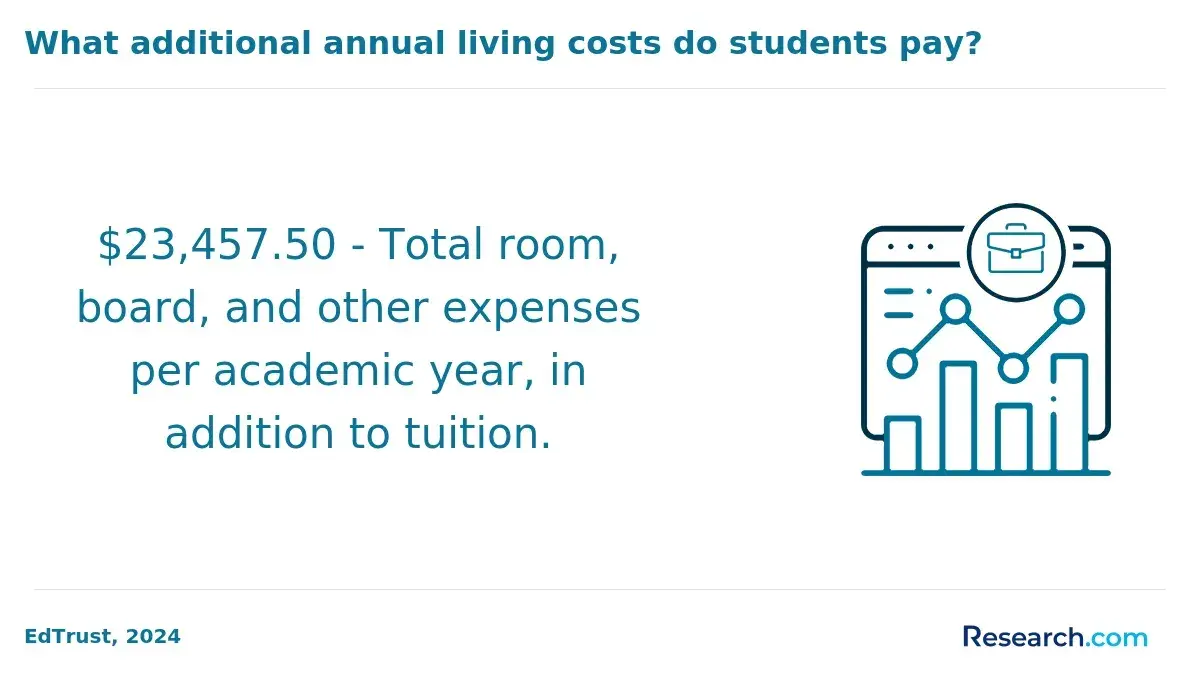
A no-recommendation policy does not determine tuition. Total cost depends on public or private control, resident status, transfer credits, degree level, technology fees, travel, clinical compliance expenses, equipment, and whether the program charges separate fees for labs or clinical coordination. Degree-completion programs may cost less overall for students who already hold an associate degree and professional credentials, but that is not universal.
Use the school's net-price information and a written program-cost estimate rather than comparing tuition alone. The following cost categories often affect the final amount a student pays.
| Cost category | Why it matters for online or hybrid sonography study | What to request |
| Tuition and mandatory fees | Per-credit rates may differ by residency, delivery format, or degree level | Program-specific rate and total required credits |
| Clinical expenses | Background checks, health documentation, drug screening, CPR, uniforms, and travel may be required | Itemized estimate and frequency of renewal costs |
| Technology and course materials | Online platforms, proctoring, software, textbooks, and equipment can add charges | Required versus optional materials list |
| Travel and lodging | Hybrid labs, intensives, and distant clinical sites can change affordability | Campus-visit schedule and clinical-site locations |
| Lost work time | Daytime clinical rotations may limit employment hours | Typical clinical schedule and attendance policy |
The 2024 U.S. Bureau of Labor Statistics median annual wage of $89,340 for diagnostic medical sonographers is useful labor-market context, not a promise of individual earnings or a reason to overlook program price. Compare anticipated borrowing against completion requirements, local job demand, certification eligibility, and the schedule you can realistically sustain.
Can You Get Financial Aid for an Online Ultrasound Technology Degree With Streamlined Admissions?
Yes, streamlined admissions does not by itself prevent financial aid. Students enrolled in an eligible program at an institution that participates in federal student aid may submit the FAFSA and may be considered for grants, loans, work-study, state aid, institutional scholarships, or employer tuition assistance. Eligibility depends on the student, school, enrollment status, satisfactory academic progress, and program structure.
For the 2025-26 award year, the maximum Federal Pell Grant is $7,395. That amount is a maximum rather than a standard award, so students should treat it as a planning reference and review their own aid offer for actual eligibility.
Before accepting an offer, compare gift aid with loans and clarify how clinical enrollment affects aid. Clinical courses may have fixed attendance schedules, and dropping below the school's required enrollment threshold can affect disbursement or repayment obligations.
Students exploring other health-related degree options can similarly compare curriculum, aid, and career alignment. An online nutritionist degree may lead toward nutrition and dietetics pathways, but it does not replace sonography-specific clinical education or credential preparation.
How Long Does an Online Ultrasound Technology Degree With No Letters of Recommendation Take to Complete?
Completion time depends on the credential, prior credits, prerequisite status, cohort sequencing, clinical availability, and whether the student attends full time. No-recommendation admissions may reduce application friction, but they do not shorten required anatomy, physics, scanning laboratory, or supervised clinical learning.
An entry-level associate degree or certificate commonly requires multiple academic terms plus clinical rotations, while a bachelor's-completion program may move faster for a student who transfers substantial prior coursework and already holds the relevant credential. Hybrid formats can add scheduling constraints because clinical sites and in-person labs operate on fixed calendars.
Ask each program for a term-by-term plan showing prerequisites, campus visits, clinical hours, and the earliest possible completion date for someone with your transfer record. Be cautious of marketing that gives a short timeline without explaining whether it applies only to credentialed professionals, full-time students, or those entering with completed prerequisites.
Can You Transfer Credits Into an Online Ultrasound Technology Degree Program With No Recommendation Letters?
Many programs evaluate transfer credit, but acceptance is separate from admission and separate from professional certification eligibility. General education, anatomy and physiology, medical terminology, statistics, and prior college coursework may transfer when they meet the school's equivalency, grade, recency, and accreditation rules. Clinical or technical sonography courses are often reviewed more strictly.
Request an official transfer evaluation before making an enrollment decision. The evaluation should identify accepted credits, remaining prerequisites, residency-credit requirements, and whether transferred coursework changes your sequence for labs or clinical rotations.
Students in degree-completion programs may receive the most value from prior associate-level education and recognized sonography credentials. In contrast, a student with unrelated credits may still need most of the professional curriculum. Do not rely on verbal estimates from recruitment staff when a written evaluation is available.
How Should You Compare Online Ultrasound Technology Degree Programs That Do Not Require Letters of Recommendation?
Compare programs based on career fit and documented outcomes, not simply on the absence of recommendation letters. The right choice depends on whether you need initial professional preparation, already work as a sonographer, require a flexible academic schedule, and can complete required clinical education where you live.
Use these questions during calls with admissions and program staff. They help distinguish a convenient application process from a program that can genuinely support your educational and employment goals.
- Are recommendation letters not required for every applicant to this exact program and upcoming term, or are they merely optional or conditionally waived?
- Is this an entry-level clinical sonography program, a hybrid program, or a degree-completion program for credentialed professionals?
- What institutional and programmatic accreditations apply, and what is the current accreditation status?
- Where will I complete labs and clinical rotations, who arranges them, and what travel or scheduling limitations should I expect?
- Which certification examination pathways can graduates pursue, and what additional requirements may apply?
- What are the total direct and indirect costs, including clinical fees, travel, technology, and supplies?
- Which of my credits will transfer in writing, and how will that change my completion timeline?
- What support is available for online learners, including tutoring, clinical coordination, disability services, and career preparation?
The best-fit no-recommendation program is one that removes an unnecessary application barrier while retaining transparent academic standards, credible clinical training, and a clear connection to your intended career. Avoid programs that pressure immediate enrollment, provide vague answers about clinical sites, or treat accreditation as unimportant.
Other Things You Should Know About Ultrasound Technology
Usually not through online coursework alone. Entry-level sonography education requires hands-on scanning practice and supervised clinical experience. Some programs deliver academic courses online but require in-person labs, clinical rotations, or both.
Most applicants submit transcripts and may also provide a resume, personal statement, prerequisite-course records, interview responses, and professional credential documentation. Follow the program's exact checklist because requirements differ by degree type.
Some programs prefer or require patient-care experience, while others admit qualified students without it. Experience may strengthen an application, but prerequisite grades, clinical readiness, and completion of required compliance steps can also be important.
Read the current program-specific application instructions, not just the university admissions page. Then email or call admissions and ask for written confirmation that letters are not required for your applicant category, concentration, and intended start term.
References
- Best 8 Month Ultrasound Tech Program Online [Accredited] - Kamerpower https://kamerpower.com/best-8-month-ultrasound-tech-program-online-accredited/
- Accredited Sonography School | Ultrasound Career Training Program https://www.gurnick.edu/programs/ultrasound-technology/
- Financial Aid: How to Pay for Sonography School https://www.ultrasoundschoolsinfo.com/how-to-pay-for-sonography-school/
- Diagnostic Medical Sonography - CT State https://ctstate.edu/programs/diagnostic-medical-sonography
- Benefits of Certification | ARDMS, APCA, & POCUS Certifications https://www.inteleos.org/benefits-of-certification/
- Essential Ultrasound Tech Requirements & Education https://www.hctravelnursing.com/blog/ultrasound-tech-requirements-education
- Eligibility and Requirements https://www.kumc.edu/school-of-health-professions/academics/departments/respiratory-care-and-diagnostic-science/academics/diagnostic-ultrasound-and-vascular-technology-program/eligibility-and-requirements.html
- Diagnostic Medical Sonography - Gadsden State Community College https://www.gadsdenstate.edu/programs-of-study/diagnostic-medical-sonography
- Top 12 Fully Accredited U.S. Ultrasound Schools https://todopocus.com/top-12-fully-accredited-us-ultrasound-schools/
- Ultrasound Tech Programs in Indiana | 2026 Guide https://in.stellarcollege.edu/ultrasound-tech-programs-indiana/