2027 Cheapest Accredited Online Physical Therapy Assistant Degree Programs That Accept FAFSA

Co-Founder and Chief Data Scientist
Choosing an online physical therapy assistant degree is tricky because the cheapest option is not always the lowest-cost path after labs, clinical travel, fees, and financial aid are counted. The U.S. Bureau of Labor Statistics reports a 12% projected job-growth rate for physical therapist assistants and aides from 2024 to 2034, making cost control especially important for students entering a growing allied health field.
This guide is for FAFSA-seeking students comparing accredited online or hybrid PTA programs, real net cost, accreditation, transfer credits, and career return before enrolling.
Key Things You Should Know
- The cheapest FAFSA-eligible online PTA options are usually public community or technical colleges with hybrid delivery; fully online PTA degrees are rare because CAPTE-accredited programs require hands-on labs and supervised clinical education.
- For 2025-26, the maximum Federal Pell Grant is $7,395, which can cover a meaningful share of tuition at low-cost public two-year colleges but usually will not cover every fee, book, lab, travel, and living expense.
- The BLS median pay benchmark for physical therapist assistants and aides was $65,510 in 2024, so students should compare total borrowing against likely entry-level wages, not just advertised tuition.
Which Are the Cheapest Accredited Online Physical Therapy Assistant Degree Programs That Accept FAFSA?
The table below is a practical shortlist of low-cost program types and named public options students often compare first. Because tuition, state residency rules, cohort availability, and online delivery can change, use this as a starting point and verify current CAPTE status, federal student aid participation, and total program cost directly with each school.
| Program or option to verify | Credential | Online format | Why it may be affordable | Important cost check |
| San Juan College | Associate of Applied Science in Physical Therapist Assistant | Online or hybrid coursework with required in-person labs and clinicals | Public community college pricing can make it one of the strongest low-cost starting points, especially for students who qualify for favorable tuition rates | Confirm current lab travel requirements, residency-based tuition, program fees, and whether the PTA cohort is aid-eligible for your enrollment term |
| Northland Community and Technical College | Associate of Applied Science in Physical Therapist Assistant | Hybrid delivery with in-person clinical education | Public two-year college structure may reduce tuition compared with private career-college alternatives | Ask whether out-of-state online students pay a different rate and how clinical placements are arranged |
| Lake Area Technical College | Associate degree pathway in physical therapist assistant | Hybrid or web-enhanced coursework with campus and clinical requirements | Public technical college model can offer lower tuition for students who can meet residency and lab requirements | Verify current online availability, cohort timing, required campus visits, and program-specific fees |
| Local public community college with CAPTE-accredited PTA program | Associate degree | Often campus-based with some online general education or lecture courses | May be cheapest overall if you can commute, avoid housing costs, and use FAFSA grants | Do not assume "some online classes" means the full PTA program can be completed online |
| Private nonprofit or private career-college hybrid PTA program | Associate degree | Campus-dependent hybrid format | Can become competitive only if grants, scholarships, employer aid, or transfer credits significantly reduce net price | Compare net price and borrowing carefully because sticker tuition is often higher than public two-year options |
The best first filter is not "online" alone. A better filter is a CAPTE-accredited associate degree, Title IV federal aid participation, low net price, acceptable lab travel, and clinical placement support.
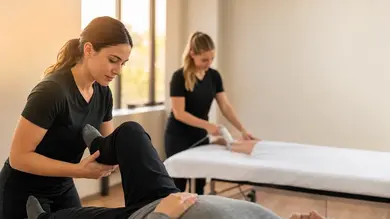
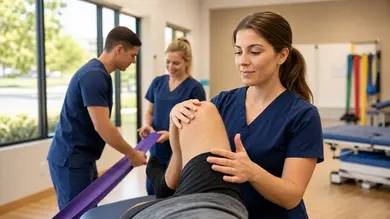
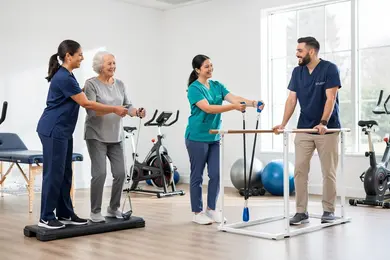
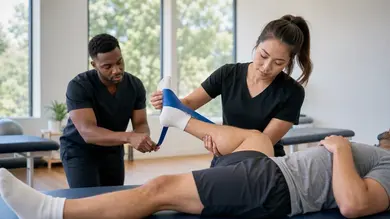
Students should also understand what the PTA credential is. A physical therapist assistant works under the direction and supervision of a licensed physical therapist, helping patients perform therapeutic exercises, use mobility equipment, improve function, and follow treatment plans. In most states, the standard education path is a CAPTE-accredited associate degree followed by the National Physical Therapy Examination for PTAs and state licensure or certification.
How Does FAFSA Eligibility Work for Online Physical Therapy Assistant Degree Programs?
FAFSA eligibility means a student can apply for federal student aid, but it does not mean the program will be free or that every student will receive the same grant amount. The school, the program, and the student must all meet federal aid requirements.
Before choosing a PTA program, verify these conditions in this order because one missing requirement can make a low advertised tuition much less useful:
- Confirm the institution participates in federal Title IV student aid programs and has a valid federal school code.
- Ask whether the specific PTA associate degree cohort is eligible for federal aid, not just whether the college as a whole accepts FAFSA.
- Check whether your enrollment level, such as full-time or half-time, supports the aid package you expect.
- Review satisfactory academic progress rules, including GPA, completion pace, repeated courses, and maximum timeframe limits.
- Ask whether summer terms, prerequisite terms, clinical rotations, or repeated lab courses are covered differently by aid.
A common mistake is assuming that FAFSA acceptance equals grant eligibility. FAFSA is the application; the aid offer depends on financial need, dependency status, enrollment intensity, cost of attendance, lifetime Pell usage, loan history, and school packaging policies.
Online delivery adds another layer. Some schools participate in federal aid but limit aid eligibility to approved programs, approved states, or approved enrollment formats. If the PTA program requires periodic campus labs, students should ask whether travel and lodging are included in the school's cost of attendance budget, because that can affect how much aid can be applied.
How Much Does an Online Physical Therapy Assistant Degree Cost After Financial Aid?
The real cost of an online physical therapy assistant degree is the net price: tuition, fees, books, supplies, lab costs, clinical travel, exam costs, and living expenses minus grants and scholarships. The College Board reported average published tuition and fees of $4,050 for in-district public two-year colleges in 2024-25, which explains why public community colleges are usually the lowest-cost PTA starting point.
The table below shows the major cost categories students should include when estimating net price. It separates direct school charges from costs that can still affect borrowing even if they are not all billed on the tuition statement.
| Cost category | What it may include | Why it matters for online or hybrid PTA students |
| Tuition | General education, PTA lecture, lab, and clinical coursework | Public in-district or in-state tuition can sharply reduce the baseline cost |
| Program fees | Lab fees, simulation fees, background checks, drug screening, uniforms, and liability insurance | PTA programs often have health-program fees that make sticker tuition incomplete |
| Books and equipment | Textbooks, online learning systems, goniometers, supplies, and technology | These costs can be due before aid refunds arrive |
| Campus travel | Required lab intensives, lodging, meals, parking, or transportation | A low-tuition online program may become less affordable if repeated travel is required |
| Clinical placement costs | Commuting, schedule changes, immunizations, health records, and lost work hours | Clinical rotations are mandatory and may limit how much a student can work |
| Licensure and exam costs | NPTE-PTA exam, state application, jurisprudence exam, and fingerprinting where required | These costs usually arrive near graduation and should be planned early |
A useful way to estimate affordability is to build a conservative aid scenario. For example, the 2025-26 maximum Federal Pell Grant is $7,395; if a student's direct tuition and required fees are close to that amount, grant aid may cover a large portion of school charges. If the same student has high travel, housing, or childcare costs, they may still need scholarships, savings, work income, or loans.
Do not compare programs by tuition alone. Compare the total amount you would need to pay or borrow to finish the degree, including prerequisite semesters and any extra term needed if courses are offered in a fixed cohort sequence.
The best-value online PTA program is not always the one with the lowest published tuition. It is the program that combines low net cost, proper accreditation, manageable clinical logistics, strong completion support, and a realistic route to licensure.
Use the following comparison when deciding whether a cheaper program is genuinely better or simply cheaper on paper:
- Choose the lowest-tuition public program if you can meet lab and clinical requirements without expensive travel, your transfer credits apply cleanly, and the program is CAPTE-accredited.
- Choose a slightly higher-cost program if it accepts more transfer credits, offers better clinical placement support, reduces time away from work, or avoids repeated long-distance lab trips.
- Avoid choosing by price alone if the program has unclear accreditation status, limited clinical placement help, high attrition risk, or fees that are not disclosed until late in the admissions process.
Students comparing allied health options may also want to review adjacent pathways, such as an online nutrition masters, if their long-term goal is broader health, wellness, or rehabilitation-adjacent work rather than direct PTA licensure.
The strongest value signal is a low expected debt load relative to entry-level earning potential. The BLS 2024 median pay figure for physical therapist assistants and aides gives students a useful national benchmark, but local wages, employer type, licensure timing, and part-time versus full-time work can change the actual ROI.
For PTA students, accreditation is not optional. The program should be accredited by the Commission on Accreditation in Physical Therapy Education, commonly known as CAPTE, because state licensure boards typically require graduation from a CAPTE-accredited PTA program before a student can sit for the licensure exam.
There are two different accreditation checks students should make. Institutional accreditation supports federal aid eligibility and credit transfer, while programmatic CAPTE accreditation supports PTA licensure eligibility.
| Accreditation or approval type | What it confirms | Why it matters |
| Institutional accreditation | The college or university meets recognized institutional standards | Often required for federal aid participation and future credit transfer |
| CAPTE program accreditation | The PTA program meets professional education standards | Usually required for PTA licensure exam eligibility |
| State authorization | The school is allowed to enroll online students from your state | Important for distance learners who live outside the school's home state |
| State licensure alignment | The curriculum is designed to meet requirements for the state where you plan to work | Prevents surprises after graduation if your state has additional rules |
Red flags include vague phrases such as "accreditation pending," unclear campus-specific accreditation, no published licensure disclosures, or admissions staff who cannot explain whether the online or hybrid cohort is included in the accredited program. If a school is inexpensive but not properly accredited for PTA licensure, the low price is not a good value.
FAFSA can connect eligible PTA students with grants, federal loans, and work-study, but the mix depends on financial need and school packaging. Grants are usually the most valuable because they generally do not need to be repaid if the student remains eligible and meets program rules.
These are the main federal aid categories to understand before accepting an award letter:
- Federal Pell Grant: Need-based grant aid for eligible undergraduate students; the maximum award is $7,395 for 2025-26, but not every student qualifies for the maximum.
- Federal Supplemental Educational Opportunity Grant: Additional campus-based grant aid for students with exceptional financial need, available only at participating schools with limited funds.
- Federal Direct Subsidized Loan: Need-based undergraduate loan where the government pays interest during certain enrolled and deferment periods.
- Federal Direct Unsubsidized Loan: Undergraduate loan not based on financial need; interest begins accruing after disbursement.
- Federal Work-Study: Part-time work funding through participating schools, though availability may be limited for students with demanding clinical schedules.
Students considering a future nursing pathway can compare how aid and degree levels work in other healthcare programs, including affordable routes to become a nurse practitioner, but PTA students should remember that NP programs are graduate-level nursing programs with different admissions, licensure, and aid rules.
The biggest FAFSA mistake is borrowing the full amount offered without calculating whether it is needed. A lower loan amount can improve ROI, especially because PTA students may also need funds later for licensure, relocation, or continuing education.
Transfer credits can lower the cost of an online PTA degree by reducing the number of general education or prerequisite courses a student must repeat. They are especially valuable in PTA programs because professional courses are often locked into a cohort sequence and may not be easy to accelerate.
Ask each school for a written transfer evaluation before committing. Focus on these high-impact credit categories:
- General education: English, psychology, communications, humanities, and social science courses are often the easiest to transfer if they match degree requirements.
- Science prerequisites: Anatomy and physiology may transfer only if completed recently, with required labs, and with a minimum grade.
- College math or statistics: These credits can remove a term from the plan if they satisfy the PTA degree map.
- Healthcare certifications: CPR or prior healthcare training may satisfy admissions requirements, but they rarely replace core PTA technical courses.
- Prior degree credits: Students with an associate or bachelor's degree may still need PTA-specific sciences and all professional PTA courses.
Transfer-friendly healthcare programs differ widely. For example, completion-oriented nursing pathways such as RN to BSN no clinicals programs are built for licensed nurses, while PTA associate programs usually require a fixed sequence of hands-on technical coursework even when general education credits transfer.
A higher-tuition PTA program can sometimes cost less overall if it accepts enough credits to eliminate a semester. The right question is not "What is the tuition per credit?" but "How many credits will I actually need to pay for before I graduate?"
A low-cost FAFSA-eligible online or hybrid PTA degree is best for students who want direct patient-care work, can handle in-person clinical requirements, and need federal aid to reduce upfront cost. It is not ideal for students who need a program that is completely remote from start to finish.
The students most likely to benefit are those who can match the program format to their life circumstances:
- Working adults with predictable schedules: Online lecture courses can help, but clinical rotations may still require daytime availability.
- Students near required lab sites: Living close to campus or lab intensives can make a hybrid program much cheaper than a distant online option.
- FAFSA-eligible students with high grant eligibility: Pell and state grants can significantly reduce the amount owed for a public two-year program.
- Career changers with completed general education credits: Transfer credits can reduce the number of paid semesters.
- Students committed to rehabilitation work: PTA training is specialized, so it offers the best value when the student truly wants supervised therapy-assistant practice.
Students who mainly want the fastest entry into nursing may be better served by comparing alternatives such as fast track LPN programs online, because LPN and PTA pathways lead to different licenses, duties, schedules, and advancement routes.
Students should be cautious if they cannot travel for labs, cannot attend full-time clinical rotations, or need evening-only scheduling. Those constraints can turn an otherwise affordable PTA program into a difficult or delayed path.
Career ROI depends on how much a student pays or borrows compared with the income the credential may support. For PTA students, low debt matters because the entry credential is usually an associate degree, not a bachelor's or graduate degree.
The BLS reported a 2024 median annual wage of $65,510 for physical therapist assistants and aides and projected 12% job growth from 2024 to 2034. That suggests solid labor-market demand, but students should still compare local wages and employer requirements because salaries vary by state, setting, experience, and whether the role is full-time.
Use this ROI framework before enrolling:
- Estimate total cost to graduation, including prerequisites, fees, travel, and licensure costs.
- Subtract grants, scholarships, tuition waivers, employer assistance, and savings you can use without borrowing.
- Calculate the total federal and private loan amount you would need if you completed on time.
- Compare monthly repayment estimates with realistic local PTA wages, not only national median figures.
- Consider non-wage factors such as schedule, physical demands, advancement options, and whether you may later pursue another healthcare credential.
Some students use PTA as a long-term clinical career, while others compare it with nursing advancement paths such as a shortest post master's FNP program later in their healthcare planning. Those are very different education levels, so the best ROI depends on the license you want, how much time you can invest, and how much debt you are willing to carry.
The cheapest program is usually the best ROI only when it is accredited, completable, and aligned with the student's state licensure goals. If low cost comes with poor fit, long delays, or expensive travel, a moderately higher-cost local program may produce a better practical return.
How Should Students Choose the Cheapest FAFSA-Eligible Online Physical Therapy Assistant Degree?
The safest way to choose is to compare programs by net cost, accreditation, completion feasibility, and licensure fit. A program that looks cheap on a tuition page may become expensive if it adds travel, delays, repeated prerequisites, or unsupported clinical placements.
Before applying, use this step-by-step checklist to narrow your options:
- Confirm the program is a PTA associate degree, not a general physical therapy, pre-PT, exercise science, or therapy aide certificate.
- Verify CAPTE accreditation for the exact program and campus or delivery format you plan to enter.
- Confirm the institution participates in federal student aid and that the PTA program is eligible for FAFSA-based aid.
- Request a full cost of attendance estimate that includes tuition, fees, books, supplies, travel, background checks, immunizations, and clinical costs.
- Ask for a transfer-credit evaluation before paying a deposit, especially if you already completed anatomy, physiology, psychology, English, or math.
- Compare grant aid before loans, then calculate how much debt you would carry if you finished on time.
- Ask how clinical placements are assigned and whether you may need to find or travel to your own sites.
- Review licensure disclosures for the state where you plan to work after graduation.
- Ask about cohort size, graduation timing, exam preparation, and what happens if you fail or need to repeat a course.
- Choose the lowest net-cost program that you can realistically complete without risking accreditation, licensure, or clinical-placement problems.
Common red flags include pressure to enroll before aid is finalized, unclear program fees, no written transfer evaluation, vague accreditation answers, and promises that federal aid will cover everything. A trustworthy school should be able to explain total cost, aid limits, refund rules, clinical expectations, and licensure alignment in writing.
The best decision is usually a balanced one: choose the affordable program that keeps debt low while still giving you the accredited training, supervised practice, and state licensure pathway required to work as a physical therapist assistant.
Other Things You Should Know About Physical Therapy Assistant
Usually no. PTA licensure generally requires graduation from a CAPTE-accredited associate degree program. Short certificates may help with healthcare exposure, but they typically do not qualify a student to become a licensed physical therapist assistant.
Most accredited PTA programs are not fully self-paced. Even when lectures are online, students usually follow a cohort schedule because labs, skills testing, and clinical rotations must occur in a structured sequence.
Some students work during prerequisite or lecture-heavy terms, but full-time work can be difficult during labs and clinical rotations. Ask for the weekly schedule before enrolling so you can plan income, childcare, and transportation realistically.
Many programs coordinate or approve clinical placements, but policies vary. Before enrolling, ask whether the school assigns placements, whether sites are available near your home, and what happens if a local placement is unavailable.
- NPTE Pass Rates By Program https://www.fsbpt.org/Free-Resources/NPTE-Pass-Rate-Reports/NPTE-Pass-Rates-By-Program/exam/PT
- Physical Therapist Assistant Program Costs https://cod.edu/academics/areas/physical-therapist/program-costs.html
- Physical Therapist Assistant (A.S.) http://www.fscj.edu/program
- Physical Therapist Assistant (PTA) & PT Aide - Certification & Salary https://www.healthcaredegree.com/physical/physical-therapist-assistant
- Physical Therapist Assistant AAS Degree https://www.lonestar.edu/programs-of-study/physical-therapist-aas.htm
- Physical Therapist Assistant, AS https://calbaptist.edu/academics/programs/associate-of-science-physical-therapist-assistant/
- Physical Therapist Assistant (A.A.S.) - Walters State Community College https://ws.edu/academics/programs/aas/physical-therapist-assistant.aspx
- Physical Therapy Assistant https://www.fastweb.com/directory/scholarships-for-physical-therapy-assistant-majors
- Physical Therapist Assistant https://www.broward.edu/academics/health-sciences/physical-therapist-assistant/
- PTA Programs in Florida: Costs, Ratings and Classes for 2025 https://physical-therapy-assistant.org/pta-schools-in-florida-fl/