2027 Best Accredited Online Physical Therapy Assistant Degree Programs: Compare Tuition, Admissions, and Career Outcomes

Co-Founder and Chief Data Scientist
Choosing an online physical therapy assistant degree is really a choice about accreditation, hands-on training, cost, and licensure readiness. The U. S. Bureau of Labor Statistics reports a $65,510 median annual wage for physical therapist assistants based on May 2024 data, making PTA a strong allied health option for students who want patient care without earning a graduate degree. This guide is for first-time college students, career changers, and working adults comparing accredited hybrid PTA programs. You will learn how to evaluate tuition, admissions, clinical requirements, flexibility, and career outcomes before applying.
Key Things You Should Know
- Accreditation is nonnegotiable: students should verify that the PTA program is accredited by the Commission on Accreditation in Physical Therapy Education, because graduation from a CAPTE-accredited program is the standard pathway to PTA licensure eligibility.
- Most "online" PTA degrees are hybrid, not fully online, because lab skills and supervised clinical education must be completed in person even when lectures or general education courses are delivered online.
- Career demand is favorable: the BLS projects 19% employment growth for physical therapist assistants and aides from 2023 to 2033, but salary and hiring outcomes still vary by location, setting, licensure status, and clinical experience.
Which Accredited Online Physical Therapy Assistant Degree Programs Offer the Best Overall Value?
The best value is usually not the program with the lowest tuition or the most flexible schedule by itself. For physical therapy assistant students, value means the strongest combination of CAPTE accreditation, manageable total cost, accessible lab requirements, clinical placement quality, licensure preparation, and student support.
Because PTA education requires hands-on training, the strongest online options are typically hybrid associate degree programs. These programs may deliver didactic courses online while requiring campus lab intensives, local clinical rotations, or scheduled in-person skill checks. That structure can work well for students who need flexibility but still want a licensure-focused health care degree.
The table below summarizes representative value factors students should compare when reviewing accredited hybrid PTA programs. It is not a substitute for checking each school's current CAPTE status, catalog, tuition schedule, and state authorization rules before applying.
| Program value factor | What it means for PTA students | Best fit | Potential drawback |
| Public community or technical college hybrid PTA program | Usually offers lower tuition, especially for in-district or in-state students, with career-focused associate degree training. | Cost-conscious students who can attend required labs and clinicals in the service area. | May have limited seats, strict prerequisites, and less scheduling flexibility for labs. |
| Distance or e-degree PTA option with campus intensives | Online coursework is combined with required in-person lab blocks and supervised clinical education. | Working adults who live farther from campus but can travel for scheduled lab sessions. | Travel, lodging, and time away from work can increase the real cost. |
| Private hybrid PTA program | May offer more frequent start dates, structured advising, or broader online infrastructure. | Students who value convenience, student support, or faster access to required courses. | Total tuition can be substantially higher, so aid offers and debt load matter more. |
| Local campus-based PTA program with some online courses | General education or lecture courses may be online while labs and clinical preparation happen on campus. | Students who want the lowest travel burden and close faculty access. | Less useful for students who need a mostly remote schedule. |
For many students, the best overall value is a CAPTE-accredited public program close enough for lab attendance and clinical placement support. Paying more can make sense if the program's format prevents relocation, reduces time away from work, or provides stronger advising, but the decision should be based on total cost and licensure readiness rather than reputation alone.
A common mistake is assuming that a "hybrid" label automatically means the program is convenient. Before choosing, ask how often you must be on campus, whether clinical placements can be completed near your home, and what happens if a placement site is unavailable in your area.
What Accreditation Should Students Look for in an Online Physical Therapy Assistant Degree Program?
Students should look for two layers of accreditation: institutional accreditation for the college and programmatic accreditation from the Commission on Accreditation in Physical Therapy Education, commonly called CAPTE. For PTA students, CAPTE accreditation is the key signal that the curriculum, faculty qualifications, lab training, clinical education, and graduate preparation meet the profession's educational standards.
This matters because physical therapy assistants are licensed or regulated by states. While requirements vary by jurisdiction, the typical pathway includes graduating from a CAPTE-accredited PTA program and passing the National Physical Therapy Exam for physical therapist assistants. A non-CAPTE program may not qualify a graduate for licensure, even if the school itself is institutionally accredited.
Use the following steps before you apply, especially if a school markets the program as online, accelerated, or flexible:
- Confirm that the specific PTA program, not just the college, appears as accredited in the CAPTE program directory.
- Check whether the program is accredited, on probation, developing, or recently changed status.
- Ask the admissions office which states the program is designed to meet licensure requirements in.
- Verify whether online students outside the school's home state are eligible for placement, supervision, and licensure preparation.
- Save written documentation of accreditation status, state authorization, and clinical placement policies before enrolling.
Red flags include vague language such as "aligned with physical therapy standards," pressure to enroll before accreditation is verified, or claims that students can complete all PTA requirements fully online. PTA training includes direct patient care skills, so legitimate programs must include in-person laboratory and clinical education.
How Do Tuition Costs Compare Across Accredited Online Physical Therapy Assistant Degree Programs?
Tuition for physical therapy assistant programs varies widely because most PTA degrees are associate degrees offered by public colleges, technical colleges, and private institutions. The most affordable route is often an in-district public community college, but the lowest published tuition is not always the lowest total cost once program fees, lab supplies, background checks, uniforms, travel, and clinical placement expenses are included.
One useful benchmark is the College Board's 2024 tuition data: the average published tuition and fees for public two-year in-district students was $4,050 for the 2024-25 academic year. PTA students should treat that as a baseline for general community college pricing, not a complete PTA program cost, because allied health programs commonly add required expenses.
The table below shows how cost categories usually differ across PTA program types. Use it to compare real affordability instead of focusing only on advertised per-credit tuition.
| Cost category | Public local hybrid PTA program | Public out-of-district or out-of-state option | Private hybrid PTA program |
| Tuition | Often the lowest for residents in the college district or state. | Higher if residency discounts do not apply. | Usually higher than public options, though aid may reduce net cost. |
| Program fees | May include lab, simulation, testing, liability insurance, or clinical fees. | Similar fees, plus possible distance learning charges. | May bundle some services but can still charge health program fees. |
| Travel and lodging | Lower if campus and clinical sites are nearby. | Can become significant for lab intensives or distant clinical sites. | Varies by campus model and required in-person schedule. |
| Lost work time | Depends on lab and clinical schedules. | May be higher if travel is required. | May be lower if scheduling is more structured, but this varies by school. |
| Net price after aid | Can be favorable for Pell-eligible and in-state students. | Depends on residency, aid eligibility, and transfer credits. | Must be evaluated carefully using the actual financial aid offer. |
When comparing programs, request a full cost sheet that includes tuition, fees, books, equipment, immunizations, background checks, drug screening, CPR certification, transportation, and clinical compliance costs. If a school cannot provide a clear estimate, that is a sign to keep asking questions before committing.
Students should also compare opportunity cost. A slightly more expensive program may be worth considering if it allows you to keep working, avoids relocation, accepts more transfer credits, or places clinical rotations closer to home. However, borrowing heavily for convenience can reduce long-term return on investment, especially if lower-cost CAPTE-accredited options are available nearby.
Admission to accredited PTA programs can be more competitive than general college admission because cohorts are limited by lab space, faculty supervision, and clinical site availability. A school may have open admission to the college but selective admission to the PTA program itself.
Most accredited PTA programs look for evidence that applicants can handle science coursework, communicate professionally, and succeed in patient-facing environments. Requirements vary, but many programs use a points-based or ranking system that weighs academic preparation and readiness for clinical education.
Before applying, compare the admissions criteria that most directly affect your chances. These are the items that can change whether a program is realistic for your timeline:
- Prerequisite courses such as anatomy and physiology, medical terminology, psychology, English composition, or college math.
- Minimum GPA requirements for overall coursework, prerequisites, or science courses.
- Entrance exams such as TEAS or other health science readiness assessments, if required by the school.
- Observation hours, volunteer experience, or documented exposure to physical therapy settings.
- Background check, immunization, drug screening, CPR certification, and physical ability requirements for clinical participation.
- Interview, essay, professional references, or ranking process for limited seats.
Admissions flexibility should not be confused with low quality. Some programs reduce barriers by accepting transfer credits, offering online prerequisites, or using multiple start dates. The important question is whether students admitted through that pathway still receive CAPTE-accredited training, supervised clinical education, and licensure preparation.
A smart strategy is to apply only after mapping your prerequisites against each program's selection formula. If your science GPA is weak, retaking one key prerequisite may improve your application more than applying broadly to programs where you do not meet the competitive profile.
The most flexible PTA programs are usually hybrid programs that deliver lectures online while concentrating required hands-on training into scheduled labs or campus intensives. Fully online PTA programs should be treated with caution because entry-level PTA education requires psychomotor skills, patient handling, safety procedures, and supervised clinical practice.
Format matters because it affects your weekly schedule, commute, ability to work, and clinical placement options. Online health care education can be highly effective when it matches the student's professional stage; for example, formats built for already-licensed clinicians, such as a shortest post master's FNP program, are very different from entry-level PTA training, where in-person skills assessment is essential.
The table below compares common PTA delivery formats and the type of student each one tends to serve best.
| Learning format | How it works | Flexibility level | Best for |
| Hybrid weekly format | Online lectures are paired with regular on-campus labs. | Moderate | Students living within commuting distance who want some online coursework. |
| Distance format with lab intensives | Students complete online coursework and travel to campus for concentrated lab sessions. | High for weekly coursework, lower during lab weeks | Working adults who can plan travel in advance. |
| Campus-based program with online general education courses | PTA technical courses are largely in person, while some nonclinical courses may be online. | Low to moderate | Students who learn best with frequent faculty contact. |
| Evening or weekend hybrid model | Coursework and labs are scheduled outside traditional weekday hours when available. | Potentially high | Students balancing work or caregiving responsibilities. |
The biggest mistake is choosing a program based on online coursework while overlooking clinical scheduling. Clinical rotations may require full-time daytime availability, travel to assigned sites, or compliance deadlines that are not flexible. Ask whether clinicals are arranged by the school, whether you may propose local sites, and who is responsible if a local placement falls through.
Support services matter more in hybrid PTA programs than many applicants realize. Students must manage online coursework, lab competency checks, clinical documentation, health compliance, and licensure preparation, often while working or commuting.
Strong programs do not simply post lectures online. They provide structured academic and clinical support that helps students progress through a cohort-based, skills-heavy curriculum. Look for services that reduce confusion before problems affect grades or clinical eligibility.
When comparing programs, ask specifically about the following support features:
- Dedicated PTA faculty advising that helps students sequence prerequisites, technical courses, labs, and clinical education.
- Online tutoring for anatomy, physiology, kinesiology, therapeutic exercise, and documentation-heavy courses.
- Early-alert systems that identify struggling students before a failed course delays graduation.
- Clinical education coordination, including site matching, onboarding requirements, and communication with clinical instructors.
- Licensure exam preparation, practice tests, and guidance on state application steps.
- Technology support for learning platforms, proctored exams, video assignments, and remote faculty meetings.
One practical sign of quality is how clearly a program explains clinical education. If the website or admissions team gives only general answers about clinical placements, ask to speak with the academic coordinator of clinical education or another designated clinical placement contact.
Students should also consider personal fit. Online lectures can save commuting time, but students who need frequent hands-on coaching may perform better in a program with more regular campus labs. The best support model is the one that matches how you learn, not simply the one with the longest list of services.
Students in accredited PTA associate degree programs may qualify for many of the same financial aid options as other eligible college students, including federal grants, federal loans, state grants, institutional scholarships, workforce funding, and employer tuition assistance. Eligibility depends on the school, program length, enrollment status, financial need, and federal student aid rules.
The starting point is the FAFSA. After that, compare net price rather than sticker price because two schools with similar tuition can produce very different final costs after grants, scholarships, and required fees are included. Students considering other health care pathways may also compare aid rules across programs; for example, an RN evaluating mobility options might research RN to BSN no clinicals programs differently because those degrees serve already-licensed nurses.
Use this checklist to compare financial aid offers across PTA programs:
- Confirm that the college and specific program are eligible for federal student aid.
- File the FAFSA early and review whether you qualify for Pell Grants, state aid, or subsidized loans.
- Ask whether PTA students qualify for health science scholarships, foundation awards, or local hospital scholarships.
- Compare the full cost of attendance, including supplies, travel, uniforms, clinical compliance, and exam preparation.
- Review loan amounts against realistic PTA earnings in your region rather than national salary data alone.
- Ask employers, workforce boards, and rehabilitation facilities about tuition assistance or service-based scholarships.
Be cautious with programs that emphasize easy financing but do not clearly explain total cost or licensure outcomes. Financial aid can improve access, but borrowing should be tied to a credible plan for completion, licensure, and employment in your local labor market.
Graduates of accredited PTA programs typically prepare for roles supporting physical therapists in patient care. Physical therapist assistants may help patients perform therapeutic exercises, use assistive devices, improve mobility, document treatment responses, and carry out care plans under the direction and supervision of a licensed physical therapist.
Career outcomes depend on licensure, geography, work setting, and local demand. The BLS reports that physical therapist assistants had a $65,510 median annual wage in May 2024. This figure is a national median, so it should be used as a planning benchmark rather than a prediction of what any individual graduate will earn.
PTAs may work in several settings, and each setting can affect schedule, pace, patient population, and advancement opportunities. The table below compares common employment environments so students can think beyond the job title.
| Work setting | Typical patient focus | What students should consider |
| Outpatient clinics | Orthopedic injuries, sports rehabilitation, post-surgical recovery, chronic pain, and mobility improvement. | Often fast-paced and exercise-focused, with strong demand for communication and patient coaching. |
| Hospitals | Acute care, post-operative mobility, discharge planning support, and medically complex patients. | May require comfort with interdisciplinary teams and changing patient conditions. |
| Skilled nursing or rehabilitation facilities | Functional recovery, gait training, balance, strength, and activities of daily living. | Can involve older adults, longer recovery timelines, and productivity expectations. |
| Home health | Mobility, safety, and functional independence in the patient's home environment. | May require travel, independence, documentation discipline, and strong safety judgment. |
PTA can be a strong fit for students who want hands-on patient care, movement science, and a shorter educational path than becoming a physical therapist. It may be a poor fit for students who want to diagnose independently, own the full plan of care, or avoid physically active work.
Students comparing long-term clinical pathways should understand scope of practice differences across health professions. For example, someone who wants advanced diagnostic authority and graduate-level clinical responsibility may eventually explore how to become a nurse practitioner, while a PTA pathway is focused on rehabilitation care under physical therapist supervision.
Online and campus-based PTA programs can both lead toward licensure eligibility if they are CAPTE-accredited and meet state requirements. The difference is not the credential itself but how students complete lectures, labs, skill checks, and clinical education.
Hybrid PTA programs are best for students who can learn theory online and travel reliably for labs and clinicals. Campus-based programs may be better for students who want frequent hands-on practice, immediate access to instructors, and a more predictable on-campus routine.
The comparison below highlights the trade-offs that matter most before enrollment.
| Decision point | Hybrid or online PTA format | Campus-based PTA format |
| Schedule flexibility | Higher for lecture-based coursework, but limited during labs and clinicals. | Lower overall, but weekly expectations may be clearer. |
| Hands-on practice | Concentrated in lab intensives or scheduled campus sessions. | More frequent in-person lab access. |
| Travel requirements | May require periodic campus travel and clinical site travel. | Usually requires regular commuting to campus. |
| Student accountability | Requires strong time management and comfort with online learning systems. | Provides more built-in structure and face-to-face contact. |
| Clinical placement | May be local, regional, or assigned based on site availability. | Often tied to the program's established local network. |
Online health care education is not one-size-fits-all. A student researching entry-level options may compare PTA with nursing routes such as fast track LPN programs online, but the right choice depends on whether the student wants rehabilitation-focused care, nursing care, or another patient support role.
Choose the format that matches your life constraints and learning style. If missing work for lab intensives would jeopardize your income, a local campus program may be more realistic. If commuting several days a week is impossible, a hybrid program with fewer campus visits may be worth the added travel planning.
How Should Students Choose the Best Accredited Online Physical Therapy Assistant Degree Program?
The best accredited online physical therapy assistant degree program is the one that you can afford, complete, and use for licensure in the state where you plan to work. Rankings can help you start a search, but they should not replace a structured comparison of accreditation, total cost, admissions fit, clinical requirements, and outcomes.
Use a decision process that forces every school to answer the same questions. This makes it easier to compare public, private, hybrid, and campus-heavy programs without being distracted by marketing language.
- Verify CAPTE accreditation for the specific PTA program and confirm the program's licensure alignment for your state.
- Calculate total cost, including tuition, fees, supplies, compliance costs, travel, lodging, and likely lost work time.
- Map all prerequisites and admissions requirements to your transcript before applying.
- Ask exactly when and where labs occur, how long they last, and whether attendance is mandatory.
- Clarify who arranges clinical placements and whether local placements are available for distance students.
- Review graduation, licensure exam, and employment information published by the program, using it as context rather than a guarantee.
- Compare financial aid offers by net price and expected borrowing, not by scholarship headlines.
- Choose the program that gives you the strongest path to completion with the least unnecessary debt.
Students should also compare PTA with adjacent health and wellness degrees if their goals are not strictly rehabilitation support. For instance, someone more interested in diet, prevention, and wellness education than hands-on mobility training might look at an online nutrition masters instead of a PTA associate degree.
Common mistakes include choosing based only on tuition, assuming all online PTA programs are equally accredited, ignoring clinical travel costs, applying before prerequisites are complete, and overlooking state licensure rules. A careful comparison can prevent delays, unexpected debt, and enrollment in a program that does not match your career goal.
Other Things You Should Know About Physical Therapy Assistant
Yes, but PTA-to-PT is not usually a simple bridge. Physical therapists typically need a Doctor of Physical Therapy degree, prerequisite coursework, observation or experience requirements, and admission to a graduate-level DPT program. PTA experience can be valuable, but students should plan early if becoming a PT is the long-term goal.
No. A physical therapy assistant is an educated and licensed or regulated provider who delivers treatment under a physical therapist's direction. A physical therapy aide usually performs nonclinical support tasks and generally does not require the same accredited degree or licensure pathway.
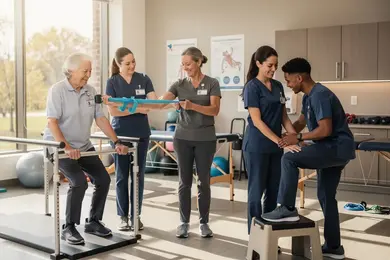
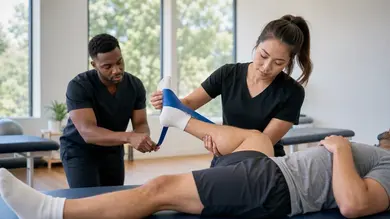
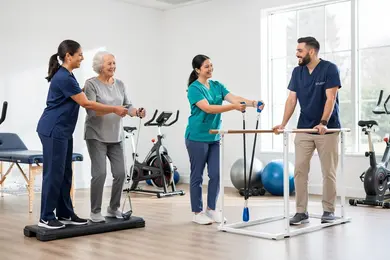
Yes. PTA students should expect hands-on labs involving movement, transfers, positioning, exercise instruction, gait training, and patient safety techniques. Programs may publish technical standards that describe the physical and communication abilities needed for safe clinical participation.
Many students work part time, but full-time work can be difficult during technical coursework, labs, and clinical rotations. Before enrolling, ask for a sample weekly schedule and clinical calendar so you can judge whether your work hours are realistic.
- 25 Best Physical Therapist Assistant Programs | Become With Lantern https://www.learnhowtobecome.org/best-physical-therapist-assistant-programs/
- Foreign Educated Physical Therapists and Physical Therapist Assistants https://www.fsbpt.org/Free-Resources/Foreign-Educated-PTs-and-PT-Assistants
- Physical Therapist/ Physical Therapist Assistant Internship Opportunities - CAM Physical Therapy - Maryland https://camphysicaltherapy.com/physical-therapist-physical-therapist-assistant-internship-opportunities/
- Clinical Internship Opportunities https://www.joinptsolutions.com/us/en/clinical-internship-opportunities
- Commission on Accreditation in Physical Therapy Education https://www.capteonline.org/
- Physical Therapist Assistants and Aides: Salary, career path, job outlook, education and more - RaiseMe https://www.raise.me/careers/healthcare/physical-therapist-assistants-and-aides/
- Physical Therapist Assistant AAS Degree https://www.lonestar.edu/programs-of-study/physical-therapist-aas.htm
- How to Become a Physical Therapist Assistant https://slchc.edu/physical-therapy/become-a-physical-therapist-assistant/
- Occupation Profile | NC Careers.org https://nccareers.org/occupation-profile/312021/1284
- Physical Therapist Assistant (PTA) & PT Aide - Certification & Salary https://www.healthcaredegree.com/physical/physical-therapist-assistant