2027 Accredited Online Physical Therapy Assistant Degree Programs for Working Adults: Flexible, Part-Time, and Self-Paced Options

Co-Founder and Chief Data Scientist
Choosing an accredited online Physical Therapy Assistant degree while working full time means balancing licensure rules, hands-on labs, clinical rotations, cost, and weekly study time. The decision matters because the U. S. Bureau of Labor Statistics reported a May 2024 median annual wage of $65,510 for physical therapist assistants, making PTA a practical allied health path for adults who want patient-care work without a graduate degree. This guide explains flexible, part-time, and self-paced options, who they fit, and how to compare accreditation, tuition, transfer credits, and scheduling before enrolling.
Key Things You Should Know
- Lectures may be online, but CAPTE-accredited programs still require in-person labs, competencies, and supervised clinical education for licensure eligibility.
- Most PTA associate degrees require about 60 to 75 credits; full-time students often finish in about 2 years, while part-time learners may need about 3 years depending on course sequencing, clinical availability, and transfer credit.
- The College Board reported $4,050 as the average published in-district tuition and fees at public two-year colleges for 2024-25, but PTA students may also pay for lab fees, uniforms, background checks, immunizations, travel to clinical sites, and licensure exams.
What Is an Accredited Online Physical Therapy Assistant Degree Program and Why Does Accreditation Matter?
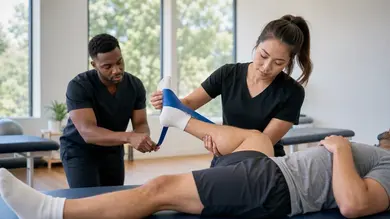
An accredited online Physical Therapy Assistant degree program is typically an associate degree, such as an Associate of Applied Science or Associate of Science, that prepares students to work under the supervision of licensed physical therapists. "Online" usually refers to online general education courses, recorded lectures, learning modules, discussion boards, simulations, and digital exams. The hands-on parts of PTA education still happen in person because students must demonstrate safe patient handling, therapeutic exercise, mobility training, documentation, and communication skills.
Accreditation matters because PTA is a regulated healthcare career. For PTA education, the key programmatic accreditor is the Commission on Accreditation in Physical Therapy Education, commonly called CAPTE. In most states, graduating from a CAPTE-accredited PTA program is required before you can sit for the National Physical Therapy Examination for PTAs and apply for state licensure or certification.
Working adults should check two forms of quality assurance before applying. Programmatic accreditation tells you whether the PTA curriculum meets profession-specific standards, while institutional accreditation affects federal financial aid eligibility, transfer credit, and employer recognition.
A school can be institutionally accredited while its PTA program is not CAPTE-accredited, so you need to verify both.
This table summarizes the accreditation checks that matter most when comparing online or hybrid PTA programs. Use it to avoid the common mistake of assuming that "online," "approved," "authorized," or "career training" means the program leads to PTA licensure.
| Accreditation or Approval Item | Why It Matters | What Working Adults Should Verify |
| CAPTE accreditation | Connects the PTA curriculum to licensure eligibility in most states | Confirm the exact PTA program appears as accredited or has an acceptable status for your enrollment timeline |
| Institutional accreditation | Supports federal aid access, credit transfer, and general academic credibility | Check the college's institutional accreditor and financial aid eligibility |
| State authorization | Online programs may be limited by where students live | Ask whether the school can enroll students from your state and place you in clinical sites there |
| Licensure alignment | Each state board can set its own application rules | Contact your state licensing board before enrolling, especially if you plan to move |
A practical rule: do not enroll until the admissions advisor gives you the program's CAPTE status, clinical placement policy, state authorization statement, estimated schedule, and total cost of attendance in writing.
Which Flexible Physical Therapy Assistant Degree Formats Are Best for Working Adults: Part-Time, Full-Time, or Self-Paced?
The best format depends on how predictable your work schedule is, how quickly you want to graduate, and whether you can attend required labs and clinical rotations during weekday hours. PTA programs are less flexible than many other online degrees because psychomotor skills and clinical education cannot be completed entirely at home.
The table below compares common formats using planning ranges rather than promises. Always ask each school for its official weekly workload estimate because lab blocks, clinical rotations, and accelerated terms can change the real time commitment.
| Format | Best Fit | Typical Schedule Pattern | Main Trade-Off |
| Full-time hybrid | Adults who can reduce work hours or use savings, employer support, or family help | Multiple courses per term, scheduled labs, and clinical education in a lockstep sequence | Fastest route, but the hardest to balance with full-time employment |
| Part-time hybrid | Working adults with steady jobs, caregiving duties, or limited tuition budget per term | Fewer courses per term, longer completion timeline, and possible daytime lab or clinical requirements | More manageable pace, but graduation and licensure may take longer |
| Asynchronous online plus in-person labs | Students who need to study evenings or weekends but can attend scheduled labs | Recorded lectures and deadlines, with required campus or partner-site skill sessions | Flexible study time, but not deadline-free |
| Self-paced general education plus cohort PTA sequence | Students with prior college experience who want to finish prerequisites efficiently | General education may be flexible, while PTA technical courses follow a fixed cohort | Can speed up preparation, but the professional sequence may not be self-paced |
For most working adults, a part-time or asynchronous hybrid program is more realistic than a fully self-paced option. True self-paced PTA technical coursework is uncommon because students must master skills in a safe sequence before treating patients in clinical settings.
Use the following decision process before choosing a format. It helps you match program structure to your real workweek instead of relying on broad marketing phrases like "flexible" or "online."
- Map your fixed obligations first, including work shifts, commute time, childcare, eldercare, and sleep.
- Ask whether labs are weekly, intensive weekend blocks, summer blocks, or weekday sessions.
- Ask whether clinical rotations require full-time daytime availability, because many healthcare sites operate on standard weekday schedules.
- Compare the maximum time allowed to finish the program, especially if you plan to pause during busy work or family periods.
- Choose the slowest schedule you can afford if withdrawing from courses would create financial aid problems or delay the cohort sequence.
What Are the Admission Requirements for Accredited Online Physical Therapy Assistant Degree Programs?
Admissions requirements vary, but accredited PTA programs are often selective because class sizes are limited by lab space, faculty supervision, and available clinical placements. Applicants usually need to show academic readiness, healthcare interest, and the ability to meet physical, legal, and professional standards for patient care.
Most programs ask for a mix of college readiness requirements and healthcare-specific documentation. Review these items early because missing one prerequisite can delay admission by an entire term or cohort cycle.
- High school diploma, GED, or prior college transcript showing required academic preparation.
- Prerequisite coursework such as anatomy and physiology, English composition, psychology, math, or medical terminology.
- Minimum GPA requirements for overall coursework, prerequisites, or science courses.
- Placement tests or completed college-level math and English courses.
- Observation, volunteer, or work hours in a physical therapy setting, if required by the program.
- CPR certification, immunization records, drug screening, background check, and health clearance before labs or clinicals.
- Technical standards showing that the student can safely lift, transfer, communicate with, and assist patients.
Working adults should be especially careful with prerequisite timing. If you need anatomy and physiology before applying, an online evening course may help, but the PTA program may require a lab component or a minimum grade. Ask whether older science credits expire, because some programs limit how long ago prerequisites can have been completed.
If you are still deciding between allied health routes, compare admissions difficulty, clinical requirements, and work flexibility across options. For example, some healthcare students explore fast track LPN programs online when they want a nursing pathway with a different scope of practice and licensure process.
The cost of an online or hybrid PTA degree depends on the college type, residency status, credit load, clinical requirements, and whether you already have transferable general education credits. Public community colleges are often the most affordable starting point, but program fees can be significant because PTA education uses labs, equipment, clinical coordination, insurance, and compliance tracking.
Use national tuition data as a baseline, not as a full estimate. The College Board reported the following 2024-25 published tuition and fee benchmarks, which help you compare whether a school's quote is unusually low, typical, or high.
- $4,050: Average published in-district tuition and fees at public two-year colleges for 2024-25.
- $11,610: Average published in-state tuition and fees at public four-year colleges for 2024-25.
- $43,350: Average published tuition and fees at private nonprofit four-year colleges for 2024-25.
For PTA students, the total cost is often higher than tuition alone. Common extra expenses include textbooks, anatomy software, lab kits, uniforms, shoes, CPR certification, background checks, drug screening, immunizations, health insurance, parking, clinical travel, state licensure applications, and the NPTE-PTA exam.
Financial aid may include the FAFSA, Federal Pell Grants, federal student loans, state grants, institutional scholarships, workforce development funds, veterans benefits, employer tuition assistance, and payment plans. If you attend part time, confirm how many credits you need each term to keep grants, loans, scholarships, or tuition benefits active.
One common mistake is comparing PTA programs with online completion degrees that have fewer in-person requirements. For instance, an RN to BSN no clinicals pathway may have a very different cost structure because it is designed for already-licensed nurses, while PTA students must complete supervised entry-level clinical education.
Most accredited PTA programs are associate degrees built around a planned sequence of general education, science, PTA theory, skill labs, and clinical education. Full-time students commonly complete the degree in about 2 years, while part-time students may take closer to 3 years if the program allows a slower pace. The main limitation is sequencing: you usually cannot take advanced PTA skills before completing prerequisite courses and lab competencies.
Transfer credit can help, but it is most useful for general education and prerequisite courses. PTA technical courses are often harder to transfer because programs must verify that your prior coursework matches their competencies, lab hours, and accreditation expectations.
Before assuming transfer credits will shorten your timeline, take these steps. They will help you avoid paying application fees for a program that cannot actually accept enough prior coursework to matter.
- Request unofficial transcript reviews from multiple schools before applying formally.
- Ask which credits apply to the PTA degree, not just which credits the college accepts generally.
- Confirm whether anatomy and physiology, psychology, English, math, or medical terminology credits have age limits.
- Ask whether transfer students can enter the PTA cohort immediately or must wait for the next annual start date.
- Get the revised degree plan in writing, including the earliest possible graduation term.
Accelerated options can be attractive, but they are not always better for working adults. A faster schedule may require heavier course loads, more frequent labs, or clinical rotations that conflict with job hours. If your income depends on full-time employment, a slightly longer program may be less risky than an accelerated plan that leads to withdrawals or failed competencies.
Comparing accredited online PTA programs is not just about finding the lowest tuition or the most online coursework. The best program for a working adult is one that is accredited, clinically feasible, transparent about scheduling, affordable after aid, and realistic for your life outside school.
The table below highlights the most important comparison factors. Use it to separate meaningful flexibility from marketing language that may not reflect labs, clinicals, or cohort deadlines.
| Comparison Factor | Why It Matters | Stronger Program Signal |
| CAPTE status | Licensure eligibility depends heavily on programmatic accreditation | Clear accreditation status and state licensure disclosures |
| Clinical placement policy | Working adults need to know whether travel or daytime availability is required | Written placement expectations before enrollment |
| Schedule transparency | "Online" may still include required live sessions or weekday labs | Sample weekly schedule, lab calendar, and clinical rotation windows |
| Transfer policy | Prior credits can reduce time and cost only if they apply to the degree | Course-by-course transcript review before admission |
| Student outcomes | Graduation, licensure exam, and employment outcomes show whether students complete and progress | Publicly available outcomes and advisor explanation of recent trends |
| Total cost | Fees, travel, and clinical compliance costs can change affordability | Itemized cost of attendance, not just per-credit tuition |
Red flags deserve special attention because they can cost you time, money, and licensure eligibility. Watch for these issues before signing an enrollment agreement.
- The school describes the PTA degree as fully online without clearly explaining in-person lab and clinical requirements.
- The program is institutionally accredited but not CAPTE-accredited for the PTA degree.
- Admissions staff cannot explain whether the program meets licensure requirements in your state.
- The school will not provide a sample schedule, lab calendar, clinical placement policy, or total cost estimate.
- The program advertises self-paced completion but sets short completion windows, strict cohort deadlines, or limited course availability.
- Transfer credits are accepted by the college but do not reduce the PTA program sequence.
If you are comparing healthcare careers broadly, include scope of practice and long-term mobility in the decision. Someone whose long-term goal is diagnosis, prescribing authority, or advanced practice nursing may be better served by a nursing path that can eventually support plans to become a nurse practitioner.
A Physical Therapy Assistant degree prepares graduates for supervised patient-care roles in rehabilitation and mobility. PTAs work under licensed physical therapists to carry out treatment plans, document patient progress, teach exercises, assist with transfers and gait training, and help patients recover or adapt after injury, surgery, illness, disability, or age-related decline.
Career settings can include outpatient clinics, hospitals, skilled nursing facilities, home health agencies, rehabilitation centers, school-based services, and sports or orthopedic practices. The right setting depends on your preferred pace, schedule, patient population, and physical demands.
The U.S. Bureau of Labor Statistics reported a May 2024 median annual wage of $65,510 for physical therapist assistants. That figure is a national median, not a guarantee; actual pay can vary by state, metro area, experience, employer type, shift, union status, and whether the role involves travel or home health work.
PTA can be a strong fit if you want direct patient interaction, movement-based care, and a relatively clear associate-degree-to-licensure pathway. It may be a poor fit if you want fully remote work, independent diagnosis, minimal physical labor, or a program with no weekday clinical commitments.
This table connects common PTA work settings with practical considerations for working adults planning a career change. It can help you think beyond salary and evaluate the day-to-day work environment.
| Work Setting | Common Responsibilities | Schedule Considerations |
| Outpatient clinic | Therapeutic exercise, orthopedic rehab, gait training, documentation | May include early morning or evening appointments |
| Hospital | Mobility training, post-surgical rehab, patient transfers, discharge support | May involve weekends, holidays, or variable shifts |
| Skilled nursing facility | Functional mobility, strength training, fall prevention, daily living support | Often daytime hours, but workload can be physically demanding |
| Home health | In-home exercise instruction, safety education, functional training | Travel time and documentation habits matter |
| Pediatric or school-based services | Developmental mobility support and therapy plan assistance | May follow school calendars or daytime schedules |
If your interests lean more toward wellness counseling, food systems, or nutrition-focused public health, an online nutrition masters may fit different career goals than PTA, especially for learners who already hold a bachelor's degree.
Balancing a PTA degree with full-time work is possible for some adults, but it requires more planning than many online programs. The hardest periods are usually lab checkoff weeks, practical exams, and clinical rotations, when attendance rules may be strict and daytime availability may be required.
A realistic study plan should start with your work schedule, not the course catalog. Use these steps to test whether a program is feasible before you enroll.
- Build a weekly calendar that includes work, commuting, meals, sleep, caregiving, exercise, and protected study blocks.
- Ask the program for a sample schedule from a recent cohort, including labs, exams, and clinical weeks.
- Talk with your employer about shift swaps, flexible scheduling, tuition assistance, unpaid leave, or reduced hours during clinical rotations.
- Create a backup plan for childcare, transportation, illness, and clinical site changes.
- Limit your first term to a manageable course load if the program allows it, especially if you have been out of school for several years.
- Reassess after each term and adjust work hours before performance problems become academic probation or withdrawal.
The biggest scheduling mistake is assuming asynchronous means "whenever I want." Many online courses allow evening study but still require weekly deadlines, proctored exams, group assignments, lab preparation, and faculty feedback cycles. In PTA programs, falling behind can also affect patient-safety competencies.
Adults with unpredictable jobs, mandatory overtime, or rotating shifts should ask whether the program has leave policies, reentry options, evening labs, weekend intensives, or part-time tracks. If the answer is unclear, choose a program with stronger schedule transparency rather than hoping flexibility will appear later.
Healthcare workers who already hold nursing credentials may have different schedule constraints than first-time PTA students. For example, nurses comparing advanced pathways sometimes look at the shortest post master's FNP program, but those programs serve a different licensure level and should not be confused with entry-level PTA education.
Strong student support can determine whether an online or hybrid PTA program is manageable for a working adult. Because the program combines academic content, hands-on skills, clinical compliance, and licensure preparation, support should be more specific than a general help desk or online library login.
Look for services that reduce friction before problems affect your grades or clinical eligibility. The following supports are especially valuable for adults balancing school, work, and family responsibilities.
- Dedicated PTA academic advising with clear degree maps and prerequisite planning.
- Early alerts for missed assignments, low exam scores, or lab competency concerns.
- Online tutoring for anatomy, physiology, kinesiology, writing, and study skills.
- Technical support during evening and weekend hours, not only standard business hours.
- Accessible faculty office hours through video, phone, or messaging.
- Clinical education coordination that explains documentation, site expectations, and travel requirements.
- Licensure exam preparation, practice questions, and guidance on state board applications.
- Disability services that can coordinate reasonable accommodations for online, lab, and clinical components.
- Career services that understand PTA resumes, interviews, employer expectations, and local job markets.
Online learning resources should also be healthcare-specific. Useful tools may include recorded demonstrations, anatomy platforms, electronic documentation practice, simulation cases, proctored testing, video feedback, and secure systems for clinical paperwork.
Students comparing several healthcare or wellness degrees should match support services to the credential. PTA students need lab and clinical support, while learners in other online health fields may need research, practicum, or community-health resources instead.
Do Online Physical Therapy Assistant Degree Programs Include Internships, Practicums, or Other Hands-On Learning Requirements?
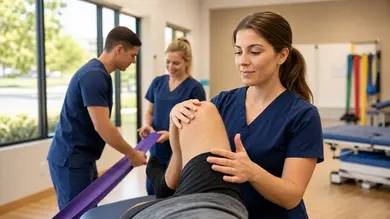
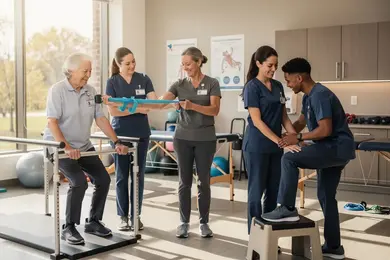
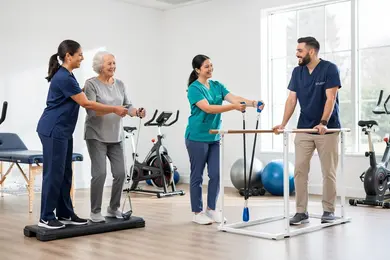
Yes. Accredited PTA programs include hands-on learning, and this is the main reason most "online" PTA degrees are actually hybrid. You should expect in-person skill labs, practical examinations, competency checkoffs, and supervised clinical education in approved healthcare settings.
Clinical education allows students to apply classroom and lab learning with real patients under supervision. It also helps programs evaluate professionalism, safety, communication, documentation, and clinical judgment. These experiences are not optional add-ons; they are central to entry-level PTA preparation.
Before enrolling, ask direct questions about hands-on requirements. These questions are practical because clinical logistics can affect your work schedule, transportation costs, and graduation timeline.
- How many clinical rotations are required, and how long is each one?
- Are clinical placements full time, part time, weekday only, evening, or weekend eligible?
- Can students request placements near home, or must they travel anywhere in the program's service area?
- Who is responsible for finding clinical sites: the program or the student?
- What happens if a clinical site cancels, closes, or cannot accept a student?
- Are students allowed to complete clinical hours at their current workplace?
- What health, background, drug screening, CPR, insurance, and immunization requirements must be completed before placement?
- Can a student continue in the program if work obligations conflict with assigned clinical dates?
The most important takeaway is simple: do not choose a PTA program unless you can realistically attend the in-person components. Online coursework can reduce commuting for lectures, but it cannot remove the patient-care practice required for safe, licensure-oriented PTA training.
Other Things You Should Know About Physical Therapy Assistant
In most states, you cannot work as a licensed PTA until you complete an approved education program, pass the required exam, and receive state authorization. Some students work as rehab aides or therapy techs while in school, but those roles have a different scope of practice.
No. A PTA is educated and licensed or certified to provide selected treatment interventions under a physical therapist's supervision. A physical therapy aide usually performs support tasks such as cleaning equipment, preparing treatment areas, scheduling, or assisting staff, depending on employer policy and state rules.
It can provide useful clinical exposure, but it is not a direct bridge to becoming a physical therapist. Physical therapists need a Doctor of Physical Therapy degree, and PTA credits may not fully transfer into the bachelor's-level prerequisites required for DPT admission.
Students should be comfortable with a learning management system, video meetings, document uploads, online quizzes, email, file sharing, and basic troubleshooting. Programs may also require webcam proctoring, anatomy software, electronic documentation tools, or reliable high-speed internet.
- Physical Therapist Assistant https://www.tridenttech.edu/programs/divisions/hlthsc/pta.html
- Scholarships https://onlinephysicaltherapyprograms.com/scholarships/
- Thanks for reaching out! https://careertraining.ucmo.edu/training-programs/certified-physical-therapy-aide-voucher-included/
- How to Pay for Physical Therapist (PT) School | SoFi https://www.sofi.com/learn/content/paying-for-pt-school/
- Best Degree Programs for Physical Therapist Assistants, Ranked by Enrollment https://clema.ai/occupations/physical-therapist-assistants
- Online Resources & Scholarships for Physical Therapy Assistant (PTA) Students https://www.edumed.org/financial-aid/scholarships/physical-therapist-assistant-programs/
- 19 Physical Therapy Scholarships for Students and PT Residents | Rizing Tide https://rizing-tide.com/physical-therapy-scholarships-for-students-and-pt-residents/
- Physical Therapist Assistant vs. Physical Therapist: What’s the Difference? https://blog.methodistcollege.edu/pta-versus-physical-therapist-whats-the-difference
- Best Online Physical Therapy Degrees Of 2025 | AffordableCollegesOnline.org https://www.affordablecollegesonline.org/degrees/physical-therapy-schools/