2027 Fastest Accredited Online Physical Therapy Assistant Programs: Accelerated Degrees and Completion Times

Co-Founder and Chief Data Scientist
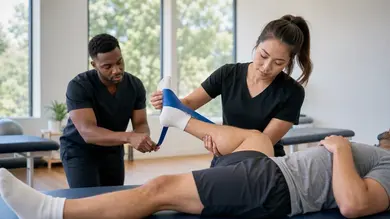
Choosing the fastest online physical therapy assistant program is really a question of speed, accreditation, and clinical feasibility. PTAs need hands-on labs and supervised clinical education, so "online" usually means hybrid, not fully remote.
The stakes are timely: the U. S. Bureau of Labor Statistics reports a May 2024 median annual wage of $65,510 for physical therapist assistants. This guide explains which accredited options move fastest, how transfer credits and prerequisites affect graduation, and how to compare advertised timelines against your real schedule, course load, campus visits, and required fieldwork.
Key Things You Should Know
- The fastest realistic CAPTE-accredited online or hybrid PTA associate degree timelines are usually about 18 to 24 months after prerequisites; students starting with no college credit often need closer to 2 to 3 years.
- Accelerated PTA programs commonly use full-time lockstep cohorts, summer enrollment, hybrid lectures, intensive lab visits, and 8-week or shortened general education terms, but clinical placements still control the final graduation date.
- Transfer credit can shorten the path most when it applies to anatomy and physiology, English, psychology, math, and other general education courses; many students reduce 15 to 30 credits, while PTA technical courses are rarely transferable.
Which Colleges Offer the Fastest Accredited Online Physical Therapy Assistant Programs?
The fastest accredited online physical therapy assistant programs are usually hybrid associate degree programs accredited by the Commission on Accreditation in Physical Therapy Education. They place lectures online but still require in-person labs, practical skill checks, and clinical rotations because PTA licensure depends on hands-on competency.
The table below compares examples of accredited or accreditation-focused hybrid PTA options students often evaluate for speed. Program details can change by cohort, so use this as a decision framework and verify the current CAPTE status, start term, campus-visit schedule, and clinical placement policy before applying.
| College | Program format | Advertised or typical program length | Why it may be faster | Important timing limitation |
| Lake Area Technical College | Hybrid or e-degree PTA associate pathway with online coursework, scheduled labs, and clinical education | Commonly structured around about 20 months for the professional sequence | Full-time cohort model and online didactic delivery can reduce commuting time | Students must complete required lab sessions and clinical placements on the program calendar |
| San Juan College | Online-hybrid PTA associate degree with online lecture components and in-person lab requirements | Often described as a multi-semester full-time sequence, typically around 5 semesters once admitted | Hybrid delivery can help students outside the local campus area remain enrolled full time | Travel for labs and clinical availability may affect the actual finish date |
| Kent State University regional PTA pathway | Hybrid or technology-supported PTA associate pathway depending on campus and course availability | Often planned across several semesters, commonly about 2 years after prerequisites or admission sequence requirements | Regional campus structure may help students complete prerequisites and technical courses within the same system | Technical PTA courses are generally cohort-based and may not be available every term |
| Community and technical colleges with CAPTE-accredited hybrid PTA cohorts | Partly online general education plus in-person PTA labs and clinicals | Usually 18 to 24 months for the PTA phase; longer if prerequisites are missing | Lower division transfer credits and summer terms may compress the calendar | Some schools call courses "online" even when labs require weekly or periodic campus attendance |
"Fastest" does not always mean the same thing as "best." A 20-month hybrid cohort may be ideal if you can travel for labs and treat school like a full-time job, while a 24-month option may be more realistic if you need predictable clinical sites near home.
When comparing colleges, focus on these speed-related details rather than the marketing headline alone:
- Whether the listed timeline begins before or after prerequisites are completed
- How many campus lab visits are required and whether they occur weekly, monthly, or in intensive blocks
- Whether the school guarantees local clinical placement or expects students to travel
- How many credits are accepted in transfer before the PTA cohort starts
- Whether PTA technical courses are offered every term or only once per year
How Long Does It Take to Complete an Accredited Online Physical Therapy Assistant Degree?
An accredited PTA degree is typically an associate degree, often an Associate of Applied Science or Associate of Science. For online students, the fastest route is usually not a shorter curriculum; it is a more efficient sequence that combines transferred general education credits, year-round enrollment, online theory courses, and tightly scheduled lab and clinical requirements.
The table below shows realistic completion timelines by student starting point. This matters because two students can enroll in the same "accelerated" program and graduate at different times depending on prerequisites, transfer evaluation, and clinical readiness.
| Student starting point | Realistic completion time | What usually makes this timeline possible | Common reason it takes longer |
| All prerequisites and most general education credits complete | About 18 to 24 months | Student enters directly into the professional PTA sequence | Limited clinical site availability or required lab travel conflicts |
| Some college credits completed | About 24 to 30 months | Transfer credits reduce general education workload while PTA courses stay lockstep | Anatomy and physiology, math, or science courses are too old or do not match requirements |
| No prior college credit | About 2 to 3 years | Student completes prerequisites, general education, technical courses, labs, and clinicals | Part-time enrollment or missed cohort admission cycle |
| Working adult attending part time where permitted | About 3 years or more | General education courses can be spread out before the cohort phase | Many PTA technical sequences require full-time attendance once admitted |
The U.S. Department of Education's 2024-25 federal aid year still uses standard enrollment intensity categories, which matters because taking fewer credits can change both aid eligibility and pace. In practical terms, a student who drops below full time may protect work-life balance but can add an extra term or more if a required PTA course is offered only once per year.
Use the school's catalog plan of study to distinguish three different timelines:
- Time to finish prerequisites before formal PTA admission
- Time in the professional PTA cohort after acceptance
- Total calendar time from first enrollment to graduation, including labs, clinicals, and licensure preparation
How Do Accelerated and Competency-Based Online Physical Therapy Assistant Programs Work?
Accelerated PTA programs usually compress the calendar, not the clinical standards. Students still learn therapeutic exercise, functional mobility, gait training, documentation, patient safety, and treatment techniques under the supervision of physical therapists and qualified faculty.
These are the most common formats that can make an online or hybrid PTA degree faster. Each format affects pace differently, so the right option depends on whether you need calendar speed, scheduling flexibility, or both.
- Hybrid cohort programs: lecture content is delivered online, while labs and clinicals happen in person on a fixed schedule.
- Short general education terms: 5-week, 7-week, or 8-week courses can help students finish prerequisites faster before the PTA cohort begins.
- Year-round enrollment: summer terms can remove idle time between spring and fall sequences.
- Block lab intensives: students complete online theory at home and travel for concentrated lab days, which can reduce weekly commuting but increase travel planning.
- Competency-based general education: some colleges allow self-paced completion of non-PTA courses, but PTA technical skills still require faculty validation, lab performance, and clinical assessment.
Competency-based education is more common in general education and bachelor's-completion programs than in entry-level PTA technical courses. That is because PTA students must demonstrate psychomotor skills and safe patient care, not just pass online assessments.
The trade-off is intensity. An 8-week anatomy course, for example, may finish twice as fast as a 16-week course, but it usually requires more weekly study time. Students who are also evaluating other fast healthcare routes may want to compare PTA timelines with fast-track LPN programs online, since nursing and PTA programs differ in clinical hours, licensure exams, and job duties.
The essential accreditation for an entry-level PTA program is programmatic accreditation from CAPTE. Institutional accreditation also matters for federal financial aid, transfer credit, and employer recognition, but institutional accreditation alone is not enough for PTA licensure preparation.
The table below separates the accreditation types students often confuse. This distinction is critical because a fast program that does not meet licensure requirements can cost time rather than save it.
| Accreditation or approval type | What it means | Why it affects speed |
| CAPTE accreditation | The PTA program meets professional education standards for entry-level physical therapist assistant preparation | Graduates generally need a CAPTE-accredited program to qualify for the National Physical Therapy Exam for PTAs and state licensure processes |
| Institutional accreditation | The college or university is recognized by an approved institutional accreditor | It supports federal aid eligibility and may make transfer credit more practical |
| State authorization | The school is permitted to offer distance education to students in your state | A student may be unable to enroll or complete fieldwork if the school lacks authorization for the student's location |
| Clinical affiliation approval | The program has approved clinical sites and supervision arrangements | Clinical placement bottlenecks can delay graduation even when coursework is finished |
Before applying, verify accreditation directly through CAPTE's public program directory and the college's current catalog. Do not rely only on phrases such as "accredited college," "online healthcare degree," or "licensure-focused," because those statements may not confirm PTA programmatic accreditation.
Common accreditation red flags include:
- The school advertises a fully online PTA degree with no in-person labs or clinicals
- The program page does not name CAPTE or lists only institutional accreditation
- The college cannot explain whether graduates are eligible for the PTA licensure exam in your state
- The program is in candidacy or developing status and presents future accreditation as guaranteed
- The admissions advisor cannot provide a current lab schedule, clinical policy, or state authorization information
Transfer credit is one of the most reliable ways to shorten an online PTA degree, but it usually helps before the professional PTA sequence begins. Once students enter the technical phase, PTA courses are commonly cohort-based and must be completed through the program that will recommend the student for graduation.
The table below shows which credits are most likely to affect time to completion. It helps you estimate whether you are a true accelerated candidate or whether you still need prerequisite coursework before admission.
| Credit type | Time-saving potential | What to verify |
| Anatomy and physiology | High if accepted, because it is often a prerequisite or early required course | Minimum grade, lab requirement, course age limit, and credit-hour match |
| English composition and communication | Moderate to high because these courses are commonly required in associate degrees | Whether the course fulfills the exact general education category |
| Psychology or lifespan development | Moderate because it may satisfy a support course requirement | Whether the program requires a specific developmental or abnormal psychology course |
| College math or statistics | Moderate depending on the degree plan | Placement policy, minimum grade, and applicability to the PTA major |
| Prior healthcare certifications | Limited for PTA technical courses but useful for readiness | Whether the college awards credit for prior learning, military training, or standardized exams |
| PTA technical courses from another program | Usually low | Programs often require students to complete technical PTA courses in residence for safety and competency reasons |
To maximize transfer credit without delaying admission, send transcripts early and ask for a written degree audit before you commit. A verbal estimate from admissions is not the same as an official evaluation by the registrar or program department.
Students trying to graduate quickly should complete these steps in order:
- Request official transcripts from every college attended, including dual-enrollment and military-credit sources.
- Ask the PTA program which prerequisites must be completed before application and which can be in progress.
- Confirm whether science courses expire after a set number of years.
- Get a written list of accepted transfer courses and remaining degree requirements.
- Build a term-by-term plan that includes clinical deadlines, immunizations, background checks, and lab travel.
Healthcare workers comparing bridge-style education should note that PTA programs are less flexible than many degree-completion pathways. For example, an experienced nurse exploring RN to BSN no clinicals options may find more online flexibility than a first-time PTA student because PTA licensure education requires direct patient-care skill validation.
Accelerated online PTA programs can be competitive because lab space and clinical placements are limited. Admissions requirements vary, but most schools use prerequisites and health-screening requirements to make sure students can safely begin patient-care training.
Most applicants should expect a combination of academic, clinical-readiness, and documentation requirements. These requirements affect speed because missing one item can push a student into the next cohort.
- High school diploma, GED, or equivalent college eligibility
- Completed prerequisite courses, often including anatomy and physiology
- Minimum college GPA and minimum grades in science prerequisites
- Observation hours, volunteer experience, or exposure to physical therapy settings when required
- Immunization records, CPR certification, background check, and drug screening before clinical placement
- Technical standards showing the ability to perform physical patient-care tasks safely
- State residency, distance education authorization, or clinical-site eligibility requirements for online students
Start dates are often less flexible than in general online degrees. Many PTA cohorts begin once per year, and some hybrid programs may have a fixed sequence that starts in the fall or spring only. Missing the application deadline can therefore add 6 to 12 months, even if you have all prerequisites complete.
Ask admissions these timing questions before you apply:
- Does the advertised completion time start when I enter the college or when I enter the PTA cohort?
- Are prerequisites accepted during the application term, or must they be finished before review?
- How often does the PTA cohort start?
- Can I take general education courses online before cohort admission?
- What happens if I cannot complete a clinical placement in the assigned term?
Students who are comparing multiple healthcare roles should also consider whether the admissions model fits their career goal. Someone drawn to diagnosis and advanced clinical decision-making may eventually research how to become a nurse practitioner, while a PTA applicant is preparing for a different scope of practice under the direction and supervision of a physical therapist.
Fast does not automatically mean cheap. A shorter calendar can reduce living expenses and time away from work, but PTA students may still pay for tuition, lab fees, clinical travel, background checks, immunizations, uniforms, textbooks, and licensure exam costs.
For context, the College Board reported an average published in-district tuition and fee price of $4,050 at public two-year colleges for the 2024-25 academic year. PTA programs can cost more than that baseline because they often include specialized lab instruction, clinical coordination, and program-specific fees.
PTA students should budget for several cost categories, not just per-credit tuition. These costs can affect whether a faster program is financially realistic.
- Tuition and mandatory college fees
- Program fees for labs, equipment, testing platforms, or clinical coordination
- Books, digital resources, gait belts, scrubs, and other supplies
- Travel and lodging for campus lab intensives in hybrid programs
- Transportation to clinical sites, which may be outside the student's immediate area
- Background checks, drug screens, immunizations, CPR certification, and health insurance when required
- Graduation, licensure application, and National Physical Therapy Exam-related expenses
Financial aid may be available if the college is institutionally accredited and the student is enrolled in an eligible degree program. The maximum federal Pell Grant for the 2024-25 award year is $7,395, but eligibility depends on financial need, enrollment intensity, and program participation in federal aid.
When comparing cost, calculate total cost to graduation rather than cost per credit alone. A program with higher tuition but fewer repeated prerequisites or less commuting may be competitive, while a lower-tuition program that requires extensive travel could cost more in practice. Students interested in adjacent wellness careers may also compare PTA costs with an online nutrition master's, although that path leads to different credentials and roles.
Working full time during an accelerated PTA program is possible for some students during prerequisites and online general education courses, but it becomes harder during the professional phase. PTA labs, practical exams, and clinical rotations often require daytime availability, physical practice, and travel.
The table below compares workload expectations by enrollment pattern. Use it to judge whether the fastest timeline is sustainable for your schedule.
| Enrollment pattern | Best fit | Likely completion impact | Main risk |
| Full-time accelerated cohort | Students who can prioritize school and clinical availability | Fastest realistic path, often 18 to 24 months after prerequisites | High weekly workload and limited flexibility during labs and clinicals |
| Full-time prerequisites, then full-time cohort | Students starting with some missing general education courses | Often around 2 to 3 years total | Science prerequisites may be intensive if compressed |
| Part-time prerequisites, then full-time cohort | Working adults who need to keep income while preparing | Slower upfront, but smoother once admitted | Delayed application if prerequisites are not complete by deadline |
| Part-time PTA technical sequence | Rare; depends on school policy | May exceed 3 years if available | Many programs do not offer PTA technical courses part time |
The practical question is not just "Can I work?" but "Can I attend labs and clinicals whenever the program assigns them?" Clinical education may follow the schedule of a healthcare facility rather than evenings or weekends, and students are usually expected to meet professional attendance standards.
If you must work full time, consider these strategies before choosing the fastest advertised option:
- Complete as many prerequisites as possible before applying to the PTA cohort
- Ask whether clinical rotations can be placed near your home or workplace
- Request the lab calendar before enrollment so you can plan travel and leave time
- Choose a program with predictable cohort dates rather than frequent schedule changes
- Build a financial cushion for terms when clinical hours reduce your work availability
Employers generally focus on whether the PTA program is CAPTE-accredited, whether the graduate is licensed or license-eligible, and whether the candidate can perform safely in clinical settings. The word "online" is less important when the program includes required labs, supervised clinical education, and preparation for the PTA licensure exam.
The job market context is favorable but should not be treated as a guarantee. The U.S. Bureau of Labor Statistics projects employment for physical therapist assistants and aides to grow 12% from 2024 to 2034, which is faster than the average for all occupations. For students, this suggests continued demand for rehabilitation support roles, especially in settings serving older adults and patients recovering from injury or surgery.
Graduate schools are a different question. A PTA associate degree can help a student build healthcare experience, but it is not the same as a Doctor of Physical Therapy prerequisite plan. Students who eventually want to become physical therapists should check DPT admission requirements early, because they may need a bachelor's degree, specific science prerequisites, shadowing hours, and competitive application materials.
Accelerated online PTA degrees are most respected when they include these quality markers:
- Current CAPTE accreditation and clear state licensure eligibility information
- Transparent clinical education requirements with supervised patient-care experience
- Published student outcomes, such as graduation, licensure exam, and employment information where available
- Qualified faculty with physical therapy experience
- Clear policies for online students, including lab travel, clinical placement, and state authorization
Students planning a longer healthcare career should map how credentials stack over time. A PTA associate degree may lead directly to PTA licensure, while pathways such as the shortest post master's FNP program are designed for already-prepared nurses pursuing a different advanced practice route.
How Should You Compare the Fastest Accredited Online Physical Therapy Assistant Programs?
The best fast PTA program is the one you can finish quickly without risking accreditation, licensure eligibility, clinical completion, or your ability to keep up academically. A slightly longer program may be the smarter choice if it offers better clinical access, clearer transfer policies, or fewer travel conflicts.
The table below summarizes the main comparison factors. Use it to move beyond the advertised timeline and identify which program is actually fastest for your situation.
| Comparison factor | What to look for | Why it matters |
| CAPTE accreditation | Current programmatic accreditation for the PTA program | It is central to licensure eligibility and employer confidence |
| Total time to graduation | Prerequisites plus cohort sequence plus clinicals | The advertised cohort length may not include all required courses |
| Transfer-credit policy | Written degree audit showing accepted courses | Transfer credits can save time only if they apply to the degree plan |
| Lab schedule | Frequency, location, and duration of in-person labs | Hybrid students may need travel time, lodging, and schedule flexibility |
| Clinical placement model | Local placement support, travel expectations, and site availability | Clinical delays can extend graduation even after coursework is complete |
| Course format | 8-week, 16-week, summer, synchronous, or asynchronous courses | Shorter terms can accelerate progress but increase weekly workload |
| Total cost | Tuition, fees, travel, supplies, and licensure-related expenses | The fastest option is not always the lowest-cost option |
Before enrolling, ask each school for the same information so you can compare programs fairly. These questions are especially important for online students because distance education policies and clinical placement rules can vary by state.
- Is the PTA program currently CAPTE-accredited, and where can I verify it?
- What is the shortest possible time to graduation for a student with my exact transcript?
- Which courses must be completed before I can enter the PTA cohort?
- How many lab visits are required, and what are the dates for the next cohort?
- Does the school arrange clinical placements, or must I help secure them?
- Can I complete clinicals in my state, and is the program authorized to enroll students there?
- What happens if I fail, withdraw from, or cannot attend a required technical course?
- What are the total estimated costs, including travel and clinical requirements?
The most common mistake is choosing the shortest advertised program without checking whether you qualify for that timeline. The better approach is to compare your transcript, work schedule, travel capacity, and licensure state against each program's official plan of study.
Other Things You Should Know About Physical Therapy Assistant
Fully online entry-level PTA programs are not realistic because CAPTE-accredited preparation requires hands-on labs and supervised clinical education. The online options students see are usually hybrid programs with online lectures and mandatory in-person requirements.
A physical therapist assistant is a licensed provider who delivers selected treatment interventions under a physical therapist's direction. A physical therapy aide usually performs support tasks such as cleaning equipment, preparing treatment areas, and clerical duties, and typically does not require the same accredited degree or licensure pathway.
Yes. PTA graduates generally must pass the National Physical Therapy Exam for PTAs and meet state-specific licensing requirements. Rules vary by state, so students should check their state physical therapy board before enrolling.
It can provide useful healthcare experience, but it is not a direct bridge to becoming a physical therapist. Students who want to become PTs usually need a bachelor's degree, specific science prerequisites, and admission to a Doctor of Physical Therapy program.
- Elevating Excellence: Our Modesto Campus PTA Earns New Accreditation! - Institute of Technology (IOT) https://www.iot.edu/elevating-excellence-our-modesto-campus-physical-therapist-assistant-program-earns-new-accreditation/
- Physical Therapist Assistant | Ozarks Tech (OTC) https://ozarkstech.edu/programs/health-services/physical-therapist-assistant/
- How to Pay for Physical Therapist (PT) School | SoFi https://www.sofi.com/learn/content/paying-for-pt-school/
- Best Online Physical Therapy Degrees Of 2025 | AffordableCollegesOnline.org https://www.affordablecollegesonline.org/degrees/physical-therapy-schools/
- Accelerated Physical Therapist Assistant https://www.mchs.edu/academics/associate-degrees/accelerated-physical-therapist-assistant/
- PTA Courses - NAIOMT https://naiomt.com/courses/pta/
- Scholarships https://onlinephysicaltherapyprograms.com/scholarships/
- Online Resources & Scholarships for Physical Therapy Assistant (PTA) Students https://www.edumed.org/financial-aid/scholarships/physical-therapist-assistant-programs/
- Ask a Question https://www.lonestar.edu/physical-therapist-requirements.htm
- Commission on Accreditation in Physical Therapy Education https://www.capteonline.org/