2027 Cheapest Accredited Online Applied Science Degree Programs: Tuition, Fees, and Financial Aid

Co-Founder and Chief Data Scientist
Choosing the cheapest online applied science degree is not as simple as picking the lowest per-credit tuition. Federal Student Aid lists the maximum Pell Grant at $7,395 for the 2024-25 award year, which can substantially change what eligible students actually pay.
This guide is for working adults, transfer students, military learners, and career changers comparing accredited online applied science programs. You will learn how tuition, fees, aid, transfer credit, accreditation, and net price work together so you can identify genuinely affordable options and avoid hidden costs.
Key Things You Should Know
- The lowest advertised online applied science prices are often found at public community colleges and state colleges, with some resident BAS or AAS pathways publishing rates near $100-$130 per credit, while flat-rate competency programs may cost less for fast-moving transfer students.
- A student eligible for the 2024-25 maximum Pell Grant of $7,395 may pay far less than the posted price, while another student in the same program may owe substantially more after fees, books, and loan costs.
- Before enrolling, compare accreditation, mandatory online fees, transfer-credit limits, residency requirements, and total credits required; the cheapest per-credit program may not be the lowest-cost degree if it accepts fewer credits or charges higher nonresident rates.
What Are the Cheapest Accredited Online Applied Science Degree Programs?
The cheapest accredited online applied science degree programs are usually offered by public colleges that price online bachelor's or associate programs at resident tuition rates, waive large campus fees, or let students complete faster through transfer-friendly or competency-based formats.
"Applied science" can mean an Associate of Applied Science, Bachelor of Applied Science, Bachelor of Applied Arts and Sciences, or similar career-focused degree built around technical, healthcare, business, public safety, or technology fields.
The table below highlights affordable U.S. options that commonly appear near the low end of published online applied science tuition. Tuition schedules can change, so use these figures as a starting point and confirm the current total cost directly with the school before applying.
| School and online applied science option | Credential type | Accreditation type to verify | Published affordability signal | Best-fit student | Cost caution |
| South Texas College online applied technology or applied science pathways | Bachelor's-level applied program | Institutional accreditation by a recognized accreditor | Often among the lowest resident public-college tuition structures, especially for in-district students | Texas residents with prior technical or associate-level credits | Out-of-district and nonresident rates can change the ranking quickly |
| Florida State College at Jacksonville online BAS options | Bachelor of Applied Science | Institutional accreditation by a recognized accreditor | Florida College System bachelor's tuition is typically much lower for state residents than many university rates | Florida residents completing a career-focused bachelor's after an AAS or AS | Upper-division fees and nonresident tuition must be calculated separately |
| St. Petersburg College online BAS options | Bachelor of Applied Science | Institutional accreditation by a recognized accreditor | Public state-college pricing can make the total degree cost competitive for Florida residents | Students seeking applied management, health services, technology, or public safety pathways | Program-specific prerequisites may add time if prior credits do not align |
| Daytona State College online BAS options | Bachelor of Applied Science | Institutional accreditation by a recognized accreditor | Resident baccalaureate tuition is generally positioned below many four-year university online rates | Students with an associate degree who want a practical bachelor's completion route | Confirm whether all required courses are online in the term you plan to enroll |
| Great Basin College online BAS-related applied programs | Bachelor of Applied Science or applied bachelor's pathway | Institutional accreditation by a recognized accreditor | Regional public-college tuition can be competitive, especially compared with private online colleges | Students seeking technical, management, or rural workforce-focused applied education | Online course fees and upper-division pricing may differ from lower-division rates |
| University of Maine at Presque Isle YourPace BAAS | Bachelor of Applied Arts and Sciences | Institutional accreditation by a recognized accreditor | Flat-rate subscription pricing can reduce cost for students who complete many courses per session | Self-directed adults with substantial transfer credit and time to accelerate | It is not automatically cheapest for students who move slowly or need many foundational courses |
| Eastern New Mexico University online BAAS | Bachelor of Applied Arts and Sciences | Institutional accreditation by a recognized accreditor | Public university online tuition is often lower than many private nonprofit and for-profit options | Transfer students wanting a broad applied bachelor's from a public university | Compare total online fees, graduation fees, and credit-transfer fit before deciding |
Students interested in allied health should be especially careful because some low-cost applied science programs prepare students for licensed or certified roles. For example, learners comparing radiology tech programs online should confirm clinical placement, programmatic accreditation, and state requirements, not just tuition.
A low-cost program is most likely to be a strong value when it combines recognized accreditation, generous transfer policies, transparent fees, FAFSA participation, and coursework that matches the student's career goal. A program with slightly higher tuition may still be cheaper overall if it accepts more credits, offers larger grants, or helps the student finish faster.
How Were the Cheapest Online Applied Science Degree Programs Ranked?
Affordable online applied science programs should be ranked by total expected cost, not by tuition alone. A fair comparison starts with the school's published tuition schedule, then adds mandatory fees, residency rules, transfer-credit policies, delivery format, and federal aid eligibility.
The ranking logic below reflects how a cost-conscious student should compare programs before enrollment. It gives the most weight to expenses that every student must pay and treats scholarships as a potential reduction rather than a guaranteed discount.
- Confirm recognized institutional accreditation and whether the specific program requires programmatic accreditation for the intended career field.
- Record the published per-credit, per-term, or flat-rate tuition for the student's actual residency category.
- Add mandatory online, technology, student services, course, proctoring, graduation, and program fees.
- Estimate the total number of credits still required after transfer evaluation, not the advertised full-degree credit count.
- Check FAFSA participation, Pell Grant eligibility, state grant access, institutional scholarships, and employer tuition benefits.
- Compare likely net price after grants and scholarships, then separately evaluate loan repayment risk.
- Review completion flexibility, course availability, career alignment, and student support before choosing the lowest-cost option.
This method prevents a common mistake: ranking a $115-per-credit program above a $250-per-credit program before knowing whether the first school accepts fewer transfer credits or charges higher mandatory fees. For applied science students, transfer fit can outweigh a small tuition difference because many learners already hold technical, military, healthcare, or workforce training credits.
How Can You Verify the Accreditation of an Online Applied Science Degree Program?
Accreditation is the first affordability test because federal financial aid usually depends on enrollment at an eligible institution, and employers or licensing boards may reject credentials from unrecognized schools. Institutional accreditation applies to the college or university as a whole, while programmatic accreditation applies to specific fields such as nursing, radiologic technology, engineering technology, health information, or aviation maintenance.
Use this checklist before you submit an application fee or share FAFSA information with a school. It is especially important for online applied science programs tied to licensure, certification exams, clinical placements, or employer reimbursement.
- Search the school in the U.S. Department of Education's accreditation database and confirm that the accreditor is federally recognized.
- Confirm the school's federal student aid eligibility through official federal or institutional financial aid information.
- Ask whether the online program is the same credential as the campus version and whether the diploma or transcript says "online."
- Check whether your career field requires programmatic accreditation, state approval, clinical authorization, or certification exam eligibility.
- Verify that the program is authorized to enroll students in your state if you will study from outside the school's home state.
- Request written confirmation of any licensure, practicum, internship, or clinical placement requirements before enrolling.
Red flags include vague claims such as "internationally accredited," pressure to enroll immediately, missing tuition disclosures, no federal school code, or refusal to provide written transfer and accreditation details. If a program is cheap but its accreditation is unclear, it is not a low-cost option; it is a financial risk.
How Much Does an Accredited Online Applied Science Degree Really Cost?
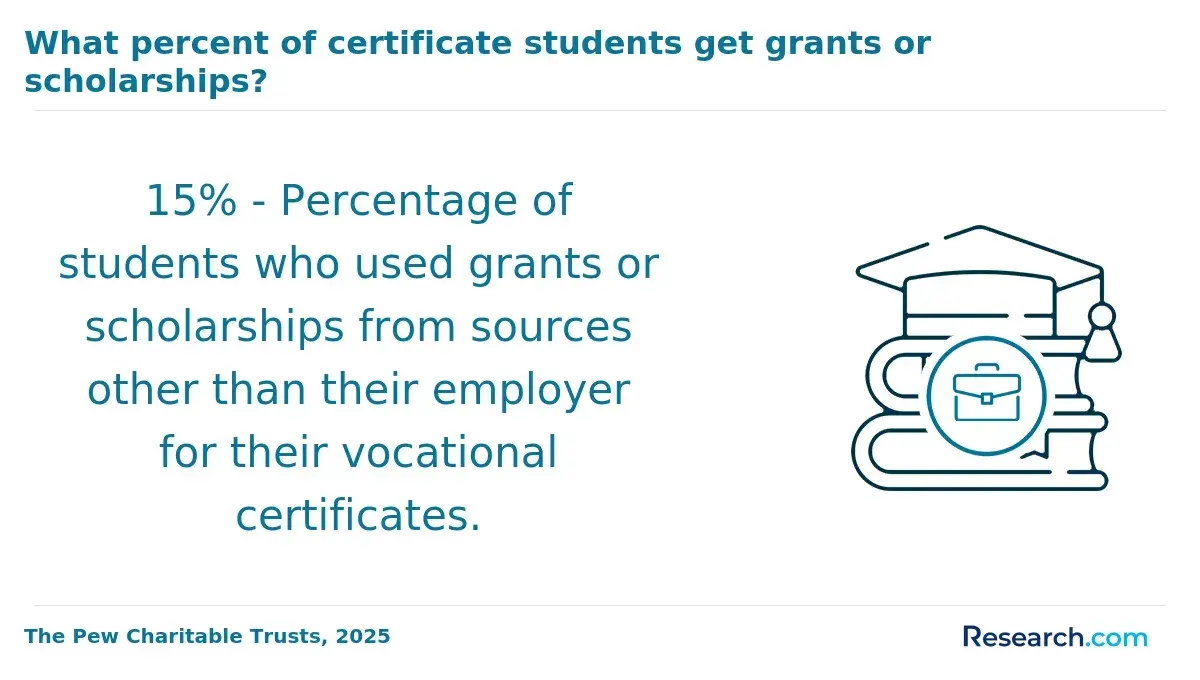
The real cost of an accredited online applied science degree is the amount required to finish the credential after adding tuition, mandatory fees, books, supplies, technology, transfer-credit limits, and financing costs. The most useful number is net price: the amount left after grants and scholarships are applied, excluding loans that must be repaid.
The table below separates common cost terms that are often mixed together in admissions pages. Understanding these differences helps students avoid comparing a tuition-only number from one school against a total-cost estimate from another.
| Cost term | What it means | Why it matters | How to compare it |
| Tuition | The instructional charge, usually per credit, per term, or per subscription period | It is the most visible price but rarely the whole bill | Multiply by the credits or terms you still need after transfer review |
| Mandatory fees | Required charges such as online, technology, student services, lab, course, proctoring, or graduation fees | Fees can make a low-tuition program more expensive than expected | Ask for a fee schedule for online students in your exact program |
| Total program cost | Tuition plus mandatory fees and required materials for all remaining credits | It shows the likely price before aid | Compare based on your personalized degree plan, not a generic catalog example |
| Financial aid | Grants, scholarships, work-study, employer benefits, military benefits, and loans | Aid changes cash flow and net cost, but loans are not discounts | Separate free aid from borrowed aid in every award letter |
| Net price | The remaining cost after grants and scholarships | It is the best affordability measure for most students | Use the school's net price calculator and request an aid estimate |
For a simple comparison, a 60-credit bachelor's completion plan at $120 per credit starts at $7,200 before mandatory fees and books, while the same 60 credits at $300 per credit starts at $18,000 before fees and books. That difference is large, but it still does not prove the $120 program is cheaper if the $300 program accepts more transfer credits, includes fees, or awards more grant aid.
Students comparing healthcare-related applied science pathways should also watch for clinical costs, background checks, immunization documentation, and travel expenses. These costs are not always part of online tuition, yet they can affect whether a program is realistic for working adults.
Which Tuition Models Make Online Applied Science Degree Programs More Affordable?
Online applied science programs use several pricing models, and the cheapest model depends on how many credits you need, how quickly you can study, and whether you qualify for resident tuition. A student with 75 transferable credits may benefit from a flat-rate or competency model, while a part-time student may prefer a predictable per-credit public-college rate.
The table below compares common tuition models and the situations in which each can lower the total cost. It also shows where students should look for hidden trade-offs before committing.
| Tuition model | How it works | When it can be cheaper | What to verify |
| Per-credit tuition | You pay for each credit attempted | Best for part-time students or those taking only a few remaining courses | Whether online and course fees are charged per credit |
| Flat-rate full-time tuition | You pay one rate for a credit band, such as 12 to 18 credits | Best for students who can take heavy course loads without withdrawing | Whether dropping below full-time changes aid or billing |
| Competency-based subscription | You pay for a term and complete as many competencies or courses as allowed | Best for experienced students who can move quickly | Academic pace, assessment rules, transfer fit, and employer acceptance |
| Resident online tuition | State residents receive lower public-college tuition for online study | Best for students living in the school's state or district | Residency documentation and out-of-state surcharges |
| Universal online tuition | All online students pay the same rate regardless of state | Best when the rate is lower than your local public options | Whether fees make the all-in cost less competitive |
Students trying to finish quickly should compare degree-completion programs with the best accelerated programs, especially if they already have an associate degree, military training, certifications, or prior college credit. Speed can reduce cost, but only if the course load is realistic enough to avoid withdrawals or repeated courses.
The most affordable model is the one that matches your pace. A flat-rate program can be a bargain for a focused adult learner, but it can become expensive if work, caregiving, or clinical requirements prevent steady progress.
What Fees and Hidden Costs Should Online Applied Science Degree Students Expect?
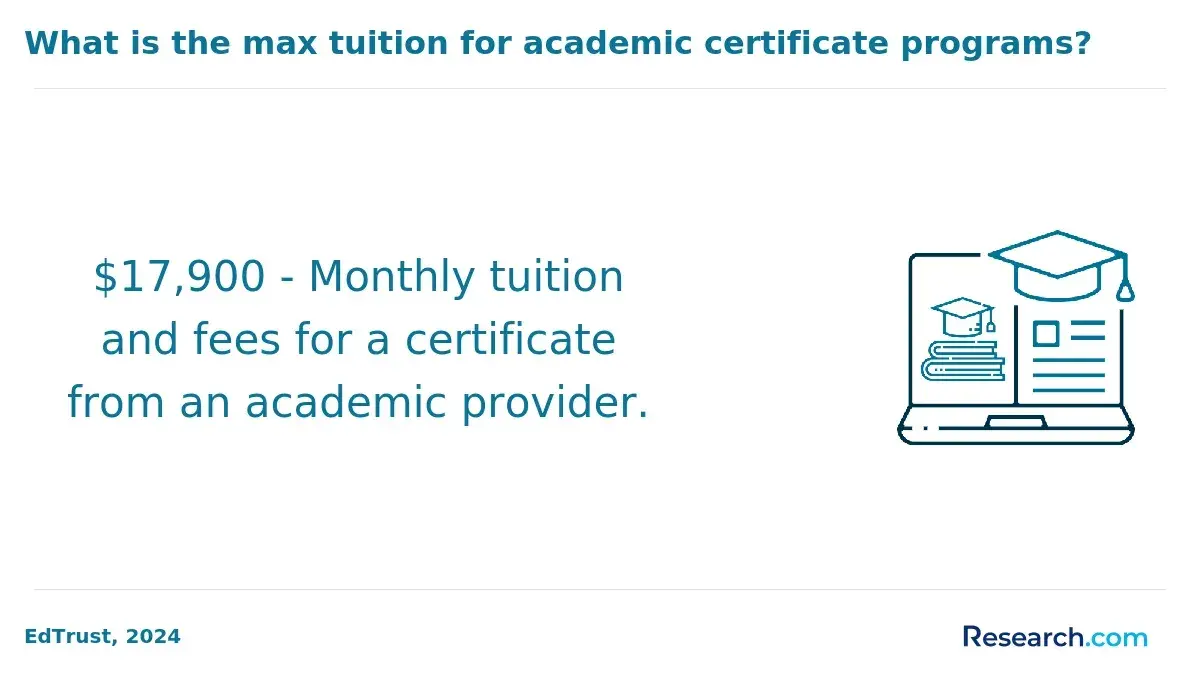
Online students often avoid housing and commuting costs, but they do not avoid all extra charges. Applied science programs may include technical software, lab materials, background checks, field experiences, simulations, certification prep, or proctored exams.
Before comparing schools, ask each program for an itemized cost sheet that separates required charges from optional expenses. The most common hidden costs include the following:
- Online learning or distance education fees charged per credit or per course
- Technology, student services, library, advising, or registration fees
- Program-specific lab kits, uniforms, tools, equipment, software, or simulation platforms
- Proctoring fees for remote exams or required testing centers
- Clinical, internship, practicum, background check, drug screening, immunization, or liability insurance costs
- Textbooks, access codes, digital course materials, and open-resource replacement fees
- Graduation, transcript, portfolio assessment, prior-learning assessment, or credit-evaluation fees
- Travel costs for orientations, labs, practicums, skills checks, or local placement requirements
The biggest mistake is assuming "fully online" means "no campus-like fees." A program can deliver coursework online and still require local placements, hands-on assessments, or industry-specific tools that add real costs.
Ask whether fees are refundable if you drop a course, whether digital materials are automatically billed, and whether program fees increase at the upper-division level. These questions are especially important for adult learners paying out of pocket on a tight monthly budget.
How Does FAFSA and Federal Financial Aid Work for Online Applied Science Degree Programs?
Online students can generally use federal financial aid if they enroll in an eligible degree or certificate program at a school that participates in Title IV federal student aid. The delivery format alone does not disqualify a program, but accreditation, program eligibility, enrollment intensity, satisfactory academic progress, and citizenship or eligible noncitizen status all matter.
The FAFSA process is similar for online and campus students. Follow these steps to understand what aid you may receive and what you may still owe:
- Confirm that the school participates in federal student aid and that your specific applied science program is aid-eligible.
- Submit the FAFSA using the school's federal code and list every institution you are seriously considering.
- Review your Student Aid Index and wait for each school's financial aid offer.
- Separate grants and scholarships from loans, because only grants and scholarships reduce net price without repayment.
- Check how full-time, half-time, and part-time enrollment affect Pell Grant amounts, loans, and satisfactory academic progress.
- Ask whether summer courses, accelerated sessions, or competency terms are covered by your aid package.
- Compare the remaining balance after free aid before deciding how much, if anything, to borrow.
The 2024-25 maximum Pell Grant is $7,395, but not every student qualifies for the maximum amount, and the award may be prorated by enrollment level. Federal Direct Loans can help with remaining costs, but they are not financial aid discounts; they increase the long-term cost because repayment and interest follow graduation, withdrawal, or reduced enrollment.
Federal aid rules apply across many online healthcare and professional pathways, from applied science bachelor's programs to advanced options such as an online PharmD. The key is always the same. Verify school eligibility, program eligibility, and the final award letter before enrolling.
Which Scholarships, Grants, and Tuition Benefits Can Help Pay for an Online Applied Science Degree?
The best funding sources for online applied science students are grants and scholarships because they do not usually require repayment. Employer tuition assistance, military education benefits, workforce grants, and state aid can also reduce the cash needed to finish a degree.
The table below summarizes common funding options and how they affect affordability. Use it to build a funding plan before relying on loans.
| Funding source | How it helps | Best-fit student | Question to ask |
| Federal Pell Grant | Reduces net price for eligible undergraduate students | Students with demonstrated financial need | Will my enrollment level reduce the award? |
| State grants | May lower tuition at public in-state colleges | Residents attending eligible in-state institutions | Can online students receive the same state aid? |
| Institutional scholarships | Can reduce tuition or fees directly through the school | Transfer students, adult learners, high-GPA students, or program-specific applicants | Is the award renewable, and what GPA is required? |
| Employer tuition assistance | May reimburse courses related to a current or future role | Working adults in healthcare, manufacturing, business, IT, public safety, or logistics | Must I stay employed for a period after reimbursement? |
| Military and veteran benefits | Can cover tuition, fees, housing allowances, or certification costs depending on the benefit | Eligible service members, veterans, spouses, or dependents | How will benefits interact with Pell Grants or scholarships? |
| Workforce or industry grants | May fund high-demand technical or healthcare pathways | Students entering fields with regional labor shortages | Does the grant require a specific employer, location, or credential? |
Scholarship searches should include the school's foundation, state workforce agencies, professional associations, local employers, unions, hospitals, community foundations, and industry groups. Healthcare workers comparing applied science and nursing advancement paths may also want to review affordability patterns in online FNP programs, where employer support and clinical placement policies can strongly affect net cost.
Do not assume a scholarship will continue automatically. Ask whether each award is one-time or renewable, whether it applies to summer or accelerated terms, and whether dropping below a credit threshold will cancel the funding.
Can Transfer Credits, Prior Learning, and Competency-Based Study Lower the Cost of an Online Applied Science Degree?
Transfer credit is often the biggest cost-saving tool for applied science students because many enter with an AAS, technical diploma, military training, industry certification, or previous college coursework. The fewer credits you must complete at the new school, the lower your tuition, fees, and time away from full-time work may be.
Use the steps below before choosing a program. A generous transfer policy can make a higher per-credit school cheaper than a lower-priced school with strict residency rules.
- Request an unofficial transfer review before applying if the school offers one.
- Ask how many technical, occupational, military, certification, and prior-learning credits can count toward the major, electives, and general education.
- Confirm the residency requirement, which is the minimum number of credits you must complete at the degree-granting school.
- Ask whether old credits expire, especially in technology, healthcare, or regulatory fields.
- Compare portfolio assessment, credit-by-exam, CLEP, DSST, industry certification, and military transcript options.
- Get the final transfer evaluation in writing before registering for classes.
Competency-based programs can also reduce cost when students already know the material and can complete assessments quickly. However, they require strong self-management, reliable time each week, and comfort with independent learning.
Applied science students should also think about credential stacking. For example, a healthcare professional might complete an applied bachelor's now and later pursue a specialized graduate credential such as an FNP post master's certificate, so transferability, prerequisites, and institutional reputation can matter beyond the first degree.
How Should Students Compare the Net Price, Quality, and Return on Investment of Online Applied Science Degree Programs?
The best-value online applied science degree is not always the cheapest one. A strong choice balances low net price with recognized accreditation, credit transfer, student support, completion flexibility, employer relevance, and career alignment.
Use the comparison table below to evaluate affordability and value together. It helps separate programs that are merely cheap from programs that are financially sensible for your goal.
| Decision factor | Low-value warning sign | Better comparison method |
| Tuition | The school advertises a low rate but omits online or program fees | Compare tuition plus mandatory fees for your remaining credits |
| Financial aid | The award letter relies heavily on loans | Calculate net price using grants and scholarships only, then review borrowing separately |
| Transfer credit | The school will not evaluate credits until after enrollment | Request a written degree plan showing accepted credits and remaining requirements |
| Accreditation | The school uses unclear or unfamiliar accreditation language | Verify institutional and any required programmatic accreditation through recognized sources |
| Career fit | The curriculum is broad but not connected to your target role | Compare courses, certifications, fieldwork, employer partnerships, and graduate-school prerequisites |
| Completion support | Courses are online but advising, tutoring, or placement support is limited | Ask about online advising, course availability, retention support, and career services |
Return on investment should be judged against the career you are actually pursuing. The U.S. Bureau of Labor Statistics reported a May 2024 median annual wage of $77,660 for radiologic technologists and technicians, but that figure applies to a specific occupation and does not represent every applied science pathway. Use occupation-specific wage, licensure, and job outlook data rather than assuming one applied science salary applies to all graduates.
Before enrolling, ask each school for a personalized cost estimate, transfer evaluation, aid projection, course sequence, and career-outcome information. If one program costs slightly more but accepts more transfer credit, offers stronger support, or aligns better with a licensed or high-demand role, it may provide the better overall value.
Other Things You Should Know About Applied Science Degrees
Not exactly. Applied science degrees are usually more career-focused and often include technical, professional, or occupational coursework. Traditional academic degrees may place more emphasis on theory, research, or broad disciplinary study.
Many applied science programs offer online coursework, but some fields require in-person labs, clinical placements, internships, practicums, or skills assessments. Always confirm the on-campus or local placement requirements before enrolling.
Many accredited schools award the same diploma for online and campus students, but policies vary. Ask the registrar whether the transcript or diploma identifies the delivery format.
It can, depending on the graduate program and your completed prerequisites. Some applied science degrees include fewer traditional liberal arts or theory courses, so students planning graduate study should confirm admission requirements early.
References
- Costs of Online and Campus Colleges | University of Phoenix https://www.phoenix.edu/blog/comparing-the-costs-of-online-and-campus-colleges.html
- International Student Scholarship Search & International Financial Aid https://www.iefa.org/
- Best Online Colleges in 2025 https://www.onlineu.com/best-online-colleges
- Can I get financial aid for an online degree? | edX https://www.edx.org/resources/can-i-get-financial-aid-for-an-online-degree
- Accreditation processes for technical programs https://edquip.co/blog/accreditation-processes-for-technical-programs
- Financial Aid For Online Colleges https://www.affordablecollegesonline.org/financial-aid/financial-aid-for-online-colleges/
- Average Cost of a Master's Degree: 2025 Analysis https://educationdata.org/average-cost-of-a-masters-degree