2027 Cheapest Accredited Online Electrical Engineering Master's Programs With Flat-Rate Tuition: Costs per Term and Total Degree Estimates

Co-Founder and Chief Data Scientist
A low advertised term price can become an expensive electrical engineering master's if the program requires extra terms or excludes mandatory fees. This matters in a field where the U.S. Bureau of Labor Statistics projects 7% employment growth for electrical and electronics engineers from 2023 to 2033.
This guide helps working engineers compare flat-rate tuition models, calculate realistic total costs, verify accreditation, and decide whether an accelerated online degree supports their technical and career goals.
Key Things You Should Know
- Flat-rate tuition is cheapest only when you take enough credits each billed term; divide the term charge by your planned credits to find the effective per-credit price.
- Total cost depends more on the number of paid terms than on the advertised term rate: a 30-credit degree completed in five terms can cost substantially more than the same degree completed in three terms.
- Prioritize institutional accreditation, engineering curriculum quality, required fees, scheduling reliability, and employer reimbursement rules alongside tuition; online electrical engineering master's programs do not all serve the same licensure or technical-career goals.
What Does Flat-Rate Tuition Mean for an Online Electrical Engineering Master's Program?
Flat-rate tuition means a university charges one set tuition amount for a defined enrollment period, such as a semester, quarter, or accelerated session, rather than charging separately for every credit. The price normally applies only within stated enrollment limits. For example, a school may charge one rate for a specified full-time credit range, while charging extra for credits above that range.
For an online electrical engineering master's program, the model can work well for employed students who can consistently take a full schedule. Typical programs require about 30 to 36 graduate credits and may offer concentrations such as power systems, communications, controls, embedded systems, microelectronics, signal processing, or computer engineering.
Do not assume that "flat rate" means unlimited coursework. Before enrolling, confirm the items that determine whether the published price applies to your plan:
- The minimum and maximum credits covered in each term.
- Whether summer, short sessions, labs, thesis credits, and independent study use the same rate.
- Whether students may register for all required courses when they need them.
- Whether prerequisite courses, repeated courses, or graduate certificates are billed separately.
- Whether a part-time student pays a lower per-credit rate instead of the flat rate.
A flat-rate model is generally a poor fit for students who can take only one course at a time, expect frequent enrollment interruptions, or need prerequisites before beginning graduate engineering courses. In those cases, a per-credit program can produce a lower total tuition bill even when its posted per-credit rate looks higher.
Admissions commonly require a bachelor's degree in electrical engineering, computer engineering, or a closely related STEM discipline; transcripts; a minimum GPA set by the school; and prerequisite preparation in calculus, circuits, programming, and signals or systems. Some programs also request a résumé, statement of purpose, recommendations, or evidence of relevant technical experience. Requirements vary, especially for applicants whose undergraduate degree is outside engineering.
How Much Does a Flat-Rate Online Electrical Engineering Master's Program Cost Per Term?
There is no reliable single national flat-rate price for online electrical engineering master's programs because universities set their own tuition calendar, credit bands, and mandatory charges. The most useful number is not the term price by itself; it is the term price plus required fees, divided by the credits you can realistically complete in that term.
The calculation below shows how to compare any school's published figures without treating an advertised rate as a total-degree estimate.
| Calculation | Formula | Why it matters |
| Effective tuition per credit | Flat-rate tuition ÷ credits taken in the term | Shows whether a full course load creates value. |
| Term charge including required fees | Flat-rate tuition + mandatory term fees | Prevents tuition-only comparisons. |
| Estimated paid terms | Required remaining credits ÷ planned credits per term, rounded up | Identifies the largest driver of total cost. |
| Estimated total tuition and mandatory fees | Term charge including fees × estimated paid terms | Creates a comparable planning estimate. |
Use the credit load you can maintain while working, not the most ambitious schedule the catalog permits. A program with a higher flat rate can be the better financial choice if it reliably lets you complete more required credits each term, avoids course bottlenecks, and does not add separate technology or distance-learning fees.
Ask the admissions or bursar office for the current rate applicable to your start term in writing. Tuition schedules can change, and a quoted rate may apply only to a specific academic year, residency category, or enrollment level.
How Much Does an Online Electrical Engineering Master's Degree Cost in Total With Flat-Rate Tuition?
Total cost equals the number of paid terms required, multiplied by the tuition and mandatory fees charged for each term, plus expenses that are not billed by term. A 30-credit degree is not automatically a three-term degree: course sequencing, capstones, prerequisite gaps, and your work schedule can add terms.
This planning table illustrates how term count changes a total-cost estimate. Replace the sample variables with each university's published price and your approved degree plan.
| Completion scenario | Planning assumption | Estimated tuition formula | Cost implication |
| Full-time pace | Credits fit within the covered full-time band each term | Term charge × fewer terms | Usually produces the lowest effective cost per credit. |
| Moderate part-time pace | Fewer credits are taken each term | Part-time rate or term charge × more terms | May reduce workload but can raise the total. |
| Extra-term scenario | One required course or capstone remains after planned completion | Base estimate + one additional term charge | Can erase savings from a low advertised rate. |
| Transfer or waiver scenario | Approved prior graduate work reduces remaining requirements | Term charge × reduced paid terms | Savings occur only if the approval removes a whole paid term. |
Include application fees, books, proctoring, equipment, travel for any required residency, and financing costs separately. A comparison should also distinguish tuition from total educational cost; neither figure predicts personal return on investment by itself.
Students seeking a compressed graduate timeline can compare program pacing with other online 1 year masters programs, but should verify that an accelerated schedule includes the electrical engineering specialization and technical depth they need.
How Does Course Load Affect the Cost of a Flat-Rate Online Electrical Engineering Master's Degree?
Course load determines whether flat-rate tuition creates savings. If a term charge covers a range of credits, taking more credits within that range lowers the effective tuition per credit. Taking a light load can make the same term price disproportionately expensive.
For example, the same formula produces very different results at different loads:
| Credits completed in a flat-rate term | Effective-cost formula | Interpretation |
| One course | Term tuition ÷ credits in one course | Often the least cost-efficient use of a full-time flat rate. |
| Two courses | Term tuition ÷ combined course credits | May be practical for working professionals but requires comparison with part-time pricing. |
| Maximum covered load | Term tuition ÷ maximum included credits | Produces the lowest effective tuition per credit, if academically sustainable. |
Electrical engineering courses can be demanding because they often combine advanced mathematics, simulation, coding, design work, and team assignments. A heavy schedule is not automatically a bargain if it causes a withdrawal, failed course, or missed prerequisite sequence. Repeating a course may add tuition, delay graduation, and create another billed term.
Plan the load around your actual weekly availability and the academic calendar. Review synchronous meeting times, examination windows, lab software requirements, group-project expectations, and the sequence of required courses before committing to an accelerated pace.
Is Flat-Rate Tuition Cheaper Than Per-Credit Tuition for an Online Electrical Engineering Master's Degree?
Flat-rate tuition is cheaper than per-credit tuition only when the credits completed within each billed term outweigh the price premium of the flat-rate option. Compare total estimated tuition for the entire degree, not just one term or one course.
The following comparison framework reveals the break-even point. A school may supply different rates for part-time and full-time enrollment, so use the rate that matches your intended load.
| Pricing model | Total-cost calculation | Usually best for | Main risk |
| Flat rate | Term price × paid terms | Students taking a full covered load consistently | Paying for unused capacity or extra terms |
| Per credit | Per-credit price × required credits | Students taking lighter or irregular loads | Higher price when many credits are taken quickly |
| Hybrid tiered rate | Applicable credit-band rate × terms | Students near a school's stated full-time threshold | Assuming one band applies to every term |
Campus-based engineering programs may use still different pricing and may require laboratory access, commuting, or on-campus sessions. Online delivery can reduce travel and relocation costs, but it does not automatically make tuition lower.
Cost comparisons in adjacent engineering fields can also clarify how program rules matter more than a headline price. For example, a guide to the cheapest online civil engineering degree can help illustrate why degree requirements, residency expectations, and accreditation should be checked separately for each discipline.
What Fees and Additional Expenses Apply to a Flat-Rate Online Electrical Engineering Master's Program?
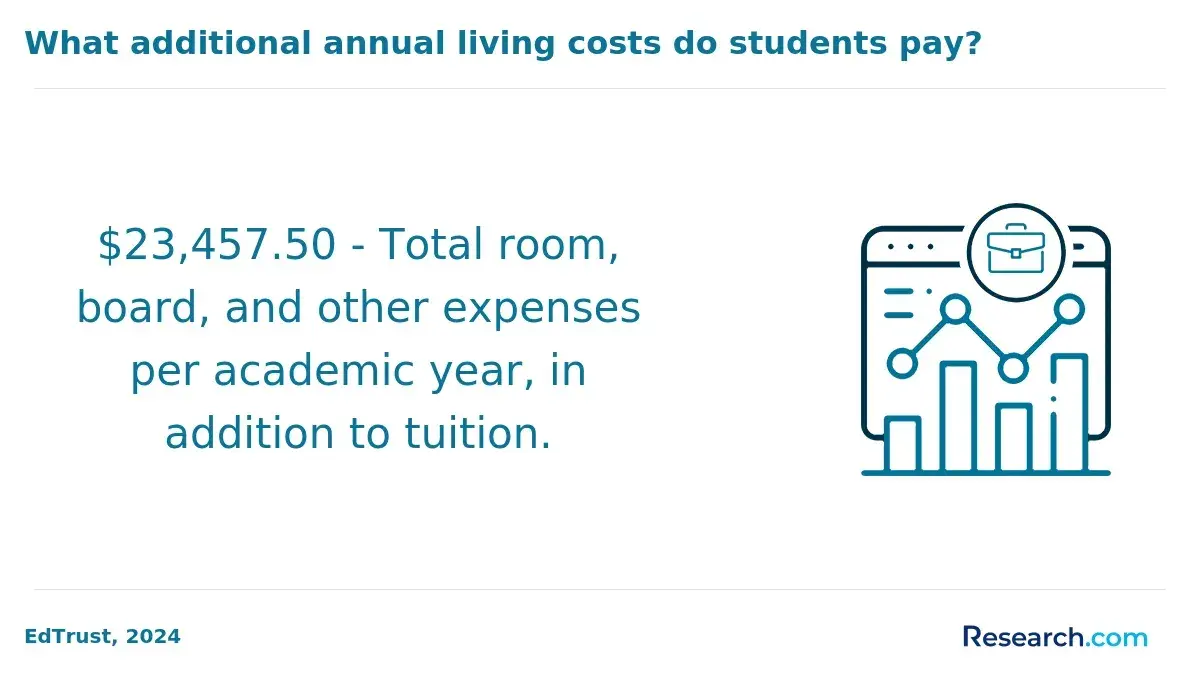
Flat-rate tuition commonly excludes at least some mandatory charges. A program can be affordable on tuition and still cost more overall than an alternative with a higher term price but fewer fees. Request a term-by-term student account estimate before making a deposit.
Review these expense categories because they can change the true cost of attendance:
- University, student services, technology, distance-learning, and course-specific fees.
- Application, graduation, transcript, late-registration, and payment-plan charges.
- Textbooks, online homework platforms, simulation software, cloud-computing access, and professional software licenses.
- A laptop or computer upgrades needed for engineering software and remote examinations.
- Travel, lodging, meals, and lost work time if a residency, orientation, presentation, or laboratory session is required.
- Interest and origination charges if federal or private loans are used.
Ask whether online students pay the same fees as campus students and whether any fee is optional. Also confirm whether charges are assessed per term, per course, per credit, or once per program. This distinction matters because a per-course fee can rise with an accelerated load, while a per-term fee rises when completion takes longer.
A red flag is a school that will not provide a clear explanation of which fees are mandatory. Another is a price page that does not identify the enrollment level on which the flat rate is based.
Can Accelerated Study Lower the Total Cost of a Flat-Rate Online Electrical Engineering Master's Degree?
Accelerated study can lower total tuition when it reduces the number of flat-rate terms you must pay for without triggering overload charges or compromising course completion. It can also shorten the time before you can apply new technical skills at work. However, acceleration is valuable only when the required courses are available in sequence and you can handle the pace.
Evaluate an accelerated option using these practical steps:
- Map every required course, elective, capstone, and prerequisite onto the school's actual term calendar.
- Confirm the maximum credits covered by the flat rate and the price of credits above that limit.
- Identify courses offered only once each year, since one missed prerequisite can add a full term.
- Check whether group projects, proctored examinations, or synchronous classes fit your work schedule.
- Calculate the cost of one additional term before deciding whether an overloaded schedule is worth the academic risk.
An accelerated degree is not necessarily a one-year degree. Program length depends on credit requirements, transfer-credit policies, term format, and available concentrations. Readers comparing fast online formats across professional fields may find that architecture programs online face similar scheduling questions, although architecture and electrical engineering have different curriculum and licensure requirements.
Avoid choosing acceleration solely to reduce tuition. For engineers changing specialties, taking enough time to master controls, power electronics, communications, or embedded design may offer greater career value than the shortest possible completion date.
Can Financial Aid and Employer Reimbursement Reduce the Cost of a Flat-Rate Online Electrical Engineering Master's?
Financial aid and employer education benefits can reduce out-of-pocket cost, but eligibility and timing differ by student and employer. U.S. students should submit the Free Application for Federal Student Aid (FAFSA) and ask the university's financial-aid office whether the online program is eligible for federal Direct Unsubsidized Loans or Graduate PLUS Loans. Loans reduce the immediate payment burden, not the underlying price, because repayment and interest remain considerations.
Employer reimbursement can be particularly relevant for engineers whose coursework supports current responsibilities in automation, semiconductors, power systems, communications, or product development. Before enrolling, obtain the employer policy and clarify these terms:
- The annual reimbursement cap and whether it is based on tuition only or includes mandatory fees.
- The minimum grade required for reimbursement and whether payment occurs upfront or after course completion.
- Whether the degree, concentration, and institution require advance approval.
- Whether a continued-employment agreement applies after reimbursement is received.
- Whether the benefit resets by calendar year, fiscal year, or academic term.
Do not assume a lower-priced program is automatically better after aid. Compare net tuition after grants or employer payments, expected borrowing, and the number of terms required. The same reimbursement planning logic applies to other career-focused online paths, including the best online paralegal programs, although employer policies and professional outcomes differ by field.
How Do Enrollment Breaks and Extra Terms Affect the Cost of an Online Electrical Engineering Master's Degree?
Enrollment breaks can raise the final cost when a student returns under a higher tuition schedule, loses access to a flat-rate cohort price, or needs an additional term to finish a capstone or sequence-dependent course. Even when leave itself has no charge, the financial effect can be significant if one incomplete requirement triggers another full term of tuition and fees.
Before beginning, review the written policies for leaves of absence, continuous enrollment, withdrawals, incompletes, course repeats, time-to-degree limits, and tuition guarantees. Ask whether you must reapply after a break, whether previously completed courses remain valid, and whether a capstone must be taken in a particular term.
Protect your budget by keeping a contingency amount equal to one extra term's full charge. This is more useful than assuming the catalog's fastest timeline will apply to every student. If your employment, caregiving, or military obligations are likely to interrupt study, a per-credit program or a flat-rate plan with flexible part-time enrollment may be the safer choice.
How Should Students Choose the Best-Value Flat-Rate Online Electrical Engineering Master's Program?
The best-value program is the one that delivers the needed technical preparation at a total cost and schedule you can complete - not simply the school with the lowest price per term. For most students, value comes from matching course availability, accreditation, specialization, employer relevance, and realistic study capacity.
Use this comparison table after collecting current written estimates from each school.
| Decision factor | What to verify | Why it affects value |
| Accreditation | Institutional accreditation and any program-specific engineering accreditation information | Can affect employer confidence, transferability, and certain professional pathways. |
| Total billed terms | Degree map, course rotation, capstone timing, and transfer decisions | Usually has more financial impact than the headline term price. |
| Flat-rate coverage | Credit minimums, maximums, overload pricing, and exclusions | Determines the true effective price per credit. |
| Career alignment | Courses, projects, faculty expertise, and concentration options | Supports the technical role or specialization you are pursuing. |
| Flexibility | Asynchronous access, live-session requirements, exam policies, and leave rules | Reduces the chance that work obligations create an extra term. |
| Net cost | Grants, employer support, loans, and required fees | Shows what you may actually pay or borrow. |
For many engineering roles, a master's degree can deepen specialized expertise but is not a universal requirement. Electrical and electronics engineers design, test, improve, and supervise systems involving power, electronics, communications, controls, and computing. Consider the degree's return in relation to your target role, employer demand for the specialization, access to advanced projects, and the cost of delaying completion - not salary assumptions alone.
Accreditation deserves careful review. Institutional accreditation is important for federal aid and broad academic recognition. ABET accreditation is most commonly associated with undergraduate engineering programs; graduate-program status and state licensure implications should be confirmed directly with the university and, when relevant, the state licensing board. A graduate electrical engineering degree alone does not automatically qualify someone for Professional Engineer licensure.
As a final check, compare how other fields describe affordability and program fit rather than relying on institution type or marketing labels. For instance, resources on an affordable library degree demonstrate the same core principle: compare published total cost, completion requirements, and the credential's fit with the career goal.
Other Things You Should Know About Electrical Engineering
Many online programs are designed for working professionals, but feasibility depends on course intensity, live-session requirements, group work, and your technical background. Start with a manageable load and increase it only after confirming that the academic workload fits your job and personal responsibilities.
Some programs use simulation software, remote-access tools, mailed kits, virtual labs, or project-based work. Others may require limited campus visits or approved local arrangements. Confirm laboratory and residency requirements before enrolling, especially if travel would affect your budget.
It can be useful when the curriculum provides the technical foundation and projects needed for the target specialty, such as power systems, embedded systems, controls, communications, or semiconductor design. Review prerequisite requirements carefully; a specialization change may require additional courses and more paid terms.
Licensure rules vary by state and depend on factors such as education, examinations, supervised experience, and board requirements. Verify requirements directly with the relevant state licensing board rather than assuming that any online graduate degree changes your eligibility.
References
- How Long Does It Take to Complete a Master's Degree Program? https://www.calsouthern.edu/articles/how-long-is-a-masters-degree
- Full-Time Student Hours vs. Part-Time: What's the Difference? https://www.citizensbank.com/student/articles/full-time-student-hours.aspx
- Beyond Tuition https://www.americanprogress.org/article/beyond-tuition-2/
- The Hidden Costs of Higher Education http://perspectives.acct.org/stories/the-hidden-costs-of-higher-education-0
- 2025 Most Affordable Online Master's Degrees in Electrical Engineering https://www.onlineu.com/most-affordable-colleges/electrical-engineering-masters-degrees
- Which Colleges Offer Free Tuition - and Who Actually Qualifies https://www.road2college.com/free-tuition-colleges/
- Average Cost of a Master's Degree: 2025 Analysis https://educationdata.org/average-cost-of-a-masters-degree
- Best Online Electrical Engineering Master's Degree Programs in 2025 https://www.onlinemastersdegrees.org/best-programs/engineering/electrical-engineering/
- EdAssist | Understanding college pricing models https://www.brighthorizons.com/resources/blog/edassist/understanding-college-pricing-models
- Hidden College Costs: What Families Miss Every Year https://www.collegeflightpath.com/cfp-blog/hidden-college-costs-and-how-to-manage-them