2027 BS in Business Administration for Credit Unions: Which Business Courses Should You Prioritize?
Audited and Verified:
Our Editorial and Data Verification Process
Research.com uses government datasets, official education statistics and primary institutional information to support its career and degree guides. Our review process checks factual accuracy, occupational definitions, source dates and the requirements associated with the credentials discussed.
How This Article Was Fact-Checked
Our editorial team verifies salary estimates, employment projections, education requirements and program information against original data providers and official organizations. Salary figures are checked against the relevant occupational definitions and reporting periods. Information about licensure, accreditation and required in-person training is reviewed separately.
Fact-checked and verified on:

Co-Founder and Chief Data Scientist
If you want to work at a credit union, the most useful business courses depend on whether you hope to serve members, evaluate loans, improve operations, or work in compliance. A BS in Business Administration can provide a broad foundation, but the right electives and applied assignments make that foundation more relevant.
This guide ranks course priorities by career goal, explains where experience matters more than coursework, and shows what to check before choosing a program or concentration.
Key Things You Should Know
- Prioritize financial accounting, business finance, spreadsheets or analytics, and professional communication; add lending, information systems, operations, or compliance-related courses for your target role.
- Choose electives by the work you want to demonstrate, not by a concentration's name. A supervised project using permitted data can show more job-relevant skill than an unrelated elective.
- A degree is not an automatic route into management: the Bureau of Labor Statistics reports a $75,940 May 2025 median for human resources specialists across industries, not a starting salary for credit union graduates.
What is a BS in Business Administration for credit union careers?
A BS in Business Administration is an undergraduate degree covering several business functions rather than a credit union-specific qualification. Its accounting, finance, management, operations, and analytical coursework can apply to a member-owned financial cooperative. Credit union employees also need to understand the institution's service mission and the rules governing their particular work.
The degree fits someone who wants room to explore lending, member experience, operations, or administrative roles. A specialized accounting, finance, or information systems degree may offer more depth for a clearly defined technical goal. A BBA may also be suitable; compare actual required courses rather than assuming the degree initials determine job readiness. If finishing a bachelor's quickly is the main constraint, accelerated online bachelor's programs are worth examining, but confirm that their business coursework fits your target function.
Which business courses best prepare you for credit union jobs?
Start with financial accounting, business finance, spreadsheet-based analysis, and business communication. Accounting helps you read statements and understand controls; finance introduces borrowing and financial decisions; analytics helps you interpret performance measures; communication supports clear explanations to members and colleagues. These are foundations, not substitutes for job-specific training or authority to make lending decisions.
The best next courses depend on the work you want to do. This comparison shows where common electives add value; course titles and depth vary by school.
| Target work | Useful additional coursework | Skill to demonstrate |
| Member service and branch operations | Marketing, consumer behavior, operations management | Explain a service clearly and identify a process bottleneck without compromising member needs. |
| Consumer or business lending support | Intermediate finance, economics, risk management | Interpret financial information and document assumptions accurately. |
| Compliance or internal controls support | Business law, information systems, audit or risk electives | Map a process, identify a control point, and escalate an exception. |
| Operations and reporting | Business analytics, statistics, project management | Build a reproducible spreadsheet and explain what its data cannot establish. |
Seek assignments that use public or fictional information unless a credit union authorizes access to internal records. If you specifically want operations work that extends beyond financial services, compare accelerated supply chain bachelor's degrees against a general business program with operations electives. Supply chain study is not a substitute for lending or financial-services preparation.
What degree requirements lead to credit union career opportunities?
Typical business programs combine general education, a business core, electives, and sometimes a capstone or internship. None of these requirements, by itself, qualifies a graduate for a particular credit union job. The strongest degree plan connects a required course to a relevant elective and then to evidence of applied work - for example, accounting followed by finance and a faculty-approved analysis of publicly available financial information.
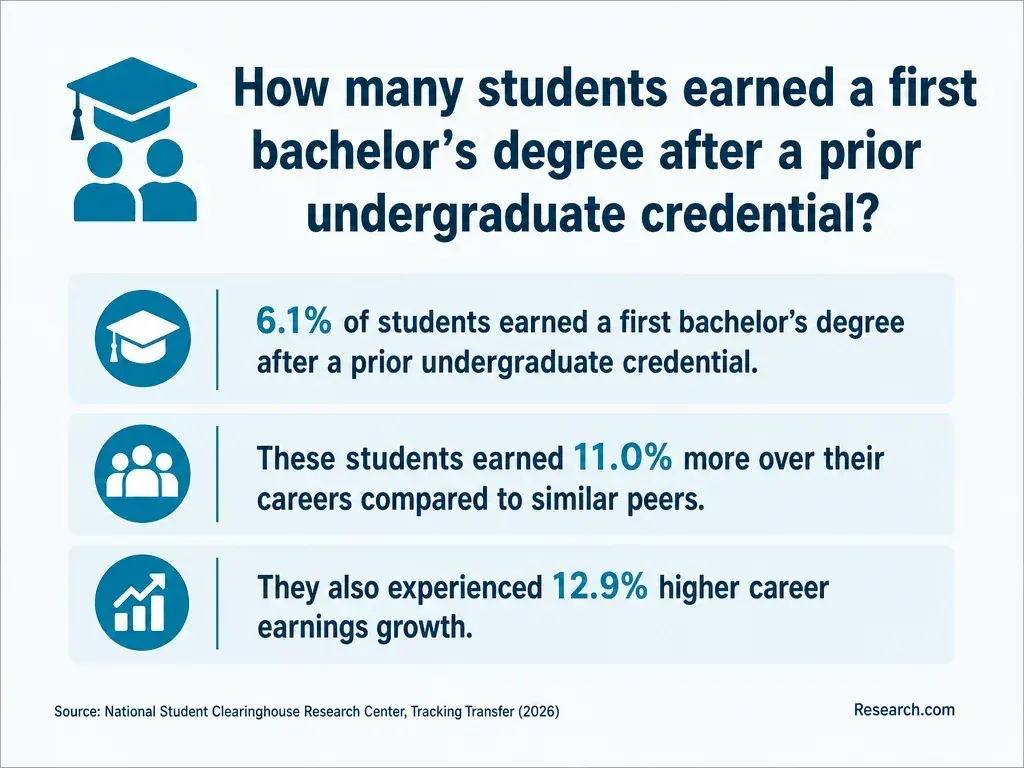
Check the catalog and degree audit before committing to a concentration. Determine whether it is officially recorded, whether its courses require prerequisites, and whether they are offered when you need them. If you already have college credit, ask which courses satisfy business requirements rather than merely transfer as electives. Students considering an HR route can also examine using existing credits in a human resources degree; the receiving institution makes the final credit determination.
An internship can provide direct exposure to member service or back-office processes, but it earns degree credit only if the program approves it. A current job likewise does not automatically satisfy a capstone. Ask faculty and the employer what supervision, deliverables, permissions, and confidentiality safeguards apply.
Either format can teach the priority courses. Online study may help someone already working at a credit union keep regular hours, while campus study may make scheduled discussion, recruiting events, and in-person projects easier to access. Neither format guarantees an internship or employer connection.
Compare the actual sections you would take: live-session times, group meetings, exam arrangements, software access, faculty feedback, and the availability of finance and analytics electives. Online business degrees with compressed terms may shorten the calendar but can concentrate assignments into fewer weeks; check whether that pace leaves enough time to master accounting and quantitative work. For either format, ask how you would complete an applied project if you cannot use workplace data.
Recognized institutional accreditation matters when evaluating the legitimacy of a college and may affect credit transfer or eligibility under particular employer education policies. Separate business-school accreditors, including AACSB, ACBSP, and IACBE, review defined schools or programs; their recognition should not be assumed to cover every degree at an institution. Accreditation does not establish that graduates obtain credit union jobs.
Verify the institution and the exact business program in the relevant accreditor's listings, then ask a prospective employer whether it has a specific degree or reimbursement policy. Even when comparing application-cost-free online school options, check accreditation scope, course availability, and total completion cost - not just the application charge.
Requirements vary by institution and by entry route. A first-time applicant may need secondary-school records; a transfer applicant may need transcripts from every previous college. Some schools admit students directly to the business major, while others require introductory courses or a separate major application. Admission is distinct from having prior courses accepted toward graduation.
Before applying, review the program's rules for mathematics, statistics, accounting, and prior credits. The guide to required credits before entering business administration study can help frame questions, but the institution's current catalog controls. Request an official evaluation if you have transfer coursework, and ask an adviser which prerequisite must precede your preferred finance or analytics elective.
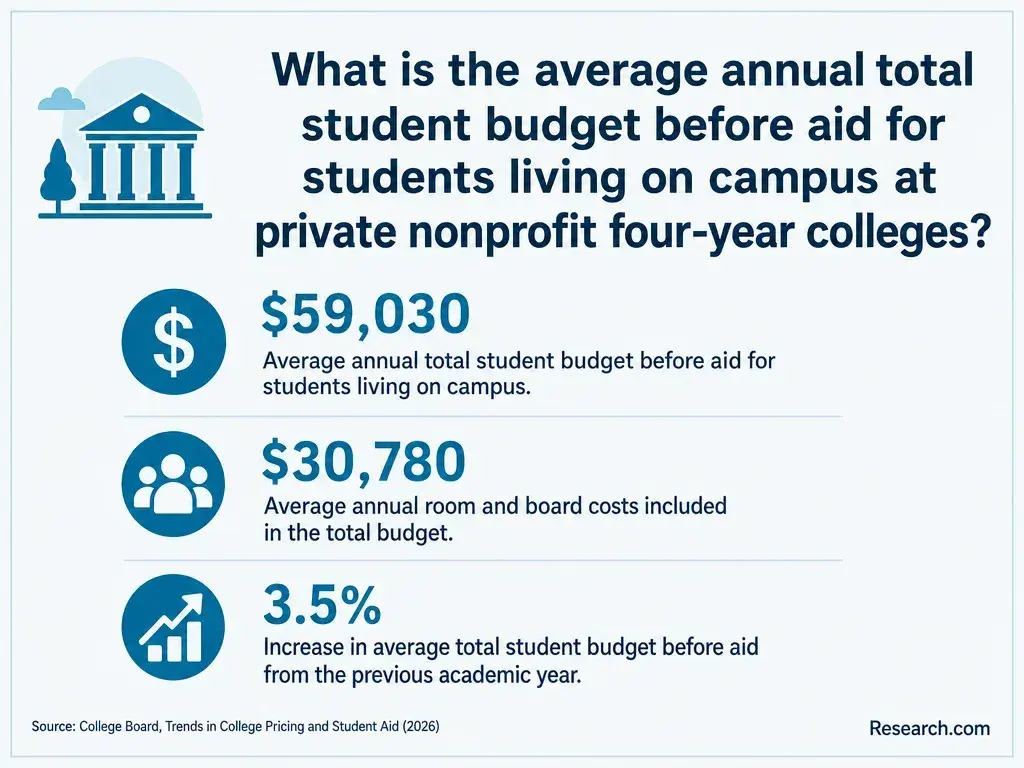
There is no standard "credit union-focused" degree price or completion time. Both depend on the school's requirements, credits that apply to those requirements, course availability, enrollment pace, and any added concentration or internship. Tuition alone misses fees, books, software, travel, and potential earnings lost when coursework conflicts with work.
Request a degree audit and a term-by-term schedule before comparing costs. A school advertising shorter undergraduate business programs across the US may still require a prerequisite sequence or a course offered infrequently. Compare the amount you would pay to finish - not the advertised price of one term - and confirm whether employer education assistance pays upfront or reimburses you later.
Entry routes include member service, lending support, operations coordination, business reporting, and administrative or HR support. In member service, the immediate test is accurate communication and responsible handling of member information. Lending support adds documentation and financial analysis; operations roles emphasize reliable processes, systems, and controls. Specific titles and hiring standards vary by credit union.
A graduate with relevant work samples or experience may compete for more analytical responsibilities, but a supervisory title usually calls for demonstrated judgment and results beyond coursework. If employee relations and recruiting are your primary goals, a human resources program selection guide can help you compare an HR-focused degree with general business study. For any route, read local job postings for required experience and build evidence that matches the tasks - not just the title.
Credit union pay depends on the job, location, employer, and experience; no single salary represents BS in Business Administration graduates. The following Bureau of Labor Statistics figures are May 2025 national occupation-wide medians across industries, not credit union-specific pay or expected starting offers.
| Related occupation | Median annual pay | Projected US employment growth, 2025-2035 |
| Human resources specialist | $75,940 | 6% |
| Financial and investment analyst | $102,740 | 7% |
| Project management specialist | $102,320 | 7% |
Use these figures to distinguish career directions, not to estimate a new graduate's offer. An analyst or project specialist role may require experience or skills beyond an introductory business core. Compare actual credit union postings in your area and the cost of gaining any missing preparation; for a project-focused alternative, consider project management fees books and aid considerations alongside the curriculum rather than assuming higher occupation-wide pay justifies another degree.
Which certifications and professional standards benefit credit union employees?
Credit union work may involve employer training in privacy, information security, fraud prevention, fair lending, and Bank Secrecy Act and anti-money-laundering responsibilities. The applicable rules depend on the role and institution. For example, understanding why a member record must be protected is broadly useful; carrying out a formal compliance function requires more specific training and oversight.
Professional certifications in areas such as compliance, audit, HR, or project management can be useful later, but their eligibility rules, examinations, and experience requirements come from the issuing organization. A business degree or elective does not award one automatically. If you already work at a credit union, ask which training supports your next assignment before paying for a credential. You can then weigh that targeted training against flexible online study for business administration career growth if a bachelor's degree is also needed for your longer-term goal.
Other Things You Should Know About Business Administration
Prior membership is not generally a prerequisite to applying. Check the employer's policy, including whether employees are expected to become members after hiring.
No. A credit union is a member-owned, not-for-profit financial cooperative, not a charity. It provides financial services and must manage revenue, expenses, and risk.
Potentially. Ask the instructor to approve the source and scope, document its limitations, and avoid implying that public data reveals confidential member or internal operating information.
Skills in service, lending operations, and controls may transfer. Learn the prospective credit union's products, cooperative structure, and role-specific procedures rather than assuming the institutions operate identically.
- Rules and Regulations | NCUA https://ncua.gov/regulation-supervision/rules-regulations
- Beginners' Guide to Financial Statement | sec.gov https://www.sec.gov/investor/pubs/begfinstmtguide.htm
- Business Analytics & Information Systems Major | Suffolk University https://www.suffolk.edu/business/degrees-programs/information-systems-operations-management/undergraduate/business-analytics-and-information-systems-major
- Human Resources vs. Organizational Behavior | Tulane University School of Professional Advancement https://sopa.tulane.edu/blog/human-resources-vs-organizational-behavior-which-degree-right-you
- Business Administration | uu.edu https://www.uu.edu/academics/programs-of-study/business-administration/
- Opportunities With a Business Administration Degree | Saint Mary's University of Minnesota https://www.smumn.edu/blog/what-doors-can-a-business-administration-degree-open/
- College of Business Administration - Academic Catalog https://catalog.uic.edu/ucat/colleges-depts/business-administration/
- BA vs BS in Business Administration: What's the Difference? | CSP Global Concordia University, ST. Paul https://online.csp.edu/resources/article/ba-vs-bs-in-business/
- Business Administration Degrees: A Comprehensive Guide | Southern Nazarene University https://www.snu.edu/business-administration-degrees-a-comprehensive-guide
- Department of Accounting | Undergraduate Courses - NYU Stern https://www.stern.nyu.edu/experience-stern/about/departments-centers-initiatives/academic-departments/accounting/academic-programs/course-descriptions/undergraduate-courses