2027 BS in Business Administration Curriculum: How to Evaluate Preparation in Negotiation
Audited and Verified:
Our Editorial and Data Verification Process
Research.com uses government datasets, official education statistics and primary institutional information to support its career and degree guides. Our review process checks factual accuracy, occupational definitions, source dates and the requirements associated with the credentials discussed.
How This Article Was Fact-Checked
Our editorial team verifies salary estimates, employment projections, education requirements and program information against original data providers and official organizations. Salary figures are checked against the relevant occupational definitions and reporting periods. Information about licensure, accreditation and required in-person training is reviewed separately.
Fact-checked and verified on:

Co-Founder and Chief Data Scientist
A business degree can list communication and leadership courses without giving students much practice negotiating. That distinction matters if you hope to work with customers, suppliers, colleagues, or project stakeholders.
This guide is for prospective and current BS in Business Administration students comparing curricula. It explains which courses and exercises build negotiation ability, how to check whether a program actually offers them, and when a different or less expensive training path may better fit your goal.
Key Things You Should Know
- Look for repeated, assessed negotiations - not just a course title - including preparation, live practice, feedback, and revision.
- Match practice to your intended work: supplier terms, customer agreements, internal resource decisions, and employee conversations call for different supporting courses.
- Compare required courses, elective availability, and total completion cost before enrolling; a negotiation elective is not a guaranteed concentration or credential.
What Is a BS in Business Administration With Negotiation Preparation?
It is a broad undergraduate business degree whose coursework develops the ability to prepare for, conduct, and evaluate agreements. Negotiation preparation may appear in management, sales, human resources, procurement, or business communication courses rather than in a formally named concentration. A BS, BBA, and specialized business degree can all offer relevant instruction, but their requirements are not interchangeable.
For an early-career student, the useful distinction is between learning about negotiation and demonstrating it. Reading about persuasion provides context; negotiating a case, receiving feedback, and improving a written agreement provides stronger evidence of skill. Experienced employees considering online business administration pathways alongside an existing career should also ask whether approved assignments can address realistic workplace situations without disclosing confidential information.
What Courses Should a BS in Business Administration Include for Negotiation?
No single course supplies all the preparation. The most useful curriculum combines business knowledge - so students understand what is at stake - with structured negotiation practice. The table shows what to look for in a catalog and syllabus, not a set of universal degree requirements.
| Course area | Contribution to negotiation | Evidence of applied learning |
| Business communication or dedicated negotiation | Questioning, proposals, listening, and agreement writing | Role-play with an assessment rubric and revision |
| Accounting, finance, or analytics | Costs, margins, budgets, and defensible trade-offs | A case requiring students to explain their assumptions |
| Management, organizational behavior, or HR | Internal interests, conflict, authority, and fairness | A supervised team or employee-relations scenario |
| Marketing, sales, operations, or supply chain | Customer value, service terms, purchasing, and delivery constraints | A scenario tied to the student's intended function |
Check which courses are required, which are electives, their prerequisites, and how often they run. An elective that is unavailable before graduation adds little practical value. Students leaning toward employee relations can compare credit acceptance at online HR schools, but should confirm that transferred courses satisfy specific requirements rather than merely count as general electives.
How Can You Evaluate Accreditation for a Business Administration Degree?
First, verify the institution's recognized accreditation and that it applies to the campus or online offering you would attend. Then check whether the business school or named program has additional AACSB, ACBSP, or IACBE accreditation; the scope differs by accreditor and institution. Neither form of accreditation, by itself, proves that students practice negotiation.
Use accreditation as a baseline, then request the current degree plan and syllabi for relevant courses. Ask an adviser whether negotiation exercises are required, how performance is assessed, and whether your preferred electives will be offered during your enrollment. When comparing accredited affordable business administration colleges with aid options, apply those same curriculum checks rather than choosing by accreditation or advertised price alone.
Effective negotiation starts before a conversation. Students should be able to identify each party's interests, estimate the value and cost of possible terms, and establish a best alternative to a negotiated agreement - what they will do if no agreement is reached. They should then practice asking questions, making conditional proposals, recognizing when an agreement is feasible, and documenting commitments clearly.
A strong assignment assesses both the outcome and the reasoning behind it. For example, a supplier exercise might require a student to weigh price against delivery reliability, explain a walk-away point, negotiate with a classmate, and revise the agreement after feedback. Ethical judgment matters too: a favorable price does not excuse misleading claims or commitments the organization cannot meet.
Project coordination adds negotiations over scope, deadlines, and resources. Students with prior college work who want that focus can examine online project management bachelor's programs accepting transfer credits as an alternative, while checking both the applied assignments and how their credits would count.
Campus classes may make it easier to schedule in-person role-plays and immediate debriefs. Online classes can use live video negotiations, recorded practice with consent, or asynchronous written exchanges. None of these formats is inherently better: the decisive factors are interaction with another person, a clear assessment rubric, useful feedback, and opportunities to try again.
Ask whether participation requires live attendance, evening group meetings, recordings, or a campus visit. An asynchronous course may still impose coordinated team deadlines. Compare these requirements alongside tuition when considering value-focused online business college choices; a lower-priced program may be a poor fit if its negotiation exercises are too difficult to attend or too limited to build skill.
Requirements vary by institution and by entry route. First-year applicants commonly submit secondary-school records; transfer applicants submit prior college transcripts. Some schools admit students directly to business, while others require additional coursework or a separate application to enter the major. Mathematics, statistics, accounting, and economics expectations also vary.
Before applying, compare your record with the school's published business administration admissions eligibility rules. If you have previous credits, ask for an evaluation showing which satisfy general education, business core, and elective requirements. Admission and acceptance of credits do not establish that a negotiation elective - or any other particular course - has been completed.
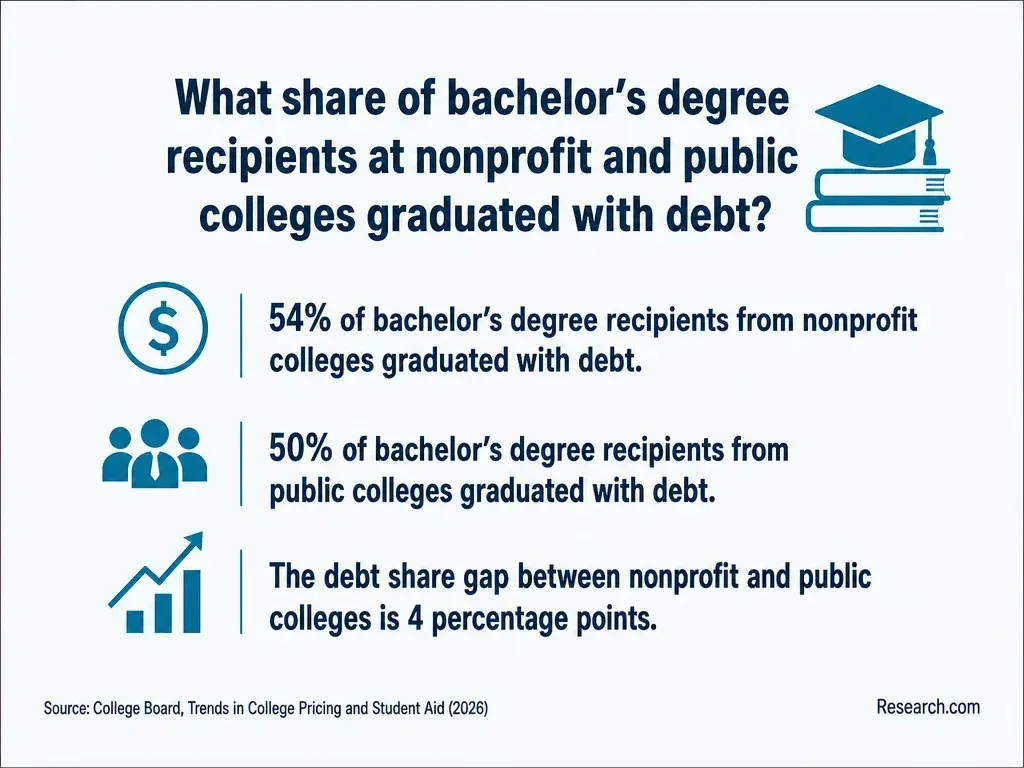
A full-time bachelor's pathway is commonly planned over four academic years, but transfer credit, enrollment pace, prerequisite sequencing, and course availability change an individual student's timeline. The meaningful cost comparison is the price of remaining requirements, not a school's advertised per-credit rate alone.
Request a degree audit and a term-by-term estimate that includes tuition, required fees, books or software, and any travel or live-session obligations. Confirm whether a desired negotiation elective fits within degree requirements or adds credits. Faster undergraduate completion pathways may shorten the calendar, but they do not necessarily reduce workload or total cost; compare the actual courses left to take and the aid available for your enrollment plan.
Negotiation is useful across several functions, but new graduates generally begin with limited authority. Sales representatives may discuss customer terms within company rules; purchasing or procurement staff may help compare supplier proposals; HR specialists may support workplace discussions; and project coordinators may reconcile deadlines and resource requests. Larger contracts, employee-relations decisions, and budget commitments usually require experience and organizational approval.
Choose coursework that reflects the decisions your target role actually makes. For an HR-oriented path, compare employee-relations and employment-law content as well as the costs of an HR degree against a general business program. If you already have a bachelor's degree or need one narrow skill for your current job, supervised work experience or targeted negotiation training may be more direct than another full degree.
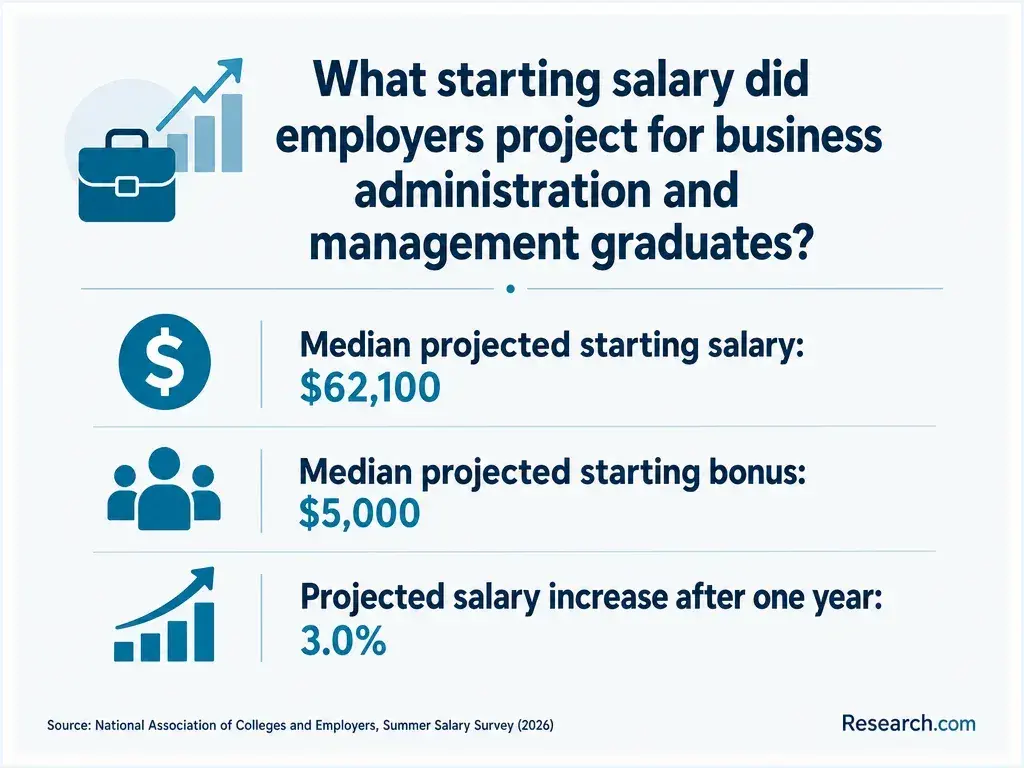
There is no reliable single salary or growth rate for "business administration graduates": the degree leads to different occupations, and negotiation skill alone does not determine pay. For one relevant example, the U.S. Bureau of Labor Statistics reports a May 2025 median annual wage of $75,940 for human resources specialists and projects 6% employment growth from 2025 to 2035. These are occupation-wide figures, not starting salaries or outcomes attributable to a particular curriculum.
Use the occupation that matches your intended duties when evaluating earnings and demand. If your goal is project work rather than HR, compare role requirements and financial aid for online project management bachelor's degrees before deciding that a general business program offers the better financial route. Local employers, prior experience, and the total cost of completion matter more to that decision than a national median alone.
Do Business Administration Graduates Need Negotiation Certifications or Licenses?
General business negotiation does not require a universal professional license. Employers may value training or a certificate, but a negotiation course or concentration is not a separately awarded occupational credential unless the institution explicitly says it is. Related roles can have their own employer, industry, or state requirements; check those against the job you want rather than assuming a business degree satisfies them.
If project management is the main objective, compare the coursework and total price of a business degree with an accredited online project management tuition guide. A specialized degree and a professional certification are different credentials, and eligibility for any certification must be checked with its issuing organization. For most students, documented practice and relevant work responsibility are better immediate priorities than collecting an unrelated credential.
Other Things You Should Know About Business Administration
Yes. Research the role and proposed terms, identify what matters most to you, and make a respectful, specific request. An employer may have fixed pay bands or other limits, so do not assume every term is negotiable.
They can generate scenarios and help rehearse responses, but they cannot replace feedback from a real counterpart. Follow course rules and do not enter confidential employer, customer, or employee information.
No. Expectations about directness, decision authority, and relationship-building can differ. Avoid stereotypes: ask about the other party's process and confirm your understanding of proposed terms.
Usually, if course rules permit it. Describe the scenario, your preparation, feedback, and revisions; obtain permission before sharing another participant's work and remove confidential details.
- 10 Business Negotiation Tactics Every MBA Student Needs | University of the Cumberlands https://www.ucumberlands.edu/blog/business-negotiation-tactics-for-mba-students
- The Best Introductory Negotiation Role Play Simulations | Program on Negotiation at Harvard Law School https://www.pon.harvard.edu/daily/teaching-negotiation-daily/teaching-the-fundamentals-the-best-introductory-negotiation-role-play-simulations/
- Beyond the Classroom - School of Labor and Employment Relations https://ler.la.psu.edu/beyond-the-classroom/
- Negotiation Skills | umich.edu https://ope.engin.umich.edu/pe/negotiation-skills/
- Measuring student learning | Center for Teaching Innovation https://teaching.cornell.edu/teaching-resources/assessment-evaluation/measuring-student-learning
- Business Administration | General Studies | BABA - UF Catalog https://catalog.ufl.edu/UGRD/colleges-schools/UGBUS/BAG_BABA/
- Peer Feedback Skills: A Negotiation Teaching Imperative | Scholarship Commons https://scholarship.law.slu.edu/cgi/viewcontent.cgi
- NEGOTIATING LEARNING ENVIRONMENTS | mitchellhamline.edu https://open.mitchellhamline.edu/cgi/viewcontent.cgi
- Academics: College of Management and Human Potential: Undergraduate: BS in Business Administration https://academics.waldenu.edu/catalog/management-human-potential/undergraduate/bachelor-science-business-administration
- Negotiation & Conflict Management - Olin Business School https://olin.washu.edu/programs/executive-education/courses/negotiation-conflict-management.php