2027 A Second BS in Business Administration After a Bachelor's in Hospitality: Credits, Cost, and Alternatives
Audited and Verified:
Our Editorial and Data Verification Process
Research.com uses government datasets, official education statistics and primary institutional information to support its career and degree guides. Our review process checks factual accuracy, occupational definitions, source dates and the requirements associated with the credentials discussed.
How This Article Was Fact-Checked
Our editorial team verifies salary estimates, employment projections, education requirements and program information against original data providers and official organizations. Salary figures are checked against the relevant occupational definitions and reporting periods. Information about licensure, accreditation and required in-person training is reviewed separately.
Fact-checked and verified on:

Co-Founder and Chief Data Scientist
A hospitality bachelor's degree already gives you experience with customers, service operations, and often budgets or staff coordination. A second BS in Business Administration may broaden that foundation, but it could also require more courses and expense than your career goal justifies.
This guide is for hospitality graduates considering a move into a business function or a wider range of industries. It explains how to evaluate remaining credits, cost, program quality, and career relevance - and when a shorter or more specialized route may be the better investment.
Key Things You Should Know
- A school may accept credits from your hospitality bachelor's yet still require its business core, upper-level courses, and a minimum number of credits completed there. Get an official second-degree audit before estimating time or cost.
- Compare the price of remaining required courses, not the advertised price of a full degree. Ask about second-bachelor's financial-aid eligibility; a prior bachelor's generally rules out a federal Pell Grant.
- A second BS is most useful when a target role calls for substantial undergraduate business preparation. It is not a prerequisite for every business job: the U.S. Bureau of Labor Statistics reports a $75,940 median annual wage for human resources specialists in May 2025, but that occupation-wide figure is not a starting salary or a return promised by the degree.
Is a second bachelor's degree in business administration worth pursuing after hospitality?
Start with the job you want, not the degree title. Hospitality graduates may already have relevant experience in scheduling, purchasing, customer experience, revenue management, and frontline supervision. A second BS makes more sense if your target positions repeatedly call for business coursework you lack - such as accounting, finance, analytics, or operations - and you want a broad undergraduate credential rather than one targeted skill.
It is a weaker investment if employers accept your existing bachelor's plus relevant experience, or if you need only a specific tool or function. Compare job postings, speak with people hiring for your target role, and ask schools for a written degree audit. If the remaining curriculum fits your goal but the calendar is the obstacle, compare accelerated business programs against their actual course sequence; a shorter schedule does not mean fewer required credits.
How many credits transfer into a second business administration bachelor's degree?
There is no reliable universal number. Accepted credits appear on your record; applicable credits satisfy requirements for the new degree. A completed hospitality bachelor's may cover general education while leaving much of the business core, concentration, and the school's residency requirement unfinished. Schools can also restrict how many credits from the first degree count toward a second one.
The audit should show where each previous course lands. This distinction prevents an impressive transfer total from hiding a lengthy path to graduation.
| Previous hospitality study | Possible application | What needs confirmation |
| General education and writing | General education or a second-degree waiver | Whether the school waives requirements or awards applicable credits |
| Hospitality accounting, economics, or statistics | Business prerequisite or core | Content equivalency, required grade, and any recency rule |
| Hotel operations or revenue management | Business elective or, sometimes, a major requirement | Whether the department approves a specific substitution |
| Internship or workplace learning | Elective or experiential requirement, if permitted | Whether separate approval and documentation are required |
Send official transcripts and, for disputed courses, syllabi to the transfer office or business department. Request an official audit showing remaining courses, residency credits, prerequisites, and substitutions in writing. If you are also considering HR, examine human resources bachelor's credit transfer options; a specialized major may apply your credits differently.
How much does a second business administration bachelor's degree cost?
The useful estimate is remaining required credits multiplied by the applicable tuition rate, plus fees and completion expenses. Do not price the program from the credits a school says it accepts. Price it from the courses the approved audit says you still must take, including any prerequisites and residency courses.
Use the same cost categories for every school you compare. Missing one can change which option is actually less expensive.
| Cost component | What to request from the school |
| Tuition | The rate for your enrollment status and delivery format, applied to every remaining course |
| Mandatory expenses | Program, technology, proctoring, books, software, and any campus-visit costs |
| Time-related costs | Likely course availability, term charges, and potential reduction in work hours |
| Funding and cash flow | Eligible loans, scholarships, employer reimbursement rules, and payment timing |
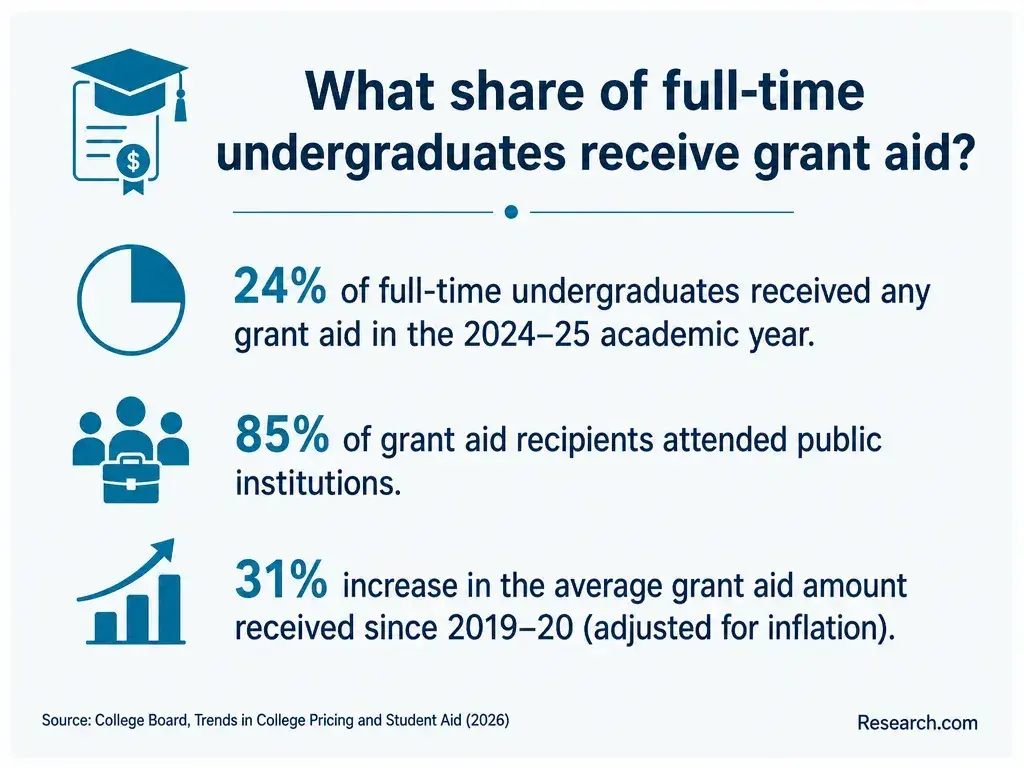
Having a bachelor's generally makes you ineligible for a federal Pell Grant, although other aid may be available subject to eligibility and borrowing limits. Ask the financial-aid office to evaluate your status as a second-degree student before relying on an aid estimate. For comparison points, use a business administration degree tuition savings guide, then replace advertised prices with each school's written estimate for your own remaining requirements.
First confirm that the institution admits second-bachelor's applicants; some programs limit or do not offer this route. Admission to the university may also differ from admission to its business major. Schools commonly review prior college transcripts and academic standing, while business departments may set grades or prerequisites for quantitative and introductory courses.
Hospitality study does not automatically satisfy accounting, economics, statistics, or mathematics requirements. Conversely, do not retake a course before the school evaluates its equivalency. Ask admissions which documents and deadlines apply, then ask the business department when any unmet prerequisites must be completed. A guide to required credits before entering business administration study can help you prepare those questions; the receiving institution makes the actual decision.
Choose the format you can complete consistently alongside hospitality work, which may include nights, weekends, or changing shifts. Online does not necessarily mean self-paced: live sessions, team presentations, fixed deadlines, and proctored exams can create scheduling conflicts. Campus study may offer easier access to local recruiting and face-to-face projects, but commuting and daytime classes can raise the practical cost.
Request a sample term schedule and ask whether required business courses run in the format and terms you need. Confirm any campus visits, internship rules, group-work expectations, and policies for reducing your course load. If you plan to keep working, compare business administration programs supporting continued employment by verified obligations rather than by a general promise of flexibility.
A typical business core covers accounting, economics, finance, marketing, management, operations, and quantitative decision-making. Your hospitality degree may have addressed some of these subjects in a service setting; the second degree's value lies in the additional depth and breadth the approved audit requires, not in repeating familiar topics under new course names.
Match the remaining curriculum to the work you want to do. For a move into business operations, examine analytics, process improvement, and finance assignments. For HR, check employment-related coursework and applied opportunities.
An official concentration is different from a few electives, and neither guarantees a job credential. If your main interest is leading teams rather than gaining a full business core, compare the curriculum with organizational leadership degrees with faster completion options - while checking whether another bachelor's is necessary at all.
Check the institution's accreditation with the accreditor and confirm that it covers the school you would attend. Then check any claimed AACSB, ACBSP, or IACBE business accreditation with the organization itself: its scope may not include every degree or location. Institutional accreditation, business accreditation, and eligibility for federal student aid are related questions, not interchangeable claims.
Quality for a second-degree student also means a usable audit, predictable access to required courses, and support for the career transition. Ask for the catalog governing your enrollment, the typical rotation of remaining courses, advising arrangements, and any published outcomes with their cohort definitions. If federal aid matters, use FAFSA-eligible online business administration colleges as a comparison starting point, then have each financial-aid office assess your personal eligibility.
Look for a bridge from work you have already done. A hospitality employee who managed vendor relationships may pursue purchasing or operations coordination; someone who tracked guest feedback and bookings may explore marketing or customer-experience analysis. Staffing and training experience may support an application for an HR assistant or specialist role, provided you can demonstrate the relevant HR knowledge. These are possible transitions, not positions a second degree automatically confers.
For each target posting, separate requirements you already meet from gaps the proposed coursework would close. Build evidence through permitted work samples, a supervised project, or relevant experience; do not present confidential employer data as a portfolio piece. HR is one example where the right pathway depends on the role: review human resources qualifications and degree routes before assuming a general business BS is preferable to focused HR study.
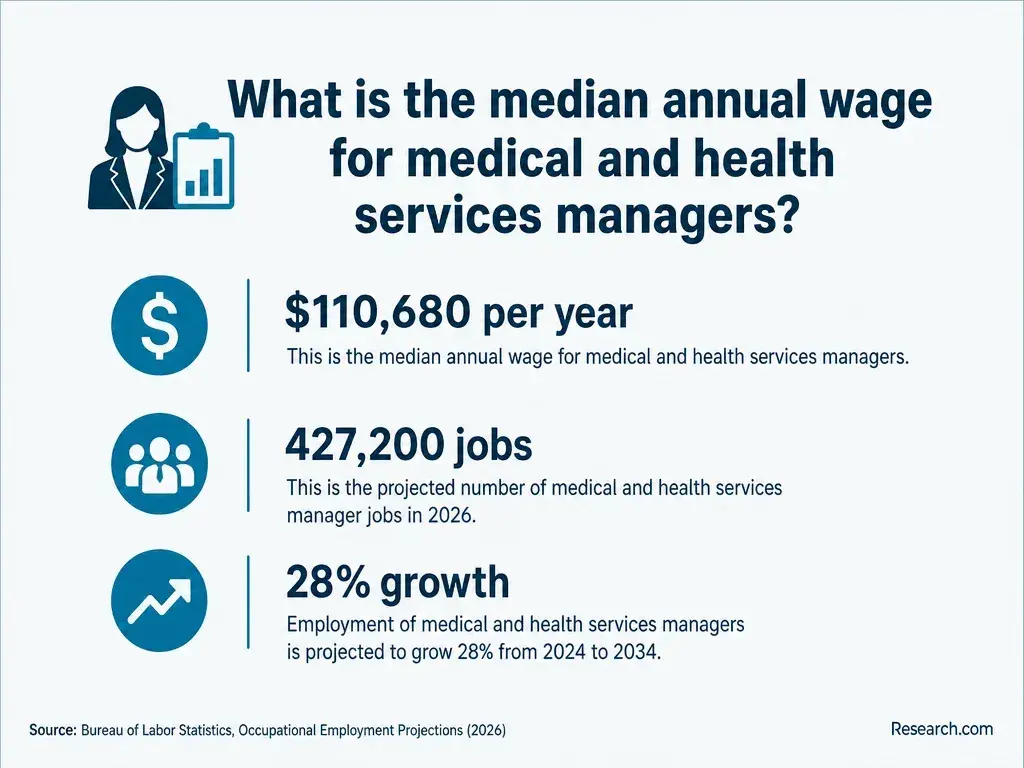
Salary evidence is most useful when tied to a specific occupation, not to the degree name. The U.S. Bureau of Labor Statistics reports a May 2025 median annual wage of $75,940 for human resources specialists and projects 6% employment growth from 2025 to 2035. These figures describe the occupation across experience levels and employers; they do not predict a hospitality graduate's first HR offer or the financial return on another bachelor's.
For your decision, compare local postings for roles you could reasonably enter, their stated qualifications, and the value of experience you can document. Then weigh plausible opportunities against the school-specific completion cost - not an occupation-wide median. You can compare tuition for online business colleges, but use your audited remaining courses and actual aid eligibility when judging affordability.
What alternatives can replace a second bachelor's degree in business?
A shorter pathway is often appropriate when you already meet the bachelor's requirement for your target jobs. Accounting or analytics courses can address a defined knowledge gap; a certificate can provide a structured sequence; employer training and a documented cross-functional project can help you demonstrate relevant work. A specialized degree may be preferable if the target occupation consistently demands deeper preparation than a general business core provides.
Compare alternatives by the missing qualification, the evidence you can show employers, required time, and total cost. An MBA may fit an experienced applicant seeking graduate-level business study, but admissions expectations and coursework differ from a second undergraduate degree.
If project work is your goal, compare a targeted course or supervised project with a specialized program and its funding options, such as project management bachelor's tuition assistance options. Choose the second BS only when its remaining coursework and credential solve a problem these alternatives do not.
Other Things You Should Know About Business Administration
No. Your original academic record remains. The new institution may calculate a separate institutional or degree GPA; ask how it reports both.
Do not assume so. MBA programs generally have their own graduate-credit rules. Ask the prospective graduate school before taking undergraduate courses for that purpose.
No. A second awarded degree is a separate credential. Your hospitality bachelor's remains part of your education history.
Only if the program formally permits and approves a substitution or experiential credit. Current employment alone does not establish that the requirement is met.
- Eligibility Requirements | Federal Student Aid https://studentaid.gov/understand-aid/eligibility/requirements
- Student Eligibility for Pell Grants | ed.gov https://fsapartners.ed.gov/knowledge-center/fsa-handbook/2024-2025/vol7/ch1-student-eligibility-pell-grants
- Accreditation in the U.S. | ed.gov http://www.ed.gov/laws-and-policy/higher-education-laws-and-policy/college-accreditation/accreditation-in-the-us
- Graduation Requirements for the Bachelor's Degree | fullerton.edu https://catalog.fullerton.edu/content.php
- What kind of aid am I eligible for as a second-degree student? | unc.edu https://studentaid.unc.edu/faq/what-kind-of-aid-am-i-eligible-for-as-a-second-degree-student/
- Is a second bachelor's degree worth it? | Strayer University https://www.strayer.edu/buzz/why-get-a-second-bachelors-degree/
- Undergraduate Degree Requirements - Academic Catalog https://catalog.louisiana.edu/content.php
- Undergraduate Degree and Program Requirements | CSUSB https://catalog.csusb.edu/undergraduate-degree-programs/undergraduate-degree-program-requirements/
- BA vs. BS in Business Administration | New England College https://www.nec.edu/news/ba-vs-bs-business-administration