2027 Business Development vs. Financial Planning for a Business Administration BS: Which Fits?
Audited and Verified:
Our Editorial and Data Verification Process
Research.com uses government datasets, official education statistics and primary institutional information to support its career and degree guides. Our review process checks factual accuracy, occupational definitions, source dates and the requirements associated with the credentials discussed.
How This Article Was Fact-Checked
Our editorial team verifies salary estimates, employment projections, education requirements and program information against original data providers and official organizations. Salary figures are checked against the relevant occupational definitions and reporting periods. Information about licensure, accreditation and required in-person training is reviewed separately.
Fact-checked and verified on:

Co-Founder and Chief Data Scientist
A Business Administration BS can prepare you to pursue new customers and partnerships or to help people and organizations make financial decisions, but those paths demand different skills and, sometimes, different credentials.
This comparison is for students choosing a concentration or planning their remaining courses. It distinguishes client-facing financial advice from corporate financial planning, compares realistic entry routes, and shows what to check before committing tuition and time to either option.
Key Things You Should Know
- Choose business development if you want to research markets, build relationships, and help generate revenue; choose financial planning if you prefer budgeting, financial analysis, or advising clients about financial goals.
- Define "financial planning" first: corporate budgeting and forecasting differ from personal financial advice, which may involve separate securities licenses or certification requirements.
- Compare outcomes carefully: the Bureau of Labor Statistics reports a $78,760 median annual wage for market research analysts and $102,740 for financial and investment analysts in May 2025, but neither figure is a starting salary or a wage estimate for every job in either path.
What Is the Difference Between Business Development and Financial Planning?
Business development identifies opportunities for an organization to grow through customers, markets, partnerships, or channels. Its work can include prospect research, outreach, proposals, negotiations, and tracking whether opportunities become sustainable revenue. It overlaps with sales and marketing but is not identical to either.
Financial planning has two common meanings. In a company, it can mean budgeting, forecasting, and evaluating financial performance - often called financial planning and analysis, or FP&A.
In personal finance, it means helping individuals plan for goals such as retirement, investing, and risk management. The client-advice route can carry licensing obligations that corporate budgeting roles do not.
The comparison below identifies the work behind each label. Job titles vary, so compare responsibilities rather than relying on a concentration or posting title alone:
| Path | Central question | Typical work product | Best fit if you enjoy |
| Business development | Where can the organization find and win viable opportunities? | Prospect assessment, partnership proposal, or opportunity pipeline | Outreach, persuasion, market research, and relationship-building |
| Corporate financial planning | How should the organization allocate resources and prepare for possible results? | Budget, forecast, or variance analysis | Spreadsheets, accounting, and explaining financial trade-offs |
| Personal financial planning | How can a client plan for financial goals and risks? | Client financial plan and recommendations within the adviser's authority | Financial analysis, client conversations, and long-term service |
If your main interest is negotiating supplier relationships and improving purchasing rather than winning customers, a specialized path may fit better; online supply chain degrees with cost and outlook details offer a separate comparison.
Which Career Paths Can a Business Administration BS Support?
The BS supplies a business foundation, not a guaranteed job title. A student with customer-service or sales experience may have a shorter route into business development; someone with bookkeeping, banking, or strong spreadsheet experience may be better positioned for financial planning support. Without relevant experience, both paths commonly begin with supervised work.
Business development routes can progress from sales support, account coordination, or prospect research toward partnership or business development responsibilities. Corporate finance routes can begin in budgeting support, accounting operations, or junior analysis before expanding into forecasting.
Personal financial planning routes may begin in client service or paraplanner-style support while the employee develops technical knowledge and meets any applicable licensing requirements.
If the work you most want is coordinating schedules, budgets, and delivery rather than finding customers or preparing financial plans, examine that function directly.
Students with prior coursework can explore how to use prior college credits in a project management bachelor's, but only the receiving school can determine which credits satisfy its requirements.

Which Business Administration Concentration Fits Your Career Goals?
For business development, look for a formal concentration in marketing, sales, entrepreneurship, or a closely related field. For corporate financial planning, finance or accounting is generally more relevant.
For personal financial planning, look beyond the concentration name to the actual planning curriculum and any documented relationship to professional credential requirements.
The best choice depends on what the concentration adds beyond the shared business core. This comparison highlights the incremental value, and the gap you may still need to fill:
| Target | Concentration to investigate | Evidence to seek beyond the degree |
| Business development | Marketing, sales, or entrepreneurship | Customer research, outreach, presentations, and measurable pipeline work |
| Corporate financial planning | Finance or accounting | Spreadsheet models, financial statements, budgets, and forecast explanations |
| Personal financial planning | Financial planning or finance with relevant planning courses | Client-plan practice and verified preparation for the intended credential or role |
A set of electives is not necessarily an officially recorded concentration. Ask whether the designation appears on your academic record, whether courses add credits or terms, and whether required classes are offered when you need them.
If your real goal is supervising people rather than either function, online organizational leadership programs for quicker graduation are another option to evaluate - without assuming a leadership degree alone qualifies you to manage staff.
Most Business Administration BS programs combine general education with a business core, but course titles and depth vary. Accounting, statistics, economics, marketing, management, and business communication can support either path. The distinguishing question is what advanced work you can complete after that core.
For business development, useful offerings include sales management, consumer behavior, market research, negotiation, and business-to-business marketing. A strong assignment might require you to define a target customer, assess an opportunity, and justify a proposal, not merely deliver a sales pitch.
For corporate financial planning, prioritize financial accounting, managerial accounting, corporate finance, forecasting, and spreadsheet modeling.
Personal financial planning may instead require substantive study of investments, tax, retirement, insurance, and estate-planning concepts. Check prerequisites: an appealing advanced finance elective may be inaccessible until you complete accounting or another required course.
A project management elective can help either path coordinate a proposal or planning cycle, but it does not replace function-specific study. If project delivery becomes your primary goal, compare cheapest accredited online project management options against the business curriculum you would otherwise complete.
Business development generally has no universal occupational license. Employers set their own expectations for education, industry knowledge, sales experience, and results. A Business Administration BS can provide relevant preparation, but demonstrated communication and customer-facing work may matter just as much for an initial role.
Corporate FP&A roles are also generally not licensed occupations. Employers may seek a bachelor's degree in business, finance, or accounting plus strong financial-statement and modeling skills. More specialized or senior roles may require substantial experience or additional credentials.
Personal financial advice requires closer checking. The Certified Financial Planner designation is separate from a degree: CFP Board sets its own education, examination, experience, and ethics requirements.
Depending on the services and employer, securities or investment-adviser registration requirements may also apply under federal or state rules. A finance concentration, or even a course labeled financial planning, does not itself award a CFP designation or a securities license.
Before enrolling, ask the program and the relevant credentialing organization whether the exact coursework meets your intended requirement.
If you need a bachelor's degree before pursuing either path, business degree programs designed for faster progress may be worth comparing. Confirm their course sequence and remaining requirements rather than assuming an accelerated label shortens your own completion time.
Both formats can teach the underlying concepts; the practical difference is often access to the experiences you need. An online business development student should check how live pitches, group proposals, networking, and internships work.
A prospective financial planning student should ask about modeling software, feedback on plans, client-interview practice, and any required in-person activity.
Online does not necessarily mean self-paced. Before choosing a format, request sample course schedules and confirm live-session times, deadlines, exam proctoring, group-work expectations, and whether concentration courses are available online every term.
Campus study may offer easier access to local recruiting and face-to-face practice, but commuting and fixed meeting times can be costly for a working student.
If you intend to keep your job while studying, compare the actual schedule and support services of business administration programs for advancement while working. Choose the format that lets you complete relevant projects and gain experience, not simply the one with the most convenient advertising claim.
A bachelor's program commonly requires about 120 semester credits and takes roughly four years of full-time study from the beginning, but the school's catalog controls its actual requirements.
Transfer credit, part-time enrollment, prerequisites, and the timing of concentration courses can change your remaining calendar time. Accepted transfer credits do not automatically satisfy business-core or concentration requirements.
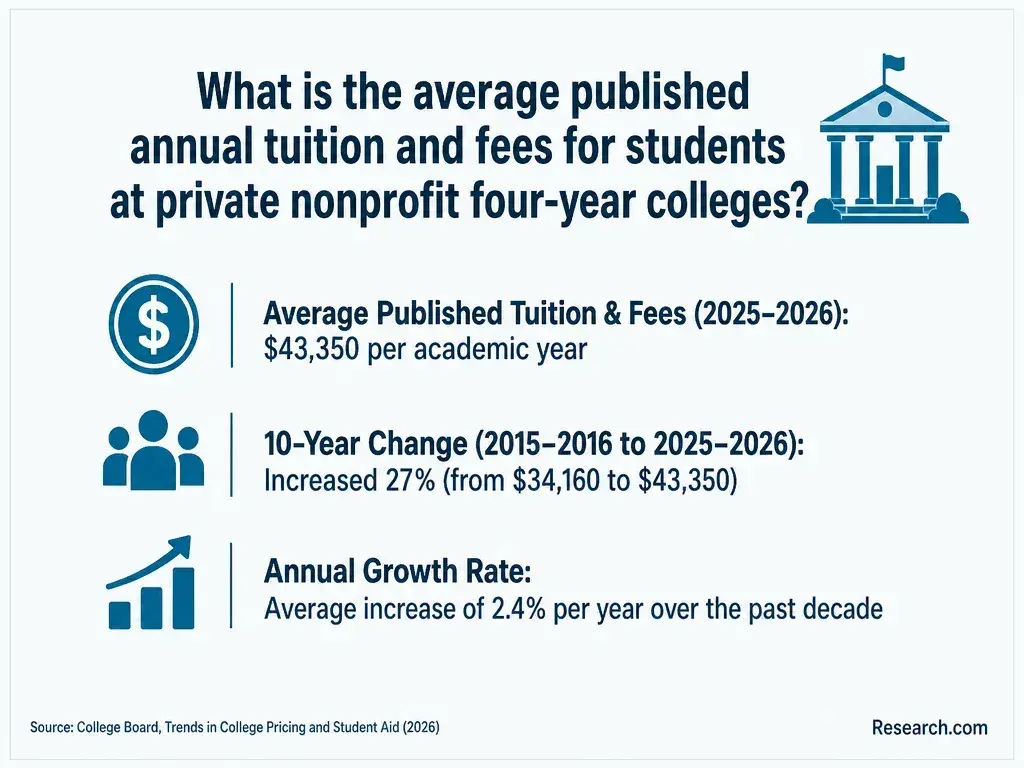
Compare costs using a school-issued estimate of credits still required, not advertised tuition alone. Include mandatory fees, books or software, travel or technology expenses, and any earnings you would forgo to attend an internship.
Ask whether a concentration requires extra credits and whether financial aid or employer reimbursement applies to your planned enrollment pattern.
Start with an official degree audit and a term-by-term course plan, then compare the resulting total across schools. Listings of affordable school choices for online business students can help identify candidates, but your remaining requirements determine whether a listed school is affordable for you.
Entry routes are more informative than a list of impressive titles. In business development, look for sales development representative, business development representative, account coordinator, or partnerships assistant postings.
Compare whether the job emphasizes prospecting, existing-account service, market research, or closing sales; those tasks imply different training and compensation arrangements.
For corporate financial planning, examine finance assistant, budget coordinator, junior financial analyst, and related accounting-support postings. For personal financial planning, client service associate or planning-support roles can provide exposure to client records and plan preparation under supervision.
Check each employer's degree, software, experience, and registration requirements rather than treating similar titles as interchangeable.
If you already have relevant work experience, a degree may address a specific hiring requirement; if you do not, internships, supervised projects, and transferable work samples can help demonstrate readiness.
Compare the cost of a full degree with the gap you actually need to close. Resources on exploring cheaper business administration college programs are most useful after you know which courses and credentials your target postings require.
There is no single reliable salary for "business development" or "financial planning": those labels cover different occupations, experience levels, and pay structures.
The U.S. Bureau of Labor Statistics reports the following May 2025 occupation-wide median wages and projected 2025-2035 employment changes. These are not salaries promised to new BS graduates.
These two occupations provide context for specific kinds of analytical work, not wage estimates for every business development representative, corporate planner, or personal financial adviser:
| BLS occupation | May 2025 median annual wage | Projected employment change, 2025-2035 | How to use the comparison |
| Market research analyst | $78,760 | +7% | Relevant when a business development role centers on researching customers and markets; not a general sales-pay figure. |
| Financial and investment analyst | $102,740 | +7% | Relevant to certain analytical finance roles; not a wage estimate for personal financial planners or every FP&A employee. |
Both projected growth rates exceed the roughly 3.5% national average across occupations, but openings still depend on location, industry, and experience.
For a real offer, compare base pay, variable compensation, benefits, licensing expenses, and the responsibilities you would actually hold. If completion time affects that calculation, shorter routes to an online bachelor's are worth examining alongside their total cost and workload.
How Can You Choose an Accredited Business Administration Program?
First, verify the institution's recognized accreditation and the exact degree it awards. Then check whether any advertised AACSB, ACBSP, or IACBE accreditation covers the relevant business school or program; institutional and business-program accreditation are different claims.
Neither accreditation status alone establishes CFP coursework eligibility, internship access, or employment outcomes.
For each finalist, obtain the current catalog, a written transfer evaluation if applicable, and the concentration course rotation. Ask for examples of assessed work in your target function, information about recruiting or supervised experience, and a documented explanation of any professional-credential pathway.
Compare costs and completion plans on the same assumptions. Online business degree rankings for US college applicants can help create a shortlist, but those program-specific checks should decide it.
Other Things You Should Know About Business Administration
Yes. Shared business fundamentals can help, but you may need function-specific coursework, experience, or licensing before an employer will consider you for the new role.
No. Some positions include variable pay, while others are salaried. Ask how performance is measured and what portion of compensation depends on results.
Not necessarily. Both paths use quantitative reasoning, but business development may emphasize pipeline measures while financial planning commonly requires more sustained work with financial figures and assumptions.
Possibly, with faculty approval and any necessary employer permission. Do not submit confidential customer or financial information without authorization.
- Opportunities With a Business Administration Degree | Saint Mary's University of Minnesota https://www.smumn.edu/blog/what-doors-can-a-business-administration-degree-open/
- Careers in Business Administration | CHASS Student Academic Affairs https://chassstudentaffairs.ucr.edu/pre-business-program/careers-in-business-administration
- Occupational Outlook - Finance | Gannon University https://www.gannon.edu/academic-offerings/engineering-and-business/undergraduate/finance/occupational-outlook/
- Business Development vs. Sales: Comparing the Career Options | MACU https://www.macu.edu/blog/business-development-vs-sales/
- 10 Best Business Degrees for High Pay and Career Growth | Pace University New York https://www.pace.edu/news/best-business-degrees-undergrad-grad
- Bachelor's Degree in Business: Administration or Accounting? | Bay Path University https://www.baypath.edu/news/bay-path-university-blogs/post/bachelor-s-degree-in-business-administration-or-accounting/
- Business vs Finance Degree: What Are the Key Differences? | American Public University https://www.apu.apus.edu/area-of-study/business-and-management/resources/business-vs-finance-degree/
- Business Administration vs. Business Management | devry.edu https://www.devry.edu/blog/business-administration-vs-business-management.html
- Choosing the Right Financial Certification | The American College of Financial Services https://www.theamericancollege.edu/knowledge-hub/insights/choosing-the-right-financial-certification
- Financial Planning and Analysis: Roles and Best Practices | Vena Solutions https://www.venasolutions.com/blog/fpa-roles-best-practices