2027 Choosing an Online BS in Business Administration Around A Return to Work After Parental Leave
Audited and Verified:
Our Editorial and Data Verification Process
Research.com uses government datasets, official education statistics and primary institutional information to support its career and degree guides. Our review process checks factual accuracy, occupational definitions, source dates and the requirements associated with the credentials discussed.
How This Article Was Fact-Checked
Our editorial team verifies salary estimates, employment projections, education requirements and program information against original data providers and official organizations. Salary figures are checked against the relevant occupational definitions and reporting periods. Information about licensure, accreditation and required in-person training is reviewed separately.
Fact-checked and verified on:

Co-Founder and Chief Data Scientist
Returning to work after parental leave can make a bachelor's degree both more valuable and harder to schedule. An online BS in Business Administration may help you finish a degree or prepare for broader responsibilities, but "online" does not guarantee flexible deadlines or a manageable workload.
This guide is for parents weighing enrollment alongside employment and caregiving. It shows how to test a program's actual schedule, calculate the path to graduation, and decide whether the degree serves your next career move.
Key Things You Should Know
- Choose by your post-leave schedule, not the "online" label: confirm live sessions, weekly deadlines, group work, exams, and any campus or internship requirements before enrolling.
- Request an official degree audit and a term-by-term cost estimate. Accepted transfer credits do not necessarily satisfy business-core requirements, and a lighter course load can extend both the calendar and household budget commitment.
- Match the degree to a specific next role. For context, the U.S. Bureau of Labor Statistics reports a $75,940 median annual wage for human resources specialists in May 2025; that occupation-wide figure is not a predicted salary for a returning parent or new graduate.
What Is an Online Business Administration Bachelor's Degree?
An online BS in Business Administration is an undergraduate degree that combines general education with study of how organizations use money, people, information, and processes. Courses are delivered primarily online, but the degree still has academic deadlines and may include scheduled meetings or in-person activities. A BS, BBA, and BA in Business can differ in quantitative requirements, electives, and degree rules; compare each school's actual curriculum rather than assuming the titles are interchangeable.
For a parent returning to work, the key distinction is between online access and control over study time. Even fast-track business degree options may compress the same work into shorter terms. Ask for sample course calendars from classes you would take, not just a description of the program format.
Is an Online Business Administration Degree Worth It After Parental Leave?
It may be worth pursuing if a bachelor's degree is required or preferred for a role you can realistically reach, your earlier credits apply to graduation, and the remaining work fits your household's time and finances. Start with job postings and advancement policies for the positions you want. Then compare those requirements with your existing experience: someone already handling budgets, customers, or operations may need the credential to advance, while someone seeking one narrow skill may be better served by employer training or a shorter course.
Evaluate value against the cost to finish, not an advertised tuition rate. Include required courses, fees, materials, potential borrowing, and any reduction in paid work or added care expenses. Use economical online business administration college programs as comparison candidates, then obtain an individual credit evaluation and written cost information from each school. A low per-credit price is less useful if more courses are required to graduate.
How Can an Online Business Degree Support Returning to Work?
A well-matched program lets you build business skills without leaving employment and may give you relevant examples for future interviews. A budgeting assignment, process analysis, or presentation can help you demonstrate current skills alongside pre-leave experience. If you want to use a workplace problem for credit, first confirm faculty approval and employer permission; do not submit confidential customer, employee, or company information without authorization.
Plan around the schedule you expect after leave, rather than the temporary time available during leave. Ask when assignments open and close, whether team meetings require evenings, and what happens if childcare falls through. Parents comparing business administration degree planning for employed applicants should also check part-time enrollment, course frequency, and the process for taking a term off. A workable first term is more valuable than an ambitious pace you cannot sustain.
Neither format is inherently better. Online study can remove commuting, while campus study can provide a predictable place to learn and face-to-face access to classmates or services. A hybrid program may combine those features but introduce travel obligations. The best choice depends on when you can reliably study, not simply where classes occur.
This comparison separates delivery claims from the commitments that affect a return-to-work schedule.
| Format | Potential advantage | Commitment to verify |
| Asynchronous online | Choose when to view lessons | Fixed deadlines, group meetings, and proctored exams |
| Live online | Scheduled discussion and instructor contact | Attendance times and missed-class policies |
| Campus or hybrid | In-person interaction and study space | Commute, childcare coverage, and required visits |
If speed matters, compare fast-track business bachelor's schools on term length and required weekly work. Finishing sooner does not make an intensive course easier to combine with a new work routine.
Most programs include general education and a business core covering accounting, finance, economics, marketing, management, operations, and quantitative reasoning. Requirements vary: one school may emphasize statistics and analytics, while another offers more management electives. Review prerequisites and when required courses are offered, especially if you need to study part time.
Choose electives for the work you want to do after leave. Human resources coursework may support an interest in recruiting or employee operations; it does not itself award an HR credential. If that function is your clear goal, compare the business core with the depth of a dedicated program using a human resources program selection guide. For any major, ask whether a capstone, simulation, or internship requires scheduled collaboration or workplace access.
Requirements depend on whether you are a first-time student, transfer applicant, or returning student. Schools may request secondary-school records, prior college transcripts, or both; admission to the institution may be separate from entry into its business major. An enrollment gap for parental leave does not, by itself, establish either eligibility or ineligibility.
If you have prior college work, request a written evaluation showing which credits meet general education, business-core, elective, and residency requirements. Ask specifically about older accounting or quantitative courses and the current catalog's prerequisites. The same check applies when considering using existing credits in a human resources degree instead: credit accepted by a school is not automatically credit applied to the major.
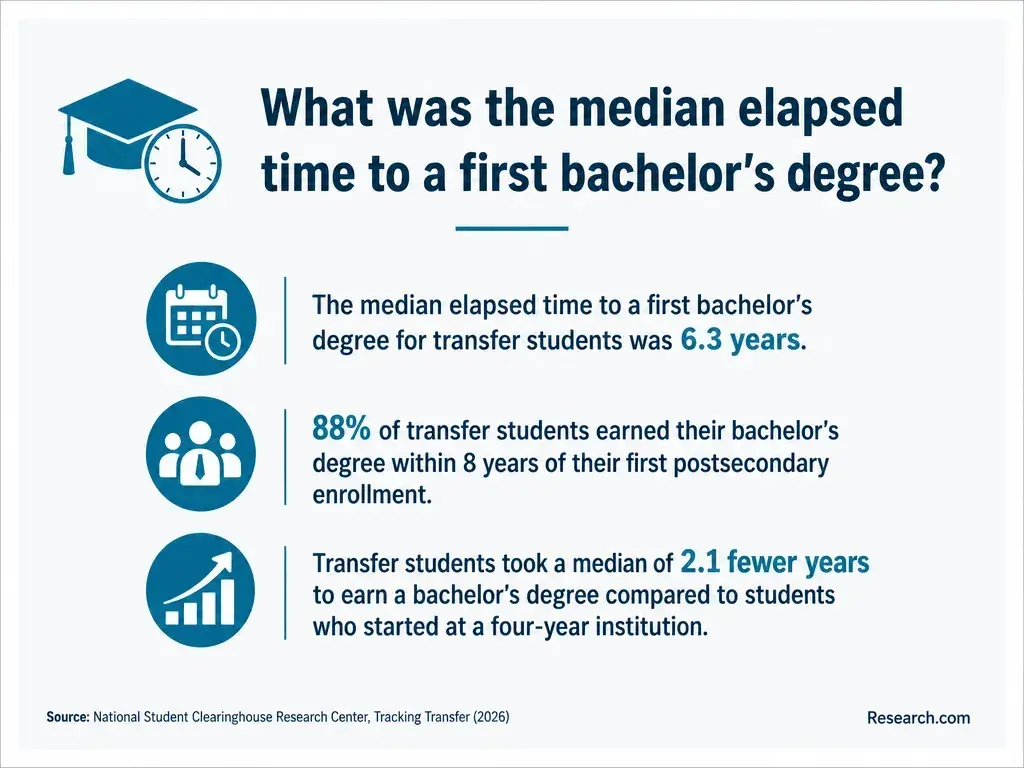
Time to graduation depends on the credits that apply, remaining course sequences, enrollment pace, and how often required classes run. A parent restarting work may prefer fewer courses per term, even if that extends completion. Ask an adviser for a term-by-term plan at a pace you could maintain during a difficult childcare week, plus an alternative if you need to pause.
For cost, compare tuition and mandatory fees for all remaining requirements, then add books, software, exam charges, and any required travel. Confirm financial-aid eligibility at your intended enrollment level and whether your employer reimburses tuition only after a course is completed. When researching business administration college affordability and FAFSA participation, verify each school's current aid arrangements and obtain your own aid offer; an advertised price is not your final cost.
First confirm that the institution holds recognized institutional accreditation and that the status covers the school awarding the degree. This matters for academic credibility and can affect credit transfer and aid eligibility, though receiving institutions make their own transfer decisions. Business-school accreditation from AACSB, ACBSP, or IACBE is a separate distinction: check the accreditor's listing to see whether the relevant business unit or program is covered.
Apply the same checks if a more specialized path, such as online project management degrees for transfer applicants, better fits your goal. Accreditation is a baseline to verify, not evidence that a particular school offers parent-friendly scheduling, strong advising, or a job after graduation.
The degree can support applications for roles such as operations coordinator, HR assistant or specialist, marketing coordinator, procurement staff member, or project coordinator. Your feasible entry point depends on prior responsibility and the employer's requirements. For example, experience scheduling staff or tracking purchases may be more directly useful in operations than an unrelated elective; a finance-focused role may demand stronger accounting or analytical preparation.
Target one or two roles, review their required tasks, and use coursework to address specific gaps. If supply chain work is the goal, compare a general business degree with supply chain bachelor's options focused on completion speed for relevant coursework as well as timing. Neither degree automatically qualifies a graduate to manage people or hold a regulated professional credential.
What Salary and Job Outlook Can Business Graduates Expect?
There is no single salary or growth rate for business administration graduates. Occupation-wide figures describe people with varied education and experience, not the pay awaiting someone after parental leave. The U.S. Bureau of Labor Statistics reports a $75,940 median annual wage for human resources specialists in May 2025 and projects 6% employment growth for that occupation from 2025 to 2035. Those figures can help you assess a target field, but local openings, prior HR experience, and job duties matter more when estimating your own prospects.
Compare potential outcomes with the full cost and time needed for your intended role. A narrower degree can be sensible if it teaches skills employers request; a broader BS may preserve more options if your direction is unsettled. For one function-specific comparison, examine supply chain college costs versus potential career outcomes without treating occupation medians as a promised return on tuition.
Other Things You Should Know About Business Administration
Check your employer's leave and education-benefit policies before enrolling. Being able to study does not establish that tuition assistance or other benefits will apply during leave.
Ask the school's financial-aid office whether its cost-of-attendance process can account for dependent-care expenses and what documentation it requires. Do not assume those costs will be covered by a grant.
Diploma and transcript wording varies by institution. Request examples or a written explanation from the registrar if the distinction matters to you.
Give a brief, accurate account of the gap if asked, then connect your earlier responsibilities and any relevant study or projects to the job's requirements. You do not need to present caregiving as professional experience.
- Frequently asked questions about educational assistance programs | Internal Revenue Service https://www.irs.gov/newsroom/frequently-asked-questions-about-educational-assistance-programs
- Cost of Attendance (Budget) | 2025-2026 Federal Student Aid Handbook https://fsapartners.ed.gov/knowledge-center/fsa-handbook/2025-2026/vol3/ch2-cost-attendance-budget
- Semester Course Load and Student Performance - PMC - NIH https://pmc.ncbi.nlm.nih.gov/articles/PMC7568764/
- Accreditation in the U.S. | ed.gov http://www.ed.gov/laws-and-policy/higher-education-laws-and-policy/college-accreditation/accreditation-in-the-us
- Academic Continuity and Support for Students | Regis University https://www.regis.edu/policies/academic-continuity-and-support-for-students
- Online Business Degree | AACSB Accredited - Online Programs | Adelphi University https://onlineprograms.adelphi.edu/programs/bs-bachelor-business/
- 10 Best Business Degrees for High Pay and Career Growth | Pace University New York https://www.pace.edu/news/best-business-degrees-undergrad-grad
- Business Administration A.S. Online Degree Program | cuny.edu https://www.qcc.cuny.edu/business/busAdm.html
- Online B.B.A. | Brooklyn College https://www.brooklyn.edu/management-marketing-and-entrepreneurship/online-bachelors-of-business-administration-bba/
- Credit for Prior Learning - The City University of New York https://www.cuny.edu/academics/academic-policy/credit-prior-learning/