2027 Business Analytics vs. International Business for a Business Administration BS: Which Fits?
Audited and Verified:
Our Editorial and Data Verification Process
Research.com uses government datasets, official education statistics and primary institutional information to support its career and degree guides. Our review process checks factual accuracy, occupational definitions, source dates and the requirements associated with the credentials discussed.
How This Article Was Fact-Checked
Our editorial team verifies salary estimates, employment projections, education requirements and program information against original data providers and official organizations. Salary figures are checked against the relevant occupational definitions and reporting periods. Information about licensure, accreditation and required in-person training is reviewed separately.
Fact-checked and verified on:

Co-Founder and Chief Data Scientist
Choosing between business analytics and international business changes which problems you practice solving during a BS in Business Administration. One emphasizes using data to improve decisions; the other emphasizes doing business across markets, cultures, and regulatory environments. For students weighing a concentration against a specific career goal, the distinction matters more than either concentration's name.
This guide compares coursework, realistic entry routes, labor-market evidence, and program costs so you can choose the option that develops skills you can demonstrate to an employer.
Key Things You Should Know
- Choose business analytics if you want to prepare, interpret, and communicate data for decisions; choose international business if you want to work on cross-border markets, suppliers, customers, or operations.
- Neither concentration guarantees a job abroad or an analyst position. Experience, language or regional knowledge, technical skills, and work samples can matter more than the concentration label.
- For one relevant occupation, U.S. market research analysts had a May 2025 median annual wage of $78,760; that occupation-wide figure is not a starting salary or a payoff attributable to either concentration.
What Is the Difference Between Business Analytics and International Business?
A business analytics concentration focuses on turning business data into usable evidence: defining a question, checking data quality, identifying patterns, and explaining what the findings can and cannot support. An international business concentration focuses on business activity across national borders, including market differences, trade, global operations, and communication across cultures. Both normally sit within a broader business administration degree, but schools decide their own required courses and whether the concentration appears on a transcript.
The comparison below separates the problems each concentration is designed to address. It also shows where their skills can overlap.
| Decision factor | Business analytics | International business |
| Typical question | What does the available evidence suggest we should change? | How should a business adapt its operations or strategy across markets? |
| Common work | Cleaning data, building reports, testing assumptions, explaining uncertainty | Assessing markets, coordinating across borders, comparing operating constraints |
| Useful additional strengths | Statistics, spreadsheets, databases, stakeholder communication | Regional knowledge, languages, trade or logistics knowledge, stakeholder communication |
| Important limit | A concentration does not itself establish advanced technical expertise. | A concentration does not itself secure overseas employment or work authorization. |
These are not opposing skill sets. A company assessing an overseas supplier may need both market context and reliable cost and delivery data. If that combined problem is your main interest, inspect the actual electives rather than choosing by title alone. A dedicated supply chain degree may offer deeper logistics preparation; budget-friendly supply chain degrees with shorter schedules provide another route to compare.
Which Business Administration Concentration Matches Your Career Goals?
Start with the work you want to do, not a broad industry label. Analytics fits best when your intended contribution is measuring performance, evaluating options, or explaining findings. International business fits best when your intended contribution is coordinating activity across countries or adapting a business approach to a particular market.
For example, an aspiring marketing analyst who wants to study customer behavior may get more direct practice from analytics courses. A student interested in international sales support may benefit more from market-entry, trade, and intercultural coursework. Someone pursuing global supply chain analysis should look for a program that permits both quantitative electives and international operations work.
Check what the concentration adds beyond the shared business core: required courses, prerequisites, project access, and any extra time or credits. If neither option develops the main skill your target role requires, a different specialization may be better. A student primarily interested in coordinating projects, for instance, can compare relevant coursework and online undergraduate project management credit acceptance rather than assuming either concentration is a substitute.
What Do You Learn in Business Analytics and International Business Programs?
In business analytics, look for a progression from business statistics and spreadsheet modeling to data preparation, visualization, and an applied question. A strong assignment does more than produce a dashboard: it identifies the decision-maker, defines the measure, checks missing or inconsistent data, and states the limits of any recommendation. Some programs teach databases or programming; others remain primarily spreadsheet-based.
International business courses may cover international marketing, trade, global strategy, cross-cultural management, and international finance or operations. The strongest assignments ask students to compare specific markets or operating choices using stated assumptions - not simply describe cultural differences. Language study, study abroad, and regional specialization may be available, but none should be assumed to be required or included.
Review course descriptions and prerequisite chains before choosing. An analytics elective that requires statistics may be unavailable until late in your degree; an international business elective may run infrequently. That sequencing matters especially if you are considering accelerated online business degree programs: a shorter advertised schedule does not ensure that your preferred concentration courses fit it.
Analytics usually offers a function-based path: begin with reporting, research, or operations support, then take on more complex analyses as you build technical and business judgment. International business is often a context-based path: you first contribute to a function such as sales, procurement, logistics, or marketing, then apply that function across markets. "International business" is rarely a single entry-level job title.
This distinction changes how to prepare. For analytics, an appropriately anonymized project showing your question, data checks, analysis, and limitations can help demonstrate readiness. For international business, an internship or supervised project involving a particular market, supplier process, or customer group can establish more credible experience than a general interest in travel. Never publish employer or customer data without permission.
Promotion into specialist or managerial work typically depends on demonstrated responsibility, not the concentration alone. When weighing further education against an entry-level opportunity, compare the experience the role offers with business administration program length and salary context; a second credential is not automatically the fastest route to relevant work.
Job titles vary by employer, and neither concentration is a hiring qualification by itself. The useful test is whether you can perform the tasks in a particular posting and show relevant coursework, projects, internships, or employment.
Business analytics graduates might pursue reporting coordinator, junior business analyst, market research assistant, sales operations analyst, or operations analyst openings. These roles can involve maintaining spreadsheets, checking figures, preparing reports, and discussing results with a team. Some analyst postings require stronger statistics, SQL, or industry experience than an undergraduate concentration provides.
International business graduates might pursue import-export coordinator, international sales support specialist, global procurement assistant, or logistics coordinator openings. Duties can include documentation, vendor communication, shipment tracking, market research, and coordination across time zones. Employers may also expect relevant trade knowledge, language ability, or familiarity with a specific region.
If your real goal is a different function - such as human resources - compare its hiring requirements directly instead of treating "international" or "analytics" as a universal business credential. Returning students considering that alternative should also check human resources bachelor's residency and transfer rules before changing programs.
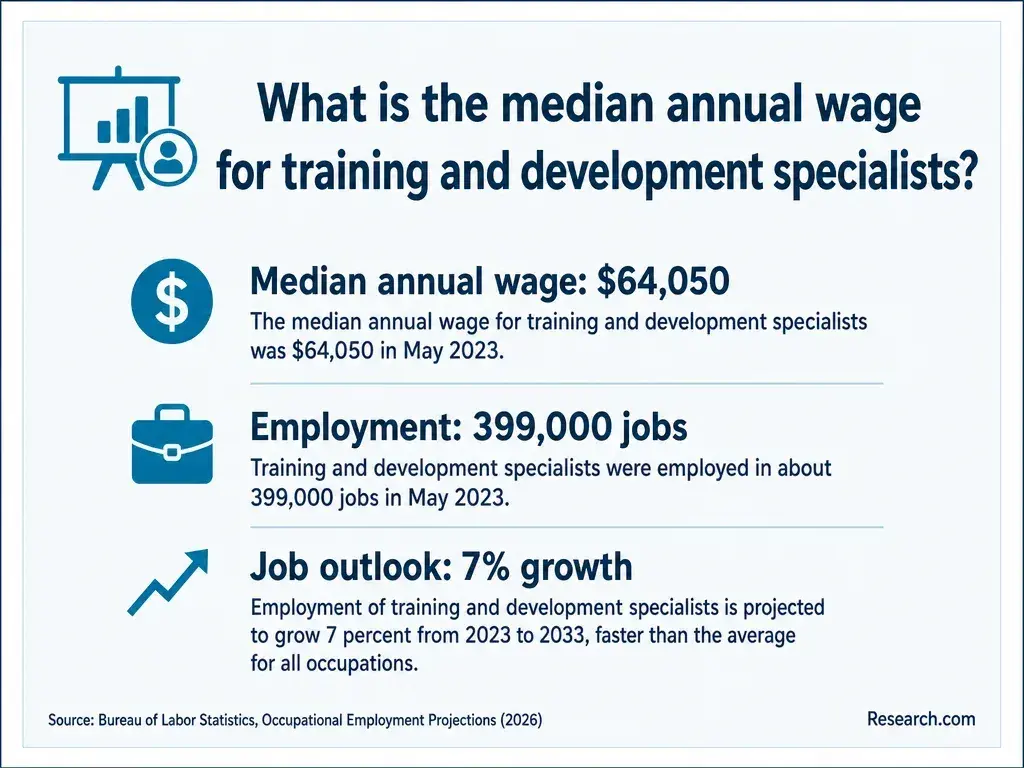
The U.S. Bureau of Labor Statistics (BLS) reports pay and projections by occupation, not by undergraduate concentration. Its May 2025 median annual wage for market research analysts was $78,760, with employment projected to grow 7% from 2025 to 2035. That makes market research one relevant benchmark for analytics-oriented work, but the median includes experienced workers and does not predict a new graduate's offer.
For a different route that can involve international operations, BLS reports a May 2025 median of $82,320 for logisticians and projected growth of 18% over the same period. Logisticians also work entirely within domestic supply chains, while international business graduates enter many occupations other than logistics. The figures therefore cannot establish that one concentration pays more.
Compare pay for the specific role and location you intend to pursue, alongside its experience and technical requirements. Then weigh likely education costs using comparable program information, such as low-cost online business degree programs. An occupation-wide median is not evidence that a particular tuition bill will pay for itself.
Students generally apply to the university and its undergraduate business program; access to a concentration may be part of that admission or may require a later declaration. Schools may specify previous coursework or a minimum grade in subjects such as accounting, economics, mathematics, or statistics. Analytics can have a more consequential quantitative sequence, but requirements vary by institution.
If you have college credit, request an official evaluation that distinguishes credits accepted by the university from courses satisfying the business core and concentration. Ask whether a statistics course meets the analytics prerequisite, when each required elective is offered, and whether changing concentrations affects your graduation audit. Applicants without prior college work should check the school's current admissions criteria rather than assume either concentration has separate entry standards.
Application charges are only one small part of the decision, but students comparing several schools can find online colleges with free admissions applications. Confirm the current fee policy and whether the school actually offers the concentration you want before applying.
Both options are typically concentrations within a bachelor's degree, so the degree's overall requirements - not the concentration name - set the baseline for completion. Your actual timeline depends on accepted credits, which requirements those credits satisfy, prerequisites, course availability, enrollment pace, and any residency rule. A concentration that adds courses or delays a required sequence can extend completion even if the degree's published length is unchanged.
To compare costs, ask each school for a degree audit and a term-by-term plan. Price the remaining required credits using its current tuition and mandatory fees, then account for books, software, travel or campus obligations, and any earnings you would give up. Do not assume an advertised per-credit rate represents the full cost or that a faster calendar lowers total tuition.
Eligible U.S. students should check aid options and the school's participation before relying on grants or loans; FAFSA-accepting colleges for business administration students can be a starting point for comparison. Financial-aid eligibility and the amount awarded require individual confirmation.
Either can be worthwhile online if the format lets you complete the same relevant work and receive useful feedback. For analytics, check access to required software, realistic datasets, faculty help, and opportunities to explain findings - not just watch demonstrations. For international business, look for substantial market-analysis assignments and meaningful collaboration across perspectives rather than assuming an online program includes overseas experience.
Online does not necessarily mean self-paced. Ask about live meetings, group work across time zones, exam arrangements, internship expectations, and the scheduling of concentration electives. These details matter if you work while studying or need a particular graduation term. Shortest online business bachelor's program rankings can help identify programs to investigate, but verify your own course sequence before relying on an advertised finish time.
How Can You Choose an Accredited and Reputable Business Program?
First, verify the institution's recognized accreditation and the exact degree and concentration offered. If a school advertises AACSB, ACBSP, or IACBE accreditation, check that accreditor's scope for the business school or program rather than assuming every offering is covered. Accreditation is an important screening factor, not proof of a particular job outcome.
Then compare evidence of learning: required courses, instructor access, applied assignments, internship support, and examples of the work students can produce. Ask an adviser for a current degree audit or sample plan and ask career services what support is available to students in your delivery format. If a school publishes employment outcomes, check who was counted and whether the results distinguish concentrations.
A practical final test is to match required assignments against several real postings for your target role. Use leading US colleges for online business study to build a shortlist, then let verified curriculum, total completion cost, and access to relevant experience decide - not a ranking or concentration label alone.
Other Things You Should Know About Business Administration
Not necessarily. Check the program's stated requirements. Language ability can strengthen preparation for a region or role, but it is not a universal admission requirement.
Possibly. Some schools permit a second concentration or electives from both areas. Confirm whether the combination appears on your transcript and whether it adds credits or delays graduation.
No. An academic concentration is not a separate professional certification. Check any certification's own eligibility and assessment rules before treating coursework as preparation for it.
Not universally. Some programs offer it as an option, while others use domestic internships, simulations, or market-analysis projects. Confirm the requirements and any travel costs with the school.
- Post-Secondary Employment Outcomes Tool Shows What You Might Earn Depending on the College You Attend | Census.gov https://www.census.gov/library/stories/2022/06/job-and-earnings-prospects-by-college-and-degree.html
- Becoming a Business Analyst: What You Need to Know | Georgia Tech Professional Education https://pe.gatech.edu/blog/industry-trends/how-to-become-a-business-analyst
- Major in Business Analytics | towson.edu https://catalog.towson.edu/undergraduate/business-economics/business-analytics-technology-management/business-analytics-bs/
- 5 steps to choosing a concentration that aligns with your goals | upenn.edu https://lpsonline.sas.upenn.edu/features/5-steps-choosing-concentration-aligns-your-goals
- Program Overview - International Business, BSBA | University of San Francisco https://www.usfca.edu/management/programs/undergraduate/international-business/program-overview
- BBA in Business Analytics and Artificial Intelligence | FIU College of Business https://business.fiu.edu/academics/undergraduate/bba-business-analytics/
- Business Analytics - Barry S. Miller College of Business https://business.ucf.edu/degree/business-analytics/
- 4 Types of Data Analytics to Improve Decision-Making | Harvard Business School https://online.hbs.edu/blog/post/types-of-data-analysis
- Internships Abroad: A Fast Track to Full-Time Jobs | AACSB https://www.aacsb.edu/insights/articles/2025/01/internships-abroad-a-fast-track-to-full-time-jobs
- Education Abroad & Career Readiness | virginia.edu https://educationabroad.virginia.edu/education-abroad-career-readiness