2027 BS in Business Administration Curriculum: How to Evaluate Preparation in Entrepreneurial Finance
Audited and Verified:
Our Editorial and Data Verification Process
Research.com uses government datasets, official education statistics and primary institutional information to support its career and degree guides. Our review process checks factual accuracy, occupational definitions, source dates and the requirements associated with the credentials discussed.
How This Article Was Fact-Checked
Our editorial team verifies salary estimates, employment projections, education requirements and program information against original data providers and official organizations. Salary figures are checked against the relevant occupational definitions and reporting periods. Information about licensure, accreditation and required in-person training is reviewed separately.
Fact-checked and verified on:

Co-Founder and Chief Data Scientist
A business degree may cover finance without teaching you how to decide whether a young company can afford its next hire, survive a slow sales month, or raise capital on acceptable terms. If you are comparing BS in Business Administration programs, the course title alone will not tell you whether you will practice those decisions.
This guide shows prospective and current students how to examine course sequences, assignments, accreditation, delivery formats, costs, and career relevance. You can use it to identify a curriculum that builds usable financial judgment—or decide whether a more focused path would serve you better.
Key Things You Should Know
- Look for accounting and finance prerequisites followed by work on cash-flow forecasts, funding choices, and decisions under uncertain sales—not just a general entrepreneurship course.
- Ask to see a recent syllabus or assignment: a strong project makes students state assumptions, test downside scenarios, and explain the effect of financing terms on ownership and cash.
- Evaluate the degree against your goal and budget. The U.S. Bureau of Labor Statistics reports a May 2025 median annual wage of $102,740 for financial and investment analysts, but that occupation-wide figure is not a starting salary for business graduates.
What Is an Entrepreneurial Finance Curriculum in a Business Administration Degree?
Entrepreneurial finance applies accounting and financial decision-making to ventures whose future sales, costs, and access to funding are uncertain. In a BS in Business Administration, it may appear in the business core, a finance or entrepreneurship elective, an official concentration, or an approved capstone. These are not equivalent: an elective does not create a concentration, and an entrepreneurship course may emphasize idea development rather than financial analysis.
The central skill is connecting a venture's operating plan to its need for cash. Revenue is not the same as cash received, and projected profit does not show whether a company can pay suppliers before customers pay it. Useful coursework examines working capital, startup costs, pricing, break-even assumptions, borrowing, investor funding, and the trade-off between retaining ownership and obtaining capital.
Choose the emphasis that matches your intended work. Someone planning to run a small firm may need cash management and lender-ready projections more than venture-capital valuation. A student interested in people operations instead may find what to expect from an HR degree a more relevant comparison than adding finance electives to a general business degree.
How Can You Evaluate Entrepreneurial Finance Coursework in a BS in Business Administration?
Compare the required path students actually take, not the longest list of courses in a catalog. A promising elective has limited value if it is rarely offered, requires prerequisites you cannot fit into your degree plan, or is unavailable to online students.
Use the following checks when speaking with a business adviser or reviewing syllabi. They separate exposure to startup terminology from assessed financial practice.
- Map the sequence: identify required accounting, statistics, spreadsheet, finance, and entrepreneurship courses, then confirm prerequisites and the next scheduled offering of each elective.
- Inspect assessed work: ask whether students build a linked forecast covering sales, expenses, cash timing, and funding needs, rather than submitting only a narrative business plan or pitch.
- Check uncertainty: look for sensitivity or scenario analysis that shows what happens when sales arrive late, costs rise, or financing terms change.
- Confirm feedback and access: ask who reviews the model, what data or software students may use, and whether an internship or capstone requires separate approval.
A model built from clearly labeled hypothetical assumptions can demonstrate sound reasoning; it does not prove a venture will succeed. If a project uses employer or client information, confirm permission and rules for confidential data before collecting it. A national guide to ranked online business colleges can help generate options, but a ranking cannot replace this course-level check.
Which Accreditation Should a Business Administration Program Have?
First, verify that the institution holds recognized institutional accreditation and that its status covers the school where you will enroll. Then check whether the business school or program also holds AACSB, ACBSP, or IACBE accreditation. Business accreditation can signal an additional review of educational processes, but its scope varies; do not assume every degree, location, or delivery format is covered.
Accreditation is a screening condition, not evidence that students learn startup modeling. Ask the school to identify the accreditor, the accredited unit, and where entrepreneurial finance is taught and assessed. If federal aid affects your choice, compare accreditation with the school's participation and your own eligibility; accredited business administration programs and federal student aid provides a starting point for that separate financial check.
No single course supplies the whole skill set. The table distinguishes foundational study from the later assignments that reveal whether students can use it in a venture decision:
| Course area | Relevant learning | Possible assessed work |
| Financial and managerial accounting | Financial statements, costs, margins, and the difference between profit and cash | Explain how a proposed sale changes earnings and cash at different times |
| Statistics and spreadsheet modeling | Assumptions, data quality, formulas, and uncertainty | Build and check scenarios using stated inputs |
| Finance and entrepreneurial finance | Cash needs, borrowing, investment, valuation assumptions, and ownership trade-offs | Compare funding options under a forecast cash shortfall |
| Marketing and operations | Customer acquisition, pricing, inventory, and payment cycles | Connect an operating choice to its cash consequences |
A strong sequence lets students revisit an early forecast after learning how sales and operations affect cash. For a product-based venture, inventory and supplier-payment timing may matter more than sophisticated valuation. If that operating side is your main interest, compare the finance electives with supply chain education costs and career prospects before choosing a specialization.
The better format is the one in which you can complete the same relevant assignments with adequate feedback and realistic access to collaborators. Online study may suit a working student, but asynchronous lectures do not guarantee flexible group meetings, presentations, exams, or capstone deadlines. Campus programs may offer easier in-person mentoring and local venture connections while requiring travel at fixed times.
Ask both programs how students receive feedback on spreadsheets, whether finance electives run in your format, and how teams handle confidential venture information. Compare the actual schedule—not just the advertised degree length. A list of fastest online business bachelor's programs in the US is useful only after you confirm that the compressed schedule still leaves room for the finance courses and applied work you want.
Requirements vary by school and by whether you enter as a first-year or transfer student. Schools commonly request evidence of prior education, such as secondary-school or college transcripts; some business majors have a separate admission step or require specific introductory courses before upper-division study. Ask whether algebra, statistics, accounting, or economics is required for admission, required before a finance course, or simply recommended preparation.
If you have prior college work, request an official evaluation showing where accepted credits apply: general education, business core, prerequisites, or electives. Admission and credit acceptance do not establish that you can enter the entrepreneurial finance sequence immediately. Application charges are a smaller but avoidable comparison item; online universities with no application charge can help you identify schools to investigate, without substituting for a curriculum or transfer review.
A bachelor's degree is commonly planned as a four-year, full-time course of study, but your completion date depends on applicable transfer credits, enrollment pace, prerequisites, and when required courses run. Compare schools using a written degree plan showing the remaining courses and their expected terms. An extra finance elective may strengthen preparation; it may also extend completion if it falls outside your requirements.
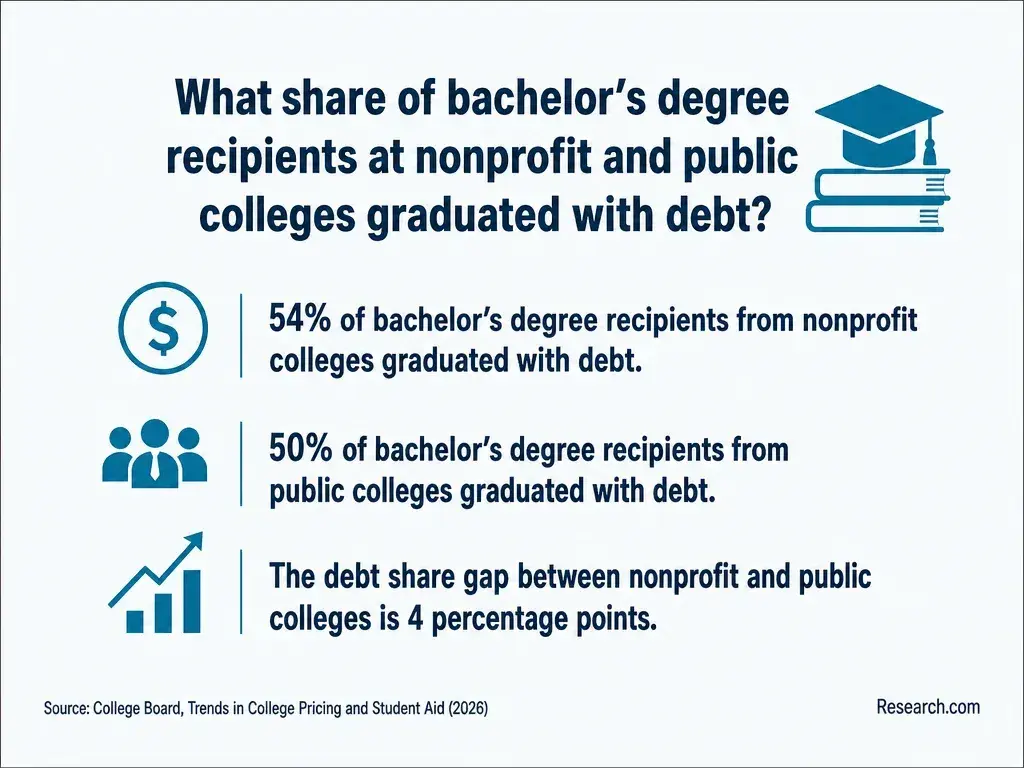
For cost, request a school-specific estimate of remaining tuition and mandatory fees, then add books, software, any travel or proctoring charges, and the earnings or work hours your schedule could affect. Confirm aid eligibility and whether a scholarship or employer benefit applies to the courses in your plan. The business administration degree affordability duration and value guide can frame comparisons, but your approved audit and aid offer—not an advertised program total—determine the useful estimate.
Preparation can support entry-level work in small-business operations, finance coordination, budgeting support, or analyst roles when the applicant also meets the employer's technical and experience requirements. The work may involve maintaining forecasts, examining costs, tracking cash collections, or preparing information for a founder or finance team. It can also help someone evaluate the finances of a venture they intend to start; a classroom plan is not a substitute for customers, operating experience, or funding.
A financial or investment analyst role generally demands deeper analytical skill and may involve employer-specific expectations beyond a general business degree. Show relevant evidence through a carefully documented model, internship, or supervised project, without presenting assumed results as actual company performance.
If you would rather work on purchasing and inventory than venture funding, shorter bachelor's pathways in supply chain management offer a different degree comparison. Neither path grants an immediate management position.
There is no single salary for graduates with entrepreneurial finance coursework: compensation follows the occupation, location, employer, responsibilities, and prior experience. For context, the U.S. Bureau of Labor Statistics reports a May 2025 median annual wage of $102,740 for financial and investment analysts and projects 7% employment growth for that occupation from 2025 to 2035. The median covers workers across experience levels; it is not an expected first-job offer or a measure of what this curriculum adds to pay.
Before borrowing for a degree, compare realistic local job postings with your existing qualifications and the program's total completion cost. Do not use analyst or manager medians as a promised return. If you are also considering project-focused education, college aid options for project management bachelor's applicants can help you compare financing questions across pathways, though aid and salary outcomes must be evaluated separately.
Do Entrepreneurial Finance Careers Require Licenses or Certifications?
Building internal budgets, analyzing a venture's cash needs, or starting a business does not itself require an entrepreneurial finance certification. Specific activities may be regulated: providing certain investment advice, selling securities, or practicing as a licensed accountant can trigger separate requirements. Check the intended role and applicable regulator rather than assuming a BS in Business Administration—or a finance concentration—confers professional eligibility.
Voluntary credentials may be useful later when an employer values them and you meet their own education and experience rules. If your target work is primarily project delivery, compare a project-management credential or targeted training with another degree before committing tuition; financial aid at low-cost project management schools is relevant to that alternative, not a licensing requirement for entrepreneurial finance.
Other Things You Should Know About Business Administration
Often, if the instructor permits it. Label invented inputs as assumptions, cite any public information used, and do not describe forecasts as actual sales or investor interest.
Not necessarily. Cash needs, pricing, payment timing, and borrowing terms may be more immediately useful. Check that the coursework reflects the kind of venture you plan to operate.
Its inputs should be traceable, formulas should reconcile, and conclusions should change sensibly when key assumptions change. A precise-looking forecast is not reliable simply because it is detailed.
Name the tools, decisions, and assignments you completed, such as a scenario-based cash forecast. Identify it as academic work unless it was an authorized project using real organizational data.
- Plan your business - Small Business Administration https://www.sba.gov/counseling/plan-your-business/
- Simulations | Harvard Business Impact Education https://hbsp.harvard.edu/simulations/
- A Conceptual Framework of Entrepreneurial Finance | sagepub.com https://journals.sagepub.com/doi/10.1177/2515127419846629
- How a Business Administration Degree Can Prepare You for Entrepreneurship - Missouri Baptist University (Mobap) https://www.mobap.edu/news/how-a-business-administration-degree-can-prepare-you-for-entrepreneurship/
- Business Administration (BS) - San Luis Obispo | Cal Poly Academic Catalog https://catalog.calpoly.edu/business/undergraduate/business-administration-bs/
- Full article: Does writing a business plan still matter for searching and obtaining external equity finance? https://www.tandfonline.com/doi/full/10.1080/13691066.2022.2161969
- Startup Funding and Finance - eCornell - Cornell University https://ecornell.cornell.edu/certificates/financial-management/startup-funding-and-finance/
- Online Bachelor of Business Administration Courses | Auburn University at Montgomery https://online.aum.edu/programs/online-bba/courses/
- BS Business Administration | University at Albany https://www.albany.edu/business/programs/bs-business-administration
- Evaluating Venture Capital Term Sheets | Stanford Graduate School of Business https://www.gsb.stanford.edu/faculty-research/case-studies/evaluating-venture-capital-term-sheets