2027 BS in Business Administration Curriculum: How to Evaluate Preparation in Business Writing
Audited and Verified:
Our Editorial and Data Verification Process
Research.com uses government datasets, official education statistics and primary institutional information to support its career and degree guides. Our review process checks factual accuracy, occupational definitions, source dates and the requirements associated with the credentials discussed.
How This Article Was Fact-Checked
Our editorial team verifies salary estimates, employment projections, education requirements and program information against original data providers and official organizations. Salary figures are checked against the relevant occupational definitions and reporting periods. Information about licensure, accreditation and required in-person training is reviewed separately.
Fact-checked and verified on:

Co-Founder and Chief Data Scientist
A business administration program can require plenty of writing without teaching students to write well for business decisions. If you are comparing BS programs, the useful question is not whether they list a communication course, but whether you will practice writing for different audiences, receive specific feedback, and revise work across the curriculum.
This guide shows prospective and returning students what to look for in courses, assignments, accreditation evidence, and program formats - so they can choose a degree that builds demonstrable writing skills rather than merely awarding credit for submitted papers.
Key Things You Should Know
- Look for assessed, revised writing in several business courses - not just a first-year composition requirement or a final capstone.
- Ask for sample assignments and rubrics covering recommendations, evidence, audience, clarity, and ethical use of data; course titles alone cannot show how writing is taught.
- Writing supports entry into roles such as market research analyst, but it is not a job qualification by itself. The U.S. Bureau of Labor Statistics reports a $78,760 May 2025 median annual wage for that occupation, not for new business graduates.
What Is a Business Administration Degree and Why Does Business Writing Matter?
A BS in Business Administration is an undergraduate degree combining subjects such as accounting, marketing, management, finance, and operations. Its exact requirements differ by institution; a BBA or specialized business degree may cover similar ground but have a different course structure. In any of these programs, business writing means producing concise, accurate communication that helps a defined audience understand information or make a decision.
That may mean explaining a budget variance to a supervisor, recommending a process change, or summarizing customer research without overstating the evidence. Grammar matters, but so do the choice of evidence, the reader's needs, and the action requested. A student aiming for employee communications may find more relevant depth in a specialized path; what to expect from an HR degree can help clarify that distinction before choosing a general business curriculum.
What Courses Should a Business Administration Curriculum Include?
There is no single required course sequence across BS programs. A strong curriculum introduces writing conventions, then asks students to use them in functional business courses and a substantial applied assignment. The table connects common course areas to the writing evidence worth seeking in a catalog or syllabus.
| Course area | Writing that demonstrates preparation | What to verify |
| Composition or business communication | Audience-specific emails, briefs, and edited reports | Whether students receive feedback and revise drafts |
| Accounting, finance, or analytics | Plain-language explanations of figures, assumptions, and limitations | Whether writing is assessed alongside calculations |
| Marketing, management, or operations | Research summaries and recommendations for a stated stakeholder | Whether assignments require evidence rather than unsupported opinion |
| Internship or capstone | An integrated proposal or decision memo | Whether it is required, supervised, and assessed for writing quality |
Electives and concentrations can add depth, but an elective is not automatically a formal concentration. If your goal is project reporting rather than broad business preparation, compare the actual course sequence and, if you have prior credits, investigate colleges accepting coursework toward project management bachelor's study. Only the receiving institution can determine which credits satisfy its requirements.
How Can You Evaluate Business Writing Preparation in a Degree Program?
Use the same evidence for every school you compare. A polished statement that graduates will "communicate effectively" is less useful than an assignment, rubric, and explanation of how students improve after feedback. Compare leading American online business degree schools as a starting point, then verify writing instruction in each program's current catalog and sample syllabi.
Ask an adviser or department representative for the following evidence. Together, these checks distinguish repeated practice from a requirement students complete once and leave behind.
- Coverage: Identify required courses - not just optional electives - that assign workplace-style writing.
- Assessment: Request a rubric showing whether faculty grade audience, reasoning, evidence, organization, and accuracy, not only mechanics.
- Revision: Ask whether students submit drafts, receive actionable comments, and revise before the final grade.
- Progression: Check whether later assignments demand more complex decisions and clearer explanations of uncertainty.
- Work samples: Ask whether students can retain a suitable, nonconfidential sample for a portfolio.
Give the most weight to required courses you will actually take. A student-facing writing center is valuable support, but it does not replace faculty feedback on business-specific reasoning.
Institutional accreditation applies to the institution; AACSB, ACBSP, and IACBE are business-focused accreditors with their own scopes and standards. Business accreditation may require a school to define learning goals, assess student work, or use results to improve instruction. It does not establish that every course teaches writing well, and a school's accredited business unit does not automatically mean every named program is covered.
Check the accreditor's directory and the institution's published accreditation statement for the specific program.
Then ask how the school measures written communication: Which student work is sampled, what rubric is used, and what changed after assessment?
If comparing programs designed around employment, working-adult business administration program comparisons can help you identify options to investigate, but confirm both accreditation scope and actual writing assessments directly with each school.
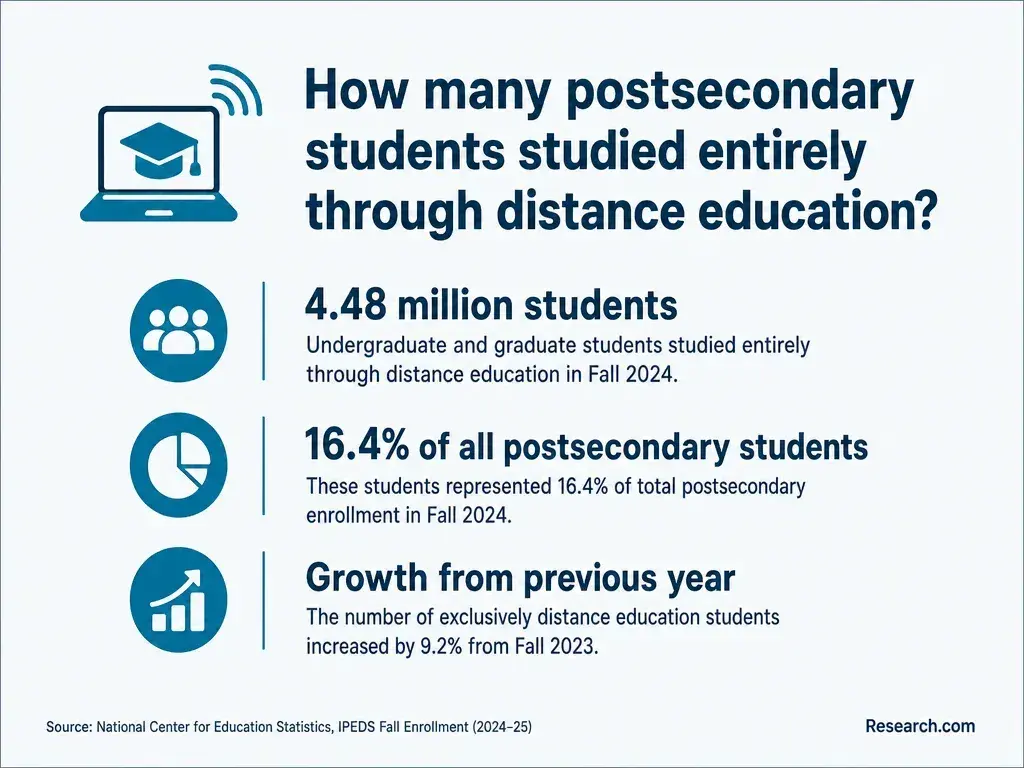
Either format can teach business writing effectively when students receive substantive comments and revise their work. Online courses may use document annotations, discussion posts, recorded presentations, and remote group projects. Campus courses may add in-person workshops and immediate peer discussion. Neither format guarantees individualized feedback.
Compare the actual obligations: live meetings, group-work schedules, draft deadlines, faculty response practices, and access to writing support. An asynchronous class can still require frequent submissions and coordinated team writing.
Likewise, flexible fast-track routes in business education may compress the time available for drafting and revision; a shorter calendar does not necessarily mean less work. For an employed student, a format is a good fit only if its feedback cycle and deadlines work alongside the job schedule.
Requirements vary by school and by whether you enter as a first-year, transfer, or returning student. Institutions may review prior transcripts and general admission eligibility separately from prerequisites for the business major. Previous English composition may satisfy a requirement without substituting for an upper-level business communication course.
Before applying, send transcripts for an official evaluation and ask which accepted credits apply to general education, the business core, and any concentration. Also check mathematics or statistics prerequisites and whether a required writing course has a course-specific transfer equivalency.
If you are comparing general business with HR, human resources bachelor's residency and transfer rules illustrate another set of requirements to check; a preliminary credit estimate is not a final degree audit.
Completion time depends on remaining requirements, course availability, enrollment pace, and applicable transfer credit - not simply how many credits a school accepts. For writing preparation, check whether a desired communication elective or capstone is offered when you need it. An accelerated schedule could reduce calendar time while leaving less room between feedback and final submission.
Compare total remaining tuition and mandatory fees, then account for books, software, possible travel, and the cost of an extra term if a required course is unavailable. Budget-friendly colleges for business administration online can provide candidates for comparison, but request a program-specific degree audit and cost estimate before treating any advertised price as your completion cost.
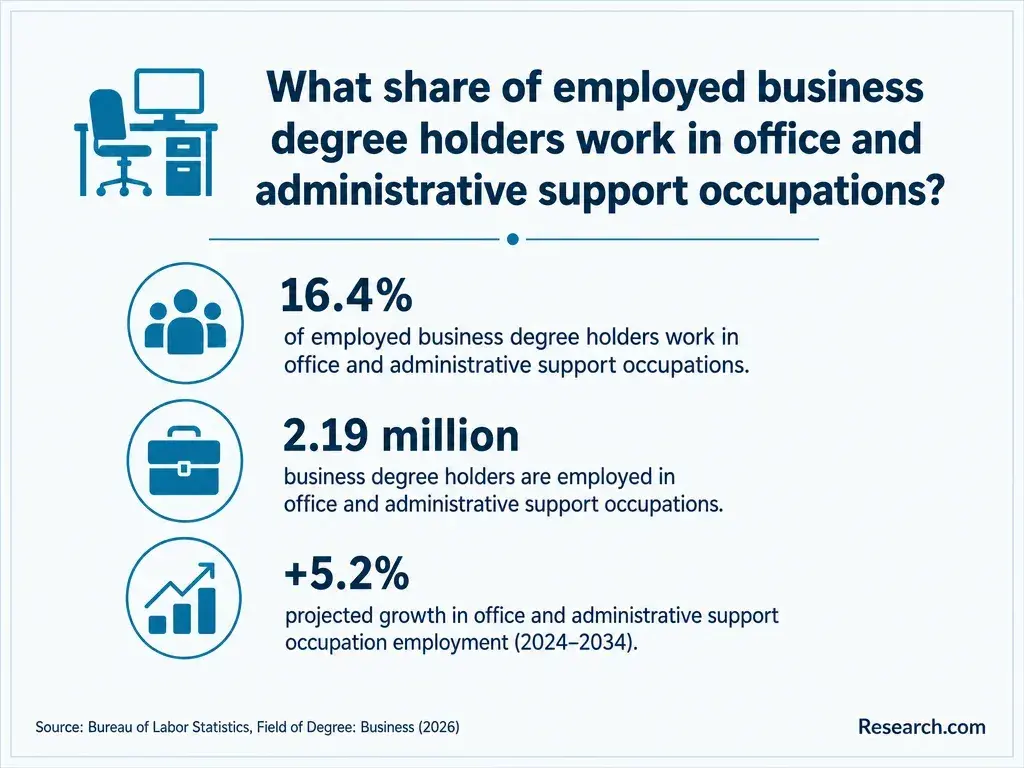
Writing is most useful when paired with a function you can perform. An operations coordinator might document a process and recommend a change; a marketing coordinator might summarize campaign results; an HR assistant might prepare accurate employee communications under appropriate review. These are different responsibilities, and employers may also expect spreadsheets, research methods, relevant experience, or specialized knowledge.
Build a work sample around the role you want: a brief with a clear audience, defensible evidence, and a recommendation that acknowledges limits. Remove personal or proprietary information, and obtain permission before using workplace material. If project coordination is your goal, weigh a business curriculum against specialized study and scholarship search options for project management majors; choose based on required skills and net education cost, not the appeal of a job title alone.
There is no single salary or job-growth figure for BS in Business Administration graduates. U.S. Bureau of Labor Statistics figures describe occupations, which include workers with different degrees and experience levels. For example, BLS projects 7% employment growth for market research analysts from 2025 to 2035. That outlook can inform a student interested in research writing, but it does not predict an individual graduate's hiring prospects or starting pay.
Use occupation data only after identifying a plausible target role and its entry requirements. Then compare the cost of acquiring the necessary skills with your existing experience; budget-friendly online business schools may merit review, provided you verify the specific curriculum, remaining credits, and costs rather than assuming the lowest advertised tuition offers the best value.
Which Certifications Strengthen Business Administration Communication Credentials?
There is no universal business writing certification that employers require of BS graduates. A credible portfolio of revised, audience-specific work may be more useful than a certificate with little assessed practice. A short writing course or certificate can make sense if you need targeted feedback rather than another degree; check who evaluates the work and whether the credential is independently awarded.
Function-specific credentials serve different purposes. Project management credentials, for example, have requirements set by their issuing organizations and do not certify business writing simply because they involve project documentation.
If comparing a specialized degree with targeted training, estimate the cost of accredited project management study, then compare it with the narrower communication gap you actually need to close. Verify eligibility and credential scope with the issuer before paying.
Other Things You Should Know About Business Administration
Follow each instructor's policy. If use is permitted, check facts, calculations, confidentiality, and citation requirements yourself; a fluent draft can still contain incorrect or unsupported claims.
Ask about language support and the program's stated proficiency requirements. Business writing assessment should make expectations for clarity, audience, and evidence explicit; requirements differ by institution.
Usually, you can discuss your own work, but check course, employer, and project rules before sharing a document. Remove confidential data and label hypothetical analyses as hypothetical.
Only if the institution approves it under its degree rules. Ask the registrar or academic adviser for a written determination rather than relying on the amount of writing assigned.
- Construct validity of primary trait writing rubrics based... - PMC https://pmc.ncbi.nlm.nih.gov/articles/PMC11605350/
- Designing and Using Rubrics - Writing Across the Curriculum https://wac.umn.edu/tww-program/teaching-resources/designing-and-using-rubrics
- Choose a Method to Collect Data/Evidence | Assessment and Curriculum Support Center https://manoa.hawaii.edu/assessment/resources/choose-a-method-to-collect-data-evidence/
- Designing Research or Inquiry-Based Assignments | Teaching and Learning Resource Center https://teaching.resources.osu.edu/teaching-topics/designing-research-or-inquiry-based
- Bachelor of Business Administration (B.B.A.) Major in Management | Texas State University https://mycatalog.txstate.edu/undergraduate/mccoy-business-administration/management/management-bba/
- What's That Supposed to Mean? Using Feedback on Your Writing - Writing Spaces: Readings on Writing, Volume 4 https://pressbooks.gvsu.edu/writingspaces4/chapter/whats-that-supposed-to-mean-using-feedback-on-your-writing/
- Giving Feedback on Student Writing - College of LSA https://lsa.umich.edu/sweetland/instructors/guides-to-teaching-writing/giving-feedback-on-student-writing.html
- Writing in Business: Writing Guides by IU Faculty | indiana.edu https://citl.indiana.edu/programs/writing/writing-guides/business-writing.html
- Artificial intelligence in education - AI | UNESCO https://www.unesco.org/en/digital-education/artificial-intelligence