2027 Should You Choose a BS in Business Administration or A Business Analysis Certification for Your Next Career Step?
Audited and Verified:
Our Editorial and Data Verification Process
Research.com uses government datasets, official education statistics and primary institutional information to support its career and degree guides. Our review process checks factual accuracy, occupational definitions, source dates and the requirements associated with the credentials discussed.
How This Article Was Fact-Checked
Our editorial team verifies salary estimates, employment projections, education requirements and program information against original data providers and official organizations. Salary figures are checked against the relevant occupational definitions and reporting periods. Information about licensure, accreditation and required in-person training is reviewed separately.
Fact-checked and verified on:

Co-Founder and Chief Data Scientist
If you want to move into business analysis, a bachelor's degree and a professional certification solve different problems. A BS in Business Administration can build broad business knowledge and meet degree requirements in job postings; certification can document analysis skills, but eligibility and employer recognition vary. This distinction matters especially if you already have work experience or college credit. This guide compares what each pathway teaches, what it takes to complete, and which career goals justify the investment - so you can choose a next step rather than simply collect another credential.
Key Things You Should Know
- Choose the BS when a bachelor's requirement is blocking your progress or you need broad preparation across business functions; certification does not substitute for a degree requirement.
- Choose a business analysis certification when you can meet its eligibility rules and need to validate relevant skills; an entry-level credential may be more realistic than an experience-based designation if you are new to analysis.
- Neither pathway guarantees an analyst job: U.S. management analysts had a May 2025 median annual wage of $101,860, but that occupation-wide figure is not a starting salary or a return promised by either credential.
What is the difference between a BS in Business Administration and business analysis certification?
A BS in Business Administration is an undergraduate academic degree. Its curriculum typically combines general education with accounting, finance, marketing, operations, management, and quantitative coursework. Business analysis certification is a separately awarded professional credential focused on identifying business needs, analyzing processes, working with stakeholders, and evaluating proposed changes.
The central distinction is breadth versus demonstrated specialization. A degree can satisfy an employer's bachelor's requirement but does not, by itself, establish professional analysis experience. Certification may show knowledge or verified experience under a certifying body's rules, but it does not award college credit or replace a bachelor's degree. Neither is the same as an academic certificate, a business analytics concentration, or a software course.
If your target is specifically HR rather than cross-functional analysis, compare the curriculum and roles covered by HR degree requirements and job opportunities before assuming a general business credential is the closest fit.
Which career goals favor a business administration degree or business analysis certification?
Start with the job you want and the experience you already have. The comparison below separates an employer's education requirement from the evidence needed to perform analysis work.
| Your goal or starting point | Stronger next step | Reason |
| A target job requires a bachelor's, and you do not have one | BS in Business Administration or another relevant bachelor's | Certification generally will not clear the stated degree requirement. |
| You already have a bachelor's and perform stakeholder, process, or requirements work | Relevant business analysis certification | It may document a specialization without repeating undergraduate study. |
| You are changing careers with little analysis experience | Targeted training and a supervised project; consider an entry-level credential | Work samples and relevant responsibilities help bridge the experience gap. |
| You need broad preparation for several business functions | BS in Business Administration | Its wider curriculum keeps more functions open than a single-specialty credential. |
For an experienced employee, the most efficient route may be certification plus documented projects. For someone without a bachelor's, the degree may remove a persistent hiring barrier while providing room to build those projects. If the goal is specifically supply chain work, compare specialized coursework and accelerated supply chain bachelor's degrees rather than assuming general business is always the best degree choice.
What are the education and experience requirements for business analysis certifications?
Requirements depend on the specific certification and issuing organization. The International Institute of Business Analysis offers credentials at different career stages, including the entry-oriented ECBA and experience-based CCBA and CBAP. The Project Management Institute's PMI-PBA is another experience-based option. Their application rules are not interchangeable: qualifying work, training, references, exams, and renewal obligations may differ.
Before paying for preparation, consult the issuer's current handbook and match your actual tasks - not just your job title - to its eligibility definitions. Requirements gathering, stakeholder discussions, process assessment, and evaluation of solutions may be more relevant than general administrative tenure. Keep dated records of projects, responsibilities, training, and supervisors who can confirm your work.
A project management credential is not automatically a business analysis credential. If you instead need a bachelor's to enter project-focused roles, transfer admission options for project management undergraduates provide a different comparison; the receiving school must determine how any prior credits apply.
A BS program usually teaches how business functions interact: accounting and finance explain resources, marketing examines customers, operations addresses processes, and management considers people and organizational decisions. Statistics, spreadsheets, information systems, and business communication can support analysis work, but the depth of each subject varies by program.
For a prospective analyst, inspect the course catalog for process improvement, data interpretation, systems analysis, project work, and opportunities to present recommendations to a stakeholder. An internship or capstone can produce useful evidence of skill only if you complete the work and have permission to share it. A concentration is official only if the school awards it as such; a few electives do not create a separate credential.
If your existing credits are in another field, ask how they apply to the business core rather than assuming they will shorten the major. This is particularly important when comparing human resources bachelor's credit transfer options with a general business degree that offers HR electives.
A bachelor's degree commonly represents about four years of full-time undergraduate study, but your remaining time depends on accepted credits, credits that actually satisfy degree requirements, course sequencing, and enrollment pace. A returning student should request an official degree audit before relying on an advertised completion timeline.
Certification preparation may take substantially less calendar time than earning a degree if you already meet the credential's experience and education rules. If you do not, the time needed to gain qualifying work can be the controlling factor - not the length of an exam-preparation course. Also check application review, exam scheduling, and renewal requirements.
When comparing undergraduate programs with faster pacing, distinguish a compressed course calendar from fewer required credits. A faster term can increase weekly workload without resolving missing prerequisites.
An online BS may reduce commuting and make continued employment easier; a campus program may offer more predictable in-person access to faculty, classmates, and recruiting events. Neither format is inherently better for learning business analysis. Compare the actual assignments, feedback, career support, and access to applied projects.
Online does not necessarily mean self-paced. Ask whether courses require live meetings, group presentations, proctored exams, internships, or campus visits, and check when required classes are offered. Working students should map those obligations against their job schedule before committing. Degree options for working business administration students can help frame that scheduling comparison.
Certification training is also available in different formats, but buying an online course does not award the credential. The certifying organization controls eligibility, assessment, and the designation itself.
BS admission typically involves an application and academic records; a school or business major may impose additional standards. Certification is usually an application to a professional organization, with requirements determined by the particular designation. Confirm both sets of rules directly before treating either pathway as available to you.
For the degree, compare remaining credits and total completion cost, not tuition alone. Include mandatory fees, books, technology, travel, financing costs, and any earnings you might forgo. Ask for a written transfer evaluation showing which credits meet general education, business-core, elective, and residency requirements. For certification, account for preparation, application or exam charges, possible membership, retakes, and renewal; check the issuer's posted fees rather than assuming a course price covers everything.
Compare business administration tuition and completion time using your own evaluated credits and expected pace. A lower advertised price may not be cheaper if more coursework remains.
For a BS, verify the institution's accreditation status and whether it applies to the campus or online offering you intend to attend. If a school cites AACSB, ACBSP, or IACBE, check the accreditor's directory and the scope of coverage; institutional accreditation and business-school or programmatic accreditation are different claims. Accreditation does not guarantee a job or certification eligibility.
For certification, verify that the designation comes from the organization named on the application and review its current eligibility handbook, exam policies, code of conduct, and renewal rules. A training provider's completion certificate is not necessarily the professional certification it helps you prepare for.
If application charges affect your school search, accredited online colleges without application fees may narrow the initial list. Verify accreditation and the exact business degree separately before applying.
A BS in Business Administration can support applications for business operations, project coordination, procurement, marketing, or other function-specific entry roles, subject to the employer's requirements. Business analysis certification is most relevant where the work involves understanding stakeholder needs, documenting requirements, examining processes, or assessing whether a proposed change solves the identified problem.
Job titles overlap imperfectly. A "business analyst" may work on software requirements, operations, finance, or organizational improvement; each demands different tools and domain knowledge. A graduate with no analysis experience may need to enter through a coordinator or junior role and build a record of completed work. An experienced employee may already have relevant responsibilities even without an analyst title. Neither a degree nor a certificate grants immediate managerial authority.
If the goal is supervising teams rather than analyzing change, compare the curriculum and employer expectations of fast-track online colleges for leadership majors. Leadership study still needs to be paired with evidence of workplace responsibility.
How do salaries and job outlook compare for business graduates and analysts?
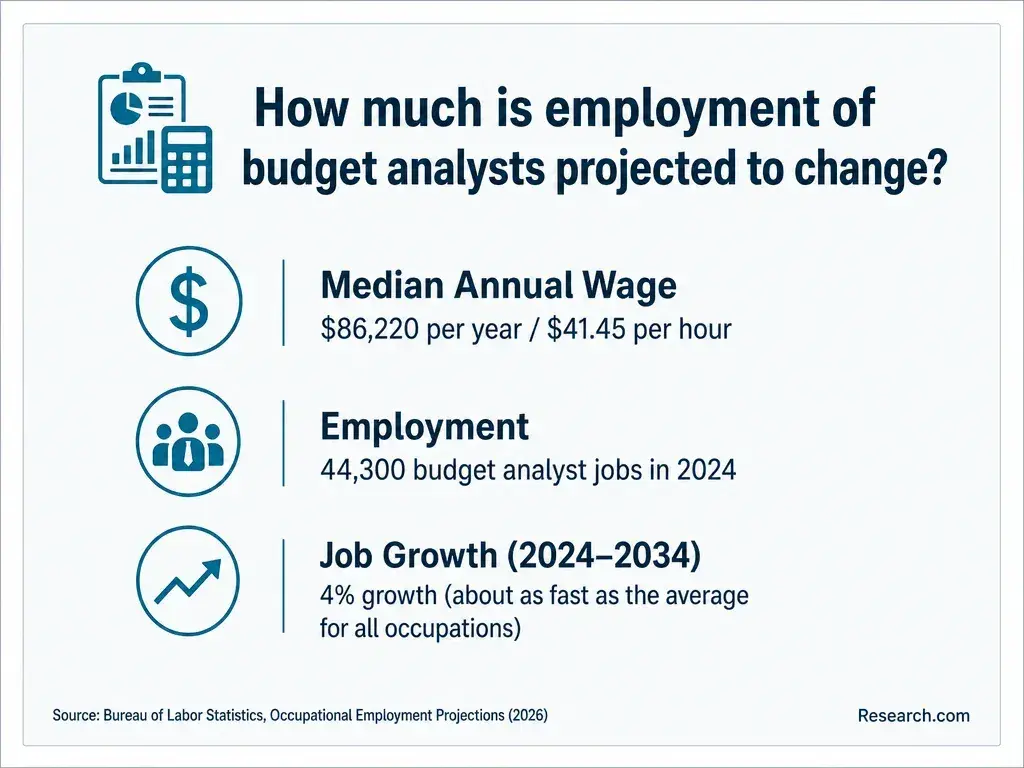
There is no reliable single salary for "business degree holders" or "certified business analysts": those groups span occupations, industries, locations, and experience levels. As one relevant benchmark, the U.S. Bureau of Labor Statistics reports a May 2025 median annual wage of $101,860 for management analysts and projects 10% employment growth from 2025 to 2035. Management analysts commonly recommend ways to improve organizational efficiency, but not every business analyst holds that occupation, and its median includes experienced workers.
Use occupation data to assess the roles you are targeting - not to forecast your starting pay or calculate an assumed credential premium. Compare local postings for required education, analysis tasks, software, and experience. Then weigh the cost of the credential against the specific barrier it removes. If completion speed is central to that calculation, shortest online business bachelor's program rankings are a starting point, not a substitute for your individual degree audit.
Other Things You Should Know About Business Administration
Yes. The credentials serve different purposes. You can complete the degree and pursue certification when you meet the issuer's eligibility rules; do not assume degree coursework counts as qualifying professional experience.
No. Business analytics generally emphasizes using data to generate insights. Business analysis often focuses on stakeholder needs, requirements, processes, and organizational change. Roles can overlap, so read course descriptions and job duties carefully.
Usually, compare targeted courses, relevant work, and certification first. A second bachelor's may make sense if your target role requires substantial undergraduate business preparation that shorter options will not provide.
Possibly. The issuer decides what activities and time periods qualify. Document your actual tasks and projects, then compare them with the current application rules before paying for an exam.
- A Systematic Review on Professional Regulation and... - PMC https://pmc.ncbi.nlm.nih.gov/articles/PMC10002239/
- Understanding College Costs | studentaid.gov https://studentaid.gov/resources/prepare-for-college/students/choosing-schools/consider-costs
- What Is a Business Administration Degree? Key Concepts | American Military University https://www.amu.apus.edu/area-of-study/business-administration-and-management/resources/what-is-a-business-administration-degree-key-concepts/
- Why Is Accreditation Important? | ACE Blog https://ace.edu/blog/why-is-accreditation-important/
- Business Administration (B.A. and B.S.) - Academic Catalog https://bulletins.wayne.edu/undergraduate/school-business/bachelors-business-administration/
- How To Become a Business Analyst - GuariniGRAD | Guarini School of Graduate and Advanced Studies https://guarinigrad.dartmouth.edu/blog/2025/03/17/how-to-become-a-business-analyst/
- Regional vs. National Accreditation: Which is Better? | Drexel University Online https://www.online.drexel.edu/news/national-vs-regional-accreditation.aspx
- Online Bachelor's Degree in Business Administration | Purdue Global https://www.purdueglobal.edu/degree-programs/business/bachelor-business-administration/
- How to Become a Business Analyst: Steps, Skills, and Salary | Touro University Worldwide https://www.tuw.edu/business/how-to-become-a-business-analyst/
- 10 Key Subjects Taught in a Bachelor of Business Administration Program | Carson-Newman University https://www.cn.edu/cps-blog/10-key-subjects-taught-in-a-bachelor-of-business-administration-program/