2027 BS in Business Administration for Manufacturing Companies: Which Business Courses Should You Prioritize?
Audited and Verified:
Our Editorial and Data Verification Process
Research.com uses government datasets, official education statistics and primary institutional information to support its career and degree guides. Our review process checks factual accuracy, occupational definitions, source dates and the requirements associated with the credentials discussed.
How This Article Was Fact-Checked
Our editorial team verifies salary estimates, employment projections, education requirements and program information against original data providers and official organizations. Salary figures are checked against the relevant occupational definitions and reporting periods. Information about licensure, accreditation and required in-person training is reviewed separately.
Fact-checked and verified on:

Co-Founder and Chief Data Scientist
A general business degree can lead toward manufacturing work, but its electives determine how well it prepares you for purchasing, production planning, cost control, or operations support. If you are choosing a BS in Business Administration - or finishing one while working in a plant - the most useful courses may not be the ones with "manufacturing" in their titles. This guide ranks the business skills to prioritize, shows how to match coursework to a target role, and explains when a specialized degree or workplace experience would be a better investment.
Key Things You Should Know
- Prioritize operations and supply chain, managerial accounting, and analytics; then choose electives for your target manufacturing function.
- Look for assignments using inventory, capacity, purchasing, or production-cost decisions - not just course titles. A business degree does not replace plant experience or technical training.
- The Bureau of Labor Statistics projects 18% U.S. employment growth for logisticians from 2025 to 2035, but that occupation-wide forecast is not specific to manufacturing or to business graduates.
What Is a BS in Business Administration for Manufacturing Companies?
A BS in Business Administration is a broad undergraduate business degree that can be applied to manufacturing companies. It normally covers functions such as accounting, management, finance, and business analysis; it is not necessarily a manufacturing-specific credential. Its value depends on the courses you can select and the practical evidence you build alongside them.
Manufacturers need business staff who can connect customer demand, materials, labor, production schedules, and costs. A student interested in that work should inspect the actual curriculum rather than assume that a BS, BBA, or operations concentration contains the same courses at every school. A formal concentration appears in a school's published degree requirements; a collection of electives may provide useful preparation without awarding a named concentration.
If speed matters, compare the remaining requirements - not just the advertised calendar length - of shorter undergraduate business programs across the US. A faster general degree is worthwhile only if it leaves room for the manufacturing-relevant courses you need.
Which Business Courses Best Prepare Students for Manufacturing Careers?
For most students, the strongest sequence is operations or supply chain management, managerial accounting, and business statistics or analytics. Operations explains how work and materials move; accounting clarifies the cost consequences; analytics helps test decisions against evidence. After that foundation, specialize according to the job you want.
The table separates broadly useful courses from role-specific choices. Course names vary, so compare syllabi and assignments rather than relying on titles alone.
| Course area | Manufacturing decision it helps explain | Priority |
| Operations management | Capacity, bottlenecks, scheduling, quality, and process trade-offs | Highest for operations and production-support paths |
| Supply chain and procurement | Supplier selection, lead times, inventory, and material availability | Highest for purchasing, planning, and logistics paths |
| Managerial accounting | Product and process costs, budgets, and variance interpretation | High across functions |
| Statistics and business analytics | Forecast uncertainty, performance measures, and spreadsheet analysis | High across functions |
| Information systems | How purchasing, inventory, and production records connect | Useful for planning and systems-facing roles |
| Project management, HR, or marketing | Improvement projects, workforce coordination, or industrial customers | Choose according to the target role |
Look for prerequisites before building an elective plan: statistics may precede analytics, and introductory accounting may precede cost or managerial accounting. Ask whether required courses run often enough to fit your graduation schedule. If procurement and logistics are your clear objective, compare the depth of a specialized degree with accelerated undergraduate supply chain programs; faster delivery alone is not a reason to sacrifice relevant coursework.
A particularly useful assignment is one that asks you to evaluate a forecast, inventory policy, or production-cost scenario and explain the limitations of the data. It demonstrates more than familiarity with terminology, though it does not establish professional expertise or access to a company's actual systems.
How Does a Business Administration Degree Support Manufacturing Management Careers?
The degree can help an employee understand decisions across departments: why a purchasing change affects production, how overtime affects costs, or how a delivery target interacts with capacity. That cross-functional perspective is useful in supervisory development. It does not, by itself, qualify a graduate to manage a plant, approve major budgets, or lead safety-critical work.
For an employee already handling schedules, inventory, purchasing, or team coordination, the best next step is to connect courses to documented responsibilities. An employer-approved project might compare a process measure before and after a proposed change, with the assumptions and limitations made clear. Academic approval is separate from workplace permission; neither should be presumed. If your aim is specifically to coordinate implementation projects, compare the remaining coursework in a general BS with project management bachelor's completion using existing credits.
Management hiring usually also depends on operational judgment, communication, results, and familiarity with the plant's equipment, workforce, and safety procedures. Someone new to manufacturing may benefit more immediately from an operations-support role and mentorship than from seeking a management title at graduation.
Choose the format that lets you complete the right courses and practical work, not merely the format that appears most convenient. Online study can suit shift workers or employees far from campus, but an online course may still require live meetings, scheduled exams, group presentations, or fixed weekly deadlines. Campus study may make faculty contact and local employer connections easier, but travel can conflict with rotating shifts.
Before enrolling, request the schedule and assessment details for the operations, accounting, and analytics courses you intend to take. Ask whether an internship is required, whether a current manufacturing job could support an approved project, and whether that project can use nonconfidential or simulated data. If a shorter calendar is important, review business programs with accelerated online classes alongside the actual weekly workload and course rotation. Accelerated does not mean self-paced or fewer hours of study.
First, verify that the university holds recognized institutional accreditation. Then check whether its business school or relevant programs hold AACSB, ACBSP, or IACBE accreditation, and confirm the accreditor's stated scope. Institutional and business accreditation answer different questions; neither certifies that a curriculum teaches manufacturing operations well or guarantees a job.
For this particular decision, read the catalog after checking accreditation. Confirm that the BS - not merely another business degree - offers the operations, supply chain, and accounting courses you want. If application cost is also a concern, accredited online colleges without application fees can be a starting point for comparison, but verify each institution's current accreditation and program offerings directly.
Requirements depend on the institution and whether you apply as a first-year, transfer, or returning student. Schools commonly review prior academic records; some business majors also have separate entry standards or prerequisite courses. A background in manufacturing, a trade, or another academic field does not automatically bar admission, but work experience does not automatically replace required coursework.
If you have previous college credits, ask for an official evaluation showing which credits satisfy general education, the business core, and your intended electives. In particular, check equivalencies for accounting, algebra or statistics, and any prerequisites for advanced operations courses. The school - not a preliminary estimate - determines what applies to graduation. If your goal is manufacturing HR rather than operations, use a human resources program selection guide to compare that more focused route before committing to general business electives.
A bachelor's degree is commonly planned as four years of full-time undergraduate study, but the remaining time for a transfer or working student depends on credits applied to requirements, course prerequisites, availability, and enrollment pace. An accelerated term may shorten the calendar without reducing required work.
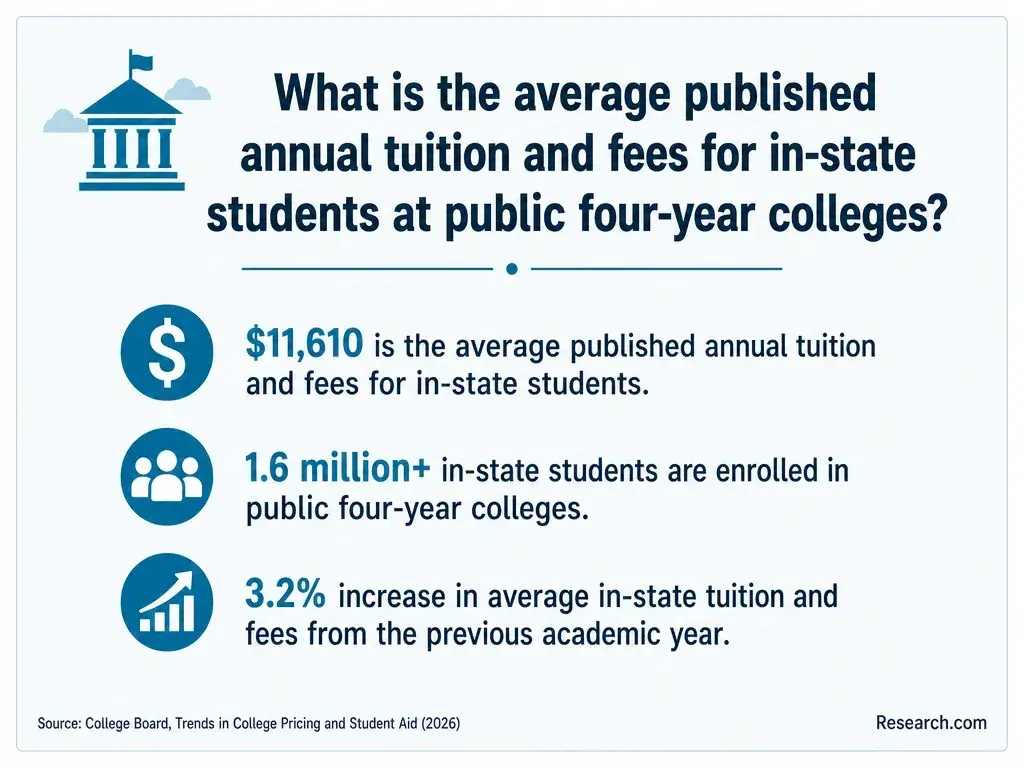
There is no reliable single price for a manufacturing-focused BS: tuition and fees vary by school, enrollment status, and delivery format. Compare the cost to finish rather than the advertised price alone. Include required courses, fees, books or software, travel or proctoring, and any earnings affected by your schedule. Employer tuition assistance may help, but check eligibility, reimbursement timing, grade rules, and repayment conditions before counting it toward your budget.
When comparing lower-tuition online business administration programs, request both a written degree audit and a current cost estimate. A low per-credit rate may not be the least expensive route if essential courses are unavailable or prior credits count only as electives.
Match job applications to tasks you can demonstrate, not to the degree title alone. Depending on your experience and local employers, relevant starting points include purchasing assistant, inventory or logistics coordinator, production-planning assistant, operations analyst assistant, and project coordinator. Titles and degree preferences vary; a planning role may require substantial spreadsheet and systems skill, while a buyer may need supplier and product knowledge.
For each target job, compare postings with your course assignments and work history. Evidence might include a clearly labeled classroom inventory model, a supervised scheduling task, or documented purchasing responsibilities. Do not present a simulation as an implemented company improvement or disclose proprietary records. If project coordination is the goal, compare a general business curriculum with affordable online project management degrees for the specific scheduling, budgeting, and stakeholder skills the postings request.
Production manager and other plant leadership positions are generally experience-dependent. A BS can support progression toward them, but familiarity with shop-floor operations, people management, and employer-specific requirements matters as much as academic preparation.
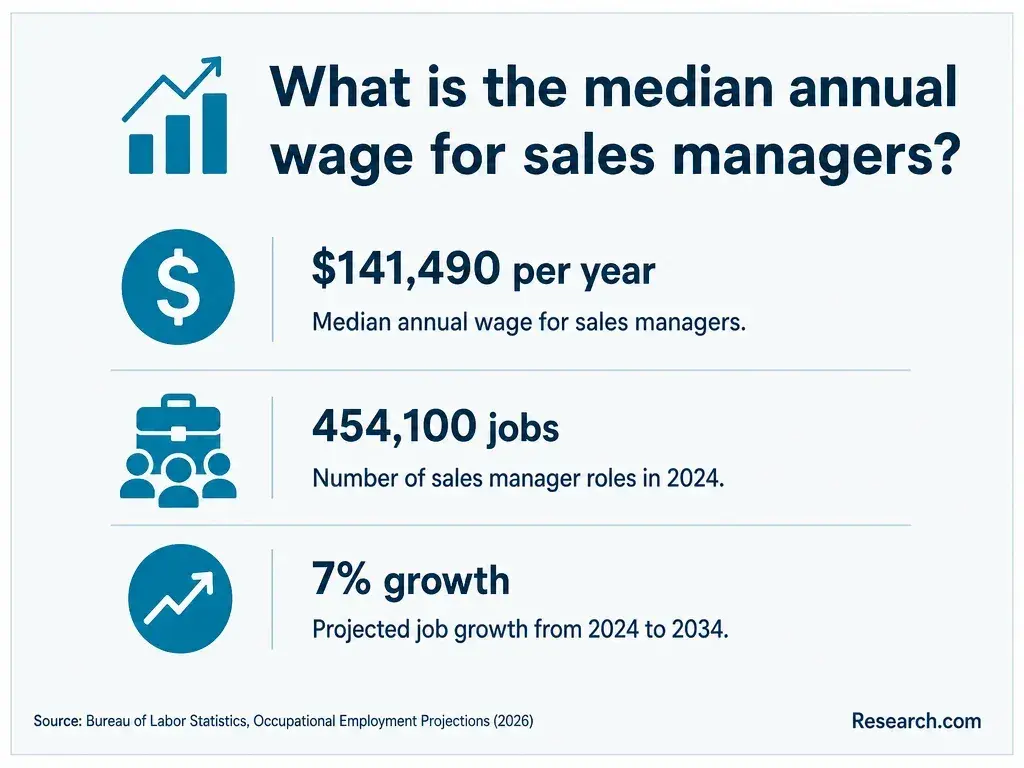
No national wage figure describes all BS in Business Administration graduates working in manufacturing. Pay depends on the occupation, location, employer, and experience. As one relevant benchmark, the U.S. Bureau of Labor Statistics reports a May 2025 median annual wage of $82,320 for logisticians across industries. That is the midpoint for employed logisticians, not an entry-level offer, a manufacturing-only figure, or a predicted salary for someone with this degree.
Use occupation data to identify promising functions, then compare local postings for jobs you could realistically obtain. A purchasing assistant and an experienced logistics specialist should not be treated as interchangeable salary outcomes. If supply chain is your target, a comparison of affordable supply chain programs and salary outlook may help frame the education trade-off; evaluate its program costs against your own remaining credits and likely entry role.
Which Certifications Improve Manufacturing Business Career Prospects?
A certification is most useful when it fills a demonstrated gap in the job postings you are targeting. Depending on the function, employers may value supply chain or inventory credentials, project management credentials, or training in quality and process improvement. These are separate from a BS and from a school-awarded concentration; each issuer sets its own eligibility, examination, and renewal rules.
Check whether employers request a credential before paying for one. For a new graduate, supervised purchasing or planning work and strong spreadsheet evidence may be more valuable than an advanced certification whose requirements include professional experience. For an experienced employee moving into projects, compare credential fees and prerequisites with the cost of further study; project management bachelor's scholarship options are relevant if a degree, rather than a standalone certification, is still required for the intended role.
Other Things You Should Know About Business Administration
Not for every entry-level role. Learn how purchasing, inventory, production, and accounting records relate, then check which systems local employers request. A course simulation is useful evidence of learning, not a claim of proficiency with an employer's system.
Yes. It can help you understand lead times, handoffs, quality issues, and the consequences of scheduling decisions. Explain those insights alongside your analytical and communication skills.
They may support budgeting, reporting, or coordination, but a business degree is not a substitute for required safety training or qualified technical judgment. Follow the employer's procedures and the responsibilities assigned to your role.
Only with appropriate employer and instructor permission and a clear understanding of confidentiality and data-use rules. Public, simulated, or properly approved anonymized data can often support a useful assignment without exposing company information.
- Managerial Accounting Techniques | devry.edu https://www.devry.edu/blog/managerial-accounting-techniques.html
- Option in Operations and Supply Chain Management | calstatela.edu https://ecatalog.calstatela.edu/preview_program.php
- Cost Accounting vs Managerial Accounting | Edgewood College https://online.edgewood.edu/blog/cost-accounting-vs-managerial-accounting/
- Manufacturing operations management: A complete guide | 27 inventory management terms and definitions you must know https://www.fishbowlinventory.com/blog/manufacturing-operations-management-a-complete-guide
- Best Business Majors | Bachelor's Degree in Business | CollegeAdvisor https://www.collegeadvisor.com/resources/best-business-majors/
- What is operations management in manufacturing? | Pelico https://www.pelico.ai/resources/our-articles/what-is-operations-management-in-manufacturing
- What Is Operations Management? Definition, Types, and Importance | NetSuite https://www.netsuite.com/portal/resource/articles/erp/operations-management.shtml