2027 BS in Business Administration and Accounting: What Math and Data Skills Should You Compare?
Audited and Verified:
Our Editorial and Data Verification Process
Research.com uses government datasets, official education statistics and primary institutional information to support its career and degree guides. Our review process checks factual accuracy, occupational definitions, source dates and the requirements associated with the credentials discussed.
How This Article Was Fact-Checked
Our editorial team verifies salary estimates, employment projections, education requirements and program information against original data providers and official organizations. Salary figures are checked against the relevant occupational definitions and reporting periods. Information about licensure, accreditation and required in-person training is reviewed separately.
Fact-checked and verified on:

Co-Founder and Chief Data Scientist
Two degrees can both advertise "business administration and accounting" while preparing students for different kinds of quantitative work. One may emphasize budgets and management decisions; another may require deeper accounting, statistics, and analysis of financial records.
If you are comparing programs - or wondering whether your math preparation is enough - the course titles alone will not settle it. This guide shows you which skills and assignments to examine, how they connect to accounting work, and which admissions, cost, and licensing details to verify before enrolling.
Key Things You Should Know
- Compare what students do with numbers: reconcile records, build spreadsheet models, interpret statistical results, and explain decisions - not just whether a catalog lists "business math."
- For accounting-focused study, prioritize financial and managerial accounting, intermediate accounting, spreadsheet work, and data-quality checks; statistics and database skills add value when tied to realistic reporting tasks.
- The U.S. median annual wage for accountants and auditors was $83,680 in May 2025, but that occupation-wide figure is neither an entry-level salary nor proof that a particular business degree meets CPA requirements.
What is a BS in Business Administration and Accounting?
The phrase can describe different credentials: a BS in Business Administration with an accounting concentration, a business degree with accounting electives, or a separately named accounting bachelor's degree. A concentration is an official group of courses within a degree; electives alone do not necessarily create one. Check the exact credential on the school's catalog and transcript rather than relying on a program webpage's shorthand.
A business administration core generally spreads study across management, finance, marketing, operations, and accounting. A dedicated accounting major may reserve more room for advanced accounting and auditing. That difference matters if you want accounting work rather than broad business literacy. When you evaluate American online business school options, compare the required accounting sequence - not merely the degree title or delivery format.
What math skills do business administration and accounting majors need?
Most undergraduate accounting work depends more on accurate arithmetic, algebra, percentages, and interpretation than on advanced calculus. Students use these skills to calculate margins, allocate costs, analyze changes over time, and test whether a financial statement or budget is internally consistent. Statistics becomes important when a course asks students to evaluate samples, variation, or forecasts.
The table distinguishes commonly encountered skills from the evidence worth looking for in a syllabus. Requirements vary, so use it to compare assignments rather than assume every program teaches each skill to the same depth.
| Skill | Accounting or business use | Evidence of practice |
| Arithmetic and percentages | Reconciliations, tax calculations, margins, and variance analysis | Problems requiring students to identify and correct an error |
| Algebra and quantitative reasoning | Break-even analysis, pricing, and cost-volume relationships | Models that state assumptions and explain a result |
| Statistics | Interpreting samples, trends, and uncertainty | Assignments discussing limitations, not just computing an average |
| Time value of money | Comparing cash flows across periods | Finance exercises that distinguish cash flow from accounting earnings |
If your goal is personnel administration rather than financial reporting, compare the quantitative demands of that pathway before choosing accounting for its perceived versatility. Understanding human resources degree levels can help clarify whether a different specialization fits your intended work better.
Which data skills should you compare in accounting degree programs?
Start with data preparation and control: Can students import transactions, check for duplicates or missing values, reconcile totals, document corrections, and trace a reported figure back to its source? A polished dashboard is less useful if its underlying records cannot be trusted. Then examine spreadsheet proficiency, including formulas, lookup methods, pivot tables, and clearly labeled assumptions.
Beyond spreadsheets, compare whether required courses introduce accounting information systems, database queries, visualization, or audit-oriented analysis. More software names do not automatically mean better preparation. A stronger assignment asks students to define a business question, select an appropriate measure and time period, explain exceptions, and communicate what the data cannot establish. For example, a rise in expenses is an observation; it does not, by itself, explain the cause.
Ask for a recent syllabus or anonymized assignment description. Find out which tools are required, whether students work with realistic but authorized datasets, and whether faculty assess written interpretation as well as calculations. If your target is broad supervision rather than accounting analysis, accelerated online organizational leadership school choices offer a contrasting curriculum to examine - but compare actual data assignments before assuming either path builds stronger analytical skills.
Look for the sequence, not just a list of subjects. Financial accounting introduces external statements; managerial accounting applies cost information to internal decisions. Intermediate accounting typically develops financial-reporting depth, while auditing, taxation, accounting information systems, and advanced accounting may be required, optional, or absent depending on the program. Business statistics, economics, finance, and a capstone may sit alongside those courses.
Map prerequisites before selecting a faster schedule: an intermediate course may require introductory accounting, and an advanced elective may not run every term. The accelerated business college program guide can help you identify formats to investigate, but ask each school whether its compressed calendar still offers the full accounting sequence you need. A capstone case or simulation demonstrates assessed classroom work; it is not the same as supervised accounting experience.
The key difference is how you access instruction and complete assessed work, not necessarily what appears on the diploma. Online students may complete spreadsheet exercises remotely but still face scheduled exams, live presentations, group meetings, or proctoring. Campus courses may offer easier access to in-person tutoring and recruiting, while requiring travel at fixed times. Neither format is automatically more flexible or more rigorous.
Ask both programs how students obtain help in intermediate accounting and statistics, which software they must use, and whether internships or capstones have location-specific requirements. If scheduling is the constraint, quick online bachelor's pathways are worth examining only after you confirm weekly deadlines, assessment rules, and the availability of required accounting courses. Choose the format in which you can consistently practice and get feedback on errors.
Requirements depend on whether you are entering as a first-year student, transferring, or seeking admission to a business major after enrolling at the institution. Schools may assess prior coursework, GPA, and mathematics preparation; some also require specific introductory courses before students enter upper-level accounting. Admission to the university does not necessarily mean admission to the major.
If you have previous credits, request an official evaluation showing whether algebra, statistics, and accounting courses satisfy specific requirements or count only as electives. Ask about course recency, substitutions, and prerequisite placement before planning your first term. This distinction also applies when you finish project management studies with transferred college credits: a quantitative course accepted for credit may not replace the accounting prerequisite your new program requires.
A bachelor's degree is commonly planned around four years of full-time undergraduate study, but your remaining timeline depends on accepted and applicable credits, course load, prerequisites, and how often required classes run. Accounting sequences can limit acceleration even when general education requirements are complete. Part-time study may better support work or caregiving, but can lengthen the calendar time.
Ask an adviser for a term-by-term plan that includes the last required accounting course and capstone. If you are considering US fast-track undergraduate business degree options, compare that plan with the school's advertised completion timeline; a fast general business route may not accommodate every accounting elective or CPA-related course.
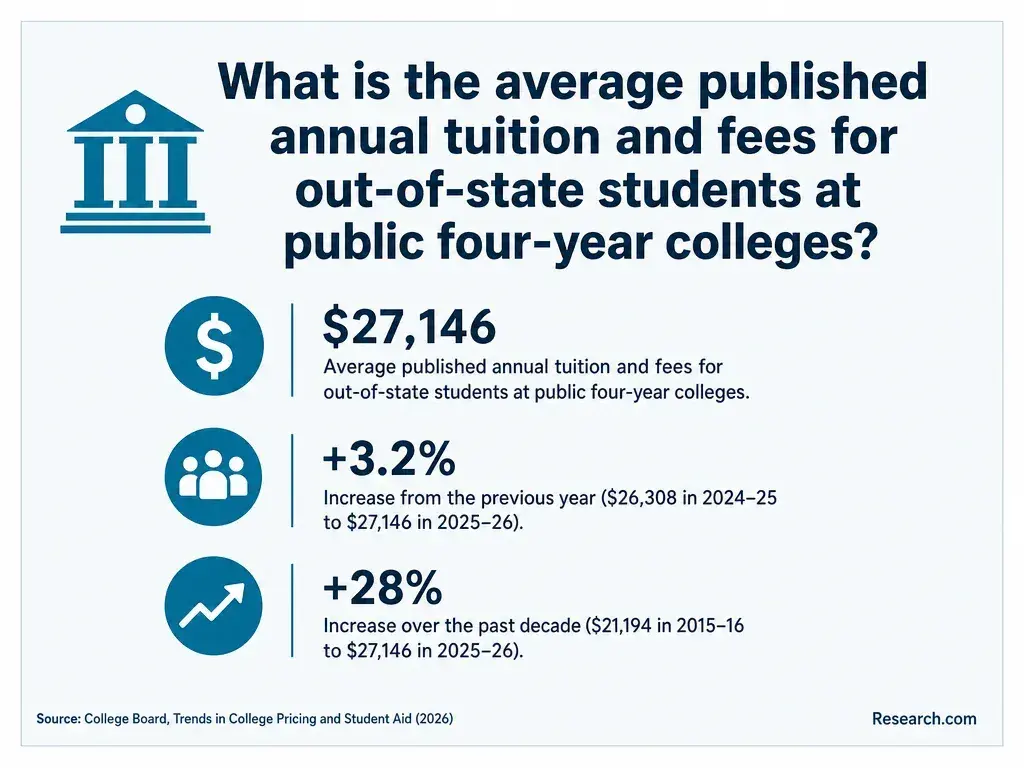
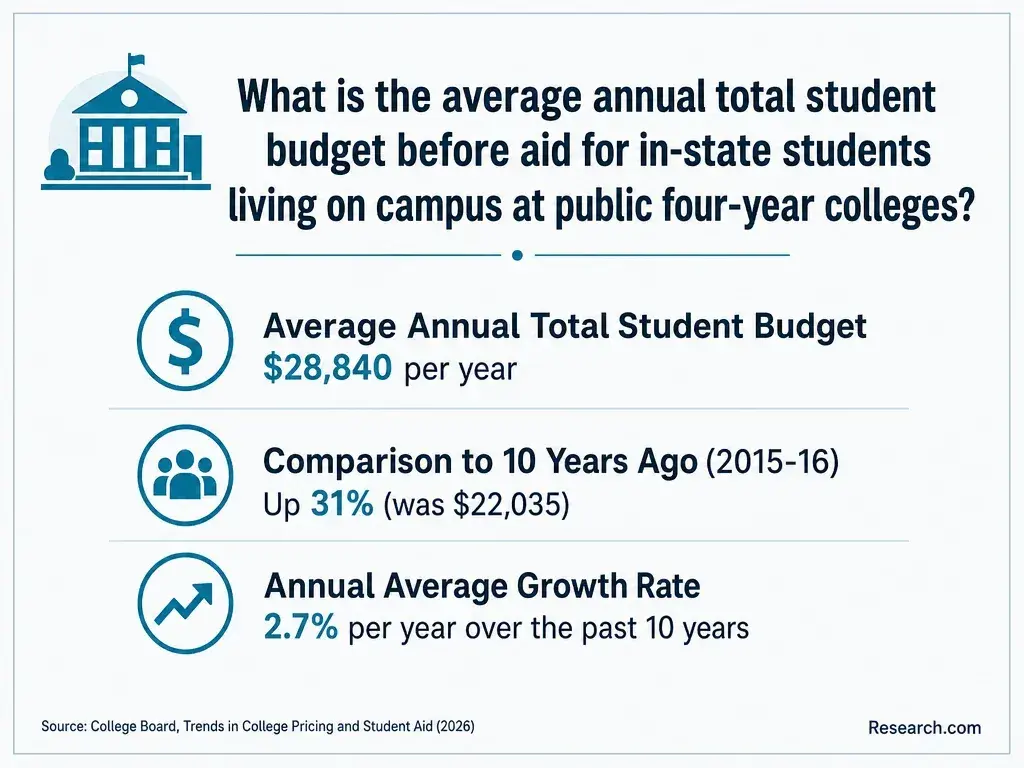
There is no responsible single price for this degree without a named school, enrollment status, and credit evaluation. Compare tuition and mandatory fees for the courses you still need, then account for software, books, proctored assessments, travel, and any additional terms caused by prerequisite sequencing. A lower per-credit price may not produce a lower completion cost if fewer prior courses apply to the major.
Request a written degree audit and a term-by-term cost estimate from each school. Confirm financial-aid eligibility and whether employer reimbursement arrives before or after tuition is due. Economical college choices for business administration majors can provide a starting set of schools, but compare each option against your actual remaining accounting requirements and out-of-pocket costs.
Depending on coursework and experience, graduates may pursue accounting assistant, staff accounting, audit support, budget support, or business operations roles. Staff accounting commonly involves preparing entries, reconciling accounts, and helping produce reports; more specialized audit, tax, or analytical responsibilities may require additional training, experience, or credentials. A broad business degree with a few accounting electives may be less direct preparation for accounting roles than an accounting major.
The U.S. Bureau of Labor Statistics reports a May 2025 median annual wage of $83,680 for accountants and auditors. That is the midpoint across workers in the occupation, not an expected starting salary for this degree. Compare entry-level postings in your location for required courses, software, internships, and credentials. Claims that shorter business administration college programs "pay well" should be weighed against the specific jobs you can qualify for and the full cost of finishing.
Does this degree meet CPA and other accounting certification requirements?
Not automatically. CPA eligibility is governed by the state accountancy board where you intend to seek licensure. Boards set rules for education, specific accounting and business coursework, examinations, experience, and other conditions. A business administration degree, an accounting concentration, and an accounting major can produce different course totals; the degree label alone cannot establish eligibility. Other accounting certifications have their own administering organizations and requirements.
Before enrolling, obtain the state board's education rules and ask the program for a course-by-course comparison, including any coursework you would still need after graduation. Confirm who can provide an official eligibility determination. When you find accredited affordable business administration colleges with aid options, distinguish institutional accreditation and aid eligibility from CPA eligibility; neither substitutes for a board review of your transcript.
Other Things You Should Know About Business Administration
Follow your instructor's policy. An AI-generated explanation can contain confident calculation or accounting errors, so verify it against course materials and show your own work.
Yes. Public financial statements or clearly labeled fictional transactions can support a work sample. State your assumptions and never imply that a classroom analysis was commissioned or approved by a company.
That depends on the institution. Ask whether the minor is officially awarded and where it appears in academic records; completing accounting electives alone does not establish one.
Only if the program permits it and approves the role, supervision, and learning objectives. Employment by itself does not award internship credit, and workplace records may require employer permission before use in coursework.
- Search Accredited Schools | AACSB https://www.aacsb.edu/accredited
- Business Student Learning Outcomes | gonzaga.edu https://www.gonzaga.edu/school-of-business-administration/undergraduate/business-administration/business-student-learning-outcomes
- Accounting and Information Systems | rutgers.edu https://catalogs.rutgers.edu/generated/rbs_2425/pg141.html
- How Much Math Do You Need to get a Degree in Business Administration? | Southern Nazarene University https://www.snu.edu/blog/how-much-math-do-you-need-to-get-a-degree-in-business-administration
- Bachelor's Degree in Business: Administration or Accounting? | Bay Path University https://www.baypath.edu/news/bay-path-university-blogs/post/bachelor-s-degree-in-business-administration-or-accounting/
- How is Data Analytics Used in Accounting? | Michigan Technological University https://www.mtu.edu/business/undergraduate/accounting/how-data-analytics/
- Learning Outcomes | Accounting | Exercise and Health Science https://www.csbsju.edu/accounting/learning-outcomes/