2027 Best Professional Doctorate Programs for Work-Life Balance

Co-Founder and Chief Data Scientist
A professional doctorate can advance your practice without requiring you to leave your job - but "online" does not necessarily mean you can study whenever you want. The stakes are real: the U.S. Bureau of Labor Statistics projects 29% employment growth for medical and health services managers from 2023 to 2033, yet a doctorate alone is not required for those roles. For working professionals comparing a DBA, EdD, DNP, or another practice-focused degree, this guide puts schedules, in-person requirements, cost, and career fit ahead of marketing claims so you can identify a sustainable path.
Key Things You Should Know
- Best overall fit: A professional doctorate with an officially permitted part-time pathway, predictable course availability, and a project connected to your existing work is often easier to balance than one requiring frequent travel or fixed clinical shifts.
- Online is not a scheduling guarantee: Confirm live-session times, residencies, placement hours, and project milestones; some DNP pathways must account for at least 1,000 post-baccalaureate practice hours.
- Compare total commitment, not just tuition: Add fees, travel, time away from work, and any change in federal loan eligibility; a doctorate is worthwhile only if it serves a goal that experience, a master's degree, or certification would not serve as well.
Top 10 Best Professional Doctorate Programs for Work-Life Balance - Top 10 Programs
Business / DBA Programs
A Doctor of Business Administration (DBA) suits experienced managers who want to investigate a workplace problem while continuing to work. The most manageable formats permit part-time enrollment and an applied project tied to the student's organization. Ask whether courses are asynchronous, whether cohort meetings occur outside work hours, and how often residencies meet. A DBA can support consulting or leadership development, but it does not replace management experience or guarantee promotion. If your goal is primarily broader business knowledge, compare the commitment with an MBA first.
Education / EdD Programs
A Doctor of Education (EdD) commonly prepares experienced educators to improve practice through organizational inquiry. A workplace-based problem of practice may fit a teacher's or administrator's existing responsibilities, but school-calendar deadlines can collide with data collection. Look for an explicitly part-time course sequence, predictable summer offerings, and clear guidance on obtaining research permissions. An EdD does not automatically provide a teaching or administrative license. If your goal is original research and a research-faculty career, compare an education PhD instead.
Educational Leadership Programs
Educational leadership doctorates are often EdDs focused on district, school, college, or organizational leadership. They can fit employed administrators when projects address problems at their workplace and evening or asynchronous classes are available. Confirm whether leadership internships, cohort weekends, or school-site research require time away from your job. Program title alone does not establish eligibility for principal or superintendent credentials; state rules and prior experience matter. Choose this specialization for a defined leadership problem, not on the assumption that the degree itself secures an administrative post.
Psychology Programs
A practice-focused Doctor of Psychology (PsyD) may prepare students for clinical practice, but required practica, an internship, supervised experience, and licensing examinations make it difficult to schedule around a full-time job. Online coursework cannot substitute for in-person clinical training. Some nonclinical professional doctorates in psychology have more flexible schedules, but they generally do not prepare graduates for psychologist licensure. Decide first whether your goal is licensed practice or applied work in an existing profession; then verify the program's accreditation and your state board's requirements.
Nursing / DNP Programs
A Doctor of Nursing Practice (DNP) prepares nurses for advanced clinical practice, systems improvement, or leadership, depending on the track. Post-master's options can be more compatible with employment than pathways preparing students for a new advanced-practice role, but both may require scheduled clinical or project hours. Ask which previous practice hours count, who arranges placements, and whether shifts can occur outside work. A DNP does not independently confer advanced-practice licensure; nursing-board and certification requirements still apply.
Public Health Programs
A Doctor of Public Health (DrPH) emphasizes applied public health leadership and may suit professionals who can develop a practice project through their employer. Part-time or hybrid study can preserve employment, although team projects, fieldwork, and required campus sessions may constrain travel and caregiving plans. Check whether your intended concentration requires a practicum and whether existing employment can satisfy its conditions. A DrPH may be valuable for a specific leadership or systems goal; many public health jobs do not require one.
Computer Science Programs
Practice-oriented computing doctorates may be titled Doctor of Computer Science or another institution-specific credential; verify the actual award rather than assuming every computing doctorate is a PhD. They may allow employed technologists to investigate an applied systems problem. However, team meetings, specialized labs, and project supervision can limit flexibility even when lectures are online. Compare the proposed research or development work with your employer's needs. If your goal is a software role rather than advanced applied scholarship, experience or targeted technical training may be a better investment.
Cybersecurity Programs
Applied cybersecurity doctorates can suit experienced practitioners working on governance, risk, or organizational defense. A workplace-based project and part-time courses may reduce schedule conflicts, provided the employer permits the proposed data access. Verify evening or asynchronous delivery, required labs, and security restrictions before choosing a project. BLS projects strong growth for information security analysts, but that occupation typically does not require a doctorate. For many technical roles, relevant experience and certifications may offer a shorter route to advancement.
Social Work / Human Services Programs
A Doctor of Social Work (DSW) often focuses on advanced practice, teaching, or organizational leadership for experienced social workers. An applied project based at an existing agency can be manageable, but client privacy, agency approval, fieldwork, and scheduled cohort meetings need early planning. Check whether the program expects an active social work license and whether its focus matches your career goal. A DSW is not a substitute for the supervised experience and state requirements needed for clinical social work licensure.
Public Administration / Public Policy Programs
A Doctor of Public Administration (DPA) or another practice-focused public-sector doctorate can help experienced professionals study a government or nonprofit problem without leaving their role. The fit is strongest when the employer supports the project and the program offers a documented part-time sequence. Budget for any policy residencies or scheduled presentations, and confirm that confidential agency data can be used. For advancement based mainly on management experience or policy skills, compare the doctorate with a master's degree or shorter training.
What Is a Professional Doctorate and Who Is It Best For?
A professional doctorate is a doctoral degree organized around advanced professional practice, applied inquiry, or leadership. It differs from a research-focused PhD in purpose, though both can demand substantial scholarly work. Common examples include the DBA, EdD, DNP, PsyD, DrPH, DSW, and DPA. A program may require an applied dissertation, clinical project, capstone, or another major scholarly product; the credential's abbreviation does not tell you which.
It is best for a professional with a specific problem to solve, a role that benefits from advanced preparation, and a realistic plan for protecting study time. It is a weaker fit if you need the credential only because a job advertisement says "doctorate preferred," or if a master's degree, licensure, or experience would meet your goal. Readers exploring degree programs for working adults should distinguish flexible coursework from the additional time demands of doctoral projects and placements.
No single professional doctorate guarantees the best work-life balance. For someone staying employed, an officially part-time DBA, EdD, DPA, or applied computing doctorate with a feasible workplace project may offer more control over study hours than a licensure-oriented clinical program. That is a comparison of typical scheduling constraints, not a ranking of every school: the individual program's rules determine the actual workload.
The comparison below shows where schedule conflicts are most likely to arise. Use it to narrow your search before reviewing individual program calendars and handbooks.
| Program family | Potential balance advantage | Main scheduling risk |
| DBA, EdD, DPA | Applied work may connect to an existing job | Cohort meetings, research approvals, or residencies |
| DrPH, DSW, applied computing | A professional project may align with current practice | Fieldwork, data access, team meetings, or labs |
| DNP | Some pathways build on an established nursing role | Clinical and project hours, placements, or shifts |
| Licensure-oriented PsyD | Direct preparation for a defined clinical goal | Practicum, internship, and supervised training |
Give the greatest weight to hours you cannot move: live classes, placements, campus visits, and required daytime access to a workplace. An asynchronous lecture is helpful, but it will not offset an internship that conflicts with your job.
Yes. An online professional doctorate can be legitimate when the institution holds recognized institutional accreditation and the program meets any relevant field-specific requirements. Delivery mode alone says little about academic quality or licensing eligibility. A legitimate online program can still require local clinical placements, campus residencies, live seminars, or an oral defense.
Before applying, check the institution's accreditation status directly with its recognized accreditor or the U.S. Department of Education's accreditation records. Then read the doctoral catalog, not just a promotional page, for required in-person activities. If a school calls a program "online" but will not specify visits, placements, or synchronous attendance, treat that uncertainty as a scheduling risk.
Institutional accreditation is the starting point; professional eligibility is a separate question. For an EdD leading toward a school credential, check the state education agency. For a clinical PsyD, investigate programmatic accreditation and the psychology board's education, internship, supervision, and examination rules in the state where you intend to practice. For a DNP advanced-practice track, check nursing-program accreditation, certification eligibility, clinical requirements, and the relevant nursing board.
Not every DBA, DrPH, DSW, or DPA is tied to a new license. Even so, programmatic accreditation may matter to employers or particular career paths. Ask the school to identify the exact accreditor, the states for which it has evaluated eligibility, and any limitations in writing. Do not assume that holding an existing professional license makes a new doctoral track eligible for every state or specialty.
Professional doctorates combine advanced coursework with methods for evaluating evidence and applying it to a real problem. A DBA might investigate an organizational decision; an EdD might study an educational improvement; a DNP might implement and assess a practice change. Depending on the program, students may complete comprehensive assessments, a proposal, an applied dissertation or doctoral project, and a presentation or defense.
Completion time depends on more than credits. The entry pathway, approved prior graduate study, part-time course sequence, project approval, access to data, clinical hours, and faculty feedback can all affect the finish date. A published minimum time may assume uninterrupted enrollment and a narrowly defined starting credential. Ask for the part-time degree map and recent completion-time information, and identify who helps students when a project site or adviser changes.
Requirements vary by degree and track. Applicants generally need at least a completed bachelor's degree; many practice-focused pathways require a relevant master's degree, professional experience, or an active license. Schools may also request transcripts, recommendations, a statement of purpose, a résumé, a writing sample, an interview, or a proposed practice problem. A clinical track may have prerequisites and placement conditions that do not apply to a leadership track at the same institution.
Read the specific doctoral program's admissions page for its GPA and testing policies rather than relying on university-wide claims. If you are still completing undergraduate study, an associate degree in 6 months online free is not a direct route into a professional doctorate; confirm the bachelor's-level and any later graduate preparation you would need. A master's degree also does not automatically reduce doctoral requirements: request a program-level evaluation of any eligible graduate transfer credit before committing.
There is no useful single price for a professional doctorate: schools charge by credit, term, or program, and a part-time student may pay fees for longer. Compare the full published curriculum cost with required technology or program fees, travel, books, clinical-placement expenses, and income lost to unpaid hours. Request a written estimate for your entry pathway and enrollment pace, including what happens if a project extends beyond scheduled coursework.
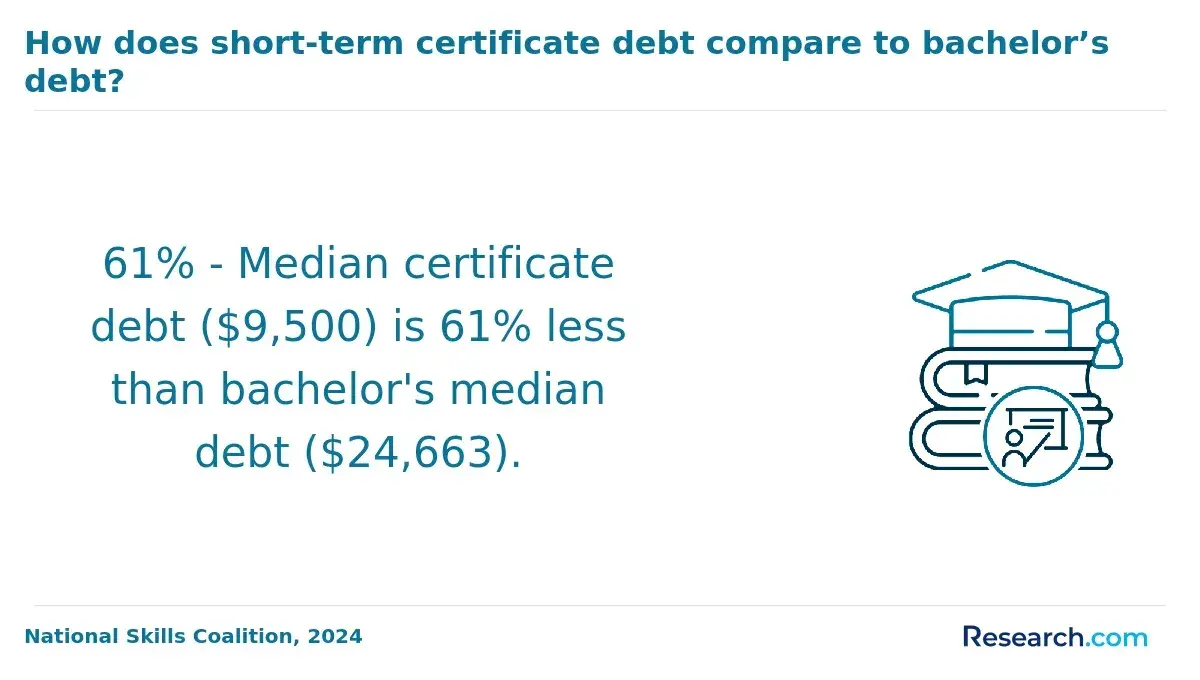
Possible funding includes employer tuition assistance, institutional scholarships, assistantships where offered, payment plans, and federal aid for eligible students and programs. Ask the financial aid office which federal borrowing rules apply to your enrollment date; do not assume a previously available loan will cover every cost. If you are comparing shorter alternatives, FAFSA-approved online certificate programs concern a different credential level and should not be used as evidence that a doctoral program qualifies for the same aid.
A professional doctorate may strengthen preparation for advanced practice, organizational improvement, consulting, or specialized leadership. Outcomes still depend on prior experience, employer needs, geography, and - where applicable - licensure. BLS occupational wages and growth figures describe jobs, not the earnings or placement rates of doctorate graduates. For example, projected growth among medical and health services managers does not mean a DrPH or DNP is required to become one.
Evaluate return on investment against the role you can realistically pursue: compare the program's total cost and time away from paid work with any documented credential requirement or likely change in responsibilities. If your goal is a specific technical or management skill, certifications that pay well may be worth comparing with doctoral study. For clinical practice or licensed psychology, however, a short certification cannot replace required education and supervised training.
How Can You Choose a Reputable Professional Doctorate Program?
Start with the career or practice problem you want the doctorate to address, then compare only programs that support that goal. A prestigious name cannot compensate for an impossible placement schedule or an ineligible licensing pathway.
Use these checks to turn "flexible" into requirements you can verify before paying an application fee:
- Map fixed commitments: Request the part-time course sequence and identify live classes, residencies, clinical or field hours, project meetings, and defense requirements.
- Check credentials: Verify institutional accreditation, relevant programmatic accreditation, and state licensing or certification eligibility for your intended role.
- Test the project fit: Ask who supervises applied work, how sites and data are approved, and what happens if employer access changes.
- Compare the complete cost: Get an estimate covering fees, travel, required hours away from work, available funding, and a delayed finish.
- Speak with enrolled part-time students: Ask what their busiest term required and whether promised courses were available when needed.
Be wary of an "online" claim without a residency schedule, an unusually short completion promise without stated assumptions, unclear accreditation, or salary claims presented as guaranteed outcomes. The best program is the credible one whose academic demands and fixed commitments you can sustain.
Other Things You Should Know About
Possibly. Look for an officially permitted part-time pathway and confirm every fixed meeting, placement, and project requirement. Licensure-oriented clinical programs may be especially difficult to combine with full-time employment.
No. Projects, adviser meetings, residencies, internships, and defenses may have fixed schedules even when lectures are asynchronous.
A DBA may offer more scheduling control when its project fits your current job. A DNP can also suit employed nurses, but required practice or clinical hours may be harder to move. Compare specific pathways rather than degree labels.
Often not. Check the positions you actually want and compare their requirements with your experience, a master's degree, or shorter professional training before taking on doctoral costs.
- Designing effective capstone experiences and projects... - PMC https://pmc.ncbi.nlm.nih.gov/articles/PMC7861568/
- Understanding College Costs | studentaid.gov https://studentaid.gov/resources/prepare-for-college/students/choosing-schools/consider-costs
- Cost of Attendance (Budget) | 2025-2026 Federal Student Aid Handbook https://fsapartners.ed.gov/knowledge-center/fsa-handbook/2025-2026/vol3/ch2-cost-attendance-budget
- Understanding the Impacts of Employment on Students' Lives | pdx.edu https://pdxscholar.library.pdx.edu/cgi/viewcontent.cgi
- The Dissertation in Practice Model - A Guide for EdD Students | University of Mount Olive https://umo.edu/blog/bridging-theory-and-practice-understanding-the-dissertation-in-practice-model-for-educational-leaders/
- What to Expect from Online and Hybrid Classes | mhcc.edu https://olsh.mhcc.edu/get-started-with-online-and-hybrid-classes/expectations-online-hybrid-classes
- What's the Difference Between a PhD and a Professional Doctoral Degree? | Walden University https://www.waldenu.edu/online-doctoral-programs/resource/what-is-the-difference-between-a-phd-and-a-professional-doctoral-degree
- Professional doctorate: what you need to know | PhD/Doctorate | Capella University Blog https://www.capella.edu/blog/phd-doctorate/what-is-a-professional-doctorate/