2027 Best PhD Programs for Remote Jobs

Co-Founder and Chief Data Scientist
A PhD can prepare you for work that can be done remotely, but it cannot make a job remote. The decision is whether a program's research training leads toward the work you want - and whether that work requires a doctorate at all.
The U.S. Bureau of Labor Statistics (BLS) projects data scientist employment to grow 34% from 2024 to 2034, a sign of demand for analytical skills, not a promise of remote openings. This guide compares PhD fields, explains the trade-offs, and shows what to verify before applying.
Key Things You Should Know
- Computer science, cybersecurity, statistics-focused public health, and some business PhDs can lead toward work with remote potential; employer policy and job duties determine where the work happens.
- The BLS reports a $140,910 median annual wage for computer and information research scientists in May 2024. That is an occupational figure, not a PhD graduate salary or a remote-work premium.
- Choose a PhD for research-intensive goals. If your target job accepts a master's degree plus experience, compare that shorter path before committing to dissertation research.
Top 10 Best PhD Programs for Remote Jobs - Top PhD Programs
Business / DBA Programs
A PhD in business suits people seeking research roles in management, operations, marketing, or organizational behavior. Quantitative analysis and research writing may be done remotely, but teaching, fieldwork, and collaboration may require attendance. A Doctor of Business Administration (DBA) is a different, typically practice-oriented credential - not a substitute for a PhD on an application requiring one. Compare faculty research interests and funding before applying. If your goal is remote management rather than original research, an MBA and relevant experience may be more direct.
Education / EdD Programs
A PhD in education emphasizes original research into learning, policy, assessment, or educational technology. It can support research and evaluation jobs whose analysis and writing may be remote, although data collection and teaching may not be. An EdD is a distinct professional doctorate often oriented toward applied leadership problems; it should not be counted as a PhD program. Choose the PhD when sustained research is central to your goal, and ask how the program supports access to data, advisers, and research partners.
Educational Leadership Programs
PhD programs in educational leadership examine institutions, policy, and organizational change. Potential remote-friendly work includes policy research, program evaluation, and some higher-education consulting - not necessarily school administration, which commonly requires on-site leadership. Programs awarding an EdD belong to a different degree category even when their concentrations have the same name. Before choosing a PhD, check faculty expertise, research-methods training, and whether your intended role actually rewards a research doctorate. State rules may separately govern school leadership credentials.
Psychology Programs
A psychology PhD can lead toward research in cognition, behavior, human factors, or organizational psychology. Some analysis, study design, and research writing can be remote; laboratory work, participant sessions, and clinical training may require physical attendance. A PsyD is a different credential and is not included as a PhD option. If your goal is telepsychology, verify that the specific program meets your state's clinical licensure requirements. A psychology PhD alone does not confer a license or permission to practice across state lines.
Nursing / DNP Programs
A nursing PhD prepares nurse researchers to study care delivery, outcomes, and health systems. Data analysis and manuscript preparation may be remote, while clinical research and team responsibilities may require on-site work. The Doctor of Nursing Practice (DNP) is a separate practice-focused degree, not a PhD. Many nursing PhD applicants already have nursing education or credentials; verify each program's entry route. If your goal is advanced clinical practice rather than research, compare DNP and master's pathways and check state licensure rules.
Public Health Programs
A public health PhD may focus on epidemiology, biostatistics, health policy, or population-health research. Data-centered projects may fit remote or hybrid jobs; community studies and field research may not. The practice-oriented DrPH is a different doctorate. Compare access to datasets, faculty methods, and research funding rather than assuming that an online course format predicts remote career options. For some analyst jobs, a Master of Public Health plus strong statistical skills may meet employer requirements without a PhD.
Computer Science Programs
A computer science PhD is strongest for people pursuing original research in areas such as AI, systems, or human-computer interaction. Some research teams work remotely, but laboratories, secure computing environments, and employer policies can limit location choice. Admission may depend heavily on research preparation and faculty fit; students should examine publications and adviser availability. For software development, a PhD is often unnecessary. Compare the value of research training with the time and earnings you would forgo while studying.
Cybersecurity Programs
A cybersecurity PhD can support research into privacy, cryptography, secure systems, or cyber policy. Theoretical and computational work may be location-flexible, but classified projects, restricted networks, and incident response can require on-site access. Check whether a prospective adviser's work matches your interests and whether the program funds that research. If your goal is a remote security-analyst job, experience and role-specific certifications may be more relevant than a dissertation.
Social Work / Human Services Programs
A social work or human services PhD emphasizes research on services, interventions, and policy. Evaluation, data analysis, and writing can sometimes be remote; interviews, community partnerships, and teaching may require travel or attendance. A Doctor of Social Work (DSW) is a separate professional doctorate. Neither a PhD nor a remote job offer removes state requirements for clinical social-work practice. Choose a research doctorate for research goals, and verify whether your desired service or clinical role instead calls for a qualifying master's degree and license.
Public Administration / Public Policy Programs
A PhD in public administration or public policy develops research skills for studying governance, budgets, and program outcomes. Policy analysis and writing may be remote, while government data access, stakeholder meetings, or security requirements may limit flexibility. A Doctor of Public Administration (DPA) is a distinct credential. Compare faculty interests and access to suitable research data. For many policy analyst positions, a relevant master's degree and experience are a more direct route than a PhD.
What PhD fields offer the best opportunities for remote jobs?
Computer science, cybersecurity, quantitative public health, and research-focused business fields offer strong potential for work whose core tasks can be performed remotely. "Remote potential" describes tasks, not guaranteed vacancies: employers may still require office attendance, travel, secure facilities, or residence in an approved state.
The comparison below separates research-heavy paths from fields where in-person practice can be a substantial part of the work. Use it to narrow your search by the job you want, rather than by the degree title alone.
| PhD field | Work with remote potential | Important constraint |
| Computer science or cybersecurity | Research, modeling, technical writing | Labs and secure systems may require on-site access |
| Public health or public policy | Statistical analysis, evaluation, policy research | Fieldwork and restricted data may limit location |
| Business or education | Organizational research, assessment, consulting | Teaching and client meetings may require attendance |
| Psychology or social work | Research, evaluation, some licensed services | Clinical work and licensing rules can restrict practice |
A PhD is most compelling when original research is central to your target role. If job postings consistently request a master's degree and applied experience instead, test that less costly route first.
Yes, an online PhD can be accredited and recognized by employers, but delivery format alone establishes neither. Confirm that the university holds accreditation recognized by the U.S. Department of Education or the Council for Higher Education Accreditation, then check whether your field or intended license requires additional programmatic approval.
Recognition also depends on what the program actually provides: credible research supervision, an appropriate dissertation process, and preparation relevant to the job. In regulated fields, ask the program and the applicable state board whether its curriculum and placements satisfy requirements where you intend to work. Accreditation does not guarantee licensure or employment.
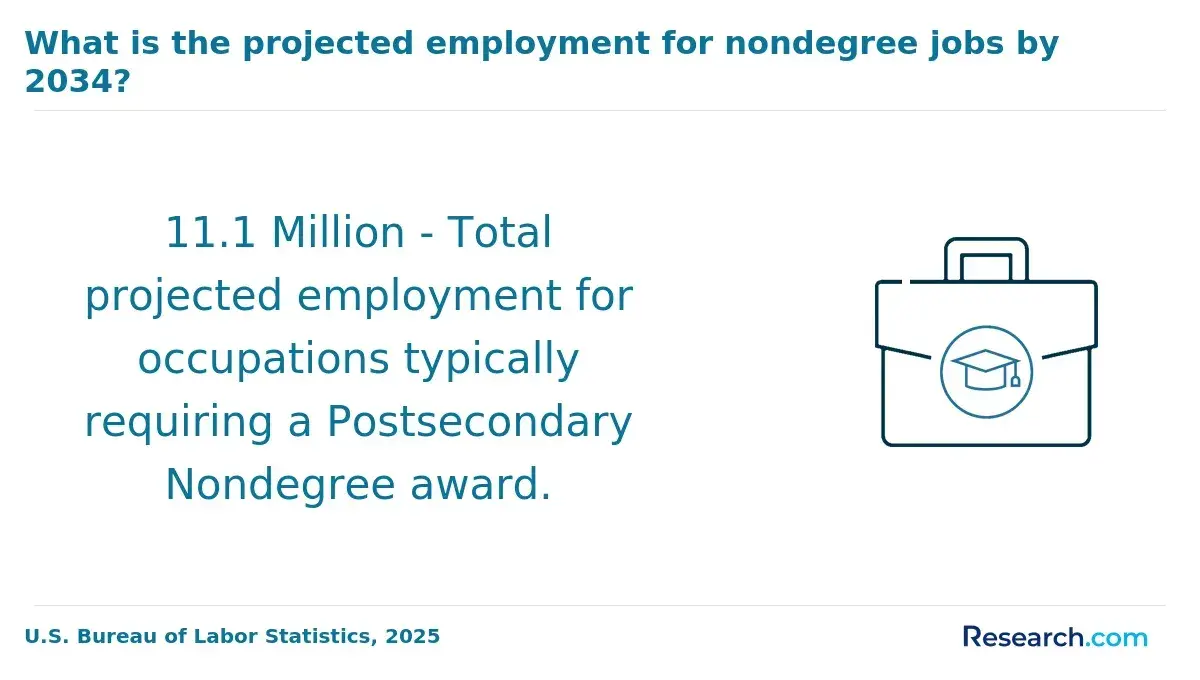
Remote PhD job pay varies by occupation, employer, location, and experience. National BLS medians describe everyone in an occupation - not specifically PhD holders or remote employees. They are useful for comparing career markets, but not for forecasting your offer.
These May 2024 occupational medians provide context for two technology-related paths. Neither occupation requires a PhD for every position.
| Occupation | U.S. median annual wage | PhD relevance |
| Computer and information research scientist | $140,910 | Advanced research roles may favor doctoral preparation |
| Information security analyst | $124,910 | Experience and technical skills often matter more than a PhD |
Before borrowing for a doctorate, compare the roles you could pursue now with those that genuinely need your proposed research specialty. Account for funding and years of foregone earnings, not just the highest occupational wage you find.
Possible remote careers include research scientist, quantitative analyst, program evaluator, policy researcher, technical consultant, and some teaching or clinical roles. Availability depends on the employer and daily duties. For example, a public health researcher might analyze data from home but travel for study meetings; a psychologist providing telehealth must still meet applicable licensing and practice rules.
Search actual job descriptions before selecting a program. Record their degree requirements, research methods, software skills, location restrictions, and experience expectations. If you prefer independent analytical work, a guide to good paying jobs for introverts can broaden your search - but personality fit does not establish that a role is remote or requires a PhD.
Requirements vary by PhD field and institution. Some programs admit students after a relevant bachelor's degree; others require or prefer a master's degree, professional credentials, or research experience. Applicants commonly submit transcripts, recommendations, a statement of purpose, and evidence of writing or research ability. A program may also require prerequisite courses, a writing sample, an interview, or a standardized test.
For research-intensive programs, faculty fit can be decisive. Read prospective advisers' current work and check whether the program asks applicants to contact them before applying. For nursing or clinical fields, confirm credential requirements separately. Do not assume that a university-wide test waiver or transfer policy applies to your specific PhD.
A PhD often takes several years, even after coursework ends. Entry preparation, full-time or part-time enrollment, qualifying exams, research approvals, data collection, and the dissertation defense all affect completion. Online study does not remove those requirements, and an existing master's degree does not automatically shorten them.
Total cost is more useful than a tuition rate. Add mandatory fees, research and travel expenses, required residencies, and income you may give up. Then subtract only funding the program confirms you are eligible to receive. Some PhDs offer assistantships, fellowships, stipends, or tuition remission; others are primarily student-funded. A comparison of cheap doctorate degree online options is a starting point, not a replacement for each program's current funding offer and full cost estimate.
A PhD curriculum combines advanced field study with training to produce original research. It commonly includes research methods, specialized seminars, and supervised research, followed by milestones such as comprehensive or qualifying exams, candidacy, a dissertation proposal, and a defended dissertation. The exact sequence varies by program.
Ask which courses are online and whether research meetings, labs, residencies, exams, or the defense require scheduled or in-person participation. Short courses do not necessarily produce a short doctorate: guides to fast track degrees can help frame questions about pacing, but dissertation progress follows its own timeline. An asynchronous course is not the same as a self-paced research program.
Some remote jobs require a license or certification; the PhD itself usually does not supply one. Clinical psychology and social-work practice are governed by state-specific education, supervised-practice, examination, and licensing rules. Nursing roles have separate licensure and, where applicable, advanced-practice requirements. Telehealth across state lines can create additional obligations.
Research, policy, and computing jobs may have no professional license requirement, though employers can request security clearances or particular certifications. Check the rules for the exact occupation and every jurisdiction where you plan to provide services before choosing a program.
How can you choose a reputable PhD program for remote work?
Start with a target job, then work backward to a PhD program. Compare recent job postings with the program's research training, faculty expertise, format, and graduate outcomes. Unlike choosing among easy college degrees online, choosing a PhD requires close attention to adviser fit and the feasibility of a multiyear research project.
Before accepting an offer, take these steps to test the program's career fit and financial risk:
- Verify institutional accreditation and any programmatic approval needed for your intended licensed occupation.
- Ask a potential adviser about research supervision, meeting expectations, dissertation support, and recent students' completion paths.
- Get written details on tuition, fees, funding duration and conditions, campus visits, and whether outside employment is permitted.
- Check graduate outcomes and ask whether your target employers hire remotely for the work you would be trained to do.
Be wary of promises that an online PhD guarantees a remote job, a particular salary, or a faculty appointment. Rankings and low published tuition cannot resolve a poor research fit or an unfunded dissertation period.
Other Things You Should Know About
Possibly, but "online" may still involve scheduled meetings, campus visits, labs, fieldwork, or an in-person defense. Ask for the complete requirements in writing.
Often not. Many analyst and applied data roles accept other degrees and relevant experience. A PhD makes more sense when the work requires original, specialized research.
Employers may accept one from an appropriately accredited institution, but they also assess research skills and experience. Verify any separate licensing requirements.
No. The employer decides the job's location rules, which can change. Evaluate actual openings and duties rather than assuming a research-oriented degree ensures flexibility.
- Chapter 5 - Advanced Degree or Exceptional Ability https://www.uscis.gov/policy-manual/volume-6-part-f-chapter-5
- Cost of Attendance (Budget) | 2025-2026 Federal Student Aid Handbook https://fsapartners.ed.gov/knowledge-center/fsa-handbook/2025-2026/vol3/ch2-cost-attendance-budget
- Survey of Earned Doctorates (SED) 2024 - NCSES - NSF https://ncses.nsf.gov/surveys/earned-doctorates/2024
- Are remote work options the new standard? Evidence... - PMC https://pmc.ncbi.nlm.nih.gov/articles/PMC9093064/
- EdD vs. PhD in Education: What's the Difference? | Campus Insider https://insider.augusta.edu/edd-vs-phd-education/
- EdD vs. PhD in Education: Key Differences, Careers & Salary | Alverno College https://edd.alverno.edu/articles/professional-doctorate-vs-phd/
- A Low Residency Doctoral Degree | School for Social Work https://ssw.smith.edu/phd/low-residency
- Which Jobs Require a Graduate Degree? | UCLA https://www.ucla.edu/academics/graduate-benefits/which-jobs-require-a-graduate-degree
- EdD vs. PhD in Education: What's the Difference? | Saint Leo University https://onlinedegrees.saintleo.edu/blog/edd-vs-phd
- 1-2 Year Doctoral Programs Online: Top Schools & More | phds.me https://www.phds.me/online-programs/one-year-doctoral-programs/